
Checking the transmission fluid on your Nissan Sentra is a simple but essential maintenance task that helps prevent costly repairs and ensures smooth shifting. This guide walks you through the process, tools needed, and signs of low or dirty fluid—so you can keep your car running like new.
In This Article
- 1 Key Takeaways
- 2 📑 Table of Contents
- 3 Why Checking Transmission Fluid Matters
- 4 When Should You Check Transmission Fluid?
- 5 Tools and Supplies You’ll Need
- 6 Step-by-Step Guide to Checking Transmission Fluid
- 7 Understanding Transmission Fluid Types for Nissan Sentra
- 8 Common Signs of Transmission Problems
- 9 How to Maintain Your Transmission
- 10 Conclusion
- 11 Frequently Asked Questions
- 11.1 Can I check transmission fluid when the engine is cold?
- 11.2 What if my Nissan Sentra doesn’t have a dipstick?
- 11.3 How much transmission fluid does a Nissan Sentra hold?
- 11.4 Can I use generic ATF in my Nissan Sentra?
- 11.5 What does it mean if transmission fluid is black?
- 11.6 Is it safe to drive with low transmission fluid?
Key Takeaways
- Check fluid when the engine is warm: For accurate readings, always check transmission fluid after driving for at least 10–15 minutes so the fluid circulates properly.
- <>Use the correct dipstick or inspection method: Most Nissan Sentras from 2007–2020 use a traditional dipstick, while newer models may require a scan tool or dealer visit due to sealed transmissions.
- Look for proper color and smell: Healthy transmission fluid is bright red and smells slightly sweet. Dark, burnt-smelling fluid indicates it’s time for a change.
- Never overfill: Adding too much fluid can cause foaming, overheating, and transmission damage. Always add slowly and recheck levels.
- Address low fluid immediately: Low fluid levels can lead to slipping gears, delayed shifting, and eventual transmission failure.
- Replace fluid every 30,000–60,000 miles: Follow your owner’s manual for recommended intervals to maintain optimal performance.
- Use only Nissan-approved fluid: Using the wrong type (e.g., Dexron instead of NS-2 or NS-3) can harm your transmission.
📑 Table of Contents
- Why Checking Transmission Fluid Matters
- When Should You Check Transmission Fluid?
- Tools and Supplies You’ll Need
- Step-by-Step Guide to Checking Transmission Fluid
- Understanding Transmission Fluid Types for Nissan Sentra
- Common Signs of Transmission Problems
- How to Maintain Your Transmission
- Conclusion
Why Checking Transmission Fluid Matters
Your Nissan Sentra’s transmission is one of the most critical—and expensive—components in your vehicle. It’s responsible for transferring power from the engine to the wheels, allowing your car to shift gears smoothly and efficiently. Just like engine oil, transmission fluid plays a vital role in lubricating parts, cooling the system, and preventing wear and tear. Over time, this fluid can degrade, become contaminated, or leak out, leading to poor performance or even complete transmission failure.
Many drivers overlook transmission maintenance, assuming it’s something only a mechanic should handle. But checking the fluid level yourself is easier than you think—and it could save you thousands in repair bills. A simple five-minute check every few months can alert you to problems early, such as leaks, burnt fluid, or low levels. Plus, it gives you peace of mind knowing your car is in good working order. Whether you’re a seasoned DIYer or a first-time car owner, this task is well within your reach.
When Should You Check Transmission Fluid?
Visual guide about How to Check Transmission Fluid on Nissan Sentra
Image source: transmissioncar.com
Timing is everything when it comes to checking your Nissan Sentra’s transmission fluid. The most accurate reading comes when the fluid is at operating temperature—meaning the engine has been running long enough for the transmission to warm up. This usually takes about 10 to 15 minutes of driving. Cold fluid contracts and may give a falsely high reading, while overheated fluid can expand and appear overfilled.
It’s best to check the fluid when the engine is running and the car is in park. This allows the fluid to circulate through the transmission and return to the pan, giving you a true level. Avoid checking it immediately after a long highway drive or in extreme heat, as the fluid may be too hot to handle safely. If you’ve just driven, let the engine idle for a few minutes to stabilize the temperature.
How often should you check? While your owner’s manual may recommend specific intervals, a good rule of thumb is every 3,000 to 5,000 miles—or at least once every oil change. If you notice any signs of trouble, such as slipping gears, delayed shifting, or a burning smell, check the fluid right away. Regular checks help you catch issues before they become major problems.
Tools and Supplies You’ll Need
Visual guide about How to Check Transmission Fluid on Nissan Sentra
Image source: global.discourse-cdn.com
Before you begin, gather the right tools to make the process smooth and safe. Fortunately, you don’t need anything fancy—just a few basic items you likely already have at home.
First, you’ll need clean rags or paper towels. These are essential for wiping the dipstick and cleaning up any spills. Transmission fluid is slippery and can stain surfaces, so it’s smart to lay down an old towel under the car to catch drips.
Next, have a flashlight handy. The transmission dipstick is often located in a tight, dimly lit area under the hood, especially in compact cars like the Sentra. A flashlight helps you see the fluid level and condition clearly.
If your fluid is low, you’ll need to top it off. Make sure you have the correct type of transmission fluid on hand. Most Nissan Sentras use Nissan Matic S, Matic D, or the newer NS-2 or NS-3 fluids. Check your owner’s manual or the dipstick label to confirm the exact specification. Never substitute with generic fluids like Dexron or Mercon unless explicitly approved—using the wrong type can damage your transmission.
Finally, consider wearing gloves. Transmission fluid can irritate skin and is difficult to wash off. Gloves protect your hands and keep the dipstick clean, which ensures an accurate reading.
Step-by-Step Guide to Checking Transmission Fluid
Visual guide about How to Check Transmission Fluid on Nissan Sentra
Image source: i.ytimg.com
Now that you’re prepared, let’s walk through the process of checking your Nissan Sentra’s transmission fluid. Follow these steps carefully to get an accurate reading and avoid common mistakes.
Step 1: Park on a Level Surface
Start by parking your car on a flat, level surface. This is crucial because an uneven surface can give a false reading—fluid will pool to one side of the transmission pan, making it appear lower or higher than it actually is. Turn off the engine and engage the parking brake for safety.
Step 2: Warm Up the Engine
Start the engine and let it run for about 10 to 15 minutes. This allows the transmission fluid to reach normal operating temperature and circulate fully. If you’ve just driven the car, that’s even better—just make sure it’s not overheating.
Step 3: Locate the Transmission Dipstick
Pop the hood and look for the transmission dipstick. On most Nissan Sentras (especially 2007–2020 models), it’s located toward the back of the engine bay, near the firewall. It usually has a yellow or red handle labeled “ATF” (Automatic Transmission Fluid) or “Transmission.” If you can’t find it, consult your owner’s manual—it will have a diagram showing the exact location.
Step 4: Check the Fluid Level
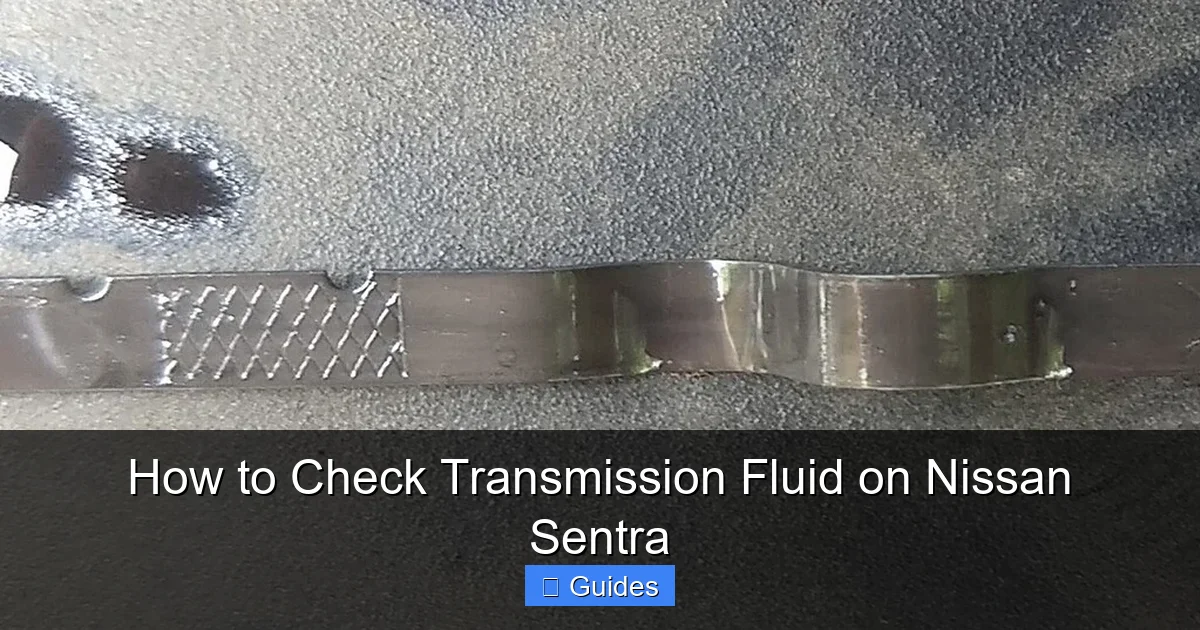
With the engine still running and the car in park, pull out the dipstick. Wipe it clean with a rag, then reinsert it fully. Pull it out again and examine the fluid level. Most dipsticks have two markings: “Full” and “Add” (or “Low”). The fluid should be between these two lines. If it’s below the “Add” line, you’ll need to top it off.
Step 5: Inspect the Fluid Condition
While checking the level, also look at the color and smell of the fluid. Healthy transmission fluid is bright red and translucent. If it’s dark brown, black, or has a burnt smell, it’s time for a fluid change. Milky or cloudy fluid could indicate coolant contamination, which is a serious issue requiring immediate attention.
Step 6: Add Fluid if Necessary
If the fluid is low, use a funnel to slowly add the correct type of transmission fluid through the dipstick tube. Add a little at a time—no more than a half-quart at first—then recheck the level. Overfilling can be just as harmful as underfilling, so go slow. Once the level is between “Full” and “Add,” you’re good to go.
Step 7: Reinsert the Dipstick and Close the Hood
Make sure the dipstick is fully seated and the hood is securely closed. Turn off the engine and take your car for a short test drive to ensure smooth shifting.
Understanding Transmission Fluid Types for Nissan Sentra
Using the right transmission fluid is just as important as checking the level. Nissan specifies particular fluid types for the Sentra to ensure compatibility with the transmission’s internal components. Using the wrong fluid can lead to poor performance, overheating, or even transmission failure.
Most older Nissan Sentras (2007–2012) use Nissan Matic S or Matic D fluid. These are synthetic fluids designed for Nissan’s automatic transmissions. Matic S is common in earlier models, while Matic D is used in some 2010–2012 models. Always double-check your owner’s manual or the dipstick label to confirm.
Newer Sentras (2013 and later) typically require Nissan NS-2 or NS-3 fluid. These are low-viscosity fluids that improve fuel efficiency and protect modern transmission designs. NS-3 is often used in continuously variable transmissions (CVTs), which are common in Sentras from 2013 onward.
Never use generic ATF like Dexron III or Mercon V unless your manual explicitly allows it. While they may seem similar, they don’t meet Nissan’s specific friction and wear requirements. In fact, using the wrong fluid can void your warranty and cause long-term damage.
If you’re unsure which fluid to use, visit a Nissan dealership or trusted mechanic. They can confirm the correct type and even perform a fluid change if needed. Some auto parts stores also have lookup tools that recommend the right fluid based on your car’s year, make, and model.
Common Signs of Transmission Problems
Even with regular checks, transmission issues can sneak up on you. Knowing the warning signs can help you act quickly and avoid costly repairs. Here are some common symptoms to watch for:
Slipping Gears
If your Sentra suddenly revs high without accelerating, or the transmission seems to “slip” between gears, low or degraded fluid could be the culprit. This happens when the fluid can’t maintain proper pressure to engage the clutches.
Delayed or Rough Shifting
Notice a hesitation when shifting from park to drive, or jerky movements when accelerating? This could indicate low fluid levels or dirty fluid that’s lost its lubricating properties.
Burning Smell
A strong, burnt odor coming from under the hood is a red flag. It usually means the transmission fluid is overheating due to low levels, contamination, or internal wear.
Transmission Fluid Leaks
Check under your car for red or brown puddles. Transmission fluid is typically red and slick to the touch. Leaks often occur at the pan gasket, seals, or cooler lines and should be repaired immediately.
Check Engine or Transmission Warning Light
Modern Sentras have sensors that monitor transmission performance. If the check engine light or a transmission-specific warning appears, have the system scanned for trouble codes.
Unusual Noises
Whining, humming, or clunking sounds when the car is in gear can signal low fluid or internal damage. These noises often worsen when the transmission is under load.
If you notice any of these signs, check the fluid level and condition right away. If the fluid is low, top it off and monitor for leaks. If it’s dark or smells burnt, schedule a professional inspection.
How to Maintain Your Transmission
Checking the fluid is just one part of transmission care. To keep your Nissan Sentra running smoothly for years, follow these maintenance tips:
Follow the Manufacturer’s Schedule
Your owner’s manual outlines recommended service intervals for transmission fluid changes. Most experts suggest changing the fluid every 30,000 to 60,000 miles, depending on driving conditions. Severe use—like frequent towing, stop-and-go traffic, or extreme temperatures—may require more frequent changes.
Use Only Approved Fluids
As mentioned earlier, always use Nissan-specified fluids. Avoid mixing different types, as this can alter the fluid’s properties and harm the transmission.
Inspect for Leaks Regularly
Check under your car weekly for signs of fluid leaks. Early detection can prevent major damage and save you money.
Avoid Overheating
Transmission fluid breaks down faster when overheated. Avoid aggressive driving, towing beyond your car’s capacity, and prolonged idling in hot weather.
Consider a Transmission Cooler
If you live in a hot climate or frequently drive in traffic, a transmission cooler can help maintain optimal fluid temperature and extend the life of your transmission.
Get Professional Inspections
Even if you check the fluid yourself, have a mechanic inspect the transmission every 20,000 to 30,000 miles. They can check for internal wear, solenoid issues, and other problems that aren’t visible during a routine check.
Conclusion
Checking the transmission fluid on your Nissan Sentra is a simple, quick task that can prevent major mechanical issues down the road. By following the steps in this guide—warming up the engine, using the correct tools, and inspecting both level and condition—you can keep your transmission in top shape. Remember, healthy fluid is bright red, smells fresh, and sits between the “Full” and “Add” marks on the dipstick.
Don’t wait for warning lights or strange noises to take action. Make fluid checks a regular part of your maintenance routine, and always use the right type of fluid for your model. With a little attention and care, your Sentra’s transmission will deliver smooth, reliable performance for many miles to come.
Frequently Asked Questions
Can I check transmission fluid when the engine is cold?
No, it’s best to check when the engine is warm. Cold fluid doesn’t circulate fully and can give a false reading. Drive for 10–15 minutes before checking for the most accurate result.
What if my Nissan Sentra doesn’t have a dipstick?
Some newer models (especially CVTs) have sealed transmissions without a dipstick. In these cases, checking the fluid requires a scan tool or a visit to a Nissan dealer or qualified mechanic.
How much transmission fluid does a Nissan Sentra hold?
Most Sentras hold between 7 to 9 quarts of transmission fluid, depending on the model year and transmission type. Always refer to your owner’s manual for exact specifications.
Can I use generic ATF in my Nissan Sentra?
No, always use Nissan-approved fluid like Matic S, Matic D, NS-2, or NS-3. Generic fluids may not meet Nissan’s performance standards and can damage the transmission.
What does it mean if transmission fluid is black?
Black or dark brown fluid usually indicates it’s old, burnt, or contaminated. This means the fluid has lost its lubricating properties and should be changed as soon as possible.
Is it safe to drive with low transmission fluid?
No, driving with low fluid can cause overheating, slipping gears, and permanent damage. Top off the fluid immediately and check for leaks.

At CarLegit, we believe information should be clear, factual, and genuinely helpful. That’s why every guide, review, and update on our website is created with care, research, and a strong focus on user experience.