
The Nissan Murano has a modest towing capacity of just 1,500 pounds, which is low compared to other midsize SUVs. This limit stems from its front-wheel-drive bias, CVT transmission, and focus on comfort over utility.
In This Article
- 1 Key Takeaways
- 2 📑 Table of Contents
- 3 Why Is Nissan Murano Towing Capacity So Low?
- 4 Understanding Towing Capacity: What It Means and Why It Matters
- 5 Engine and Transmission: The Heart of the Limitation
- 6 Drivetrain and Chassis: Built for Comfort, Not Cargo
- 7 Safety, Warranty, and Real-World Risks
- 8 Market Positioning: Why Nissan Chose Comfort Over Capability
- 9 Practical Tips for Towing with a Nissan Murano
- 10 Conclusion: The Murano’s Towing Limit Is By Design
- 11 Frequently Asked Questions
- 11.1 Can the Nissan Murano tow a small camper?
- 11.2 Does all-wheel drive increase the Murano’s towing capacity?
- 11.3 What happens if I tow more than 1,500 pounds with my Murano?
- 11.4 Can I upgrade the Murano to tow more?
- 11.5 Is the Nissan Murano good for towing jet skis?
- 11.6 What SUV should I buy if I need more towing power?
Key Takeaways
- Engine and Drivetrain Limitations: The Murano’s 3.5L V6 engine and CVT transmission are optimized for smooth city driving, not heavy towing.
- Front-Wheel-Drive Bias: Most Murano models are FWD, reducing traction and stability when pulling heavy loads.
- Unibody Construction: Built for comfort and fuel efficiency, not rugged towing demands like body-on-frame trucks.
- Safety and Warranty Concerns: Exceeding towing limits can void warranties and increase accident risks due to poor handling.
- Market Positioning: Nissan designed the Murano as a luxury crossover, prioritizing ride quality over utility.
- Practical Alternatives: For heavier towing, consider the Nissan Pathfinder or Frontier instead.
- Towing Tips: If towing within limits, use proper equipment and distribute weight evenly for safety.
📑 Table of Contents
- Why Is Nissan Murano Towing Capacity So Low?
- Understanding Towing Capacity: What It Means and Why It Matters
- Engine and Transmission: The Heart of the Limitation
- Drivetrain and Chassis: Built for Comfort, Not Cargo
- Safety, Warranty, and Real-World Risks
- Market Positioning: Why Nissan Chose Comfort Over Capability
- Practical Tips for Towing with a Nissan Murano
- Conclusion: The Murano’s Towing Limit Is By Design
Why Is Nissan Murano Towing Capacity So Low?
If you’re shopping for a midsize SUV and need to tow a small trailer, camper, or boat, you might be surprised to learn that the Nissan Murano has one of the lowest towing capacities in its class—just 1,500 pounds. That’s barely enough for a small utility trailer or a couple of jet skis. Compared to rivals like the Toyota Highlander (up to 5,000 lbs) or the Ford Edge (up to 3,500 lbs), the Murano’s towing ability feels almost anemic.
So why is the Nissan Murano towing capacity so low? It’s not because Nissan cut corners or made a mistake. Instead, it’s the result of deliberate design choices that prioritize comfort, fuel efficiency, and urban drivability over heavy-duty utility. The Murano was never meant to be a workhorse. It’s a stylish, refined crossover built for daily commutes, weekend errands, and family road trips—not hauling heavy loads.
In this guide, we’ll dive deep into the engineering, design philosophy, and market strategy behind the Murano’s limited towing capacity. We’ll explore the role of its engine, transmission, drivetrain, and chassis. We’ll also look at how safety, warranty, and consumer expectations play a part. By the end, you’ll understand not only why the Murano can’t tow much—but also whether it’s still the right SUV for your lifestyle.
Understanding Towing Capacity: What It Means and Why It Matters
Visual guide about Why Is Nissan Murano Towing Capacity So Low
Image source: nissannationpodcast.com
Before we get into the specifics of the Murano, let’s clarify what “towing capacity” actually means. Towing capacity is the maximum weight a vehicle can safely pull behind it, including the trailer, cargo, passengers, and fuel. This number isn’t arbitrary—it’s determined by the manufacturer based on rigorous testing of the vehicle’s engine, transmission, cooling system, brakes, suspension, and frame.
A higher towing capacity usually means the vehicle has a stronger engine, a robust transmission (often a traditional automatic), heavy-duty cooling, reinforced suspension, and sometimes a body-on-frame construction. Trucks and full-size SUVs like the Ford F-150 or Chevrolet Tahoe are built with these features in mind.
On the other hand, vehicles with lower towing capacities—like the Nissan Murano—are typically unibody crossovers designed for everyday driving. They prioritize smooth rides, quiet cabins, and fuel efficiency. As a result, their components aren’t built to handle the stress of heavy towing.
For the Murano, the official towing capacity is 1,500 pounds when properly equipped. That’s the same across all model years from 2003 to the present, with only minor variations. Even the available all-wheel drive (AWD) version doesn’t increase this number. In fact, some AWD models may have slightly lower capacity due to added weight.
To put this in perspective, here’s what 1,500 pounds can (and can’t) tow:
– ✅ A small utility trailer with lawn equipment
– ✅ A single jet ski or small motorcycle
– ✅ A lightweight pop-up camper (under 1,200 lbs)
– ❌ A full-size travel trailer (typically 3,000+ lbs)
– ❌ A small boat with trailer (often 2,000+ lbs)
– ❌ A small car on a tow dolly
If you’re planning to tow anything heavier, the Murano simply isn’t the right tool for the job. And trying to push it beyond its limits can lead to serious mechanical failures, safety hazards, and even voided warranties.
Engine and Transmission: The Heart of the Limitation
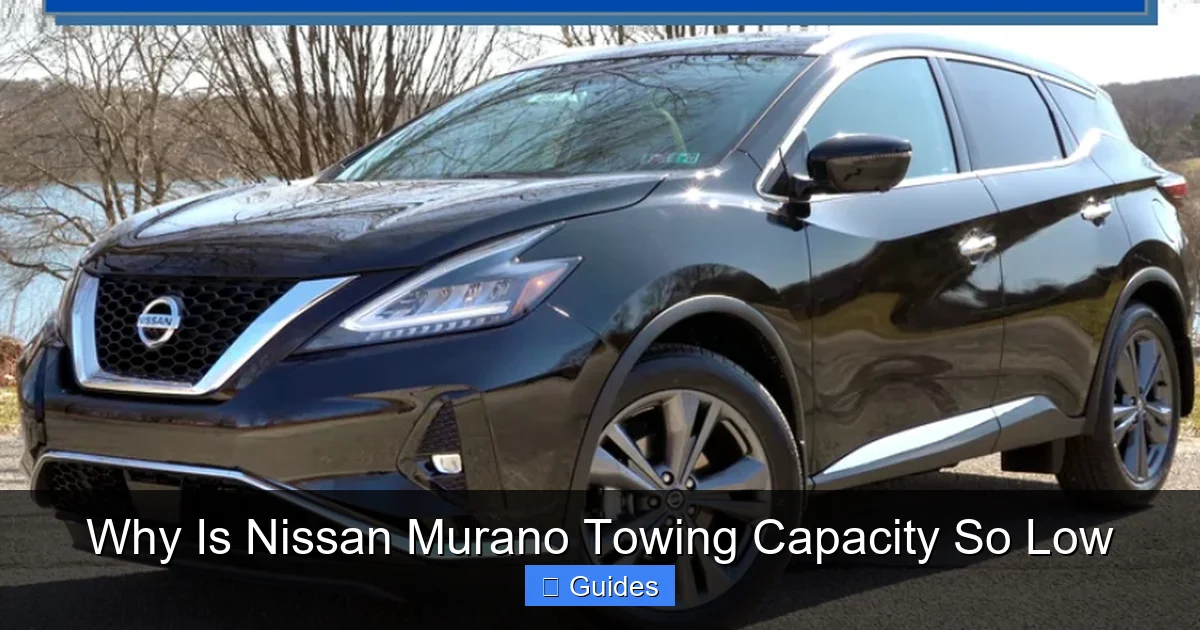
Visual guide about Why Is Nissan Murano Towing Capacity So Low
Image source: towstats.com
One of the biggest reasons the Nissan Murano towing capacity is so low comes down to its powertrain—specifically, the engine and transmission combination.
The 3.5L V6 Engine: Smooth, Not Strong
The Murano is powered by a 3.5-liter V6 engine that produces around 260 to 270 horsepower, depending on the model year. On paper, that sounds decent—especially compared to smaller four-cylinder engines. But horsepower alone doesn’t determine towing ability. What matters more is torque, especially low-end torque, which helps a vehicle get heavy loads moving from a stop.
The Murano’s V6 generates about 240 to 250 lb-ft of torque. That’s adequate for daily driving and highway merging, but it’s not enough to confidently tow heavy trailers up hills or accelerate quickly with a load. When you add 1,500 pounds behind the vehicle, the engine has to work much harder, which can lead to overheating, reduced fuel economy, and increased wear.
Moreover, the engine is tuned for smoothness and efficiency, not brute strength. Nissan designed it to deliver a quiet, comfortable ride—perfect for city driving and long commutes. But that same refinement means it lacks the raw power needed for serious towing.
The CVT Transmission: Efficiency Over Endurance
Another major factor is the Murano’s use of a continuously variable transmission (CVT). Unlike traditional automatic transmissions with fixed gear ratios, a CVT uses a belt and pulley system to provide an infinite range of gear ratios. This allows for smoother acceleration and better fuel economy—two things Nissan prioritized in the Murano.
However, CVTs are generally not built for heavy towing. They’re more fragile under stress and can overheat when subjected to prolonged load. Towing a trailer puts constant strain on the transmission, especially when climbing hills or accelerating from stops. Over time, this can lead to premature wear, slipping, or even complete failure.
Nissan does offer a towing package on some Murano models, which includes a transmission cooler. This helps manage heat during light towing, but it doesn’t increase the overall capacity. Even with the cooler, the CVT remains the weakest link when it comes to pulling heavy loads.
In contrast, vehicles with higher towing capacities—like the Nissan Pathfinder—use traditional automatic transmissions with multiple gears and stronger internal components. These are better suited for the demands of towing.
Cooling System Limitations
Towing generates extra heat—not just in the engine and transmission, but also in the brakes and exhaust system. Vehicles designed for towing usually come with upgraded cooling systems: larger radiators, auxiliary transmission coolers, and enhanced airflow.
The Murano’s cooling system is adequate for normal driving, but it’s not built to handle the extra heat from towing. Even with the optional towing package, the cooling capacity is limited. If you tow frequently or in hot climates, you risk overheating, which can cause engine damage and leave you stranded.
Drivetrain and Chassis: Built for Comfort, Not Cargo
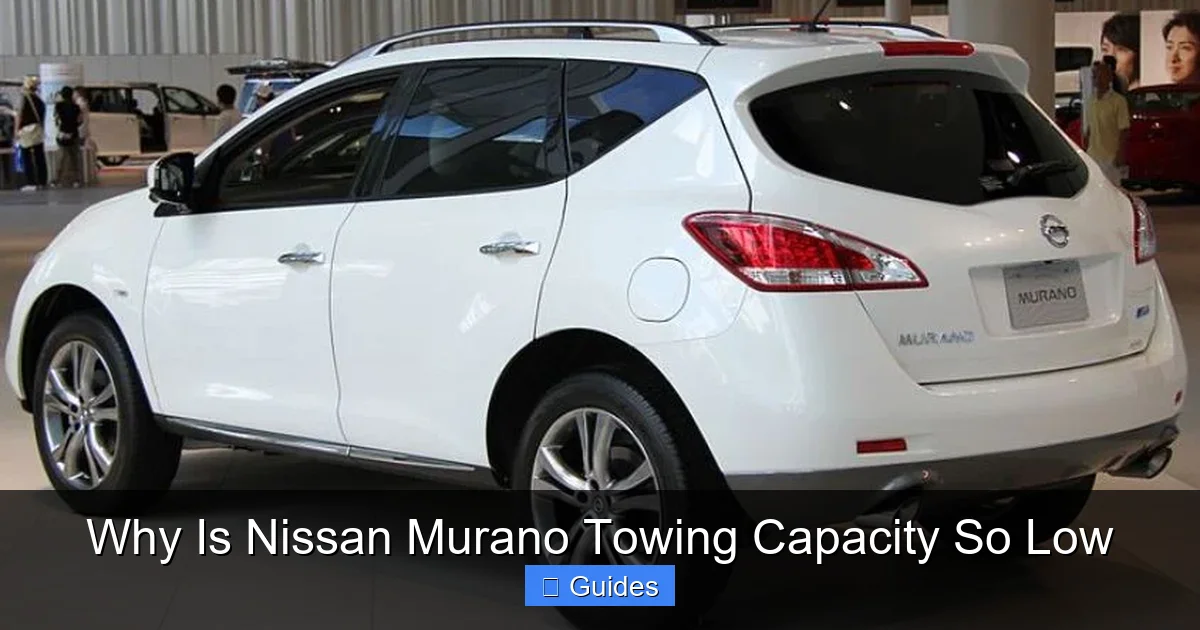
Visual guide about Why Is Nissan Murano Towing Capacity So Low
Image source: towstats.com
Beyond the engine and transmission, the Murano’s drivetrain and chassis design play a big role in its low towing capacity.
Front-Wheel-Drive Bias
Most Nissan Murano models are front-wheel drive (FWD). Only a few trim levels offer all-wheel drive (AWD) as an option. While AWD can improve traction in slippery conditions, it doesn’t significantly increase towing capacity. In fact, the added weight and complexity of AWD can sometimes reduce it slightly.
FWD vehicles inherently have less traction when towing because the weight of the trailer pushes down on the rear axle, reducing grip on the front wheels—the ones responsible for both steering and propulsion. This can lead to wheel spin, poor handling, and reduced braking performance.
In contrast, rear-wheel-drive (RWD) or body-on-frame vehicles distribute weight more evenly and provide better balance when towing. Trucks and full-size SUVs often use RWD or 4WD systems specifically for this reason.
Unibody Construction: Lightweight and Smooth
The Murano uses a unibody construction, meaning the body and frame are integrated into a single structure. This design is lighter, more fuel-efficient, and provides a smoother, quieter ride—ideal for a luxury-oriented crossover.
However, unibody vehicles are generally not as strong as body-on-frame designs when it comes to towing. The frame isn’t built to handle the twisting forces and stress that come from pulling heavy loads. Over time, repeated towing can cause flexing, fatigue, and even structural damage.
Body-on-frame vehicles, like the Nissan Titan or Frontier, have a separate, rugged frame that can handle much heavier loads. That’s why trucks can tow 5,000 to 10,000 pounds or more—while the Murano maxes out at 1,500.
Suspension and Braking: Not Built for Loads
The Murano’s suspension is tuned for comfort, with soft springs and dampers that absorb bumps and provide a plush ride. While great for passengers, this setup isn’t ideal for towing. When you add weight to the rear, the suspension can sag, affecting ride height, steering, and stability.
Additionally, the Murano’s brakes are designed for the vehicle’s normal weight—not for stopping a loaded trailer. Towing increases stopping distances and puts extra strain on the braking system. Without trailer brakes (which are required for heavier loads), the Murano’s brakes can overheat and fail, especially on long downhill grades.
Some higher-end SUVs come with trailer sway control, integrated brake controllers, and reinforced suspension—features the Murano lacks. These systems help maintain control and safety when towing, but they’re absent here because the vehicle wasn’t designed for it.
Safety, Warranty, and Real-World Risks
Pushing the Nissan Murano beyond its towing capacity isn’t just impractical—it’s dangerous and could cost you dearly.
Safety Hazards of Overloading
Towing more than 1,500 pounds with a Murano can lead to serious safety issues:
– **Loss of control:** The vehicle may sway or fishtail, especially at highway speeds or in windy conditions.
– **Brake failure:** The brakes weren’t designed to stop the combined weight of the SUV and a heavy trailer.
– **Tire blowouts:** Overloading increases tire stress and heat, raising the risk of blowouts.
– **Transmission damage:** The CVT can overheat and fail, leaving you stranded.
– **Reduced visibility:** A heavy trailer can block rear visibility and make parking difficult.
Even if you don’t exceed the weight limit, improper loading—like placing too much weight at the back of the trailer—can cause trailer sway, where the trailer pushes the SUV side to side. This can quickly escalate into a dangerous situation, especially on highways.
Warranty and Insurance Implications
Nissan’s warranty explicitly states that towing beyond the rated capacity can void coverage. If your transmission fails due to overheating from towing, Nissan may deny your claim, leaving you with a costly repair bill.
Similarly, your auto insurance may not cover accidents caused by overloading. If you’re involved in a crash while towing more than 1,500 pounds, the insurer could argue that you were operating the vehicle outside its intended use, potentially denying your claim.
Real-World Examples
Many Murano owners have shared stories online about attempting to tow small campers or boats—only to experience transmission shudder, overheating, or poor handling. Some report that even 1,200 pounds feels “heavy” for the vehicle, with sluggish acceleration and reduced braking performance.
One owner tried to tow a 1,400-pound pop-up camper up a mountain pass and noticed the transmission temperature warning light come on. They had to stop frequently to let the system cool down. Another reported that their CVT started making a whining noise after a few trips with a loaded trailer.
These experiences highlight the real risks of pushing the Murano beyond its limits—even if you’re technically under the 1,500-pound cap.
Market Positioning: Why Nissan Chose Comfort Over Capability
To truly understand why the Nissan Murano towing capacity is so low, you have to look at how Nissan positioned the vehicle in the market.
A Luxury Crossover, Not a Workhorse
When the Murano launched in 2003, Nissan marketed it as a “crossover luxury vehicle”—a blend of SUV utility and car-like refinement. It was designed to compete with vehicles like the Lexus RX and Acura MDX, not trucks or full-size SUVs.
The focus was on:
– Smooth, quiet ride quality
– Upscale interior materials
– Advanced tech and safety features
– Fuel efficiency for city driving
Towing capacity was never a priority. In fact, emphasizing towing would have gone against the Murano’s brand image. Nissan wanted to attract buyers who valued comfort and style over brute strength.
Consumer Expectations and Usage Patterns
Most Murano buyers don’t need to tow heavy loads. They use the vehicle for:
– Daily commuting
– School drop-offs and errands
– Weekend getaways
– Light recreational use (e.g., camping with a small trailer)
For this audience, a 1,500-pound towing capacity is sufficient. They’re not looking to haul boats or trailers—they want a comfortable, reliable SUV that looks good and drives well.
Nissan knew this. That’s why they didn’t invest in a stronger transmission, heavier-duty suspension, or a more robust cooling system. Those features would have increased cost, weight, and complexity—without adding value for the typical Murano buyer.
Competitive Landscape
Even among competitors, the Murano’s towing capacity is on the lower end. Here’s a quick comparison:
– **Nissan Murano:** 1,500 lbs
– **Toyota Highlander:** Up to 5,000 lbs
– **Honda Pilot:** Up to 5,000 lbs
– **Ford Edge:** Up to 3,500 lbs
– **Hyundai Santa Fe:** Up to 3,500 lbs
Some of these vehicles offer V6 or turbocharged engines, traditional automatics, and available towing packages. The Murano doesn’t. It’s not that Nissan couldn’t build a higher-capacity version—it’s that they chose not to.
Practical Tips for Towing with a Nissan Murano
If you own a Murano and need to tow within its limits, here are some practical tips to stay safe and protect your vehicle.
Stay Within the 1,500-Pound Limit
This can’t be stressed enough: do not exceed 1,500 pounds. That includes the trailer, cargo, and any passengers or gear in the vehicle. Use a trailer scale to weigh your load before hitting the road.
Use the Right Equipment
– **Hitch:** Use a Class II or Class III hitch rated for at least 2,000 pounds (to provide a safety margin).
– **Wiring harness:** Ensure your trailer lights work properly.
– **Trailer brakes:** Not required for under 1,500 lbs, but consider them for added safety.
– **Weight distribution:** Load 60% of the weight in the front half of the trailer to prevent sway.
Drive Cautiously
– Allow extra stopping distance.
– Avoid sudden lane changes or sharp turns.
– Use lower gears on hills to reduce strain on the transmission.
– Take breaks on long trips to let the engine and transmission cool.
Maintain Your Vehicle
– Check transmission fluid regularly.
– Inspect brakes and tires before towing.
– Consider adding an auxiliary transmission cooler if you tow frequently.
Know When to Choose a Different Vehicle
If you regularly need to tow more than 1,500 pounds, consider upgrading to a more capable SUV or truck. The Nissan Pathfinder, for example, can tow up to 6,000 pounds. Or look at the Nissan Frontier pickup, which offers even greater capacity.
The Murano is a great SUV—just not for heavy towing.
Conclusion: The Murano’s Towing Limit Is By Design
So, why is the Nissan Murano towing capacity so low? The answer is simple: it was never meant to tow heavy loads. From its smooth V6 engine and CVT transmission to its FWD bias and unibody construction, every aspect of the Murano is optimized for comfort, efficiency, and urban driving—not utility.
While 1,500 pounds may seem limiting compared to other SUVs, it’s actually appropriate for the vehicle’s intended use. Most Murano owners don’t need to tow campers or boats. They value the quiet cabin, plush ride, and stylish design—and they’re willing to sacrifice towing power for those benefits.
If you’re in that camp, the Murano is still an excellent choice. But if towing is a priority, it’s worth considering a different vehicle. The Murano shines as a luxury crossover—not a workhorse.
In the end, understanding your vehicle’s limits is key to safe and enjoyable driving. Respect the Murano’s towing capacity, and it will serve you well for years to come.
Frequently Asked Questions
Can the Nissan Murano tow a small camper?
Yes, but only if the camper weighs 1,500 pounds or less when fully loaded. Most pop-up campers and teardrop trailers fall within this range, but larger RVs do not.
Does all-wheel drive increase the Murano’s towing capacity?
No, AWD does not increase the towing capacity. The limit remains 1,500 pounds, even with all-wheel drive.
What happens if I tow more than 1,500 pounds with my Murano?
You risk transmission damage, brake failure, loss of control, and voiding your warranty. It’s unsafe and not recommended.
Can I upgrade the Murano to tow more?
No, there are no factory or aftermarket upgrades that legally increase the towing capacity. The vehicle’s design limits it to 1,500 pounds.
Is the Nissan Murano good for towing jet skis?
Yes, a single jet ski with trailer typically weighs under 1,000 pounds, well within the Murano’s capacity.
What SUV should I buy if I need more towing power?
Consider the Nissan Pathfinder (up to 6,000 lbs), Toyota Highlander, or Ford Explorer—all offer higher towing capacities than the Murano.

At CarLegit, we believe information should be clear, factual, and genuinely helpful. That’s why every guide, review, and update on our website is created with care, research, and a strong focus on user experience.