
Proper tire maintenance on a Nissan Altima ensures safety, improves fuel efficiency, and extends tire life. This guide covers everything from pressure checks to alignment, helping you keep your Altima running smoothly and safely on the road.
When it comes to keeping your Nissan Altima in top shape, most owners focus on oil changes, brake pads, and engine performance. But one of the most overlooked—and critically important—aspects of vehicle care is tire maintenance. You might be wondering, “What does tire maintenance mean on a Nissan Altima?” Simply put, it’s the regular care and attention you give to your tires to ensure they perform safely, efficiently, and last as long as possible.
Your tires are the only part of your car that touches the road. That means they play a huge role in braking, handling, fuel economy, and overall safety. Neglecting them can lead to poor traction, increased stopping distances, blowouts, and even accidents—especially in wet or icy conditions. For a vehicle like the Nissan Altima, which is known for its smooth ride and reliable performance, maintaining your tires is essential to preserving that driving experience.
Tire maintenance isn’t just about inflating them when they look flat. It’s a comprehensive routine that includes checking air pressure, rotating tires, inspecting tread depth, aligning wheels, and watching for signs of damage. Whether you drive a 2020 Altima with all-season tires or an older model with performance rubber, these practices apply. And the good news? Most of these tasks are simple, affordable, and can be done at home or during routine service visits.
In this guide, we’ll walk you through everything you need to know about tire maintenance on your Nissan Altima. From understanding why it matters to step-by-step tips you can follow, you’ll learn how to keep your tires—and your car—running at their best. Let’s dive in.
In This Article
- 1 Key Takeaways
- 2 📑 Table of Contents
- 3 Why Tire Maintenance Matters on a Nissan Altima
- 4 Checking Tire Pressure: The Foundation of Tire Care
- 5 Tire Rotation: Balancing Wear for Longer Life
- 6 Wheel Alignment: Keeping Your Altima on Track
- 7 Monitoring Tread Depth: Knowing When to Replace Tires
- 8 Inspecting for Damage: Spotting Problems Early
- 9 Choosing the Right Tires for Your Nissan Altima
- 10 Conclusion
- 11 Frequently Asked Questions
Key Takeaways
- Regular tire pressure checks prevent uneven wear and improve fuel economy—check monthly and before long trips.
- Tire rotation every 5,000 to 7,500 miles promotes even tread wear and extends tire lifespan.
- Proper wheel alignment reduces steering issues and prevents rapid or uneven tire wear.
- Tread depth monitoring using the penny test or tread wear indicators ensures safe traction and grip.
- Seasonal tire changes (like switching to winter tires) enhance performance in extreme weather conditions.
- Visual inspections for damage such as cuts, bulges, or embedded objects can prevent blowouts and accidents.
- Using the correct tire size and type as recommended by Nissan ensures optimal handling and safety.
📑 Table of Contents
- Why Tire Maintenance Matters on a Nissan Altima
- Checking Tire Pressure: The Foundation of Tire Care
- Tire Rotation: Balancing Wear for Longer Life
- Wheel Alignment: Keeping Your Altima on Track
- Monitoring Tread Depth: Knowing When to Replace Tires
- Inspecting for Damage: Spotting Problems Early
- Choosing the Right Tires for Your Nissan Altima
- Conclusion
Why Tire Maintenance Matters on a Nissan Altima
The Nissan Altima is a midsize sedan designed for comfort, efficiency, and everyday reliability. Whether you’re commuting to work, taking a road trip, or navigating city streets, your tires are working hard every mile. That’s why tire maintenance isn’t just a suggestion—it’s a necessity.
One of the biggest reasons tire care matters is safety. Underinflated or worn-out tires can dramatically reduce your car’s ability to grip the road. This is especially dangerous during rain, snow, or sudden braking. According to the National Highway Traffic Safety Administration (NHTSA), underinflated tires contribute to thousands of accidents each year. On a front-wheel-drive vehicle like the Altima, where the front tires handle both steering and power, the risk is even greater if those tires aren’t properly maintained.
Fuel efficiency is another major factor. When your tires are underinflated, your engine has to work harder to move the car, which burns more fuel. Studies show that driving with low tire pressure can reduce gas mileage by up to 3%. Over time, that adds up—both in cost and environmental impact. Properly inflated tires roll more easily, helping your Altima achieve the fuel economy it was designed for.
Then there’s tire longevity. Tires are expensive, and replacing them prematurely is a financial burden no one wants. Regular maintenance like rotation and alignment helps distribute wear evenly across all four tires. This means you won’t have to replace just one or two tires early because they wore out faster than the others. Instead, you can replace all four at once when they truly need it, saving money and hassle.
Finally, tire maintenance improves your overall driving experience. A well-maintained set of tires provides a smoother, quieter ride with better handling and responsiveness. You’ll notice less road noise, better cornering, and more confidence behind the wheel—especially on highways or winding roads.
In short, tire maintenance on your Nissan Altima isn’t just about avoiding problems. It’s about enhancing performance, saving money, and keeping you and your passengers safe. And the best part? It doesn’t take much time or effort.
Checking Tire Pressure: The Foundation of Tire Care
Visual guide about What Does Tire Maintenance Mean on Nissan Altima
Image source: bryansgarage.com
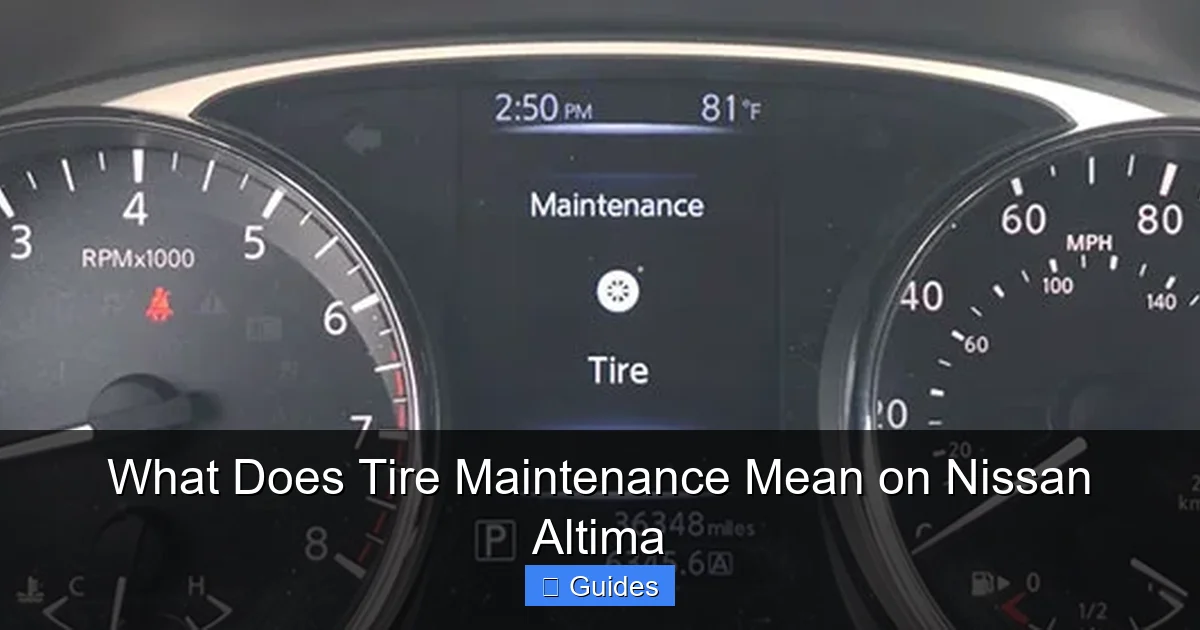
If there’s one tire maintenance task you should never skip, it’s checking your tire pressure. This simple step is the foundation of all other care routines and can make a huge difference in how your Altima performs.
Tire pressure refers to the amount of air inside your tires, measured in pounds per square inch (PSI). Every Nissan Altima has a recommended PSI level, which you can find on a sticker inside the driver’s side door jamb or in your owner’s manual. For most Altima models, the recommended pressure is between 32 and 35 PSI, but always double-check for your specific year and trim.
Why does this number matter so much? Because even a small drop in pressure can affect your car’s handling, braking, and fuel economy. For example, if your tires are 5 PSI below the recommended level, you could be losing up to 10% in fuel efficiency. Over time, that’s like paying for gas you’re not even using.
How to Check Tire Pressure on Your Altima
Checking tire pressure is easier than you might think. Here’s a step-by-step guide:
1. **Wait until the tires are cold.** This means your car hasn’t been driven for at least three hours. Driving heats up the tires, which increases pressure and gives a false reading.
2. **Remove the valve cap.** Unscrew the small cap on the tire’s valve stem. Keep it in a safe place so you don’t lose it.
3. **Use a tire pressure gauge.** Press the gauge firmly onto the valve stem. You’ll hear a slight hiss of air—that’s normal. The gauge will display the current PSI.
4. **Compare to the recommended level.** If the reading is below the recommended PSI, add air using an air compressor (available at most gas stations). If it’s too high, press the gauge’s center pin to release a small amount of air.
5. **Recheck and replace the cap.** Once the pressure is correct, screw the valve cap back on tightly.
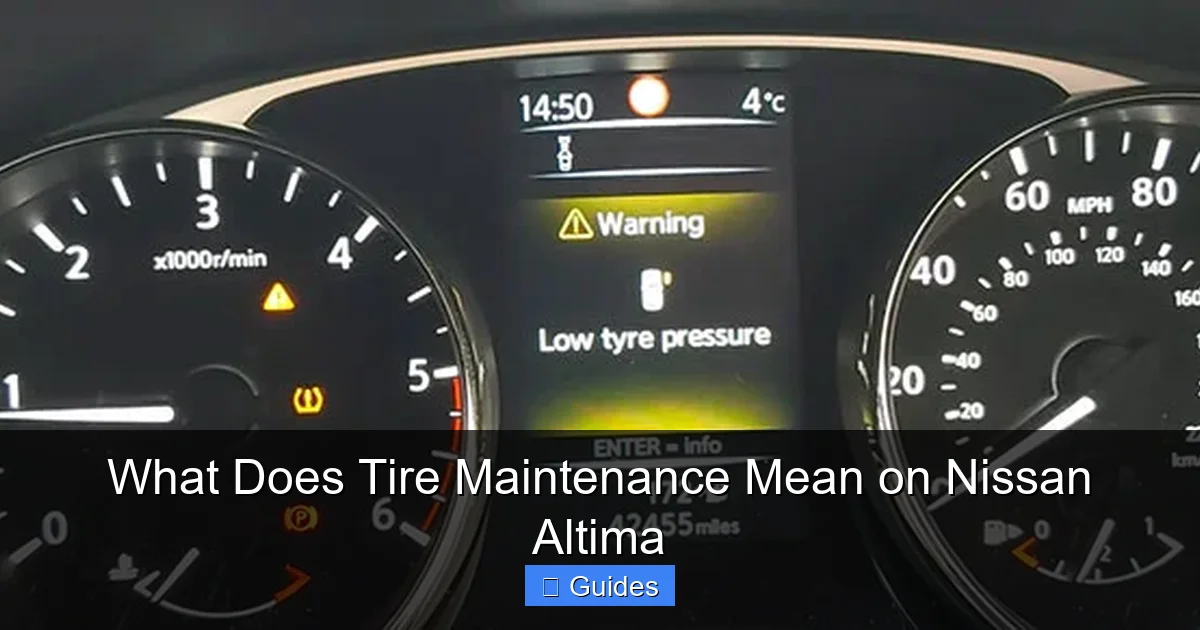
It’s best to check your tire pressure at least once a month and before long trips. Many modern Altimas come with a Tire Pressure Monitoring System (TPMS) that alerts you when pressure is low. While this is helpful, don’t rely on it alone—TPMS isn’t always accurate and may not catch gradual pressure loss.
Tips for Maintaining Proper Tire Pressure
– **Invest in a quality gauge.** Digital gauges are more accurate than the cheap ones at gas stations.
– **Check all four tires plus the spare.** Yes, even the spare! You never know when you’ll need it.
– **Adjust for temperature changes.** Tire pressure drops about 1 PSI for every 10°F drop in temperature. In winter, check more frequently.
– **Don’t overinflate.** More air isn’t better. Overinflated tires wear out faster in the center and can reduce traction.
By making tire pressure checks a monthly habit, you’ll keep your Altima running efficiently and safely.
Tire Rotation: Balancing Wear for Longer Life
Visual guide about What Does Tire Maintenance Mean on Nissan Altima
Image source: bryansgarage.com
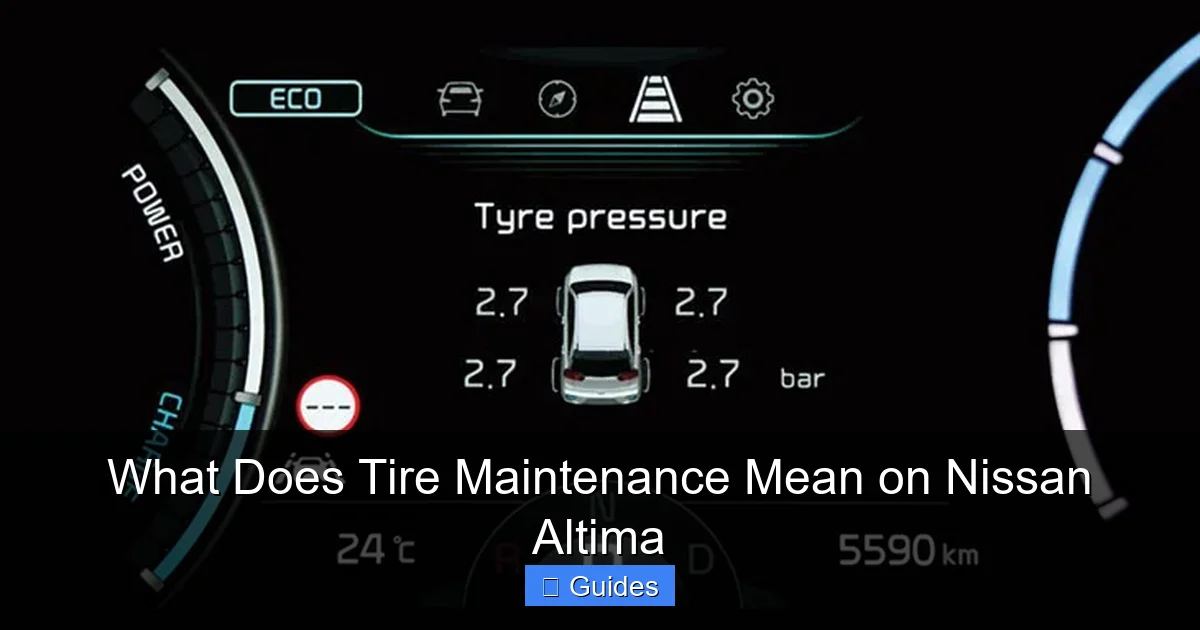
Even if your tires are perfectly inflated, they don’t wear evenly. Due to the Altima’s front-wheel-drive system, the front tires typically wear faster than the rear ones. This is because they handle steering, acceleration, and most of the braking force. Over time, this uneven wear can lead to poor handling, noise, and the need for early replacement.
That’s where tire rotation comes in. Tire rotation means moving each tire to a different position on the car—front to back, side to side, or a combination—to ensure even wear across all four tires.
How Often Should You Rotate Tires on a Nissan Altima?
Nissan recommends rotating your tires every 5,000 to 7,500 miles. This is usually aligned with your regular oil change schedule, making it easy to remember. However, if you drive in harsh conditions—like frequent stop-and-go traffic, rough roads, or extreme weather—you may need to rotate more often.
Tire Rotation Patterns for the Altima
The rotation pattern depends on whether your Altima has directional tires (which can only roll in one direction) and whether it’s front-wheel drive or all-wheel drive. Most Altimas are front-wheel drive, so here’s the standard pattern:
– **Front tires move straight to the rear.**
– **Rear tires cross to the front (left rear goes to right front, and right rear goes to left front).**
This “forward cross” pattern helps balance wear and is ideal for front-wheel-drive vehicles. If your Altima has directional tires (marked with an arrow on the sidewall), you’ll only rotate front to back on the same side.
Benefits of Regular Tire Rotation
– **Extends tire life.** Even wear means you get the full lifespan out of your tires.
– **Improves handling.** Balanced tires provide better grip and stability.
– **Reduces noise.** Worn tires can create a humming or thumping sound.
– **Saves money.** You won’t need to replace tires as often.
Many drivers skip rotation because it seems unnecessary—but it’s one of the best ways to protect your investment. Most tire shops and service centers offer rotation for $20–$50, and some include it in maintenance packages.
Wheel Alignment: Keeping Your Altima on Track
Visual guide about What Does Tire Maintenance Mean on Nissan Altima
Image source: bryansgarage.com
You might not think about wheel alignment until your car starts pulling to one side or your steering wheel feels off-center. But alignment is a critical part of tire maintenance that affects both safety and tire wear.
Wheel alignment refers to adjusting the angles of your wheels so they’re parallel to each other and perpendicular to the ground. When alignment is off, your tires don’t make full, even contact with the road. This leads to uneven wear, poor handling, and reduced fuel efficiency.
Signs Your Altima Needs an Alignment
– **Pulling to one side while driving.** Even when the steering wheel is straight, the car drifts left or right.
– **Uneven tire wear.** For example, the outer edges of the front tires are worn down more than the center.
– **Steering wheel is off-center.** When driving straight, the wheel isn’t pointing directly forward.
– **Vibration or shaking in the steering wheel.** This can indicate misalignment or imbalance.
Causes of Misalignment
Alignment can be thrown off by hitting potholes, curbs, or speed bumps at high speed. It can also happen gradually due to worn suspension components. Even normal driving over time can shift alignment slightly.
How Alignment Affects Tire Wear
Misaligned wheels cause specific wear patterns:
– **Toe misalignment** (wheels pointing inward or outward) causes feathering or saw-tooth wear.
– **Camber misalignment** (wheels tilted in or out) wears down the inner or outer edge.
– **Caster misalignment** affects steering stability but doesn’t directly wear tires.
These patterns not only shorten tire life but also reduce traction and increase the risk of hydroplaning.
Getting an Alignment Check
Most service centers offer free alignment checks. If adjustments are needed, a professional will use computerized equipment to measure and correct the angles. A full alignment typically costs $75–$150 and should be done every 10,000 miles or after hitting a major pothole.
Monitoring Tread Depth: Knowing When to Replace Tires
Tread depth is the thickness of the rubber grooves on your tire’s surface. These grooves channel water away from the tire, preventing hydroplaning and maintaining grip. As tires wear down, the tread gets shallower, reducing traction—especially in rain or snow.
How to Check Tread Depth
There are two easy ways to check tread depth:
1. **The Penny Test.** Insert a penny into the tread groove with Lincoln’s head upside down. If you can see the top of Lincoln’s head, your tread is too shallow (less than 2/32 of an inch) and it’s time to replace the tire.
2. **Tread Wear Indicators.** Most tires have built-in bars across the grooves. When the tread wears down to the level of these bars, it’s time for new tires.
Recommended Tread Depth
– **Minimum legal limit:** 2/32 of an inch (about 1.6 mm).
– **Recommended safe level:** 4/32 of an inch or more, especially for wet or winter driving.
Driving on bald tires is dangerous and can result in fines in some states. It also increases stopping distance and the risk of blowouts.
Seasonal Considerations
In colder climates, consider switching to winter tires when temperatures drop below 45°F. Winter tires have deeper tread and softer rubber compounds that stay flexible in cold weather, providing better grip on snow and ice. All-season tires, while convenient, aren’t optimized for extreme conditions.
Inspecting for Damage: Spotting Problems Early
Even with perfect pressure, rotation, and alignment, tires can still suffer damage from road hazards, aging, or manufacturing defects. Regular visual inspections can help you catch problems before they become serious.
What to Look For
– **Cuts or punctures.** Small nails or glass can cause slow leaks.
– **Bulges or blisters.** These indicate internal damage and can lead to blowouts.
– **Cracks in the sidewall.** Often caused by aging or UV exposure.
– **Uneven wear patterns.** Could signal alignment, inflation, or suspension issues.
How Often to Inspect
Make it a habit to visually inspect your tires every time you fill up gas or wash your car. Look at all four sides of each tire and feel for any abnormalities.
When to See a Professional
If you notice any damage, take your Altima to a tire shop immediately. Some issues, like small punctures, can be repaired. Others, like bulges or deep cracks, require tire replacement.
Choosing the Right Tires for Your Nissan Altima
Not all tires are created equal. Using the wrong size or type can affect performance, safety, and even your car’s warranty. Always refer to your owner’s manual or the tire information sticker on the driver’s door for the correct specifications.
Tire Size and Type
Common tire sizes for the Altima include 215/55R17, 235/45R18, and 245/40R19, depending on the model year and trim. Stick to the manufacturer’s recommendations unless you’re upgrading with professional guidance.
All-Season vs. Performance vs. Winter Tires
– **All-season tires** are the most common and work well in most climates.
– **Performance tires** offer better handling and grip but wear faster.
– **Winter tires** are essential for snowy or icy regions.
Brand and Quality
Choose reputable brands like Michelin, Bridgestone, Goodyear, or Continental. While budget tires may seem tempting, they often wear faster and provide less traction.
Conclusion
Tire maintenance on a Nissan Altima isn’t complicated, but it’s essential. By checking pressure monthly, rotating tires regularly, aligning wheels, monitoring tread, inspecting for damage, and choosing the right tires, you’ll keep your Altima safe, efficient, and reliable for years to come.
These small efforts add up to big savings—both in fuel and replacement costs—and give you peace of mind every time you hit the road. Remember, your tires are your car’s only connection to the pavement. Treat them well, and they’ll take care of you.
Frequently Asked Questions
How often should I check tire pressure on my Nissan Altima?
You should check tire pressure at least once a month and before long trips. Cold tires (not driven for 3+ hours) give the most accurate reading.
Can I rotate my own tires at home?
Yes, with the right tools and jack stands, you can rotate tires at home. However, if you’re unsure, it’s safer to have a professional do it.
What happens if I don’t rotate my tires?
Without rotation, front tires wear out faster than rear ones, leading to uneven tread, poor handling, and the need for early replacement.
How do I know if my Altima needs an alignment?
Signs include pulling to one side, uneven tire wear, or an off-center steering wheel. A professional alignment check can confirm the issue.
Is it safe to drive with low tread depth?
No. Tread below 2/32 of an inch reduces traction, increases stopping distance, and raises the risk of hydroplaning and blowouts.
Do I need winter tires for my Nissan Altima?
If you live in an area with snow, ice, or temperatures below 45°F, winter tires provide significantly better grip and safety than all-season tires.

At CarLegit, we believe information should be clear, factual, and genuinely helpful. That’s why every guide, review, and update on our website is created with care, research, and a strong focus on user experience.