
DCA stands for “Driver Assistance” on a Nissan Armada, a suite of advanced safety technologies designed to help you stay alert and in control. It includes features like blind-spot monitoring, lane departure warnings, and emergency braking to enhance safety on the road.
In This Article
- 1 Key Takeaways
- 2 📑 Table of Contents
- 3 What Does DCA Mean on a Nissan Armada?
- 4 Breaking Down the DCA System: What’s Included?
- 5 How Does DCA Work in Real-World Driving?
- 6 Can You Customize or Turn Off DCA Features?
- 7 Is DCA the Same as Autopilot or Self-Driving?
- 8 Which Nissan Armada Models Include DCA?
- 9 Tips for Getting the Most Out of DCA
- 10 Conclusion: DCA Makes Driving Safer and Easier
- 11 Frequently Asked Questions
Key Takeaways
- DCA stands for Driver Assistance: It’s not a single feature but a collection of smart safety systems working together to support the driver.
- Includes multiple safety technologies: DCA covers blind-spot monitoring, rear cross-traffic alert, forward collision warning, and more.
- Enhances driving safety: These systems help prevent accidents by alerting you to potential hazards before they become dangerous.
- Works automatically: Most DCA features operate in the background without needing driver input, using sensors and cameras.
- Can be customized: Some DCA settings can be adjusted or turned off through the vehicle’s infotainment system or dashboard menu.
- Not a substitute for attentive driving: While helpful, DCA systems are designed to assist—not replace—an alert and responsible driver.
- Common on newer Armada models: DCA is standard or available on most recent Nissan Armada trims, especially SL and Platinum.
📑 Table of Contents
- What Does DCA Mean on a Nissan Armada?
- Breaking Down the DCA System: What’s Included?
- How Does DCA Work in Real-World Driving?
- Can You Customize or Turn Off DCA Features?
- Is DCA the Same as Autopilot or Self-Driving?
- Which Nissan Armada Models Include DCA?
- Tips for Getting the Most Out of DCA
- Conclusion: DCA Makes Driving Safer and Easier
What Does DCA Mean on a Nissan Armada?
If you’ve ever glanced at your Nissan Armada’s dashboard or infotainment screen and seen the acronym “DCA,” you might have wondered what it stands for—and more importantly, what it does. You’re not alone. Many drivers, especially those new to modern SUVs, find themselves puzzled by the array of acronyms and symbols that populate today’s vehicles. But don’t worry—DCA isn’t some mysterious code or hidden diagnostic mode. In fact, it’s one of the most helpful and forward-thinking features your Armada has to offer.
DCA stands for **Driver Assistance**, and it represents a suite of advanced safety and convenience technologies built into your vehicle. Think of it as your co-pilot—quietly watching the road, monitoring your surroundings, and stepping in when needed to help prevent accidents or reduce driver fatigue. Whether you’re cruising down the highway or backing out of a busy parking lot, DCA is working behind the scenes to keep you and your passengers safe.
But here’s the thing: DCA isn’t just one single feature. It’s an umbrella term that covers several individual systems, each designed to address a different aspect of driving safety. From detecting vehicles in your blind spot to warning you if you’re drifting out of your lane, DCA brings together a powerful combination of sensors, cameras, and intelligent software to support your driving. And the best part? Most of these systems operate automatically, so you don’t have to remember to turn them on or adjust settings every time you get behind the wheel.
Breaking Down the DCA System: What’s Included?
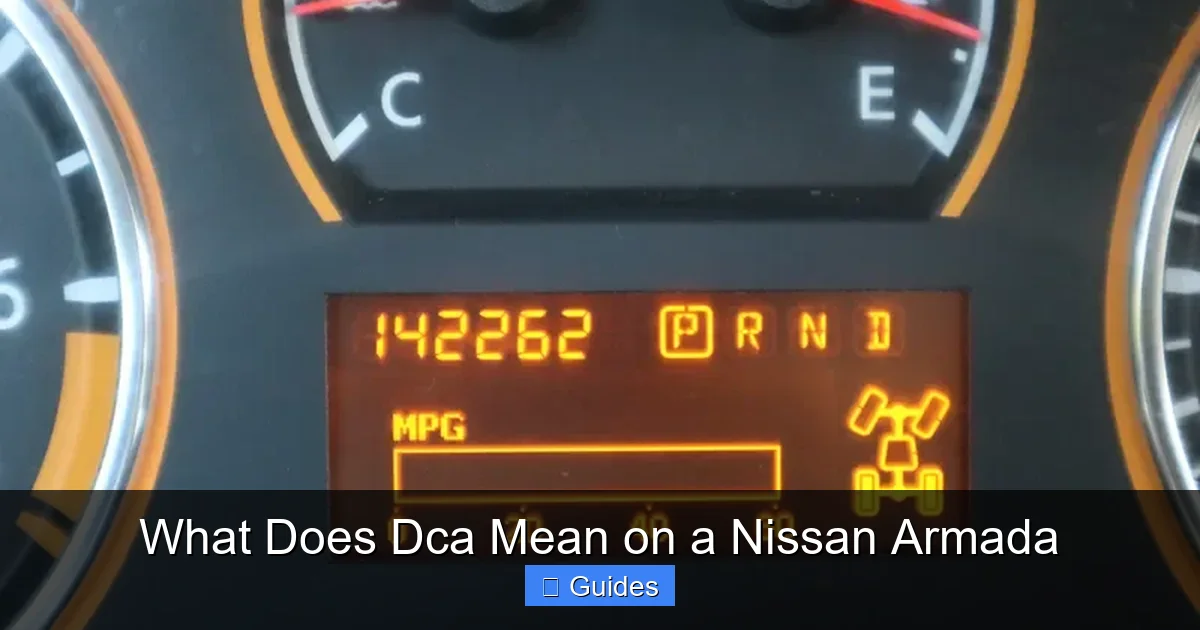
Visual guide about What Does Dca Mean on a Nissan Armada
Image source: cdn.dealrimages.com
Now that you know DCA stands for Driver Assistance, let’s dive deeper into what that actually means in practice. The DCA system on the Nissan Armada includes a range of technologies, each with its own specific function. While the exact features may vary slightly depending on your model year and trim level, most modern Armadas come equipped with a robust set of driver assistance tools.
Blind Spot Monitoring (BSM)
One of the most common and useful components of DCA is Blind Spot Monitoring. This system uses radar sensors mounted on the rear bumper to detect vehicles that are in your blind spot—those areas alongside and slightly behind your vehicle that aren’t visible in your mirrors. When another vehicle enters your blind spot, a small warning light typically appears on your side mirror. If you signal to change lanes while a vehicle is detected, the system may flash the light or even emit an audible alert to warn you.
For example, imagine you’re driving on the highway and want to merge into the left lane. You check your mirrors, but a fast-moving car is tucked just out of view. Without BSM, you might not see it—but with DCA, your Armada will alert you before you make the move. This simple feature can prevent side-swipe accidents and give you greater confidence when changing lanes.
Rear Cross-Traffic Alert (RCTA)
Another key part of DCA is Rear Cross-Traffic Alert. This system is especially helpful when you’re backing out of parking spaces, driveways, or tight spots where visibility is limited. Using the same rear-mounted sensors as BSM, RCTA scans the area behind and to the sides of your vehicle as you reverse. If it detects a car, cyclist, or even a pedestrian approaching from either side, it will warn you with visual and audible alerts.
Let’s say you’re backing out of a grocery store parking spot. A delivery truck is pulling up on your left, and you can’t see it from your rearview mirror. With RCTA, your Armada will beep and flash a warning on the dashboard or infotainment screen, giving you time to stop before a collision occurs. This feature is a game-changer for urban driving and busy shopping centers.
Forward Collision Warning (FCW) and Automatic Emergency Braking (AEB)
Safety isn’t just about what’s beside or behind you—it’s also about what’s in front. That’s where Forward Collision Warning and Automatic Emergency Braking come in. These systems use a forward-facing camera and radar to monitor the distance between your Armada and the vehicle ahead. If the system detects that you’re approaching too quickly and a collision is imminent, it will first issue a visual and audible warning.
If you don’t respond in time, AEB can automatically apply the brakes to reduce your speed or even bring the vehicle to a complete stop. This can be the difference between a minor fender bender and a serious accident. For instance, if the car in front of you suddenly brakes on the highway, your Armada’s DCA system can react faster than a human, potentially avoiding a rear-end collision altogether.
Lane Departure Warning (LDW) and Lane Keeping Assist (LKA)
Drifting out of your lane is a common cause of accidents, especially on long drives or when you’re distracted. The DCA system includes Lane Departure Warning and Lane Keeping Assist to help prevent this. LDW uses a camera to track lane markings on the road. If your vehicle begins to drift out of its lane without signaling, the system will alert you with a chime or vibration in the steering wheel.
Some Armada models also include Lane Keeping Assist, which goes a step further by gently steering the vehicle back into the lane if you don’t respond to the warning. This is particularly useful on highways or during nighttime driving when fatigue might set in. It’s like having a gentle hand on the wheel, guiding you back to safety.
Intelligent Cruise Control (ICC)
While not always grouped under DCA, Intelligent Cruise Control is closely related and often works in tandem with other driver assistance features. ICC uses radar to maintain a set distance from the vehicle ahead, automatically adjusting your speed as traffic slows or speeds up. This reduces the need to constantly press the accelerator or brake, making long drives more comfortable and less tiring.
For example, on a road trip, you can set your desired speed and following distance. If the car in front slows down, your Armada will slow down too—without you having to touch the pedals. When traffic clears, it will accelerate back to your set speed. This feature not only improves comfort but also helps maintain safe following distances, reducing the risk of rear-end collisions.
How Does DCA Work in Real-World Driving?
Visual guide about What Does Dca Mean on a Nissan Armada
Image source: d2ivfcfbdvj3sm.cloudfront.net
Now that we’ve covered the individual components of DCA, you might be wondering: how does it all come together in everyday driving? The beauty of the DCA system is that it’s designed to be seamless and intuitive. Most of the time, you won’t even notice it’s there—until it’s needed.
Let’s walk through a typical driving scenario to see DCA in action. Imagine you’re driving your Nissan Armada on a busy city street during rush hour. Traffic is stop-and-go, and you’re navigating through intersections, changing lanes, and watching for pedestrians. Here’s how DCA supports you:
– As you approach a red light, Forward Collision Warning monitors the car ahead. If it brakes suddenly, your Armada alerts you with a beep and a flashing icon on the dashboard.
– When you signal to change lanes, Blind Spot Monitoring checks for vehicles in your blind spot. If one is detected, a warning light appears on your mirror.
– At an intersection, you need to make a left turn across oncoming traffic. Intelligent Cruise Control helps you maintain a safe speed, while Lane Departure Warning ensures you stay in your lane.
– Later, you pull into a parking garage and back into a tight space. Rear Cross-Traffic Alert scans for approaching vehicles, warning you if someone is driving down the aisle behind you.
In each of these situations, DCA is quietly doing its job—monitoring, alerting, and sometimes even intervening—to keep you safe. It’s not about taking control away from you; it’s about giving you extra awareness and support when you need it most.
Can You Customize or Turn Off DCA Features?
Visual guide about What Does Dca Mean on a Nissan Armada
Image source: cdn.globalcarsbrands.com
One question many Armada owners have is whether they can adjust or disable DCA features. The answer is yes—but with some important caveats.
Most DCA systems allow you to customize certain settings through the vehicle’s infotainment screen or dashboard menu. For example, you might be able to:
– Adjust the sensitivity of Forward Collision Warning
– Turn off Lane Departure Warning if you find the alerts distracting
– Change the volume or type of audible alerts
– Disable Rear Cross-Traffic Alert in certain driving conditions
However, it’s important to remember that these systems are designed for safety. Disabling them—especially in high-risk situations like highway driving or bad weather—can increase your chances of an accident. That said, some drivers may prefer to turn off certain features temporarily, such as when driving off-road or in heavy snow where lane markings are obscured.
To access DCA settings, look for the “Settings” or “Driver Assistance” menu on your Armada’s touchscreen. From there, you can explore options for each feature. Some models also allow you to create custom profiles, so you can save your preferred settings and switch between them easily.
Is DCA the Same as Autopilot or Self-Driving?
A common misconception is that DCA means your Nissan Armada can drive itself. But that’s not the case. DCA is a **driver assistance** system, not an autonomous driving system. It’s designed to support you, not replace you.
Unlike Tesla’s Autopilot or GM’s Super Cruise, the DCA system on the Armada does not allow hands-free driving or fully automated navigation. It won’t steer, accelerate, and brake on its own for extended periods. Instead, it provides alerts and minor interventions to help you stay safe.
For example, if Lane Keeping Assist gently steers you back into your lane, it’s only doing so after you’ve drifted unintentionally. It’s not planning your route or making decisions for you. The driver remains fully in control at all times.
This distinction is important. While DCA can make driving easier and safer, it’s not a substitute for attentive, responsible driving. You still need to keep your hands on the wheel, eyes on the road, and mind focused on the task at hand.
Which Nissan Armada Models Include DCA?
If you’re shopping for a Nissan Armada or considering an upgrade, you’ll be happy to know that DCA is widely available across the lineup. However, the exact features and availability depend on the model year and trim level.
In recent years (2020 and newer), DCA has become standard on higher trims like the SL and Platinum. These models typically include the full suite of driver assistance features, such as:
– Blind Spot Monitoring
– Rear Cross-Traffic Alert
– Forward Collision Warning with Automatic Emergency Braking
– Lane Departure Warning
– Intelligent Cruise Control
Lower trims, such as the SV, may offer DCA as part of an optional package or with certain upgrades. It’s always a good idea to check the specific features of the vehicle you’re interested in, either through the Nissan website or by consulting a dealership.
Older Armada models (pre-2020) may have fewer DCA features or use different terminology. For example, some earlier versions included “Safety Shield” technologies, which were the predecessors to today’s DCA system. While not as advanced, these still provided valuable safety benefits.
Tips for Getting the Most Out of DCA
To make the most of your Armada’s DCA system, here are a few practical tips:
– **Keep sensors clean:** The cameras and radar sensors that power DCA need to be unobstructed. Regularly clean your windshield, side mirrors, and bumpers to ensure they can detect vehicles and lane markings accurately.
– **Understand the alerts:** Familiarize yourself with the different warning sounds and icons. Knowing what each alert means will help you respond quickly and appropriately.
– **Don’t rely on it completely:** DCA is a helpful tool, but it’s not perfect. Always perform shoulder checks when changing lanes and stay alert to your surroundings.
– **Update your system:** If your Armada has over-the-air update capabilities, make sure your software is up to date. This ensures you have the latest improvements and bug fixes for your DCA features.
– **Use it in the right conditions:** DCA works best in clear weather and well-marked roads. In heavy rain, snow, or fog, its effectiveness may be reduced.
Conclusion: DCA Makes Driving Safer and Easier
So, what does DCA mean on a Nissan Armada? In short, it stands for **Driver Assistance**—a powerful collection of safety technologies designed to help you drive more safely and confidently. From detecting vehicles in your blind spot to warning you of potential collisions, DCA is like having a second set of eyes on the road.
While it’s not a self-driving system, DCA provides invaluable support in everyday driving situations. Whether you’re navigating city traffic, cruising on the highway, or backing into a tight parking spot, these features work together to reduce risk and enhance your overall driving experience.
As automotive technology continues to evolve, systems like DCA are becoming standard in more vehicles. And for good reason—they save lives, prevent accidents, and give drivers peace of mind. So the next time you see “DCA” on your Armada’s dashboard, remember: it’s not just an acronym. It’s your partner in safety.
Frequently Asked Questions
What does DCA stand for on a Nissan Armada?
DCA stands for “Driver Assistance.” It refers to a suite of advanced safety features designed to help drivers stay alert and avoid accidents. These include blind-spot monitoring, lane departure warnings, and emergency braking.
Is DCA the same as autopilot?
No, DCA is not autopilot. It’s a driver assistance system that supports the driver with alerts and minor interventions, but it does not allow hands-free or fully automated driving.
Can I turn off DCA features on my Armada?
Yes, most DCA features can be customized or turned off through the vehicle’s settings menu. However, it’s recommended to keep them active for safety, especially in high-risk driving conditions.
Does every Nissan Armada have DCA?
DCA is standard on higher trims like the SL and Platinum in recent model years. Lower trims may offer it as an option or with certain packages. Check your specific model for details.
How does DCA help prevent accidents?
DCA uses sensors and cameras to monitor your surroundings and alert you to potential hazards, such as vehicles in your blind spot or an impending collision. Some systems can even apply brakes automatically.
Do I still need to drive carefully if my Armada has DCA?
Absolutely. DCA is designed to assist, not replace, an attentive driver. You should always stay focused, check mirrors manually, and follow safe driving practices.

At CarLegit, we believe information should be clear, factual, and genuinely helpful. That’s why every guide, review, and update on our website is created with care, research, and a strong focus on user experience.