
The Nissan Armada holds 26 gallons of fuel, giving it an impressive driving range ideal for long trips and heavy-duty use. With proper maintenance and smart driving habits, you can maximize every mile on a single tank.
If you’re considering buying a Nissan Armada—or you already own one—you’ve probably wondered: *How many gallons does a Nissan Armada hold?* It’s a smart question, especially if you’re planning long road trips, towing a trailer, or just want to know how often you’ll be stopping at the pump. The good news? The Nissan Armada is built for big adventures, and its fuel capacity reflects that.
The Nissan Armada is a full-size SUV that’s been turning heads since its debut. Known for its bold styling, powerful V8 engine, and spacious three-row seating, it’s a favorite among families, outdoor enthusiasts, and anyone who needs serious hauling power. But beyond the muscle and the roominess, one of the most practical features is its fuel tank. With a generous 26-gallon capacity, the Armada is designed to go the distance—literally.
Whether you’re driving across state lines, heading to a national park, or simply commuting daily with a full crew, knowing your vehicle’s fuel capacity helps you plan better. It affects everything from how often you refuel to how much you spend on gas each month. In this guide, we’ll dive deep into the fuel specs of the Nissan Armada, explore real-world driving range, discuss factors that affect fuel economy, and share tips to get the most out of every gallon. Let’s fill up your knowledge—and your tank.
In This Article
- 1 Key Takeaways
- 2 📑 Table of Contents
- 3 Fuel Tank Capacity of the Nissan Armada
- 4 Real-World Driving Range: How Far Can You Go?
- 5 Fuel Type and Octane Requirements
- 6 Fuel Efficiency Tips for the Nissan Armada
- 7 Towing and Fuel Economy: What to Expect
- 8 Comparing the Armada to Competitors
- 9 Long-Term Ownership and Fuel Costs
- 10 Conclusion
- 11 Frequently Asked Questions
- 11.1 How many gallons does a Nissan Armada hold?
- 11.2 Can I use regular gas in a Nissan Armada?
- 11.3 How far can a Nissan Armada go on a full tank?
- 11.4 Does towing reduce fuel economy in the Armada?
- 11.5 What affects the fuel efficiency of a Nissan Armada?
- 11.6 Is the Armada’s fuel tank the same on all trims?
Key Takeaways
- Fuel Tank Capacity: The Nissan Armada has a 26-gallon fuel tank across all recent model years, providing ample range for highway and city driving.
- Real-World Range: Depending on driving conditions, the Armada can travel between 400 and 520 miles on a full tank, making it great for road trips.
- Fuel Efficiency: Expect around 13–15 mpg in the city and 18–20 mpg on the highway, influenced by driving style, terrain, and load.
- Fuel Type: The Armada requires premium unleaded gasoline (91 octane or higher) for optimal performance and engine longevity.
- Maintenance Matters: Regular oil changes, tire rotations, and air filter replacements help maintain fuel efficiency and extend range.
- Towing Impact: Towing heavy loads can reduce fuel economy by up to 30%, so plan fuel stops accordingly when hauling trailers or boats.
- Eco-Driving Tips: Smooth acceleration, steady speeds, and using cruise control on highways can significantly improve miles per gallon.
📑 Table of Contents
Fuel Tank Capacity of the Nissan Armada
When it comes to fuel capacity, the Nissan Armada doesn’t cut corners. Across all recent model years—from 2017 to the current 2024 lineup—the Armada comes equipped with a **26-gallon fuel tank**. This consistent capacity is one of the reasons the SUV stands out in its class. Whether you’re driving a 2017 model or the latest 2024 edition, you can count on that same generous tank size.
Why 26 gallons? It’s a sweet spot for full-size SUVs. It’s large enough to support long-distance travel without constant refueling, yet not so massive that it adds unnecessary weight or cost. For comparison, some competitors like the Chevrolet Tahoe and Ford Expedition also hover around the 26- to 28-gallon range, so the Armada holds its own in the fuel capacity game.
This 26-gallon tank is standard across all trims—whether you go for the base S, the mid-level SV, the luxurious SL, or the top-tier Platinum. There are no variations based on trim level or drivetrain (the Armada is rear-wheel drive standard, with four-wheel drive available). So no matter which version you choose, you’re getting the same fuel-holding power.
It’s also worth noting that the fuel tank is made from durable materials designed to withstand harsh conditions, including extreme temperatures and off-road use. This is important for Armada owners who take their SUVs beyond paved roads—whether it’s a weekend camping trip or a rugged mountain trail.
Why Fuel Tank Size Matters
You might be thinking, “It’s just a number—why does it matter?” But fuel tank size directly impacts your driving experience. A larger tank means fewer stops at the gas station, which is a big deal on long drives. Imagine driving from Los Angeles to Las Vegas—a trip of about 270 miles. With a 26-gallon tank and decent fuel economy, you could make the round trip without refueling. That’s convenience and peace of mind.
Also, a bigger tank gives you more flexibility. If you’re traveling through remote areas with sparse gas stations—like parts of Montana or Wyoming—having extra fuel on board can be a lifesaver. It reduces range anxiety and lets you focus on the journey, not the next pump.
Fuel Tank Location and Design
The fuel tank on the Nissan Armada is strategically located under the vehicle, between the rear axles. This placement helps with weight distribution and protects the tank from road debris. It’s also designed with safety in mind, featuring reinforced materials and shielding to prevent damage in the event of a collision or off-road scrape.
The fuel filler neck is located on the driver’s side rear quarter panel, making it easy to access at most gas stations. The cap is tethered, so you won’t lose it while refueling—a small but thoughtful detail.
Real-World Driving Range: How Far Can You Go?
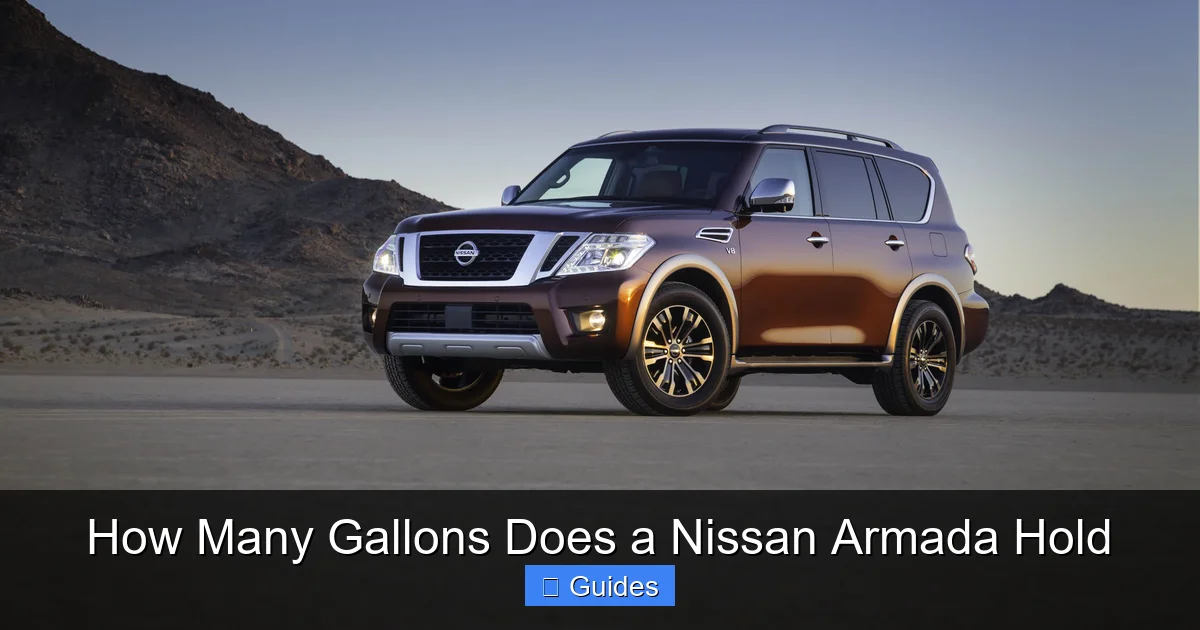
Visual guide about How Many Gallons Does a Nissan Armada Hold
Image source: i.imgur.com
Now that we know the Armada holds 26 gallons, the next question is: *How far can it actually go on a full tank?* The answer depends on several factors, including driving conditions, terrain, load, and your driving habits. But let’s break it down with real-world estimates.
On average, the Nissan Armada gets between **13 and 15 miles per gallon (mpg) in the city** and **18 to 20 mpg on the highway**, according to EPA estimates and owner reports. These numbers can vary slightly depending on the model year and whether you’re driving a 2WD or 4WD version.
Let’s do the math. If you’re getting 14 mpg in the city, a full 26-gallon tank gives you:
26 gallons × 14 mpg = **364 miles**
On the highway, with 19 mpg:
26 gallons × 19 mpg = **494 miles**
So, in real-world terms, you can expect a driving range of **approximately 400 to 520 miles** on a single tank, depending on your mix of city and highway driving.
City vs. Highway Driving
City driving tends to be less efficient due to frequent stops, idling, and lower average speeds. The Armada’s large size and V8 engine mean it uses more fuel in stop-and-go traffic. But even in the city, 13–15 mpg is respectable for a vehicle this size.
Highway driving is where the Armada shines. With steady speeds and fewer stops, the engine operates more efficiently. Cruise control helps maintain a consistent speed, which improves fuel economy. On long road trips, many owners report hitting 19–20 mpg without much effort.
Factors That Affect Range
Several variables can influence how far your Armada can go on a tank of gas:
– **Driving Style:** Aggressive acceleration and hard braking reduce fuel efficiency. Smooth, gradual inputs help you go farther.
– **Load and Cargo:** The more weight you carry, the harder the engine works. Packing light can improve your range.
– **Towing:** This is a big one. If you’re towing a trailer, boat, or camper, fuel economy can drop by 20–30%. For example, towing a 6,000-pound trailer might reduce your highway mpg from 19 to 13 or lower.
– **Weather:** Cold weather can reduce fuel efficiency by up to 10–20%, especially during short trips when the engine doesn’t reach optimal temperature.
– **Tire Pressure:** Underinflated tires increase rolling resistance, which burns more fuel. Check your tire pressure monthly.
Real-Life Example: A Family Road Trip
Let’s say you’re driving from Denver, Colorado, to Moab, Utah—a scenic 350-mile trip through mountain passes and desert highways. With a full tank and highway driving, your Armada should easily make the trip without stopping for gas. Even with some elevation changes and winding roads, you’ll likely have fuel to spare.
But if you’re towing a small camper, you might want to plan a fuel stop halfway. That’s the reality of full-size SUVs: they’re powerful, but they do consume more fuel under load.
Fuel Type and Octane Requirements
Visual guide about How Many Gallons Does a Nissan Armada Hold
Image source: vroom.zone
Another important aspect of fueling your Nissan Armada is the type of gasoline it requires. The Armada is designed to run on **premium unleaded gasoline with an octane rating of 91 or higher**. This isn’t just a suggestion—it’s a requirement for optimal performance.
Why Premium Gas?
The Armada is powered by a 5.6-liter V8 engine that produces up to 400 horsepower and 413 lb-ft of torque. This high-output engine uses advanced technologies like direct fuel injection and variable valve timing, which are optimized for higher-octane fuel.
Premium gasoline resists “knocking” or “pinging” under high compression, which can damage the engine over time. Using lower-octane fuel (like regular 87-octane) may cause the engine to reduce power or trigger the check engine light. In extreme cases, it can lead to long-term engine damage.
Can You Use Regular Gas?
Technically, the Armada can run on regular gasoline in a pinch—especially if you’re not towing or driving aggressively. The engine control unit (ECU) will adjust timing to prevent knocking. But this comes at a cost: reduced performance, lower fuel efficiency, and potential long-term wear.
Nissan explicitly states in the owner’s manual that using fuel with less than 91 octane may void your warranty if engine damage occurs. So while it’s possible, it’s not recommended.
Cost Considerations
Premium gas is more expensive than regular—typically 20 to 40 cents more per gallon. Over time, this adds up. For example, if you drive 15,000 miles per year and get 16 mpg, you’ll use about 937 gallons annually. At a 30-cent premium, that’s an extra $281 per year.
But consider the trade-off: better performance, smoother operation, and protection for your engine. For many owners, the added cost is worth it for the peace of mind and longevity of their vehicle.
Fuel Efficiency Tips for the Nissan Armada
Visual guide about How Many Gallons Does a Nissan Armada Hold
Image source: i.imgur.com
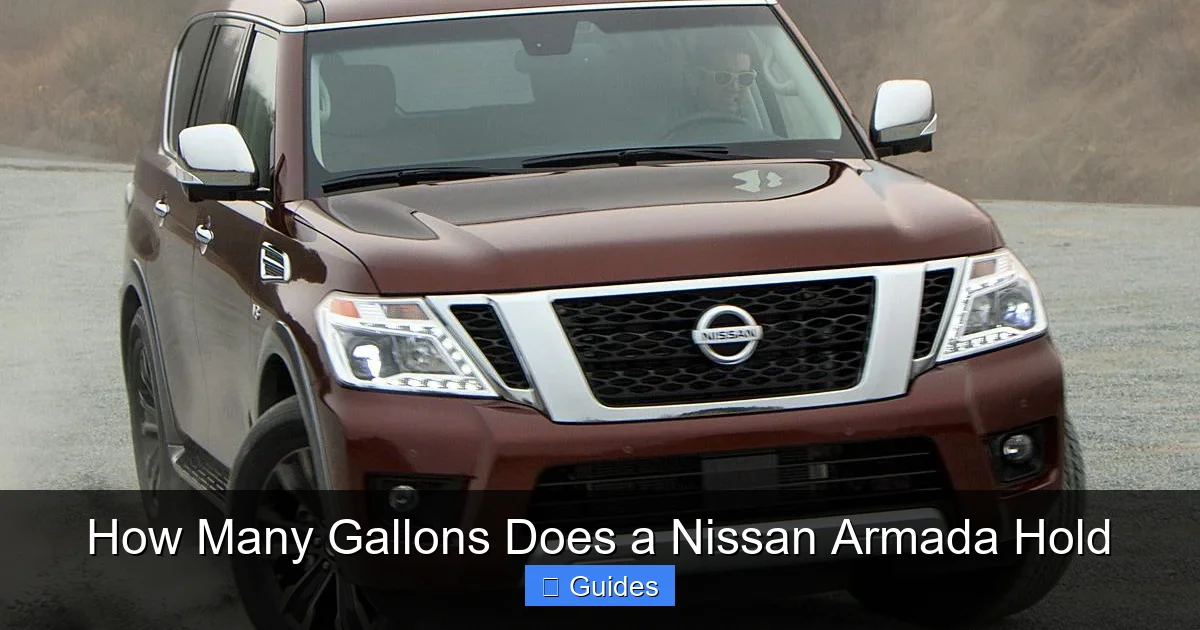
Even with a large fuel tank, it pays to maximize your miles per gallon. Here are some practical tips to help you get the most out of every gallon in your Armada.
Drive Smoothly
Aggressive driving—like rapid acceleration and hard braking—can lower your fuel economy by 15–30% in city driving. Instead, accelerate gradually and anticipate stops. This not only saves fuel but also reduces wear on your brakes and tires.
Use Cruise Control on Highways
Cruise control helps maintain a steady speed, which improves fuel efficiency on long, flat highways. Just be sure to turn it off in hilly terrain or heavy traffic, where frequent speed changes are needed.
Reduce Weight and Drag
Remove unnecessary items from your cargo area. Every extra 100 pounds can reduce fuel economy by 1–2%. Also, avoid roof racks or cargo boxes when not in use—they increase aerodynamic drag, especially at highway speeds.
Keep Up with Maintenance
A well-maintained Armada runs more efficiently. Stick to the recommended service schedule:
– Change the engine oil and filter every 5,000–7,500 miles (or as specified).
– Replace the air filter every 15,000–30,000 miles.
– Rotate tires every 7,500 miles to ensure even wear.
– Check tire pressure monthly—underinflated tires hurt fuel economy.
Use the Right Oil
Nissan recommends using synthetic oil that meets their specifications (like 5W-30). Synthetic oil reduces engine friction and improves efficiency, especially in extreme temperatures.
Avoid Excessive Idling
Idling burns fuel without moving the vehicle. If you’re stopped for more than 30 seconds (except in traffic), turn off the engine. Modern engines use less fuel to restart than they do to idle for long periods.
Plan Your Trips
Combine errands into one trip instead of making multiple short drives. A cold engine uses more fuel, so fewer cold starts mean better efficiency.
Towing and Fuel Economy: What to Expect
The Nissan Armada is a capable towing machine, with a maximum towing capacity of **8,500 pounds** when properly equipped. But towing heavy loads has a significant impact on fuel economy.
How Towing Affects Fuel Use
When you tow, your engine works harder to overcome the added weight and aerodynamic drag. This increases fuel consumption. On average, towing can reduce your fuel economy by **20–30%**, depending on the load and terrain.
For example, if your Armada normally gets 19 mpg on the highway, towing a 6,000-pound trailer might drop that to 13–15 mpg. In the city, the drop could be even more pronounced.
Tips for Efficient Towing
– **Distribute Weight Properly:** Load the trailer so about 10–15% of the weight is on the tongue. This improves stability and reduces strain on the vehicle.
– **Use a Weight Distribution Hitch:** This helps balance the load and improves handling.
– **Avoid Overloading:** Stay within the Armada’s towing limits. Overloading can damage the transmission and reduce safety.
– **Drive Slower:** Towing at 55–60 mph instead of 70 mph can significantly improve fuel economy.
– **Plan Fuel Stops:** When towing long distances, map out gas stations in advance. You’ll need to refuel more often.
Real-World Towing Example
Imagine you’re towing a 7,000-pound travel trailer from Phoenix to Flagstaff—a 120-mile trip with mountain grades. With a full tank, you might only get 12 mpg under load. That means you’ll use about 10 gallons for the trip, leaving you with plenty of fuel. But on a longer journey, like from Dallas to Denver (800 miles), you’ll need to refuel at least once, possibly twice.
Comparing the Armada to Competitors
How does the Nissan Armada stack up against other full-size SUVs in terms of fuel capacity and efficiency? Let’s take a quick look.
| SUV Model | Fuel Tank Size | City MPG | Highway MPG | Max Towing |
|——————-|—————|———-|————-|————|
| Nissan Armada | 26 gallons | 13–15 | 18–20 | 8,500 lbs |
| Chevrolet Tahoe | 24–28 gallons | 14–16 | 19–21 | 8,400 lbs |
| Ford Expedition | 27–28 gallons | 17–19 | 23–25 | 9,300 lbs |
| Toyota Sequoia | 26 gallons | 13–15 | 17–19 | 9,500 lbs |
As you can see, the Armada holds its own in fuel capacity, matching or exceeding most rivals. However, its fuel efficiency lags slightly behind the Ford Expedition, which benefits from a more advanced turbocharged V6 engine.
That said, the Armada’s V8 engine delivers smooth, consistent power and a classic engine note that many drivers prefer. It’s a trade-off: slightly lower efficiency for more traditional performance.
Long-Term Ownership and Fuel Costs
Owning a large SUV like the Armada comes with higher fuel costs. But with smart habits, you can keep expenses manageable.
Annual Fuel Cost Estimate
Let’s assume you drive 15,000 miles per year and average 16 mpg combined. At $3.50 per gallon (premium), your annual fuel cost would be:
15,000 miles ÷ 16 mpg = 937.5 gallons
937.5 × $3.50 = **$3,281 per year**
That’s about $273 per month. Compare that to a smaller SUV like the Honda CR-V, which might cost around $1,500 per year in fuel. The difference is significant, but it reflects the Armada’s size and capability.
Ways to Save on Fuel
– **Use Gas Rewards Programs:** Many credit cards and grocery stores offer fuel discounts.
– **Shop Around for Gas:** Use apps like GasBuddy to find the cheapest stations near you.
– **Drive Less:** Combine trips, carpool, or use public transit when possible.
– **Consider a Hybrid Alternative:** If fuel costs are a major concern, look into hybrid SUVs like the Toyota Highlander Hybrid.
Resale Value and Efficiency
While the Armada isn’t the most fuel-efficient SUV, it holds its value well due to its reliability, towing capacity, and brand reputation. Over time, this can offset some of the higher fuel costs.
Conclusion
So, how many gallons does a Nissan Armada hold? The answer is clear: **26 gallons**. This generous fuel tank capacity, combined with a powerful V8 engine and robust towing ability, makes the Armada a top choice for drivers who need space, strength, and range.
While it’s not the most fuel-efficient SUV on the market, its real-world range of 400 to 520 miles per tank is more than enough for most families and adventurers. With proper maintenance and smart driving habits, you can stretch every gallon and enjoy the full potential of your Armada.
Whether you’re planning a cross-country road trip, towing a boat to the lake, or just need a reliable daily driver, the Armada’s fuel capacity gives you the freedom to go farther with fewer stops. Just remember to use premium gas, keep up with maintenance, and drive efficiently to get the most out of every mile.
The Nissan Armada isn’t just a vehicle—it’s a companion for big journeys. And with a 26-gallon tank, it’s ready for whatever adventure comes next.
Frequently Asked Questions
How many gallons does a Nissan Armada hold?
The Nissan Armada has a fuel tank capacity of 26 gallons across all recent model years, from 2017 to 2024. This large tank supports long-distance driving and reduces the need for frequent refueling.
Can I use regular gas in a Nissan Armada?
The Armada requires premium unleaded gasoline with an octane rating of 91 or higher for optimal performance. While it can run on regular gas in emergencies, doing so may reduce efficiency and potentially damage the engine over time.
How far can a Nissan Armada go on a full tank?
Depending on driving conditions, the Armada can travel between 400 and 520 miles on a full 26-gallon tank. Highway driving yields better range, while city driving and towing reduce it.
Does towing reduce fuel economy in the Armada?
Yes, towing can reduce fuel economy by 20–30%. For example, towing a 6,000-pound trailer may drop highway mpg from 19 to 13 or lower, so plan extra fuel stops on long trips.
What affects the fuel efficiency of a Nissan Armada?
Factors include driving style, load weight, tire pressure, weather, and towing. Smooth acceleration, proper maintenance, and reduced cargo weight can help improve fuel economy.
Is the Armada’s fuel tank the same on all trims?
Yes, all Armada trims—S, SV, SL, and Platinum—come with the same 26-gallon fuel tank. There are no differences based on trim level or drivetrain configuration.

At CarLegit, we believe information should be clear, factual, and genuinely helpful. That’s why every guide, review, and update on our website is created with care, research, and a strong focus on user experience.