
Choosing between the Nissan Rogue and Chevy Equinox depends on your priorities. The Rogue offers better fuel efficiency and a smoother ride, while the Equinox delivers stronger engine options and more standard tech. Both are reliable, safe, and practical—but one may suit your lifestyle better.
In This Article
- 1 Key Takeaways
- 2 📑 Table of Contents
- 3 Introduction: Picking the Right Compact SUV
- 4 Performance and Engine Options
- 5 Fuel Economy: Saving at the Pump
- 6 Interior Space and Comfort
- 7 Technology and Infotainment
- 8 Safety Features and Ratings
- 9 Reliability, Warranty, and Long-Term Value
- 10 Which Is Better: Nissan Rogue or Chevy Equinox?
- 11 Frequently Asked Questions
- 11.1 Which has better fuel economy, the Nissan Rogue or Chevy Equinox?
- 11.2 Does the Chevy Equinox have more power than the Nissan Rogue?
- 11.3 Which SUV has more cargo space?
- 11.4 Are safety features standard on both vehicles?
- 11.5 Which holds its value better?
- 11.6 Can I get hands-free driving in either SUV?
Key Takeaways
- Fuel Economy: The Nissan Rogue edges out the Chevy Equinox with up to 35 mpg highway, making it ideal for long commutes or road trips.
- Engine Performance: The Chevy Equinox offers a more powerful turbocharged engine option, giving it an advantage for drivers who want quicker acceleration.
- Interior Space & Comfort: The Rogue provides slightly more rear legroom and a quieter cabin, enhancing passenger comfort on longer drives.
- Technology & Infotainment: The Equinox comes with more standard tech features, including a larger touchscreen and wireless Apple CarPlay/Android Auto on higher trims.
- Safety Ratings: Both SUVs earn top marks from the IIHS and NHTSA, but the Rogue includes more standard driver-assist features across all trims.
- Cargo Space: The Equinox offers a bit more cargo volume behind the second row, useful for families or frequent travelers.
- Value & Pricing: The Rogue typically has a lower starting price and better resale value, offering stronger long-term affordability.
📑 Table of Contents
Introduction: Picking the Right Compact SUV
Choosing a new vehicle is never easy—especially when you’re stuck between two strong contenders like the Nissan Rogue and the Chevy Equinox. Both are popular compact SUVs that offer a blend of practicality, comfort, and modern features. But which one truly stands out? Whether you’re a daily commuter, a weekend adventurer, or a growing family, the decision comes down to what matters most to you.
The compact SUV market is crowded, but the Rogue and Equinox have consistently ranked among the top picks. They’re reliable, safe, and packed with tech. Yet, they differ in subtle but important ways. Some drivers care most about fuel efficiency, while others prioritize power or cargo space. In this guide, we’ll break down every key aspect—from performance and interior comfort to safety and value—so you can confidently decide which is better: the Nissan Rogue or the Chevy Equinox.
Performance and Engine Options
When it comes to how a vehicle drives, engine performance is a big factor. The Nissan Rogue and Chevy Equinox take different approaches here, and your preference will depend on your driving style and needs.
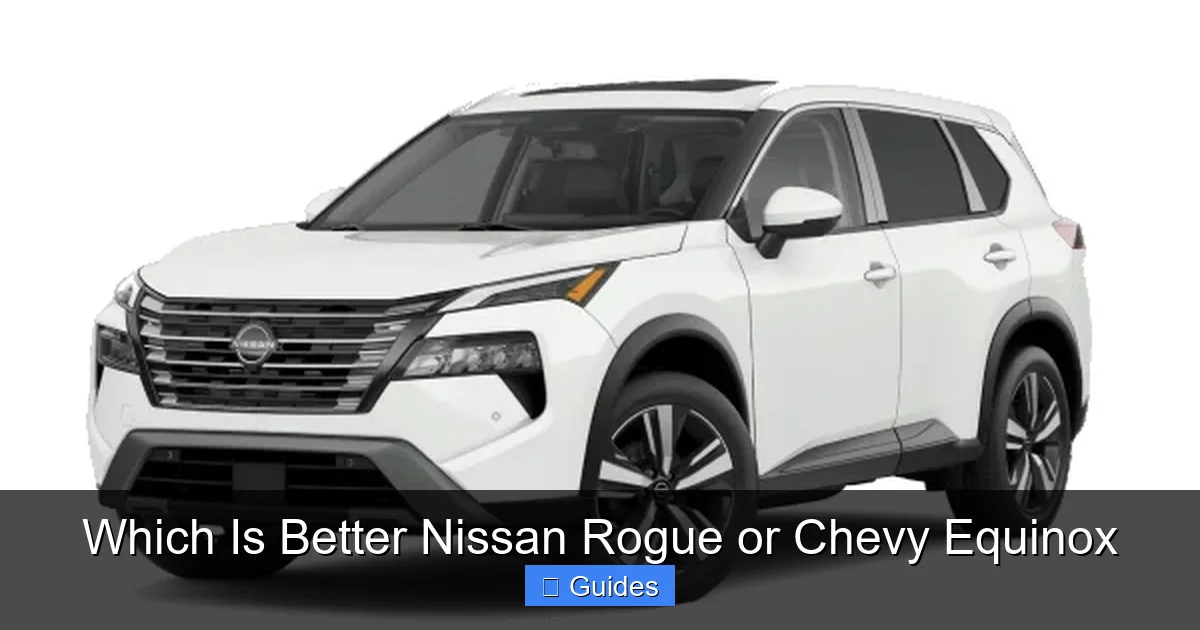
Visual guide about Which Is Better Nissan Rogue or Chevy Equinox
Image source: s7d9.scene7.com
Nissan Rogue: Smooth and Efficient
The 2024 Nissan Rogue comes with a single engine option: a 1.5-liter turbocharged three-cylinder engine that produces 201 horsepower and 225 lb-ft of torque. While three-cylinder engines sometimes get a bad rap for being underpowered or noisy, Nissan has tuned this one well. It delivers smooth acceleration and feels responsive in city driving. The engine is paired with a continuously variable transmission (CVT), which helps maximize fuel efficiency.
One of the Rogue’s biggest strengths is its all-wheel-drive system, which is available on most trims. It’s not designed for serious off-roading, but it provides excellent traction in rain, snow, or light gravel. If you live in an area with unpredictable weather, this can be a real advantage.
Chevy Equinox: Power and Choice
The Chevy Equinox offers more variety under the hood. The base model comes with a 1.5-liter turbocharged four-cylinder engine that makes 175 horsepower and 203 lb-ft of torque. It’s adequate for daily driving but can feel a bit sluggish when fully loaded or merging onto highways.
Where the Equinox shines is with its optional 2.0-liter turbocharged four-cylinder engine, available on the RS and Premier trims. This engine bumps output to 250 horsepower and 260 lb-ft of torque—significantly more than the Rogue. If you enjoy a sportier feel or frequently drive with passengers and gear, this extra power makes a noticeable difference.
The Equinox also uses a traditional 6-speed automatic transmission on most trims (or a 9-speed on the 2.0L), which some drivers prefer over a CVT for its more familiar shift feel.
Real-World Driving Experience
In real-world testing, the Rogue feels more refined and quieter at highway speeds. The suspension absorbs bumps well, making it a comfortable cruiser. The Equinox, especially with the 2.0L engine, feels more engaging and responsive, particularly during quick lane changes or uphill climbs.
However, if you mostly drive in stop-and-go traffic or prioritize fuel savings, the Rogue’s smoother, more efficient setup might be the better fit. On the other hand, if you want a little more zip and don’t mind slightly lower fuel economy, the Equinox with the turbo engine is the way to go.
Fuel Economy: Saving at the Pump
Fuel costs add up fast, especially if you drive a lot. When comparing the Nissan Rogue and Chevy Equinox, fuel economy is a major differentiator—and one where the Rogue clearly leads.
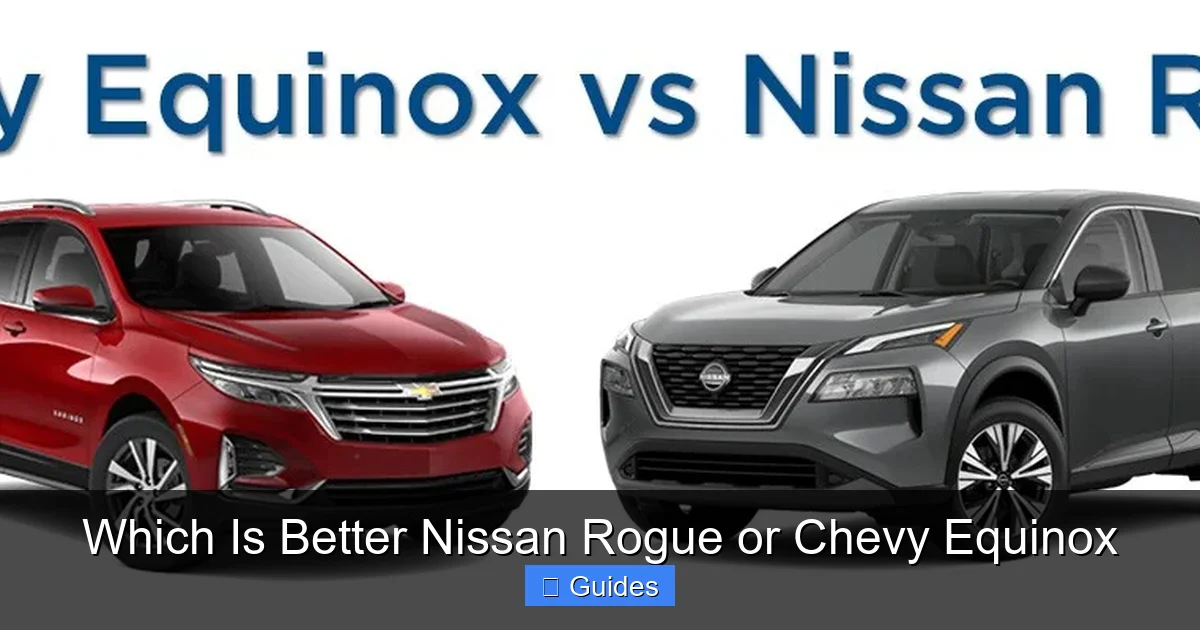
Visual guide about Which Is Better Nissan Rogue or Chevy Equinox
Image source: pictures.dealer.com
Nissan Rogue: The Efficiency Champion
The 2024 Nissan Rogue delivers impressive fuel economy across the board. With front-wheel drive, it achieves up to 29 mpg in the city and 35 mpg on the highway. Even with all-wheel drive, it still manages 28 mpg city and 34 mpg highway. These numbers are among the best in the compact SUV class.
Thanks to its smaller three-cylinder engine and aerodynamic design, the Rogue is built to sip fuel without sacrificing too much performance. For commuters driving 50+ miles a day, this could mean saving hundreds of dollars a year on gas.
Chevy Equinox: Decent, But Not Class-Leading
The base 1.5L engine in the Equinox gets respectable numbers: 26 mpg city and 31 mpg highway with front-wheel drive. With all-wheel drive, it drops slightly to 25 mpg city and 30 mpg highway. That’s still good, but not quite as strong as the Rogue.
The 2.0L turbo engine, while more powerful, takes a bigger hit on fuel economy. It averages around 22 mpg city and 29 mpg highway—noticeably lower. If you choose the more powerful engine for performance, you’ll pay for it at the pump.
Long-Term Cost of Ownership
Over five years of ownership, the fuel savings from the Rogue can add up to over $1,000 compared to the base Equinox, and even more when compared to the turbo model. If you’re budget-conscious or plan to keep the vehicle for many years, the Rogue’s efficiency is a smart financial move.
Interior Space and Comfort
A vehicle’s interior is where you spend most of your time, so comfort and space matter. Both the Rogue and Equinox offer spacious cabins, but there are some key differences in layout, materials, and usability.
Visual guide about Which Is Better Nissan Rogue or Chevy Equinox
Image source: pictures.dealer.com
Passenger Room: Rogue Wins on Rear Legroom
The Nissan Rogue offers 39.2 inches of rear legroom, which is generous for the class. Tall passengers can sit comfortably in the back without feeling cramped. The Equinox, by comparison, has 38.7 inches—still good, but slightly less.
Both SUVs have flat rear floors, making it easier for three passengers to sit across the back seat. The Rogue’s seats are also praised for their cushioning and support, especially on long drives. Chevy uses decent materials, but some reviewers note that the Equinox’s rear seats feel a bit firmer.
Cargo Space: Equinox Has a Slight Edge
When it comes to hauling gear, the Chevy Equinox offers 29.9 cubic feet of cargo space behind the second row. The Nissan Rogue provides 27.5 cubic feet—a noticeable difference if you frequently carry luggage, strollers, or camping equipment.
With the rear seats folded, the Equinox expands to 63.5 cubic feet, while the Rogue reaches 64.7 cubic feet. So while the Equinox wins in the back, the Rogue pulls ahead when you need maximum storage.
Interior Materials and Design
The Rogue’s interior feels more upscale, especially in higher trims like the SL and Platinum. Soft-touch materials, ambient lighting, and a minimalist dashboard design give it a modern, premium feel. The Equinox’s cabin is functional and clean, but some hard plastics are still present, particularly in lower trims.
Both vehicles offer heated and ventilated front seats, dual-zone climate control, and panoramic sunroofs on top models. But the Rogue’s quieter cabin—thanks to better sound insulation—makes it more relaxing on long trips.
Ease of Use and Visibility
The Rogue has a slightly higher seating position, giving drivers better visibility over the hood and around the vehicle. The Equinox sits a bit lower, which some prefer for a car-like feel, but it can make it harder to see curbs or obstacles in tight spaces.
Both have large windows and minimal blind spots, but the Rogue’s standard rearview camera and available 360-degree camera system make parking and maneuvering even easier.
Technology and Infotainment
Modern drivers expect seamless tech integration, and both the Rogue and Equinox deliver—but in different ways. Let’s break down what you get and how they compare.
Infotainment Systems
The Nissan Rogue comes standard with an 8-inch touchscreen on most trims, while the top-tier Platinum model gets a larger 9-inch display. The system runs Nissan’s latest infotainment software, which is intuitive and responsive. Apple CarPlay and Android Auto are standard, but only wired—no wireless connection unless you upgrade.
The Chevy Equinox starts with a 7-inch screen on the base L trim, but most buyers will opt for the 8-inch system on the LT and higher trims. Wireless Apple CarPlay and Android Auto are standard on all trims except the base model, which is a big plus for convenience.
Audio and Connectivity
Both SUVs offer premium audio options. The Rogue can be equipped with a Bose sound system, which delivers rich, clear sound. The Equinox offers a Bose setup as well, but only on the Premier trim.
USB ports are plentiful in both vehicles, with multiple ports up front and in the back. The Rogue includes a wireless charging pad on higher trims, while the Equinox reserves it for the top model.
Digital Displays and Driver Aids
The Rogue’s digital instrument cluster is more advanced. On the Platinum trim, you get a 12.3-inch customizable display that shows navigation, audio, and vehicle info. The Equinox uses a traditional analog cluster with a small digital screen—functional, but less high-tech.
Both offer head-up displays on top trims, but the Rogue’s is larger and more informative. If you love having data at a glance, the Rogue has the edge.
Software Updates and Reliability
Nissan has improved its infotainment system in recent years, but some users still report occasional lag or glitches. Chevy’s system is generally stable, though the smaller base screen can feel cramped.
Neither brand offers over-the-air updates like Tesla or Ford, so you’ll need to visit a dealer for major software upgrades. Still, both systems are user-friendly and get the job done.
Safety Features and Ratings
Safety is non-negotiable, and both the Nissan Rogue and Chevy Equinox earn top marks from the Insurance Institute for Highway Safety (IIHS) and the National Highway Traffic Safety Administration (NHTSA). But how do their safety suites compare?
Standard Safety Tech
The Nissan Rogue comes with Nissan Safety Shield 360 as standard on all trims. This includes:
- Automatic emergency braking with pedestrian detection
- Blind-spot monitoring
- Rear cross-traffic alert
- Lane departure warning
- High beam assist
- Rear automatic braking
The Chevy Equinox includes Chevy Safety Assist on most trims, which covers:
- Automatic emergency braking
- Forward collision alert
- Lane keep assist
- Following distance indicator
- IntelliBeam automatic high beams
Noticeably missing from the base Equinox are blind-spot monitoring and rear cross-traffic alert—features that are standard on the Rogue. You’ll need to step up to the LT trim or add a package to get them.
Crash Test Ratings
Both SUVs earn “Top Safety Pick” or “Top Safety Pick+” ratings from the IIHS, depending on trim and headlights. The Rogue achieves “Good” ratings in all crash tests, while the Equinox scores similarly—though some lower trims have “Acceptable” headlight ratings.
NHTSA gives both vehicles a 5-star overall safety rating, the highest possible. They perform well in frontal, side, and rollover tests.
Advanced Driver Assistance
The Rogue offers ProPILOT Assist on higher trims—a semi-autonomous system that combines adaptive cruise control and lane-centering for hands-free driving on highways. It’s one of the best in the class and works reliably in real-world conditions.
The Equinox offers Super Cruise on the Premier trim, which is even more advanced. It allows true hands-free driving on over 200,000 miles of mapped highways in the U.S. and Canada. However, it’s only available on the top trim and adds significant cost.
For most buyers, the Rogue’s standard safety suite offers better value. But if you want cutting-edge autonomy and don’t mind the price, the Equinox with Super Cruise is impressive.
Reliability, Warranty, and Long-Term Value
No one wants a car that breaks down or loses value quickly. Let’s look at how the Rogue and Equinox stack up in terms of reliability, warranty coverage, and resale value.
Reliability Ratings
According to J.D. Power and Consumer Reports, the Nissan Rogue has shown strong reliability in recent years. It scores above average in predicted reliability, with few major mechanical issues reported. The 1.5L turbo engine has proven durable, and the CVT has been improved over earlier models.
The Chevy Equinox has a mixed record. Earlier models (2018–2020) had issues with the transmission and engine, but GM has addressed many of these in recent updates. The 2024 model scores average to above average in reliability surveys, but it still lags slightly behind the Rogue.
Warranty Coverage
Nissan offers a 3-year/36,000-mile basic warranty and a 5-year/60,000-mile powertrain warranty. Chevy matches this exactly—same terms, same coverage. Neither brand stands out here, but both are competitive with the industry standard.
One advantage for Chevy owners: GM includes two years of scheduled maintenance on new vehicles, which can save you money on oil changes and inspections. Nissan does not offer this.
Depreciation and Resale Value
The Nissan Rogue holds its value better than the Equinox. According to Kelley Blue Book, the Rogue retains about 50% of its value after three years, while the Equinox drops to around 45%. Over five years, the gap widens further.
This means if you plan to sell or trade in your SUV down the road, the Rogue will likely get you more money. It’s also a sign of stronger brand loyalty and perceived quality.
Cost of Ownership
When you factor in fuel, insurance, maintenance, and depreciation, the Rogue generally costs less to own over time. It’s more efficient, more reliable, and holds value better. The Equinox can be cheaper upfront on some trims, but long-term costs may be higher—especially if you choose the turbo engine.
Which Is Better: Nissan Rogue or Chevy Equinox?
So, which is better—the Nissan Rogue or the Chevy Equinox? The answer depends on your priorities.
If you value fuel efficiency, a quiet and comfortable ride, strong standard safety features, and better long-term value, the Nissan Rogue is the clear winner. It’s ideal for commuters, families, and anyone who wants a reliable, no-fuss SUV that saves money at the pump and holds its value.
If you prefer more engine power, enjoy tech features like wireless connectivity, and want access to advanced systems like Super Cruise, the Chevy Equinox—especially with the 2.0L turbo engine—might be the better fit. It’s a good choice for drivers who want a sportier feel and don’t mind slightly lower fuel economy.
Both are excellent vehicles with strong safety ratings, modern interiors, and plenty of practicality. But for most buyers, the Rogue’s blend of efficiency, comfort, and value makes it the better all-around choice. The Equinox shines in specific areas, but it doesn’t dominate across the board.
Before you decide, take both for a test drive. Pay attention to how they feel on the road, how intuitive the tech is, and how spacious the cabin feels with your family or gear inside. The best SUV is the one that fits your life—not just your budget.
Frequently Asked Questions
Which has better fuel economy, the Nissan Rogue or Chevy Equinox?
The Nissan Rogue is more fuel-efficient, achieving up to 35 mpg highway compared to the Equinox’s 31 mpg. This makes the Rogue a better choice for long commutes or frequent driving.
Does the Chevy Equinox have more power than the Nissan Rogue?
Yes, the Equinox offers an optional 2.0L turbo engine with 250 horsepower, while the Rogue’s 1.5L turbo makes 201 horsepower. The Equinox feels more responsive, especially when loaded.
Which SUV has more cargo space?
The Chevy Equinox has slightly more cargo space behind the second row (29.9 vs. 27.5 cubic feet), but the Rogue offers more total space with seats folded (64.7 vs. 63.5 cubic feet).
Are safety features standard on both vehicles?
The Nissan Rogue includes more standard safety features, like blind-spot monitoring and rear cross-traffic alert, even on base trims. The Equinox requires a higher trim for these features.
Which holds its value better?
The Nissan Rogue has better resale value, retaining about 50% of its value after three years compared to the Equinox’s 45%. This makes the Rogue a smarter long-term investment.
Can I get hands-free driving in either SUV?
Yes, the Chevy Equinox offers Super Cruise on the Premier trim for true hands-free driving on highways. The Nissan Rogue has ProPILOT Assist, which requires hands on the wheel but offers semi-autonomous highway driving.

At CarLegit, we believe information should be clear, factual, and genuinely helpful. That’s why every guide, review, and update on our website is created with care, research, and a strong focus on user experience.