
The Nissan 33 V6—often referring to the VG30DE or VG33ER—is a solid, durable engine found in popular models like the Pathfinder and Frontier. While not the most powerful or modern powerplant, it offers reliable performance, decent torque, and strong aftermarket support, making it a favorite among off-roaders and DIY mechanics.
In This Article
- 1 Key Takeaways
- 2 📑 Table of Contents
- 3 Is the Nissan 33 V6 a Good Engine? A Complete Guide
- 4 Understanding the Nissan 33 V6: Engine Basics
- 5 Performance: How Does It Drive?
- 6 Reliability and Longevity: Can It Last?
- 7 Fuel Economy: What to Expect
- 8 Common Problems and How to Fix Them
- 9 Aftermarket Support and Upgrades
- 10 Is It Right for You?
- 11 Final Verdict
- 12 Frequently Asked Questions
Key Takeaways
- Reliable and Durable: The Nissan 33 V6 is known for its longevity when properly maintained, often lasting 200,000+ miles.
- Good Low-End Torque: Ideal for towing and off-roading, this engine delivers strong pulling power at lower RPMs.
- Common in Popular Models: Found in vehicles like the Nissan Pathfinder, Frontier, and Xterra, making parts and service widely available.
- Known Oil Consumption Issues: Some variants, especially the VG33ER, may burn oil over time—regular checks are essential.
- Timing Belt Maintenance Critical: Requires replacement every 90,000–105,000 miles; failure can cause catastrophic engine damage.
- Aftermarket Support: Strong community and performance parts available for tuning and upgrades.
- Not the Most Fuel Efficient: Expect 15–18 mpg combined, which is average for its era and class.
📑 Table of Contents
- Is the Nissan 33 V6 a Good Engine? A Complete Guide
- Understanding the Nissan 33 V6: Engine Basics
- Performance: How Does It Drive?
- Reliability and Longevity: Can It Last?
- Fuel Economy: What to Expect
- Common Problems and How to Fix Them
- Aftermarket Support and Upgrades
- Is It Right for You?
- Final Verdict
Is the Nissan 33 V6 a Good Engine? A Complete Guide
If you’re shopping for a used Nissan truck or SUV from the late 1990s to mid-2000s, chances are you’ve come across the “Nissan 33 V6.” This engine has earned a reputation—both good and bad—among enthusiasts, mechanics, and daily drivers alike. But is it really worth your time and money? Let’s dive deep into what makes this engine tick, where it shines, and where it might let you down.
First, a quick clarification: the term “Nissan 33 V6” isn’t an official engine name. It’s a nickname used by owners and forums to describe Nissan’s 3.0L and 3.3L V6 engines—specifically the VG30DE (3.0L) and VG33ER (3.3L). These engines powered some of Nissan’s most beloved vehicles, including the Pathfinder, Frontier pickup, and Xterra SUV. Over the years, they’ve become icons in the off-road and overlanding communities thanks to their ruggedness and simplicity.
So, is the Nissan 33 V6 a good engine? The short answer is: yes—but with caveats. It’s not perfect, and it’s definitely not cutting-edge. But for the right driver—someone who values reliability, torque, and ease of repair—it’s a surprisingly solid choice. In this guide, we’ll break down everything you need to know, from performance and reliability to common problems and maintenance tips.
Understanding the Nissan 33 V6: Engine Basics
Before we get into whether it’s “good,” let’s get familiar with what the Nissan 33 V6 actually is. As mentioned, it’s not one engine—it’s a family of two closely related V6s developed by Nissan in the 1980s and used well into the 2000s.
VG30DE: The 3.0L V6
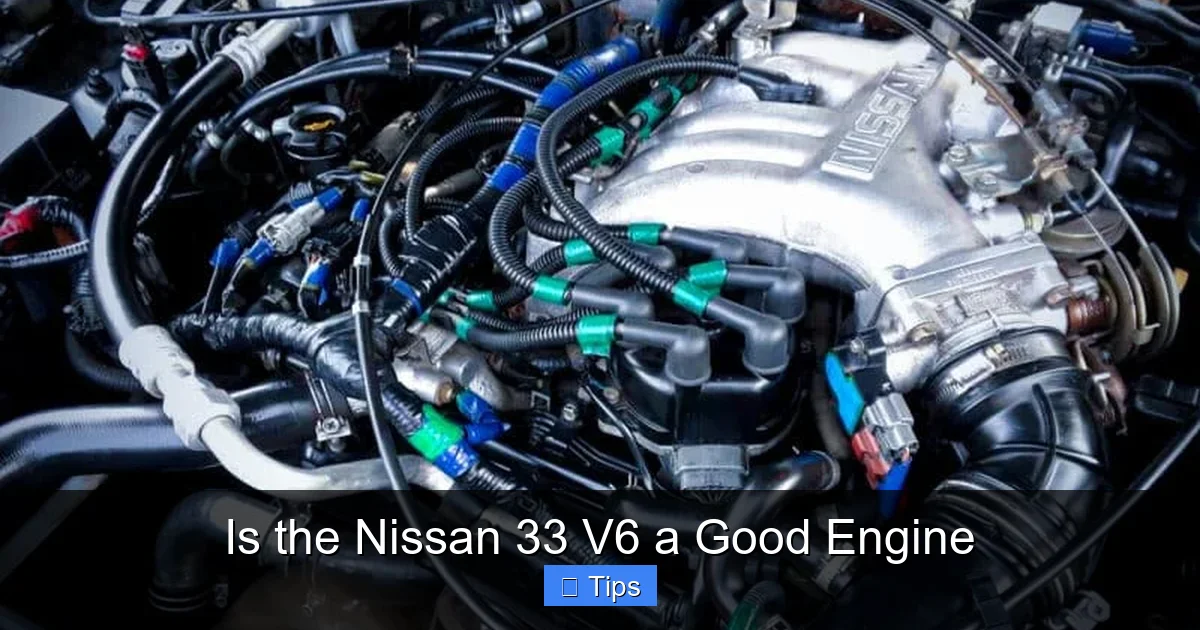
The VG30DE is a 3.0-liter, 24-valve DOHC V6 engine that first appeared in the 1990 Nissan 300ZX. It produced around 200 horsepower and 190 lb-ft of torque, which was impressive for its time. This engine featured multi-port fuel injection, aluminum heads, and a timing belt-driven valvetrain. It was used in several rear-wheel-drive and all-wheel-drive applications, including the Pathfinder and some Infiniti models.
Visual guide about Is the Nissan 33 V6 a Good Engine
Image source: low-offset.com
VG33ER: The 3.3L V6
The VG33ER is the bigger sibling—a 3.3-liter, 12-valve SOHC V6 with electronic fuel injection. It made about 170–180 horsepower and 200+ lb-ft of torque, depending on the model year and application. This engine was widely used in the Nissan Frontier, Xterra, and second-generation Pathfinder. Unlike the VG30DE, the VG33ER uses a single overhead cam per bank and a more traditional pushrod-style valvetrain, which makes it simpler and more durable in harsh conditions.
Why “33”?
The “33” in “Nissan 33 V6” refers to the 3.3-liter displacement of the VG33ER. Over time, the nickname stuck—even when people were talking about the 3.0L version. So when someone says “33 V6,” they’re usually referring to the VG33ER, but the term has become a catch-all for both engines in the VG family.
Key Specs at a Glance
- Displacement: 3.0L (VG30DE) or 3.3L (VG33ER)
- Configuration: 60-degree V6
- Valvetrain: DOHC (VG30DE) or SOHC (VG33ER)
- Fuel System: Multi-port electronic fuel injection
- Horsepower: 170–200 hp
- Torque: 190–210 lb-ft
- Redline: ~6,000–6,500 RPM
Performance: How Does It Drive?
Now, let’s talk about how the Nissan 33 V6 actually performs on the road, trail, and highway. Performance is subjective—what one driver calls “gutless,” another might call “smooth and predictable.” But overall, the VG33ER and VG30DE deliver a balanced driving experience that suits their intended用途.
Low-End Torque: A Real Strength
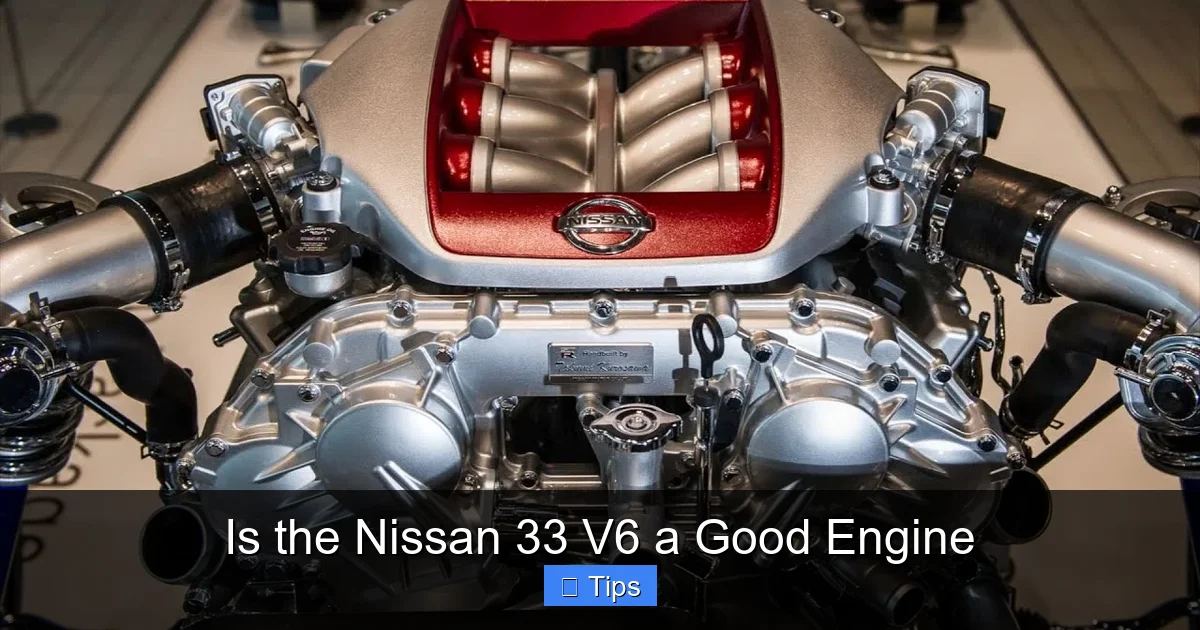
One of the biggest strengths of the Nissan 33 V6 is its low-end torque. The VG33ER, in particular, makes over 200 lb-ft of torque at just 2,800 RPM. That means it pulls strongly from a stop, which is great for towing trailers, hauling gear, or crawling over rocks off-road. If you’ve ever driven a Frontier with this engine, you’ll notice it doesn’t need to be revved high to get moving—it’s got grunt right off idle.
Visual guide about Is the Nissan 33 V6 a Good Engine
Image source: i.ytimg.com
High-RPM Power: Not a Revver
That said, the Nissan 33 V6 isn’t built for high-revving performance. The VG33ER, with its SOHC design and 12-valve layout, doesn’t breathe as well as a modern 24-valve engine. It starts to run out of breath around 5,500 RPM, and the power curve flattens out quickly. This isn’t a sports car engine—it’s a workhorse. If you’re looking for thrilling acceleration or high-speed passing power, you might be disappointed. But for daily driving, light towing, and off-roading, it’s more than adequate.
Real-World Example: Towing with a Frontier
Let’s say you’re towing a 5,000-pound trailer with a 2003 Nissan Frontier equipped with the VG33ER. You’ll notice the engine doesn’t struggle—thanks to that strong torque curve. It downshifts smoothly on hills, and the engine stays in its sweet spot. Compare that to a smaller 4-cylinder engine, which would be screaming and overheating. The V6 gives you confidence, even if it’s not the fastest tow rig on the road.
Off-Road Performance
Off-road enthusiasts love the Nissan 33 V6 for its simplicity and reliability. The VG33ER, in particular, is a favorite in the overlanding community. Why? It’s mechanically simple, has plenty of low-end torque for crawling, and doesn’t rely on complex electronics that can fail in the dirt. Plus, the engine bay in vehicles like the Xterra and Frontier is spacious, making repairs and modifications easier.
Reliability and Longevity: Can It Last?
Reliability is where the Nissan 33 V6 earns its stripes—and also where it can trip up. Overall, these engines are known for lasting a long time, but only if you take care of them. Let’s break it down.
Proven Track Record
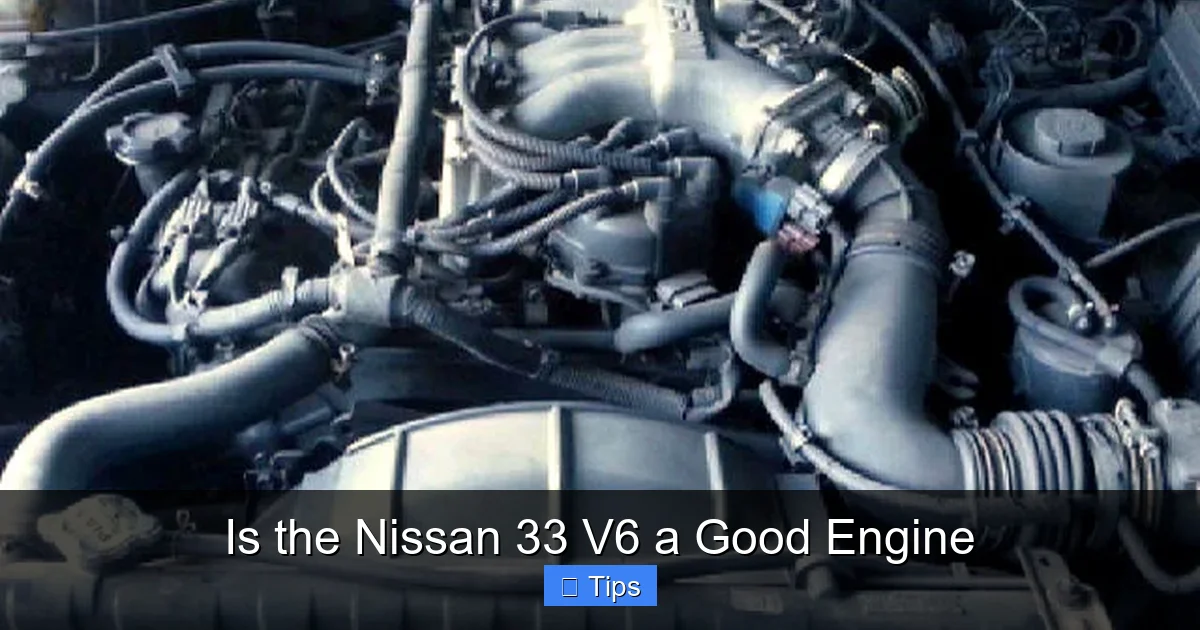
Many Nissan 33 V6 engines have surpassed 200,000 miles with proper maintenance. There are countless stories of Frontiers and Pathfinders still running strong at 250,000+ miles. The cast-iron block and simple design contribute to this durability. Unlike some modern engines with turbochargers, direct injection, and variable valve timing, the VG33ER is straightforward—fewer things can go wrong.
Visual guide about Is the Nissan 33 V6 a Good Engine
Image source: engine-specs.net
Common Failure Points
That said, no engine is perfect. The Nissan 33 V6 has a few known issues that can shorten its life if ignored:
- Timing Belt: This is the #1 maintenance item. The timing belt must be replaced every 90,000–105,000 miles. If it fails, the pistons can hit the valves (interference engine), causing catastrophic damage. Replacing the belt, water pump, and tensioners together is recommended.
- Oil Consumption: Some VG33ER engines, especially in the early 2000s, are known to burn oil—sometimes a quart every 1,000 miles. This is often due to worn piston rings or valve seals. Regular oil level checks are a must.
- Intake Manifold Gasket Leaks: Over time, the intake manifold gaskets can degrade, leading to vacuum leaks, rough idle, and poor fuel economy. Replacing them with upgraded silicone gaskets can help.
- Exhaust Manifold Cracks: The exhaust manifolds on these engines can crack due to heat cycling, causing loud ticking noises and reduced performance.
Maintenance Tips for Longevity
To keep your Nissan 33 V6 running strong, follow these tips:
- Change the oil every 3,000–5,000 miles using high-quality synthetic or conventional oil (10W-30 or 5W-30).
- Replace the timing belt and water pump at the recommended interval—don’t skip this!
- Check the oil level weekly, especially if you notice burning.
- Use premium fuel occasionally to help clean carbon deposits.
- Inspect belts, hoses, and gaskets during regular oil changes.
Fuel Economy: What to Expect
Let’s be honest—the Nissan 33 V6 isn’t winning any fuel economy awards. But for its size and era, it’s not terrible.
Real-World MPG
Most drivers report 15–18 miles per gallon combined, depending on driving style, vehicle weight, and terrain. In a Frontier or Xterra, you might see 16 mpg in the city and 19 mpg on the highway. That’s not great by today’s standards, but it’s average for a V6-powered truck or SUV from the early 2000s.
Factors That Affect Fuel Economy
- Vehicle Weight: Heavier vehicles like the Pathfinder will consume more fuel than a lighter Frontier.
- Driving Habits: Aggressive acceleration and high speeds reduce mileage.
- Maintenance: A dirty air filter, worn spark plugs, or low tire pressure can hurt efficiency.
- Modifications: Lift kits, larger tires, and roof racks increase drag and reduce mpg.
Is It a Gas Guzzler?
Compared to modern turbocharged 4-cylinders or hybrid systems, yes—the Nissan 33 V6 uses more fuel. But compared to other V6s of its time, like the Toyota 5VZ-FE or Ford 4.0L Cologne, it’s on par. If fuel economy is your top priority, this might not be the best choice. But if you value reliability and torque over saving a few bucks at the pump, it’s still a solid option.
Common Problems and How to Fix Them
No engine is flawless, and the Nissan 33 V6 has its share of quirks. Knowing what to look for can save you time, money, and headaches.
Timing Belt Failure
This is the most critical issue. The VG33ER is an interference engine, meaning if the timing belt breaks, the valves and pistons collide. The result? A ruined engine. Always replace the belt, tensioner, and water pump together. Use a quality kit from a reputable brand like Gates or Aisin.
Oil Burning
If your engine is burning oil, start by checking the PCV valve and valve seals. Worn piston rings are harder to fix and may require a rebuild. Some owners add oil additives like Lucas Oil Stabilizer to reduce consumption, but this is a temporary fix.
Intake Manifold Gasket Leaks
Symptoms include rough idle, hesitation, and a hissing noise from the engine bay. Replacing the gaskets is a weekend job for a DIYer. Use upgraded silicone gaskets for longer life.
Exhaust Manifold Cracks
Listen for a ticking noise that gets louder with RPM. Cracked manifolds can be welded or replaced. Aftermarket headers are also available for better flow and durability.
Alternator and Starter Issues
These aren’t engine problems per se, but they’re common in high-mileage Nissans. Carry a spare alternator if you’re off-roading—many overlanders do.
Aftermarket Support and Upgrades
One of the best things about the Nissan 33 V6 is the strong aftermarket community. Whether you want more power, better reliability, or just easier maintenance, there are plenty of options.
Performance Upgrades
- Headers: Aftermarket exhaust headers improve flow and add 10–15 hp.
- Cold Air Intake: A simple mod that can improve throttle response and sound.
- ECU Tuning: While limited, some tuners offer custom maps for better fueling and timing.
- Supercharger Kits: Companies like Stillen offer supercharger kits for the VG33ER, boosting power to 250+ hp.
Reliability Upgrades
- Upgraded Water Pump: Heavy-duty pumps last longer and handle heat better.
- Silicone Hoses: Replace rubber hoses with silicone for better heat resistance.
- High-Flow Oil Filter: Improves oil flow and filtration.
Off-Road Mods
For overlanders, the Nissan 33 V6 is a great base for builds. Popular mods include:
- Lift kits and larger tires
- Skid plates and rock sliders
- Upgraded suspension (Bilstein shocks, Old Man Emu springs)
- Dual battery systems and auxiliary lighting
Is It Right for You?
So, is the Nissan 33 V6 a good engine? The answer depends on your needs.
Choose It If:
- You want a reliable, durable engine for daily driving or off-roading.
- You’re looking for a vehicle with strong low-end torque for towing or hauling.
- You enjoy DIY maintenance and appreciate simple, serviceable engines.
- You’re on a budget and want a used vehicle with good parts availability.
Avoid It If:
- You prioritize fuel economy above all else.
- You want high-revving performance or modern tech features.
- You’re not willing to perform regular maintenance, especially timing belt replacements.
- You need a vehicle for long highway commutes at high speeds.
Final Verdict
The Nissan 33 V6—whether it’s the VG30DE or VG33ER—is a solid, dependable engine that has stood the test of time. It’s not flashy, not the most powerful, and not the most efficient. But it’s tough, simple, and capable. For drivers who value reliability, torque, and ease of repair, it’s a great choice.
With proper maintenance, these engines can easily last 200,000 miles or more. And thanks to a strong community and aftermarket support, you can keep them running—and even improve them—for years to come.
So, is the Nissan 33 V6 a good engine? For the right person, absolutely. It’s a workhorse that won’t let you down—as long as you don’t let it down first.
Frequently Asked Questions
What vehicles came with the Nissan 33 V6?
The Nissan 33 V6 (VG33ER) was used in the Nissan Frontier pickup, Xterra SUV, and second-generation Pathfinder from the late 1990s to mid-2000s. The VG30DE 3.0L version appeared in the 300ZX and earlier Pathfinder models.
How many miles can a Nissan 33 V6 last?
With proper maintenance, the Nissan 33 V6 can easily last 200,000 miles or more. Many owners report engines running strong past 250,000 miles, especially when the timing belt is replaced on schedule.
Does the Nissan 33 V6 burn oil?
Some VG33ER engines are known to burn oil, especially in higher-mileage examples. This is often due to worn piston rings or valve seals. Regular oil checks and changes can help manage the issue.
Is the timing belt replacement expensive?
Timing belt replacement typically costs $600–$1,200 at a shop, depending on labor rates. It’s a critical maintenance item—skipping it can lead to engine failure.
Can I turbocharge a Nissan 33 V6?
Yes, but it’s not common. Supercharger kits are more popular and reliable. Turbocharging requires significant modifications, including fuel system upgrades and custom tuning.
Is the Nissan 33 V6 good for towing?
Yes, the strong low-end torque makes it well-suited for light to moderate towing. It can handle trailers up to 5,000 pounds, depending on the vehicle and drivetrain.

At CarLegit, we believe information should be clear, factual, and genuinely helpful. That’s why every guide, review, and update on our website is created with care, research, and a strong focus on user experience.