
Choosing the right oil for your 2017 Nissan Rogue is essential for engine health and fuel efficiency. This guide covers the recommended oil type, viscosity, capacity, and best practices for oil changes to keep your Rogue running smoothly.
In This Article
- 1 Key Takeaways
- 2 📑 Table of Contents
- 3 What Oil Does a 2017 Nissan Rogue Take?
- 4 Why Oil Choice Matters for Your 2017 Nissan Rogue
- 5 Recommended Oil Type and Viscosity
- 6 Oil Capacity and Oil Change Process
- 7 Oil Change Intervals and Maintenance Schedule
- 8 Choosing the Right Oil and Filter
- 9 Common Mistakes to Avoid
- 10 Environmental and Cost Considerations
- 11 Conclusion
- 12 Frequently Asked Questions
- 12.1 Can I use 5W-20 oil in my 2017 Nissan Rogue?
- 12.2 How much oil does a 2017 Nissan Rogue hold?
- 12.3 Can I extend oil changes beyond 7,500 miles?
- 12.4 Is it okay to use conventional oil in a 2017 Nissan Rogue?
- 12.5 How do I reset the oil life monitor on a 2017 Nissan Rogue?
- 12.6 What happens if I use the wrong oil in my Rogue?
Key Takeaways
- Recommended Oil Type: Use full synthetic 0W-20 oil for optimal performance and protection in all driving conditions.
- Viscosity Matters: 0W-20 is the factory-specified viscosity for the 2017 Nissan Rogue’s 2.5L 4-cylinder engine.
- Oil Capacity: The engine holds approximately 4.8 quarts (including the oil filter) during an oil change.
- Change Interval: Follow Nissan’s recommendation of every 5,000 to 7,500 miles, depending on driving habits and conditions.
- Use Genuine or Approved Filters: Pair your oil with a high-quality oil filter like the Nissan OEM or equivalent (e.g., Fram Ultra, Mobil 1 Extended Performance).
- Check for Leaks and Levels: Regularly inspect your oil level and look for signs of leaks or burning oil to prevent engine damage.
- Environmental Considerations: Dispose of used oil responsibly at certified recycling centers to protect the environment.
📑 Table of Contents
- What Oil Does a 2017 Nissan Rogue Take?
- Why Oil Choice Matters for Your 2017 Nissan Rogue
- Recommended Oil Type and Viscosity
- Oil Capacity and Oil Change Process
- Oil Change Intervals and Maintenance Schedule
- Choosing the Right Oil and Filter
- Common Mistakes to Avoid
- Environmental and Cost Considerations
- Conclusion
What Oil Does a 2017 Nissan Rogue Take?
If you own a 2017 Nissan Rogue, you’re driving one of the most popular compact SUVs on the road. Known for its reliability, fuel efficiency, and comfortable ride, the Rogue has earned a loyal following. But like any vehicle, it needs regular maintenance to keep performing at its best—and one of the most important aspects of that maintenance is using the correct engine oil.
Choosing the right oil isn’t just about keeping your engine clean. It’s about protecting internal components, improving fuel economy, extending engine life, and ensuring your Rogue runs smoothly in all weather conditions. Whether you’re a DIY mechanic or you take your car to a professional, understanding what oil your 2017 Nissan Rogue needs is a smart move.
In this guide, we’ll walk you through everything you need to know about oil for your 2017 Nissan Rogue—from the recommended type and viscosity to oil change intervals, capacity, and tips for choosing the best products. We’ll also cover common mistakes to avoid and answer frequently asked questions so you can make informed decisions about your vehicle’s care.
Why Oil Choice Matters for Your 2017 Nissan Rogue

Visual guide about What Oil Does a 2017 Nissan Rogue Take
Image source: gearshifters.org
Engine oil is the lifeblood of your vehicle. It lubricates moving parts, reduces friction, prevents overheating, and helps keep the engine clean by trapping dirt and debris. In modern engines like the one in your 2017 Nissan Rogue, oil also plays a role in fuel efficiency and emissions control.
The 2017 Rogue is powered by a 2.5-liter inline-4 engine (QR25DE), which is designed to run efficiently with low-viscosity synthetic oil. Using the wrong oil—whether it’s the wrong viscosity, type, or quality—can lead to poor performance, increased wear, reduced fuel economy, and even engine damage over time.
For example, using a thicker oil like 10W-30 instead of the recommended 0W-20 can make the engine work harder, especially in cold weather. This increases fuel consumption and puts unnecessary strain on internal components. On the other hand, using a lower-quality conventional oil instead of full synthetic may not provide the level of protection your engine needs, especially under high-stress conditions like stop-and-go traffic or towing.
That’s why it’s so important to follow Nissan’s specifications. The manufacturer has tested and approved specific oil types for your Rogue to ensure maximum performance, longevity, and warranty compliance. Sticking to these recommendations helps you get the most out of your vehicle while avoiding costly repairs down the road.
How Oil Affects Engine Performance and Longevity
Think of engine oil like a protective shield for your car’s heart. It keeps metal parts from grinding against each other, which would cause heat, wear, and eventual failure. High-quality synthetic oil flows more smoothly, especially in cold starts, and maintains its protective properties longer than conventional oil.
In the 2017 Nissan Rogue, the engine is designed to operate with tight tolerances and advanced fuel injection systems. These systems rely on clean, properly flowing oil to function correctly. If the oil becomes too thick or contaminated, it can clog oil passages, reduce lubrication, and lead to premature wear.
Additionally, modern engines often use variable valve timing (VVT) systems, which depend on precise oil pressure to operate. Using the wrong oil can interfere with these systems, causing performance issues like rough idling, reduced power, or even check engine lights.
By using the correct oil, you’re not just following the manual—you’re actively protecting your investment. A well-maintained engine can last well over 200,000 miles, and using the right oil is one of the simplest and most effective ways to achieve that.
Recommended Oil Type and Viscosity

Visual guide about What Oil Does a 2017 Nissan Rogue Take
Image source: gearshifters.org
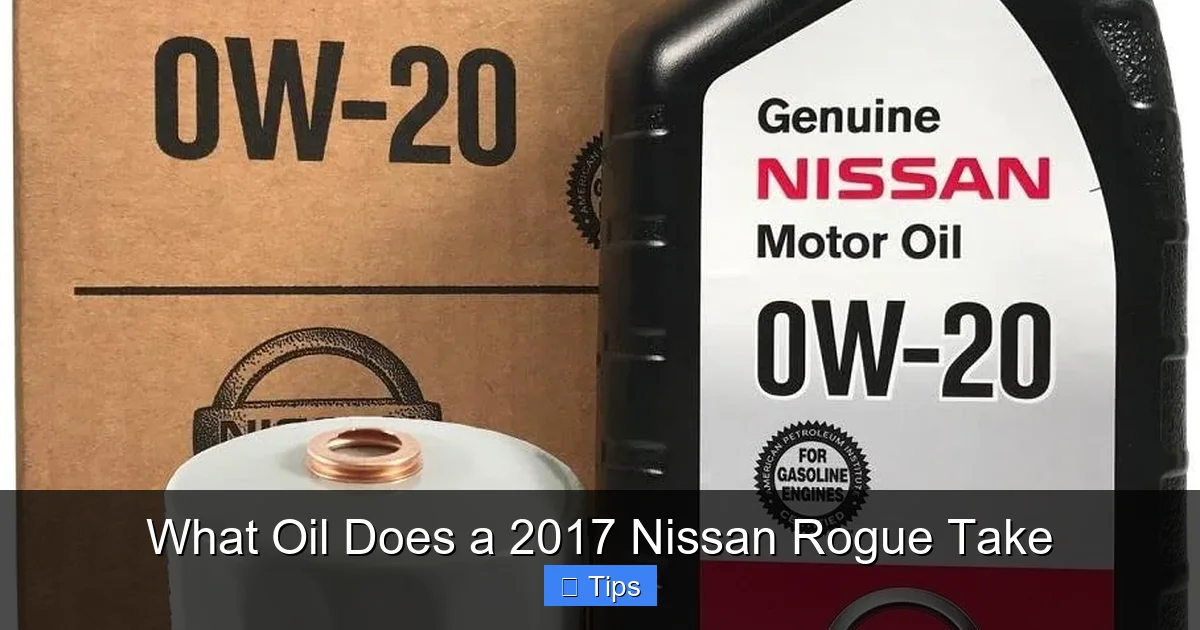
So, what oil does a 2017 Nissan Rogue take? The answer is clear: **full synthetic 0W-20 motor oil**.
This is the oil viscosity and type specified by Nissan in the owner’s manual and on the oil cap under the hood. Let’s break down what that means and why it matters.
Understanding 0W-20 Viscosity
The “0W-20” designation refers to the oil’s viscosity—how thick or thin it is at different temperatures. The “0W” (Winter) rating means the oil flows easily in cold weather, starting at temperatures as low as -30°F (-34°C). This ensures quick lubrication during cold starts, which is critical for engine protection.
The “20” refers to the oil’s viscosity at operating temperature (around 212°F or 100°C). A 20-weight oil is relatively thin, which helps reduce internal engine friction and improves fuel efficiency. This is especially important in modern engines like the Rogue’s, which are designed for low-friction operation.
Using 0W-20 oil helps your Rogue achieve better gas mileage—often by 1-2% compared to thicker oils—and ensures smooth operation in both winter and summer conditions.
Why Full Synthetic?
Nissan recommends full synthetic oil for the 2017 Rogue because it offers superior performance compared to conventional or synthetic blend oils. Here’s why:
– **Better Cold-Weather Performance:** Synthetic oil flows more easily in cold temperatures, reducing engine wear during startup.
– **Higher Heat Resistance:** It resists breakdown at high temperatures, maintaining its protective properties longer.
– **Improved Cleanliness:** Synthetic oils contain fewer impurities and are better at preventing sludge and deposit buildup.
– **Longer Oil Life:** High-quality synthetics can last longer between changes, especially when used with modern engine designs.
While synthetic oil costs more upfront, it often pays for itself through improved fuel economy, longer engine life, and fewer oil changes over time.
Approved Oil Specifications
Nissan also specifies that the oil must meet certain industry standards. For the 2017 Rogue, the oil should meet or exceed the following:
– **API (American Petroleum Institute) Service Classification:** SN or newer
– **ILSAC (International Lubricant Standardization and Approval Committee):** GF-5 or newer
These standards ensure the oil provides adequate protection against wear, oxidation, and deposit formation. Most major brands—like Mobil 1, Pennzoil, Castrol, and Valvoline—offer full synthetic 0W-20 oils that meet these requirements.
When shopping for oil, look for labels that say “Full Synthetic,” “0W-20,” and “Meets API SN” or “ILSAC GF-5.” This ensures compatibility with your Rogue’s engine.
Oil Capacity and Oil Change Process
Visual guide about What Oil Does a 2017 Nissan Rogue Take
Image source: davesoilchange.com
Knowing how much oil your 2017 Nissan Rogue holds is just as important as knowing what type to use. The engine has an oil capacity of **approximately 4.8 quarts (4.5 liters)** when including a new oil filter.
This means that during a standard oil change, you’ll need about 4.8 quarts of fresh 0W-20 synthetic oil and a new oil filter.
Steps for a DIY Oil Change
If you’re comfortable doing your own oil change, here’s a simple step-by-step guide:
1. **Warm Up the Engine:** Run the engine for a few minutes to warm the oil, making it flow more easily.
2. **Lift the Vehicle:** Use a jack and jack stands or ramps to safely lift the front of the car. Always work on a level surface and use wheel chocks.
3. **Drain the Old Oil:** Locate the oil drain plug under the engine (usually on the oil pan). Place a drain pan underneath, then remove the plug and let the oil drain completely (about 10–15 minutes).
4. **Replace the Oil Filter:** While the oil is draining, remove the old oil filter using an oil filter wrench. Before installing the new filter, lightly coat the rubber gasket with fresh oil to ensure a proper seal. Screw on the new filter by hand—do not overtighten.
5. **Reinstall the Drain Plug:** Once the oil has drained, clean the drain plug and reinstall it. Tighten it to the manufacturer’s torque specification (usually around 22–25 ft-lbs).
6. **Add New Oil:** Remove the oil filler cap on top of the engine and pour in about 4.5 quarts of 0W-20 synthetic oil. Wait a few minutes, then check the dipstick. Add more oil as needed to reach the “Full” mark.
7. **Start the Engine:** Run the engine for 30 seconds to circulate the new oil, then turn it off and check for leaks.
8. **Check Oil Level Again:** After waiting a few minutes, recheck the dipstick and top off if necessary.
9. **Reset the Oil Life Monitor:** If your Rogue has an oil life monitoring system, reset it using the vehicle information display.
Professional Oil Change Tips
If you prefer to have your oil changed at a dealership or service center, make sure they use full synthetic 0W-20 oil and a quality oil filter. Ask to see the oil and filter before they’re installed, and request that they reset the oil life monitor.
Avoid quick-lube shops that push “upgrades” to thicker oils or unnecessary additives. Stick to the manufacturer’s recommendations to protect your warranty and engine.
Oil Change Intervals and Maintenance Schedule
One of the most common questions Rogue owners have is: “How often should I change the oil?”
Nissan recommends changing the oil **every 5,000 to 7,500 miles**, depending on your driving conditions. This interval applies when using full synthetic 0W-20 oil.
Factors That Affect Oil Change Frequency
Not all driving is equal. If you frequently drive in severe conditions, you may need to change your oil more often. These conditions include:
– **Short trips (less than 10 miles)** where the engine doesn’t fully warm up
– **Stop-and-go traffic** or city driving
– **Extreme temperatures** (very hot or very cold)
– **Towing or hauling heavy loads**
– **Dusty or dirty environments**
In these cases, Nissan recommends changing the oil every **5,000 miles**.
If you mostly drive on highways at steady speeds and in moderate climates, you may be able to extend the interval to **7,500 miles**—especially if you use high-quality synthetic oil.
Using the Oil Life Monitor
The 2017 Nissan Rogue is equipped with an **oil life monitoring system** that calculates when your oil needs changing based on engine speed, temperature, driving time, and mileage. This system is more accurate than a simple mileage counter because it adapts to your driving habits.
To check the oil life:
1. Press the “INFO” button on your steering wheel.
2. Navigate to “Maintenance” and then “Oil and Filter.”
3. The display will show the remaining oil life as a percentage.
When the oil life reaches 15%, you’ll see a reminder message. At 5%, the message will appear every time you start the car. Change the oil before it reaches 0%.
Even with the monitor, it’s a good idea to check your oil level monthly and look for signs of contamination (like a milky appearance, which could indicate coolant leakage).
Choosing the Right Oil and Filter
With so many brands and products on the market, it’s easy to feel overwhelmed. But choosing the right oil and filter doesn’t have to be complicated.
Top Oil Brands for the 2017 Nissan Rogue
Here are some highly recommended full synthetic 0W-20 oils:
– **Mobil 1 Advanced Fuel Economy 0W-20:** Excellent for fuel efficiency and engine protection.
– **Pennzoil Platinum Full Synthetic 0W-20:** Made from natural gas, offers strong sludge protection.
– **Castrol EDGE 0W-20:** High-performance oil with titanium additives for extra strength.
– **Valvoline Advanced Full Synthetic 0W-20:** Affordable and reliable, with good cold-flow properties.
– **Royal Purple HPS 0W-20:** Premium oil with enhanced wear protection (ideal for high-mileage or performance use).
All of these meet API SN and ILSAC GF-5 standards and are safe for your Rogue.
Oil Filter Recommendations
The oil filter is just as important as the oil itself. A quality filter ensures contaminants are removed and oil flows properly.
Recommended filters include:
– **Nissan OEM Oil Filter (Part #15208-65F0E):** Direct fit, reliable, and designed specifically for your Rogue.
– **Fram Ultra Synthetic (XG7317):** Long-lasting, high-capacity filter with excellent filtration.
– **Mobil 1 Extended Performance (M1-210):** Designed for extended oil change intervals.
– **K&N HP-1010:** High-flow filter with reusable housing (if you prefer eco-friendly options).
Avoid cheap, no-name filters. A low-quality filter can collapse, leak, or fail to trap debris, leading to engine damage.
Common Mistakes to Avoid
Even experienced drivers can make mistakes when it comes to oil changes. Here are some common pitfalls to watch out for:
Using the Wrong Viscosity
Never use 5W-20, 10W-30, or any other viscosity unless specifically advised by a mechanic for a modified engine. The 2017 Rogue’s engine is calibrated for 0W-20, and using a different oil can void your warranty or cause damage.
Overfilling or Underfilling
Adding too much oil can cause foaming, which reduces lubrication and increases pressure. Too little oil can lead to inadequate lubrication and overheating. Always check the dipstick after adding oil and top off as needed.
Skipping the Oil Filter Change
Always replace the oil filter with every oil change. Reusing an old filter reduces oil flow and allows contaminants to circulate.
Ignoring the Oil Life Monitor
Don’t assume you can go 10,000 miles between changes just because you’re using synthetic oil. Follow the monitor and your driving conditions.
Using Additives Unnecessarily
Modern synthetic oils already contain the necessary additives. Adding extra “engine treatments” is usually unnecessary and can sometimes do more harm than good.
Environmental and Cost Considerations
Changing your own oil can save you money—typically $40–$70 per visit compared to a professional service. However, you’ll need basic tools: a wrench, oil filter wrench, drain pan, funnel, and jack stands.
The cost of 4.8 quarts of full synthetic 0W-20 oil ranges from $30 to $50, depending on the brand. Oil filters cost $8–$15. So a DIY oil change can cost as little as $40, including disposal.
Proper Oil Disposal
Never pour used oil down the drain or on the ground. One quart of oil can contaminate up to 250,000 gallons of water.
Instead, store used oil in a sealed container and take it to a recycling center, auto parts store, or service station. Many places accept used oil for free.
Long-Term Savings
While synthetic oil costs more, it can extend the time between changes and improve fuel economy. Over the life of your vehicle, this can add up to significant savings—not to mention the value of a well-maintained engine.
Conclusion
Taking care of your 2017 Nissan Rogue starts with using the right oil. Full synthetic 0W-20 motor oil is the gold standard for this vehicle, offering superior protection, fuel efficiency, and performance in all conditions.
By following Nissan’s recommendations—using the correct viscosity, changing the oil every 5,000 to 7,500 miles, and pairing it with a quality filter—you’ll keep your Rogue running smoothly for years to come.
Whether you’re a DIY enthusiast or prefer professional service, understanding your vehicle’s oil needs empowers you to make smart maintenance decisions. Regular oil changes are a small investment that pays big dividends in reliability, performance, and peace of mind.
So the next time you pop the hood, remember: the right oil isn’t just a suggestion—it’s a necessity for your Rogue’s health.
Frequently Asked Questions
Can I use 5W-20 oil in my 2017 Nissan Rogue?
No, Nissan specifically recommends 0W-20 full synthetic oil for the 2017 Rogue. Using 5W-20 may reduce fuel efficiency and could affect engine performance, especially in cold weather.
How much oil does a 2017 Nissan Rogue hold?
The engine holds approximately 4.8 quarts of oil when including a new oil filter. Always check the dipstick after adding oil to ensure proper levels.
Can I extend oil changes beyond 7,500 miles?
It’s not recommended. Even with synthetic oil, extending beyond 7,500 miles—especially in severe driving conditions—can reduce engine protection and increase wear.
Is it okay to use conventional oil in a 2017 Nissan Rogue?
Nissan recommends full synthetic oil for optimal performance. Conventional oil may not provide the same level of protection, especially in extreme temperatures or under heavy use.
How do I reset the oil life monitor on a 2017 Nissan Rogue?
Press the “INFO” button, go to “Maintenance,” select “Oil and Filter,” then press and hold the “Enter” button until the system resets. The display will show 100% oil life.
What happens if I use the wrong oil in my Rogue?
Using the wrong viscosity or type of oil can lead to poor fuel economy, increased engine wear, reduced performance, and potential damage to components like the variable valve timing system.

At CarLegit, we believe information should be clear, factual, and genuinely helpful. That’s why every guide, review, and update on our website is created with care, research, and a strong focus on user experience.