
Choosing between the Kia Seltos and Nissan Kicks depends on your priorities. The Seltos offers more power, standard all-wheel drive, and a bolder design, while the Kicks focuses on fuel efficiency, affordability, and a smooth ride. Both are excellent subcompact SUVs—but one may suit your lifestyle better.
[FEATURED_IMAGE_PLACEHODEL]
In This Article
- 1 Key Takeaways
- 2 📑 Table of Contents
- 3 Introduction: Two Compact SUVs, One Tough Decision
- 4 Performance and Powertrain: Seltos vs. Kicks
- 5 Fuel Economy: Efficiency Matters
- 6 Interior Comfort and Cargo Space
- 7 Technology and Infotainment
- 8 Design and Styling: Bold vs. Sleek
- 9 Price, Value, and Ownership Costs
- 10 Conclusion: Which Is Better for You?
- 11 Frequently Asked Questions
- 11.1 Which SUV has better fuel economy, the Kia Seltos or Nissan Kicks?
- 11.2 Does the Kia Seltos come with all-wheel drive?
- 11.3 Which SUV has more cargo space?
- 11.4 Is the Kia Seltos more expensive than the Nissan Kicks?
- 11.5 Which SUV has better safety features?
- 11.6 Which SUV is better for city driving?
Key Takeaways
- Performance: The Kia Seltos delivers stronger engine options and available all-wheel drive, making it better for varied terrain and spirited driving.
- Fuel Economy: The Nissan Kicks leads in fuel efficiency, offering up to 36 mpg on the highway—ideal for city commuters and long-distance drivers.
- Interior & Tech: The Seltos features a more modern, tech-forward cabin with a standard 8-inch touchscreen, while the Kicks offers simplicity and user-friendly controls.
- Safety Features: Both come with advanced driver-assist systems, but the Seltos often includes more standard safety tech across trims.
- Cargo & Space: The Kicks provides slightly more rear legroom and cargo space, making it a better fit for passengers and weekend trips.
- Price & Value: The Kicks starts at a lower price point, offering great value for budget-conscious buyers, while the Seltos justifies its higher cost with more features and performance.
- Design & Styling: The Seltos has a bold, rugged look, while the Kicks leans into a sleek, urban-friendly aesthetic—choose based on personal taste.
📑 Table of Contents
Introduction: Two Compact SUVs, One Tough Decision
Picking the right subcompact SUV can feel like choosing between two great friends—both have their strengths, and it’s hard to pick just one. In today’s crowded market, the Kia Seltos and Nissan Kicks stand out as two of the most compelling options for drivers who want space, style, and smart features without the bulk (or price tag) of a full-size SUV.
Both vehicles target the same audience: young professionals, small families, city dwellers, and weekend adventurers who need a reliable, fuel-efficient ride that’s easy to park and fun to drive. But while they share a category, they take very different approaches. The Seltos leans into performance and presence, offering available all-wheel drive and a more powerful engine lineup. The Kicks, on the other hand, prioritizes efficiency and affordability, delivering impressive fuel economy and a surprisingly spacious interior for its size.
So, which is better—Kia Seltos or Nissan Kicks? The answer isn’t black and white. It depends on what you value most: power or efficiency, tech or simplicity, rugged capability or urban agility. In this detailed comparison, we’ll break down every major aspect—from performance and fuel economy to interior comfort, safety, and long-term value—so you can make an informed choice that fits your lifestyle.
Performance and Powertrain: Seltos vs. Kicks

Visual guide about Which Is Better Kia Seltos or Nissan Kicks
Image source: tadvantagealpha-com.cdn-convertus.com
When it comes to how these SUVs actually drive, the differences are clear—and significant. The Kia Seltos and Nissan Kicks cater to different driving preferences, and understanding their powertrains is key to picking the right one.
Engine Options and Horsepower
The Kia Seltos offers two engine choices, giving drivers more flexibility. The base model comes with a 2.0-liter four-cylinder engine that produces 146 horsepower and 132 lb-ft of torque. For those who want more pep, the available 1.6-liter turbocharged engine delivers a robust 195 horsepower and 195 lb-ft of torque—especially noticeable during highway merges or uphill climbs.
In contrast, the Nissan Kicks comes with a single engine: a 1.6-liter four-cylinder that makes 122 horsepower and 114 lb-ft of torque. While it’s not the most powerful option in the segment, it’s tuned for smoothness and efficiency rather than speed. This makes the Kicks feel adequate in city driving but slightly underpowered when you need quick acceleration.
For example, if you frequently drive on highways or live in a hilly area, the Seltos’ turbo engine will feel noticeably more responsive. The Kicks, while competent, may require more patience when passing slower vehicles or merging into fast-moving traffic.
Transmission and Drivetrain
The Seltos pairs its base engine with a continuously variable transmission (CVT), while the turbo model uses a 7-speed dual-clutch automatic. Both are smooth, but the dual-clutch setup in the turbo version offers quicker shifts and a more engaging feel.
The Kicks uses a CVT across all trims, which helps maximize fuel economy but can feel a bit rubber-band-like under hard acceleration. Some drivers find CVTs less satisfying, especially if they enjoy a more traditional driving experience.
One major advantage the Seltos holds is available all-wheel drive (AWD). On higher trims, you can opt for AWD, which improves traction in rain, snow, or light off-road conditions. The Kicks, however, is strictly front-wheel drive (FWD). If you live in a region with harsh winters or frequently drive on unpaved roads, the Seltos’ AWD capability could be a game-changer.
Real-World Driving Experience
In daily use, the Kicks feels light and nimble, perfect for zipping through city traffic or squeezing into tight parking spots. Its suspension is tuned for comfort, absorbing bumps and potholes with ease. However, at higher speeds, the Kicks can feel a bit floaty, and wind noise becomes more noticeable.
The Seltos, especially with the turbo engine, offers a more planted and confident ride. It handles corners better, and the steering feels more precise. The turbo model’s extra power makes highway driving more relaxed, and the available AWD adds peace of mind in inclement weather.
If you value a sportier, more capable driving experience, the Seltos wins hands down. But if you’re mostly driving in the city and prioritize a smooth, quiet ride, the Kicks holds its own.
Fuel Economy: Efficiency Matters
Visual guide about Which Is Better Kia Seltos or Nissan Kicks
Image source: s7d9.scene7.com
For many buyers, fuel economy is a top deciding factor—especially with rising gas prices and longer commutes. Here, the Nissan Kicks has a clear edge.
MPG Ratings Compared
The Nissan Kicks is one of the most fuel-efficient SUVs in its class. The EPA estimates it gets up to 31 mpg in the city and 36 mpg on the highway, with a combined rating of 33 mpg. That’s impressive for a vehicle with seating for five and decent cargo space.
The Kia Seltos, while still efficient, falls short in comparison. The base 2.0-liter engine with FWD gets an estimated 27 mpg city / 31 mpg highway (29 combined). The turbocharged 1.6-liter model with FWD is slightly lower at 25 mpg city / 30 mpg highway (27 combined). If you choose the AWD version, expect around 27 mpg combined.
That’s a noticeable difference—especially if you drive long distances regularly. For example, over 15,000 miles per year, the Kicks could save you over $200 in fuel costs compared to the Seltos turbo AWD model, assuming current gas prices.
Real-World Fuel Efficiency
In real-world testing, both vehicles tend to match or slightly exceed EPA estimates, especially in city driving. The Kicks’ lightweight design and efficient CVT help it sip fuel gently, even in stop-and-go traffic. Many owners report achieving 34–36 mpg on the highway with careful driving.
The Seltos, particularly the turbo model, can be thirstier if you drive aggressively. However, if you maintain a steady pace and avoid heavy acceleration, you can still achieve respectable fuel economy. The base engine is more efficient than the turbo, so if fuel savings are a priority, consider the lower trim.
Who Should Choose Which?
If you’re a daily commuter, live in a city, or frequently take long road trips, the Kicks’ superior fuel economy makes it a smart financial choice. It’s also a great option for eco-conscious drivers who want to minimize their carbon footprint.
On the other hand, if you’re willing to trade a few miles per gallon for more power and capability, the Seltos is still efficient enough for most drivers. Just be aware that the turbo and AWD options will reduce your fuel savings.
Interior Comfort and Cargo Space
Visual guide about Which Is Better Kia Seltos or Nissan Kicks
Image source: autotest.com.ar
Step inside both SUVs, and you’ll notice distinct design philosophies. The Seltos feels more modern and tech-forward, while the Kicks emphasizes simplicity and practicality.
Seating and Passenger Comfort
Both vehicles seat five passengers, but the Kicks offers slightly more rear legroom—about 33.4 inches compared to the Seltos’ 32.5 inches. That extra inch can make a difference for taller passengers on long trips. Headroom is similar in both, though the Kicks’ slightly taller roofline gives it a roomier feel.
The Seltos counters with more supportive front seats and available leather upholstery on higher trims. The Kicks uses cloth seats standard, with synthetic leather available on top models. While not as plush, the Kicks’ seats are comfortable for daily use and easy to clean.
One area where the Kicks shines is rear seat flexibility. The rear seats recline and slide slightly, allowing passengers to adjust for comfort or create more cargo space. The Seltos’ rear seats are fixed, which limits adjustability.
Cargo Capacity and Practicality
When it comes to hauling gear, the Kicks has a slight advantage. It offers 25.3 cubic feet of cargo space behind the rear seats and up to 50.1 cubic feet with the seats folded. The Seltos provides 26.6 cubic feet behind the rear seats—slightly more—but only 48.4 cubic feet when folded.
While the difference is small, the Kicks’ sliding rear seats give it an edge in versatility. You can prioritize passenger comfort or cargo space on the fly. The Seltos, meanwhile, offers a more traditional cargo layout with underfloor storage on some trims.
Both SUVs include practical features like roof rails, cup holders, and USB ports. The Seltos adds more premium touches, such as ambient lighting and a dual-level cargo floor, which enhance usability.
Materials and Build Quality
The Seltos feels more upscale inside, with soft-touch materials on the dashboard and door panels. Higher trims include piano black accents and metallic trim that give it a more modern, premium look.
The Kicks uses more hard plastics, especially on lower trims, but everything is well-assembled and functional. It’s not as luxurious, but it’s durable and easy to maintain—perfect for families or drivers who prioritize practicality over pampering.
In short, if you want a more refined cabin with better materials, go for the Seltos. If you value space, flexibility, and ease of use, the Kicks is a strong contender.
Technology and Infotainment
Modern drivers expect seamless tech integration, and both the Seltos and Kicks deliver—but in different ways.
Infotainment Systems
The Kia Seltos comes standard with an 8-inch touchscreen, wireless Apple CarPlay, and Android Auto. Higher trims add navigation, a premium Bose audio system, and a 10.25-inch digital instrument cluster. The interface is intuitive, with large icons and quick response times.
The Nissan Kicks also features an 8-inch touchscreen with Apple CarPlay and Android Auto—but only wired connections on most trims. Wireless connectivity is limited to higher-end models. The system is simple and reliable, though not as flashy as the Seltos’ setup.
One advantage the Kicks offers is Nissan’s “Zero Gravity” seats, which are designed to reduce fatigue on long drives. While not a tech feature per se, it enhances the overall driving experience.
Driver Assistance and Safety Tech
Both SUVs come well-equipped with advanced safety features. The Seltos includes forward collision warning, automatic emergency braking, lane departure warning, and driver attention monitoring as standard. Higher trims add blind-spot monitoring, rear cross-traffic alert, and adaptive cruise control.
The Kicks also includes automatic emergency braking, forward collision warning, and lane departure warning standard. However, blind-spot monitoring and rear cross-traffic alert are only available on higher trims. Adaptive cruise control isn’t offered at all.
For families or safety-conscious drivers, the Seltos’ more comprehensive standard safety suite is a big plus. The Kicks still offers solid protection, but you’ll need to step up in trim to get the full package.
Connectivity and Convenience
The Seltos offers more USB ports (up to six on some trims), wireless phone charging, and available Wi-Fi hotspot capability. The Kicks has fewer USB ports and no wireless charging, though it does include a 12-volt outlet and auxiliary input.
If you’re someone who relies on tech for navigation, entertainment, and staying connected, the Seltos provides a more future-ready experience. The Kicks keeps things simple, which some drivers prefer.
Design and Styling: Bold vs. Sleek
First impressions matter, and these two SUVs make very different statements.
Exterior Design
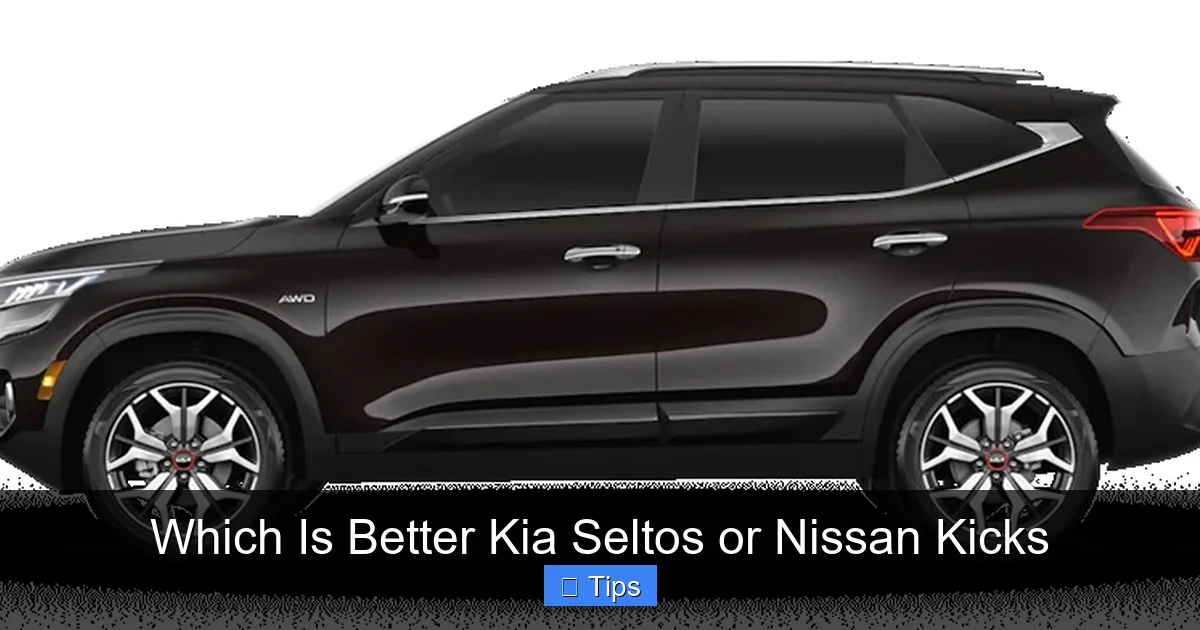
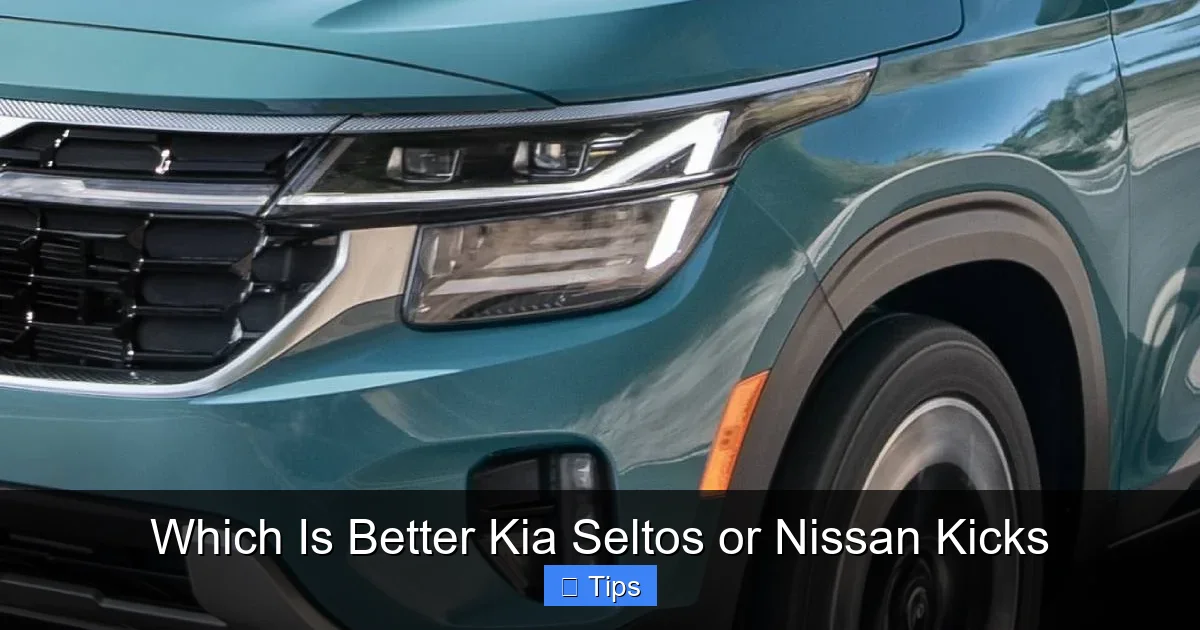
The Kia Seltos has a bold, rugged look with sharp lines, a wide grille, and aggressive headlights. It looks like a smaller version of the larger Kia Telluride, giving it a confident, SUV-like presence. Available LED lighting, roof rails, and dual exhaust tips enhance its sporty appeal.
The Nissan Kicks takes a more urban, minimalist approach. Its smooth curves, floating roof design, and slim LED taillights give it a modern, almost coupe-like appearance. It’s stylish without being flashy—perfect for city driving.
If you want a vehicle that stands out and looks ready for adventure, the Seltos wins. If you prefer a sleek, understated design that blends into the urban landscape, the Kicks is the way to go.
Interior Aesthetics
Inside, the Seltos feels more like a premium vehicle, with a driver-focused layout and high-quality materials. The available panoramic sunroof adds to the airy, open feel.
The Kicks’ cabin is clean and uncluttered, with a focus on functionality. The dashboard is simple, and controls are easy to reach. It’s not as luxurious, but it’s refreshingly straightforward.
Ultimately, design comes down to personal taste. Do you want a bold, tech-packed SUV or a sleek, efficient city cruiser?
Price, Value, and Ownership Costs
Let’s talk money—because let’s face it, that’s a big part of the decision.
Starting Prices
The Nissan Kicks starts at around $21,000, making it one of the most affordable SUVs in its class. Even the top-tier SR trim stays under $25,000, offering great value for the price.
The Kia Seltos starts at about $23,000 for the base LX trim. The turbocharged EX and SX trims can push the price past $28,000, especially with AWD and added options.
So, the Kicks is clearly the more budget-friendly option. But is it worth paying more for the Seltos?
Long-Term Value and Resale
Both Kia and Nissan have improved their reliability and resale value in recent years. According to industry reports, the Seltos tends to hold its value slightly better than the Kicks, thanks to Kia’s strong reputation and the Seltos’ more robust feature set.
However, the Kicks’ lower purchase price means you’re spending less upfront, which can offset lower resale value. Plus, its excellent fuel economy reduces long-term operating costs.
Warranty and Maintenance
Kia offers one of the best warranties in the industry: 10 years/100,000 miles on the powertrain and 5 years/60,000 miles bumper-to-bumper. Nissan provides 5 years/60,000 miles on the powertrain and 3 years/36,000 miles bumper-to-bumper.
If peace of mind and long-term protection matter to you, the Seltos’ warranty is a major advantage.
Conclusion: Which Is Better for You?
So, which is better—Kia Seltos or Nissan Kicks? The answer depends on your needs.
Choose the Kia Seltos if you want:
– More power and available all-wheel drive
– A more modern, tech-rich interior
– Better standard safety features
– A bold, rugged design
– A longer warranty
Choose the Nissan Kicks if you want:
– Superior fuel economy
– A lower starting price
– More rear passenger space and cargo flexibility
– A smooth, comfortable ride for city driving
– A sleek, urban-friendly design
Both are excellent subcompact SUVs with strong points. The Seltos is the better performer and tech leader, while the Kicks excels in efficiency and value. Test drive both, consider your priorities, and pick the one that feels right for your lifestyle.
Frequently Asked Questions
Which SUV has better fuel economy, the Kia Seltos or Nissan Kicks?
The Nissan Kicks is more fuel-efficient, offering up to 36 mpg on the highway compared to the Seltos’ 31 mpg. This makes the Kicks ideal for commuters and long-distance drivers.
Does the Kia Seltos come with all-wheel drive?
Yes, the Kia Seltos offers available all-wheel drive on higher trims, while the Nissan Kicks is only available with front-wheel drive.
Which SUV has more cargo space?
The Nissan Kicks offers slightly more cargo space when the rear seats are folded (50.1 cubic feet vs. 48.4), and its sliding rear seats add versatility.
Is the Kia Seltos more expensive than the Nissan Kicks?
Yes, the Seltos starts at a higher price point—around $23,000 compared to the Kicks’ $21,000—and can cost significantly more with options.
Which SUV has better safety features?
The Kia Seltos includes more standard advanced safety features, such as blind-spot monitoring and rear cross-traffic alert, even on lower trims.
Which SUV is better for city driving?
The Nissan Kicks is better suited for city driving due to its compact size, excellent fuel economy, and smooth ride, making it easy to maneuver in traffic.

At CarLegit, we believe information should be clear, factual, and genuinely helpful. That’s why every guide, review, and update on our website is created with care, research, and a strong focus on user experience.