
If you’re considering the Hyundai Santa Fe but want to explore your options, you’re in the right place. This guide breaks down the best SUVs comparable to the Hyundai Santa Fe—offering similar size, features, safety, and value. Whether you prioritize tech, towing, or fuel economy, we’ve got you covered.
In This Article
- 1 Key Takeaways
- 2 📑 Table of Contents
- 3 Introduction: Why Compare SUVs to the Hyundai Santa Fe?
- 4 What Makes the Hyundai Santa Fe Stand Out?
- 5 Top SUVs Comparable to the Hyundai Santa Fe
- 6 How to Choose the Right SUV for You
- 7 Final Thoughts: Is the Hyundai Santa Fe Still a Top Choice?
- 8 Frequently Asked Questions
- 8.1 Is the Kia Sorento really that similar to the Hyundai Santa Fe?
- 8.2 Which SUV has the best fuel economy compared to the Santa Fe?
- 8.3 Does any SUV comparable to the Santa Fe offer a third row?
- 8.4 Is the Mazda CX-50 worth considering over the Santa Fe?
- 8.5 How does the Hyundai Santa Fe’s warranty compare to its competitors?
- 8.6 Can the Hyundai Santa Fe tow as much as other midsize SUVs?
Key Takeaways
- Kia Sorento: Shares the same platform and many components with the Santa Fe, offering nearly identical performance and features at a competitive price.
- Mazda CX-50: Delivers a more premium interior and sportier handling, ideal for drivers who value driving dynamics over maximum cargo space.
- Toyota RAV4: A top-selling compact SUV with excellent reliability, fuel efficiency, and strong resale value—great for long-term ownership.
- Honda CR-V: Known for its spacious cabin, user-friendly tech, and smooth ride, making it a favorite among families.
- Ford Edge: Offers a more powerful engine lineup and a refined interior, appealing to those who want a bolder driving experience.
- Subaru Outback: Combines SUV versatility with wagon practicality, featuring standard all-wheel drive and rugged capability.
- Hyundai Santa Fe vs. Competitors: While the Santa Fe excels in value and warranty, rivals may offer better fuel economy, tech, or driving feel depending on your needs.
📑 Table of Contents
Introduction: Why Compare SUVs to the Hyundai Santa Fe?
Choosing the right SUV can feel overwhelming—especially when you’ve got your eye on a popular model like the Hyundai Santa Fe. It’s no surprise why: the Santa Fe blends practicality, modern tech, and a comfortable ride into one well-rounded package. With three rows of seating (in the larger Santa Fe XL), strong safety ratings, and a generous warranty, it’s a top pick for families and commuters alike.
But here’s the thing—just because the Santa Fe checks a lot of boxes doesn’t mean it’s the only game in town. The midsize SUV segment is packed with strong contenders, each offering unique strengths. Maybe you want better fuel economy, a more luxurious interior, or a sportier drive. Or perhaps you’re comparing prices and want to know if you’re getting the best value. That’s where this guide comes in.
In this article, we’ll walk you through the best SUVs comparable to the Hyundai Santa Fe. We’ll look at everything from performance and cargo space to tech features and long-term reliability. Whether you’re shopping new or used, leasing or buying, this comparison will help you make a confident decision. Let’s dive in.
What Makes the Hyundai Santa Fe Stand Out?
Before we compare the Santa Fe to its rivals, it’s important to understand what makes it such a compelling choice. The Hyundai Santa Fe has evolved significantly over the years, and the latest models reflect Hyundai’s push toward premium design and technology.

Visual guide about What Suv Is Comparable to Hyundai Santa Fe
Image source: s1.paultan.org
Performance and Powertrain Options
The 2024 Hyundai Santa Fe comes with two engine choices. The standard 2.5-liter four-cylinder engine delivers 191 horsepower, which is adequate for daily driving but may feel underpowered when fully loaded or towing. For more muscle, the available 2.5-liter turbocharged engine bumps output to 277 horsepower—plenty for highway merging and light towing.
Both engines are paired with an eight-speed automatic transmission and offer front-wheel drive (FWD) or all-wheel drive (AWD). The turbo model, in particular, gives the Santa Fe a noticeable edge in acceleration and towing capacity, which maxes out at 3,500 pounds when properly equipped.
Interior Space and Comfort
One of the Santa Fe’s biggest selling points is its spacious interior. The standard five-passenger layout offers generous legroom in both rows, while the optional third row (in the extended Santa Fe XL) makes it a true seven-seater. While the third row is best suited for kids, it’s a rare find in this class and adds serious versatility.
Materials are a step up from earlier models, with soft-touch surfaces, available leather upholstery, and a clean, modern dashboard design. The cabin is quiet, thanks to active noise cancellation and improved insulation, making long drives more enjoyable.
Technology and Safety Features
The Santa Fe comes well-equipped even in its base trim. Standard features include an 8-inch touchscreen, Apple CarPlay, Android Auto, and a six-speaker audio system. Higher trims add a 10.25-inch display, wireless device charging, a 12-speaker Bose audio system, and a digital gauge cluster.
Safety is another strong suit. Every Santa Fe includes Hyundai’s SmartSense suite, which features forward collision warning, automatic emergency braking, lane-keeping assist, adaptive cruise control, and blind-spot monitoring. It earns top marks from the IIHS and NHTSA, making it a safe choice for families.
Warranty and Value
Hyundai’s reputation for value shines through in its warranty. The Santa Fe comes with a 5-year/60,000-mile basic warranty and a 10-year/100,000-mile powertrain warranty—among the best in the industry. This peace of mind, combined with competitive pricing, makes the Santa Fe a smart long-term investment.
Top SUVs Comparable to the Hyundai Santa Fe
Now that we’ve covered what the Santa Fe brings to the table, let’s look at the competition. These SUVs offer similar size, features, and price points, but each has its own personality. Depending on your priorities, one of these might be a better fit.
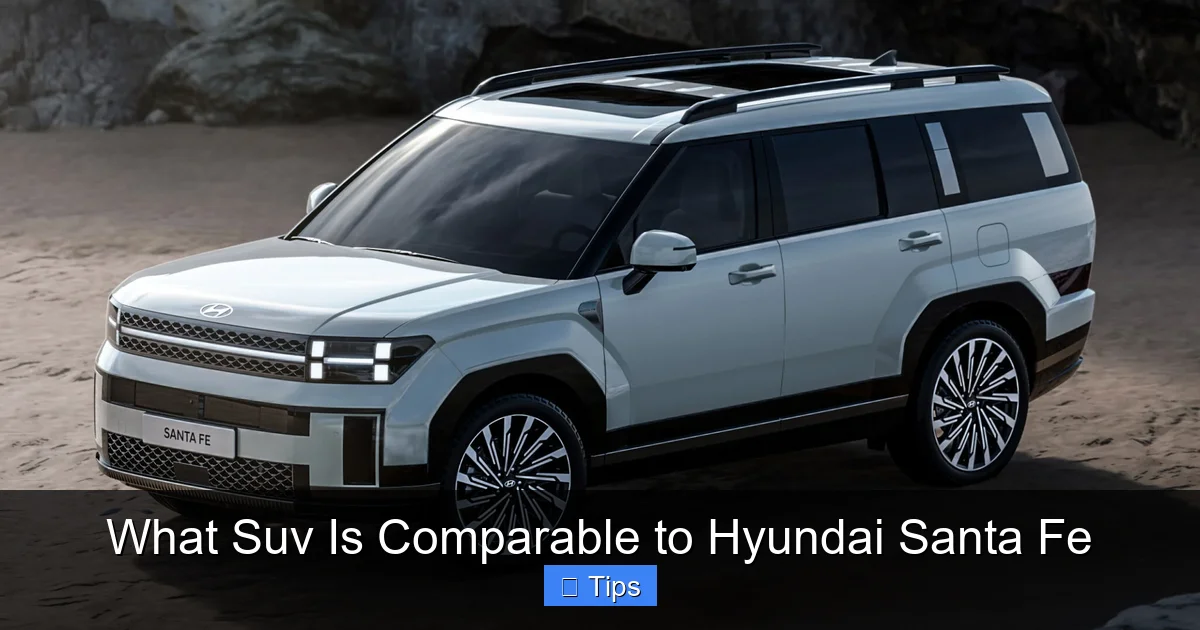
Visual guide about What Suv Is Comparable to Hyundai Santa Fe
Image source: carscoops.com
1. Kia Sorento: The Santa Fe’s Closest Cousin
If you like the Santa Fe, you’ll likely love the Kia Sorento. That’s because both SUVs are built on the same platform and share many mechanical components. In fact, the Sorento is essentially Hyundai’s sibling model, offering nearly identical performance, dimensions, and features.
The Sorento comes with a 2.5-liter four-cylinder engine (191 hp) or a turbocharged 2.5-liter (260 hp), both paired with an eight-speed automatic. Like the Santa Fe, it offers FWD or AWD and an optional third row. The Sorento’s third row is slightly more usable than the Santa Fe’s, though still best for shorter trips.
Inside, the Sorento mirrors the Santa Fe’s modern design but adds a few upscale touches, like available ambient lighting and a more driver-focused cockpit layout. Tech features are nearly identical, including the same infotainment system and safety suite.
So why choose the Sorento over the Santa Fe? It often comes with a lower starting price and slightly better fuel economy (up to 26 mpg combined vs. 24 mpg for the Santa Fe). It also has a slightly more rugged look, which some buyers prefer. If you’re comparing the two, take both for a test drive—you might not notice a huge difference.
2. Mazda CX-50: The Driver’s Choice
For drivers who care about how a car feels on the road, the Mazda CX-50 is a standout. While it’s technically a compact SUV (slightly smaller than the Santa Fe), it competes in the same space and price range. The CX-50 emphasizes driving enjoyment, with precise steering, a well-tuned suspension, and a premium interior that rivals luxury brands.
The base engine is a 2.5-liter four-cylinder with 187 horsepower, but the available turbocharged version delivers 256 hp—close to the Santa Fe’s turbo. Both engines are paired with a six-speed automatic and standard AWD, which is rare in this class.
The CX-50’s cabin is where it truly shines. High-quality materials, minimalist design, and intuitive controls create a serene driving environment. The infotainment system uses a rotary dial instead of touchscreen-only controls, which many find easier to use while driving.
Downsides? The CX-50 has less cargo space and no third row, so it’s not ideal for large families. But if you prioritize driving dynamics and interior refinement over maximum utility, the CX-50 is a compelling alternative.
3. Toyota RAV4: The Reliability King
The Toyota RAV4 is one of the best-selling SUVs in America—and for good reason. It’s known for bulletproof reliability, excellent resale value, and a wide range of trims and powertrains. While it’s a compact SUV, the RAV4 offers a lot of what makes the Santa Fe appealing.
The standard 2.5-liter four-cylinder engine produces 203 horsepower and comes with an eight-speed automatic and optional AWD. Fuel economy is a strong point, with up to 30 mpg combined—better than the Santa Fe. The RAV4 Hybrid and plug-in RAV4 Prime offer even greater efficiency and performance, with the Prime delivering 302 horsepower.
Inside, the RAV4 is practical and well-built, though not as upscale as the Santa Fe. The infotainment system is user-friendly, and higher trims add features like a JBL audio system and a digital rearview mirror. Safety is top-notch, with Toyota Safety Sense 2.0 standard on all models.
The RAV4 doesn’t offer a third row, and cargo space is slightly less than the Santa Fe’s. But if you value long-term dependability and low ownership costs, the RAV4 is hard to beat.
4. Honda CR-V: The Family Favorite
The Honda CR-V has long been a favorite among families, and the latest model continues that tradition. It’s spacious, fuel-efficient, and packed with thoughtful features. Like the RAV4, it’s a compact SUV, but it feels roomier inside than many midsize rivals.
The CR-V comes with a 1.5-liter turbocharged four-cylinder engine making 190 horsepower, paired with a continuously variable transmission (CVT) and optional AWD. Fuel economy is excellent, with up to 30 mpg combined. A hybrid version is also available, offering even better efficiency.
The interior is one of the CR-V’s strongest points. The dashboard is clean and intuitive, with a 7-inch touchscreen (9-inch on higher trims), wireless Apple CarPlay and Android Auto, and plenty of storage cubbies. Rear-seat legroom is generous, and the cargo area is deep and easy to access.
Safety features are comprehensive, with Honda Sensing standard on all trims. The CR-V earns top safety ratings and is known for its smooth, comfortable ride. While it lacks a third row and towing capacity is limited (1,500 pounds), it’s an excellent choice for daily driving and family errands.
5. Ford Edge: The Power Play
If you want more power and a bolder presence, the Ford Edge is worth considering. This midsize SUV offers a more performance-oriented experience than the Santa Fe, with a stronger standard engine and a sportier ST trim.
The base engine is a 2.0-liter turbocharged four-cylinder with 250 horsepower—already more than the Santa Fe’s base engine. The optional 2.7-liter twin-turbo V6 in the ST trim delivers 335 horsepower, making it one of the fastest SUVs in its class. Both engines come with an eight-speed automatic and optional AWD.
The Edge’s interior is well-appointed, with available leather seats, a panoramic sunroof, and a 12-inch touchscreen. The ST trim adds sport seats, upgraded suspension, and unique styling cues. However, the third row is cramped and best avoided unless you really need it.
Fuel economy is lower than the Santa Fe’s (around 23 mpg combined), and Ford’s warranty isn’t as strong. But if you want a more engaging drive and don’t mind the trade-offs, the Edge is a solid pick.
6. Subaru Outback: The All-Weather Adventurer
The Subaru Outback blurs the line between SUV and wagon, offering car-like handling with SUV capability. It’s built on the same platform as the Legacy sedan but adds standard AWD, higher ground clearance, and rugged styling.
The base engine is a 2.5-liter four-cylinder with 182 horsepower, while the optional 2.4-liter turbo delivers 260 hp. Both are paired with a CVT and standard AWD. Fuel economy is competitive, with up to 29 mpg combined.
The Outback’s interior is spacious and practical, with a 11.6-inch vertical touchscreen and plenty of cargo room. It doesn’t have a third row, but the flat load floor and wide tailgate make it great for gear-heavy lifestyles. Safety is a priority, with EyeSight driver aids standard.
If you live in a snowy or rural area and want all-weather confidence, the Outback is a top contender. It’s not as refined as the Santa Fe, but it’s more capable off the beaten path.
How to Choose the Right SUV for You
With so many great options, how do you decide which SUV is right for you? Start by asking yourself a few key questions.
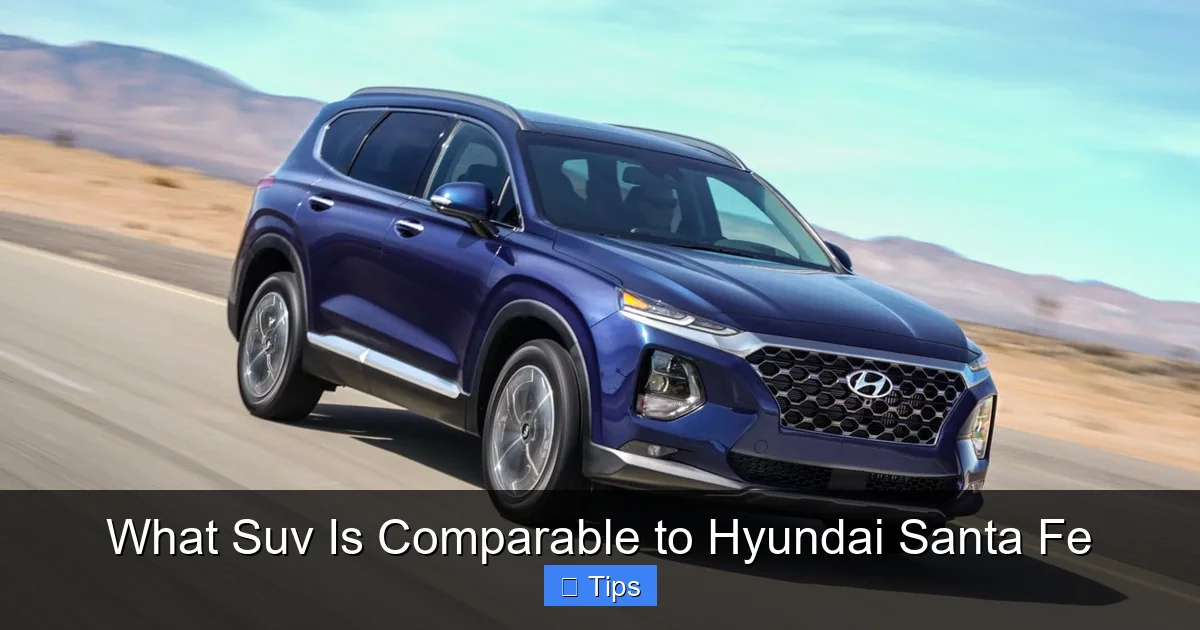
Visual guide about What Suv Is Comparable to Hyundai Santa Fe
Image source: focusdailynews.com
What’s Your Budget?
The Hyundai Santa Fe starts around $32,000, placing it in the middle of the pack. The Kia Sorento and Honda CR-V are similarly priced, while the Mazda CX-50 and Subaru Outback start slightly lower. The Ford Edge and Toyota RAV4 can go higher with options, especially the RAV4 Hybrid and Edge ST.
Don’t forget to factor in long-term costs like fuel, insurance, and maintenance. The RAV4 and CR-V tend to have lower ownership costs, while the Edge and CX-50 may cost more to insure.
How Many Passengers Do You Need?
If you regularly carry six or seven people, the Santa Fe, Sorento, and Edge are your best bets. The CR-V, RAV4, CX-50, and Outback are five-seaters only. Keep in mind that third rows in this class are often tight—great for kids, less so for adults.
What About Cargo and Towing?
The Santa Fe offers up to 72.1 cubic feet of cargo space with the rear seats folded. The Sorento is similar, while the CR-V and RAV4 offer around 65–70 cubic feet. The Outback leads with up to 75.7 cubic feet.
For towing, the Santa Fe (3,500 lbs), Sorento (3,500 lbs), and Edge (3,500–5,000 lbs) are strongest. The CR-V and RAV4 max out at 1,500–3,500 lbs, depending on the engine.
Do You Prioritize Tech or Driving Feel?
If you love cutting-edge tech, the Santa Fe and Sorento offer large screens and advanced driver aids. The Mazda CX-50 focuses more on driving enjoyment, with a sportier suspension and premium interior. The RAV4 and CR-V strike a balance between the two.
Final Thoughts: Is the Hyundai Santa Fe Still a Top Choice?
The Hyundai Santa Fe remains one of the most well-rounded midsize SUVs on the market. It offers a great mix of space, features, safety, and value, backed by an industry-leading warranty. For many buyers, it’s the perfect blend of practicality and peace of mind.
But the competition is fierce. The Kia Sorento is nearly identical and often cheaper. The Mazda CX-50 offers a more engaging drive. The Toyota RAV4 and Honda CR-V excel in reliability and efficiency. The Ford Edge delivers more power, and the Subaru Outback is ideal for outdoor adventures.
Ultimately, the best SUV for you depends on your lifestyle, budget, and priorities. Take your time, test drive a few models, and don’t rush the decision. Whether you choose the Santa Fe or one of its rivals, you’re likely to get a vehicle that serves you well for years to come.
Frequently Asked Questions
Is the Kia Sorento really that similar to the Hyundai Santa Fe?
Yes, the Kia Sorento and Hyundai Santa Fe are built on the same platform and share many components, including engines, transmissions, and safety systems. They offer nearly identical performance, interior space, and features, making them direct competitors.
Which SUV has the best fuel economy compared to the Santa Fe?
The Toyota RAV4 and Honda CR-V offer better fuel economy than the Santa Fe, with up to 30 mpg combined. The RAV4 Hybrid and CR-V Hybrid are even more efficient, making them ideal for long commutes or eco-conscious buyers.
Does any SUV comparable to the Santa Fe offer a third row?
Yes, the Kia Sorento and Ford Edge both offer optional third rows, similar to the Santa Fe. However, all three-row SUVs in this class have tight third-row seating, best suited for children or short trips.
Is the Mazda CX-50 worth considering over the Santa Fe?
If you prioritize driving enjoyment and interior quality, the Mazda CX-50 is a great choice. It has a more premium feel and sportier handling, though it lacks a third row and has less cargo space than the Santa Fe.
How does the Hyundai Santa Fe’s warranty compare to its competitors?
The Santa Fe’s 10-year/100,000-mile powertrain warranty is one of the best in the industry. Most competitors, like Toyota and Honda, offer shorter warranties (typically 5-year/60,000-mile basic and 5-year/60,000-mile powertrain).
Can the Hyundai Santa Fe tow as much as other midsize SUVs?
The Santa Fe can tow up to 3,500 pounds when properly equipped, which is competitive with the Kia Sorento and Honda Pilot. The Ford Edge ST can tow up to 5,000 pounds, making it the strongest in this group.

At CarLegit, we believe information should be clear, factual, and genuinely helpful. That’s why every guide, review, and update on our website is created with care, research, and a strong focus on user experience.