
Experiencing your Hyundai shutting off while driving is alarming and potentially dangerous. This issue can stem from electrical faults, fuel system problems, or sensor malfunctions. Understanding the root cause and acting quickly can prevent accidents and costly repairs.
In This Article
- 1 Key Takeaways
- 2 📑 Table of Contents
- 3 Why Does My Hyundai Shut Off While Driving?
- 4 Common Causes of Sudden Engine Shutdown
- 5 How to Diagnose the Problem
- 6 What to Do If Your Hyundai Shuts Off While Driving
- 7 Preventing Future Shutdowns
- 8 When to See a Mechanic
- 9 Conclusion
- 10 Frequently Asked Questions
- 10.1 Why does my Hyundai shut off when I come to a stop?
- 10.2 Can a bad battery cause my Hyundai to shut off while driving?
- 10.3 Is it safe to drive my Hyundai after it shuts off once?
- 10.4 How much does it cost to fix a Hyundai that shuts off while driving?
- 10.5 Can software updates fix my Hyundai’s stalling issue?
- 10.6 What should I do if my Hyundai shuts off and won’t restart?
Key Takeaways
- Electrical system issues like a failing alternator or bad battery can cause sudden engine shutdowns.
- Fuel delivery problems such as a clogged fuel filter or weak fuel pump may starve the engine of fuel.
- Faulty sensors including the crankshaft or camshaft position sensor can disrupt engine timing.
- Ignition system failures like worn spark plugs or a bad ignition coil can lead to stalling.
- Software glitches in the engine control unit (ECU) may require a reset or update.
- Overheating or low oil levels can trigger safety shutdowns to protect the engine.
- Regular maintenance and prompt diagnostics are key to preventing recurring shutdowns.
📑 Table of Contents
Why Does My Hyundai Shut Off While Driving?
Imagine you’re cruising down the highway, enjoying the drive in your Hyundai Elantra or Tucson, when suddenly—your car shuts off. No warning lights, no sputtering, just a complete loss of power. Your dashboard goes dark, and you’re left coasting to the shoulder, heart pounding. This isn’t just scary—it’s a serious safety risk.
If your Hyundai shuts off while driving, you’re not alone. Many Hyundai owners have reported similar experiences, especially in models like the Sonata, Accent, and Santa Fe. While the brand is known for reliability, no vehicle is immune to mechanical or electrical issues. The good news? Most causes are diagnosable and fixable—if you know what to look for.
In this guide, we’ll walk you through the most common reasons your Hyundai might shut off unexpectedly. We’ll break down each cause in simple terms, explain how to spot the signs, and offer practical tips to get you back on the road safely. Whether you’re a seasoned DIYer or prefer to leave it to the pros, this article will help you understand what’s happening under the hood.
Common Causes of Sudden Engine Shutdown

Visual guide about Why Does My Hyundai Shut Off While Driving
Image source: autozonic.com
When your Hyundai shuts off while driving, it’s usually a sign that the engine isn’t receiving what it needs to keep running. That could be fuel, spark, air, or proper electrical signals. Let’s explore the most frequent culprits behind this unnerving experience.
Electrical System Failures
One of the top reasons your Hyundai might stall unexpectedly is an electrical problem. Modern cars rely heavily on a complex network of sensors, fuses, and wiring. If any part of this system fails, the engine control unit (ECU) may shut down the engine to prevent damage.
A failing alternator is a prime suspect. The alternator charges the battery and powers the electrical system while the engine runs. If it stops working, the battery drains quickly, and the car can shut off—even while driving. You might notice dimming headlights, a battery warning light, or electrical accessories acting up before the shutdown.
Another possibility is a loose or corroded battery connection. Even a slight interruption in power can cause the ECU to reset or shut down the engine. Check your battery terminals for corrosion (a white, powdery substance) and ensure they’re tight and secure.
Fuel System Issues
Your engine needs a steady supply of fuel to run. If that supply is interrupted, your Hyundai will stall—no matter how fast you’re going.
A clogged fuel filter is a common cause. Over time, dirt and debris build up in the filter, restricting fuel flow. This is especially problematic under load, like when accelerating or climbing a hill. If your car runs fine at idle but stalls when you press the gas, a dirty fuel filter could be to blame.
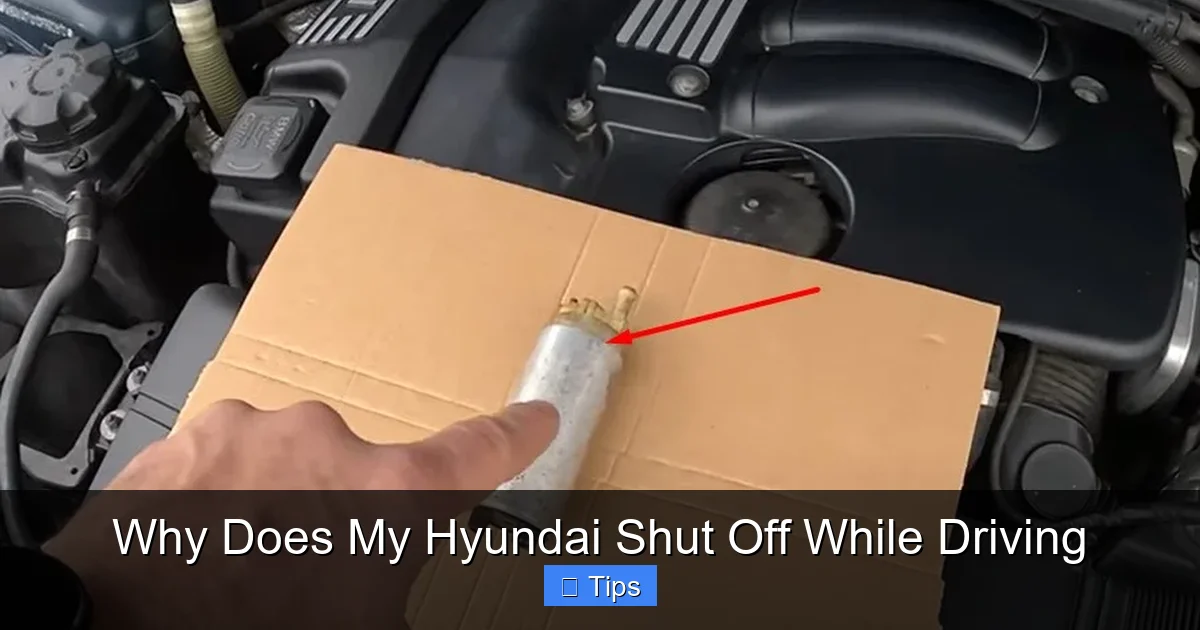
The fuel pump is another critical component. Located inside the gas tank, it sends fuel to the engine at the right pressure. A failing pump may work intermittently, causing the engine to sputter or shut off. You might hear a whining noise from the fuel tank or experience difficulty starting the car after it stalls.
Low fuel pressure can also result from a faulty fuel pressure regulator or a leak in the fuel line. These issues are harder to spot but can be diagnosed with a fuel pressure test at a repair shop.
Sensor Malfunctions
Hyundais rely on a network of sensors to monitor engine performance. If one of these sensors sends incorrect data—or stops working altogether—the ECU may shut down the engine to prevent damage.
The crankshaft position sensor (CKP) is especially important. It tells the ECU when to fire the spark plugs and inject fuel. If it fails, the engine may stall suddenly, especially at low speeds or idle. You might also notice difficulty starting or a check engine light.
Similarly, a faulty camshaft position sensor (CMP) can disrupt engine timing. While it’s less likely to cause a complete shutdown, it can lead to rough idling, poor acceleration, or stalling—particularly in stop-and-go traffic.
Other sensors to watch for include the mass airflow (MAF) sensor and the throttle position sensor (TPS). A dirty or failing MAF sensor can cause the engine to run lean (too much air, not enough fuel), leading to stalling. A bad TPS can confuse the ECU about throttle input, causing erratic behavior or shutdowns.
Ignition System Problems
Even with fuel and air, your engine needs a spark to ignite the mixture. If the ignition system fails, your Hyundai will shut off—no questions asked.
Worn spark plugs are a common culprit. Over time, the electrodes wear down, making it harder to create a strong spark. This can cause misfires, rough idling, or stalling. Most Hyundai models recommend replacing spark plugs every 30,000 to 100,000 miles, depending on the type (copper, platinum, or iridium).
Ignition coils are another weak point. Each cylinder has its own coil (in coil-on-plug systems), and if one fails, that cylinder won’t fire. This can cause the engine to shake, lose power, or shut off. A diagnostic scan tool can help pinpoint which coil is faulty.
Engine Overheating or Low Oil
Modern Hyundais are equipped with safety systems that shut down the engine if it overheats or runs low on oil. This is designed to prevent catastrophic engine damage.
If your temperature gauge spikes or you see steam coming from under the hood, pull over immediately. Overheating can be caused by a coolant leak, a faulty thermostat, or a broken water pump. Continuing to drive in this state can warp the engine block or blow the head gasket.
Low oil levels are equally dangerous. Oil lubricates engine parts and prevents overheating. If the oil is low—or if the oil pressure sensor fails—the ECU may shut off the engine to protect it. Check your oil level regularly and top it off as needed.
How to Diagnose the Problem

Visual guide about Why Does My Hyundai Shut Off While Driving
Image source: autoily.com
When your Hyundai shuts off while driving, the first step is to stay calm and get to a safe location. Once you’re parked, don’t try to restart the car immediately—especially if it overheated or made strange noises.
Check the Dashboard Lights
Turn the key to the “on” position (without starting the engine) and look at the dashboard. Are any warning lights on? Common ones include:
– Check Engine Light
– Battery Light
– Oil Pressure Light
– Temperature Light
These lights can give you clues about what’s wrong. For example, a battery light suggests an alternator issue, while an oil light points to low oil pressure.
Listen for Unusual Sounds
Before the shutdown, did you hear any unusual noises? A whining sound from the fuel tank could indicate a failing fuel pump. A clicking noise when turning the key might mean a weak battery. Rattling or knocking under the hood could signal engine damage.
Use an OBD2 Scanner
If your Hyundai has a check engine light, an OBD2 (On-Board Diagnostics) scanner can read the trouble codes stored in the ECU. These codes point to specific problems, like a faulty sensor or misfire.
You can buy a basic scanner for under $50 or visit an auto parts store—many offer free code reading. Just plug it into the OBD2 port (usually under the dashboard near the steering wheel), turn the key, and let it scan.
Common codes related to stalling include:
– P0335 – Crankshaft Position Sensor “A” Circuit
– P0340 – Camshaft Position Sensor “A” Circuit
– P0230 – Fuel Pump Primary Circuit
– P0171 – System Too Lean (Bank 1)
Inspect Fluid Levels
Pop the hood and check:
– Engine oil (use the dipstick)
– Coolant (in the overflow tank)
– Brake fluid
– Power steering fluid
Low levels can cause performance issues or trigger safety shutdowns. Top off fluids as needed, but be cautious—adding the wrong type can cause damage.
Test the Battery and Alternator
A weak battery or bad alternator can cause intermittent power loss. You can test these at home with a multimeter or visit a mechanic.
– Battery voltage should be around 12.6 volts when the car is off.
– When running, alternator output should be 13.7–14.7 volts.
If the alternator isn’t charging, the battery will drain, and the car will eventually shut off.
What to Do If Your Hyundai Shuts Off While Driving
Visual guide about Why Does My Hyundai Shut Off While Driving
Image source: psychoautos.com
Safety comes first. If your Hyundai shuts off while driving, follow these steps:
Stay Calm and Steer to Safety
Don’t panic. Keep both hands on the wheel and gently steer toward the shoulder or a safe area. Use your turn signal to alert other drivers.
Turn on Hazard Lights
As soon as you’re off the road, turn on your hazard lights. This warns other drivers and helps prevent accidents.
Do Not Attempt to Restart Immediately
If the engine overheated or made loud noises, don’t try to restart it. Let it cool down for at least 15–20 minutes. Forcing it could cause more damage.
Call for Help
If you can’t safely restart the car, call roadside assistance or a tow truck. Many Hyundai owners have roadside assistance through their warranty or insurance.
Document the Incident
Take notes about what happened:
– Speed and conditions when it shut off
– Warning lights or sounds
– Recent maintenance or repairs
This information helps mechanics diagnose the problem faster.
Preventing Future Shutdowns
The best way to avoid your Hyundai shutting off while driving is through regular maintenance and attention to warning signs.
Follow the Maintenance Schedule
Hyundai provides a detailed maintenance schedule in your owner’s manual. Stick to it. Key items include:
– Oil changes every 5,000–7,500 miles
– Air filter replacement every 15,000–30,000 miles
– Spark plug replacement as recommended
– Fuel filter replacement (if applicable)
Use Quality Fuel and Parts
Fill up at reputable gas stations and use the fuel grade recommended by Hyundai (usually regular unleaded). Avoid cheap additives or off-brand parts.
Address Warning Lights Promptly
Don’t ignore the check engine light. Even if the car seems fine, a small issue can escalate into a major failure. Get it checked within a few days.
Keep the Battery and Charging System in Good Shape
Clean battery terminals every 6 months. Have the alternator and battery tested annually, especially if your car is more than 3 years old.
Monitor Driving Habits
Avoid running the car on low fuel. A near-empty tank can cause the fuel pump to overheat and fail. Also, don’t ignore rough idling or hesitation—these are early signs of trouble.
When to See a Mechanic
While some issues can be fixed at home, others require professional help. See a certified Hyundai technician if:
– The car shuts off repeatedly
– You can’t identify the cause
– Warning lights stay on
– You hear unusual noises or smells
Hyundai dealerships have specialized tools and software to diagnose complex electrical and engine problems. They can also check for technical service bulletins (TSBs)—recalls or known issues for your model.
For example, some Hyundai Elantra and Sonata models from 2011–2014 had issues with the crankshaft position sensor causing stalling. Hyundai issued a TSB and extended the warranty for affected vehicles.
Conclusion
Having your Hyundai shut off while driving is a frightening experience, but it’s often preventable. Most causes—like electrical faults, fuel issues, or sensor failures—can be diagnosed and fixed with the right knowledge and tools.
The key is to stay alert to warning signs, follow your maintenance schedule, and act quickly when something feels off. Whether it’s a simple battery connection or a failing fuel pump, addressing the problem early can save you time, money, and stress.
If you’ve experienced this issue, don’t wait. Get your car inspected by a trusted mechanic. And remember: your safety is more important than any repair cost. With proper care, your Hyundai can continue to deliver reliable, smooth performance for years to come.
Frequently Asked Questions
Why does my Hyundai shut off when I come to a stop?
This is often caused by a faulty crankshaft position sensor, dirty fuel injectors, or a weak fuel pump. It can also be due to a vacuum leak or idle air control valve issue.
Can a bad battery cause my Hyundai to shut off while driving?
Yes, a weak battery or failing alternator can cause power loss. If the alternator isn’t charging the battery, the car will eventually shut off as electrical systems lose power.
Is it safe to drive my Hyundai after it shuts off once?
It’s not recommended. Even if it restarts, the underlying issue could cause another shutdown at any time—potentially in traffic or at high speed. Get it checked immediately.
How much does it cost to fix a Hyundai that shuts off while driving?
Costs vary: a new battery ($100–$200), fuel pump ($300–$600), or crankshaft sensor ($150–$300). Labor adds $100–$200. Diagnostics may cost $50–$100.
Can software updates fix my Hyundai’s stalling issue?
Yes, in some cases. Hyundai has released ECU updates for certain models to fix stalling caused by software glitches. A dealership can check if your car is eligible.
What should I do if my Hyundai shuts off and won’t restart?
Turn on hazards, call for a tow, and avoid repeated restart attempts. Forcing it could damage the starter or drain the battery further. Let a mechanic diagnose the issue.

At CarLegit, we believe information should be clear, factual, and genuinely helpful. That’s why every guide, review, and update on our website is created with care, research, and a strong focus on user experience.