
Knowing where to put coolant in your BMW 5 Series is essential for engine health and performance. This guide walks you through the exact location, proper procedure, and safety tips to ensure you top up your coolant correctly—without risking damage or overheating.
In This Article
- 1 Key Takeaways
- 2 📑 Table of Contents
- 3 Introduction: Why Coolant Matters in Your BMW 5 Series
- 4 Understanding Coolant and Its Role in BMW Engines
- 5 Locating the Coolant Reservoir in Your BMW 5 Series
- 6 How to Safely Add Coolant to Your BMW 5 Series
- 7 Common Mistakes to Avoid When Adding Coolant
- 8 When to Seek Professional Help
- 9 Maintaining Your BMW’s Cooling System Long-Term
- 10 Conclusion: Stay Cool, Stay Safe
- 11 Frequently Asked Questions
- 11.1 Can I use any coolant in my BMW 5 Series?
- 11.2 How often should I check the coolant level in my BMW?
- 11.3 Is it safe to drive if the coolant is low?
- 11.4 Why is my coolant disappearing quickly?
- 11.5 Can I mix different types of BMW coolant?
- 11.6 What should I do if I accidentally overfill the coolant?
Key Takeaways
- Coolant reservoir location: The coolant expansion tank is typically found on the passenger side of the engine bay, marked with a blue or black cap labeled “Coolant” or “Antifreeze.”
- Engine must be cool: Never open the coolant cap when the engine is hot—this can cause dangerous pressure release and severe burns.
- Use BMW-approved coolant: Always use G48, G11, G12, or G13 coolant types specified for your 5 Series model to avoid corrosion and system damage.
- Check levels regularly: Inspect coolant levels every 3,000–5,000 miles or during routine oil changes to prevent overheating.
- Top up slowly and safely: Pour coolant gradually into the reservoir up to the “MAX” line—never overfill.
- Watch for leaks or discoloration: Milky or oily coolant may indicate a head gasket issue; address it immediately.
- When in doubt, consult a professional: If you’re unsure about the process or notice irregularities, visit a certified BMW technician.
📑 Table of Contents
- Introduction: Why Coolant Matters in Your BMW 5 Series
- Understanding Coolant and Its Role in BMW Engines
- Locating the Coolant Reservoir in Your BMW 5 Series
- How to Safely Add Coolant to Your BMW 5 Series
- Common Mistakes to Avoid When Adding Coolant
- When to Seek Professional Help
- Maintaining Your BMW’s Cooling System Long-Term
- Conclusion: Stay Cool, Stay Safe
Introduction: Why Coolant Matters in Your BMW 5 Series
Your BMW 5 Series is a finely tuned machine—engineered for performance, luxury, and precision. But even the most advanced engineering needs proper care to keep running smoothly. One of the most critical yet often overlooked aspects of BMW maintenance is coolant. Coolant, also known as antifreeze, plays a vital role in regulating your engine’s temperature, preventing overheating, and protecting internal components from corrosion and freezing.
Unlike simpler cars where coolant maintenance might be a straightforward task, BMWs—especially the 5 Series—come with specific requirements and design nuances. From the type of coolant used to the exact location of the reservoir, every detail matters. If you’ve ever popped the hood and wondered, “Where do I even put coolant in this thing?”—you’re not alone. Many BMW owners, especially first-time owners or those new to DIY maintenance, feel intimidated by the sleek but complex engine bay.
The good news? Adding coolant to your BMW 5 Series is easier than it looks—once you know where to look and what to do. This guide will walk you through everything you need to know: from identifying the correct reservoir to choosing the right coolant, performing a safe top-up, and recognizing warning signs that something might be wrong. Whether you drive a 2010 535i, a 2018 540i, or a 2023 530e plug-in hybrid, the principles remain consistent. Let’s get started.
Understanding Coolant and Its Role in BMW Engines
Before we dive into the “where” and “how,” let’s take a moment to understand what coolant actually does—and why it’s so important for your BMW 5 Series.
Visual guide about Where to Put Coolant in Bmw 5 Series
Image source: i.ytimg.com
What Is Coolant and How Does It Work?
Coolant is a specialized fluid that circulates through your engine and radiator to absorb excess heat. As your engine runs, it generates intense heat—up to 2,000°F in combustion chambers. Without proper cooling, metal components would warp, seals would fail, and the engine could seize. Coolant absorbs this heat and carries it to the radiator, where it’s dissipated into the air.
But coolant isn’t just about heat. It also contains additives that prevent rust, lubricate the water pump, and protect against freezing in cold climates. In BMWs, the coolant is typically a mixture of ethylene glycol and water (usually 50/50), along with proprietary corrosion inhibitors designed specifically for aluminum engine blocks and radiators.
Why BMWs Need Special Coolant
BMW engines are built with precision and use materials like aluminum and magnesium, which are more susceptible to corrosion than traditional cast iron. That’s why BMW specifies exact coolant formulations—such as G48, G11, G12, or G13—depending on the model year and engine type.
Using the wrong coolant can lead to:
- Corrosion of radiator and water pump components
- Clogged coolant passages
- Reduced heat transfer efficiency
- Premature water pump failure
For example, older 5 Series models (E60, F10) often use G11 or G12 coolant, while newer G30 models (2017+) typically require G13. Always check your owner’s manual or the label on the coolant reservoir to confirm the correct type.
Signs Your BMW Needs Coolant
Low coolant doesn’t always trigger a warning light immediately—but your car will give you clues. Watch for:
- The temperature gauge creeping into the red zone
- Heater blowing cold air even when set to hot
- Coolant leaks under the car (usually green, blue, or pink puddles)
- Steam or sweet-smelling vapor from the engine bay
- Dashboard warning light (often a radiator symbol or “Engine Overheat”)
If you notice any of these signs, it’s time to check your coolant level—and possibly top it up.
Locating the Coolant Reservoir in Your BMW 5 Series
Now for the main event: where exactly do you put coolant in a BMW 5 Series? The answer is consistent across most models, but let’s break it down step by step.
Visual guide about Where to Put Coolant in Bmw 5 Series
Image source: i.ytimg.com
Step 1: Open the Hood Safely
Start by parking your car on a level surface and turning off the engine. Make sure the car has been off for at least 30–60 minutes—this allows the engine and coolant system to cool down. Opening the coolant cap on a hot engine can cause a sudden release of pressurized steam, leading to serious burns.
Locate the hood release lever inside the car—usually under the dashboard on the driver’s side. Pull it, then go to the front of the car and lift the hood. Secure it with the prop rod or hydraulic strut.
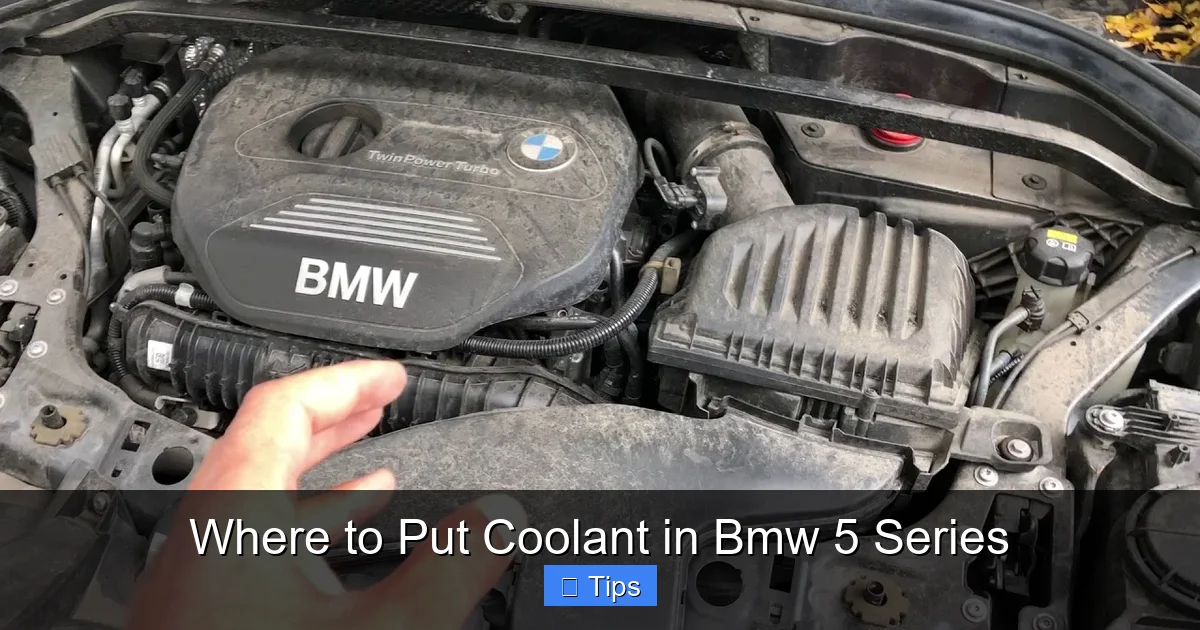
Step 2: Identify the Coolant Expansion Tank
Once the hood is open, look toward the passenger side of the engine bay. You’re looking for a translucent plastic tank with markings for “MIN” and “MAX.” This is the coolant expansion tank (also called the overflow reservoir).
In most BMW 5 Series models—from the E60 (2004–2010) to the G30 (2017–present)—this tank is located near the firewall, behind the radiator. It’s usually black or dark gray with a blue or black cap. The cap often has a warning symbol (a thermometer or radiator icon) and may be labeled “Coolant” or “Antifreeze.”
Pro Tip: If you’re having trouble finding it, look for a hose connecting the tank to the radiator. That’s a sure sign you’ve found the right component.
Step 3: Check the Coolant Level
With the engine cool, check the coolant level through the translucent walls of the reservoir. The fluid should be between the “MIN” and “MAX” lines. If it’s below “MIN,” you’ll need to add coolant.
Important: Never open the cap if the engine is hot. Even if the coolant level looks low, wait until the engine cools completely. The system is pressurized when hot, and opening the cap can cause a dangerous spray of hot coolant.
Model-Specific Notes
While the general location is consistent, there are slight variations:
- E60 (2004–2010): The reservoir is on the passenger side, near the firewall. The cap is often blue.
- F10 (2011–2016): Similar placement, but some models have a black cap with a yellow warning label.
- G30 (2017–present): The reservoir is still on the passenger side, but the cap may be labeled “Coolant – Do Not Open When Hot.”
- Plug-in Hybrids (e.g., 530e): The location is the same, but be extra cautious around high-voltage components.
If you’re still unsure, consult your owner’s manual or look for a diagram under the hood—many BMWs include a label showing fluid locations.
How to Safely Add Coolant to Your BMW 5 Series
Now that you’ve found the reservoir, it’s time to add coolant—safely and correctly.
Visual guide about Where to Put Coolant in Bmw 5 Series
Image source: bestfordriver.com
Step 1: Gather the Right Supplies
Before you begin, make sure you have:
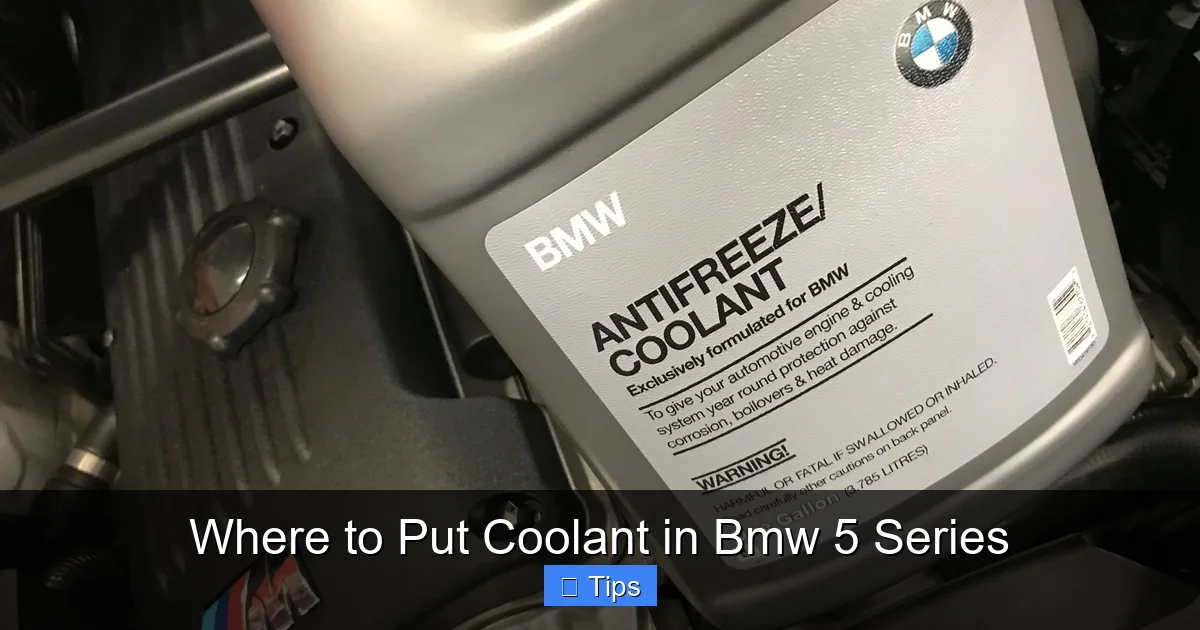
- BMW-approved coolant (G12, G13, etc.)—available at BMW dealerships or auto parts stores
- A clean funnel (to avoid spills)
- Distilled water (if mixing your own 50/50 solution)
- Gloves and safety glasses (coolant is toxic and can irritate skin)
Never use tap water. Minerals in tap water can cause scale buildup and corrosion. Always use distilled water if you’re mixing coolant concentrate.
Step 2: Open the Reservoir Cap
With the engine cool, slowly twist the reservoir cap counterclockwise. You may hear a slight hiss—this is normal as pressure releases. Do not remove the cap quickly. Wait until all pressure is gone before fully removing it.
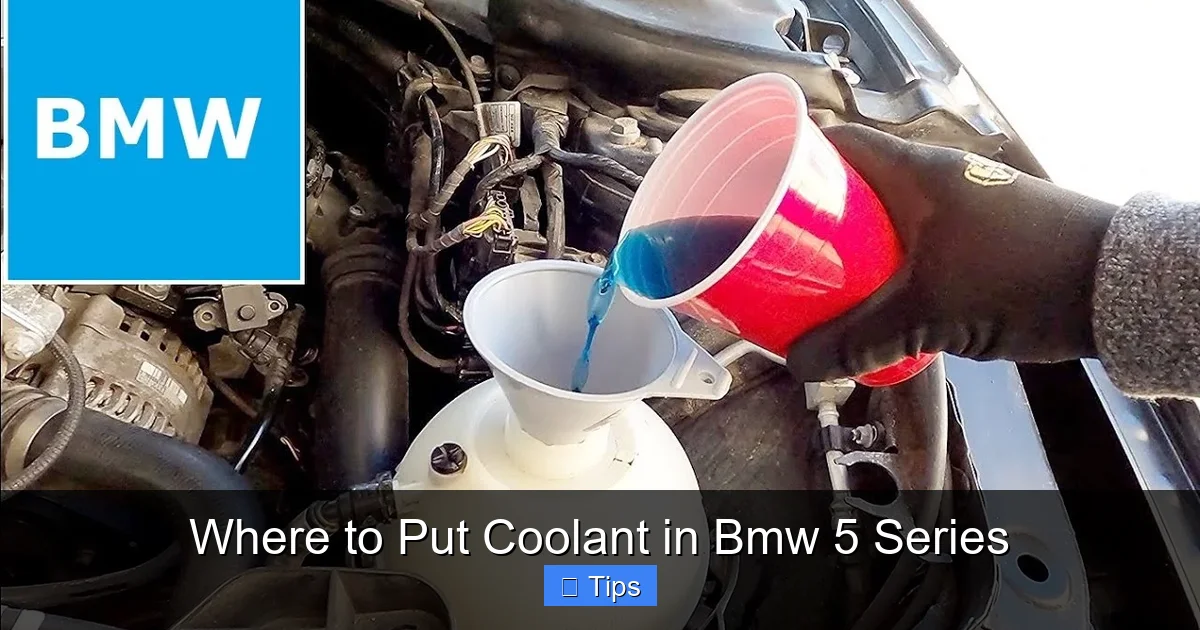
Step 3: Add Coolant Gradually
Insert the funnel into the opening and slowly pour the coolant. Add it until the level reaches the “MAX” line. Do not overfill—excess coolant will be expelled through the overflow tube when the engine heats up.
If the reservoir is completely empty, you may need to add a significant amount. In that case, it’s best to:
- Add about half the required amount
- Start the engine and let it run for 5–10 minutes (with the cap off)
- Turn off the engine and let it cool
- Check the level again and top up if needed
This process helps remove air pockets from the system, which can cause overheating.
Step 4: Replace the Cap and Clean Up
Once the coolant is at the correct level, securely tighten the cap. Wipe away any spills—coolant is slippery and can damage paint or rubber components.
Dispose of any used coolant properly. Never pour it down the drain or on the ground. Most auto parts stores accept used coolant for recycling.
Pro Tips for a Smooth Process
- Use a coolant mixture that’s already pre-diluted (50/50) to save time and avoid mistakes.
- If you’re topping up frequently, investigate for leaks—constant low coolant isn’t normal.
- Keep a bottle of BMW coolant in your trunk for emergencies, especially on long trips.
Common Mistakes to Avoid When Adding Coolant
Even experienced drivers can make mistakes when handling coolant. Here are the most common pitfalls—and how to avoid them.
Opening the Cap on a Hot Engine
This is the #1 mistake. When the engine is hot, the coolant system is under pressure—up to 15 psi. Opening the cap can cause a violent eruption of steam and hot coolant, leading to severe burns. Always wait until the engine is completely cool.
Using the Wrong Coolant
Using generic coolant or the wrong type can damage your BMW’s cooling system. For example, mixing G12 with G13 can cause gel formation and block coolant flow. Always use the coolant specified for your model.
Overfilling the Reservoir
Adding too much coolant can cause it to overflow when the engine heats up. This not only wastes fluid but can also lead to contamination or damage to nearby components. Stick to the “MAX” line.
Ignoring the Coolant Type Label
Many BMWs have a label on the reservoir or under the hood indicating the correct coolant type. Don’t ignore it. If your car requires G13 coolant, don’t substitute with G11—even if it looks similar.
Skipping the Air Bleed Process
If you’ve added a large amount of coolant or replaced the system, air pockets can form. These prevent proper circulation and cause hot spots. Always run the engine with the cap off (when cool) to allow air to escape.
Not Checking for Leaks
Low coolant levels often indicate a leak. If you’re topping up more than once every few months, inspect hoses, the radiator, water pump, and heater core for signs of leakage. A professional inspection may be needed.
When to Seek Professional Help
While adding coolant is a DIY-friendly task, some situations require a certified BMW technician.
Persistent Low Coolant Levels
If your coolant keeps dropping despite regular top-ups, there’s likely a leak. Common culprits include:
- Cracked radiator
- Faulty water pump
- Leaking heater core
- Damaged hoses or clamps
- Blown head gasket (indicated by white smoke, milky oil, or bubbling in the reservoir)
A mechanic can perform a pressure test to locate the leak and recommend repairs.
Coolant Discoloration or Contamination
Coolant should be bright green, blue, pink, or purple—depending on the type. If it looks brown, milky, or oily, there may be:
- Engine oil mixing with coolant (head gasket failure)
- Transmission fluid contamination (in automatic models)
- Rust or debris buildup
These issues require immediate attention to prevent engine damage.
Overheating or Warning Lights
If your temperature gauge rises into the red or you see an overheating warning, pull over safely and turn off the engine. Do not continue driving—this can cause catastrophic engine failure. Call for roadside assistance or a tow to a BMW service center.
Complex Coolant System Repairs
Some BMW 5 Series models have auxiliary coolers, electric water pumps, or hybrid-specific cooling circuits. These systems are more complex and may require specialized tools and knowledge. When in doubt, let the experts handle it.
Maintaining Your BMW’s Cooling System Long-Term
Adding coolant is just one part of cooling system care. To keep your BMW 5 Series running smoothly, follow these maintenance tips:
Regular Inspections
Check coolant levels every month or during oil changes. Look for cracks, leaks, or discoloration in hoses and the reservoir.
Flush and Replace Coolant
BMW recommends replacing coolant every 4–6 years or 60,000–100,000 miles, depending on the model. A coolant flush removes old fluid and contaminants, ensuring optimal performance.
Monitor the Radiator and Fans
Keep the radiator clean and free of debris. Ensure cooling fans activate when the engine is hot. Faulty fans can cause overheating even with proper coolant levels.
Use Only Genuine or OEM-Approved Parts
When replacing hoses, caps, or the reservoir, use BMW OEM or high-quality aftermarket parts designed for your specific model.
Keep Records
Document coolant additions, flushes, and repairs. This helps track maintenance and can increase resale value.
Conclusion: Stay Cool, Stay Safe
Knowing where to put coolant in your BMW 5 Series isn’t just about convenience—it’s about protecting your investment and ensuring your car performs at its best. With the right knowledge, tools, and a little caution, you can safely maintain your cooling system and avoid costly repairs down the road.
Remember: always let the engine cool, use the correct coolant, fill to the “MAX” line, and watch for warning signs. When in doubt, consult your owner’s manual or a certified BMW technician. Your 5 Series deserves the best care—and now, you’re equipped to give it.
Frequently Asked Questions
Can I use any coolant in my BMW 5 Series?
No, you should only use BMW-approved coolant such as G48, G11, G12, or G13, depending on your model year. Using the wrong type can cause corrosion, clogs, or system failure.
How often should I check the coolant level in my BMW?
Check the coolant level every 3,000–5,000 miles or during routine oil changes. Also inspect it if you notice overheating or leaks.
Is it safe to drive if the coolant is low?
You can drive a short distance if the level is slightly below “MIN,” but top it up as soon as possible. Driving with very low coolant can cause overheating and engine damage.
Why is my coolant disappearing quickly?
Rapid coolant loss usually indicates a leak in the radiator, hoses, water pump, or head gasket. Have it inspected by a professional immediately.
Can I mix different types of BMW coolant?
No, never mix different coolant types (e.g., G12 and G13). This can cause chemical reactions, gel formation, and system damage. Always use the same type or flush the system before switching.
What should I do if I accidentally overfill the coolant?
If you overfill, excess coolant will usually escape through the overflow tube when the engine heats up. Wipe up any spills and monitor the level after cooling. Avoid driving with a severely overfilled reservoir.

At CarLegit, we believe information should be clear, factual, and genuinely helpful. That’s why every guide, review, and update on our website is created with care, research, and a strong focus on user experience.