
The 2011 BMW 328i requires high-quality synthetic oil, specifically 5W-30 or 0W-30, that meets BMW Longlife-01 (LL-01) specifications. Using the correct oil ensures engine longevity, fuel efficiency, and protection under various driving conditions.
In This Article
- 1 Key Takeaways
- 2 📑 Table of Contents
- 3 What Oil Does a 2011 BMW 328i Take?
- 4 Understanding Your 2011 BMW 328i Engine
- 5 Recommended Oil Viscosity for the 2011 BMW 328i
- 6 Why Synthetic Oil Is a Must for Your 328i
- 7 BMW Longlife-01 (LL-01) Certification: What It Means
- 8 Top Recommended Oil Brands for the 2011 BMW 328i
- 9 How Often Should You Change the Oil in a 2011 BMW 328i?
- 10 DIY Oil Change Tips for the 2011 BMW 328i
- 11 Common Mistakes to Avoid
- 12 Conclusion
- 13 Frequently Asked Questions
- 13.1 Can I use 10W-40 oil in my 2011 BMW 328i?
- 13.2 Is it okay to mix different brands of synthetic oil?
- 13.3 How much oil does a 2011 BMW 328i hold?
- 13.4 Can I extend oil changes beyond 10,000 miles?
- 13.5 Why does my BMW show an oil service light even after an oil change?
- 13.6 Can I use diesel oil in my gasoline BMW 328i?
Key Takeaways
- Use only synthetic oil: The 2011 BMW 328i engine is designed for full synthetic oil to maintain performance and protect internal components.
- Recommended viscosity: 5W-30 or 0W-30: These grades provide optimal cold-start protection and high-temperature stability.
- Must meet BMW Longlife-01 (LL-01) standard: This certification ensures the oil is formulated for extended drain intervals and BMW engine requirements.
- Avoid conventional or non-approved oils: Using the wrong oil can trigger warning lights, reduce performance, or cause engine damage.
- Change oil every 7,500–10,000 miles: BMW recommends longer intervals with approved synthetic oils, but driving conditions may require more frequent changes.
- Check oil level regularly: The 328i doesn’t have a traditional dipstick—use the electronic oil level sensor via the iDrive system.
- Top brands include Castrol, Mobil 1, and Shell Rotella: These offer BMW-approved formulations trusted by enthusiasts and mechanics.
📑 Table of Contents
- What Oil Does a 2011 BMW 328i Take?
- Understanding Your 2011 BMW 328i Engine
- Recommended Oil Viscosity for the 2011 BMW 328i
- Why Synthetic Oil Is a Must for Your 328i
- BMW Longlife-01 (LL-01) Certification: What It Means
- Top Recommended Oil Brands for the 2011 BMW 328i
- How Often Should You Change the Oil in a 2011 BMW 328i?
- DIY Oil Change Tips for the 2011 BMW 328i
- Common Mistakes to Avoid
- Conclusion
What Oil Does a 2011 BMW 328i Take?
If you own a 2011 BMW 328i, you already know it’s more than just a car—it’s a driving experience. From its smooth inline-6 engine to its responsive handling, the 328i delivers a blend of luxury and performance that few sedans can match. But to keep that engine purring like it should, one of the most important things you can do is use the right oil.
Choosing the correct oil for your 2011 BMW 328i isn’t just about following a recommendation—it’s about protecting your investment. BMW engines, especially the N52 inline-6 found in the 328i, are precision-built machines with tight tolerances and advanced engineering. They demand high-quality lubrication to operate efficiently and last for hundreds of thousands of miles.
Using the wrong oil can lead to a host of problems: increased engine wear, reduced fuel economy, sludge buildup, and even dashboard warning lights. Worse, it could void your warranty or lead to costly repairs down the road. That’s why it’s crucial to understand exactly what oil your 2011 BMW 328i needs—and why not all oils are created equal.
In this guide, we’ll walk you through everything you need to know about oil for your 2011 BMW 328i. From viscosity grades and synthetic requirements to top brand recommendations and maintenance tips, we’ve got you covered. Whether you’re a DIY enthusiast or just want to be informed before your next oil change, this article will help you make the right choice.
Understanding Your 2011 BMW 328i Engine

Visual guide about What Oil Does a 2011 Bmw 328i Take
Image source: batterytools.net
Before diving into oil types, it helps to understand the engine under the hood of your 2011 BMW 328i. This model is powered by the N52 inline-6 engine, a naturally aspirated 3.0-liter unit that produces around 230 horsepower. Known for its smoothness, reliability, and efficiency, the N52 was a significant improvement over its predecessor, the M54.
One of the key features of the N52 engine is its use of Valvetronic variable valve lift technology. This system adjusts the intake valve lift electronically, eliminating the need for a traditional throttle body in many driving conditions. The result is better fuel economy and reduced emissions. However, Valvetronic also places higher demands on engine oil. Because the system relies on precise hydraulic operation, it requires oil that maintains consistent viscosity and resists breakdown under heat and pressure.
Another important aspect of the N52 is its aluminum construction. The engine block and cylinder head are made from lightweight aluminum, which improves performance and fuel efficiency. But aluminum expands and contracts more than cast iron, meaning the engine relies heavily on proper lubrication to prevent metal-to-metal contact and wear.
The N52 also uses a timing chain instead of a belt, which is more durable but still requires clean, high-quality oil to function smoothly. Over time, low-quality or incorrect oil can cause chain stretch or tensioner issues, leading to noise or even engine damage.
Given these engineering details, it’s clear why BMW has strict oil requirements for the 328i. The engine wasn’t designed to run on just any oil—it needs a specific type that can handle its advanced systems and maintain performance over time.
Recommended Oil Viscosity for the 2011 BMW 328i
Visual guide about What Oil Does a 2011 Bmw 328i Take
Image source: madisonrising.com
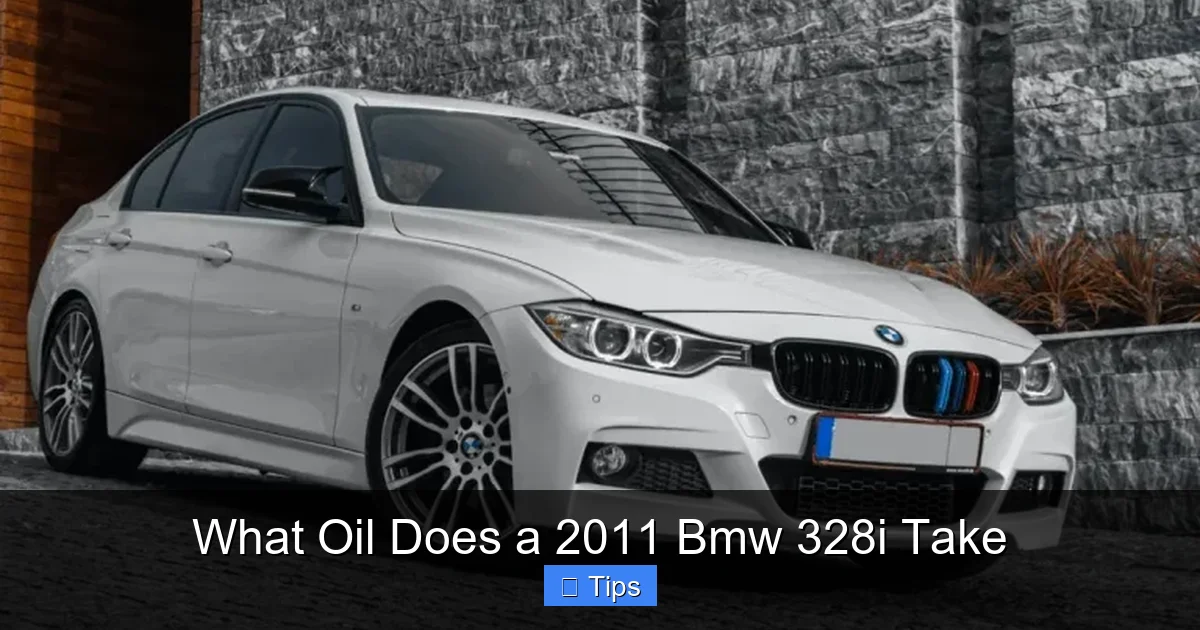
When it comes to oil, viscosity is one of the most important factors. Viscosity refers to how thick or thin the oil is—and how well it flows at different temperatures. For the 2011 BMW 328i, BMW officially recommends using synthetic oil with a viscosity of **5W-30** or **0W-30**.
Let’s break that down. The “W” stands for “winter,” and the number before it (5W or 0W) indicates how well the oil flows in cold temperatures. A lower number means better cold-weather performance. The number after the “W” (30) refers to the oil’s thickness at operating temperature. A 30-weight oil is considered mid-range—thick enough to protect engine parts at high temps, but not so thick that it reduces fuel efficiency.
So why 5W-30 or 0W-30? These grades strike the perfect balance for the N52 engine. They provide excellent cold-start protection, which is crucial for reducing wear during startup—when most engine wear occurs. They also maintain stable viscosity at high temperatures, ensuring proper lubrication even during spirited driving or hot weather.
You might wonder: can I use 10W-30 or 5W-40 instead? While these oils might seem similar, they’re not ideal for the 328i. A 10W-30 is thicker in cold weather, which can make cold starts harder on the engine and reduce fuel economy. A 5W-40, while offering great high-temperature protection, may be too thick for the N52’s tight tolerances, potentially reducing oil flow and increasing strain on the oil pump.
BMW’s recommendation of 5W-30 or 0W-30 is based on extensive testing and real-world performance data. These grades are designed to work seamlessly with the engine’s Valvetronic system, timing chain, and aluminum components.
One tip: if you live in a very cold climate (below 0°F), 0W-30 may offer slightly better cold-start performance. In milder climates, 5W-30 is perfectly fine. Either way, always check your owner’s manual or consult a BMW specialist to confirm the best choice for your driving conditions.
Why Synthetic Oil Is a Must for Your 328i
Visual guide about What Oil Does a 2011 Bmw 328i Take
Image source: i.ytimg.com
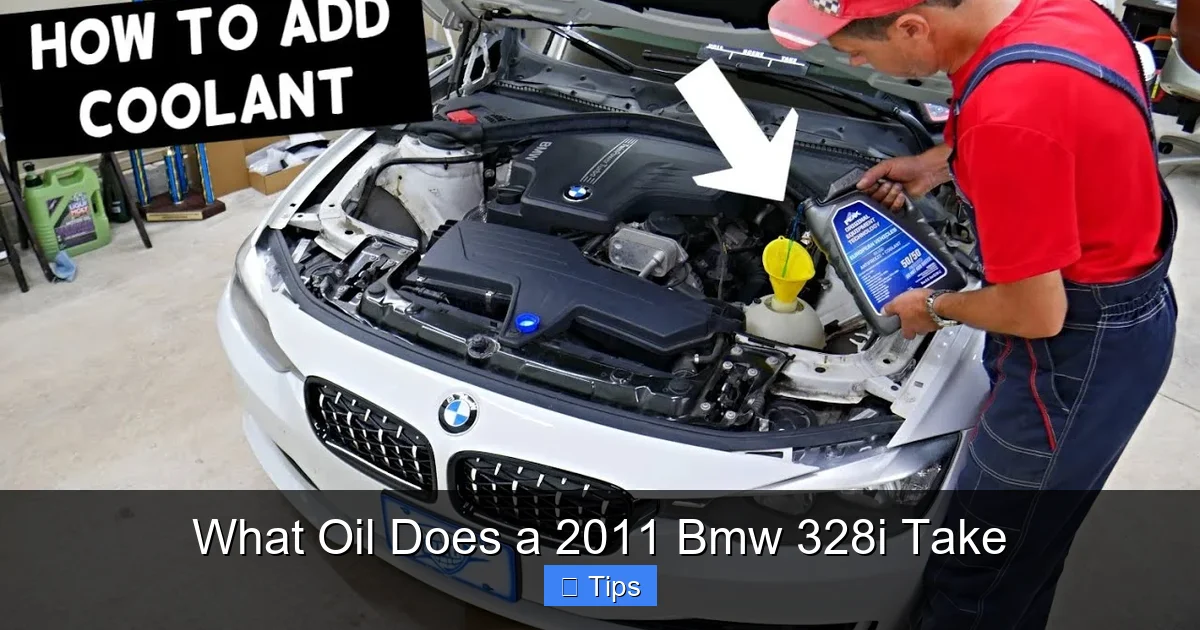
If you’re still using conventional oil in your 2011 BMW 328i, it’s time for a change—literally. BMW requires **full synthetic oil** for this model, and there’s a very good reason why.
Synthetic oil is engineered in a lab to have a more uniform molecular structure than conventional oil, which is refined from crude oil. This means synthetic oil offers superior performance in several key areas:
First, it provides better protection at extreme temperatures. Whether you’re starting your car on a freezing winter morning or driving through summer traffic, synthetic oil maintains its viscosity and lubricating properties far better than conventional oil.
Second, synthetic oil resists breakdown and oxidation. Over time, conventional oil can thicken, form sludge, and lose its effectiveness—especially in high-heat environments like an engine. Synthetic oil lasts longer and stays cleaner, which helps prevent deposits on critical components like the Valvetronic system.
Third, synthetic oil improves fuel efficiency. Because it flows more easily, it reduces internal engine friction, allowing the engine to operate more efficiently. This can translate to better gas mileage and smoother performance.
BMW’s N52 engine was designed with synthetic oil in mind. Its tight tolerances, advanced valve train, and aluminum construction all benefit from the consistent lubrication that only synthetic oil can provide. Using conventional oil—or even a synthetic blend—can lead to increased wear, reduced performance, and potential engine damage.
Another advantage of synthetic oil is its compatibility with extended oil change intervals. BMW allows oil changes every 7,500 to 10,000 miles when using approved synthetic oil. This is possible because synthetic oil degrades more slowly and maintains its protective qualities longer than conventional oil.
Of course, not all synthetic oils are created equal. That’s why it’s essential to choose a product that meets BMW’s specific standards—more on that in the next section.
BMW Longlife-01 (LL-01) Certification: What It Means
You’ve probably seen the term “BMW Longlife-01” or “LL-01” on oil bottles. But what does it actually mean—and why does it matter for your 2011 BMW 328i?
BMW Longlife-01 is a certification standard that ensures the oil meets BMW’s strict requirements for performance, protection, and longevity. Oils that carry this certification have been tested and approved by BMW for use in engines like the N52 found in the 328i.
To earn LL-01 certification, an oil must pass a series of rigorous tests, including:
– **High-temperature stability:** The oil must resist thinning and oxidation under extreme heat.
– **Shear stability:** It must maintain its viscosity even under mechanical stress.
– **Wear protection:** It must protect engine components from metal-to-metal contact.
– **Cleanliness:** It must prevent sludge and deposit formation.
– **Compatibility:** It must work with BMW’s Valvetronic and timing chain systems.
Using oil that meets LL-01 ensures that your engine is getting the protection it was designed for. It also allows you to take advantage of BMW’s recommended oil change intervals—up to 10,000 miles under normal driving conditions.
But here’s the catch: not all 5W-30 or 0W-30 synthetic oils are LL-01 certified. Some may meet general industry standards (like API or ACEA), but they haven’t been tested or approved by BMW. Using non-certified oil can trigger the “Oil Service” or “Engine Oil” warning light on your dashboard, even if the oil level is fine.
That’s because BMW’s onboard computer monitors oil quality and expects oil that meets its specifications. If it detects oil that doesn’t meet LL-01, it may assume the oil has degraded prematurely and prompt you to change it—even if it’s still good.
To avoid confusion, always look for the BMW Longlife-01 certification on the oil bottle. It’s usually printed clearly on the label, often with a BMW logo or “Approved by BMW” statement.
Some oils may also carry BMW Longlife-04 (LL-04), which is designed for diesel engines or vehicles with particulate filters. **Do not use LL-04 oil in your 328i**—it’s not compatible with gasoline engines like the N52.
Top Recommended Oil Brands for the 2011 BMW 328i
Now that you know what to look for—synthetic, 5W-30 or 0W-30, LL-01 certified—let’s talk about which brands offer the best options for your 2011 BMW 328i.
While BMW doesn’t manufacture its own oil, it approves several major brands that meet its standards. Here are some of the top choices trusted by BMW owners and mechanics:
Castrol EDGE Professional BMW LL-01 5W-30
Castrol is one of the most popular choices among BMW enthusiasts. Their EDGE Professional line is specifically formulated for BMW engines and carries full LL-01 certification. It uses advanced titanium technology to reduce friction and improve engine response. Many 328i owners report smoother shifting and better throttle response after switching to Castrol.
Mobil 1 ESP 5W-30
Mobil 1 is another top contender. Their ESP (European Street Performance) formula is designed for European engines and meets BMW LL-01 standards. It offers excellent cold-start protection and high-temperature stability. Mobil 1 is widely available and often more affordable than some OEM-branded options.
Shell Rotella Gas Truck 5W-30
Don’t let the name fool you—this isn’t diesel oil. Shell Rotella Gas Truck is a high-performance synthetic oil approved for gasoline engines, including BMW’s N52. It’s known for its exceptional wear protection and cleanliness, making it a favorite among DIY mechanics. It’s also budget-friendly compared to some premium brands.
BMW Genuine Oil 5W-30
If you want to stick with the factory-recommended option, BMW sells its own branded synthetic oil. It’s formulated to meet LL-01 standards and is available at BMW dealerships. While it’s often more expensive, some owners prefer the peace of mind that comes with using OEM products.
Liqui Moly Leichtlauf High Tech 5W-30
A German brand popular in Europe, Liqui Moly offers high-quality oils that meet BMW specifications. Their Leichtlauf High Tech formula is designed for modern gasoline engines and provides excellent protection and fuel efficiency. It’s a great choice if you’re looking for a European-engineered oil.
When choosing a brand, consider availability, price, and your driving habits. All of these oils are excellent choices—just make sure they’re labeled as BMW LL-01 approved and the correct viscosity.
How Often Should You Change the Oil in a 2011 BMW 328i?
One of the most common questions BMW owners have is: how often should I change the oil?
BMW officially recommends oil changes every **7,500 to 10,000 miles** for the 2011 328i when using approved synthetic oil. This interval is based on normal driving conditions and assumes you’re using LL-01 certified oil.
But “normal” driving can vary. If you frequently drive in stop-and-go traffic, extreme temperatures, or dusty environments, you may need to change the oil more often—perhaps every 5,000 to 7,500 miles. These conditions put extra stress on the oil and can cause it to degrade faster.
BMW’s onboard computer monitors oil quality and will display a service reminder when it’s time for an oil change. This system, called Condition Based Service (CBS), takes into account factors like mileage, engine temperature, and driving style. When the light comes on, it’s time to schedule a change.
However, don’t rely solely on the dashboard reminder. It’s a good idea to check your oil level regularly—especially since the 328i doesn’t have a traditional dipstick.
How to Check Oil Level in a 2011 BMW 328i
The 2011 328i uses an electronic oil level sensor instead of a dipstick. Here’s how to check it:
1. Start the engine and let it idle for a few minutes to warm up.
2. Press the “BC” button on the turn signal stalk until you see “Oil Level” on the instrument cluster.
3. Wait about 30 seconds for the system to measure the oil level.
4. The display will show the oil level as “OK,” “+1L” (add one liter), or “–1L” (overfilled).
Never check the oil level when the engine is cold or immediately after turning it off—this can give inaccurate readings. Always check it when the engine is at operating temperature and the car is on level ground.
If the system indicates low oil, add the recommended oil slowly and recheck the level. Overfilling can be just as harmful as underfilling.
DIY Oil Change Tips for the 2011 BMW 328i
If you’re comfortable working on your car, changing the oil in your 328i is a straightforward job. Here’s a step-by-step guide to help you do it safely and correctly.
What You’ll Need
– 6–7 quarts of BMW LL-01 approved 5W-30 or 0W-30 synthetic oil
– New oil filter (BMW part #11 42 7 566 327 or equivalent)
– Oil filter wrench
– Socket set (usually 17mm for the drain plug)
– Oil drain pan
– Funnel
– Gloves and safety glasses
– Jack and jack stands (or ramps)
Step-by-Step Process
1. **Warm up the engine:** Run the car for 5–10 minutes to warm the oil, making it easier to drain.
2. **Lift the car:** Use a jack and jack stands or drive onto ramps. Never work under a car supported only by a jack.
3. **Locate the drain plug:** It’s on the bottom of the oil pan, toward the front of the engine.
4. **Drain the oil:** Place the drain pan underneath, then remove the drain plug with a socket. Let the oil drain completely—this may take 10–15 minutes.
5. **Replace the drain plug:** Clean the plug and reinstall it with a new crush washer. Torque to 25 Nm (18 ft-lbs).
6. **Replace the oil filter:** The filter is located on the side of the engine. Use an oil filter wrench to remove the old one. Lubricate the new filter’s gasket with fresh oil before installing.
7. **Add new oil:** Remove the oil filler cap on top of the engine and pour in about 6 quarts of oil using a funnel. Wait a few minutes, then check the level electronically.
8. **Start the engine:** Let it run for 10–15 seconds, then turn it off. Recheck the oil level and add more if needed.
9. **Reset the service indicator:** Use the “BC” button to reset the oil service reminder.
Always dispose of used oil and filters at a recycling center or auto parts store. Most retailers accept used oil for free.
Common Mistakes to Avoid
Even experienced DIYers can make mistakes when changing oil. Here are some common pitfalls to watch out for:
– **Using the wrong oil:** Always double-check that the oil is synthetic, 5W-30 or 0W-30, and LL-01 certified.
– **Overfilling or underfilling:** Both can cause engine damage. Use the electronic oil level sensor to verify.
– **Reusing the crush washer:** The drain plug washer should be replaced every time to prevent leaks.
– **Not tightening the drain plug:** A loose plug can leak; too tight can strip the threads.
– **Skipping the oil filter:** Always replace the filter with every oil change.
– **Ignoring the service light:** If the oil service light comes on, don’t delay—schedule a change soon.
Conclusion
Taking care of your 2011 BMW 328i starts with using the right oil. By choosing a high-quality synthetic oil that meets BMW Longlife-01 standards—such as 5W-30 or 0W-30 from trusted brands like Castrol, Mobil 1, or Shell—you’re giving your engine the protection it needs to perform at its best.
Regular oil changes, proper maintenance, and attention to detail will help your 328i deliver the smooth, responsive driving experience BMW is known for. Whether you’re a weekend mechanic or prefer to leave it to the pros, understanding your car’s oil requirements is a smart move.
Remember: your BMW isn’t just a car—it’s a precision instrument. Treat it right, and it will reward you with years of reliable, enjoyable driving.
Frequently Asked Questions
Can I use 10W-40 oil in my 2011 BMW 328i?
No, 10W-40 is not recommended for the 2011 BMW 328i. It’s too thick in cold weather and may not meet BMW’s LL-01 specification, potentially causing poor cold-start performance and engine wear.
Is it okay to mix different brands of synthetic oil?
While it’s generally safe to mix synthetic oils of the same viscosity and specification, it’s best to use one consistent brand. Mixing can dilute additives and reduce overall performance.
How much oil does a 2011 BMW 328i hold?
The 2011 BMW 328i holds approximately 6.5 to 7 quarts of oil, including the oil filter. Always check the level electronically after an oil change.
Can I extend oil changes beyond 10,000 miles?
It’s not recommended. While BMW allows up to 10,000 miles with approved oil, exceeding this interval increases the risk of oil breakdown and engine wear, especially under severe driving conditions.
Why does my BMW show an oil service light even after an oil change?
This usually means the service indicator wasn’t reset properly. Use the “BC” button on the turn signal stalk to reset it. If the light persists, have the system checked by a technician.
Can I use diesel oil in my gasoline BMW 328i?
No, diesel oils (like those meeting BMW LL-04) are formulated for diesel engines and contain different additives. Using them in a gasoline engine like the N52 can cause damage and trigger warning lights.

At CarLegit, we believe information should be clear, factual, and genuinely helpful. That’s why every guide, review, and update on our website is created with care, research, and a strong focus on user experience.