
A BMW battery discharge can leave you stranded, but it’s often fixable with the right knowledge. This guide covers common causes, DIY fixes, and professional solutions to restore your car’s power and prevent future issues.
In This Article
- 1 Key Takeaways
- 2 📑 Table of Contents
- 3 How Do You Fix a BMW Battery Discharge
- 4 Understanding BMW Battery Discharge
- 5 Common Causes of BMW Battery Discharge
- 6 Step-by-Step Guide to Diagnosing Battery Discharge
- 7 How to Fix a BMW Battery Discharge
- 8 When to Seek Professional Help
- 9 Conclusion
- 10 Frequently Asked Questions
- 10.1 Why does my BMW battery keep dying even after replacement?
- 10.2 How long does it take for a BMW battery to drain if left unused?
- 10.3 Can a bad alternator cause battery discharge?
- 10.4 Do I need a special charger for a BMW battery?
- 10.5 Can aftermarket accessories drain my BMW battery?
- 10.6 How do I reset the battery registration on my BMW?
Key Takeaways
- Understand the root cause: Battery drain in BMWs is often due to parasitic draw, aging batteries, or electrical system faults.
- Check the battery health: Use a multimeter or OBD2 scanner to test voltage and identify weak or failing batteries.
- Inspect for parasitic drain: Unplug fuses one by one to locate circuits drawing power when the car is off.
- Maintain proper charging: Drive regularly or use a smart charger to keep the battery topped up, especially in cold weather.
- Reset the battery registration: After replacement, register the new battery with BMW’s IBS system to optimize charging.
- Consider professional diagnostics: Complex electrical issues may require a BMW specialist with advanced tools.
- Prevent future discharges: Turn off accessories, avoid short trips, and inspect wiring regularly.
📑 Table of Contents
How Do You Fix a BMW Battery Discharge
You’re ready to head out, keys in hand, only to find your BMW won’t start. The dashboard lights flicker weakly, and the engine won’t turn over. Sound familiar? If you’ve owned a BMW for any length of time, you’ve probably faced a battery discharge issue. These luxury vehicles are packed with advanced electronics, which means they’re also more prone to battery drain than older or simpler cars. But don’t panic—most BMW battery discharge problems are fixable, and many can even be prevented with a little know-how.
BMW battery discharge isn’t just an inconvenience; it can signal deeper electrical issues that, if ignored, might lead to costly repairs. Whether you drive a 3 Series, an X5, or a sleek M4, understanding why your battery is draining and how to fix it is essential. This guide will walk you through the most common causes, step-by-step troubleshooting, and long-term solutions to keep your BMW powered up and ready to go. From simple DIY checks to advanced diagnostics, we’ve got you covered.
Understanding BMW Battery Discharge
Before diving into fixes, it’s important to understand what causes a BMW battery to discharge in the first place. Unlike older cars that only draw power when the engine is running, modern BMWs are always “awake” in some way. Even when parked, your car’s computer systems, alarms, key fobs, and infotainment units consume small amounts of electricity. This is normal—but when the draw becomes excessive, your battery can’t keep up.
Visual guide about How Do You Fix a Bmw Battery Discharge
Image source: vehiclefixing.com
What Is Battery Discharge?
Battery discharge refers to the loss of stored electrical energy in your car’s battery. In BMWs, this typically happens when the battery isn’t being recharged properly or when something is drawing too much power while the car is off. A fully charged BMW battery should read around 12.6 volts when the engine is off. If it drops below 12.0 volts, the battery is considered discharged and may not have enough power to start the engine.
Normal vs. Abnormal Drain
All cars have a small amount of “parasitic drain”—power used by systems like the clock, security system, and memory settings. In a BMW, this is usually between 20–50 milliamps (mA). However, if the drain exceeds 100 mA, it’s considered abnormal and can lead to a dead battery within a day or two, especially if the car sits unused.
Why BMWs Are More Prone to Discharge
BMWs are engineered for performance and luxury, which means they come loaded with features that demand power. From adaptive headlights and heated seats to the iDrive system and advanced driver assistance, these electronics never truly “sleep.” Additionally, BMWs use an Intelligent Battery Sensor (IBS) to monitor battery health and charging needs. If the IBS malfunctions or isn’t properly calibrated, it can misread the battery’s state and cause overcharging or undercharging.
Common Causes of BMW Battery Discharge
Identifying the root cause of your BMW’s battery discharge is the first step toward fixing it. While there are several potential culprits, most fall into a few common categories. Let’s break them down.
Visual guide about How Do You Fix a Bmw Battery Discharge
Image source: homeygears.com
Aging or Faulty Battery
The most obvious cause is a battery that’s simply worn out. BMW batteries typically last 4–6 years, depending on climate, driving habits, and maintenance. Cold weather reduces battery efficiency, while frequent short trips don’t allow the alternator enough time to recharge the battery fully. Signs of a failing battery include slow engine cranking, dim headlights, and frequent jump-starts.
Parasitic Electrical Drain
This is one of the most common—and tricky—causes of battery discharge. Parasitic drain occurs when a component or circuit continues to draw power after the car is turned off. Common culprits include:
- Faulty door switches: If a door isn’t fully closed or the switch is broken, the interior lights or alarm system may stay on.
- Malfunctioning trunk or hood lights: These can stay illuminated, draining the battery overnight.
- Aftermarket accessories: Dash cams, GPS units, or phone chargers plugged in 24/7 can slowly drain the battery.
- Electrical shorts or damaged wiring: Corrosion, frayed wires, or water intrusion can cause unintended power draws.
Alternator Problems
The alternator charges the battery while the engine runs. If it’s failing, the battery won’t get enough power, leading to repeated discharges. Symptoms include dimming lights, warning messages on the dashboard, or a battery warning light. A healthy alternator should output 13.5–14.5 volts when the engine is running.
Software or Module Glitches
BMWs rely heavily on software to manage electrical systems. Sometimes, a software bug or module (like the FRM—Footwell Module) can get “stuck” in an active state, causing continuous power draw. This is especially common after software updates or battery replacements that weren’t properly registered.
Improper Battery Registration
BMWs use the IBS to communicate with the charging system. When you replace the battery, the car needs to “register” the new one so it knows how to charge it properly. If you skip this step, the alternator may undercharge the battery, leading to premature discharge. This is a critical step often overlooked by DIYers.
Step-by-Step Guide to Diagnosing Battery Discharge
Now that you know the common causes, let’s walk through how to diagnose the issue yourself. With a few tools and some patience, you can pinpoint the problem without visiting a mechanic.
Visual guide about How Do You Fix a Bmw Battery Discharge
Image source: thedailyautomotive.com
Gather Your Tools
You’ll need:
- A digital multimeter (preferably with a mA setting)
- A test light (optional)
- OBD2 scanner (for advanced diagnostics)
- Basic hand tools (screwdrivers, pliers)
- A notebook to track your findings
Step 1: Check Battery Voltage
Start by measuring the battery voltage with the engine off and all accessories turned off. Set your multimeter to DC volts and connect the red probe to the positive terminal and the black probe to the negative terminal.
- 12.6V or higher: Fully charged
- 12.4V: 75% charged
- 12.2V: 50% charged
- Below 12.0V: Discharged or failing
If the voltage is low, try charging the battery with a smart charger and retest. If it won’t hold a charge, the battery may need replacement.
Step 2: Test for Parasitic Drain
This is the most important diagnostic step. Here’s how to do it:
- Turn off the engine, remove the key, and close all doors and windows.
- Wait 15–20 minutes for the car’s modules to “sleep” (some systems stay active briefly after shutdown).
- Set your multimeter to measure current (mA).
- Disconnect the negative battery cable.
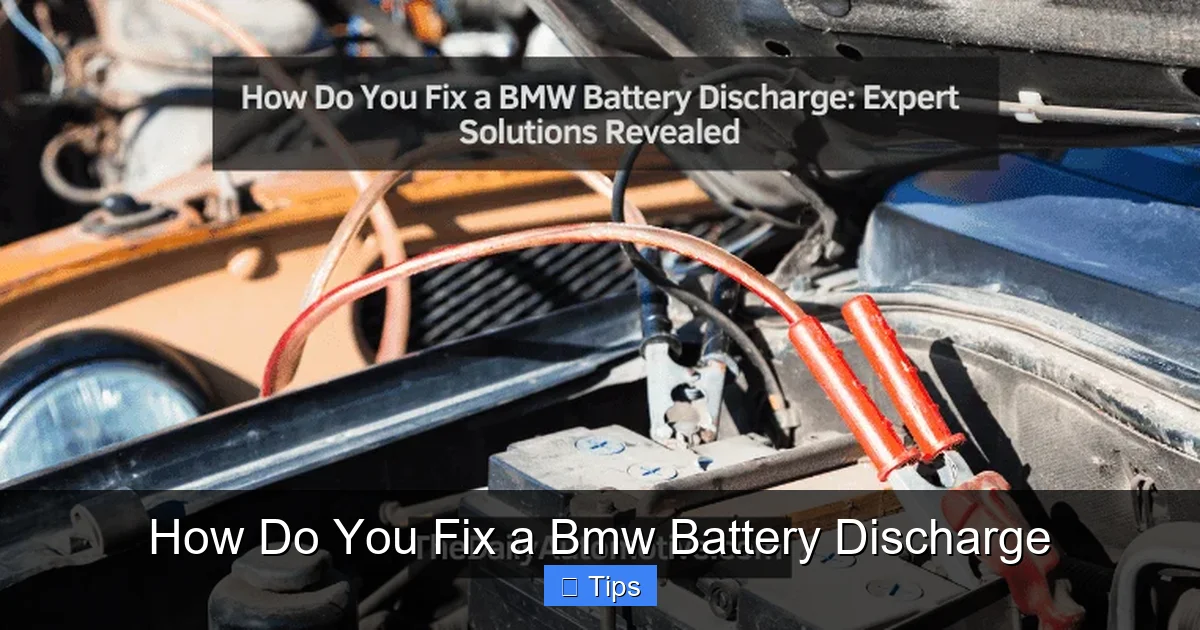
- Connect the multimeter in series between the negative terminal and the negative cable (red probe to cable, black probe to terminal).
- Read the current draw. Normal is 20–50 mA. Anything above 100 mA indicates a problem.
Step 3: Locate the Source of the Drain
If you find excessive drain, the next step is to find which circuit is causing it. Here’s how:
- With the multimeter still connected, start pulling fuses one by one from the fuse box (usually under the hood or in the glove compartment).
- Watch the multimeter reading. When the current drops significantly, you’ve found the problematic circuit.
- Check components on that circuit—lights, modules, or accessories—for faults.
For example, if pulling the fuse for the interior lights causes the drain to drop, check the door switches or trunk light.
Step 4: Use an OBD2 Scanner for Advanced Diagnostics
If the drain isn’t obvious, use an OBD2 scanner with BMW-specific software (like INPA, ISTA, or a high-end scanner like Foxwell NT530). These tools can read fault codes, monitor module activity, and even perform battery registration. Look for codes related to the IBS, charging system, or specific modules.
How to Fix a BMW Battery Discharge
Once you’ve diagnosed the issue, it’s time to fix it. Here are the most effective solutions based on the root cause.
Replace the Battery (If Necessary)
If your battery is old or won’t hold a charge, replacement is the best option. Choose a high-quality AGM (Absorbent Glass Mat) battery, as most modern BMWs require it. Avoid cheap aftermarket batteries—they often fail prematurely and can damage the charging system.
After installing the new battery, always register it with the IBS. This can be done with an OBD2 scanner or at a BMW dealership. Registration tells the car the battery’s capacity and age, allowing the alternator to charge it correctly.
Repair or Replace Faulty Components
If a specific component is causing the drain, repair or replace it. For example:
- Replace a stuck door switch or trunk light.
- Unplug or hardwire aftermarket devices so they don’t draw power when off.
- Fix damaged wiring or corrosion in the fuse box.
For electrical shorts, trace the wiring and look for exposed or melted insulation. Use electrical tape or heat shrink tubing to repair minor damage.
Fix Alternator Issues
If the alternator isn’t charging properly, have it tested at an auto parts store or by a mechanic. If it’s faulty, replace it with an OEM or high-quality aftermarket unit. Also, check the serpentine belt—if it’s loose or worn, it can reduce alternator output.
Update Software or Reset Modules
Software glitches can often be resolved with a reset or update. Use an OBD2 scanner to clear fault codes and reset modules. In some cases, a firmware update from BMW may be needed. If the FRM or other control module is faulty, it may need to be reprogrammed or replaced.
Prevent Future Discharges
Once the issue is fixed, take steps to avoid it happening again:
- Drive your BMW regularly—short trips don’t allow full recharging.
- Use a battery maintainer if the car sits for long periods.
- Turn off all accessories (lights, radio, phone chargers) before exiting.
- Inspect wiring and fuses during routine maintenance.
- Avoid installing non-OEM electronics without proper wiring.
When to Seek Professional Help
While many BMW battery discharge issues can be fixed at home, some problems require professional expertise. Here’s when to call a BMW specialist:
- You can’t locate the source of the parasitic drain after thorough testing.
- The alternator or IBS needs replacement—these require precise calibration.
- Software updates or module programming are needed.
- You’re uncomfortable working with high-voltage systems or delicate electronics.
A certified BMW technician has access to factory tools and diagnostic software that can quickly identify and resolve complex electrical issues.
Conclusion
Dealing with a BMW battery discharge can be frustrating, but it’s rarely a sign of a major failure. With the right approach, most issues can be diagnosed and fixed at home using basic tools and a bit of patience. Start by checking the battery voltage, testing for parasitic drain, and inspecting common culprits like door switches and aftermarket devices. If the problem persists, don’t hesitate to seek professional help.
Remember, prevention is key. Regular maintenance, proper battery registration, and mindful use of electronics can go a long way in keeping your BMW’s electrical system healthy. By understanding how your car’s systems work and staying proactive, you’ll spend less time worrying about a dead battery and more time enjoying the drive.
Frequently Asked Questions
Why does my BMW battery keep dying even after replacement?
This is often due to improper battery registration. BMWs require the new battery to be registered with the IBS system so the alternator charges it correctly. Without registration, the battery may not receive the right charge, leading to repeated discharges.
How long does it take for a BMW battery to drain if left unused?
A healthy BMW battery can last 2–4 weeks if the car is parked and not driven. However, if there’s a parasitic drain over 100 mA, the battery could die in as little as 24–48 hours.
Can a bad alternator cause battery discharge?
Yes. If the alternator isn’t producing enough voltage (below 13.5V while running), it won’t recharge the battery properly, leading to gradual discharge even while driving.
Do I need a special charger for a BMW battery?
Yes, especially for AGM batteries. Use a smart charger designed for AGM or lithium batteries. These chargers adjust voltage and current to prevent overcharging and extend battery life.
Can aftermarket accessories drain my BMW battery?
Absolutely. Dash cams, GPS units, or phone chargers that remain plugged in can draw power continuously. Always unplug them or hardwire them with a switch to cut power when the car is off.
How do I reset the battery registration on my BMW?
You’ll need an OBD2 scanner with BMW software (like ISTA or INPA) or visit a dealership. The process involves connecting the scanner, selecting the battery registration function, and entering the new battery’s specifications.

At CarLegit, we believe information should be clear, factual, and genuinely helpful. That’s why every guide, review, and update on our website is created with care, research, and a strong focus on user experience.