
Resetting the check engine light on your Toyota Corolla isn’t just about clearing a warning—it’s about understanding what caused it in the first place. This guide walks you through safe, reliable methods to reset the light, whether you’ve fixed the issue or just want to clear it after maintenance.
In This Article
- 1 Key Takeaways
- 2 📑 Table of Contents
- 3 Understanding the Toyota Corolla Check Engine Light
- 4 Why the Check Engine Light Comes On
- 5 Method 1: Using an OBD2 Scanner to Reset the Light
- 6 Method 2: Disconnecting the Battery
- 7 Method 3: Letting the Light Turn Off Naturally
- 8 Preventing the Check Engine Light from Returning
- 9 When to See a Mechanic
- 10 Conclusion
- 11 Frequently Asked Questions
- 11.1 Can I reset the check engine light without a scanner?
- 11.2 Will the check engine light reset itself?
- 11.3 Is it safe to drive with the check engine light on?
- 11.4 How much does it cost to reset the check engine light?
- 11.5 Why does the check engine light come back after resetting?
- 11.6 Can a bad gas cap really trigger the check engine light?
Key Takeaways
- Diagnose the problem first: Never reset the light without identifying and fixing the underlying issue, such as a loose gas cap or faulty oxygen sensor.
- Use an OBD2 scanner for accuracy: This tool reads error codes and allows you to clear them safely, giving you insight into what triggered the light.
- Battery disconnection works—but has risks: Disconnecting the car battery can reset the light, but it may also erase radio settings, trip data, and adaptive learning in the engine.
- Drive cycles help confirm repairs: After resetting, complete a few drive cycles to ensure the issue is truly resolved and the light doesn’t return.
- Regular maintenance prevents future warnings: Simple habits like tightening the gas cap and using quality fuel reduce the chances of the light coming back.
- Seek professional help if unsure: If the light returns repeatedly or you’re uncomfortable with DIY fixes, visit a certified Toyota technician.
- Resetting doesn’t fix mechanical problems: The light is a warning system—clearing it won’t repair a malfunctioning component.
📑 Table of Contents
- Understanding the Toyota Corolla Check Engine Light
- Why the Check Engine Light Comes On
- Method 1: Using an OBD2 Scanner to Reset the Light
- Method 2: Disconnecting the Battery
- Method 3: Letting the Light Turn Off Naturally
- Preventing the Check Engine Light from Returning
- When to See a Mechanic
- Conclusion
Understanding the Toyota Corolla Check Engine Light
The check engine light on your Toyota Corolla might seem like a minor annoyance, but it’s actually one of the most important warning signals your car can give you. This small, glowing icon—often shaped like an engine or labeled “Check Engine”—is part of your vehicle’s onboard diagnostics system (OBD2), which monitors everything from emissions to engine performance. When something goes off track, the system triggers the light to alert you.
But here’s the thing: the light doesn’t always mean your car is about to break down. Sometimes, it’s as simple as a loose gas cap. Other times, it could indicate a serious issue like a failing catalytic converter or misfiring engine. That’s why it’s crucial not to ignore it—or worse, just reset it without understanding why it came on in the first place.
Think of the check engine light like a smoke detector in your home. It doesn’t tell you exactly where the fire is, but it definitely means you need to investigate. Resetting the light without fixing the root cause is like silencing the alarm while the stove is still on fire. You might feel relieved for a moment, but the danger hasn’t gone away.
In this guide, we’ll walk you through how to reset the Toyota Corolla check engine light the right way—safely, effectively, and with full awareness of what you’re doing. Whether you’re a seasoned DIYer or a first-time car owner, you’ll learn the best methods, common pitfalls to avoid, and how to keep your Corolla running smoothly long after the light is gone.
Why the Check Engine Light Comes On

Visual guide about How to Reset Toyota Corolla Check Engine Light
Image source: toyotacheckenginelight.com
Before you even think about resetting the light, it’s essential to understand why it turned on in the first place. The check engine light can be triggered by hundreds of different issues, ranging from minor to severe. The OBD2 system in your Toyota Corolla constantly monitors sensors and components, and when it detects a problem—like a drop in fuel efficiency, unusual emissions, or engine misfires—it logs a trouble code and illuminates the light.
One of the most common causes is a loose or faulty gas cap. Sounds simple, right? But it happens more often than you’d think. If the cap isn’t tightened properly after refueling, fuel vapors can escape, triggering an evaporative emissions system fault. This is one of the easiest fixes: just tighten the cap and see if the light goes off after a few drives.
Other frequent culprits include:
– Faulty oxygen (O2) sensors, which monitor exhaust gases and help regulate fuel mixture
– Mass airflow (MAF) sensor issues, affecting how much air enters the engine
– Spark plug or ignition coil problems, leading to misfires
– Catalytic converter inefficiency, often due to long-term neglect
– Exhaust gas recirculation (EGR) valve malfunctions
Each of these issues generates a specific diagnostic trouble code (DTC), which can be read using an OBD2 scanner. For example, code P0420 typically points to a catalytic converter problem, while P0171 indicates a lean fuel mixture.
It’s also worth noting that the check engine light can behave differently. A steady light usually means a non-urgent issue that should be checked soon. A flashing light, however, signals a severe problem—like a major misfire—that could damage the catalytic converter if not addressed immediately. In that case, you should stop driving and get professional help right away.
Understanding the cause isn’t just about fixing the car—it’s about protecting your wallet and your safety. Ignoring a serious issue could lead to costly repairs down the line. So before you reset the light, take the time to diagnose the problem. It could save you hundreds of dollars and a lot of stress.
Method 1: Using an OBD2 Scanner to Reset the Light
Visual guide about How to Reset Toyota Corolla Check Engine Light
Image source: diycarexpert.com
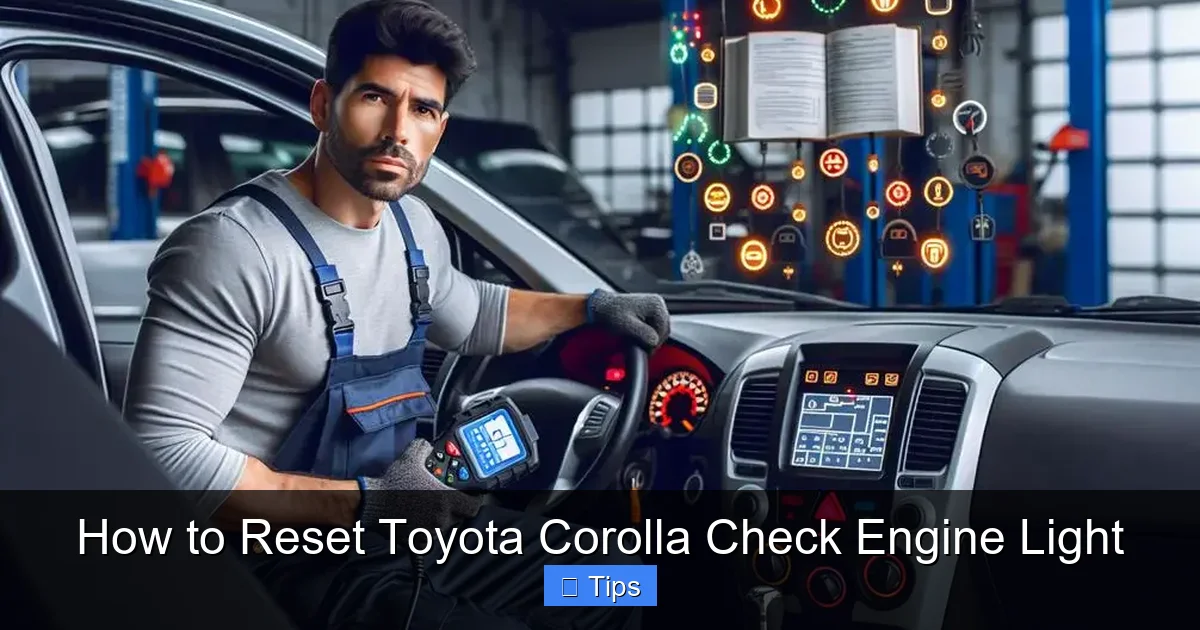
The most reliable and recommended way to reset the check engine light on your Toyota Corolla is by using an OBD2 scanner. This small, handheld device plugs into your car’s OBD2 port—usually located under the dashboard near the steering column—and communicates directly with the vehicle’s computer system. It reads the trouble codes, tells you what’s wrong, and allows you to clear the codes once the issue is fixed.
Using an OBD2 scanner is like having a doctor’s stethoscope for your car. It gives you precise information instead of guessing. And the best part? You don’t need to be a mechanic to use one. Most scanners come with simple instructions and even smartphone apps that make the process user-friendly.
How to Use an OBD2 Scanner
Here’s a step-by-step guide to using an OBD2 scanner to reset your check engine light:
1. **Turn off the engine.** Make sure your Corolla is completely off before you begin.
2. **Locate the OBD2 port.** It’s typically found under the dashboard, on the driver’s side, near the steering wheel. It’s a 16-pin connector that looks like a trapezoid.
3. **Plug in the scanner.** Insert the scanner’s connector firmly into the port.
4. **Turn the ignition to “ON.”** Don’t start the engine—just turn the key to the second position so the dashboard lights up.
5. **Follow the scanner’s prompts.** Most scanners will ask you to select your vehicle make, model, and year. Then they’ll begin scanning for trouble codes.
6. **Read the codes.** The scanner will display one or more DTCs (like P0420 or P0171). Write them down or take a photo for reference.
7. **Research the codes.** Use the scanner’s built-in database or look up the codes online to understand what they mean.
8. **Fix the issue.** Whether it’s tightening the gas cap or replacing a sensor, address the problem before resetting the light.
9. **Clear the codes.** Once the repair is complete, use the scanner’s “Clear Codes” or “Erase DTCs” function to reset the check engine light.
10. **Turn off the ignition and unplug the scanner.**
After resetting, start your car and check if the light stays off. If it does, great! If it comes back, the problem may not be fully resolved, or there could be another issue.
Choosing the Right OBD2 Scanner
Not all scanners are created equal. For basic use, a simple code reader like the BlueDriver or Ancel AD310 works well and costs under $50. These devices can read and clear codes, and some even offer live data and freeze frame information.
If you’re more tech-savvy or plan to use the scanner regularly, consider a Bluetooth-enabled model that pairs with your smartphone. Apps like Torque Pro (for Android) or OBD Fusion (for iOS) provide detailed diagnostics, graphs, and even performance monitoring.
Avoid cheap, no-name scanners from unknown brands. They may not be compatible with your Toyota or could give inaccurate readings. Stick to reputable brands and check reviews before buying.
Tips for Successful Scanning
– Always scan with the engine off and ignition on.
– Make sure the scanner is fully charged or connected to power.
– If the scanner fails to connect, check the OBD2 port for dirt or damage.
– After clearing codes, drive your car for a few miles to allow the system to relearn and complete a drive cycle.
Using an OBD2 scanner is the gold standard for resetting the check engine light because it’s accurate, informative, and safe. It empowers you to take control of your car’s health without relying on a mechanic for every little issue.
Method 2: Disconnecting the Battery
Visual guide about How to Reset Toyota Corolla Check Engine Light
Image source: diycarexpert.com
If you don’t have an OBD2 scanner, another way to reset the check engine light is by disconnecting the car battery. This method forces the vehicle’s computer to reset by cutting power to the system. It’s a bit like restarting your computer when it freezes—it clears temporary glitches and resets certain functions.
However, this method comes with caveats. While it can clear the check engine light, it also resets other systems in your car, including the radio presets, clock, trip computer, and even the adaptive learning in the engine control unit (ECU). That means your Corolla might run a little rough for the first few miles as the ECU relearns your driving habits.
Step-by-Step Battery Disconnection
Here’s how to safely disconnect your Toyota Corolla’s battery to reset the check engine light:
1. **Park on a flat surface and turn off the engine.** Engage the parking brake for safety.
2. **Open the hood and locate the battery.** In most Corolla models, it’s on the right side of the engine bay.
3. **Identify the negative terminal.** It’s marked with a minus sign (“-”) and usually has a black cable.
4. **Use a wrench to loosen the nut.** Turn it counterclockwise until the cable can be removed. Always disconnect the negative terminal first to avoid short circuits.
5. **Remove the negative cable.** Pull it away from the battery terminal and secure it so it doesn’t touch metal.
6. **Wait 15–30 minutes.** This gives the ECU enough time to fully discharge and reset.
7. **Reconnect the cable.** Place the negative cable back on the terminal and tighten the nut securely.
8. **Close the hood and start the car.** The check engine light should be off—at least temporarily.
What to Expect After Reconnection
After reconnecting the battery, your Corolla may behave differently for a short time. The engine might idle roughly, the transmission could shift abruptly, or the radio might ask for a security code. These are normal side effects of the reset.
To help the ECU relearn, take your car for a 15–30 minute drive that includes city and highway speeds. This allows the system to recalibrate fuel trims, shift points, and other parameters.
When Not to Use This Method
Battery disconnection isn’t ideal if:
– You’ve recently had your radio or security system serviced (you might lose codes).
– Your car has advanced driver-assistance systems (ADAS) that require recalibration.
– The check engine light is flashing—this indicates a serious issue that needs immediate attention.
Also, keep in mind that disconnecting the battery won’t fix the underlying problem. If the issue persists, the light will come back on after the system completes its next diagnostic cycle.
Alternative: Using the Fuse Box
Some Toyota owners try removing the ECU fuse instead of disconnecting the battery. This can work, but it’s less reliable and harder to locate. The ECU fuse is usually in the engine bay fuse box, labeled “ECU” or “Engine.” Remove it for 10–15 minutes, then reinsert it.
However, this method is not recommended for beginners. It’s easy to pull the wrong fuse, and some systems may not reset properly. Stick with battery disconnection if you’re going the manual route.
Method 3: Letting the Light Turn Off Naturally
Believe it or not, sometimes the best way to reset the check engine light is to do nothing at all. If the issue was minor—like a loose gas cap that you’ve since tightened—the light may turn off on its own after a few drive cycles.
A drive cycle is a specific pattern of driving that allows the car’s computer to run all its diagnostic tests. For most Toyota Corollas, this includes:
– Starting the engine when cold
– Driving at varying speeds (city and highway)
– Coming to a complete stop
– Letting the car idle for a few minutes
The exact sequence varies by model year, but generally, completing 3–5 drive cycles without the fault recurring can cause the light to go out.
How Long Does It Take?
In many cases, the light will turn off within 50–100 miles of normal driving, assuming the problem is fixed. However, some issues—like intermittent sensor faults—may take longer to clear.
If the light doesn’t go off after a week of regular driving, it’s likely that the problem still exists. In that case, you’ll need to use an OBD2 scanner or visit a mechanic.
Pros and Cons of Natural Reset
Pros:
– No tools or technical knowledge required
– No risk of resetting other systems
– Confirms the issue is truly resolved
Cons:
– Can take days or weeks
– Light remains on, which may cause stress or fail an emissions test
– Not reliable for persistent or severe issues
This method works best for minor, one-time faults. For anything more serious, active resetting is the better choice.
Preventing the Check Engine Light from Returning
Resetting the light is only half the battle. The real goal is to keep it off for good. That means addressing the root cause and adopting habits that prevent future problems.
Regular Maintenance is Key
Your Toyota Corolla is designed to run efficiently with proper care. Follow the maintenance schedule in your owner’s manual, which includes:
– Oil changes every 5,000–10,000 miles (depending on driving conditions)
– Replacing spark plugs every 60,000–100,000 miles
– Inspecting and cleaning the air filter
– Checking tire pressure and alignment
Neglecting these basics can lead to engine inefficiency, increased emissions, and—you guessed it—a check engine light.
Use Quality Fuel and Parts
Cheap fuel can contain contaminants that clog fuel injectors or damage sensors. Stick to reputable gas stations and consider using a fuel system cleaner every 3,000–5,000 miles.
When replacing parts, choose OEM (Original Equipment Manufacturer) or high-quality aftermarket components. Cheap sensors or caps may fail prematurely and trigger the light again.
Don’t Ignore Warning Signs
If your car starts running rough, losing power, or making unusual noises, get it checked immediately. Small issues can escalate quickly, turning a $50 repair into a $500 one.
Also, pay attention to other dashboard lights. A flashing check engine light, combined with a temperature or oil warning, could indicate a serious problem.
Keep the Gas Cap Tight
After every fill-up, make sure the gas cap clicks three times when tightened. This ensures a proper seal and prevents evaporative emissions leaks.
Monitor Your Driving Habits
Aggressive driving, frequent short trips, and towing heavy loads can stress your engine and emissions system. Try to drive smoothly and allow the engine to warm up fully before pushing it hard.
When to See a Mechanic
While many check engine light issues can be resolved at home, some problems require professional attention. Here’s when you should visit a certified Toyota technician:
– The light is flashing (indicating a severe misfire)
– The car is running poorly, stalling, or losing power
– You’ve reset the light multiple times and it keeps coming back
– You’re uncomfortable performing diagnostics or repairs
– The issue involves the transmission, catalytic converter, or engine internals
A mechanic has access to advanced diagnostic tools and factory-trained knowledge. They can perform a thorough inspection, clear codes properly, and ensure your Corolla is safe and reliable.
Don’t let pride or cost concerns keep you from getting help. A quick visit now could prevent a breakdown later.
Conclusion
Resetting the check engine light on your Toyota Corolla doesn’t have to be intimidating. With the right tools and knowledge, you can do it safely and effectively. Whether you use an OBD2 scanner, disconnect the battery, or let the light turn off naturally, the key is to always address the underlying issue first.
Remember, the light is there to protect you—not to scare you. By understanding why it comes on and how to respond, you’ll keep your Corolla running smoothly for years to come. Stay proactive, stay informed, and don’t hesitate to seek help when needed. Your car—and your peace of mind—will thank you.
Frequently Asked Questions
Can I reset the check engine light without a scanner?
Yes, you can reset the light by disconnecting the car battery for 15–30 minutes. However, this method may also reset other systems like the radio and clock, and it doesn’t tell you what caused the light in the first place.
Will the check engine light reset itself?
In some cases, yes—especially if the issue was minor, like a loose gas cap. After fixing the problem and completing a few drive cycles, the light may turn off on its own within 50–100 miles of driving.
Is it safe to drive with the check engine light on?
It depends. A steady light usually means you can drive for a short time, but you should get it checked soon. A flashing light indicates a serious problem—stop driving and seek help immediately.
How much does it cost to reset the check engine light?
Using an OBD2 scanner at home costs nothing beyond the device (around $30–$60). At a mechanic or auto parts store, they may reset it for free or charge $50–$100, especially if diagnostics are needed.
Why does the check engine light come back after resetting?
The light returns because the underlying issue wasn’t fixed. Common causes include faulty sensors, emissions problems, or unresolved engine faults. Use a scanner to read the codes and address the root cause.
Can a bad gas cap really trigger the check engine light?
Absolutely. A loose, damaged, or missing gas cap can cause fuel vapors to escape, triggering an evaporative emissions fault. Always tighten the cap until it clicks three times after refueling.

At CarLegit, we believe information should be clear, factual, and genuinely helpful. That’s why every guide, review, and update on our website is created with care, research, and a strong focus on user experience.