
If your Toyota Tacoma’s AC light is flashing, it usually signals a problem with the air conditioning system. This issue can stem from low refrigerant, electrical faults, or sensor malfunctions. With the right diagnosis and simple fixes, you can restore cool air and prevent further damage.
In This Article
- 1 Key Takeaways
- 2 📑 Table of Contents
- 3 Why Is the AC Light Flashing on My Toyota Tacoma?
- 4 Common Causes of the AC Light Flashing
- 5 Step-by-Step Guide to Diagnose the Problem
- 6 DIY Fixes You Can Try at Home
- 7 When to Call a Professional
- 8 Preventing Future AC Light Issues
- 9 Conclusion
- 10 Frequently Asked Questions
Key Takeaways
- Flashing AC light indicates a system fault: It’s a warning from your Tacoma’s onboard computer that something is wrong with the AC system.
- Low refrigerant is a common cause: Leaks or undercharged refrigerant can trigger the light and reduce cooling performance.
- Electrical issues may be to blame: Faulty relays, blown fuses, or damaged wiring can interrupt AC operation.
- Check the pressure sensors: High or low refrigerant pressure can cause the AC clutch to disengage and the light to flash.
- DIY checks can save time and money: Simple inspections like checking fuses and refrigerant levels can resolve many issues.
- Professional diagnosis is recommended for complex problems: If the issue persists, a certified mechanic with proper tools should inspect the system.
- Regular maintenance prevents future issues: Routine AC service helps avoid refrigerant leaks and electrical failures.
📑 Table of Contents
Why Is the AC Light Flashing on My Toyota Tacoma?
If you’re driving your Toyota Tacoma on a hot day and suddenly notice the AC light flashing on the dashboard, it’s natural to feel concerned. This blinking light isn’t just annoying—it’s your vehicle’s way of saying, “Hey, something’s not right with the air conditioning system.” Ignoring it could lead to reduced cooling, increased wear on components, or even a complete AC failure.
The AC light flashing on a Toyota Tacoma typically means the vehicle’s onboard computer has detected a fault in the air conditioning system. Unlike a simple warning like the check engine light, the flashing AC light is specifically tied to the climate control system. It can appear in various models, including the 2016, 2018, 2020, and 2022 Tacoma, and is often linked to refrigerant levels, electrical issues, or sensor malfunctions. The good news? Many of these problems are fixable with some basic troubleshooting and a little know-how.
Understanding why this happens is the first step toward fixing it. The AC system in your Tacoma relies on a delicate balance of refrigerant, electrical signals, and mechanical components. When one part fails or operates outside normal parameters, the system shuts down as a safety measure—hence the flashing light. This prevents damage to the compressor and other expensive parts. By learning what triggers this warning, you can take quick action and get back to enjoying cool, comfortable drives.
Common Causes of the AC Light Flashing
There are several reasons why your Toyota Tacoma’s AC light might start flashing. While it can be frustrating, identifying the root cause is easier when you know what to look for. Below are the most common culprits behind this issue.

Visual guide about How to Fix Ac Light Flashing Toyota Tacoma
Image source: carcarehacks.com
Low Refrigerant Levels
One of the most frequent causes of a flashing AC light is low refrigerant. The AC system relies on refrigerant (usually R-134a) to absorb heat from the cabin and release it outside. If the level drops due to a leak or natural depletion over time, the system can’t function properly. When the pressure drops too low, the low-pressure switch triggers a fault, causing the AC light to flash and the compressor to disengage.
Signs of low refrigerant include weak airflow, warm air blowing from the vents, and hissing sounds near the AC lines. If you suspect a leak, look for oily residue around AC hoses, the compressor, or the condenser. Refrigerant leaks are serious and should be repaired by a professional, as simply recharging the system without fixing the leak will only provide a temporary fix.
Electrical Problems
Electrical issues are another common reason for the AC light flashing. The AC system depends on a network of fuses, relays, switches, and wiring to operate. If any of these components fail, the system may not receive the necessary power or signals to engage the compressor.
For example, a blown fuse in the AC circuit can cut power to the compressor clutch, preventing it from turning on. Similarly, a faulty relay may fail to send the electrical signal needed to activate the system. Corroded or loose wiring connections can also disrupt communication between sensors and the control module. These issues are often easy to spot with a multimeter and visual inspection.
Faulty Pressure Sensors
Your Tacoma’s AC system uses high- and low-pressure switches (also called pressure transducers) to monitor refrigerant pressure. These sensors ensure the system operates within safe limits. If pressure gets too high (due to overcharging or a blocked condenser) or too low (from a leak), the sensors send a signal to the ECU, which disables the compressor and triggers the flashing AC light.
A malfunctioning pressure sensor can give false readings, even if refrigerant levels are normal. This can cause the system to shut down unnecessarily. Testing these sensors requires specialized tools, but swapping them with known-good units can help isolate the problem.
Compressor Clutch Issues
The compressor clutch is responsible for engaging and disengaging the compressor when the AC is turned on or off. If the clutch fails to engage, the compressor won’t circulate refrigerant, and the AC won’t cool. This can happen due to worn clutch plates, electrical faults, or a seized compressor.
You can test the clutch by turning on the AC and watching whether it spins when activated. If it doesn’t move, there may be an electrical issue or mechanical failure. In some cases, the clutch can be replaced separately from the compressor, saving you money.
Blown Fuses or Bad Relays
Fuses and relays are the unsung heroes of your vehicle’s electrical system. They protect circuits from overloads and ensure components receive the right amount of power. In the AC system, a blown fuse or failed relay can prevent the compressor from receiving power, leading to a flashing AC light.
Check your owner’s manual or the fuse box diagram to locate the AC-related fuses and relays. Common locations include under the hood or inside the cabin near the driver’s side kick panel. Use a fuse puller or needle-nose pliers to inspect each fuse. If a fuse is blackened or the metal strip is broken, replace it with one of the same amperage. For relays, try swapping them with a known-working relay of the same type to see if the problem resolves.
Step-by-Step Guide to Diagnose the Problem
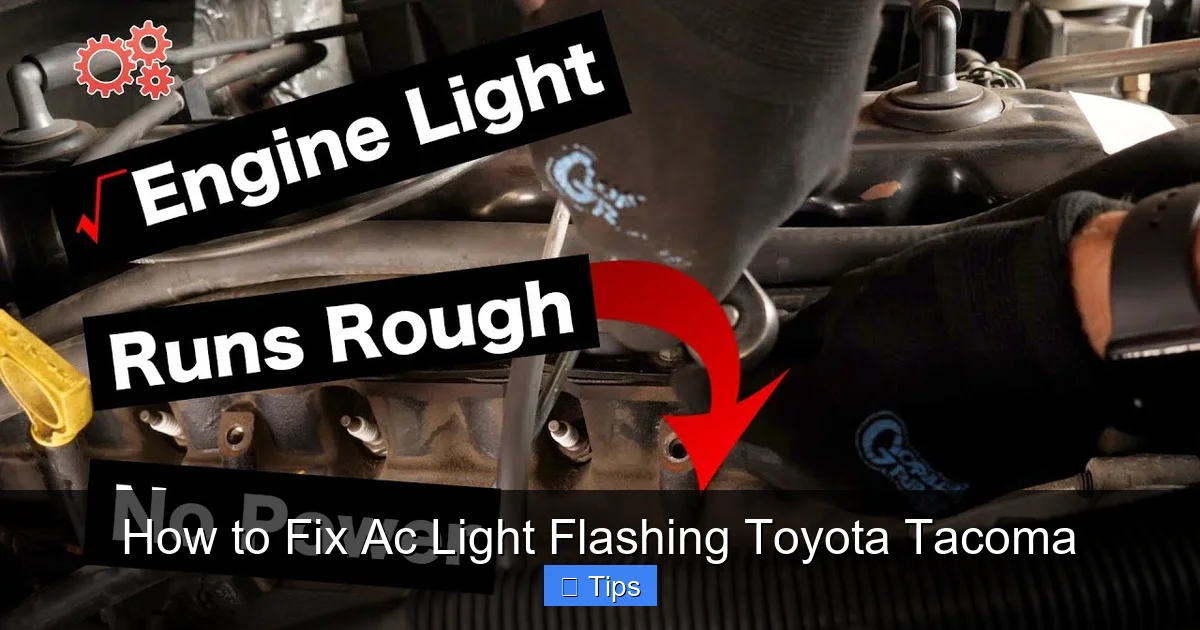
Diagnosing a flashing AC light doesn’t require advanced mechanical skills, but it does require patience and attention to detail. Follow these steps to identify the issue and determine the best course of action.
Visual guide about How to Fix Ac Light Flashing Toyota Tacoma
Image source: i.ytimg.com
Step 1: Check the Fuses and Relays
Start with the simplest fix: inspect the fuses and relays related to the AC system. Open the fuse box under the hood or inside the cabin and locate the AC fuse (usually labeled “AC,” “COMP,” or “CLUTCH”). Use a multimeter to test for continuity or visually inspect for damage. Replace any blown fuses.
Next, locate the AC relay. It’s often in the same fuse box. Relays can fail internally even if they look fine. Swap the AC relay with another identical relay (like the horn or fan relay) and test the AC. If the light stops flashing, you’ve found the problem.
Step 2: Inspect the Refrigerant Level
Low refrigerant is a common cause of AC issues. To check the level, you’ll need a refrigerant pressure gauge (also called a manifold gauge set). Attach the low-pressure side hose to the service port (usually on the larger aluminum line near the firewall). With the engine running and AC on max, the pressure should read between 25 and 45 psi, depending on ambient temperature.
If the pressure is below 25 psi, the system is likely undercharged. However, don’t just add refrigerant—this could mask a leak. Use a UV dye kit or electronic leak detector to find and repair any leaks before recharging.
Step 3: Test the Pressure Switches
The high- and low-pressure switches monitor refrigerant pressure and send signals to the ECU. If either switch fails, it can cause the AC light to flash. Use a multimeter to test for continuity across the switch terminals. With the engine off, the low-pressure switch should show continuity when refrigerant is present. If it doesn’t, the switch may be faulty.
You can also bypass the switch temporarily by disconnecting the connector and jumping the terminals with a paperclip or wire. If the AC turns on and the light stops flashing, the switch is likely bad and needs replacement.
Step 4: Examine the Compressor Clutch
With the engine running and AC turned on, look at the compressor pulley. The clutch should engage (you’ll hear a click and see the center hub spin). If it doesn’t engage, check for power at the clutch connector using a multimeter. If there’s power but the clutch doesn’t engage, the clutch coil may be faulty.
If there’s no power, trace the wiring back to the relay and fuse. A broken wire or poor ground connection could be the issue. Clean and tighten all connections to ensure proper contact.
Step 5: Scan for Diagnostic Trouble Codes (DTCs)
Modern Toyota Tacomas store trouble codes when the AC system malfunctions. Use an OBD2 scanner to check for codes related to the AC system, such as P0532 (low refrigerant pressure) or P0533 (high refrigerant pressure). These codes can help pinpoint the exact issue.
Even if no codes appear, some scanners can display live data from the AC pressure sensors. This allows you to see real-time pressure readings and determine if the sensors are working correctly.
DIY Fixes You Can Try at Home
Many AC light issues can be resolved with basic tools and a little effort. Here are some practical fixes you can try without visiting a mechanic.
Visual guide about How to Fix Ac Light Flashing Toyota Tacoma
Image source: waynesautocenter.com
Replace a Blown Fuse
If you find a blown AC fuse, replacing it is quick and inexpensive. Purchase the correct amperage fuse (usually 10A or 15A) and insert it into the fuse slot. Turn on the AC and see if the light stops flashing. If the new fuse blows immediately, there’s likely a short circuit that needs professional attention.
Swap or Replace the AC Relay
Relays are inexpensive and easy to replace. Buy a new AC relay from an auto parts store or online. Remove the old relay and install the new one. Test the AC to see if the light stops flashing. If the problem persists, the issue may be elsewhere.
Recharge the Refrigerant (If No Leak Is Present)
If you’ve confirmed there’s no leak and the refrigerant is low, you can recharge the system using a DIY recharge kit. These kits include a can of R-134a refrigerant and a pressure gauge. Follow the instructions carefully, and don’t overfill the system. Overcharging can cause high pressure and trigger the flashing light.
Note: Only recharge if you’re confident there’s no leak. Adding refrigerant without fixing a leak is a temporary fix and can harm the environment.
Clean Electrical Connections
Corrosion or dirt on electrical connectors can disrupt signals. Disconnect the AC clutch connector, pressure switch connectors, and relay sockets. Clean them with electrical contact cleaner and a small brush. Reconnect them firmly and test the system.
Check the Cabin Air Filter
A clogged cabin air filter can restrict airflow and cause the AC to work harder, potentially triggering a fault. Locate the filter (usually behind the glove box) and inspect it. If it’s dirty, replace it with a new one. This simple fix can improve cooling and reduce strain on the system.
When to Call a Professional
While many AC light issues can be fixed at home, some problems require professional expertise. Here’s when it’s time to visit a certified mechanic or Toyota dealership.
Suspected Refrigerant Leak
If you suspect a refrigerant leak, don’t attempt to recharge the system yourself. Leaks can be dangerous and harmful to the environment. A professional can use electronic leak detectors or UV dye to locate and repair the leak, then properly evacuate and recharge the system.
Compressor Failure
If the compressor is seized or making unusual noises, it likely needs replacement. Compressors are expensive and require specialized tools to install. A mechanic can also check for metal shavings in the system, which could indicate internal damage.
Electrical Diagnosis Beyond Basic Checks
If you’ve checked fuses, relays, and connections but the light still flashes, the issue may be in the wiring harness or control module. These problems require advanced diagnostic tools and knowledge of Toyota’s electrical systems.
Persistent Flashing After Repairs
If you’ve tried multiple fixes and the AC light continues to flash, there may be an intermittent fault or a software issue. A technician can perform a full system scan and update the ECU if necessary.
Preventing Future AC Light Issues
An ounce of prevention is worth a pound of cure—especially when it comes to your Tacoma’s AC system. Regular maintenance can help you avoid the frustration of a flashing AC light and keep your cabin cool all summer long.
Schedule Annual AC Inspections
Have your AC system inspected once a year, preferably before summer. A technician can check refrigerant levels, test pressure switches, and inspect for leaks. This proactive approach catches small issues before they become big problems.
Replace the Cabin Air Filter Regularly
A clean cabin air filter ensures proper airflow and reduces strain on the AC system. Replace it every 12,000 to 15,000 miles or once a year, whichever comes first.
Use the AC Regularly
Even in cooler months, run your AC for 10–15 minutes every few weeks. This keeps the compressor lubricated and prevents seals from drying out, which can lead to leaks.
Park in the Shade
Excessive heat can strain the AC system. Whenever possible, park in the shade or use a sunshade to reduce cabin temperature and lessen the load on the compressor.
Listen for Unusual Noises
Grinding, squealing, or clicking sounds from the AC system can indicate early signs of failure. Address these noises promptly to avoid costly repairs.
Conclusion
A flashing AC light on your Toyota Tacoma is more than just an annoyance—it’s a signal that your air conditioning system needs attention. While the issue can stem from low refrigerant, electrical faults, or sensor problems, many causes are fixable with basic tools and a little know-how. By following the diagnostic steps outlined above, you can identify the root cause and take appropriate action.
Start with simple checks like fuses, relays, and refrigerant levels. If the problem persists, don’t hesitate to consult a professional. Regular maintenance, such as replacing the cabin air filter and inspecting the system annually, can prevent future issues and keep your Tacoma’s AC running smoothly. With the right approach, you can enjoy cool, comfortable drives no matter how hot it gets outside.
Frequently Asked Questions
Why is my Toyota Tacoma AC light flashing?
The AC light flashing usually indicates a fault in the air conditioning system, such as low refrigerant, electrical issues, or a malfunctioning sensor. It’s a warning from the vehicle’s computer to prevent further damage.
Can I drive my Tacoma with the AC light flashing?
Yes, you can drive the vehicle, but the AC won’t cool properly. Continuing to drive with a fault may cause additional damage to the compressor or other components, so it’s best to diagnose and fix the issue soon.
How much does it cost to fix a flashing AC light?
Costs vary depending on the cause. Simple fixes like replacing a fuse or relay may cost under $20. Recharging refrigerant or replacing a pressure sensor can cost $100–$300. Major repairs like compressor replacement can exceed $1,000.
Can I recharge the AC myself?
Yes, if there’s no leak and the system is low on refrigerant. Use a DIY recharge kit with a pressure gauge. However, if you suspect a leak, have it repaired professionally before recharging.
How do I reset the AC light on a Toyota Tacoma?
The light usually resets automatically once the fault is fixed. If it doesn’t, disconnect the battery for 10–15 minutes or use an OBD2 scanner to clear any stored trouble codes.
Is a flashing AC light covered under warranty?
It depends on your vehicle’s warranty and the cause of the issue. If the problem is due to a manufacturing defect or covered component, it may be included. Check your warranty documentation or contact a Toyota dealer.

At CarLegit, we believe information should be clear, factual, and genuinely helpful. That’s why every guide, review, and update on our website is created with care, research, and a strong focus on user experience.