
ECT Power on a Toyota Tacoma is an electronic control transmission mode that enhances engine response and acceleration by adjusting shift points. It’s ideal for towing, climbing hills, or driving in challenging conditions, giving you more control and power when you need it most.
If you’ve ever driven a Toyota Tacoma—especially one from the last two decades—you’ve probably noticed a small button on the dashboard or gear shifter labeled “ECT PWR.” You might have pressed it out of curiosity, heard the engine rev a little louder, and then wondered, “What exactly does this do?” You’re not alone. Many Tacoma owners see the button but aren’t sure when—or why—they should use it.
The ECT Power mode is one of those features that seems simple on the surface but plays a surprisingly important role in how your truck performs under pressure. Whether you’re hauling a trailer up a mountain pass, driving through mud, or just want a little extra kick when merging onto the highway, ECT Power can make a noticeable difference. But it’s not something you’ll want to use all the time. Like any performance-enhancing feature, it comes with trade-offs—mainly in fuel economy and engine wear over the long term.
In this guide, we’ll break down everything you need to know about ECT Power on a Toyota Tacoma. We’ll explain what it does, how it works, when to use it, and when to leave it off. Whether you’re a new Tacoma owner or a seasoned off-roader, understanding this feature can help you get the most out of your truck. So let’s dive in and demystify the ECT Power button once and for all.
In This Article
- 1 Key Takeaways
- 2 📑 Table of Contents
- 3 What Does ECT Power Stand For?
- 4 How Does ECT Power Work on the Toyota Tacoma?
- 5 When Should You Use ECT Power?
- 6 When Should You Avoid Using ECT Power?
- 7 How to Use ECT Power: A Step-by-Step Guide
- 8 ECT Power vs. Other Driving Modes
- 9 Myths and Misconceptions About ECT Power
- 10 Conclusion
- 11 Frequently Asked Questions
Key Takeaways
- ECT Power stands for Electronically Controlled Transmission Power mode: It modifies the transmission’s shift pattern to deliver quicker acceleration and improved performance.
- It’s designed for demanding driving situations: Use it when towing, driving uphill, or navigating rough terrain to get more power and control.
- Activating ECT Power increases engine RPMs: The transmission holds lower gears longer, allowing the engine to operate in its optimal power band.
- It can reduce fuel efficiency: Because the engine works harder, expect slightly lower gas mileage when ECT Power is engaged.
- It’s easy to turn on and off: A simple button on the dashboard lets you switch between normal and power modes instantly.
- Not needed for everyday driving: For city commutes or highway cruising, normal mode is more efficient and comfortable.
- Understanding when to use it improves driving experience: Knowing the right situations to activate ECT Power helps maximize your Tacoma’s capabilities.
📑 Table of Contents
What Does ECT Power Stand For?
ECT Power stands for Electronically Controlled Transmission Power. It’s a driving mode built into many Toyota vehicles, especially trucks and SUVs like the Tacoma, to give drivers more control over how the transmission behaves. The “ECT” part refers to the transmission’s electronic control system, which manages when and how the gears shift. The “Power” part tells you exactly what this mode is designed to do—deliver more power when you need it.
Unlike older mechanical transmissions that relied on vacuum lines and cables, modern Toyotas use sophisticated computer systems to control gear changes. These systems monitor engine speed, throttle position, vehicle speed, and load to decide the best time to shift. ECT Power overrides some of these default settings to prioritize performance over efficiency.
When you press the ECT Power button, the transmission’s shift map changes. Instead of shifting up early to save fuel, it holds lower gears longer. This keeps the engine spinning at higher RPMs (revolutions per minute), which is where most engines produce their peak torque and horsepower. The result? Faster acceleration, stronger pulling power, and better responsiveness—especially under load.
It’s important to note that ECT Power doesn’t change the engine’s actual output. The engine still makes the same amount of power. What changes is how the transmission delivers that power to the wheels. Think of it like switching from a high gear to a low gear on a bicycle. You’re not pedaling harder, but you’re getting more force with each stroke—perfect for climbing a steep hill.
How Does ECT Power Work on the Toyota Tacoma?
Visual guide about What Is Ect Power on a Toyota Tacoma
Image source: tacomaexplorer.com
To understand how ECT Power works, it helps to know a little about how automatic transmissions function. In normal driving mode, the transmission tries to shift up as early as possible. This keeps engine RPMs low, reduces noise, and improves fuel economy. For example, your Tacoma might shift into 4th gear at 35 mph during light acceleration.
But when you activate ECT Power, the transmission delays these upshifts. It might stay in 3rd gear until 45 mph or even higher, depending on throttle input. This keeps the engine in its “power band”—the RPM range where it produces the most torque. For most Tacoma engines, that’s between 3,000 and 5,000 RPM.
The system also changes how quickly the transmission downshifts. In normal mode, downshifts happen gradually. But in ECT Power mode, the transmission responds faster to sudden throttle inputs. If you slam the accelerator to pass another vehicle, the transmission will drop a gear (or two) almost instantly, giving you a burst of acceleration.
Another key feature is improved engine braking. When you lift off the accelerator in ECT Power mode, the transmission stays in a lower gear longer, which helps slow the vehicle down more effectively. This is especially useful when driving downhill or towing a heavy load, where you want to reduce wear on your brakes.
All of this is managed by the Tacoma’s Transmission Control Module (TCM), a small computer that communicates with the engine control unit (ECU). When you press the ECT Power button, the TCM receives a signal and adjusts the shift schedule accordingly. The change is immediate—there’s no delay or lag.
It’s also worth noting that ECT Power works in conjunction with other systems. For example, if your Tacoma has traction control or downhill assist, those systems remain active even in Power mode. The truck doesn’t become “dumber” or less safe—it just prioritizes performance.
When Should You Use ECT Power?
Visual guide about What Is Ect Power on a Toyota Tacoma
Image source: tacomaexplorer.com
Now that you know what ECT Power does, the next question is: when should you actually use it? The short answer is: only when you need extra power or control. Using it all the time isn’t necessary—and can even be counterproductive.
Here are the most common situations where ECT Power shines:
Towing Heavy Loads
If you’re pulling a trailer, boat, or camper, ECT Power is your best friend. Towing increases the load on your engine and transmission, making it harder to accelerate and maintain speed—especially on inclines. By keeping the engine in lower gears, ECT Power ensures you have enough torque to get moving and stay moving.
For example, imagine you’re towing a 5,000-pound trailer up a steep hill. In normal mode, your Tacoma might struggle, the transmission might “hunt” between gears, and you could lose momentum. But in ECT Power mode, the transmission holds 3rd or 4th gear, giving you consistent power and smoother acceleration. You’ll also notice better engine braking when descending, which reduces stress on your brakes.
Driving Uphill or on Steep Grades
Even without a trailer, driving uphill can be tough—especially in mountainous areas. ECT Power helps by preventing the transmission from shifting up too soon. This keeps the engine in its sweet spot, so you don’t feel like you’re losing power halfway up the hill.
A practical tip: if you’re driving in a region with lots of hills, consider using ECT Power during long climbs. It can make the difference between a smooth drive and a frustrating slog. Just remember to turn it off once you’re back on level ground.
Off-Roading and Rough Terrain
Off-road driving demands precise control and instant power. Whether you’re crawling over rocks, driving through mud, or navigating sandy trails, ECT Power gives you better throttle response and more consistent power delivery.
In low-traction situations, sudden shifts can cause wheel spin or loss of control. ECT Power minimizes this by keeping the transmission in a lower gear, which reduces the chance of abrupt power changes. It also helps with hill climbs and descents, where engine braking is crucial.
Many off-roaders also use ECT Power when using low-range 4WD. The combination of low gear and Power mode gives maximum control and torque, making it easier to tackle tough obstacles.
Passing and Merging at High Speeds
Need to pass a slow truck on a two-lane road? Or merge onto a busy highway? ECT Power can give you that extra burst of speed you need.
In normal mode, the transmission might hesitate before downshifting, causing a delay in acceleration. But in Power mode, the downshift happens instantly. This means you can go from 55 mph to 70 mph in a matter of seconds—safely and confidently.
Just be mindful of your surroundings. Extra power is great, but always check mirrors and blind spots before making a move.
Carrying Heavy Cargo
Even if you’re not towing, carrying a full truck bed of tools, equipment, or supplies can weigh down your Tacoma. This extra weight affects acceleration and braking. ECT Power helps compensate by keeping the engine in a higher power range.
For instance, if you’re driving with 1,000 pounds of gravel in the bed, you’ll notice the truck feels sluggish in normal mode. Switching to ECT Power restores that responsive feel, making city driving and highway merges much smoother.
When Should You Avoid Using ECT Power?
Visual guide about What Is Ect Power on a Toyota Tacoma
Image source: tacomaexplorer.com
While ECT Power is useful in specific situations, it’s not meant for everyday use. In fact, using it unnecessarily can lead to a few downsides.
Normal City and Highway Driving
For daily commutes, grocery runs, or cruising on the highway, normal mode is the better choice. Your Tacoma is designed to be efficient and comfortable in these conditions, and ECT Power works against that.
In normal mode, the transmission shifts early, keeping RPMs low and fuel consumption down. You’ll also notice a quieter cabin and smoother gear changes. ECT Power, on the other hand, makes the engine louder and the ride feel more aggressive—great for performance, but overkill for a trip to the mall.
Fuel Efficiency Concerns
One of the biggest trade-offs with ECT Power is reduced fuel economy. Because the engine runs at higher RPMs and the transmission holds lower gears, you’ll burn more fuel.
Studies and real-world tests show that using ECT Power can reduce fuel efficiency by 10–15% compared to normal mode. That might not sound like much, but over time, it adds up. If you’re trying to save money at the pump—or reduce your carbon footprint—stick to normal mode unless you really need the extra power.
Wear and Tear on the Drivetrain
Running the engine at higher RPMs for extended periods increases wear on internal components. While modern engines and transmissions are built to handle this, unnecessary use of ECT Power can shorten their lifespan over time.
Think of it like running your car at high speed on the highway for hours. It’s fine occasionally, but doing it every day will take a toll. The same logic applies to ECT Power. Use it when needed, but don’t leave it on all the time.
Smooth, Relaxed Driving
If you prefer a calm, quiet drive—especially on long road trips—ECT Power can be distracting. The increased engine noise and sharper throttle response might make the ride feel less comfortable.
Many drivers find that normal mode offers a better balance of performance and comfort for everyday use. Save ECT Power for when the situation demands it.
How to Use ECT Power: A Step-by-Step Guide
Using ECT Power on your Toyota Tacoma is simple, but it helps to know exactly how and when to activate it.
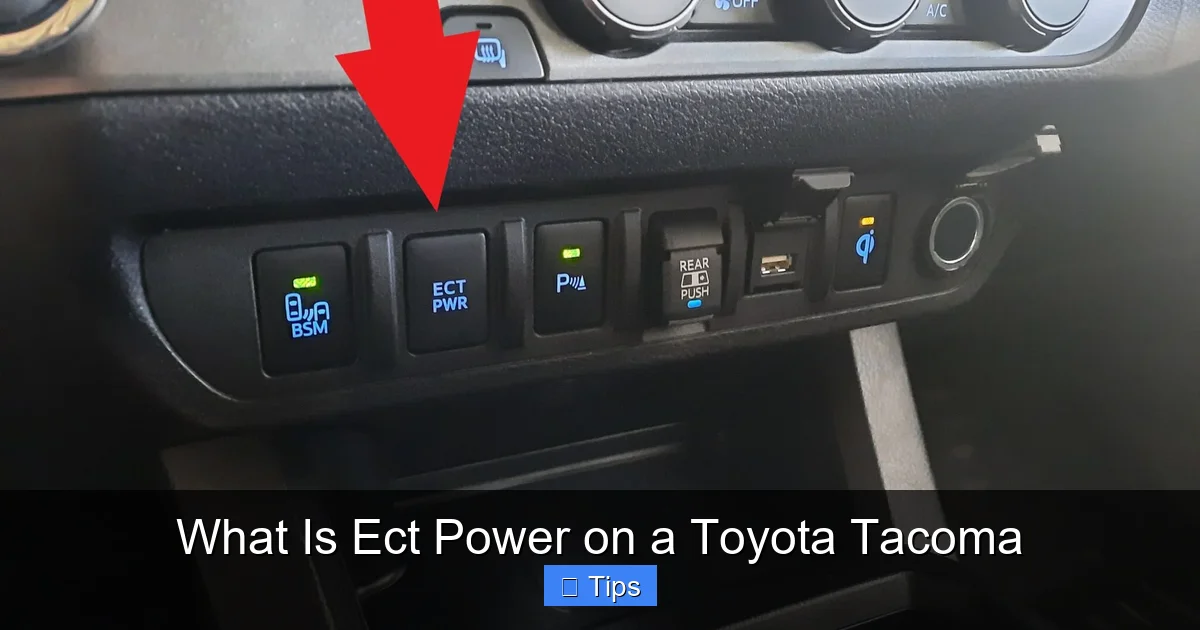
Locating the ECT Power Button
The button is usually found in one of two places:
– On the dashboard, near the climate controls or instrument cluster.
– On the gear shifter, often labeled “ECT PWR” or just “PWR.”
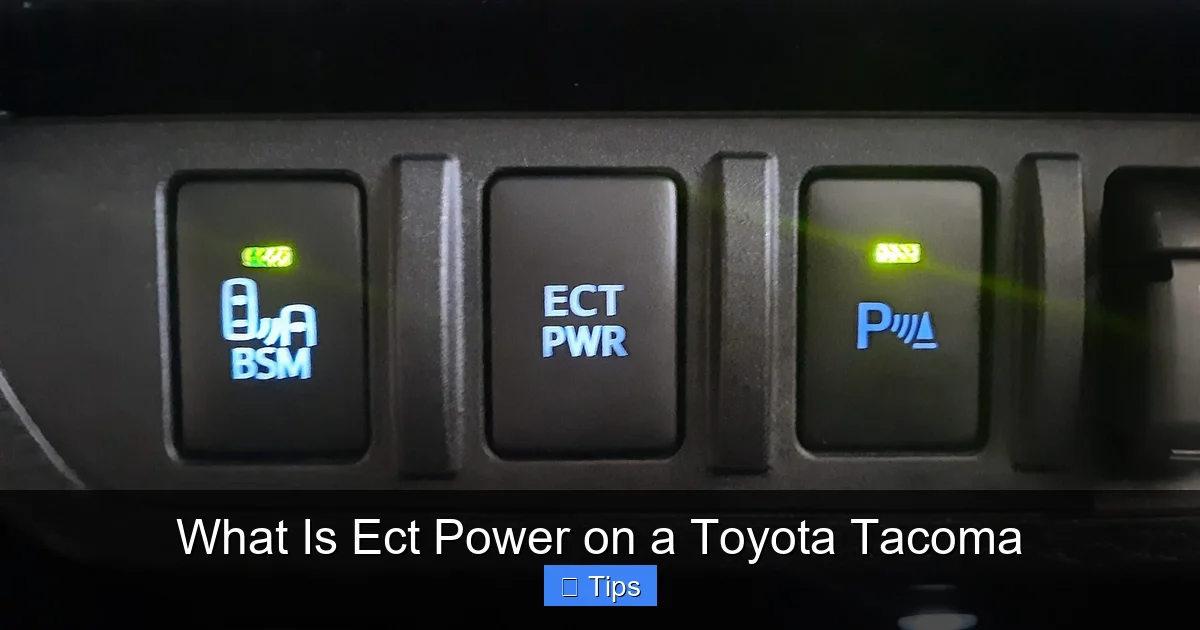
It’s typically a small, rectangular button with a light that illuminates when activated. Some newer Tacomas may have it integrated into a touchscreen menu, but most still use a physical button.
Activating the Mode
To turn on ECT Power:
1. Start your truck and ensure it’s in “Drive” (D).
2. Press the ECT Power button once.
3. You’ll see a light on the dashboard (often labeled “ECT PWR” or “PWR”) illuminate.
4. The transmission will immediately adjust its shift pattern.
You’ll notice the change right away—the engine will sound more responsive, and acceleration will feel quicker.
Deactivating the Mode
To turn off ECT Power:
1. Simply press the button again.
2. The light will turn off.
3. The transmission returns to normal shift patterns.
You can switch between modes at any time, even while driving. There’s no need to stop or slow down.
Practical Tips for Best Results
– Use ECT Power before you need it. For example, if you know you’re about to tow or climb a hill, activate it in advance.
– Don’t forget to turn it off afterward. Leaving it on during normal driving wastes fuel.
– Combine it with other features like 4WD or traction control for maximum effectiveness in tough conditions.
– If your Tacoma has a manual shift mode (like “S” mode), you can use ECT Power alongside it for even more control.
ECT Power vs. Other Driving Modes
Many modern vehicles come with multiple driving modes—Eco, Sport, Normal, etc. So how does ECT Power compare?
ECT Power vs. Eco Mode
Eco mode is the opposite of ECT Power. It prioritizes fuel efficiency by reducing throttle response, delaying upshifts, and even limiting air conditioning output. Use Eco for city driving or long highway trips where saving gas is the goal.
ECT Power, on the other hand, is all about performance. It’s the closest thing to a “Sport” mode on the Tacoma. If your truck has both Eco and ECT Power buttons, you can think of them as two ends of the spectrum: one for efficiency, one for power.
ECT Power vs. Manual Shift Mode
Some Tacomas offer a manual shift mode (often labeled “S” or “M”), where you can shift gears using paddle shifters or the gear lever. This gives you full control over gear selection.
ECT Power works differently—it doesn’t let you choose gears manually. Instead, it changes the automatic shift pattern to favor performance. You can use both together: activate ECT Power for quicker shifts, then use manual mode to lock in a specific gear for steep climbs or descents.
ECT Power vs. 4WD Low
4WD Low is used for extreme off-road conditions, where maximum torque and slow, controlled movement are needed. ECT Power can complement 4WD Low by keeping the transmission in lower gears, but it’s not a replacement.
Use 4WD Low for rock crawling or deep mud. Use ECT Power for towing, hills, or high-speed off-roading where you still need acceleration.
Myths and Misconceptions About ECT Power
Despite its usefulness, ECT Power is often misunderstood. Let’s clear up some common myths.
Myth: ECT Power Makes the Engine More Powerful
False. ECT Power doesn’t increase the engine’s horsepower or torque. It only changes how the transmission delivers existing power. The engine still makes the same amount of power—it’s just used more effectively.
Myth: You Should Always Use It When Towing
Not necessarily. While ECT Power helps with towing, it’s not always required. For light loads or flat terrain, normal mode may be sufficient. Use ECT Power when you notice the truck struggling or when driving in hilly areas.
Myth: It’s Bad for the Transmission
Not if used correctly. Modern transmissions are designed to handle ECT Power. The key is using it only when needed and not leaving it on all the time. Occasional use won’t harm your truck.
Myth: It Only Works at High Speeds
No. ECT Power is effective at all speeds. In fact, it’s most useful at low to mid speeds, where quick acceleration and engine braking matter most.
Myth: All Tacomas Have ECT Power
Most do, but not all. Older models (pre-2005) may not have the feature. Check your owner’s manual or look for the button to confirm.
Conclusion
ECT Power on a Toyota Tacoma is a smart, driver-focused feature that enhances performance when you need it most. Whether you’re towing, climbing hills, or off-roading, it gives you more control, better acceleration, and improved safety. But like any tool, it’s only useful when used correctly.
The key is understanding when to activate it—and when to leave it off. Use ECT Power for demanding situations, but switch back to normal mode for everyday driving. This balance ensures you get the best performance without sacrificing fuel economy or drivetrain longevity.
So the next time you see that little “ECT PWR” button, don’t ignore it. Give it a try the next time you’re hauling a load or heading into the mountains. You might be surprised at how much of a difference it makes. And now, you’ll know exactly why.
Frequently Asked Questions
What does ECT Power do on a Toyota Tacoma?
ECT Power changes the transmission’s shift pattern to hold lower gears longer, increasing engine RPMs and improving acceleration and towing performance.
Is it bad to drive with ECT Power on all the time?
Yes, using ECT Power constantly can reduce fuel efficiency and increase engine wear. It’s best reserved for towing, hills, or off-roading.
Can I use ECT Power while driving normally?
You can, but it’s not recommended. Normal mode is more efficient and comfortable for everyday driving.
Does ECT Power work in 4WD?
Yes, ECT Power works in both 2WD and 4WD modes. It enhances performance in all driving conditions.
How do I know if ECT Power is active?
A light on the dashboard—usually labeled “ECT PWR” or “PWR”—will illuminate when the mode is on.
Can ECT Power damage my transmission?
No, if used properly. Modern transmissions are designed to handle ECT Power. Just avoid using it unnecessarily.

At CarLegit, we believe information should be clear, factual, and genuinely helpful. That’s why every guide, review, and update on our website is created with care, research, and a strong focus on user experience.