
The snow button on a Toyota Highlander adjusts throttle response and transmission shifting to improve traction and control in slippery conditions like snow, ice, or mud. It’s not just for snow—this feature helps prevent wheel spin and enhances stability, making winter driving safer and more confident.
In This Article
- 1 Key Takeaways
- 2 📑 Table of Contents
- 3 What Does the Snow Button Do on a Toyota Highlander?
- 4 How the Snow Button Works: The Science Behind Smoother Driving
- 5 When Should You Use the Snow Button?
- 6 Snow Button vs. Other Toyota Highlander Features
- 7 Real-World Tips for Using the Snow Button Effectively
- 8 Common Misconceptions About the Snow Button
- 9 Conclusion: A Simple Button with Big Benefits
- 10 Frequently Asked Questions
Key Takeaways
- Improves Traction: The snow button reduces engine power delivery to prevent wheel spin on slippery surfaces.
- Smoother Acceleration: It softens throttle response, making acceleration gentler and more controlled in low-grip conditions.
- Optimized Transmission Shifting: The system delays upshifts and holds lower gears longer to maintain better control.
- Enhances Safety: Helps prevent skidding and loss of control during starts, stops, and turns on snowy or icy roads.
- Works with AWD Systems: Complements Toyota’s All-Wheel Drive (AWD) for maximum stability in winter weather.
- Easy to Use: Simply press the button on the center console—no special setup required.
- Not Just for Snow: Also useful in rain, mud, sand, or any low-traction driving scenario.
📑 Table of Contents
- What Does the Snow Button Do on a Toyota Highlander?
- How the Snow Button Works: The Science Behind Smoother Driving
- When Should You Use the Snow Button?
- Snow Button vs. Other Toyota Highlander Features
- Real-World Tips for Using the Snow Button Effectively
- Common Misconceptions About the Snow Button
- Conclusion: A Simple Button with Big Benefits
What Does the Snow Button Do on a Toyota Highlander?
If you’ve ever driven a Toyota Highlander in winter, you’ve probably noticed a small button labeled “SNOW” on the center console. It might look unassuming, but this little button plays a big role in how your SUV handles in slippery conditions. Whether you’re navigating a snow-covered driveway, driving through a slushy parking lot, or tackling icy mountain roads, the snow button is designed to help you maintain control and drive more safely.
At first glance, it might seem like just another gimmick—another button that does something mysterious. But in reality, the snow button is a smart, driver-focused feature that adjusts how your Highlander responds to your inputs. It doesn’t magically melt snow or add chains to your tires, but it does change the vehicle’s behavior in ways that make driving in winter conditions far less stressful.
So, what exactly does it do? In simple terms, the snow button modifies the engine’s throttle response and the transmission’s shifting pattern. This helps prevent the wheels from spinning when you accelerate, especially from a stop. It’s particularly useful when you’re trying to pull away on a slick surface, where too much power too quickly can cause you to lose traction. By softening the throttle and managing power delivery, the snow button gives you smoother, more predictable control.
But it’s not just about starting from a stop. The snow button also influences how the transmission behaves during normal driving. It delays upshifts and keeps the engine in lower gears longer, which helps maintain better traction and stability. This is especially helpful when driving uphill on snowy roads or when you need steady, controlled power.
And here’s a bonus: the snow button isn’t just for snow. It can also help in other low-traction conditions like heavy rain, mud, or loose gravel. So even if you’re not dealing with a blizzard, this feature can still make a difference in how confidently your Highlander handles tricky terrain.
How the Snow Button Works: The Science Behind Smoother Driving
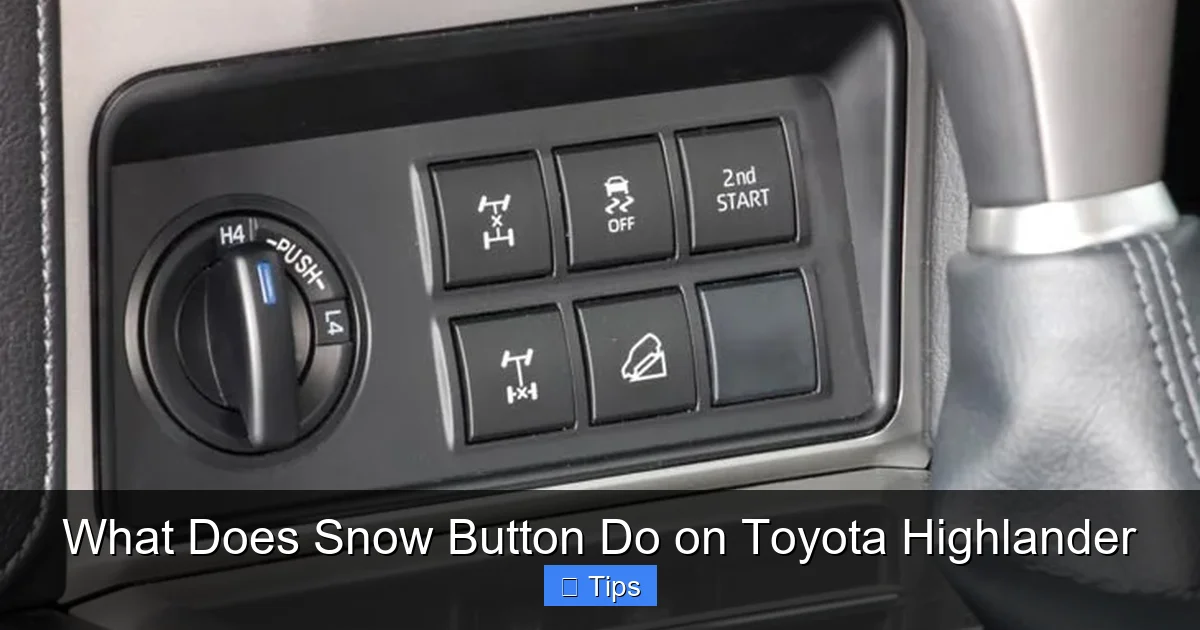
Visual guide about What Does Snow Button Do on Toyota Highlander
Image source: bryansgarage.com
To truly understand what the snow button does, it helps to know a little about how your Toyota Highlander’s engine and transmission communicate. Modern vehicles like the Highlander use sophisticated electronic control systems to manage everything from fuel injection to gear changes. The snow button taps into this system and makes temporary adjustments to improve performance in slippery conditions.
When you press the snow button, it sends a signal to the vehicle’s engine control unit (ECU) and transmission control module (TCM). These systems then modify how the throttle responds when you press the accelerator pedal. Instead of delivering full power the moment you touch the gas, the system reduces sensitivity. This means that even if you press the pedal hard, the engine won’t surge forward aggressively. The result is smoother, more gradual acceleration that’s less likely to break traction.
For example, imagine you’re trying to pull out of a snowy driveway. Without the snow button, a quick press of the gas might cause your front wheels to spin, especially if the snow is packed or icy. But with the snow button engaged, the throttle response is softened. The engine delivers power more gradually, giving the tires time to grip the surface. This reduces the chance of spinning and helps you move forward steadily.
The transmission also plays a key role. Normally, the Highlander’s automatic transmission shifts gears based on speed, load, and throttle input. But in snow mode, the system delays upshifts. This keeps the engine in a lower gear longer, which increases torque at the wheels and improves traction. It’s similar to how you might drive a manual car in second gear on a slippery road instead of first—more control, less wheel spin.
Additionally, the snow button can influence how the vehicle handles braking and cornering. While it doesn’t directly control the brakes, the reduced throttle sensitivity and lower gearing help prevent sudden movements that could lead to skidding. When you’re driving slowly on snow, this stability is crucial.
It’s also worth noting that the snow button works in harmony with other safety systems in the Highlander, such as traction control and electronic stability control (ESC). These systems monitor wheel speed and vehicle motion, and they can automatically apply brakes or reduce engine power if they detect loss of traction. The snow button enhances this by making the vehicle less likely to trigger those interventions in the first place.
When Should You Use the Snow Button?
Visual guide about What Does Snow Button Do on Toyota Highlander
Image source: gearfixup.com
Now that you know how the snow button works, the next question is: when should you actually use it? The short answer is: whenever road conditions are slippery or traction is reduced. But let’s break that down with some practical examples.
Starting from a Stop on Snow or Ice
One of the most common times to use the snow button is when you’re pulling away from a stop on a snowy or icy surface. Whether it’s your driveway, a parking spot, or a stop sign, starting smoothly is key to maintaining control. Without the snow button, a quick press of the gas can cause the wheels to spin, especially if the snow is packed or there’s black ice underneath.
With the snow button on, the throttle response is softened. This means you can press the accelerator with confidence, knowing the engine won’t surge forward too quickly. It’s like easing into the gas instead of stomping on it. This gentle approach gives the tires a better chance to grip the surface and helps you move forward without spinning.
Driving on Slushy or Icy Roads
Slush—that mix of snow and water—can be especially tricky. It reduces tire grip and can cause hydroplaning if you’re not careful. The snow button helps by keeping acceleration smooth and preventing sudden power surges. It also helps maintain steady speed, which is important when driving through slush-covered roads.
Similarly, on icy roads, even small movements can lead to skidding. The snow button’s reduced throttle sensitivity helps you make gradual adjustments, whether you’re accelerating, braking, or turning. This is especially helpful when navigating intersections or making slow turns.
Climbing Hills in Winter Conditions
Driving uphill on snow or ice can be nerve-wracking. If you lose traction partway up, you could slide backward or get stuck. The snow button helps by keeping the transmission in a lower gear, which provides more torque to the wheels. This gives you better pulling power and reduces the chance of spinning out.
For example, imagine you’re driving up a snowy hill and your wheels start to slip. With the snow button off, the transmission might upshift, reducing engine power and making the problem worse. But with the snow button on, the system holds a lower gear, maintaining steady power delivery and helping you climb safely.
Driving in Heavy Rain or Mud
While the snow button is named for snow, it’s also useful in other low-traction conditions. Heavy rain can make roads slick, especially if there’s standing water. Mud, whether on a trail or a rural road, can be just as slippery as snow. In both cases, the snow button helps by smoothing out throttle response and preventing wheel spin.
Even on gravel or loose dirt roads, the snow button can improve control. Sudden acceleration can cause tires to dig in or slide sideways. The snow button’s gentle power delivery helps you maintain traction and stay on course.
When Not to Use the Snow Button
While the snow button is helpful in many situations, it’s not always the best choice. On dry, clear roads, you don’t need the reduced throttle response or delayed shifting. In fact, using the snow button in normal conditions can make the vehicle feel sluggish and less responsive. It may also reduce fuel efficiency slightly, since the engine stays in lower gears longer.
So, it’s best to turn the snow button off when road conditions improve. Most drivers find it helpful to use it only when needed—like during a snowstorm, icy morning, or muddy off-road drive—and then turn it off once conditions return to normal.
Snow Button vs. Other Toyota Highlander Features
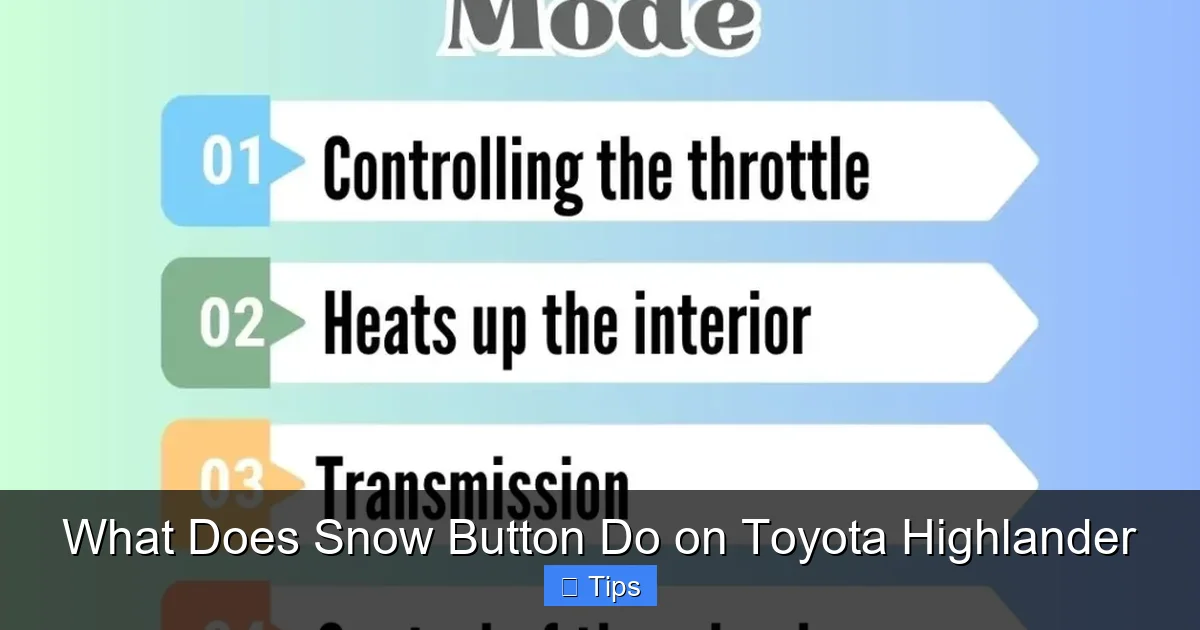
Visual guide about What Does Snow Button Do on Toyota Highlander
Image source: gearfixup.com
The snow button is just one of many features designed to improve safety and performance in the Toyota Highlander. To get the most out of your SUV in winter, it’s helpful to understand how the snow button works alongside other systems like All-Wheel Drive (AWD), Traction Control, and Electronic Stability Control (ESC).
All-Wheel Drive (AWD)
The Highlander comes standard with AWD on most trims, which means power is sent to all four wheels instead of just two. This improves traction in slippery conditions because more wheels are gripping the road. The snow button complements AWD by managing how that power is delivered. While AWD helps you maintain grip, the snow button helps prevent that grip from being overwhelmed by sudden acceleration.
Think of it this way: AWD is like having four-wheel drive on a truck—it gives you more pulling power. The snow button is like a gentle foot on the gas—it ensures that power is applied smoothly, so you don’t break traction.
Traction Control System (TCS)
Traction control monitors wheel speed and automatically reduces engine power or applies brakes if it detects a wheel spinning. It’s a reactive system—it steps in after a problem starts. The snow button, on the other hand, is proactive. It prevents wheel spin from happening in the first place by softening throttle response.
Using both together gives you the best of both worlds: the snow button helps you avoid slipping, and traction control catches you if you do.
Electronic Stability Control (ESC)
ESC helps prevent skidding and loss of control during sudden maneuvers, like swerving to avoid an obstacle. It works by applying brakes to individual wheels and reducing engine power. The snow button supports ESC by making your inputs smoother and less likely to trigger a skid.
In short, the snow button doesn’t replace these systems—it enhances them. It’s part of a layered approach to safety that helps you drive confidently in challenging conditions.
Drive Modes (Eco, Normal, Sport)
The Highlander also offers different drive modes that change how the vehicle responds. Eco mode prioritizes fuel efficiency, Normal mode balances performance and comfort, and Sport mode sharpens throttle response and steering. The snow button can be used alongside any of these modes, but it’s most effective in Normal or Eco, where smooth driving is already emphasized.
Using Sport mode with the snow button on might feel contradictory—Sport wants quick response, while Snow wants slow and steady. So, for best results, stick with Normal or Eco when using the snow button.
Real-World Tips for Using the Snow Button Effectively
Knowing what the snow button does is one thing—using it effectively is another. Here are some practical tips to help you get the most out of this feature in real-world driving.
Press the Button Before You Need It
Don’t wait until you’re already slipping to turn on the snow button. It’s best to activate it as soon as you know you’ll be driving in slippery conditions. For example, if you wake up to a snow-covered driveway, press the button before you even start the engine. This way, the system is ready to help from the moment you begin driving.
Use It in Combination with Winter Tires
The snow button improves traction, but it can’t overcome the limits of your tires. For the best performance in winter, pair the snow button with a set of quality winter tires. Winter tires are made with softer rubber and deeper treads that grip snow and ice far better than all-season tires. Together, they give you maximum control.
Don’t Rely on It Alone
The snow button is a helpful tool, but it’s not a substitute for safe driving habits. Always reduce your speed in winter conditions, increase following distance, and avoid sudden movements. The snow button helps, but it can’t prevent accidents caused by excessive speed or distracted driving.
Practice in a Safe Area
If you’re new to the snow button, try using it in a safe, empty parking lot during light snow. Practice starting, stopping, and turning to get a feel for how the vehicle responds. This will help you build confidence before driving in more challenging conditions.
Turn It Off When Conditions Improve
Once the roads are clear and dry, turn the snow button off. This restores normal throttle response and improves fuel efficiency. It also ensures the vehicle performs at its best in everyday driving.
Check Your Owner’s Manual
Every Highlander model year may have slight variations in how the snow button works. Your owner’s manual will have the most accurate and up-to-date information. It’s a quick read and can answer any specific questions you have.
Common Misconceptions About the Snow Button
Despite its usefulness, the snow button is often misunderstood. Let’s clear up some common myths so you can use it with confidence.
“It Melts Snow or Ice”
No, the snow button doesn’t heat up the tires or clear the road. It’s an electronic feature that adjusts how the engine and transmission behave. It doesn’t physically change the environment—it changes how your vehicle responds to it.
“It’s Only for Heavy Snowstorms”
Actually, the snow button is helpful even in light snow or icy patches. You don’t need a blizzard to benefit from smoother throttle response and better traction. It’s useful any time traction is reduced.
“It Slows Down the Vehicle Too Much”
While the snow button does soften throttle response, it doesn’t make the Highlander sluggish in a dangerous way. It’s designed to be smooth, not slow. You can still accelerate when needed—just more gradually.
“It Replaces Winter Tires”
This is a dangerous myth. The snow button helps with traction, but it can’t compensate for poor tire grip. Winter tires are still essential for safe winter driving.
“It’s the Same as 4WD or AWD”
No, the snow button doesn’t change how power is distributed to the wheels. It only affects throttle and transmission behavior. AWD is a mechanical system; the snow button is an electronic assist.
Conclusion: A Simple Button with Big Benefits
The snow button on the Toyota Highlander might seem like a small feature, but it makes a big difference in how safely and confidently you can drive in winter conditions. By softening throttle response and optimizing transmission shifting, it helps prevent wheel spin, improves traction, and enhances overall control.
Whether you’re dealing with snow, ice, slush, or even heavy rain, this button is a valuable tool in your winter driving toolkit. It works best when used proactively, in combination with winter tires and safe driving habits. And while it doesn’t replace other safety systems, it complements them beautifully.
So the next time you see that little “SNOW” button on your Highlander’s console, don’t ignore it. Press it, feel the difference, and drive with more peace of mind. Winter driving doesn’t have to be stressful—especially when your SUV is equipped with smart features designed to keep you safe.
Frequently Asked Questions
The snow button adjusts the throttle response and transmission shifting to provide smoother acceleration and better traction in slippery conditions like snow, ice, or mud. It helps prevent wheel spin and improves control during low-traction driving.
Yes, the snow button is also effective in heavy rain, mud, or loose gravel. It helps maintain traction and control in any low-grip situation, not just snow.
It may slightly reduce fuel efficiency because the transmission holds lower gears longer. However, the impact is minimal and worth the improved safety in winter conditions.
Absolutely. Winter tires provide the best grip in cold weather, and the snow button enhances control by managing power delivery. Using both together gives you maximum safety.
It’s not recommended. Use it only in slippery conditions. On dry roads, it can make the vehicle feel less responsive and may reduce fuel efficiency.
Yes, it works seamlessly with Toyota’s All-Wheel Drive system. The snow button manages power delivery, while AWD distributes power to all four wheels for better traction.

At CarLegit, we believe information should be clear, factual, and genuinely helpful. That’s why every guide, review, and update on our website is created with care, research, and a strong focus on user experience.