
Buying a second hand car can save you thousands—if you know where to look. Whether you’re shopping online, visiting dealerships, or connecting with private sellers, this guide covers the best options and insider tips to help you find a safe, affordable, and reliable used vehicle.
In This Article
- 1 Key Takeaways
- 2 📑 Table of Contents
- 3 Where Can I Buy a Second Hand Car? A Complete Guide for Smart Buyers
- 4 1. Buying from Certified Dealerships
- 5 2. Shopping on Online Marketplaces
- 6 3. Buying from Private Sellers
- 7 4. Exploring Auctions and Government Sales
- 8 5. Certified Pre-Owned (CPO) Programs
- 9 6. Additional Tips for Buying a Second Hand Car
- 10 Conclusion
- 11 Frequently Asked Questions
- 11.1 Is it safe to buy a second hand car online?
- 11.2 Should I buy a used car from a private seller or a dealership?
- 11.3 How can I avoid buying a lemon?
- 11.4 What documents do I need when buying a used car?
- 11.5 Can I negotiate the price of a second hand car?
- 11.6 What is a certified pre-owned (CPO) car?
Key Takeaways
- Choose reputable sources: Buy from certified dealerships, trusted online platforms, or verified private sellers to reduce risk.
- Always get a vehicle history report: Use services like Carfax or AutoCheck to check for accidents, title issues, and odometer fraud.
- Inspect the car thoroughly: Bring a mechanic for a pre-purchase inspection to uncover hidden mechanical problems.
- Compare prices across platforms: Check multiple listings to ensure you’re getting a fair deal based on market value.
- Negotiate confidently: Use your research and inspection findings to negotiate a better price.
- Understand financing and paperwork: Know your loan options and ensure all legal documents are in order before finalizing the purchase.
- Consider certified pre-owned (CPO) vehicles: These offer extended warranties and rigorous inspections for added peace of mind.
📑 Table of Contents
- Where Can I Buy a Second Hand Car? A Complete Guide for Smart Buyers
- 1. Buying from Certified Dealerships
- 2. Shopping on Online Marketplaces
- 3. Buying from Private Sellers
- 4. Exploring Auctions and Government Sales
- 5. Certified Pre-Owned (CPO) Programs
- 6. Additional Tips for Buying a Second Hand Car
- Conclusion
Where Can I Buy a Second Hand Car? A Complete Guide for Smart Buyers
Buying a second hand car is one of the smartest financial moves you can make. New cars lose value the moment they’re driven off the lot—often depreciating by 20% in the first year. A used car, on the other hand, has already taken that hit, meaning you get more value for your money. But finding the right second hand car isn’t just about saving cash. It’s about finding a reliable vehicle that fits your lifestyle, budget, and long-term needs.
The good news? There are more options than ever when it comes to where you can buy a second hand car. From online marketplaces to local dealerships and private sellers, the market is full of opportunities. The challenge is knowing where to look, how to evaluate your options, and how to avoid common pitfalls. Whether you’re a first-time buyer or upgrading from your current ride, this guide will walk you through every step of the process—so you can drive away with confidence.
1. Buying from Certified Dealerships
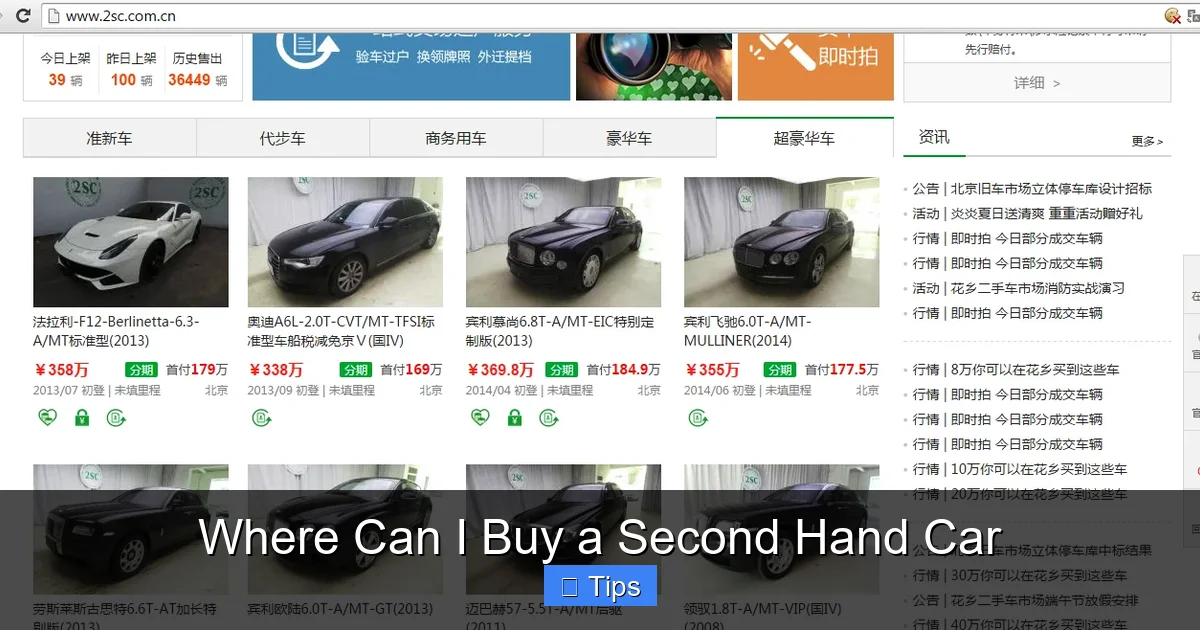
One of the most trusted places to buy a second hand car is through a certified dealership. These are established businesses that sell used vehicles alongside new ones, often offering warranties, financing, and professional inspections.
Advantages of Dealerships
Dealerships provide a level of security that private sellers can’t match. Most reputable dealers inspect vehicles before selling them, and many offer certified pre-owned (CPO) programs. These CPO cars undergo rigorous multi-point inspections, come with extended warranties, and often include roadside assistance. For example, a Toyota CPO vehicle might include a 12-month/12,000-mile comprehensive warranty and a 7-year/100,000-mile powertrain warranty.
Visual guide about Where Can I Buy a Second Hand Car
Image source: beijingrelocation.com
Another benefit is financing. Dealerships often have relationships with banks and credit unions, making it easier to secure a loan—even if you have less-than-perfect credit. They can also handle the paperwork for you, including title transfers and registration, which saves time and reduces stress.
What to Watch Out For
Not all dealerships are created equal. Some may pressure you into add-ons like extended warranties, paint protection, or VIN etching—services that are often overpriced and unnecessary. Always read the fine print and ask for a breakdown of all fees.
Also, be cautious of “buy here, pay here” lots. These dealerships cater to buyers with poor credit but often charge high interest rates and may install GPS trackers or starter interrupters on the vehicle. While they can be a last resort, they’re generally not the best option for most buyers.
Tips for a Smooth Dealership Experience
- Research dealerships with strong customer reviews on Google, Yelp, or the Better Business Bureau.
- Visit multiple dealerships to compare inventory and pricing.
- Ask for a copy of the vehicle history report and inspection checklist.
- Test drive the car and pay attention to how it handles, sounds, and feels.
- Negotiate the out-the-door price, not just the monthly payment.
2. Shopping on Online Marketplaces
The internet has revolutionized how we buy second hand cars. Online platforms make it easy to browse hundreds of listings from the comfort of your home, compare prices, and even arrange for delivery.
Top Online Platforms to Consider
Websites like Cars.com, Autotrader, and CarGurus are among the most popular for used car shopping. These platforms allow you to filter by make, model, price, mileage, location, and even fuel type. They also provide tools like price analysis, which tells you whether a listing is a good deal based on similar vehicles in your area.
Visual guide about Where Can I Buy a Second Hand Car
Image source: readingcan.org.uk
For a more direct approach, consider Facebook Marketplace or Craigslist. These sites connect you with private sellers, often resulting in lower prices since there’s no dealer markup. However, they come with higher risk—there’s no guarantee the car is in good condition, and scams are more common.
Emerging platforms like Vroom, Carvana, and Shift offer a hybrid experience. You shop online, get the car delivered to your door, and often have a return window (usually 7 days). These services are convenient but may charge delivery fees and have limited inventory in some areas.
How to Stay Safe Online
When buying from an online marketplace, always verify the seller’s identity. For private sellers, ask for their full name, phone number, and address. Be wary of deals that seem too good to be true—scammers often post fake listings with stolen photos and urgent language like “must sell today.”
Never wire money or send cash without seeing the car in person. Use secure payment methods like cashier’s checks or escrow services for high-value transactions. And always meet in a public place, preferably during daylight hours, when inspecting a car from a private seller.
Making the Most of Online Tools
- Set up alerts on your favorite platforms to be notified when new listings match your criteria.
- Use the “compare” feature to evaluate similar vehicles side by side.
- Read seller reviews and ratings, especially on platforms like eBay Motors.
- Check the vehicle’s VIN on the National Insurance Crime Bureau (NICB) website to see if it’s reported as stolen.
- Ask for recent photos of the engine, undercarriage, and interior—don’t rely solely on stock images.
3. Buying from Private Sellers
Buying directly from a private seller can be one of the most cost-effective ways to purchase a second hand car. Since there’s no middleman, you often get a better price—but you also take on more responsibility.
Why Private Sellers Can Be a Great Option
Private sellers are often motivated to sell quickly, especially if they’re upgrading or no longer need the vehicle. This can work in your favor during negotiations. You might find a well-maintained car with low mileage at a price well below market value.
Visual guide about Where Can I Buy a Second Hand Car
Image source: gocarremoval.com.au
Another advantage is transparency. Many private sellers are happy to share maintenance records, repair history, and even let you speak with their mechanic. This level of detail is rare at dealerships, where cars may have had multiple previous owners.
Risks and How to Avoid Them
The biggest risk with private sales is the lack of recourse. If the car breaks down a week after purchase, you’re on your own. That’s why due diligence is critical. Always get a vehicle history report using the car’s VIN. Services like Carfax or AutoCheck can reveal accidents, flood damage, odometer rollbacks, and title issues like salvage or lemon law buybacks.
Also, be cautious of sellers who refuse to let you inspect the car or bring a mechanic. This is a major red flag. A legitimate seller should have nothing to hide.
Steps for a Successful Private Purchase
- Contact the seller and ask detailed questions about the car’s condition, reason for selling, and maintenance history.
- Request to see the title—make sure the seller’s name matches the one on the document.
- Schedule a meeting in a safe, public location, such as a police station parking lot.
- Bring a friend or family member for support and an extra set of eyes.
- Take the car for a test drive on different road types—highway, city streets, hills—to assess performance.
- Hire a mobile mechanic to perform a pre-purchase inspection (typically $100–$150).
- Complete the transaction with a bill of sale and transfer the title according to your state’s requirements.
4. Exploring Auctions and Government Sales
For bargain hunters and those willing to take on a bit more risk, car auctions can be a goldmine for second hand vehicles. These events sell everything from repossessed cars to fleet vehicles and government surplus.
Types of Car Auctions
Public Auctions: Open to anyone, these are often held by local governments, police departments, or auction houses. You might find seized vehicles, abandoned cars, or retired police cruisers. Websites like GovDeals.com and PublicSurplus.com list upcoming auctions.
Dealer-Only Auctions: These are typically closed to the public and require a dealer license to bid. However, some platforms like Manheim or ADESA allow private buyers to participate through a registered agent or broker.
Online Auctions: Sites like eBay Motors offer both public and dealer auctions. You can bid from home, but be aware that many vehicles are sold “as-is,” with no warranty or return policy.
Pros and Cons of Buying at Auction
The biggest advantage is price. You can often buy a second hand car for significantly less than retail value—sometimes 30–50% off. This is especially true for older models or vehicles with cosmetic damage.
However, auctions come with risks. Most cars are sold without test drives or inspections, and you usually can’t return the vehicle if you’re unhappy. There’s also the possibility of bidding wars driving up the price.
Tips for First-Time Auction Buyers
- Research the auction house and read reviews from past buyers.
- Attend a few auctions as an observer before bidding to understand the process.
- Set a strict budget and stick to it—emotions can lead to overspending.
- Inspect the car as much as possible before the auction (some allow pre-auction viewing).
- Ask about buyer’s premiums, registration fees, and transportation costs.
- Consider hiring a professional bidder or agent if you’re not comfortable bidding yourself.
5. Certified Pre-Owned (CPO) Programs
If you want the reliability of a new car with the savings of a used one, certified pre-owned (CPO) vehicles are worth considering. These are late-model, low-mileage cars that have been inspected, refurbished, and backed by a manufacturer or dealer warranty.
What Makes a Car “Certified”?
To qualify as CPO, a vehicle must meet strict criteria set by the manufacturer. This usually includes being under a certain age (often 5–6 years old), having low mileage (typically under 60,000–80,000 miles), and passing a comprehensive inspection of over 100 points. Any issues found during the inspection are repaired using genuine parts.
CPO programs also include benefits like roadside assistance, complimentary maintenance for a limited time, and sometimes even loaner cars during service visits.
CPO vs. Regular Used Cars
The main difference is peace of mind. While a regular used car might come with no warranty, a CPO vehicle often includes an extended factory warranty that covers major components like the engine and transmission. For example, a Honda CPO might offer a 12-month/12,000-mile comprehensive warranty plus a 7-year/100,000-mile powertrain warranty from the original in-service date.
Of course, this added security comes at a cost. CPO cars are typically priced higher than similar non-certified models. But for many buyers, the extra expense is worth it for the reduced risk and long-term savings on repairs.
Finding CPO Vehicles
- Visit manufacturer websites (e.g., Ford Certified, BMW Premium Selection) to search for CPO inventory.
- Check with local dealerships—many have dedicated CPO lots.
- Use filters on online platforms like Cars.com or Autotrader to narrow your search to certified vehicles.
- Ask about the specific warranty terms and what’s covered.
- Compare CPO pricing to similar non-certified models to determine if the premium is justified.
6. Additional Tips for Buying a Second Hand Car
No matter where you choose to buy your second hand car, a few universal tips can help you make a smarter, safer purchase.
Do Your Homework
Before you even start shopping, research the makes and models that fit your needs. Consider factors like fuel efficiency, reliability, maintenance costs, and resale value. Websites like Kelley Blue Book (KBB), Edmunds, and Consumer Reports offer valuable insights and owner reviews.
Once you’ve narrowed your choices, check the fair market value using KBB’s “Private Party” or “Dealer Retail” pricing. This gives you a baseline for negotiations.
Get Pre-Approved for Financing
Even if you plan to pay cash, getting pre-approved for a loan gives you negotiating power. You’ll know exactly how much you can afford, and you can compare rates from banks, credit unions, and online lenders. Pre-approval also speeds up the buying process.
Never Skip the Inspection
A pre-purchase inspection by a trusted mechanic is one of the best investments you can make. For around $100–$150, a professional can identify hidden issues like transmission problems, frame damage, or worn suspension components. Many mobile mechanics will come to the car’s location, making it convenient for private sales.
Understand the Paperwork
Every state has different requirements for transferring ownership of a used car. Make sure you have the title, bill of sale, odometer disclosure statement, and emissions test (if required). If buying from a dealer, they should handle most of this. With private sellers, you may need to file the paperwork yourself.
Trust Your Gut
If something feels off—whether it’s the seller’s behavior, the car’s condition, or the deal itself—walk away. There are plenty of second hand cars available, and rushing into a bad purchase can cost you far more in the long run.
Conclusion
Buying a second hand car doesn’t have to be stressful or risky. By knowing where to look—whether it’s a certified dealership, online marketplace, private seller, or auction—you can find a reliable vehicle that fits your budget and lifestyle. The key is doing your research, inspecting the car thoroughly, and understanding your rights and responsibilities as a buyer.
Remember, the cheapest option isn’t always the best. A slightly higher price for a well-maintained, inspected vehicle with a clean history can save you thousands in repairs down the road. Take your time, ask questions, and don’t be afraid to walk away if something doesn’t feel right.
With the right approach, your next second hand car could be the most satisfying purchase you’ve ever made—offering reliability, value, and the freedom to go wherever life takes you.
Frequently Asked Questions
Is it safe to buy a second hand car online?
Yes, it can be safe if you take precautions. Stick to reputable platforms, verify the seller, and always inspect the car in person before paying. Avoid deals that seem too good to be true.
Should I buy a used car from a private seller or a dealership?
It depends on your priorities. Private sellers often offer lower prices, while dealerships provide more security, warranties, and financing options. Consider your budget, risk tolerance, and need for support after the sale.
How can I avoid buying a lemon?
Get a vehicle history report, have the car inspected by a mechanic, and buy from a trusted source. Certified pre-owned programs also reduce the risk of purchasing a defective vehicle.
What documents do I need when buying a used car?
You’ll typically need the title, bill of sale, odometer disclosure, and proof of insurance. Some states also require emissions or safety inspections. Check your local DMV for specific requirements.
Can I negotiate the price of a second hand car?
Absolutely. Use your research on market value, any issues found during inspection, and comparable listings to negotiate a fair price. Be polite but firm in your discussions.
What is a certified pre-owned (CPO) car?
A CPO car is a used vehicle that has been inspected, refurbished, and certified by the manufacturer or dealer. It comes with an extended warranty and often includes additional benefits like roadside assistance.

At CarLegit, we believe information should be clear, factual, and genuinely helpful. That’s why every guide, review, and update on our website is created with care, research, and a strong focus on user experience.