
Using car oil in a lawn mower is possible in emergencies, but it’s not ideal. Lawn mower engines operate under different conditions and require specific oil formulations. Choosing the right oil ensures longer engine life and better performance.
In This Article
- 1 Key Takeaways
- 2 📑 Table of Contents
- 3 Can You Use Car Oil for Lawn Mower?
- 4 Understanding Lawn Mower Engines
- 5 Types of Oil: Car vs. Lawn Mower
- 6 When Is It Okay to Use Car Oil?
- 7 Risks of Using Car Oil in a Lawn Mower
- 8 Best Practices for Lawn Mower Oil Maintenance
- 9 Conclusion
- 10 Frequently Asked Questions
Key Takeaways
- Car oil is not designed for small engines: Lawn mower engines run hotter and at higher RPMs than car engines, requiring oils with different additives and viscosity.
- Check your owner’s manual first: Always follow the manufacturer’s recommended oil type and change intervals to avoid warranty issues or engine damage.
- Use SAE 30 or 10W-30 for most mowers: These are standard viscosities for small engines in typical operating temperatures.
- Avoid detergent oils if not specified: Some older mowers require non-detergent oil to prevent foaming and carbon buildup.
- Never use synthetic car oil in older mowers: Synthetic oils can degrade older seals and gaskets not designed for modern formulations.
- Emergency use is okay—temporarily: If you’re out of mower oil and need to start the engine, a small amount of car oil won’t cause immediate harm, but replace it ASAP.
- Proper oil maintenance extends engine life: Regular oil changes with the correct oil keep your mower running efficiently for years.
📑 Table of Contents
Can You Use Car Oil for Lawn Mower?
So, you’re out mowing the lawn, and suddenly your mower sputters and dies. You pop the hood—well, the engine cover—and realize you’re low on oil. You check the garage and all you have is a bottle of 10W-30 car oil. Now you’re wondering: *Can you use car oil for lawn mower?* It’s a common question, especially among homeowners who maintain both cars and lawns.
At first glance, oil is oil, right? It lubricates, reduces friction, and keeps engines cool. But here’s the catch: lawn mower engines are not the same as car engines. They’re smaller, run hotter, and operate at much higher revolutions per minute (RPMs). Because of these differences, the oil they need is specifically formulated to meet their unique demands.
While it might seem convenient to use car oil in a pinch, doing so regularly can lead to performance issues, increased wear, and even engine failure over time. That doesn’t mean it’s always a disaster—sometimes, in an emergency, using car oil temporarily won’t immediately ruin your mower. But understanding the differences between car oil and lawn mower oil is key to making smart, long-term decisions for your equipment.
In this guide, we’ll break down everything you need to know about using car oil in a lawn mower—when it’s okay, when it’s not, and what to do instead. Whether you’re a weekend warrior or a seasoned landscaper, this information will help you keep your mower running smoothly season after season.
Understanding Lawn Mower Engines
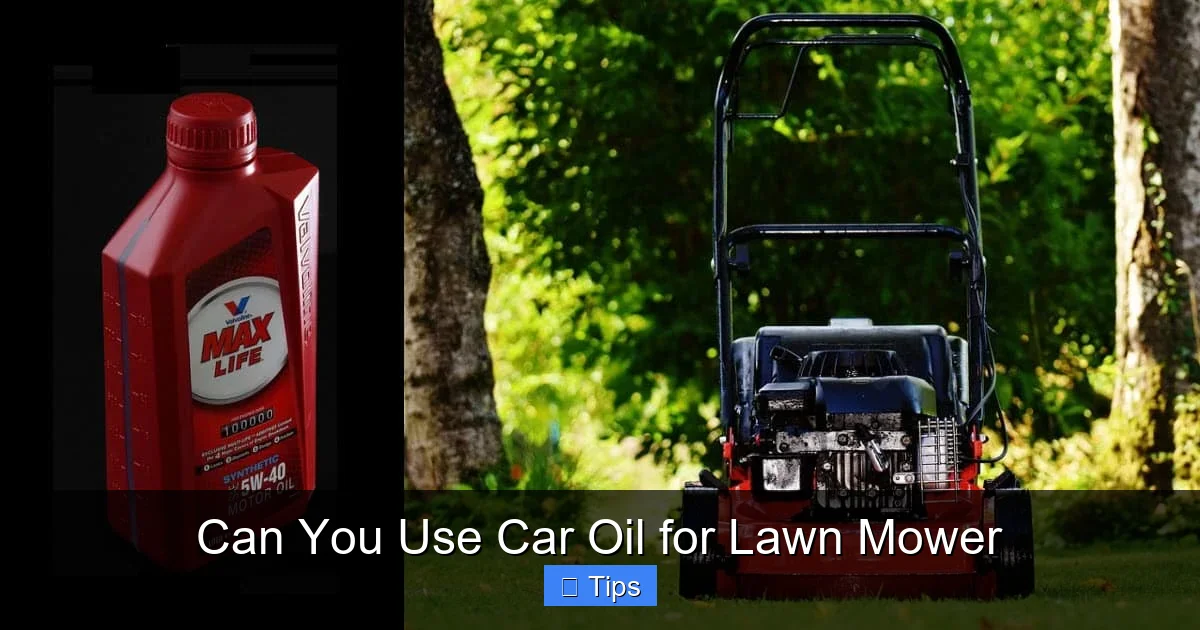
Visual guide about Can You Use Car Oil for Lawn Mower
Image source: lawnchick.com
Before we dive into oil types, it’s important to understand how lawn mower engines work—and why they’re different from car engines. Most residential lawn mowers use small, four-stroke engines that are air-cooled and run at very high speeds. These engines typically operate between 3,000 and 3,600 RPMs, which is significantly higher than the average car engine at idle (around 600–1,000 RPMs).
Because of these high RPMs and the lack of a liquid cooling system, lawn mower engines generate a lot of heat. This heat, combined with the constant vibration and exposure to dirt and grass clippings, creates a harsh environment for engine components. The oil in a lawn mower must be able to withstand these conditions while still providing adequate lubrication.
Another key difference is the oil system itself. Most lawn mower engines use a splash lubrication system, where oil is flung around the engine by moving parts. This is less efficient than the pressurized oil systems in cars, which use oil pumps to deliver oil directly to critical components. As a result, lawn mower oil must be formulated to stay in place and resist breaking down under stress.
Additionally, many small engines are designed to run in multiple positions—especially in push mowers or tillers that might tilt during use. This means the oil must cling to engine parts even when the mower is angled, preventing dry starts and ensuring consistent lubrication.
All of these factors mean that lawn mower oil is engineered with specific additives and viscosity grades to handle the unique demands of small engines. Using the wrong oil—like standard car oil—can lead to poor lubrication, increased sludge buildup, and premature engine wear.
Types of Oil: Car vs. Lawn Mower
Visual guide about Can You Use Car Oil for Lawn Mower
Image source: m.media-amazon.com
Now that we understand how lawn mower engines work, let’s compare the types of oil used in cars versus those recommended for lawn mowers. At the most basic level, both car and lawn mower oils are designed to lubricate engine parts, reduce friction, and help dissipate heat. But the similarities end there.
Viscosity Differences
Viscosity refers to how thick or thin an oil is. It’s usually indicated by a number like 10W-30 or SAE 30. The “W” stands for winter, indicating how the oil flows in cold temperatures. For example, 10W-30 is thinner in cold weather (10W) and thicker at operating temperature (30).
Car engines typically use multi-viscosity oils like 5W-30 or 10W-40, which are designed to perform well across a wide range of temperatures. These oils are formulated to flow easily at startup and maintain stability at high speeds and loads.
Lawn mower engines, on the other hand, often use single-viscosity oils like SAE 30, especially in warmer climates. In colder regions, 10W-30 is commonly recommended because it offers better cold-weather performance. The key is that lawn mower oil must maintain the right viscosity at high RPMs without thinning out too much.
Additives and Detergents
Another major difference lies in the additives. Car oils contain a complex blend of detergents, dispersants, anti-wear agents, and friction modifiers. These additives help keep car engines clean by preventing sludge and varnish buildup, especially in engines that run for long periods and at varying loads.
Lawn mower oils may or may not contain detergents. Some older or smaller engines actually require non-detergent oil because detergents can cause foaming in splash-lubrication systems. Foaming reduces the oil’s ability to lubricate properly, leading to increased wear.
Additionally, car oils often contain additives designed for emissions systems, such as catalytic converters. These additives can leave behind ash when burned, which can clog small engine components like spark arrestors or exhaust ports in lawn mowers.
Synthetic vs. Conventional Oil
Synthetic oils are engineered for superior performance, offering better temperature stability, reduced breakdown, and improved fuel efficiency. Many modern cars use full or partial synthetic oils.
However, synthetic car oils are not always suitable for lawn mowers—especially older models. The advanced additives and lower viscosity of synthetics can degrade older seals and gaskets not designed for modern formulations. This can lead to leaks and reduced engine performance.
Some high-quality small engine oils are now available in synthetic blends, but these are specifically formulated for lawn mowers and small engines. Using automotive synthetic oil in a mower without checking compatibility can do more harm than good.
Oil Classification Systems
Car oils are classified by the American Petroleum Institute (API) using codes like “SN” or “SP,” which indicate performance levels for gasoline engines. These classifications are based on extensive testing for emissions, fuel economy, and engine cleanliness.
Lawn mower oils, on the other hand, are often classified under the Small Engine Council (SEC) or by manufacturer specifications. They may not carry API ratings, but they are tested specifically for small engine performance, including resistance to thermal breakdown and wear protection.
In short, while car oil and lawn mower oil may look similar, they are formulated for very different purposes. Using the wrong one can compromise your mower’s performance and longevity.
When Is It Okay to Use Car Oil?
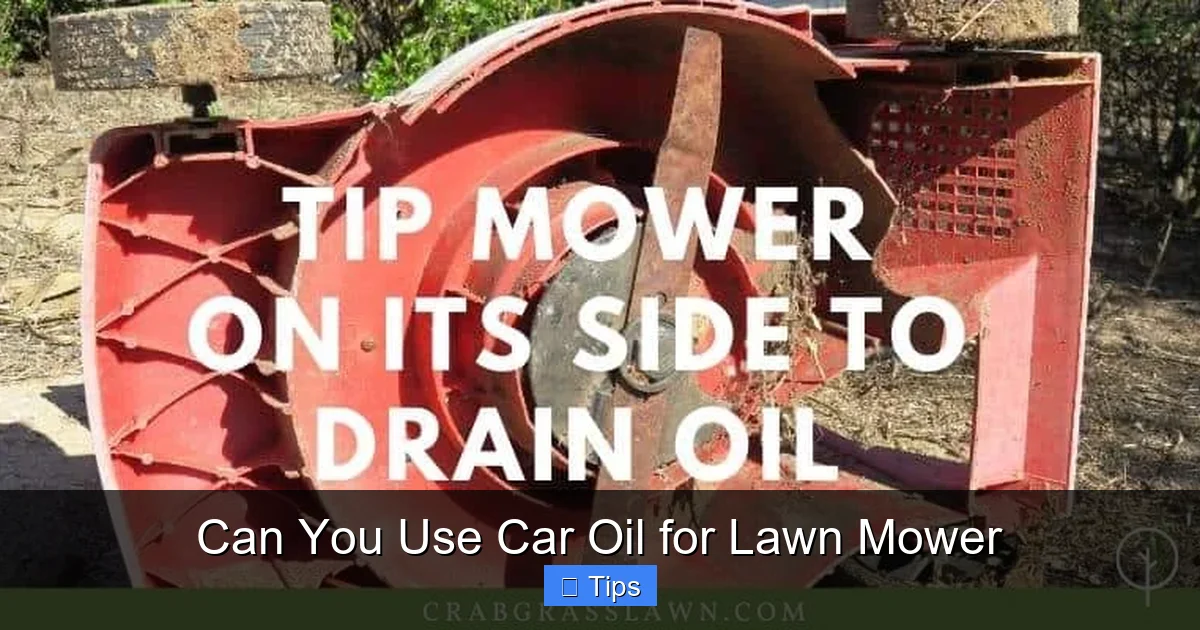
Visual guide about Can You Use Car Oil for Lawn Mower
Image source: crabgrasslawn.com
So, can you use car oil for lawn mower? The short answer is: sometimes—but with major caveats.
Emergency Situations
If you’re in the middle of mowing and your mower runs low on oil, using a small amount of car oil to get it started and back to the garage is generally acceptable—as a temporary fix. For example, if you have a bottle of 10W-30 car oil and your mower calls for 10W-30, adding a little won’t cause immediate damage.
However, this should only be done in true emergencies. Once you’re able, drain the oil and replace it with the correct lawn mower oil. Running your mower long-term on car oil can lead to problems down the road.
Similar Viscosity and Additive Profiles
In some cases, car oil may be a close enough match to work temporarily. For instance, if your mower requires 10W-30 and you use a high-quality 10W-30 car oil that doesn’t contain excessive detergents or ash-forming additives, the risk is lower.
But even then, it’s not ideal. Car oils are designed for engines that run cleaner, cooler, and with better filtration. Lawn mower engines are exposed to more dirt, run hotter, and have less sophisticated oil systems. Over time, the additives in car oil may not perform as well in these conditions.
Older Mowers and Non-Detergent Oil
Some older lawn mowers, especially those made before the 1980s, were designed to run on non-detergent oil. In these cases, using modern car oil—which is almost always detergent-based—can cause foaming and poor lubrication.
If you have a vintage mower, check the manual or consult a small engine expert. You may need to use a non-detergent oil like SAE 30 without additives. Using car oil in these engines can lead to rapid wear and engine failure.
Modern Mowers and Manufacturer Recommendations
Most modern lawn mowers are designed to run on oils specifically formulated for small engines. These oils are often labeled as “4-cycle” or “small engine” oil and are available at hardware stores, garden centers, and online.
Manufacturers like Briggs & Stratton, Honda, and Kohler provide clear oil recommendations in their owner’s manuals. Following these guidelines ensures optimal performance and protects your warranty.
If your manual says to use SAE 30 or 10W-30 small engine oil, stick to that. Deviating from the recommendation—even with a similar car oil—can void your warranty and reduce engine life.
Practical Example: A Real-World Scenario
Imagine you’re mowing your lawn on a hot summer day. Your mower starts sputtering, and you realize the oil is low. You don’t have small engine oil on hand, but you do have a quart of 10W-30 car oil in your garage.
In this case, adding a small amount of car oil to get the mower back to the shed is reasonable. But once you’re done, drain the oil completely and refill it with the correct small engine oil. Don’t continue using the car oil for the next few months—this is a temporary solution, not a long-term fix.
Risks of Using Car Oil in a Lawn Mower
While using car oil in a lawn mower might seem harmless, especially if the viscosity matches, there are several risks to consider. Ignoring these can lead to costly repairs or even the need for a new engine.
Increased Engine Wear
Lawn mower engines operate at high RPMs and generate significant heat. Car oils are not formulated to handle these conditions as effectively as small engine oils. Over time, the oil may break down faster, losing its ability to lubricate properly.
This can lead to increased friction between moving parts, such as the piston and cylinder wall. Without proper lubrication, these components wear down prematurely, leading to reduced power, poor performance, and eventual engine failure.
Foaming and Poor Lubrication
As mentioned earlier, many lawn mowers use a splash lubrication system. When detergent-based car oil is used, it can trap air and create foam. Foamy oil doesn’t lubricate as effectively because air bubbles reduce the oil’s ability to coat engine parts.
This can result in dry starts, increased wear, and overheating. In severe cases, the engine may seize due to lack of lubrication.
Sludge and Carbon Buildup
Car oils contain detergents designed to keep engines clean by suspending dirt and combustion byproducts. However, in a small engine that runs hot and doesn’t have a full-flow oil filter, these detergents can contribute to sludge formation.
Over time, sludge can clog oil passages, reduce oil flow, and cause overheating. Additionally, some car oil additives leave behind ash when burned, which can accumulate in the combustion chamber and exhaust system, reducing efficiency and increasing emissions.
Seal and Gasket Damage
Modern synthetic car oils are formulated with advanced additives that can be too aggressive for older lawn mower engines. These additives may degrade rubber seals and gaskets not designed for modern oil chemistry.
This can lead to oil leaks, reduced compression, and loss of engine performance. In some cases, the damage may not be immediately visible but can worsen over time.
Voided Warranty
If your lawn mower is still under warranty, using the wrong type of oil—such as car oil—can void the warranty. Manufacturers require the use of approved oils to ensure proper engine function and longevity.
If you experience engine problems and the manufacturer discovers you used car oil, they may deny your warranty claim, leaving you to cover repair or replacement costs.
Reduced Fuel Efficiency and Performance
Using the wrong oil can also affect how your mower performs. Thinner or improperly formulated oil may not provide adequate protection, leading to increased friction and reduced power output.
You might notice your mower struggles to start, runs rough, or uses more fuel than usual. These are signs that the oil isn’t doing its job properly.
Best Practices for Lawn Mower Oil Maintenance
To keep your lawn mower running smoothly and avoid the pitfalls of using the wrong oil, follow these best practices for oil maintenance.
Check the Owner’s Manual
The first step in proper oil maintenance is to consult your mower’s owner’s manual. This document will tell you exactly what type of oil to use, the recommended viscosity, and how often to change it.
For example, a Briggs & Stratton engine might recommend SAE 30 oil for temperatures above 40°F (4°C) and 10W-30 for colder climates. Some manuals even specify brand names or oil certifications.
Use the Right Oil Type
Always use oil specifically formulated for small engines. Look for labels like “4-cycle oil,” “small engine oil,” or “lawn mower oil.” These oils are designed to handle high heat, resist foaming, and provide long-lasting lubrication.
Common viscosities include:
– SAE 30: Best for warm weather (above 40°F)
– 10W-30: Good for varying temperatures, including cold starts
– 5W-30: Ideal for very cold climates
Avoid using multi-grade car oils unless specifically recommended by the manufacturer.
Change the Oil Regularly
Regular oil changes are essential for engine health. Most manufacturers recommend changing the oil after the first 5 hours of use, then every 50 hours or once per season.
If you mow frequently or in dusty conditions, you may need to change the oil more often. Dirty oil loses its effectiveness and can damage engine components.
Check Oil Levels Before Each Use
Before starting your mower, check the oil level using the dipstick. The oil should be between the “full” and “add” marks. If it’s low, top it off with the correct oil—don’t mix different types unless absolutely necessary.
Store Oil Properly
Keep your lawn mower oil in a cool, dry place, away from direct sunlight and extreme temperatures. Exposure to heat and moisture can degrade the oil over time, reducing its effectiveness.
Dispose of Used Oil Responsibly
When changing the oil, collect the used oil in a sealed container and take it to a recycling center or auto parts store. Never pour oil down the drain or on the ground—it’s harmful to the environment.
Conclusion
So, can you use car oil for lawn mower? The answer is: yes, in a pinch—but it’s not recommended for regular use. While a small amount of car oil might get your mower running temporarily, it’s not formulated for the unique demands of small engines.
Lawn mower engines run hotter, faster, and in harsher conditions than car engines. They require oils with the right viscosity, additive packages, and performance characteristics to stay protected. Using car oil long-term can lead to increased wear, foaming, sludge buildup, and even engine failure.
The best approach is to use oil specifically designed for small engines, as recommended by your mower’s manufacturer. Check the owner’s manual, follow the recommended oil type and change intervals, and perform regular maintenance to keep your mower in top shape.
By taking the time to use the right oil, you’ll extend the life of your lawn mower, improve its performance, and avoid costly repairs down the road. Your lawn—and your wallet—will thank you.
Frequently Asked Questions
Can I use 10W-30 car oil in my lawn mower?
You can use 10W-30 car oil in an emergency if your mower calls for 10W-30, but it’s not ideal for long-term use. Car oils contain additives that may not perform well in small engines and can cause foaming or sludge buildup.
What happens if I use car oil in my lawn mower?
Using car oil can lead to increased engine wear, foaming, sludge formation, and potential seal damage. Over time, this may reduce performance, cause overheating, or even lead to engine failure.
Is synthetic car oil safe for lawn mowers?
Synthetic car oil is generally not recommended for older lawn mowers, as it can degrade seals and gaskets. Some modern mowers may tolerate it, but always check the owner’s manual first.
What oil should I use in my lawn mower?
Use oil specifically labeled for small engines, such as SAE 30 or 10W-30. Always follow the manufacturer’s recommendations in the owner’s manual for the best results.
How often should I change my lawn mower oil?
Most manufacturers recommend changing the oil after the first 5 hours of use, then every 50 hours or once per season. More frequent changes may be needed in dusty or heavy-use conditions.
Can I mix car oil and lawn mower oil?
It’s best not to mix different types of oil. If you must, use oils with the same viscosity and additive profile, but drain and replace the mixture as soon as possible with the correct small engine oil.

At CarLegit, we believe information should be clear, factual, and genuinely helpful. That’s why every guide, review, and update on our website is created with care, research, and a strong focus on user experience.