
You can absolutely buy a car with a learner permit, but you won’t be able to drive it unsupervised. The key is understanding legal requirements, insurance options, and planning for a licensed driver to accompany you. With the right preparation, owning a car as a learner is not only possible—it’s a smart move.
So, you’ve got your learner permit and you’re itching to get behind the wheel. Maybe you’ve been practicing in a family car, or you’re tired of borrowing rides. Now, you’re wondering: *Can I buy a car with a learner permit?* The short answer? Yes—you absolutely can. But before you rush out to the dealership, there are some important things to know.
Owning a car as a learner isn’t just about buying wheels. It’s about understanding the rules, planning for safety, and making smart financial choices. While you can’t drive solo, having your own vehicle can actually help you gain experience faster, build confidence, and prepare for your full license. Think of it as your personal training ground—on four wheels.
But here’s the catch: just because you *can* buy a car doesn’t mean it’s the right move for everyone. You’ll need to consider insurance, supervision, maintenance, and legal requirements. The good news? With a little planning, buying a car with a learner permit can be a smart, responsible step toward independence.
In This Article
- 1 Key Takeaways
- 2 📑 Table of Contents
- 3 Understanding Learner Permit Restrictions
- 4 Can You Legally Buy a Car with a Learner Permit?
- 5 Insurance Requirements and Options
- 6 Choosing the Right Car as a Learner
- 7 Practical Tips for Owning a Car as a Learner
- 8 Long-Term Benefits of Owning a Car Early
- 9 Common Mistakes to Avoid
- 10 Conclusion
- 11 Frequently Asked Questions
- 11.1 Can I buy a car with just a learner permit?
- 11.2 Do I need insurance if I have a learner permit?
- 11.3 Can I drive my car alone with a learner permit?
- 11.4 What kind of car is best for a learner permit holder?
- 11.5 Can my parent be the primary driver on the insurance policy?
- 11.6 Do I need a full license to register a car?
Key Takeaways
- Yes, you can buy a car with a learner permit: There’s no law preventing permit holders from purchasing a vehicle, but you must follow driving restrictions.
- You must have a licensed driver present: Every time you drive, a fully licensed adult (usually 21+) must be in the passenger seat.
- Insurance is required and possible: You can insure the car under your name or add it to a parent’s policy, though rates may be higher for new drivers.
- Consider a used or affordable car: As a learner, a reliable, low-cost vehicle reduces financial risk and is easier to maintain.
- Plan for practice and parking: Use the car for driving lessons and ensure you have safe, legal parking at home or school.
- Check state-specific rules: Driving laws vary by state, so verify local regulations on permits, supervision, and vehicle registration.
- Use the car as a learning tool: Owning a car early builds responsibility, maintenance awareness, and real-world driving confidence.
📑 Table of Contents
Understanding Learner Permit Restrictions
Before you start shopping for cars, it’s crucial to understand what your learner permit allows—and what it doesn’t. A learner permit (also called a provisional or instruction permit) is the first step toward getting a full driver’s license. It gives you the legal right to practice driving, but only under strict conditions.
In most states, you must be accompanied by a licensed adult—typically someone 21 years or older—who has held a full license for at least three years. This person must sit in the front passenger seat and be able to take control if needed. You’re also usually restricted from driving at night, on highways, or with passengers under a certain age, depending on your state.
For example, in California, learner permit holders under 18 can’t drive between 11 p.m. and 5 a.m. and can’t carry passengers under 20 unless a licensed adult is present. In Texas, the nighttime restriction starts at midnight for drivers under 18. These rules are in place to reduce risk while you’re still learning.
So, while you can legally own a car, you can’t drive it alone. That means every trip—whether it’s to school, the grocery store, or a friend’s house—requires a licensed supervisor. This might sound limiting, but it’s actually a safety net. It ensures you’re gaining experience in a controlled environment.
Why Restrictions Exist
These rules aren’t meant to frustrate you—they’re designed to protect you. New drivers are statistically more likely to be involved in accidents, especially in their first six months of driving. According to the CDC, teen drivers aged 16–19 are nearly three times more likely than drivers aged 20 and older to be in a fatal crash per mile driven.
Supervision helps reduce this risk. A licensed adult can guide you through tricky situations, remind you of traffic rules, and intervene if you make a mistake. Think of it like training wheels on a bike—they’re temporary, but they keep you safe while you learn.
State-by-State Variations
It’s important to check your state’s specific rules. Some states allow permit holders to drive alone under certain conditions (like medical emergencies), while others have zero-tolerance policies. You can usually find this information on your state’s Department of Motor Vehicles (DMV) website.
For instance, in Florida, learner permit holders must have a licensed driver 21 or older in the front seat. In New York, the supervising driver must be at least 21 and have a valid license for at least four years. Always confirm the rules in your area before making any decisions.
Can You Legally Buy a Car with a Learner Permit?
Visual guide about Can I Buy a Car with Learner Permit
Image source: media.takealot.com
Now for the big question: *Can you legally buy a car with a learner permit?* The answer is a resounding yes. There is no law that prohibits someone with a learner permit from purchasing a vehicle. You don’t need a full driver’s license to buy a car—just the ability to sign a contract and pay for it.
This might surprise you, but it’s actually quite common. Many teens and young adults buy cars while they’re still learning to drive. Parents often help with the purchase, either by co-signing or providing financial support. Some even use the car as a shared family vehicle until the learner gets their full license.
But here’s what you need to know: buying a car is different from driving it. You can own the vehicle, register it, and insure it—all without a full license. However, you still can’t drive it unsupervised. That means you’ll need a licensed driver to help you get behind the wheel, even if it’s just to move the car from the dealership to your driveway.
How to Buy a Car as a Learner
The process of buying a car with a learner permit is similar to buying one with a full license. You’ll need to:
– Choose a vehicle that fits your budget and needs
– Get pre-approved for financing (if needed)
– Visit dealerships or private sellers
– Test drive with a licensed adult
– Sign the purchase agreement
– Register the car and get insurance
One key difference? You’ll need a licensed driver to accompany you during the test drive and to drive the car home after purchase. Some dealerships may even require the supervising driver to be present during the transaction.
Financing Options for Learners
If you’re not paying cash, you’ll likely need financing. Most lenders require a co-signer for minors or young adults with limited credit history. This is usually a parent or guardian who agrees to take responsibility for the loan if you can’t make payments.
Interest rates may be higher for new borrowers, so shop around. Credit unions often offer better rates than banks or dealerships. You can also look into secured loans or credit-builder programs designed for young adults.
Insurance Requirements and Options
Visual guide about Can I Buy a Car with Learner Permit
Image source: vehq.com
Insurance is one of the biggest hurdles—and expenses—when buying a car as a learner. But it’s also non-negotiable. Every state requires at least liability insurance to legally operate a vehicle, even if you’re not driving it yet.
The good news? You *can* insure a car with a learner permit. The bad news? It can be expensive. Insurance companies see new drivers as high-risk, so premiums are often significantly higher for teens and young adults.
Can You Be the Named Insured?
Yes, you can be the primary policyholder on an insurance policy, even with just a learner permit. However, most insurers prefer that a parent or guardian be listed as the main driver, especially if you’re under 18. This can help lower rates and simplify the process.
Some insurance companies allow you to be added as a “permissive user” to a parent’s policy. This means you’re covered when driving the family car, but the parent remains the primary policyholder. This is often cheaper than getting your own policy.
Types of Coverage to Consider
At a minimum, you’ll need liability insurance, which covers damage or injuries you cause to others. But as a learner, you may want more protection:
– **Collision coverage:** Pays for damage to your car in an accident, regardless of fault.
– **Comprehensive coverage:** Covers non-collision events like theft, vandalism, or weather damage.
– **Uninsured/underinsured motorist coverage:** Protects you if you’re hit by a driver with no or insufficient insurance.
Since you’ll be driving with a supervisor, some insurers may offer discounts for supervised driving or driver training courses. Ask about these when getting quotes.
Tips to Lower Insurance Costs
Insurance doesn’t have to break the bank. Here are some ways to save:
– **Maintain good grades:** Many insurers offer “good student” discounts for teens with a B average or higher.
– **Take a driver’s ed course:** Completing an approved course can reduce your premium.
– **Choose a safe, low-cost car:** Vehicles with high safety ratings and low repair costs are cheaper to insure.
– **Increase your deductible:** A higher deductible lowers your monthly payment, but you’ll pay more out of pocket if you file a claim.
– **Bundle policies:** If your family has home or renters insurance, adding your car to the same policy can save money.
Choosing the Right Car as a Learner
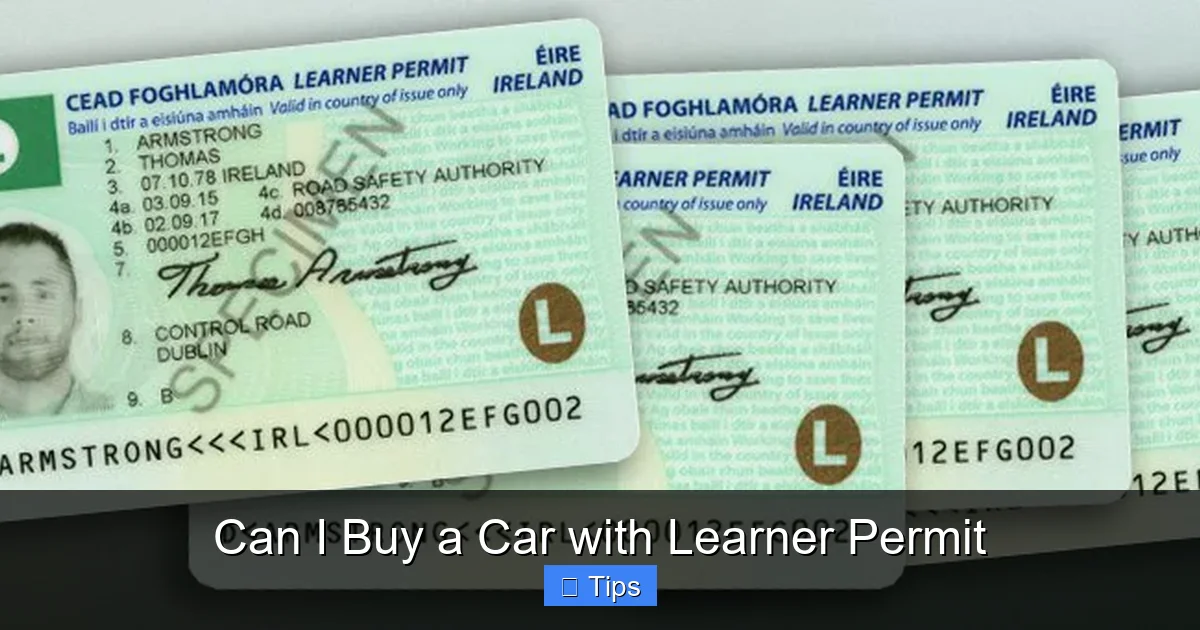
Visual guide about Can I Buy a Car with Learner Permit
Image source: nessan.ie
Now that you know you can buy and insure a car, it’s time to pick the right one. As a learner, your priorities should be safety, reliability, and affordability—not flashy features or high horsepower.
Best Types of Cars for Learners
Look for vehicles that are:
– **Easy to drive:** Avoid large trucks, sports cars, or vehicles with manual transmissions (unless you’re specifically learning stick).
– **Reliable:** Choose brands known for longevity, like Toyota, Honda, or Subaru.
– **Safe:** Check safety ratings from the National Highway Traffic Safety Administration (NHTSA) or the Insurance Institute for Highway Safety (IIHS).
– **Fuel-efficient:** Gas costs add up, so a car with good mileage saves money in the long run.
– **Affordable to maintain:** Older models with simple mechanics are cheaper to repair.
A used compact car like a Honda Civic, Toyota Corolla, or Ford Focus is often a great choice. These cars are widely available, reliable, and have low ownership costs.
New vs. Used: What’s Better?
For most learners, a used car is the smarter option. New cars depreciate quickly—losing up to 20% of their value in the first year. A used car gives you more value for your money and reduces financial risk if you’re still learning.
That said, a certified pre-owned (CPO) vehicle can offer the best of both worlds: lower price than new, plus warranty coverage and inspection. Just make sure to get a vehicle history report (like Carfax) to check for accidents or major repairs.
Red Flags to Avoid
When shopping, watch out for:
– **High mileage (over 100,000 miles):** While not always a dealbreaker, high mileage increases the risk of repairs.
– **Salvage titles:** These cars have been declared total losses by insurers and may have hidden damage.
– **Lack of maintenance records:** A well-documented service history is a good sign.
– **Unrealistically low prices:** If it seems too good to be true, it probably is.
Always have a trusted mechanic inspect the car before you buy—especially if it’s a private sale.
Practical Tips for Owning a Car as a Learner
Owning a car is more than just driving. It’s about responsibility, planning, and safety. Here’s how to make the most of your experience as a learner car owner.
Always Have a Licensed Supervisor
This can’t be stressed enough: you must have a licensed adult in the car every time you drive. This person should be calm, experienced, and willing to guide you—not just sit there on their phone.
Choose someone you trust, like a parent, older sibling, or driving instructor. Make sure they’re comfortable with your driving and know the rules for supervising learners in your state.
Use the Car for Practice
Your car is your classroom. Use it to practice:
– Parking (parallel, perpendicular, backing in)
– Highway driving
– Night driving (if allowed)
– Handling different weather conditions
– Navigating busy intersections
Set goals for each driving session. For example, “Today, I’ll practice three-point turns in an empty parking lot.” This builds confidence and skill.
Plan for Parking and Storage
Where will you park your car when it’s not in use? At home, you’ll need a driveway, garage, or street parking with permission. At school, check if student parking is available and affordable.
If you live in an apartment or urban area, parking can be a challenge. Consider the cost and convenience before buying. You don’t want to spend $100 a month on parking just to practice driving.
Learn Basic Maintenance
Owning a car means learning how to take care of it. Start with the basics:
– Check tire pressure monthly
– Monitor oil levels and change it regularly
– Replace windshield wipers when they streak
– Keep the gas tank at least half full
– Wash and wax the car to protect the paint
These small tasks build responsibility and save money on repairs. Plus, knowing how your car works makes you a safer driver.
Keep Records and Stay Organized
Keep a folder or digital file with:
– Registration and insurance documents
– Maintenance records
– Receipts for repairs and parts
– Driving log (to track practice hours)
Many states require a minimum number of supervised driving hours before you can take the road test. A log helps you stay on track.
Long-Term Benefits of Owning a Car Early
Buying a car with a learner permit isn’t just about convenience—it’s an investment in your future. Here’s why it can be a smart move:
Builds Responsibility
Owning a car teaches you about budgeting, time management, and accountability. You’ll learn to plan for gas, maintenance, and insurance. These skills translate to other areas of life, like school, work, and personal finance.
Accelerates Learning
The more you drive, the faster you improve. Having your own car means more practice time, which leads to greater confidence and competence. You’ll be better prepared for your road test and safer once you get your full license.
Prepares You for Independence
When you turn 18 or move out, you’ll already know how to handle car ownership. You won’t have to start from scratch—you’ll have experience with insurance, registration, and maintenance.
Can Save Money in the Long Run
If you plan to keep the car after getting your license, buying early can save money. You avoid rental fees, ride-sharing costs, or relying on others for transportation. Plus, you can build equity in the vehicle.
Encourages Safe Driving Habits
When you own the car, you’re more likely to drive carefully. You don’t want to damage your own property. This mindset promotes defensive driving and respect for traffic laws.
Common Mistakes to Avoid
Even with the best intentions, learners can make mistakes. Here are some to watch out for:
– **Buying a car that’s too expensive:** Don’t let emotions override logic. Stick to your budget.
– **Skipping insurance:** Driving uninsured is illegal and risky. Always have coverage.
– **Driving alone:** Never break the rules. It’s not worth the risk or penalty.
– **Ignoring maintenance:** A broken-down car isn’t just inconvenient—it’s unsafe.
– **Not planning for supervision:** Make sure you have a reliable licensed driver available.
Conclusion
So, can you buy a car with a learner permit? Absolutely. It’s legal, possible, and often a smart decision—if you do it right. The key is understanding the rules, planning for supervision, and making responsible choices.
Owning a car as a learner gives you hands-on experience, builds responsibility, and prepares you for the road ahead. Just remember: you can’t drive alone. Always have a licensed adult with you, keep your insurance active, and use the car as a tool for learning.
With the right mindset and support, your learner permit car can be the first step toward confident, safe, and independent driving. So go ahead—start shopping, but do it wisely. Your future self will thank you.
Frequently Asked Questions
Can I buy a car with just a learner permit?
Yes, you can legally purchase a car with a learner permit. There’s no law requiring a full driver’s license to buy a vehicle. However, you must follow all driving restrictions, including having a licensed supervisor present whenever you drive.
Do I need insurance if I have a learner permit?
Yes, insurance is required by law in every state. You can insure the car under your name or add it to a parent’s policy. Rates may be higher for new drivers, but coverage is essential for legal and financial protection.
Can I drive my car alone with a learner permit?
No, you cannot drive alone. A licensed adult (usually 21 or older) must be in the front passenger seat at all times. This rule applies even if you own the car and have insurance.
What kind of car is best for a learner permit holder?
A safe, reliable, and affordable used car is ideal. Look for models like the Honda Civic, Toyota Corolla, or Ford Focus. Avoid high-performance vehicles and prioritize safety ratings and low maintenance costs.
Can my parent be the primary driver on the insurance policy?
Yes, many insurers allow a parent to be the primary policyholder while you’re listed as a permissive user. This can lower premiums and simplify the process, especially if you’re under 18.
Do I need a full license to register a car?
No, you don’t need a full license to register a car. You can register it in your name with just a learner permit. However, you’ll still need a licensed driver to operate the vehicle legally.

At CarLegit, we believe information should be clear, factual, and genuinely helpful. That’s why every guide, review, and update on our website is created with care, research, and a strong focus on user experience.