
If your Acura displays a “Check Emission System” message, it means the onboard diagnostics have detected an issue with your vehicle’s emissions control system. This warning shouldn’t be ignored—it could stem from something minor like a loose gas cap or signal a more serious problem like a faulty oxygen sensor or catalytic converter. Addressing it promptly helps maintain performance, fuel efficiency, and environmental compliance.
In This Article
- 1 Key Takeaways
- 2 📑 Table of Contents
- 3 What Does “Check Emission System” Mean on Acura?
- 4 How the Acura Emission System Works
- 5 Common Causes of the “Check Emission System” Warning
- 6 How to Diagnose the Problem
- 7 DIY Fixes You Can Try at Home
- 8 Preventing Future Emission System Issues
- 9 When to Seek Professional Help
- 10 Conclusion
- 11 Frequently Asked Questions
- 11.1 What does “Check Emission System” mean on an Acura?
- 11.2 Can I drive my Acura with the “Check Emission System” light on?
- 11.3 How much does it cost to fix a “Check Emission System” issue?
- 11.4 Will the “Check Emission System” light turn off on its own?
- 11.5 Can a bad battery cause the emission system warning?
- 11.6 How often should I service my Acura’s emission system?
Key Takeaways
- It’s a diagnostic alert: The “Check Emission System” message is triggered by your Acura’s onboard computer when it detects irregularities in the emissions control system.
- Common causes include gas cap issues: A loose, damaged, or missing gas cap is one of the most frequent—and easiest—fixes for this warning.
- Oxygen sensors play a key role: Faulty O2 sensors can misread exhaust data, leading to incorrect fuel mixture and triggering the warning light.
- Catalytic converter problems are serious: A failing catalytic converter reduces efficiency and increases emissions, often requiring professional repair or replacement.
- EVAP system leaks matter: Even small leaks in the evaporative emissions system can set off the warning and fail emissions tests.
- Don’t ignore the light: Driving with the emission system warning on can reduce fuel economy, damage engine components, and lead to costly repairs.
- Use an OBD2 scanner for diagnosis: Plugging in a code reader helps pinpoint the exact issue so you can fix it efficiently.
📑 Table of Contents
What Does “Check Emission System” Mean on Acura?
You’re cruising down the highway in your Acura, enjoying the smooth ride and quiet cabin, when suddenly—a yellow or orange warning light appears on your dashboard. It reads: “Check Emission System.” Your first thought might be, “Uh-oh. What now?” Don’t panic. While this message can feel alarming, understanding what it means and how to respond can save you time, money, and stress.
The “Check Emission System” warning on your Acura is part of the vehicle’s onboard diagnostic system (OBD2), which continuously monitors the performance of various components related to emissions control. When the system detects an anomaly—such as a leak, sensor malfunction, or inefficient combustion—it triggers this alert to notify you that something needs attention. This isn’t just about passing your next smog check; it’s about keeping your car running efficiently, protecting the environment, and avoiding more serious mechanical issues down the road.
Acura vehicles are engineered with precision and built to meet strict emissions standards. That means even minor deviations from normal operation can trigger the warning. The good news? Many of these issues are relatively easy and inexpensive to fix—especially if caught early. Whether you’re driving a sleek TLX, a versatile RDX, or a high-performance NSX, the underlying principles of the emission system remain consistent across the lineup.
How the Acura Emission System Works
To truly understand what the “Check Emission System” message means, it helps to know how your Acura’s emissions control system functions. This network of components works together to reduce harmful pollutants released into the atmosphere during combustion. The system includes several key parts: the exhaust gas recirculation (EGR) valve, oxygen (O2) sensors, catalytic converter, evaporative emissions (EVAP) system, and the powertrain control module (PCM)—the brain that monitors everything.

Visual guide about What Does Check Emission System Mean on Acura
Image source: carjustify.com
The Role of the Powertrain Control Module (PCM)
The PCM constantly collects data from sensors throughout the engine and exhaust system. It analyzes this information to ensure the engine is burning fuel efficiently and that emissions stay within legal limits. If the PCM detects a problem—like a drop in oxygen sensor readings or a pressure change in the fuel tank—it logs a diagnostic trouble code (DTC) and illuminates the “Check Emission System” light.
Key Components Monitored
- Oxygen Sensors: Located before and after the catalytic converter, these sensors measure oxygen levels in the exhaust to determine if the fuel mixture is optimal.
- Catalytic Converter: This device converts harmful gases like carbon monoxide and nitrogen oxides into less harmful substances like carbon dioxide and water vapor.
- EVAP System: Prevents fuel vapors from escaping into the air by capturing and storing them in a charcoal canister, then routing them back into the engine to be burned.
- EGR Valve: Recirculates a portion of exhaust gases back into the combustion chamber to lower combustion temperatures and reduce NOx emissions.
When any of these components fail or operate outside expected parameters, the PCM flags the issue. The “Check Emission System” light is your car’s way of saying, “Hey, something’s not right—please check it out.”
Common Causes of the “Check Emission System” Warning
Now that you know how the system works, let’s explore the most common reasons your Acura might be displaying this warning. Some are quick fixes you can handle yourself, while others may require a trip to the mechanic. Either way, early diagnosis is key.
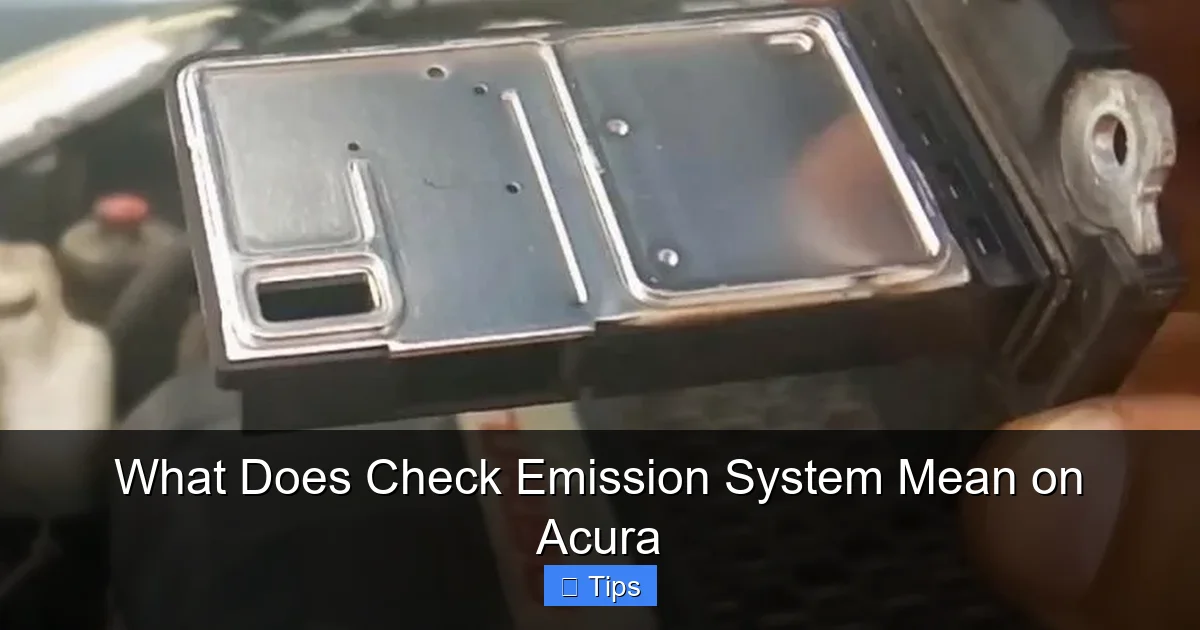
Visual guide about What Does Check Emission System Mean on Acura
Image source: carjustify.com
1. Loose or Faulty Gas Cap
This might sound too simple to be true, but a loose, cracked, or missing gas cap is one of the top causes of the “Check Emission System” light. The gas cap seals the fuel system, maintaining proper pressure and preventing fuel vapors from escaping. If it’s not tightened properly after refueling, or if the seal is worn out, the EVAP system detects a leak and triggers the warning.
What to do: After filling up, always make sure the gas cap clicks three to five times when tightened. If the light comes on shortly after refueling, try tightening the cap and driving for a few days. If the light goes off, problem solved! If not, inspect the cap for cracks or damage and replace it if needed. Most auto parts stores sell OEM-style caps for under $20.
2. Faulty Oxygen (O2) Sensor
Oxygen sensors are critical for maintaining the correct air-fuel ratio. A failing O2 sensor may send incorrect data to the PCM, causing the engine to run rich (too much fuel) or lean (too little fuel). This not only increases emissions but also reduces fuel efficiency and can damage the catalytic converter over time.
Signs of a bad O2 sensor: Poor gas mileage, rough idling, engine hesitation, or a sulfur-like “rotten egg” smell from the exhaust. Replacing an O2 sensor typically costs between $150 and $400, depending on the model and labor rates.
3. Catalytic Converter Issues
The catalytic converter is one of the most expensive components in the emissions system. It can fail due to age, contamination (like oil or coolant entering the exhaust), or prolonged driving with a misfiring engine. A clogged converter restricts exhaust flow, leading to reduced power, poor acceleration, and increased emissions.
Warning signs: Rattling noise from under the car, strong sulfur smell, or the car struggling to go over 30–40 mph. If your Acura has over 100,000 miles and the light comes on with performance issues, the catalytic converter may be failing. Replacement can cost $1,000–$3,000, so it’s wise to get a professional diagnosis first.
4. EVAP System Leaks
The evaporative emissions system is designed to trap fuel vapors and prevent them from escaping into the atmosphere. Even a tiny leak—such as a cracked hose, faulty purge valve, or damaged charcoal canister—can trigger the warning light. These leaks are often hard to detect visually but show up in diagnostic scans.
Common EVAP issues: A cracked vacuum hose near the engine, a stuck purge solenoid, or a loose filler neck. Many of these parts are inexpensive (under $50), but locating the leak may require a smoke test at a repair shop.
5. Misfiring Engine or Faulty Spark Plugs
An engine that’s misfiring sends unburned fuel into the exhaust system, overwhelming the catalytic converter and increasing emissions. This can happen due to worn spark plugs, bad ignition coils, or fuel injector problems. While the primary symptom might be a rough idle or hesitation, it often triggers the emission system warning as a secondary effect.
Tip: If your Acura has over 60,000 miles and you haven’t replaced the spark plugs, consider doing so. OEM spark plugs for Acuras are designed to last up to 100,000 miles, but driving conditions and fuel quality can shorten that lifespan.
How to Diagnose the Problem
When the “Check Emission System” light comes on, the first step is to retrieve the diagnostic trouble code (DTC). This code tells you exactly which system or component is causing the issue. You don’t need to be a mechanic to do this—thanks to OBD2 scanners, diagnosis is now accessible to most car owners.
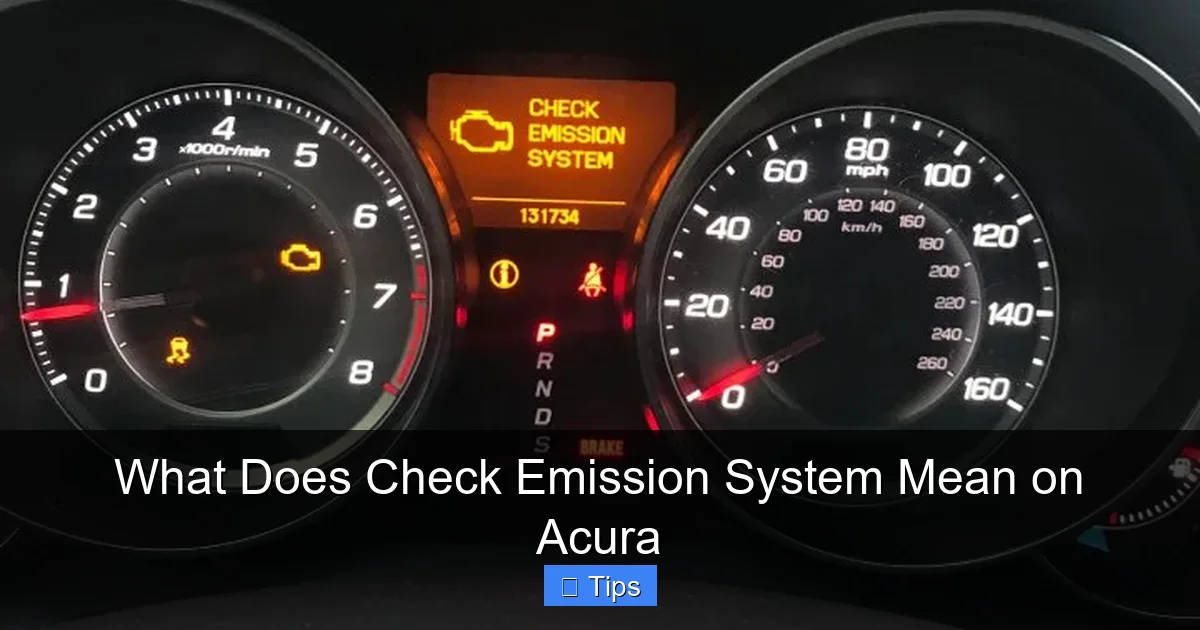
Visual guide about What Does Check Emission System Mean on Acura
Image source: mechanicask.com
Using an OBD2 Scanner
An OBD2 scanner plugs into a port usually located under the dashboard, near the steering column. Once connected, it communicates with your Acura’s PCM and displays the stored trouble code. For example, a code like P0420 indicates a problem with the catalytic converter’s efficiency, while P0455 suggests a large EVAP system leak.
Recommended scanners: Basic code readers like the Innova 3100 or BlueDriver Bluetooth scanner (used with a smartphone app) are affordable ($50–$100) and user-friendly. They provide clear explanations of codes and even suggest possible fixes.
Interpreting the Codes
Once you have the code, you can look it up online or in the scanner’s database. Keep in mind that while the code points to a general area (e.g., “catalyst system efficiency below threshold”), it doesn’t always mean the part needs replacement. For instance, a P0420 code could be caused by a failing O2 sensor rather than a bad catalytic converter. That’s why further testing—like checking sensor voltages or performing a backpressure test—is often needed.
When to See a Mechanic
If you’re not comfortable diagnosing or repairing the issue yourself, or if the problem involves complex components like the catalytic converter or PCM, it’s best to visit a certified Acura technician. They have access to advanced diagnostic tools and factory service information, ensuring accurate repairs and proper calibration.
DIY Fixes You Can Try at Home
Many “Check Emission System” warnings can be resolved without a trip to the shop. Here are some practical, cost-effective solutions you can try yourself.
Tighten or Replace the Gas Cap
As mentioned earlier, this is the easiest fix. After refueling, always twist the cap until it clicks. If the cap is old or damaged, replace it with an OEM or high-quality aftermarket version. Avoid cheap universal caps—they may not seal properly.
Reset the Warning Light
After fixing a known issue (like tightening the gas cap), the light may not turn off immediately. You can reset it using your OBD2 scanner or by disconnecting the battery for 10–15 minutes. However, if the underlying problem isn’t resolved, the light will come back on.
Check and Replace Air Filter
A dirty air filter restricts airflow, causing the engine to run rich and increasing emissions. Inspect your air filter every 12,000 miles and replace it if it’s clogged with dirt or debris. This simple maintenance step improves performance and fuel economy.
Use Fuel System Cleaner
Over time, carbon deposits can build up in the fuel injectors and combustion chamber, affecting efficiency. Adding a quality fuel system cleaner (like Chevron Techron or Sea Foam) to your gas tank every 3,000–5,000 miles can help dissolve deposits and restore performance.
Inspect Vacuum Hoses
Look under the hood for cracked, brittle, or disconnected vacuum hoses, especially around the intake manifold and EVAP canister. Replace any damaged hoses with OEM-spec replacements to ensure a proper seal.
Preventing Future Emission System Issues
An ounce of prevention is worth a pound of cure—especially when it comes to your Acura’s emissions system. Regular maintenance and mindful driving habits can keep the “Check Emission System” light off for good.
Follow the Maintenance Schedule
Acura provides a detailed maintenance schedule in your owner’s manual. Stick to it. This includes oil changes, spark plug replacements, air filter changes, and fuel system inspections. Neglecting routine service increases the risk of emission-related problems.
Use High-Quality Fuel
Fill up at reputable gas stations that use fuel additives and maintain clean tanks. Low-quality or contaminated fuel can lead to carbon buildup and sensor fouling.
Avoid Short Trips
Frequent short trips prevent the engine from reaching optimal operating temperature, leading to incomplete combustion and increased emissions. When possible, combine errands into one longer drive to help the system “bake off” moisture and deposits.
Address Check Engine Lights Promptly
Never ignore warning lights. Even if the car seems to run fine, an unresolved issue can worsen over time. The sooner you diagnose and fix a problem, the less damage it will cause.
When to Seek Professional Help
While many emission system issues are DIY-friendly, some require expert attention. Here’s when you should visit an Acura service center or trusted mechanic:
- The warning light is flashing (indicating a severe misfire that can damage the catalytic converter).
- You’ve tried basic fixes, but the light keeps returning.
- The car is running poorly, overheating, or losing power.
- You suspect a major component failure (e.g., catalytic converter, PCM).
- You’re due for a smog check and need the issue resolved to pass.
Professional technicians can perform advanced diagnostics, such as smoke testing for EVAP leaks or exhaust backpressure testing for catalytic converter issues. They can also reset adaptive fuel trims and ensure all systems are functioning within specifications.
Conclusion
The “Check Emission System” warning on your Acura is more than just a dashboard light—it’s a vital communication from your vehicle’s onboard computer. While it can signal anything from a loose gas cap to a failing catalytic converter, most causes are manageable with timely attention and basic troubleshooting.
By understanding how your Acura’s emission system works, recognizing common triggers, and using tools like an OBD2 scanner, you can take control of the situation. Regular maintenance, quality fuel, and prompt repairs go a long way in keeping your car clean, efficient, and reliable. Remember: ignoring the warning won’t make it go away—it’ll only lead to bigger problems down the road.
So the next time that light pops up, don’t panic. Take a deep breath, check the gas cap, scan for codes, and address the issue head-on. Your Acura—and the environment—will thank you.
Frequently Asked Questions
What does “Check Emission System” mean on an Acura?
It means your Acura’s onboard computer has detected a problem with the emissions control system. This could be due to a sensor malfunction, leak, or component failure that affects how your car releases pollutants.
Can I drive my Acura with the “Check Emission System” light on?
You can drive short distances, but it’s not recommended for long. Ignoring the issue can reduce fuel efficiency, damage the catalytic converter, and cause your car to fail emissions tests.
How much does it cost to fix a “Check Emission System” issue?
Costs vary widely. A gas cap replacement may cost $15–$30, while a catalytic converter can run $1,000–$3,000. Most issues fall somewhere in between, depending on the cause and labor rates.
Will the “Check Emission System” light turn off on its own?
Sometimes, yes—especially if the issue was temporary, like a loose gas cap. However, if the problem persists, the light will remain on until the underlying cause is fixed and the system is reset.
Can a bad battery cause the emission system warning?
Yes, a weak or dying battery can cause voltage fluctuations that confuse the PCM and trigger false warnings. Replacing the battery may resolve the issue, but it’s best to scan for codes first.
How often should I service my Acura’s emission system?
There’s no separate schedule for the emission system, but follow your owner’s manual for spark plug, air filter, and fuel system maintenance. Regular oil changes and tune-ups help keep emissions in check.

At CarLegit, we believe information should be clear, factual, and genuinely helpful. That’s why every guide, review, and update on our website is created with care, research, and a strong focus on user experience.