
Featured image for how do i reset my lexus after replacing the battery
Image source: cartireinflator.com
After replacing your Lexus’s battery, multiple systems will require resetting to restore full functionality and optimal performance. This typically involves recalibrating power windows, manually resetting the clock and radio presets, and allowing the Engine Control Unit (ECU) to relearn its operating parameters through a short drive cycle. Following these simple steps ensures your Lexus runs smoothly, avoiding minor glitches and maintaining its premium driving experience.
Replacing your Lexus’s battery is a routine maintenance task that brings a fresh surge of power to your vehicle. The immediate relief of a strong crank and reliable starting is often palpable. However, for owners of sophisticated Lexus models, this seemingly straightforward procedure can sometimes usher in a new set of challenges: an array of electronic glitches, warning lights, and system malfunctions. These aren’t signs of a faulty new battery or a deeper problem with your Lexus; rather, they are the expected consequence of momentarily cutting power to the vehicle’s complex network of Electronic Control Units (ECUs).
Modern Lexus vehicles are marvels of engineering, integrating dozens of microprocessors that manage everything from engine performance and transmission shifts to the comfort of your climate control and the convenience of your power windows. When the battery is disconnected, these ECUs lose their learned parameters and volatile memory, essentially undergoing a temporary amnesia. The good news is that most of these issues are easily remedied with a series of simple reset procedures that you can perform yourself. This comprehensive guide will review the necessary steps to systematically reset your Lexus after replacing the battery, ensuring all systems are back to optimal functionality and you can fully enjoy the refined driving experience your Lexus is designed to provide.
Navigating the post-battery replacement landscape can feel daunting with illuminated dashboard lights and unresponsive features. But armed with the right knowledge and a systematic approach, you can restore your vehicle to its peak condition without an immediate trip to the dealership. From recalibrating power windows to resetting engine idle parameters, we’ll cover every critical step, offering practical tips and troubleshooting advice to guide you through the process of how to reset your Lexus after replacing the battery successfully. Let’s dive in and review how to bring your Lexus’s intelligent systems back online.
In This Article
- 1 Key Takeaways
- 2 Understanding Why Resets Are Necessary After A Lexus Battery Replacement
- 3 Essential First Steps After Connecting the New Battery
- 4 Step-by-Step Guide to Resetting Common Lexus Systems
- 5 Advanced Lexus Resets and Troubleshooting Common Issues
- 6 Lexus Battery Replacement Reset Checklist and Troubleshooting Table
- 7 Conclusion
- 8 Understanding Why Resets Are Necessary After A Lexus Battery Replacement
- 9 Essential First Steps After Connecting the New Battery
- 10 Step-by-Step Guide to Resetting Common Lexus Systems
- 11 Advanced Lexus Resets and Troubleshooting Common Issues
- 12 Lexus Battery Replacement Reset Checklist and Troubleshooting Table
- 13 Conclusion
- 14 Frequently Asked Questions
- 14.1 Why is it necessary to reset my Lexus after replacing the battery?
- 14.2 What specific systems or settings might need to be reconfigured or reset in my Lexus?
- 14.3 How do I reset the power windows and sunroof functions on my Lexus?
- 14.4 Will replacing the battery cause a “Check Engine” light, and how do I ensure normal operation after a Lexus battery reset?
- 14.5 What is the “idle relearn” process for my Lexus, and how does it complete itself after a battery replacement?
- 14.6 Do I need any special tools to perform a Lexus battery reset or other post-replacement adjustments?
Key Takeaways
- Safety First: Always disconnect the negative battery terminal first.
- Basic Reset: Drive to recalibrate engine and transmission systems.
- Window Reset: Fully open then close each window, holding switches.
- Steering Reset: Turn steering wheel full lock-to-lock.
- Radio Code: Re-enter security code for multimedia systems.
- Check Lights: Clear any lingering dashboard warning lights.
- Professional Help: Consult dealer for complex or persistent issues.
Understanding Why Resets Are Necessary After A Lexus Battery Replacement
When you replace your Lexus’s battery, you’re not just swapping out a power source; you’re temporarily severing the electrical lifeline to a highly interconnected digital ecosystem. This interruption, while necessary, has ripple effects throughout the vehicle’s intricate electronic architecture. Understanding why these resets are crucial is the first step in effectively troubleshooting and resolving any post-replacement anomalies that might arise.
The Brain of Your Lexus: ECUs and Memory
At the heart of every modern Lexus are numerous Electronic Control Units (ECUs). Think of these as miniature computers, each dedicated to managing a specific subsystem – the engine, transmission, anti-lock brakes (ABS), vehicle stability control (VSC), power windows, climate control, navigation, and even the infotainment system. These ECUs are constantly learning and adapting to your driving style, environmental conditions, and component wear. They store vital information in their memory, including fuel trim adjustments, idle speed parameters, transmission shift points, steering angle sensor calibrations, and the upper and lower limits for your power windows. This “learned data” ensures the vehicle operates smoothly, efficiently, and safely.
Most ECUs utilize both non-volatile and volatile memory. While non-volatile memory retains critical programming even without power, volatile memory, much like the RAM in your home computer, requires a constant power supply to maintain its stored information. When you disconnect the battery, the power to these volatile memory banks is cut, leading to a temporary loss of this learned data. This “amnesia” is the primary reason why various systems need to be reset and re-taught their operational parameters after a Lexus battery replacement.
Common Symptoms of Un-reset Systems
The loss of learned data manifests in a variety of noticeable symptoms. You might encounter one or several of these issues, which can initially be concerning but are typically straightforward to resolve once you understand why your Lexus needs to be reset after replacing the battery:
- Illuminated Check Engine Light (CEL): Often, diagnostic trouble codes (DTCs) related to low voltage or power interruption are stored. Even without specific fault codes, the ECU might signal a general system check.
- Rough Idle or Poor Performance: The engine ECU loses its learned fuel trims and idle speed calibrations, leading to an inconsistent or rough idle, hesitation, or even stalling until it re-learns these parameters.
- Erratic Window Behavior: The most common issue. Power windows may lose their “auto up/down” function, requiring you to hold the button continuously. The system needs to re-learn its upper and lower travel limits.
- Radio and Navigation Issues: Your radio might ask for a security code, lose all your presets, or the navigation system might take longer to acquire a GPS signal.
- VSC, TRAC, ABS, or Steering Wheel Lights: These warning lights often indicate that the steering angle sensor has lost its calibration, which is critical for the stability control systems.
- Incorrect Clock/Date: The vehicle’s internal clock simply resets to a default or incorrect time.
- Seat Memory Loss: Your personalized seat and mirror positions might be erased.
- Tire Pressure Monitoring System (TPMS) Light: While sometimes these reset on their own after a drive, they might occasionally require a manual reset or a relearn cycle.
Each of these symptoms points to a system that requires recalibration or re-initialization. Understanding this can save you from unnecessary worry and potential diagnostic fees at a service center.
The Importance of a Proper Reset Procedure
Performing the correct reset procedures is not merely about restoring convenience; it’s about ensuring the optimal performance, safety, and longevity of your Lexus. A proper reset:
- Prevents Future Diagnostic Headaches: By clearing erroneous codes and recalibrating systems, you avoid chasing phantom problems that are simply artifacts of the battery replacement.
- Restores Comfort and Convenience Features: Simple things like auto-up windows and correctly set radio stations significantly enhance your daily driving experience.
- Ensures Optimal Engine and Transmission Performance: Relearning idle parameters and transmission shift points allows the engine and gearbox to operate at peak efficiency and smoothness.
- Maintains Safety Systems: Systems like VSC and ABS rely on accurately calibrated sensors. Resetting these ensures your vehicle’s crucial safety features are fully functional.
- Saves Money on Unnecessary Dealer Visits: Most of these resets are designed to be user-friendly, allowing you to resolve issues at home rather than incurring diagnostic charges.
Taking the time to systematically reset your Lexus after replacing the battery is a small investment that yields significant returns in peace of mind and vehicle performance.
Essential First Steps After Connecting the New Battery
Once you’ve successfully installed the new battery and secured the terminals, there are a few immediate actions and observations you should make. These initial steps are crucial for ensuring the basic electrical systems are functioning correctly and for setting the stage for the more specific resets that will follow. Approaching the power-up systematically can help you identify any immediate issues and confirm the battery installation was successful, allowing you to confidently reset your Lexus after replacing the battery.
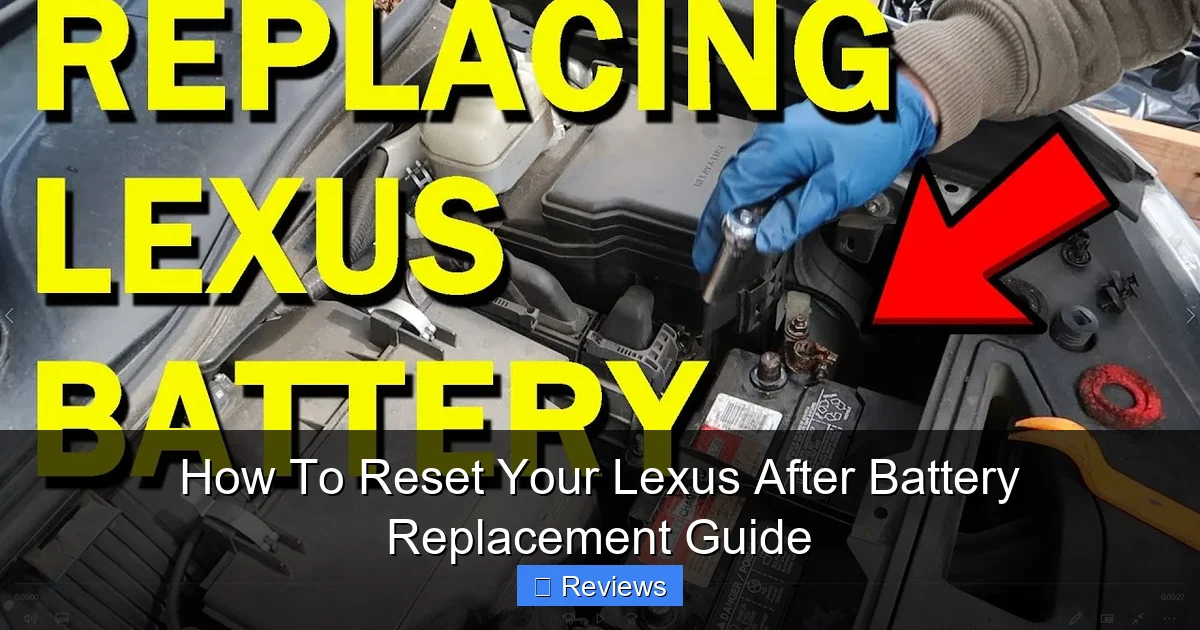
Visual guide about how do i reset my lexus after replacing the battery
Image source: i.ytimg.com
Initial Power-Up and Observation
After connecting both the positive and negative terminals firmly to your new battery, the first thing to do is a quick general check. This involves turning the ignition to different positions and observing the vehicle’s response.
- Check for Basic Functions: Before even attempting to start the engine, turn your key or push your start button to the “ACC” (Accessory) position. Listen for the radio, check the interior lights, and verify the headlights turn on. Then, move to the “ON” position (without starting the engine). All dashboard lights should illuminate, and you should hear the fuel pump prime for a moment. This confirms a basic electrical connection.
- Listen for Unusual Noises: As the ECUs power up, you might hear faint clicks or hums, which are normal. However, listen for any loud buzzing, sizzling, or smoking, which could indicate a short circuit or an improperly connected terminal. If you hear or see anything concerning, immediately disconnect the negative battery terminal and re-check your installation.
- Attempt to Start the Engine: Once you’ve confirmed basic functions, try starting the engine. It should crank strongly and start smoothly. If it struggles or doesn’t start, double-check your battery terminal connections and ensure they are tight. Sometimes, a weak connection can lead to insufficient power delivery, preventing proper engine startup.
This initial phase is about confirming the fundamental transfer of power from the new battery to the vehicle’s electrical system, a critical preliminary step to adequately reset your Lexus after replacing the battery.
Allowing the ECUs to Power Cycle
Modern Lexus vehicles are equipped with a complex array of ECUs that need a moment to re-establish communication and perform their internal boot-up sequences after a complete power loss. Rushing into specific resets immediately might sometimes lead to incomplete recalibrations.
- The “On-Off” Cycle: A simple yet effective technique is to cycle the ignition a few times. Turn the ignition key or push the start button to the “ON” position (without starting the engine) for about 10-15 seconds, then turn it completely “OFF” for about 10-15 seconds. Repeat this sequence 2-3 times. This allows the ECUs to fully power up, check their systems, and then power down, helping them to properly initialize.
- Wait a Few Minutes: After starting the vehicle, let it run for 5-10 minutes without engaging any accessories or driving. This provides the engine ECU and other critical systems time to establish basic communication and begin their preliminary learning processes, such as settling into a stable idle. This passive waiting period is an important step before you actively reset your Lexus after replacing the battery.
Checking for Diagnostic Trouble Codes (DTCs)
It’s highly probable that after a battery replacement, your “Check Engine” light (CEL) will be illuminated, and possibly other warning lights like VSC or ABS. These are often triggered by the temporary loss of power rather than an actual fault.
- Using an OBD-II Scanner: A crucial tool for this step is an OBD-II scanner. These are inexpensive and readily available. Connect the scanner to your vehicle’s OBD-II port (usually located under the dashboard on the driver’s side).
- Read and Clear Codes: Power on the scanner and retrieve any stored DTCs. You will likely find codes related to low voltage (e.g., P0562 – System Voltage Low) or general system interruptions. Record these codes for your reference, then use the scanner’s function to clear them.
- Distinguish Between Old and New Codes: If you had a CEL on prior to the battery replacement, clearing codes will remove it. If the light reappears quickly after clearing and starting the car, it might indicate a persistent issue that needs further investigation beyond a simple reset. However, in most cases after a battery replacement, the codes are a byproduct of the power loss and will not return once cleared and the systems are properly reset. Clearing these initial “ghost” codes is a necessary precursor to further steps to reset your Lexus after replacing the battery.
By performing these initial checks and clearing any immediate DTCs, you create a clean slate, allowing you to proceed with confidence to the specific system resets, knowing that your foundational electrical connections are sound and any initial error messages have been addressed.
Step-by-Step Guide to Resetting Common Lexus Systems
After confirming basic power and clearing any initial diagnostic trouble codes, it’s time to systematically address the specific systems that lose their calibration when the battery is disconnected. These procedures are designed to allow your Lexus’s ECUs to re-learn their operational parameters. Mastering these steps is key to completely reset your Lexus after replacing the battery.
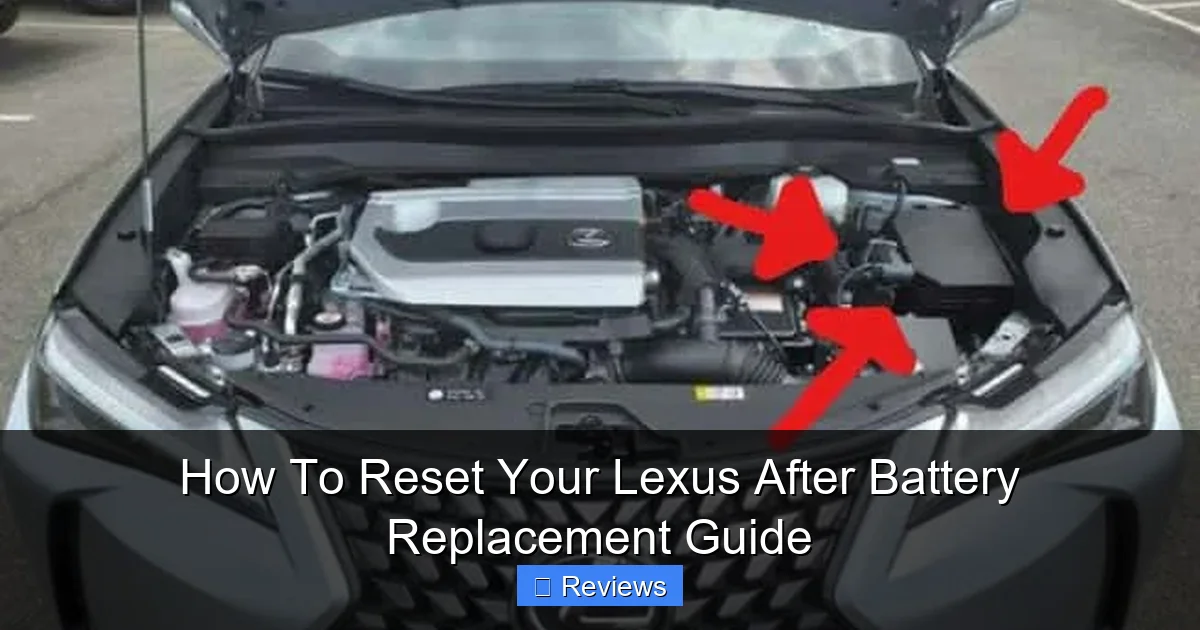
Visual guide about how do i reset my lexus after replacing the battery
Image source: tpmsreset.com
Window Auto Up/Down Reset
This is arguably the most common issue encountered after a battery replacement. The “auto up/down” feature, which allows you to fully open or close a window with a single press of the button, relies on the window ECU knowing the exact upper and lower limits of the window’s travel. When power is lost, this memory is erased.
Procedure for each power window:
- Sit in the driver’s seat and turn the ignition to the “ON” position (engine off).
- For the first window (start with the driver’s side):
- Press and hold the window switch down until the window is fully open.
- Continue to hold the switch down for an additional 2-3 seconds after the window reaches its lowest point.
- Pull and hold the window switch up until the window is fully closed.
- Continue to hold the switch up for an additional 2-3 seconds after the window reaches its highest point.
- Release the switch and test the auto up/down function by quickly pressing or pulling the switch. The window should now operate automatically with a single touch.
- Repeat this exact procedure for all other power windows in your Lexus.
Practical Example: Imagine your front passenger window stops responding to the auto function. You’d go to the passenger door, turn the ignition to ON, lower the window, hold the button for 3 seconds, then raise it, and hold it for 3 seconds. Release, and it should work. This simple recalibration is critical to fully reset your Lexus after replacing the battery.
Your infotainment system, including the radio and navigation, also relies on memory for presets, clock settings, and sometimes security codes.
- Security Code Entry (if applicable): Some older Lexus models, or specific aftermarket units, may require you to enter a security code to unlock the radio. This code is usually found in your owner’s manual, on a sticker in the glove compartment, or sometimes requires a dealer lookup based on your VIN. Follow the on-screen prompts or manual instructions to enter the code.
- Reprogramming Radio Presets: Once the radio is operational, simply tune to your desired stations and save them to your preset buttons as you normally would.
- Initializing Navigation: The navigation system may take a few minutes to reacquire GPS satellites and update its current position. Drive the vehicle around for 5-10 minutes in an open area, and the navigation should self-calibrate. Ensure your clock and date are correct, as GPS relies on accurate time information.
Tip: For some units, navigating to the “Settings” menu might offer a “Factory Reset” option if issues persist. However, this is usually a last resort, as it will clear all personalized settings.
Engine Idle Learning Procedure
The engine’s ECU constantly learns and adapts to maintain an optimal idle speed, fuel-air mixture, and combustion efficiency. Losing this data can result in a rough or fluctuating idle, especially after you reset your Lexus after replacing the battery.
Procedure:
- Ensure all accessories (AC, radio, headlights) are turned off.
- Start the engine and allow it to idle in Park (P) or Neutral (N) for at least 10-15 minutes, until it reaches normal operating temperature and the idle stabilizes. Do not touch the accelerator pedal during this time.
- Next, drive the vehicle gently for a period. This “drive cycle” helps the ECU re-learn various parameters under different loads. Aim for a mix of city driving (stop-and-go, lower speeds) and highway driving (constant speed, higher RPMs) for about 20-30 minutes.
- During this drive, the ECU will be relearning fuel trims, transmission shift points, and other performance parameters. Avoid aggressive acceleration or braking initially.
Example: You might notice your idle is a bit high or rough right after the battery change. After letting it idle in your driveway for 15 minutes, then taking a 25-minute drive covering local streets and a short highway stretch, the ECU will have gathered enough data to smooth out the idle and optimize engine performance.
Steering Angle Sensor (VSC/TRAC) Reset
The Vehicle Stability Control (VSC) and Traction Control (TRAC) systems rely heavily on the steering angle sensor to determine the driver’s intended direction. If these warning lights (VSC, TRAC, or sometimes ABS) are illuminated after a battery replacement, it’s often due to the sensor losing its calibration.
Common Procedure:
- Start the engine and ensure the vehicle is parked on a level surface.
- Turn the steering wheel fully to the left lock position, hold for 2-3 seconds.
- Turn the steering wheel fully to the right lock position, hold for 2-3 seconds.
- Return the steering wheel to the center (straight-ahead) position.
- Drive the vehicle straight for a short distance (e.g., 10-20 feet) at a slow speed (under 10 mph).
Often, this simple lock-to-lock maneuver will clear the VSC/TRAC lights as the sensor re-establishes its zero-point calibration. If the lights persist, some Lexus models (especially newer ones or specific chassis) might require a more advanced “zero-point calibration” using a specialized diagnostic tool like Toyota Techstream. In such cases, a visit to a dealership or an independent Lexus specialist might be necessary if your attempts to reset your Lexus after replacing the battery are unsuccessful.
Clock and Date Reset
A minor but common annoyance is an incorrect clock and date.
Procedure:
- Access the “Settings” menu on your Lexus’s infotainment screen.
- Navigate to “Clock,” “Time,” or “Date & Time” settings.
- Manually adjust the hour, minute, and date. You might also need to confirm your time zone or adjust for daylight saving if the system doesn’t have an automatic GPS sync.
Other Potential Resets (Sunroof, Seat Memory, TPMS)
- Sunroof: If your sunroof’s auto open/close feature isn’t working, try opening it fully, then closing it fully, and hold the close button for a few extra seconds after it’s shut. This often recalibrates its limits.
- Seat Memory: Simply adjust your power seats and mirrors to your desired positions, then save them to your preferred memory buttons (e.g., “1,” “2,” “SET”).
- Tire Pressure Monitoring System (TPMS): After driving for 10-20 minutes, the TPMS light should ideally turn off as the sensors re-learn their positions and pressures. If it persists, some Lexus models have a manual TPMS reset button (often found under the dash or in the glovebox) that you can press and hold until the light blinks, initiating a relearn cycle. If the light blinks for a minute and then stays solid, it indicates a sensor issue, not just a reset issue.
By diligently performing these resets, you can bring the vast majority of your Lexus’s systems back online, restoring full functionality and addressing the common electronic glitches that follow a battery replacement.
Advanced Lexus Resets and Troubleshooting Common Issues
While the previous steps cover the most common resets, there are situations that might require a deeper understanding of your Lexus’s systems or more advanced troubleshooting. Sometimes, despite your best efforts to reset your Lexus after replacing the battery, a persistent warning light or an unusual behavior might remain. This section delves into these more complex scenarios, including understanding drive cycles, knowing when to seek professional help, and using a “hard reset” as a last resort.
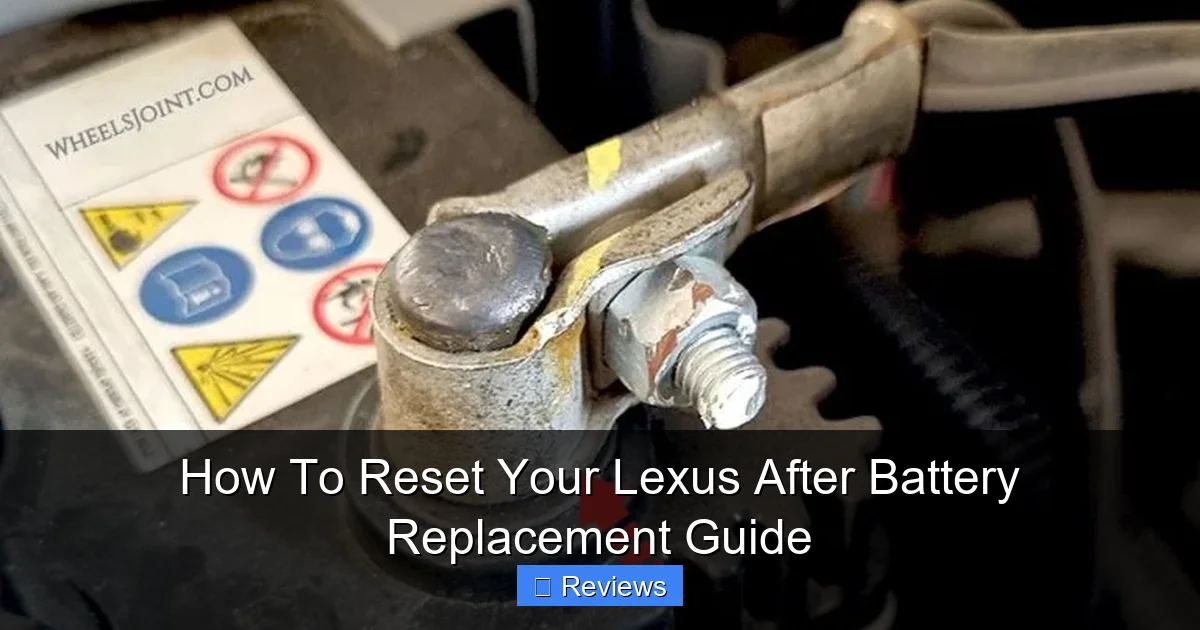
Visual guide about how do i reset my lexus after replacing the battery
Image source: wheelsjoint.com
Understanding Drive Cycle Monitoring
One of the most critical aspects of post-battery replacement for modern vehicles, including Lexus, is the completion of the “drive cycle.” This is especially relevant if you live in an area that requires emissions testing (smog checks). Your Lexus’s Engine Control Unit (ECU) has several “readiness monitors” – self-tests that various emission-related systems must pass. When the battery is disconnected, these monitors are reset to an “incomplete” or “not ready” state.
Why Drive Cycles are Important:
- Emissions Compliance: For an emissions test, most jurisdictions require all (or all but one) of these monitors to be in a “ready” state. If they are not, your vehicle will fail the inspection.
- System Validation: The drive cycle allows the ECU to gather data under various operating conditions to ensure all sensors and components are functioning correctly and within specifications, validating the integrity of the emission control systems.
Typical Drive Cycle Components: The exact sequence can vary slightly by Lexus model and year, but a general drive cycle typically involves:
- Cold Start: Start the engine when it’s completely cold (e.g., after sitting overnight). Let it idle for a few minutes.
- Mixed Driving: Drive the vehicle for an extended period (e.g., 15-30 miles) that includes:
- Steady Highway Speed: Maintain a constant speed (e.g., 55-60 mph) for several minutes.
- Stop-and-Go City Driving: Experience varying speeds, accelerations, and decelerations.
- Deceleration: Allow the vehicle to coast down from higher speeds to a stop without braking, if safe.
- Idle Periods: Allow the engine to idle for short periods at traffic lights or in congested areas.
- Ignition Cycles: It might take several driving trips or “ignition cycles” (turning the car on, driving, turning it off) for all monitors to become “ready.”
You can check the status of your readiness monitors using an OBD-II scanner. The scanner will show which monitors are “ready” and which are “incomplete.” Patience is key here; a proper drive cycle can take time and vary based on your driving habits and environment after you reset your Lexus after replacing the battery.
When to Consider a Dealer Visit (Techstream)
While many post-battery replacement issues can be resolved with DIY resets, there are instances where professional intervention might be necessary. Lexus vehicles, particularly newer models, feature highly integrated and sophisticated electronic systems that sometimes require specialized diagnostic tools.
Indicators for a Professional Visit:
- Persistent Warning Lights: If the Check Engine, VSC, ABS, or TRAC lights remain illuminated even after attempting all relevant resets and completing a drive cycle.
- Transmission Shift Issues: While gentle driving helps the transmission ECU relearn, persistent hard shifts, delayed engagement, or abnormal behavior might indicate a deeper issue or a need for a specific transmission ECU reset that requires dealer tools.
- Immobilizer/Key Programming Problems: In very rare cases, extreme voltage fluctuations or improper battery replacement can affect the immobilizer system, preventing the car from starting or recognizing your key. This invariably requires dealer-level programming.
- Specific System Resets Requiring Techstream: Some advanced features, like certain steering angle sensor zero-point calibrations, specific memory clear functions, or certain sensor relearns, can only be performed using Toyota/Lexus’s proprietary diagnostic software, Techstream. An independent Lexus specialist or a dealership will have this tool.
- Advanced Driver-Assistance Systems (ADAS): For vehicles equipped with systems like Lane Keep Assist, Dynamic Radar Cruise Control, or Pre-Collision System, a battery replacement can sometimes affect their calibration. While less common, persistent warnings related to these systems might require professional recalibration.
A dealership or a Lexus-certified independent mechanic can connect to your vehicle’s ECUs with Techstream, diagnose complex issues, and perform any necessary advanced resets or calibrations that are beyond the scope of a DIY enthusiast trying to reset your Lexus after replacing the battery.
Battery Terminal Disconnect (Hard Reset)
Sometimes, if individual system resets aren’t working, or if you encounter multiple, seemingly unrelated electronic glitches, a complete “hard reset” might be considered. This involves disconnecting the battery terminals again for an extended period to ensure all ECUs are completely de-energized and their volatile memory is fully cleared. This is often a last resort if simpler resets fail.
Procedure for a Hard Reset:
- Turn off your vehicle and remove the key from the ignition.
- Using a wrench, disconnect the negative battery terminal first.
- Then, disconnect the positive battery terminal.
- Carefully touch the disconnected positive and negative cables together (ensure they are *not* touching the battery terminals) for about 30 seconds. This drains any residual charge in the capacitors of the ECUs, ensuring a complete reset.
- Leave the battery disconnected for at least 15-30 minutes, or even longer (e.g., an hour), to ensure all ECUs are fully de-energized.
- Reconnect the positive battery terminal first, followed by the negative terminal. Ensure both are tight and secure.
- Proceed with all the initial steps and specific system resets outlined in the previous sections.
Warning: While often effective, a hard reset can sometimes lead to more systems requiring recalibration, including potentially more sensitive ones. It’s best used after trying individual system resets first. Ensure that if you reset your Lexus after replacing the battery using this method, you are prepared for all subsequent recalibration steps.
Preventative Measures for Future Battery Replacements
To minimize the need for extensive resets in the future, consider these preventative tips:
- Use a Memory Saver: These devices plug into your OBD-II port or a 12V auxiliary port and provide continuous low-amperage power to your vehicle’s ECUs while you swap the main battery. This prevents the loss of volatile memory.
- Label Wires: If you’re replacing accessories or doing other electrical work, clearly label wires to avoid confusion during reconnection.
- Regular Battery Checks: Keep an eye on your battery’s health. Replace it proactively before it dies completely to avoid unexpected power loss scenarios.
By understanding these advanced aspects and knowing when to seek professional help, you can tackle even the most stubborn post-battery replacement issues with confidence, ensuring your Lexus operates flawlessly.
Lexus Battery Replacement Reset Checklist and Troubleshooting Table
To streamline the process of getting your Lexus back to optimal performance after a battery replacement, we’ve compiled a practical checklist summarizing the key resets. Additionally, a troubleshooting table will help you quickly diagnose and address common symptoms that might persist, ensuring you know exactly how to reset your Lexus after replacing the battery for each specific issue.
Lexus Post-Battery Replacement Reset Checklist
Use this checklist as a systematic guide to ensure you don’t miss any critical steps when you reset your Lexus after replacing the battery:
- Initial Power-Up & Basic Checks:
- Checked for lights, horn, radio functionality (ACC & ON positions).
- Attempted engine start; confirmed strong crank and smooth start.
- Allowed ECUs to power cycle (ignition ON/OFF a few times).
- Let engine idle for 5-10 minutes to stabilize.
- Diagnostic Trouble Codes (DTCs):
- Connected OBD-II scanner.
- Read and noted any stored DTCs.
- Cleared all codes (especially low voltage/power interruption codes).
- Window Auto Up/Down Reset:
- Performed full down, hold, full up, hold procedure for each window.
- Tested auto up/down function for all windows.
- Radio & Navigation System Reset:
- Entered security code (if required).
- Reprogrammed radio presets.
- Confirmed navigation system acquired GPS signal (after driving).
- Engine Idle Learning Procedure:
- Idled vehicle for 10-15 minutes until operating temperature reached.
- Completed a gentle drive cycle (mix of city/highway) for 20-30 minutes.
- Steering Angle Sensor (VSC/TRAC) Reset:
- Turned steering wheel full left, hold; full right, hold; return to center.
- Drove straight for a short distance at low speed.
- Clock & Date Reset:
- Accessed infotainment settings and manually set time and date.
- Other Potential Resets (as needed):
- Sunroof auto function recalibrated.
- Seat memory positions re-saved.
- TPMS light gone after driving or manual reset button pressed.
- Drive Cycle Completion:
- Confirmed readiness monitors are “READY” using OBD-II scanner (especially before emissions testing).
Troubleshooting Common Post-Replacement Symptoms
This table outlines common issues you might encounter after a battery replacement and provides the recommended actions to resolve them. This will serve as a quick reference guide on how to reset your Lexus after replacing the battery for specific problems.
| Symptom | Possible Cause | Recommended Reset/Action |
|---|---|---|
| Check Engine Light (CEL) On | ECU lost memory; stored low voltage/power interruption DTCs. | Clear DTCs with an OBD-II scanner. Complete a full drive cycle. |
| Windows won’t auto up/down | Window ECU lost its travel limit calibration. | Perform the “Window Auto Up/Down Reset” procedure for each affected window. |
| Rough or erratic idle; engine stalls | Engine ECU lost learned idle parameters and fuel trims. | Perform the “Engine Idle Learning Procedure” (idle for 10-15 min, then gentle drive cycle). |
| VSC, TRAC, or ABS lights illuminated | Steering angle sensor lost zero-point calibration. | Perform the “Steering Angle Sensor (VSC/TRAC) Reset” (lock-to-lock steering). If persistent, consider Techstream calibration. |
| Radio asking for security code / lost presets | Radio/infotainment system memory erased. | Enter radio security code (if applicable). Reprogram all radio presets. |
| Navigation system not working / slow GPS acquisition | Navigation system requires re-initialization and satellite acquisition. | Ensure clock/date are correct. Drive in an open area for 5-10 minutes for GPS re-acquisition. |
| TPMS (Tire Pressure Monitoring System) light on | TPMS sensors need to re-learn their positions/pressures or reset. | Drive for 10-20 minutes. If light persists, press and hold the TPMS reset button (if available). |
| Clock and date are incorrect | Power interruption reset the internal clock. | Access infotainment settings and manually set the correct time and date. |
| Hard shifts or abnormal transmission behavior | Transmission ECU lost learned shift points. | Perform “Engine Idle Learning Procedure” (includes transmission relearning). Drive gently for the first few days. If persistent, dealer visit might be needed. |
| Sunroof auto open/close not working | Sunroof ECU lost travel limits. | Open sunroof fully, then close fully, holding the button for 2-3 seconds after reaching the limit. |
| Seat memory functions lost | Seat memory ECU lost stored positions. | Adjust seats and mirrors to desired positions, then re-save them to your memory buttons. |
This comprehensive checklist and troubleshooting guide should empower you to confidently address almost any electronic hiccup after you reset your Lexus after replacing the battery. Remember that patience and a systematic approach are your best tools in these situations.
Conclusion
Replacing the battery in your Lexus is an essential maintenance task that breathes new life into your vehicle, but it’s often accompanied by a temporary electrical amnesia that can manifest in various electronic quirks. As we’ve thoroughly reviewed in this guide, these post-replacement anomalies are not typically indicative of a serious problem, but rather a normal consequence of momentarily disconnecting power to your Lexus’s sophisticated network of Electronic Control Units. Understanding the “why” behind these resets empowers you to approach them with confidence and clarity.
By systematically following the step-by-step procedures outlined for recalibrating your windows, re-familiarizing your engine with its idle parameters, re-establishing your steering angle sensor, and addressing other common system resets, you can quickly restore your Lexus to its pristine operational state. Most of these adjustments are designed to be user-friendly, allowing you to bypass a potentially costly and time-consuming trip to the dealership. The key is to be patient, meticulous, and methodical, ensuring each system has the opportunity to re-learn and stabilize.
While the majority of issues can be resolved at home, remember that for persistent warning lights, complex transmission behavior, or specific calibrations requiring specialized tools like Techstream, consulting a Lexus specialist or dealership remains a wise decision. Ultimately, knowing how to reset your Lexus after replacing the battery is an invaluable skill for any Lexus owner. It not only ensures all comfort, convenience, and safety features are fully functional but also reinforces the appreciation for the meticulous engineering that makes your Lexus such a remarkable driving machine. Drive with confidence, knowing you’ve mastered the art of post-battery replacement rejuvenation for your luxury vehicle.
“`
Replacing your Lexus’s battery is a routine maintenance task that brings a fresh surge of power to your vehicle. The immediate relief of a strong crank and reliable starting is often palpable. However, for owners of sophisticated Lexus models, this seemingly straightforward procedure can sometimes usher in a new set of challenges: an array of electronic glitches, warning lights, and system malfunctions. These aren’t signs of a faulty new battery or a deeper problem with your Lexus; rather, they are the expected consequence of momentarily cutting power to the vehicle’s complex network of Electronic Control Units (ECUs).
Modern Lexus vehicles are marvels of engineering, integrating dozens of microprocessors that manage everything from engine performance and transmission shifts to the comfort of your climate control and the convenience of your power windows. When the battery is disconnected, these ECUs lose their learned parameters and volatile memory, essentially undergoing a temporary amnesia. The good news is that most of these issues are easily remedied with a series of simple reset procedures that you can perform yourself. This comprehensive guide will review the necessary steps to systematically reset your Lexus after replacing the battery, ensuring all systems are back to optimal functionality and you can fully enjoy the refined driving experience your Lexus is designed to provide.
Navigating the post-battery replacement landscape can feel daunting with illuminated dashboard lights and unresponsive features. But armed with the right knowledge and a systematic approach, you can restore your vehicle to its peak condition without an immediate trip to the dealership. From recalibrating power windows to resetting engine idle parameters, we’ll cover every critical step, offering practical tips and troubleshooting advice to guide you through the process of how to reset your Lexus after replacing the battery successfully. Let’s dive in and review how to bring your Lexus’s intelligent systems back online.
Understanding Why Resets Are Necessary After A Lexus Battery Replacement
When you replace your Lexus’s battery, you’re not just swapping out a power source; you’re temporarily severing the electrical lifeline to a highly interconnected digital ecosystem. This interruption, while necessary, has ripple effects throughout the vehicle’s intricate electronic architecture. Understanding why these resets are crucial is the first step in effectively troubleshooting and resolving any post-replacement anomalies that might arise.
The Brain of Your Lexus: ECUs and Memory
At the heart of every modern Lexus are numerous Electronic Control Units (ECUs). Think of these as miniature computers, each dedicated to managing a specific subsystem – the engine, transmission, anti-lock brakes (ABS), vehicle stability control (VSC), power windows, climate control, navigation, and even the infotainment system. These ECUs are constantly learning and adapting to your driving style, environmental conditions, and component wear. They store vital information in their memory, including fuel trim adjustments, idle speed parameters, transmission shift points, steering angle sensor calibrations, and the upper and lower limits for your power windows. This “learned data” ensures the vehicle operates smoothly, efficiently, and safely.
Most ECUs utilize both non-volatile and volatile memory. While non-volatile memory retains critical programming even without power, volatile memory, much like the RAM in your home computer, requires a constant power supply to maintain its stored information. When you disconnect the battery, the power to these volatile memory banks is cut, leading to a temporary loss of this learned data. This “amnesia” is the primary reason why various systems need to be reset and re-taught their operational parameters after a Lexus battery replacement.
Common Symptoms of Un-reset Systems
The loss of learned data manifests in a variety of noticeable symptoms. You might encounter one or several of these issues, which can initially be concerning but are typically straightforward to resolve once you understand why your Lexus needs to be reset after replacing the battery:
- Illuminated Check Engine Light (CEL): Often, diagnostic trouble codes (DTCs) related to low voltage or power interruption are stored. Even without specific fault codes, the ECU might signal a general system check.
- Rough Idle or Poor Performance: The engine ECU loses its learned fuel trims and idle speed calibrations, leading to an inconsistent or rough idle, hesitation, or even stalling until it re-learns these parameters.
- Erratic Window Behavior: The most common issue. Power windows may lose their “auto up/down” function, requiring you to hold the button continuously. The system needs to re-learn its upper and lower travel limits.
- Radio and Navigation Issues: Your radio might ask for a security code, lose all your presets, or the navigation system might take longer to acquire a GPS signal.
- VSC, TRAC, ABS, or Steering Wheel Lights: These warning lights often indicate that the steering angle sensor has lost its calibration, which is critical for the stability control systems.
- Incorrect Clock/Date: The vehicle’s internal clock simply resets to a default or incorrect time.
- Seat Memory Loss: Your personalized seat and mirror positions might be erased.
- Tire Pressure Monitoring System (TPMS) Light: While sometimes these reset on their own after a drive, they might occasionally require a manual reset or a relearn cycle.
Each of these symptoms points to a system that requires recalibration or re-initialization. Understanding this can save you from unnecessary worry and potential diagnostic fees at a service center.
The Importance of a Proper Reset Procedure
Performing the correct reset procedures is not merely about restoring convenience; it’s about ensuring the optimal performance, safety, and longevity of your Lexus. A proper reset:
- Prevents Future Diagnostic Headaches: By clearing erroneous codes and recalibrating systems, you avoid chasing phantom problems that are simply artifacts of the battery replacement.
- Restores Comfort and Convenience Features: Simple things like auto-up windows and correctly set radio stations significantly enhance your daily driving experience.
- Ensures Optimal Engine and Transmission Performance: Relearning idle parameters and transmission shift points allows the engine and gearbox to operate at peak efficiency and smoothness.
- Maintains Safety Systems: Systems like VSC and ABS rely on accurately calibrated sensors. Resetting these ensures your vehicle’s crucial safety features are fully functional.
- Saves Money on Unnecessary Dealer Visits: Most of these resets are designed to be user-friendly, allowing you to resolve issues at home rather than incurring diagnostic charges.
Taking the time to systematically reset your Lexus after replacing the battery is a small investment that yields significant returns in peace of mind and vehicle performance.
Essential First Steps After Connecting the New Battery
Once you’ve successfully installed the new battery and secured the terminals, there are a few immediate actions and observations you should make. These initial steps are crucial for ensuring the basic electrical systems are functioning correctly and for setting the stage for the more specific resets that will follow. Approaching the power-up systematically can help you identify any immediate issues and confirm the battery installation was successful, allowing you to confidently reset your Lexus after replacing the battery.
Initial Power-Up and Observation
After connecting both the positive and negative terminals firmly to your new battery, the first thing to do is a quick general check. This involves turning the ignition to different positions and observing the vehicle’s response.
- Check for Basic Functions: Before even attempting to start the engine, turn your key or push your start button to the “ACC” (Accessory) position. Listen for the radio, check the interior lights, and verify the headlights turn on. Then, move to the “ON” position (without starting the engine). All dashboard lights should illuminate, and you should hear the fuel pump prime for a moment. This confirms a basic electrical connection.
- Listen for Unusual Noises: As the ECUs power up, you might hear faint clicks or hums, which are normal. However, listen for any loud buzzing, sizzling, or smoking, which could indicate a short circuit or an improperly connected terminal. If you hear or see anything concerning, immediately disconnect the negative battery terminal and re-check your installation.
- Attempt to Start the Engine: Once you’ve confirmed basic functions, try starting the engine. It should crank strongly and start smoothly. If it struggles or doesn’t start, double-check your battery terminal connections and ensure they are tight. Sometimes, a weak connection can lead to insufficient power delivery, preventing proper engine startup.
This initial phase is about confirming the fundamental transfer of power from the new battery to the vehicle’s electrical system, a critical preliminary step to adequately reset your Lexus after replacing the battery.
Allowing the ECUs to Power Cycle
Modern Lexus vehicles are equipped with a complex array of ECUs that need a moment to re-establish communication and perform their internal boot-up sequences after a complete power loss. Rushing into specific resets immediately might sometimes lead to incomplete recalibrations.
- The “On-Off” Cycle: A simple yet effective technique is to cycle the ignition a few times. Turn the ignition key or push the start button to the “ON” position (without starting the engine) for about 10-15 seconds, then turn it completely “OFF” for about 10-15 seconds. Repeat this sequence 2-3 times. This allows the ECUs to fully power up, check their systems, and then power down, helping them to properly initialize.
- Wait a Few Minutes: After starting the vehicle, let it run for 5-10 minutes without engaging any accessories or driving. This provides the engine ECU and other critical systems time to establish basic communication and begin their preliminary learning processes, such as settling into a stable idle. This passive waiting period is an important step before you actively reset your Lexus after replacing the battery.
Checking for Diagnostic Trouble Codes (DTCs)
It’s highly probable that after a battery replacement, your “Check Engine” light (CEL) will be illuminated, and possibly other warning lights like VSC or ABS. These are often triggered by the temporary loss of power rather than an actual fault.
- Using an OBD-II Scanner: A crucial tool for this step is an OBD-II scanner. These are inexpensive and readily available. Connect the scanner to your vehicle’s OBD-II port (usually located under the dashboard on the driver’s side).
- Read and Clear Codes: Power on the scanner and retrieve any stored DTCs. You will likely find codes related to low voltage (e.g., P0562 – System Voltage Low) or general system interruptions. Record these codes for your reference, then use the scanner’s function to clear them.
- Distinguish Between Old and New Codes: If you had a CEL on prior to the battery replacement, clearing codes will remove it. If the light reappears quickly after clearing and starting the car, it might indicate a persistent issue that needs further investigation beyond a simple reset. However, in most cases after a battery replacement, the codes are a byproduct of the power loss and will not return once cleared and the systems are properly reset. Clearing these initial “ghost” codes is a necessary precursor to further steps to reset your Lexus after replacing the battery.
By performing these initial checks and clearing any immediate DTCs, you create a clean slate, allowing you to proceed with confidence to the specific system resets, knowing that your foundational electrical connections are sound and any initial error messages have been addressed.
Step-by-Step Guide to Resetting Common Lexus Systems
After confirming basic power and clearing any initial diagnostic trouble codes, it’s time to systematically address the specific systems that lose their calibration when the battery is disconnected. These procedures are designed to allow your Lexus’s ECUs to re-learn their operational parameters. Mastering these steps is key to completely reset your Lexus after replacing the battery.
Window Auto Up/Down Reset
This is arguably the most common issue encountered after a battery replacement. The “auto up/down” feature, which allows you to fully open or close a window with a single press of the button, relies on the window ECU knowing the exact upper and lower limits of the window’s travel. When power is lost, this memory is erased.
Procedure for each power window:
- Sit in the driver’s seat and turn the ignition to the “ON” position (engine off).
- For the first window (start with the driver’s side):
- Press and hold the window switch down until the window is fully open.
- Continue to hold the switch down for an additional 2-3 seconds after the window reaches its lowest point.
- Pull and hold the window switch up until the window is fully closed.
- Continue to hold the switch up for an additional 2-3 seconds after the window reaches its highest point.
- Release the switch and test the auto up/down function by quickly pressing or pulling the switch. The window should now operate automatically with a single touch.
- Repeat this exact procedure for all other power windows in your Lexus.
Practical Example: Imagine your front passenger window stops responding to the auto function. You’d go to the passenger door, turn the ignition to ON, lower the window, hold the button for 3 seconds, then raise it, and hold it for 3 seconds. Release, and it should work. This simple recalibration is critical to fully reset your Lexus after replacing the battery.
Your infotainment system, including the radio and navigation, also relies on memory for presets, clock settings, and sometimes security codes.
- Security Code Entry (if applicable): Some older Lexus models, or specific aftermarket units, may require you to enter a security code to unlock the radio. This code is usually found in your owner’s manual, on a sticker in the glove compartment, or sometimes requires a dealer lookup based on your VIN. Follow the on-screen prompts or manual instructions to enter the code.
- Reprogramming Radio Presets: Once the radio is operational, simply tune to your desired stations and save them to your preset buttons as you normally would.
- Initializing Navigation: The navigation system may take a few minutes to reacquire GPS satellites and update its current position. Drive the vehicle around for 5-10 minutes in an open area, and the navigation should self-calibrate. Ensure your clock and date are correct, as GPS relies on accurate time information.
Tip: For some units, navigating to the “Settings” menu might offer a “Factory Reset” option if issues persist. However, this is usually a last resort, as it will clear all personalized settings.
Engine Idle Learning Procedure
The engine’s ECU constantly learns and adapts to maintain an optimal idle speed, fuel-air mixture, and combustion efficiency. Losing this data can result in a rough or fluctuating idle, especially after you reset your Lexus after replacing the battery.
Procedure:
- Ensure all accessories (AC, radio, headlights) are turned off.
- Start the engine and allow it to idle in Park (P) or Neutral (N) for at least 10-15 minutes, until it reaches normal operating temperature and the idle stabilizes. Do not touch the accelerator pedal during this time.
- Next, drive the vehicle gently for a period. This “drive cycle” helps the ECU re-learn various parameters under different loads. Aim for a mix of city driving (stop-and-go, lower speeds) and highway driving (constant speed, higher RPMs) for about 20-30 minutes.
- During this drive, the ECU will be relearning fuel trims, transmission shift points, and other performance parameters. Avoid aggressive acceleration or braking initially.
Example: You might notice your idle is a bit high or rough right after the battery change. After letting it idle in your driveway for 15 minutes, then taking a 25-minute drive covering local streets and a short highway stretch, the ECU will have gathered enough data to smooth out the idle and optimize engine performance.
Steering Angle Sensor (VSC/TRAC) Reset
The Vehicle Stability Control (VSC) and Traction Control (TRAC) systems rely heavily on the steering angle sensor to determine the driver’s intended direction. If these warning lights (VSC, TRAC, or sometimes ABS) are illuminated after a battery replacement, it’s often due to the sensor losing its calibration.
Common Procedure:
- Start the engine and ensure the vehicle is parked on a level surface.
- Turn the steering wheel fully to the left lock position, hold for 2-3 seconds.
- Turn the steering wheel fully to the right lock position, hold for 2-3 seconds.
- Return the steering wheel to the center (straight-ahead) position.
- Drive the vehicle straight for a short distance (e.g., 10-20 feet) at a slow speed (under 10 mph).
Often, this simple lock-to-lock maneuver will clear the VSC/TRAC lights as the sensor re-establish its zero-point calibration. If the lights persist, some Lexus models (especially newer ones or specific chassis) might require a more advanced “zero-point calibration” using a specialized diagnostic tool like Toyota Techstream. In such cases, a visit to a dealership or an independent Lexus specialist might be necessary if your attempts to reset your Lexus after replacing the battery are unsuccessful.
Clock and Date Reset
A minor but common annoyance is an incorrect clock and date.
Procedure:
- Access the “Settings” menu on your Lexus’s infotainment screen.
- Navigate to “Clock,” “Time,” or “Date & Time” settings.
- Manually adjust the hour, minute, and date. You might also need to confirm your time zone or adjust for daylight saving if the system doesn’t have an automatic GPS sync.
Other Potential Resets (Sunroof, Seat Memory, TPMS)
- Sunroof: If your sunroof’s auto open/close feature isn’t working, try opening it fully, then closing it fully, and hold the close button for a few extra seconds after it’s shut. This often recalibrates its limits.
- Seat Memory: Simply adjust your power seats and mirrors to your desired positions, then save them to your preferred memory buttons (e.g., “1,” “2,” “SET”).
- Tire Pressure Monitoring System (TPMS): After driving for 10-20 minutes, the TPMS light should ideally turn off as the sensors re-learn their positions and pressures. If it persists, some Lexus models have a manual TPMS reset button (often found under the dash or in the glovebox) that you can press and hold until the light blinks, initiating a relearn cycle. If the light blinks for a minute and then stays solid, it indicates a sensor issue, not just a reset issue.
By diligently performing these resets, you can bring the vast majority of your Lexus’s systems back online, restoring full functionality and addressing the common electronic glitches that follow a battery replacement.
Advanced Lexus Resets and Troubleshooting Common Issues
While the previous steps cover the most common resets, there are situations that might require a deeper understanding of your Lexus’s systems or more advanced troubleshooting. Sometimes, despite your best efforts to reset your Lexus after replacing the battery, a persistent warning light or an unusual behavior might remain. This section delves into these more complex scenarios, including understanding drive cycles, knowing when to seek professional help, and using a “hard reset” as a last resort.
Understanding Drive Cycle Monitoring
One of the most critical aspects of post-battery replacement for modern vehicles, including Lexus, is the completion of the “drive cycle.” This is especially relevant if you live in an area that requires emissions testing (smog checks). Your Lexus’s Engine Control Unit (ECU) has several “readiness monitors” – self-tests that various emission-related systems must pass. When the battery is disconnected, these monitors are reset to an “incomplete” or “not ready” state.
Why Drive Cycles are Important:
- Emissions Compliance: For an emissions test, most jurisdictions require all (or all but one) of these monitors to be in a “ready” state. If they are not, your vehicle will fail the inspection.
- System Validation: The drive cycle allows the ECU to gather data under various operating conditions to ensure all sensors and components are functioning correctly and within specifications, validating the integrity of the emission control systems.
Typical Drive Cycle Components: The exact sequence can vary slightly by Lexus model and year, but a general drive cycle typically involves:
- Cold Start: Start the engine when it’s completely cold (e.g., after sitting overnight). Let it idle for a few minutes.
- Mixed Driving: Drive the vehicle for an extended period (e.g., 15-30 miles) that includes:
- Steady Highway Speed: Maintain a constant speed (e.g., 55-60 mph) for several minutes.
- Stop-and-Go City Driving: Experience varying speeds, accelerations, and decelerations.
- Deceleration: Allow the vehicle to coast down from higher speeds to a stop without braking, if safe.
- Idle Periods: Allow the engine to idle for short periods at traffic lights or in congested areas.
- Ignition Cycles: It might take several driving trips or “ignition cycles” (turning the car on, driving, turning it off) for all monitors to become “ready.”
You can check the status of your readiness monitors using an OBD-II scanner. The scanner will show which monitors are “ready” and which are “incomplete.” Patience is key here; a proper drive cycle can take time and vary based on your driving habits and environment after you reset your Lexus after replacing the battery.
When to Consider a Dealer Visit (Techstream)
While many post-battery replacement issues can be resolved with DIY resets, there are instances where professional intervention might be necessary. Lexus vehicles, particularly newer models, feature highly integrated and sophisticated electronic systems that sometimes require specialized diagnostic tools.
Indicators for a Professional Visit:
- Persistent Warning Lights: If the Check Engine, VSC, ABS, or TRAC lights remain illuminated even after attempting all relevant resets and completing a drive cycle.
- Transmission Shift Issues: While gentle driving helps the transmission ECU relearn, persistent hard shifts, delayed engagement, or abnormal behavior might indicate a deeper issue or a need for a specific transmission ECU reset that requires dealer tools.
- Immobilizer/Key Programming Problems: In very rare cases, extreme voltage fluctuations or improper battery replacement can affect the immobilizer system, preventing the car from starting or recognizing your key. This invariably requires dealer-level programming.
- Specific System Resets Requiring Techstream: Some advanced features, like certain steering angle sensor zero-point calibrations, specific memory clear functions, or certain sensor relearns, can only be performed using Toyota/Lexus’s proprietary diagnostic software, Techstream. An independent Lexus specialist or a dealership will have this tool.
- Advanced Driver-Assistance Systems (ADAS): For vehicles equipped with systems like Lane Keep Assist, Dynamic Radar Cruise Control, or Pre-Collision System, a battery replacement can sometimes affect their calibration. While less common, persistent warnings related to these systems might require professional recalibration.
A dealership or a Lexus-certified independent mechanic can connect to your vehicle’s ECUs with Techstream, diagnose complex issues, and perform any necessary advanced resets or calibrations that are beyond the scope of a DIY enthusiast trying to reset your Lexus after replacing the battery.
Battery Terminal Disconnect (Hard Reset)
Sometimes, if individual system resets aren’t working, or if you encounter multiple, seemingly unrelated electronic glitches, a complete “hard reset” might be considered. This involves disconnecting the battery terminals again for an extended period to ensure all ECUs are completely de-energized and their volatile memory is fully cleared. This is often a last resort if simpler resets fail.
Procedure for a Hard Reset:
- Turn off your vehicle and remove the key from the ignition.
- Using a wrench, disconnect the negative battery terminal first.
- Then, disconnect the positive battery terminal.
- Carefully touch the disconnected positive and negative cables together (ensure they are not touching the battery terminals) for about 30 seconds. This drains any residual charge in the capacitors of the ECUs, ensuring a complete reset.
- Leave the battery disconnected for at least 15-30 minutes, or even longer (e.g., an hour), to ensure all ECUs are fully de-energized.
- Reconnect the positive battery terminal first, followed by the negative terminal. Ensure both are tight and secure.
- Proceed with all the initial steps and specific system resets outlined in the previous sections.
Warning: While often effective, a hard reset can sometimes lead to more systems requiring recalibration, including potentially more sensitive ones. It’s best used after trying individual system resets first. Ensure that if you reset your Lexus after replacing the battery using this method, you are prepared for all subsequent recalibration steps.
Preventative Measures for Future Battery Replacements
To minimize the need for extensive resets in the future, consider these preventative tips:
- Use a Memory Saver: These devices plug into your OBD-II port or a 12V auxiliary port and provide continuous low-amperage power to your vehicle’s ECUs while you swap the main battery. This prevents the loss of volatile memory.
- Label Wires: If you’re replacing accessories or doing other electrical work, clearly label wires to avoid confusion during reconnection.
- Regular Battery Checks: Keep an eye on your battery’s health. Replace it proactively before it dies completely to avoid unexpected power loss scenarios.
By understanding these advanced aspects and knowing when to seek professional help, you can tackle even the most stubborn post-battery replacement issues with confidence, ensuring your Lexus operates flawlessly.
Lexus Battery Replacement Reset Checklist and Troubleshooting Table
To streamline the process of getting your Lexus back to optimal performance after a battery replacement, we’ve compiled a practical checklist summarizing the key resets. Additionally, a troubleshooting table will help you quickly diagnose and address common symptoms that might persist, ensuring you know exactly how to reset your Lexus after replacing the battery for each specific issue.
Lexus Post-Battery Replacement Reset Checklist
Use this checklist as a systematic guide to ensure you don’t miss any critical steps when you reset your Lexus after replacing the battery:
- Initial Power-Up & Basic Checks:
- Checked for lights, horn, radio functionality (ACC & ON positions).
- Attempted engine start; confirmed strong crank and smooth start.
- Allowed ECUs to power cycle (ignition ON/OFF a few times).
- Let engine idle for 5-10 minutes to stabilize.
- Diagnostic Trouble Codes (DTCs):
- Connected OBD-II scanner.
- Read and noted any stored DTCs.
- Cleared all codes (especially low voltage/power interruption codes).
- Window Auto Up/Down Reset:
- Performed full down, hold, full up, hold procedure for each window.
- Tested auto up/down function for all windows.
- Radio & Navigation System Reset:
- Entered security code (if required).
- Reprogrammed radio presets.
- Confirmed navigation system acquired GPS signal (after driving).
- Engine Idle Learning Procedure:
- Idled vehicle for 10-15 minutes until operating temperature reached.
- Completed a gentle drive cycle (mix of city/highway) for 20-30 minutes.
- Steering Angle Sensor (VSC/TRAC) Reset:
- Turned steering wheel full left, hold; full right, hold; return to center.
- Drove straight for a short distance at low speed.
- Clock & Date Reset:
- Accessed infotainment settings and manually set time and date.
- Other Potential Resets (as needed):
- Sunroof auto function recalibrated.
- Seat memory positions re-saved.
- TPMS light gone after driving or manual reset button pressed.
- Drive Cycle Completion:
- Confirmed readiness monitors are “READY” using OBD-II scanner (especially before emissions testing).
Troubleshooting Common Post-Replacement Symptoms
This table outlines common issues you might encounter after a battery replacement and provides the recommended actions to resolve them. This will serve as a quick reference guide on how to reset your Lexus after replacing the battery for specific problems.
| Symptom | Possible Cause | Recommended Reset/Action |
|---|---|---|
| Check Engine Light (CEL) On | ECU lost memory; stored low voltage/power interruption DTCs. | Clear DTCs with an OBD-II scanner. Complete a full drive cycle. |
| Windows won’t auto up/down | Window ECU lost its travel limit calibration. | Perform the “Window Auto Up/Down Reset” procedure for each affected window. |
| Rough or erratic idle; engine stalls | Engine ECU lost learned idle parameters and fuel trims. | Perform the “Engine Idle Learning Procedure” (idle for 10-15 min, then gentle drive cycle). |
| VSC, TRAC, or ABS lights illuminated | Steering angle sensor lost zero-point calibration. | Perform the “Steering Angle Sensor (VSC/TRAC) Reset” (lock-to-lock steering). If persistent, consider Techstream calibration. |
| Radio asking for security code / lost presets | Radio/infotainment system memory erased. | Enter radio security code (if applicable). Reprogram all radio presets. |
| Navigation system not working / slow GPS acquisition | Navigation system requires re-initialization and satellite acquisition. | Ensure clock/date are correct. Drive in an open area for 5-10 minutes for GPS re-acquisition. |
| TPMS (Tire Pressure Monitoring System) light on | TPMS sensors need to re-learn their positions/pressures or reset. | Drive for 10-20 minutes. If light persists, press and hold the TPMS reset button (if available). |
| Clock and date are incorrect | Power interruption reset the internal clock. | Access infotainment settings and manually set the correct time and date. |
| Hard shifts or abnormal transmission behavior | Transmission ECU lost learned shift points. | Perform “Engine Idle Learning Procedure” (includes transmission relearning). Drive gently for the first few days. If persistent, dealer visit might be needed. |
| Sunroof auto open/close not working | Sunroof ECU lost travel limits. | Open sunroof fully, then close fully, holding the button for 2-3 seconds after reaching the limit. |
| Seat memory functions lost | Seat memory ECU lost stored positions. | Adjust seats and mirrors to desired positions, then re-save them to your memory buttons. |
This comprehensive checklist and troubleshooting guide should empower you to confidently address almost any electronic hiccup after you reset your Lexus after replacing the battery. Remember that patience and a systematic approach are your best tools in these situations.
Conclusion
Replacing the battery in your Lexus is an essential maintenance task that breathes new life into your vehicle, but it’s often accompanied by a temporary electrical amnesia that can manifest in various electronic quirks. As we’ve thoroughly reviewed in this guide, these post-replacement anomalies are not typically indicative of a serious problem, but rather a normal consequence of momentarily disconnecting power to your Lexus’s sophisticated network of Electronic Control Units. Understanding the “why” behind these resets empowers you to approach them with confidence and clarity.
By systematically following the step-by-step procedures outlined for recalibrating your windows, re-familiarizing your engine with its idle parameters, re-establishing your steering angle sensor, and addressing other common system resets, you can quickly restore your Lexus to its pristine operational state. Most of these adjustments are designed to be user-friendly, allowing you to bypass a potentially costly and time-consuming trip to the dealership. The key is to be patient, meticulous, and methodical, ensuring each system has the opportunity to re-learn and stabilize.
While the majority of issues can be resolved at home, remember that for persistent warning lights, complex transmission behavior, or specific calibrations requiring specialized tools like Techstream, consulting a Lexus specialist or dealership remains a wise decision. Ultimately, knowing how to reset your Lexus after replacing the battery is an invaluable skill for any Lexus owner. It not only ensures all comfort, convenience, and safety features are fully functional but also reinforces the appreciation for the meticulous engineering that makes your Lexus such a remarkable driving machine. Drive with confidence, knowing you’ve mastered the art of post-battery replacement rejuvenation for your luxury vehicle.
Frequently Asked Questions
Why is it necessary to reset my Lexus after replacing the battery?
Disconnecting the battery clears the car’s volatile memory, which stores various settings and learned parameters for the engine and electronic systems. Performing a reset ensures your Lexus relearns these functions, allowing all components to operate correctly and efficiently.
What specific systems or settings might need to be reconfigured or reset in my Lexus?
After a battery replacement, you’ll typically need to re-enter radio presets, reset the clock, and recalibrate power windows and the sunroof. The engine’s computer will also undergo an “idle relearn” process, which usually completes itself after some driving.
How do I reset the power windows and sunroof functions on my Lexus?
For most Lexus models, operate each window individually by holding the switch down until fully open, then immediately holding it up until fully closed. Keep holding the switch for 2-3 extra seconds after it closes to re-initialize the auto up/down feature. The sunroof often follows a similar open-and-hold, close-and-hold procedure.
Will replacing the battery cause a “Check Engine” light, and how do I ensure normal operation after a Lexus battery reset?
It’s possible for temporary “soft” fault codes to appear due to the power interruption, but these rarely trigger a persistent “Check Engine” light. Driving your Lexus normally for a few drive cycles will typically allow the car’s computer to relearn its parameters and clear any temporary codes, ensuring all systems are functioning as expected.
What is the “idle relearn” process for my Lexus, and how does it complete itself after a battery replacement?
The “idle relearn” process is when the engine’s computer re-establishes its optimal idle speed and fuel trim settings. This usually happens automatically by simply driving your Lexus for a combination of city and highway conditions over a period, allowing the engine to adapt to its new power source.
Do I need any special tools to perform a Lexus battery reset or other post-replacement adjustments?
No, for the standard resets like the clock, radio, windows, and sunroof, you won’t need any special tools; these are typically performed manually using the car’s existing controls. The engine’s idle relearn is an automatic process that the vehicle manages on its own.

At CarLegit, we believe information should be clear, factual, and genuinely helpful. That’s why every guide, review, and update on our website is created with care, research, and a strong focus on user experience.