
Featured image for how to put alfa romeo in neutral with dead battery
Image source: conveyanceopedia.com
Putting your Alfa Romeo in neutral with a dead battery demands a specific manual override, as its electronic shifter becomes inoperable. This critical process often involves physically accessing the gear selector mechanism, typically found under the center console or directly on the transmission, to mechanically disengage the park lock. Always consult your vehicle’s owner’s manual for precise, model-specific instructions and required tools to ensure a safe and damage-free procedure.
There are few automotive predicaments as universally frustrating and anxiety-inducing as a dead battery, especially when it strikes a vehicle as sophisticated and electronically reliant as an Alfa Romeo. You climb in, ready to ignite that passionate engine note, only to be met with silence, flickering lights, or a stubborn refusal to start. The initial frustration quickly morphs into a significant problem if your beautiful Italian machine is parked in an inconvenient spot – blocking a garage, hindering another car, or simply needing to be moved for service or towing. This is precisely when the critical question arises: How do you put an Alfa Romeo in neutral with a dead battery?
Modern Alfa Romeos, like the Giulia, Stelvio, and Tonale, are masterpieces of engineering, but their reliance on advanced electronic systems means that a complete loss of 12V power can render the traditional gear selector inoperable. The elegant shift-by-wire system, which normally provides seamless gear changes, becomes a digital brick wall. This comprehensive guide reviews the challenges and provides detailed, actionable insights into manually engaging neutral when your Alfa Romeo’s battery is dead. From crucial safety protocols to model-specific considerations and preventative measures, we’ll equip you with the knowledge to navigate this common, yet often complex, automotive dilemma.
Understanding the intricacies of your vehicle’s design and knowing the correct procedures for putting your Alfa Romeo in neutral with a dead battery isn’t just about convenience; it’s about preventing potential damage to your transmission during an improper tow, ensuring safety, and regaining control of an otherwise immobilized vehicle. Dive in as we demystify this critical process, turning a moment of panic into a manageable task with the right information and preparation.
In This Article
- 1 Key Takeaways
- 2 Understanding Your Alfa Romeo’s Transmission System and the Dead Battery Dilemma
- 3 Essential Preparations and Safety Precautions Before You Begin
- 4 The Common Methods: Accessing the Manual Gear Release Mechanism
- 5 Model-Specific Considerations and Nuances
- 6 Post-Neutral Procedures and Troubleshooting Common Issues
- 7 Preventative Measures and Maintaining Your Alfa Romeo’s Battery Health
- 8 Comparative Approaches to Achieving Neutral with a Dead Battery: A Review
- 9 Conclusion: Empowering Alfa Romeo Owners Through Preparedness
- 10 Frequently Asked Questions
- 10.1 Why can’t I put my Alfa Romeo in neutral when the battery is dead?
- 10.2 Is there a way to manually put an Alfa Romeo into neutral with a dead battery?
- 10.3 Where is the manual neutral release mechanism located in an Alfa Romeo?
- 10.4 What tools are needed to access the manual neutral release for an Alfa Romeo with a dead battery?
- 10.5 Can putting my Alfa Romeo in neutral manually damage the transmission?
- 10.6 After getting my Alfa Romeo into neutral with a dead battery, what should I do next?
Key Takeaways
- Prioritize Safety: Always secure the vehicle on a level surface first.
- Locate Release Button: Find the shifter override button, often near the gear lever.
- Consult Your Manual: Owner’s manual provides model-specific, precise instructions.
- Press Brake Pedal: Firmly press the brake pedal while engaging neutral.
- Use Small Tool: A screwdriver or key might be needed for the release slot.
- Seek Professional Help: If unsure, contact roadside assistance or a mechanic.
Understanding Your Alfa Romeo’s Transmission System and the Dead Battery Dilemma
Modern vehicles, particularly high-performance and luxury marques like Alfa Romeo, have evolved significantly from their purely mechanical predecessors. This evolution brings enhanced performance, efficiency, and comfort, but it also introduces new complexities, especially when fundamental systems like the battery fail. To truly understand how to put an Alfa Romeo in neutral with a dead battery, one must first appreciate the sophisticated ecosystem under its hood and chassis.
The Sophistication of Modern Alfa Romeo Transmissions
Alfa Romeo models such as the Giulia and Stelvio typically utilize an 8-speed automatic transmission, renowned for its smooth shifts and sporty performance. What’s crucial to understand is that the gear selection process in these vehicles is predominantly shift-by-wire. This means there isn’t a direct mechanical linkage between the gear selector in the cabin and the transmission itself. Instead, your input at the selector sends an electronic signal to a Transmission Control Unit (TCU), which then commands actuators and solenoids within the transmission to engage the desired gear.
Furthermore, many contemporary Alfas incorporate an electronic park brake (EPB). This system, too, is entirely electronic, relying on motor-driven calipers or a separate actuator to hold the vehicle stationary. The convenience and space-saving advantages are clear, but their electronic nature means they are intrinsically tied to the vehicle’s 12V electrical system. When that system fails, the elegant electronics become inert, presenting a significant hurdle to simply moving the vehicle.
Why a Dead Battery Paralyses Your Gear Selector
The core issue when dealing with an Alfa Romeo with a dead battery isn’t just the inability to start the engine. It’s the complete loss of power to all critical electronic control modules. Without the 12V supply, the TCU receives no power, and consequently, it cannot interpret inputs from the gear selector or command the transmission’s internal components. The actuators and solenoids responsible for physically shifting the gears are dormant. This is why you’ll often find the gear selector utterly unresponsive, seemingly locked in park, even if you press the brake pedal – a common interlock requirement for shifting out of park in a functional vehicle.
Even a partially drained battery, insufficient to crank the engine, might still provide enough residual power for some accessory functions or even the TCU to attempt a basic operation. However, a completely dead battery leaves the system entirely without power, rendering all electronic controls inert. This state forces you to bypass the electronic controls altogether and resort to a manual override mechanism, a feature built into these sophisticated transmissions precisely for such emergency scenarios.
The Critical Need for Neutral: Towing, Moving, or Repair
The imperative to put your Alfa Romeo in neutral when the battery is dead extends beyond mere inconvenience. It becomes a critical necessity for several reasons:
- Safe Towing: Towing a vehicle with its drive wheels on the ground and the transmission locked in park (or any gear) can cause severe, irreversible damage to the transmission. The internal components are not designed to be dragged without lubrication or proper rotation, leading to catastrophic failure. Neutral allows the transmission’s output shaft to rotate freely, mitigating this risk during flat-towing (though flat-bed towing is always preferred for AWD/RWD vehicles).
- Maneuverability for Repairs: If your Alfa Romeo is stranded in a tight spot, such as the middle of a garage or blocking a driveway, getting it into neutral allows it to be manually pushed or winched a short distance. This is often necessary to gain access for battery replacement, jump-starting, or general repair work.
- Shop Access: Service centers or tow truck operators may require the vehicle to be in neutral to load it onto a lift or position it correctly within the bay. Knowing how to put your Alfa Romeo in neutral with a dead battery can save time and potential frustration during these interactions.
In essence, the manual neutral release is an emergency bypass, a testament to thoughtful engineering, providing a lifeline when the primary electronic systems fail. Understanding its existence and proper operation is invaluable for any Alfa Romeo owner.
Essential Preparations and Safety Precautions Before You Begin
Before attempting to manually put your Alfa Romeo in neutral with a dead battery, it is absolutely paramount to prioritize safety and ensure you have the correct tools. Rushing into the process without adequate preparation can lead to personal injury or further damage to your vehicle. This section reviews the essential steps to prepare safely and effectively.
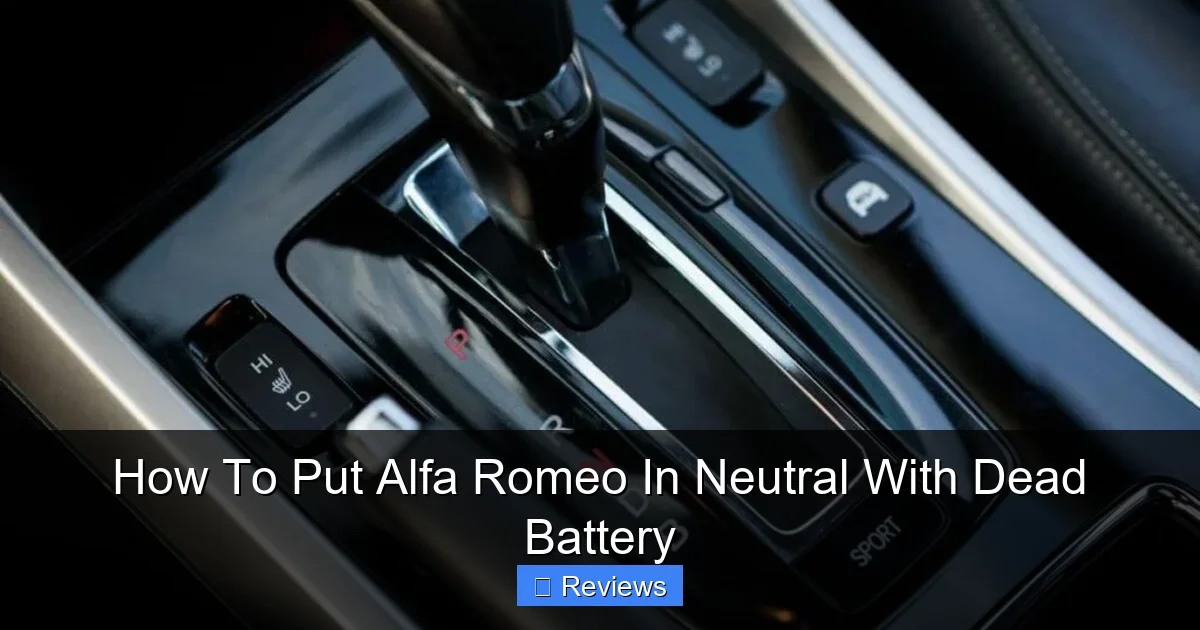
Visual guide about how to put alfa romeo in neutral with dead battery
Image source: conveyanceopedia.com
Gathering the Right Tools and Equipment
Having the appropriate tools at hand will streamline the process and enhance safety. Depending on your specific Alfa Romeo model and the nature of the neutral release mechanism, you might need a combination of the following:
- Owner’s Manual: This is your primary resource. It contains model-specific diagrams and instructions for the manual neutral release. Do not skip consulting it!
- Gloves: Protect your hands from grease, sharp edges, and potential heat.
- Flashlight or Headlamp: Essential for illuminating dark areas, especially if the release mechanism is under the vehicle. A headlamp leaves your hands free.
- Wheel Chocks: Absolutely critical for preventing the vehicle from rolling once it’s lifted or placed in neutral. Always use chocks on the wheels that remain on the ground.
- Hydraulic Jack and Jack Stands: If the neutral release requires accessing the underside of the vehicle, a robust hydraulic jack is needed to lift the car, and sturdy jack stands are non-negotiable for supporting it safely. Never work under a vehicle supported only by a jack.
- Wrench or Socket Set: Many under-vehicle release mechanisms involve turning a bolt or lever, which may require a specific size wrench or socket.
- Small Flathead Screwdriver: Some interior shift lock release covers might need a small screwdriver to pry them open.
- Portable Power Pack or Jumper Cables: While the guide focuses on a dead battery, if there’s any residual power, a jump start might provide enough juice to electronically shift into neutral without manual intervention. This is always worth trying first if feasible.
- Eye Protection: Recommended for working under the vehicle to protect against debris.
- Creeper or Mat: For comfort and ease of movement if you need to slide under the car.
Prioritising Your Safety: A Non-Negotiable Step
Working on or under an immobilized vehicle carries inherent risks. Adhering to strict safety protocols is paramount:
- Flat, Stable Ground: Always perform this operation on a level, solid surface. Avoid inclines, soft ground, or gravel, which can compromise the stability of your jack and jack stands.
- Engage Parking Brake (if possible): If your Alfa Romeo’s battery is dead, the electronic parking brake may or may not engage. If it has any residual power and can be engaged, do so. If not, rely entirely on wheel chocks.
- Chock the Wheels: Before jacking the vehicle or attempting to release the transmission, place wheel chocks firmly against the wheels that will remain on the ground. If you’re lifting the front, chock the rear wheels; if lifting the rear, chock the front wheels. If you’re only lifting one side, chock the diagonal wheel.
- Inform Others: Let someone know what you’re doing, especially if you’re working alone. This ensures help is available if an unforeseen incident occurs.
- Secure the Vehicle on Jack Stands: Once the vehicle is lifted to the required height, immediately place jack stands beneath the designated lift points (consult your owner’s manual for these locations). Slowly lower the vehicle onto the jack stands. Give the vehicle a gentle shake to confirm stability before ever putting any part of your body under it.
- Proper Lifting Points: Always use the factory-designated jack points. Using incorrect points can damage the vehicle’s frame, suspension, or underbody components.
- Ventilation: If you’re working in a garage, ensure adequate ventilation, especially if there’s any chance the engine might start (e.g., after a jump attempt).
Consulting Your Owner’s Manual: Your First and Best Resource
Every Alfa Romeo model is unique, and while general principles apply, the specific location and method for manually releasing the transmission into neutral can vary significantly. Your owner’s manual is the definitive source of truth for your particular vehicle. It will provide:
- Exact Location: Diagrams and descriptions pinpointing where the neutral release mechanism is located.
- Specific Procedure: Step-by-step instructions on how to activate the release (e.g., which way to turn a bolt, how many rotations, which lever to pull).
- Required Tools: Any specialized tools or specific wrench sizes needed.
- Safety Warnings: Crucial safety information pertinent to your model.
Taking a few minutes to read and understand these instructions thoroughly can prevent mistakes, save time, and most importantly, ensure your safety and the integrity of your Alfa Romeo.
The Common Methods: Accessing the Manual Gear Release Mechanism
When faced with an Alfa Romeo with a dead battery, the primary goal is to engage neutral. Modern Alfa Romeo vehicles, largely due to their shift-by-wire architecture, typically require an under-vehicle manual release mechanism. However, for completeness, we will review various potential methods, including less common interior options and the possibility of a temporary power boost.
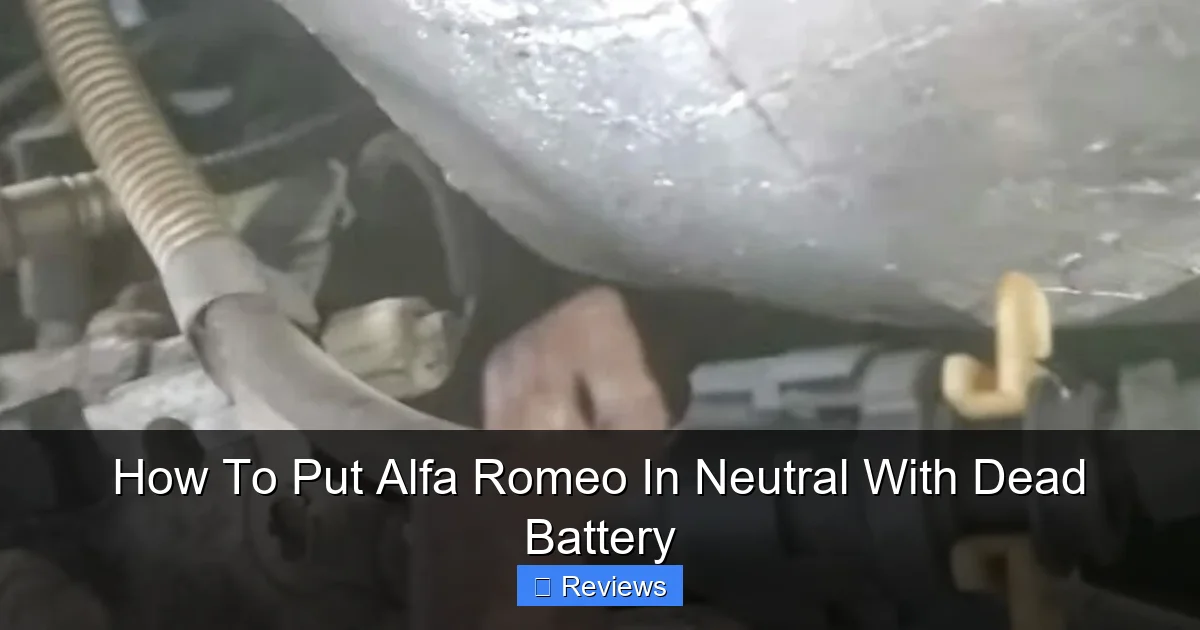
Visual guide about how to put alfa romeo in neutral with dead battery
Image source: toolsweek.com
Locating the Shift Lock Release Button (If Applicable)
While less common in contemporary Alfa Romeo models with a completely dead battery, some vehicles – particularly older designs or those with a different electronic setup – may feature a visible shift lock release button near the gear selector. This button is primarily designed for scenarios where the brake pedal switch fails, preventing shifting out of park even with a live battery, or for diagnostics.
- Appearance: Typically a small, recessed button or slot next to the shifter, often covered by a plastic cap.
- Procedure:
- Apply the parking brake (if possible) and chock the wheels securely.
- Locate the small cover or cap near the gear selector. You may need a small flathead screwdriver or trim tool to carefully pry it open.
- Press the exposed button or insert a key/small tool into the slot while simultaneously depressing the brake pedal (if there’s any residual power) and attempting to move the gear selector into neutral.
- Limitations: This method usually requires *some* electrical power for the gear selector to move, even if minimal. If the battery is completely flat, this mechanism might not be effective as the electronic interlock won’t release. For a dead battery scenario, this is rarely the solution for modern Alfas like the Giulia or Stelvio.
The Under-Vehicle Release: A More Frequent Scenario
For most modern Alfa Romeo Giulia, Stelvio, and Tonale models with a dead battery, the primary method for engaging neutral involves accessing a manual release mechanism directly on the transmission itself. This process demands proper safety precautions and the right tools, as it requires getting under the vehicle.
- Detailed Steps:
- Prepare the Vehicle: Ensure the car is on a flat, stable surface. Place wheel chocks firmly against the wheels that will remain on the ground. This is crucial.
- Safely Jack the Vehicle: Using a robust hydraulic jack, lift the side of the vehicle that allows easiest access to the transmission. For most Alfa Romeos, the neutral release mechanism is located on the driver’s side of the transmission. Lift the front driver’s side or both front wheels if you prefer. Consult your owner’s manual for specific jacking points.
- Secure with Jack Stands: Once lifted, immediately place sturdy jack stands under the designated support points. Slowly lower the vehicle onto the jack stands, ensuring it is stable. Never work under a vehicle supported only by a jack.
- Locate the Transmission: The transmission is typically positioned centrally under the vehicle, behind the engine. Use your flashlight to illuminate the area.
- Identify the Release Mechanism:
- For Giulia and Stelvio models, the manual neutral release is often a small, distinct lever or bolt located on the driver’s side of the transmission housing, sometimes near the transmission fluid pan or behind a small access panel.
- It may be a hex bolt that needs to be partially unscrewed or turned a certain number of rotations, or a lever that needs to be pulled or pushed and possibly secured in place.
- Refer to your owner’s manual for precise location and identification. It might be labeled with a distinct symbol or colored.
- Engage Neutral:
- If it’s a bolt, use the correct size wrench or socket (e.g., 10mm or 13mm are common, but verify). Turn the bolt as instructed by the manual. Often, it’s a partial turn (e.g., 90 degrees or 180 degrees counter-clockwise) that detents and locks the transmission in neutral. It’s usually not meant to be fully removed.
- If it’s a lever, follow the manual’s instructions to pull or push it into the neutral position. Some levers may have a retaining clip or require a specific motion to keep them engaged in neutral.
- Verify Neutral: Once you believe you’ve engaged neutral, and only after ensuring the vehicle is securely supported and chocked, gently attempt to rotate the drive wheels (if accessible and safe to do so). If they spin freely, neutral is engaged.
- Lower the Vehicle: Once neutral is confirmed, safely raise the vehicle slightly with the jack, remove the jack stands, and then slowly lower the vehicle completely to the ground.
- Re-chock: Re-chock the wheels immediately if the parking brake is inoperable, as the vehicle will now be free to roll.
- Practical Tip: Take pictures with your phone as you locate and manipulate the mechanism. This can be helpful for documentation or if you need to reverse the process.
Utilizing a Jump Start or Portable Power Pack: A Less Invasive Alternative
Before resorting to the physically demanding under-vehicle method, it’s always worth considering if a temporary power boost can electronically facilitate the shift to neutral. This approach is significantly less invasive if successful.
- When it Works: This method is viable if the dead battery isn’t completely flat but merely discharged to a point where it cannot crank the engine. Often, a brief jump start can provide enough voltage for the TCU and shift-by-wire system to operate minimally, allowing you to select neutral electronically.
- Procedure:
- Prepare: Ensure both vehicles (if jump-starting from another car) or your portable power pack are ready. Park the assisting vehicle close enough for jumper cables to reach, but not touching your Alfa Romeo.
- Connect Jumper Cables:
- Connect the red positive (+) clamp to the positive terminal of the dead battery (or jump point, typically under the hood).
- Connect the other red positive (+) clamp to the positive terminal of the assisting battery or power pack.
- Connect the black negative (-) clamp to the negative terminal of the assisting battery or power pack.
- Connect the other black negative (-) clamp to a clean, unpainted metal surface on the engine block or chassis of your Alfa Romeo, away from the battery. Never connect the negative clamp directly to the dead battery’s negative terminal.
- Attempt to Shift: Allow the connection to sit for 5-10 minutes. Then, with the brake pedal firmly depressed, attempt to move the gear selector into neutral. You may or may not see dashboard lights or hear a click as the system attempts to activate.
- Disconnect Safely: If successful, keep the assisting vehicle running or power pack connected until you are ready to move the Alfa. Disconnect the cables in reverse order: negative from the Alfa, negative from the assisting battery, positive from the assisting battery, positive from the Alfa.
- Limitations: If the battery is severely damaged (e.g., shorted cell) or completely depleted, a jump start might not provide enough instantaneous power for the electronics to function. In such cases, the under-vehicle manual release remains the only option to put your Alfa Romeo in neutral with a dead battery.
Model-Specific Considerations and Nuances
While the general principles for putting an Alfa Romeo in neutral with a dead battery remain consistent, the precise location and nature of the manual release mechanism can vary between models. Understanding these nuances is crucial for a successful and safe operation. This section reviews specific points for popular Alfa Romeo models.
Visual guide about how to put alfa romeo in neutral with dead battery
Image source: compressorlab.com
Alfa Romeo Giulia and Stelvio: Unlocking the Drive
The Alfa Romeo Giulia sedan and Stelvio SUV share a common platform and many mechanical components, including their transmission systems. Consequently, the manual neutral release procedure is often very similar for both models.
- Mechanism Type: For Giulia and Stelvio, the manual neutral release is typically a small hex bolt located on the driver’s side of the transmission case. It’s designed to mechanically disengage the park pawl.
- Location Details:
- You will need to lift the vehicle and secure it on jack stands (as detailed in the “Essential Preparations” section).
- Look towards the driver’s side of the transmission housing, often relatively low down, near the transmission pan or just forward of it.
- It can sometimes be partially obscured by other components or underbody shielding, requiring a good flashlight and some careful maneuvering to spot.
- The bolt itself might be distinguished by a unique head or a surrounding marking, but it will generally be a standard hex head (e.g., 10mm, 13mm, or similar, always check your specific owner’s manual).
- Procedure Specifics:
- Once located, use the appropriate size wrench or socket.
- The manual will specify the exact turning motion. Typically, it involves partially unscrewing or turning the bolt a specific number of degrees (e.g., 90-180 degrees counter-clockwise) until it clicks into a detent position or becomes loose but remains in its housing. It is usually NOT meant to be fully removed.
- The purpose is to manually retract the park pawl, releasing the transmission into neutral.
- Once in neutral, you should be able to spin the drive wheels by hand (if elevated) or push the vehicle.
- Re-engaging Park: To return to park (once power is restored, or for subsequent towing preparation), the bolt is typically turned back to its original, tightened position. Ensure it’s snug, but do not overtighten, as this mechanism is not designed for high torque.
- Practical Example: Many Giulia/Stelvio owners have reported finding this bolt relatively accessible once the car is properly lifted. The main challenge is correct identification among the other bolts and components on the transmission case. Always verify with a clear diagram from the owner’s manual.
Alfa Romeo Tonale and Other FWD/AWD Variants
The Alfa Romeo Tonale, being a compact SUV, may utilize a different transmission design compared to the rear-wheel-drive based Giulia and Stelvio platforms. While it often features an automatic transmission, its front-wheel-drive or all-wheel-drive architecture (derived from its platform sharing) might mean a slightly different neutral release mechanism or location.
- Potential Differences:
- The transmission housing might be oriented differently or have different external characteristics.
- The manual release could be a cable-pull system, a different style of lever, or a push-button mechanism located on a different part of the transmission case.
- Access might be from a different angle, potentially requiring removal of more underbody shielding.
- Recommendation: For the Tonale and any other FWD/AWD Alfa Romeo, it is even more critical to consult the owner’s manual directly. Do not assume the Giulia/Stelvio procedure is identical. The manual will provide the definitive guide for how to put your Alfa Romeo Tonale in neutral with a dead battery.
- General Expectation: Despite potential variations, the underlying principle will be the same: a mechanical override designed to release the transmission from park when electronic control is absent due to a dead battery. It will still likely be an under-vehicle operation.
Older Alfa Romeo Models: Simpler Solutions?
If you own an older Alfa Romeo (e.g., 159, 156, or even classic models), the situation with a dead battery and neutral might be vastly different. These vehicles pre-date widespread shift-by-wire technology and often feature more direct mechanical linkages for gear selection.
- Mechanical Linkage: Older automatics or manuals would have a direct cable or rod connecting the shifter to the transmission. If the battery dies in such a vehicle, the transmission generally remains in its last selected gear (if automatic) or can still be manually shifted if a clutch is present (manual).
- Electronic Park Brake Absence: Older models typically use a hand-lever or foot-pedal operated mechanical parking brake, which is entirely independent of the 12V battery system. This means the parking brake would still function even with a dead battery.
- Simpler Overrides: If an older Alfa Romeo automatic transmission were “stuck” due to an electrical fault (not necessarily a dead battery), the override mechanism might be a simple shift-lock button or a key-release slot near the shifter, as described in the “Shift Lock Release Button” section.
- Key Takeaway: For classic or pre-2010s Alfa Romeos, the complexity of a dead battery neutral release is usually significantly lower, as the fundamental electronic dependency for gear selection is less prevalent. However, always consult the specific owner’s manual for your vehicle year and model for accurate instructions.
In summary, while the modern Giulia and Stelvio share a similar, robust under-vehicle manual release, owners of other Alfa Romeo models must always defer to their specific owner’s manual for precise instructions. This diligence ensures safety and avoids potential damage when attempting to put your Alfa Romeo in neutral with a dead battery.
Post-Neutral Procedures and Troubleshooting Common Issues
Successfully putting your Alfa Romeo in neutral with a dead battery is a significant achievement, but it’s not the final step. There are important procedures to follow once neutral is engaged, as well as common issues that might arise during the process. This section provides a comprehensive review of these critical next steps and troubleshooting tips.
Verifying Neutral and Securing the Vehicle
Once you believe you have successfully engaged the manual neutral release, it’s crucial to verify the transmission is indeed in neutral before attempting to move the vehicle or letting go of any support. Improper verification could lead to unexpected rolling or transmission damage during towing.
- Method 1: Wheel Spin Test (Vehicle Elevated):
- If your vehicle is still lifted on jack stands, gently try to spin the drive wheels by hand. If they rotate freely without significant resistance, the transmission is in neutral.
- If you can’t spin them, or they feel ‘locked’, the release may not be fully engaged, or you may need to re-attempt the procedure.
- Method 2: Attempt to Push (Vehicle on Ground):
- Once the vehicle is safely lowered to the ground (and securely chocked), try to gently push the vehicle. If it rolls with relative ease (accounting for weight and friction), neutral is engaged.
- If it remains stubborn, do not force it. Re-verify the manual release mechanism.
- Re-engage Parking Brake (if possible): If, during or after a jump start, your electronic parking brake (EPB) has regained functionality, engage it immediately after verifying neutral. This adds an extra layer of security.
- Use Chocks Religiously: If the EPB is inoperable, your wheel chocks are the only thing preventing your Alfa Romeo from rolling away once it’s in neutral. Keep them firmly in place until the vehicle is hooked up for towing or securely parked.
The Road to Recovery: What to Do After Achieving Neutral
With your Alfa Romeo in neutral, you can now proceed with moving it or arranging for its repair:
- Towing Guidelines:
- Flatbed Towing is Preferred: For all Alfa Romeo models, especially AWD and RWD variants like the Giulia and Stelvio, flatbed towing is always the safest method. It completely lifts all four wheels off the ground, eliminating any risk to the transmission.
- Dolly Towing (Limited Circumstances): If flatbed towing isn’t an option, and your vehicle is FWD, using a tow dolly for the front wheels (leaving the rear wheels on the ground) can be acceptable. For RWD vehicles, dollies can be used on the rear wheels, with the front wheels lifted. For AWD, only flatbed towing is recommended to prevent drivetrain damage.
- Inform Tow Operator: Always inform the tow truck operator that your Alfa Romeo’s battery is dead and that you have manually engaged neutral. Confirm they understand the vehicle is free-rolling and how to secure it properly.
- Battery Replacement/Charging:
- The immediate cause of your predicament is the dead battery. Once moved to a safe location, the next step is to diagnose the battery.
- Attempt to recharge the battery using a trickle charger or a smart charger. Modern Alfas often require AGM batteries, which demand specific charging profiles.
- If the battery is old, visibly damaged, or fails to hold a charge, it needs to be replaced. Ensure the replacement battery meets Alfa Romeo’s specifications (CCA, Ah, type – AGM is common).
- Professional Installation Recommended: Battery replacement in modern Alfas often requires proper registration with the vehicle’s Battery Management System (BMS) using diagnostic tools. Improper replacement can lead to charging issues, premature battery failure, or various electronic glitches.
- Diagnostic Checks: Even after the battery is sorted, consider having a professional perform a diagnostic check. A dead battery can sometimes be a symptom of an underlying issue, such as a faulty alternator, parasitic draw, or a failing charging system component.
Troubleshooting: When Things Don’t Go as Planned
Despite careful preparation, you might encounter issues when trying to put your Alfa Romeo in neutral with a dead battery. Here’s how to troubleshoot common problems:
- Difficulty Locating the Mechanism:
- Solution: Re-consult your owner’s manual. Use a bright flashlight or headlamp. Try different angles and positions under the vehicle. The mechanism can be small and easily overlooked. Patience is key.
- Tip: Search online forums or YouTube for videos specific to your Alfa Romeo model. Other owners may have posted visual guides.
- Mechanism Feels Stuck or Won’t Turn/Move:
- Solution: Do not force it aggressively. It might be stiff due to dirt, corrosion, or lack of use. Apply gentle, consistent pressure. Ensure you are using the correct tool size to prevent stripping the bolt head.
- Consider: A small amount of penetrating oil might help if corrosion is suspected, but be very cautious not to spray it on electrical connectors or other sensitive components.
- Vehicle Still Won’t Roll After Release:
- Solution: Double-check that the release mechanism is fully engaged in the neutral position as per your manual. Also, ensure the parking brake is fully disengaged (if it was somehow applied or if it’s a mechanical brake). Verify no chocks are still inadvertently in place.
- If AWD: Ensure both front and rear wheels are free.
- Safety Concerns: Unstable Vehicle on Jack Stands:
- Solution: If at any point the vehicle feels unstable, or you are unsure about the jack stand placement, stop immediately. Re-evaluate your setup. Never work under a vehicle that is not absolutely stable. If you’re unsure, it’s better to call for professional assistance.
- When to Call Professional Help:
- If you’ve followed all steps, consulted your manual, and still cannot locate or operate the manual release.
- If you lack the necessary tools or feel unsafe performing the procedure.
- If the vehicle is stuck in a dangerous or extremely inconvenient location.
- A professional roadside assistance service or a qualified Alfa Romeo technician will have specialized equipment and expertise to safely move your vehicle.
Remember, the goal is not just to get your Alfa Romeo in neutral but to do so safely and without causing further damage. Knowing when to call for expert help is a sign of good judgment.
Preventative Measures and Maintaining Your Alfa Romeo’s Battery Health
While knowing how to put your Alfa Romeo in neutral with a dead battery is invaluable for emergencies, preventing the dead battery scenario in the first place is always the best approach. Modern Alfa Romeos, with their extensive electronic systems, are particularly sensitive to battery health. Regular maintenance and smart habits can significantly extend your battery’s life and reduce the chances of getting stranded.
Regular Battery Checks and Maintenance
Proactive battery care can identify potential issues before they escalate:
- Voltage Testing: Regularly (e.g., quarterly) test your battery’s voltage with a multimeter. A fully charged 12V battery should read around 12.6V or higher when the engine is off. Readings consistently below 12.4V suggest a state of discharge or a weakening battery.
- Terminal Cleaning: Inspect battery terminals for corrosion (a fuzzy, white, or greenish buildup). Corrosion impedes electrical flow and can contribute to a dead battery. Clean terminals with a wire brush and a baking soda/water solution. Ensure they are tight and secure.
- Casing Inspection: Check the battery casing for any cracks, bulges, or leaks. These are signs of internal damage and warrant immediate battery replacement.
- Fluid Levels (if applicable): Some non-AGM batteries may have removable caps to check electrolyte levels. If low, top up with distilled water (not tap water). However, most modern Alfa Romeos use sealed, maintenance-free AGM batteries where this isn’t necessary.
- Load Testing: A professional mechanic can perform a load test to determine the battery’s ability to hold a charge under stress, which is a more accurate indicator of its health than a simple voltage test.
Smart Charging Habits and Battery Tenders
The way you use and store your Alfa Romeo can have a significant impact on battery longevity:
- Avoid Short Trips: Frequent short trips (less than 15-20 minutes) do not allow the alternator enough time to fully recharge the battery after starting the engine. Over time, this leads to a chronically undercharged battery.
- Battery Tenders for Infrequent Use: If you don’t drive your Alfa Romeo daily or frequently (e.g., it’s a weekend car, or you travel for extended periods), invest in a smart battery tender or trickle charger. These devices maintain the battery’s charge without overcharging, preventing deep discharge that significantly shortens battery life. They are particularly crucial for modern vehicles with constant parasitic draws from their complex electronics.
- Charging After Extended Accessory Use: If you’ve spent time in the car with the engine off, listening to the radio, or using other accessories, consider putting the car on a charger or going for a longer drive to replenish the battery.
Recognizing the Warning Signs of a Failing Battery
Your Alfa Romeo will often give you clues before the battery completely dies:
- Slow Engine Cranking: The most common sign. The engine turns over slowly or with difficulty, especially in cold weather.
- Dim Headlights and Interior Lights: Lights may appear dim when the engine is off, or flicker/brighten as you rev the engine.
- Electronic Glitches: Erratic behavior from infotainment systems, power windows, or other electronics can be a symptom of low voltage.
- Dashboard Warning Lights: The battery warning light, or other general warning lights, may illuminate.
- Clicking Sound on Start-up: A rapid clicking sound from under the hood when trying to start indicates insufficient power to engage the starter motor.
- Age: Car batteries typically last 3-5 years. If your battery is approaching or past this age, it’s a good idea to have it tested.
The Importance of Professional Servicing
Regular maintenance at an authorized Alfa Romeo service center or a reputable independent specialist is invaluable:
- Comprehensive Battery Checks: During routine service, technicians can perform detailed battery and charging system tests, including alternator output and parasitic draw analysis.
- Proper Battery Replacement: As mentioned, modern Alfas require specific battery types and often battery registration with the vehicle’s computer. Professionals have the necessary diagnostic tools (e.g., Launch X431 or Autel Maxisys) to ensure the new battery is correctly integrated into the vehicle’s electrical system.
- Software Updates: Sometimes, software updates related to power management can improve battery longevity.
By adopting these preventative measures and staying attuned to your Alfa Romeo’s battery health, you can significantly reduce the likelihood of encountering a dead battery and the subsequent need to manually put it in neutral.
Comparative Approaches to Achieving Neutral with a Dead Battery: A Review
When reviewing the options for putting an Alfa Romeo in neutral with a dead battery, it’s helpful to compare the various approaches based on their complexity, required tools, and typical scenarios. This table summarizes the main methods discussed and provides a quick reference guide.
| Scenario / Method | Description & Typical Use Case | Required Tools & Resources | Complexity & Time Investment | Effectiveness for a Truly Dead Battery | Key Considerations |
|---|---|---|---|---|---|
| Jump Start / Portable Power Pack | Attempting to provide temporary power to the vehicle’s electrical system to allow electronic shifting into neutral. Best for partially discharged batteries. | Jumper cables or portable power pack, assisting vehicle (optional). | Low. Quickest method if successful. | Low to Medium. Will fail if battery is severely damaged or completely flat. | Always worth trying first. Less invasive. Ensure proper jump-starting procedure. |
| Manual Shift Lock Override Button (Interior) | Utilizing a physical button or slot near the gear selector to manually bypass the shift lock. | Small flathead screwdriver (to remove cover), potentially a key/tool for the slot. | Low. Relatively simple if present and accessible. | Very Low. Rarely effective for modern Alfas with a truly dead battery, as some residual power is often needed for the electronic selector. | Consult owner’s manual. More common in older vehicles or for brake switch failures, not typically for dead battery. |
| Under-Vehicle Manual Release Mechanism (Transmission) | Directly manipulating a mechanical lever or bolt on the transmission housing to disengage the park pawl. The most common method for modern Alfas with a dead battery. | Hydraulic jack, jack stands, wheel chocks, flashlight, appropriate size wrench/socket, gloves, owner’s manual. | High. Requires lifting the vehicle, working underneath, and precise identification. | High. This is the definitive solution for a dead battery. | Absolute adherence to safety protocols is paramount. Consult owner’s manual for exact location and procedure. |
| Professional Roadside Assistance / Tow Service | Calling experts who have specialized equipment and knowledge to safely move the vehicle. | Phone, membership/payment. | Very Low for owner; High for professional. | High. Professionals are equipped for all scenarios. | Best option if you are uncomfortable, lack tools, or fail with DIY attempts. Can incur costs. |
This review demonstrates that while there are multiple approaches, the under-vehicle manual release is the most robust and reliable solution for an Alfa Romeo with a dead battery that needs to be moved into neutral. The other methods serve as preliminary checks or are applicable only in specific, less severe circumstances.
Conclusion: Empowering Alfa Romeo Owners Through Preparedness
Navigating the unexpected challenge of an Alfa Romeo with a dead battery is undoubtedly stressful, especially when it renders your magnificent vehicle immobilized and unable to shift into neutral. However, as this comprehensive guide has reviewed, understanding the sophisticated electronic architecture of your Alfa Romeo and being prepared with the correct knowledge, tools, and safety protocols can transform a daunting situation into a manageable task. Knowing how to put your Alfa Romeo in neutral with a dead battery is a vital piece of knowledge for any owner, empowering you to safely move your vehicle for towing or repair, preventing potentially costly transmission damage.
We’ve delved into the intricacies of why modern Alfa Romeo transmissions become locked without 12V power, walked through the critical safety preparations, and explored the various methods for engaging neutral – with a particular focus on the definitive under-vehicle manual release for Giulia, Stelvio, and similar models. The importance of your owner’s manual cannot be overstated, serving as your ultimate model-specific blueprint. Furthermore, we’ve equipped you with troubleshooting tips for when things don’t go as planned and underscored the critical next steps once neutral is achieved, including proper towing practices and addressing the underlying battery issue.
Beyond the immediate crisis, this guide emphasizes the paramount importance of preventative measures. Regular battery checks, smart charging habits, and recognizing the early warning signs of a failing battery are your first line of defense against ever facing this predicament. While the manual neutral release is an indispensable emergency feature, maintaining your Alfa Romeo’s battery health is the best way to ensure continuous, worry-free enjoyment of its passionate performance.
By arming yourself with this information, you’re not just learning a repair trick; you’re gaining a deeper understanding of your vehicle and enhancing your capability as an Alfa Romeo owner. So, the next time you’re faced with a silent ignition and a stubborn gear selector, you’ll be ready to confidently take action, knowing precisely how to put your Alfa Romeo in neutral with a dead battery and get it back on the road to recovery.
Frequently Asked Questions
Why can’t I put my Alfa Romeo in neutral when the battery is dead?
Modern Alfa Romeos often use an electronic “shift-by-wire” system for gear selection. Without power from a healthy battery, this system cannot electrically engage the neutral position, leaving the transmission locked in park. This is a common issue designed to prevent accidental shifting without electrical control.
Is there a way to manually put an Alfa Romeo into neutral with a dead battery?
Yes, fortunately, Alfa Romeo vehicles are equipped with a manual override feature specifically for this situation. This mechanical release allows you to disengage the transmission from park into neutral, even with a complete loss of electrical power. It’s a critical feature for towing or moving the vehicle.
Where is the manual neutral release mechanism located in an Alfa Romeo?
The manual neutral release is typically found near the gear selector lever inside the cabin. You usually need to carefully remove a small trim piece or cover, often marked with a “P” or “N” or a gear icon, to access the release lever or button underneath. Consult your owner’s manual for the exact location for your specific model.
What tools are needed to access the manual neutral release for an Alfa Romeo with a dead battery?
Often, you only need a small flathead screwdriver or a plastic trim removal tool to carefully pry off the access cover. Some models might have a push-button release once the cover is off, while others may require you to pull a small lever. Always be gentle to avoid scratching interior components.
Can putting my Alfa Romeo in neutral manually damage the transmission?
No, using the designated manual neutral release mechanism will not damage your Alfa Romeo’s transmission. This feature is intentionally designed by the manufacturer for situations precisely like a dead battery, allowing safe movement or towing of the vehicle. Do not attempt to force the gear selector without using this specific override.
After getting my Alfa Romeo into neutral with a dead battery, what should I do next?
Once your Alfa Romeo is in neutral, you can safely move or tow the vehicle to a service location. Your next steps should focus on jump-starting the car to recharge or replace the dead battery, or having it transported for repair. Ensure the parking brake is engaged if the vehicle is stationary after being put in neutral.

At CarLegit, we believe information should be clear, factual, and genuinely helpful. That’s why every guide, review, and update on our website is created with care, research, and a strong focus on user experience.