

Featured image for how to reset oil light on 2017 alfa romeo giulia
Image source: i.ytimg.com
Resetting the oil light on your 2017 Alfa Romeo Giulia is a straightforward process crucial after an oil change, empowering you to clear the service reminder yourself. This guide details the procedure in just three easy steps, saving you a trip to the dealership. You’ll typically perform specific ignition cycles and pedal presses to quickly restore your Giulia’s dashboard display.
The exhilarating growl of an Alfa Romeo Giulia’s engine, the precise steering, and its breathtaking Italian design are all elements that combine to create an unparalleled driving experience. Owning a 2017 Alfa Romeo Giulia is not just about driving; it’s about embracing a legacy of passion and performance. Like any high-performance machine, maintaining your Giulia is crucial to preserving its dynamic capabilities and ensuring its longevity. One of the most common maintenance tasks, and one that often triggers a dashboard warning, is the oil change. After performing this vital service, you’ll typically encounter a persistent reminder on your instrument cluster: the oil change service light.
This light, while seemingly a nuisance, serves as an important prompt, ensuring you adhere to the manufacturer’s recommended service intervals. However, once the oil change is complete, whether you’ve handled it yourself or had it performed by a professional, the light won’t magically disappear. It requires a manual reset to inform the vehicle’s onboard computer that the service has been completed and to start the countdown to the next service interval. For many Giulia owners, understanding how to reset oil light on 2017 Alfa Romeo Giulia is a fundamental step in routine care that can save a trip to the dealership and empower them to take a more active role in their vehicle’s upkeep.
This comprehensive guide will walk you through the precise steps to reset the oil light on your 2017 Alfa Romeo Giulia. We’ll not only cover the exact process but also delve into the importance of timely oil changes, the types of oil recommended, and common issues you might encounter. By the end of this post, you’ll be equipped with the knowledge and confidence to handle this essential maintenance task, ensuring your Italian masterpiece continues to perform at its peak and the only lights you see are those of pure driving pleasure.
In This Article
- 1 Key Takeaways
- 2 Understanding Your Alfa Romeo Giulia’s Oil Light System
- 3 Essential Preparations Before Resetting the Oil Light
- 4 Step-by-Step Guide: How To Reset Oil Light On 2017 Alfa Romeo Giulia (The 3 Steps)
- 5 Beyond the Reset: Comprehensive Oil Maintenance for Your Giulia
- 6 Common Issues and Advanced Diagnostics Related to the Oil Light
- 7 2017 Alfa Romeo Giulia Oil Specifications and Service Data
- 8 Conclusion
- 9 Frequently Asked Questions
- 9.1 How do I perform the oil light reset on my 2017 Alfa Romeo Giulia?
- 9.2 Why is it important to reset the oil light after an oil change on a 2017 Alfa Romeo Giulia?
- 9.3 Can I reset the oil light on my 2017 Alfa Romeo Giulia without actually changing the oil?
- 9.4 Do I need a special diagnostic tool or scanner to reset the oil light on my 2017 Alfa Romeo Giulia?
- 9.5 What if the oil light comes back on immediately after I reset it on my 2017 Alfa Romeo Giulia?
- 9.6 Is the oil light on my 2017 Alfa Romeo Giulia related to the “check engine” light?
Key Takeaways
- Ignition On: Start with the engine off but ignition on.
- Pump Accelerator: Press the pedal fully 5-7 times slowly.
- Slow Pumping: Ensure each pump takes approximately one second.
- Verify Reset: Look for the oil light to turn off after the procedure.
- Oil Changed First: Only reset *after* completing the actual oil change.
- Troubleshoot If Needed: Repeat steps or consult professional if light persists.
Understanding Your Alfa Romeo Giulia’s Oil Light System
Before diving into the specifics of how to reset oil light on 2017 Alfa Romeo Giulia, it’s crucial to understand what this warning light signifies and the sophisticated system behind it. Your Giulia is equipped with advanced electronics designed to monitor its various components, including the engine’s lubrication system. The oil light is more than just a simple reminder; it’s an integral part of your vehicle’s health monitoring.
What the Oil Light Means
In most modern vehicles, including the 2017 Alfa Romeo Giulia, there are typically two distinct types of oil-related warnings: a “Low Oil Pressure” warning and a “Service Due” or “Oil Change Due” warning. The former, often depicted as a red oil can icon, is an emergency indicator of critically low oil pressure, demanding immediate attention to prevent severe engine damage. The latter, which is the focus of our discussion, is usually a yellow or amber light, often accompanied by a message like “Oil Change Due” or “Service Due” on the instrument cluster display. This indicates that the predetermined mileage or time interval for your next oil service has been reached or exceeded. Understanding this distinction is the first step in properly addressing the warning.
The Importance of Regular Oil Changes for Performance and Longevity
Engine oil is the lifeblood of your Alfa Romeo Giulia’s engine. It performs multiple critical functions:
- Lubrication: Reduces friction between moving parts, preventing wear and tear.
- Cooling: Helps dissipate heat generated by combustion and friction.
- Cleaning: Suspends contaminants like dirt, metal particles, and sludge, carrying them to the oil filter.
- Sealing: Fills microscopic gaps between engine parts, preventing combustion gases from escaping.
- Corrosion Protection: Contains additives to prevent rust and corrosion on internal metal surfaces.
Over time, oil degrades, loses its viscosity, and becomes saturated with contaminants. Using degraded oil significantly increases engine wear, reduces fuel efficiency, and can lead to costly repairs down the line. For a high-performance engine like those found in the Giulia, consistent use of fresh, high-quality oil is non-negotiable for maintaining its thrilling performance and ensuring its long-term reliability.
How the Giulia’s Maintenance System Works
The 2017 Alfa Romeo Giulia’s onboard computer continuously monitors various parameters to determine when maintenance is due. This isn’t just a simple odometer-based countdown; it’s a sophisticated algorithm that considers factors such as:
- Mileage: The most straightforward factor.
- Time: Even if you don’t drive much, oil degrades over time.
- Engine Operating Conditions: Hard driving, frequent short trips, and extreme temperatures can accelerate oil degradation, prompting an earlier service reminder.
When the system determines that an oil change is necessary, it triggers the “Service Due” message and the associated warning light. Successfully resetting the oil light on your 2017 Alfa Romeo Giulia tells this system that the service has been performed, clearing the alert and resetting the service interval counter.
Common Reasons the Oil Light Appears
The oil light typically appears for one of three main reasons:
- Scheduled Maintenance Reminder: This is the most common reason. Your Giulia’s computer has calculated that it’s time for an oil change based on mileage, time, or driving conditions. Even if you’ve just changed the oil, if the light hasn’t been reset, it will persist. This is precisely why knowing how to reset oil light on 2017 Alfa Romeo Giulia is so important after an oil change.
- Actual Low Oil Level: While less common for the “Service Due” light, an actual low oil level can sometimes trigger general oil system warnings. It’s always wise to check your oil level manually if you see any oil-related warning.
- Sensor or System Error: Rarely, a faulty oil level sensor, pressure sensor, or an issue within the vehicle’s electronic system can cause the light to illuminate incorrectly. If the light persists after an oil change and a successful reset, further investigation might be needed.
Essential Preparations Before Resetting the Oil Light
Before you attempt to reset the oil light on your 2017 Alfa Romeo Giulia, it is absolutely paramount to ensure that the actual oil change has been performed correctly. Resetting the light without changing the oil is akin to turning off a smoke detector without extinguishing the fire – it masks a problem that will inevitably lead to severe consequences for your engine. This section will cover critical preparatory steps, emphasizing safety, the right oil, and necessary supplies.
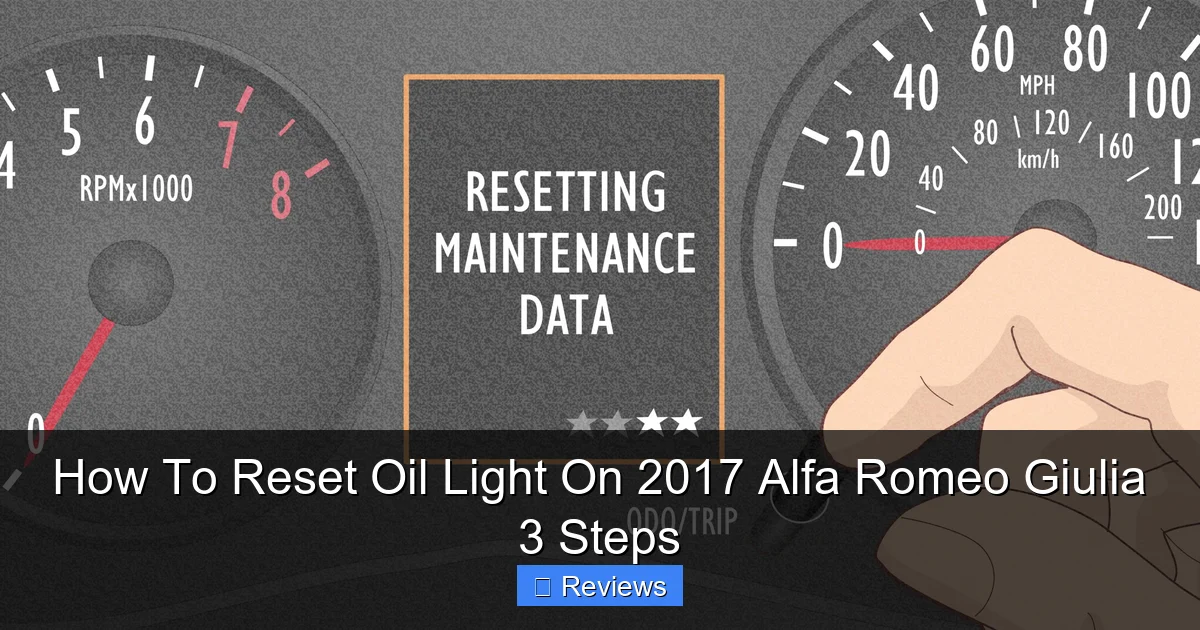
Visual guide about how to reset oil light on 2017 alfa romeo giulia
Image source: wikihow.com
Confirming the Oil Change
This step cannot be overstressed. The primary purpose of resetting the oil light is to acknowledge that the necessary maintenance has been completed. If you are seeing the “Oil Change Due” message, and you haven’t recently performed an oil change, stop immediately. Check your oil level, and schedule an oil change with a trusted mechanic or prepare to do it yourself. Only proceed with the reset procedure once you are absolutely certain that fresh, clean oil and a new oil filter are in your engine. Ignoring this can lead to accelerated engine wear, sludge buildup, and potential engine failure, completely undermining the performance and reliability your Alfa Romeo Giulia is renowned for.
Choosing the Right Oil for Your 2017 Alfa Romeo Giulia
Alfa Romeo engines are precision-engineered and demand specific lubricants. Using the wrong type of oil can lead to decreased performance, increased wear, and potential warranty issues. For the 2017 Alfa Romeo Giulia, there are two primary engine variants:
- 2.0L Turbocharged I4 (280 hp): This engine typically requires SAE 5W-40 synthetic engine oil. Look for specifications such as API SN/CF or ACEA C3. Crucially, it must meet the Fiat Chrysler Automobiles (FCA) specification MS-12991. Examples often include Pennzoil Ultra Platinum Full Synthetic 5W-40 or equivalent.
- 2.9L Twin-Turbo V6 Quadrifoglio (505 hp): This high-performance engine has even stricter requirements. It also typically uses SAE 5W-40 full synthetic engine oil, but it must meet a specific and often proprietary performance standard, usually indicated by FCA MS-10725 or a similar designation specific to high-performance Abarth/SRT/Quadrifoglio engines. Always double-check your owner’s manual for the most accurate and up-to-date specifications.
Always consult your owner’s manual for the definitive oil specification, quantity, and recommended oil filter part number. Investing in high-quality full synthetic oil is not an extravagance but a necessity for your Giulia’s sophisticated engine. The difference in cost is negligible compared to potential repair bills from using inferior lubricants.
Necessary Tools and Supplies for an Oil Change (If DIY)
Even if you’re not performing the oil change yourself, being aware of the tools and supplies involved provides a better understanding of the process. If you are tackling the oil change, ensure you have:
- New Engine Oil: As specified above, with the correct volume (check owner’s manual, typically 5.5-6.5 quarts for the 2.0L).
- New Oil Filter: OEM or high-quality aftermarket filter designed specifically for your Giulia’s engine.
- Oil Filter Wrench: A cap-style wrench that fits the Giulia’s oil filter housing.
- Drain Pan: Large enough capacity to hold all the old oil.
- Socket Wrench Set: For the drain plug (typically a large hex or Torx bit).
- Funnel: To prevent spills when refilling oil.
- Jack and Jack Stands: Essential for safely lifting the vehicle for access to the drain plug and filter. Never work under a car supported only by a jack.
- Gloves and Eye Protection: For safety and cleanliness.
- Shop Rags/Towels: For cleanup.
- Torque Wrench: Crucial for tightening the drain plug and oil filter housing to specification, preventing leaks or overtightening damage.
Safety Precautions During Maintenance
Working on any vehicle requires adherence to safety protocols. If you are performing the oil change:
- Vehicle Stability: Ensure the car is on a level surface and securely supported by jack stands. Engage the parking brake.
- Engine Temperature: Allow the engine to cool down sufficiently before draining oil to prevent burns from hot oil or engine components.
- Eye and Skin Protection: Wear safety glasses and gloves to protect against oil splashes and chemicals.
- Proper Disposal: Dispose of used oil and filters responsibly at a designated recycling center. Never pour them down drains or onto the ground.
Even for just resetting the light, ensure the vehicle is in a safe, off position unless specified by the procedure. These preparations are foundational to not only the successful reset but also the long-term health of your Alfa Romeo Giulia.
Step-by-Step Guide: How To Reset Oil Light On 2017 Alfa Romeo Giulia (The 3 Steps)
Once you’ve confirmed that your 2017 Alfa Romeo Giulia has received its much-needed oil change, it’s time to tackle the “Oil Change Due” light. The process is straightforward, requiring a few simple interactions with your vehicle’s instrument cluster. Follow these steps precisely to successfully reset the service reminder.
Visual guide about how to reset oil light on 2017 alfa romeo giulia
Image source: i.ytimg.com
Step 1: Powering Up and Initializing the System
The first step involves getting your Giulia into the correct state for the reset procedure. It’s crucial that the engine is off, but the electrical system is fully powered. This allows you to navigate the menus without the engine running.
- Ensure the Vehicle is Off: Make sure the engine is completely shut down. The key fob should be present in the vehicle.
- Press the “START/STOP” Button Twice (Without Pressing the Brake Pedal): This action will turn the ignition ON but keep the engine OFF. You should see all the dashboard lights illuminate, and the infotainment system will power up. This is often referred to as “KEY ON, ENGINE OFF” (KOEO) mode. The “Oil Change Due” message should typically be displayed or visible within the instrument cluster.
If you accidentally start the engine, simply turn it off and repeat step 2. Consistency in this initial setup is key to the successful execution of how to reset oil light on 2017 Alfa Romeo Giulia.
With the ignition on, you’ll use the controls on your steering wheel to navigate the digital display within your instrument cluster. This is where you’ll find the service menu.
- Locate Steering Wheel Controls: On the left side of your steering wheel, you’ll find a set of buttons, including up/down arrow keys and an “OK” button (sometimes represented by a checkmark or similar symbol). These controls manipulate the information displayed on your digital cluster screen.
- Scroll to the “Service” or “Maintenance” Menu: Using the up or down arrow keys, navigate through the various menu options on the instrument cluster display. You are looking for a section that pertains to “Service,” “Maintenance,” “Vehicle Info,” or “Settings.” Keep scrolling until you find a menu entry that seems relevant to service intervals.
- Select the “Service” Sub-Menu: Once you land on the “Service” or “Maintenance” entry, press the “OK” button to enter that sub-menu.
Within this sub-menu, you should see options related to different service intervals, often including “Oil Change,” “Maintenance Interval,” or similar wording. The exact wording can vary slightly based on software versions, but the intent is always clear.
Step 3: Confirming and Resetting the Service Interval
This is the final and most crucial step for resetting the oil light on your 2017 Alfa Romeo Giulia.
- Locate the “Oil Change” or “Service Interval” Option: Use the arrow keys again to highlight the specific option for resetting the oil change reminder. It might be labeled “Oil Change,” “Oil Life Reset,” or “Service Interval Reset.”
- Initiate the Reset: Once “Oil Change” or “Service Interval” is highlighted, press and hold the “OK” button for several seconds (typically 5-10 seconds). You should observe the display changing.
- Confirmation: The display should show a confirmation message, such as “Resetting” or “Service Interval Reset Complete,” and then update the mileage/time to the next service interval. The “Oil Change Due” warning light or message should now disappear from your instrument cluster.
- Turn Off Ignition: Once confirmed, turn off the ignition by pressing the “START/STOP” button once. Wait a few seconds, then start the engine as normal to verify that the light remains off.
Troubleshooting Common Reset Issues
While the process is generally straightforward, you might encounter minor hiccups:
- “OK” Button Not Responding: Ensure you are in the correct “KEY ON, ENGINE OFF” mode. Sometimes, a quick tap rather than a hold might be needed to enter a sub-menu, then a hold for the reset itself.
- Menu Not Appearing: If you can’t find the “Service” menu, try cycling through all the main menu options on the cluster again. Refer to your owner’s manual’s instrument cluster navigation section.
- Light Stays On After Reset: If the light persists, repeat the entire procedure from Step 1. Ensure you hold the “OK” button for the full duration required until you see the confirmation message. If it still persists, there might be a deeper issue (e.g., a faulty sensor or a genuine problem) that requires professional diagnosis. In such cases, the light might not be a “Service Due” reminder but another oil-related warning.
Successfully performing this reset ensures your Giulia’s system is up-to-date and ready to track your next service interval. You’ve now mastered how to reset oil light on 2017 Alfa Romeo Giulia, a valuable skill for any owner.
Beyond the Reset: Comprehensive Oil Maintenance for Your Giulia
Resetting the oil light is merely the final step in the oil maintenance process. True care for your 2017 Alfa Romeo Giulia involves a holistic approach to its lubrication system. Understanding the nuances of oil quality, checking procedures, and professional service can significantly impact your vehicle’s performance and longevity, extending well beyond just knowing how to reset oil light on 2017 Alfa Romeo Giulia.
Visual guide about how to reset oil light on 2017 alfa romeo giulia
Image source: cdn.shopify.com
Why Professional Service is Sometimes Best
While performing an oil change yourself and knowing how to reset oil light on 2017 Alfa Romeo Giulia is empowering, there are valid reasons why many owners opt for professional service:
- Specialized Tools and Equipment: Dealerships and reputable independent shops have specialized tools for lifting, draining, and accessing components specific to the Giulia, ensuring a precise job.
- Expertise and Diagnostics: Technicians trained specifically on Alfa Romeo vehicles can identify potential issues that a DIY enthusiast might miss, such as minor leaks, abnormal wear patterns, or sensor malfunctions. They also have access to advanced diagnostic equipment to read and clear complex fault codes.
- Genuine Parts: Professionals often use genuine OEM Alfa Romeo parts, including oil filters and drain plugs, which are designed to meet the exact specifications of your vehicle.
- Service Record: Keeping a meticulous service record, especially with authorized dealers, can be beneficial for warranty claims and resale value.
- Convenience: For many, the time and effort saved by having a professional handle the oil change and reset are worth the cost.
Even if you perform basic maintenance yourself, consider having major services or occasional check-ups done by professionals to ensure everything is in top condition.
Interpreting Oil Quality
While you shouldn’t judge oil quality solely by its appearance, a quick visual inspection can provide some clues:
- Color: New oil is typically amber or light brown. As it circulates and cleans the engine, it will gradually darken due to suspended contaminants. Very dark or black oil is normal after some use, especially in turbocharged engines. However, milky or cloudy oil could indicate coolant contamination, a serious issue.
- Consistency: The oil should feel somewhat viscous between your fingers, not watery. Any grittiness indicates excessive wear particles.
- Smell: Fresh oil has a distinctive smell. A strong gasoline smell could indicate fuel dilution, while a burnt smell suggests overheating or severe degradation.
These are rudimentary checks. The true health of your oil is best determined by adhering to recommended change intervals and using the correct specification of oil.
Checking Oil Levels Manually
Modern cars, including the Giulia, often have digital oil level indicators, but a manual dipstick check remains the gold standard for accuracy and reliability.
- Warm Up Engine: Drive the car for a few minutes to bring the engine to operating temperature, then turn it off.
- Wait for Oil to Settle: Wait 5-10 minutes for the oil to drain back into the oil pan.
- Locate Dipstick: Find the yellow or orange handle of the dipstick (consult your owner’s manual for its exact location).
- Wipe and Reinsert: Pull out the dipstick, wipe it clean, reinsert it fully, and then pull it out again.
- Read Level: The oil level should be between the “MIN” and “MAX” marks. If it’s below “MIN,” add the recommended oil gradually, rechecking frequently until it’s within the safe range.
Regularly checking your oil level (e.g., once a month or before long trips) can help you catch leaks or consumption issues early, preventing low oil pressure conditions that could seriously damage your engine.
The Role of the Oil Filter
The oil filter is just as critical as the oil itself. Its job is to remove contaminants from the engine oil, preventing them from circulating and causing wear. A clogged or inefficient filter defeats the purpose of fresh oil.
- Why Change It Every Time: Always replace the oil filter with every oil change. A new filter ensures maximum filtration efficiency for the fresh oil.
- Types of Filters: Your Giulia uses a cartridge-style oil filter, which is housed within a specific casing on the engine. Using an OEM or a high-quality aftermarket filter that meets Alfa Romeo’s specifications is crucial for proper filtration and fitment.
Recommended Oil Change Intervals
Alfa Romeo, like other manufacturers, provides recommended oil change intervals. For the 2017 Giulia, these typically range from:
- Standard Driving: Every 10,000 miles (16,000 km) or 12 months, whichever comes first.
- Severe Duty Driving: More frequent changes, perhaps every 5,000-7,500 miles (8,000-12,000 km) or 6 months. Severe duty includes frequent short trips, extensive idling, towing, driving in dusty conditions, or extreme temperatures.
Always consult your owner’s manual for the most accurate and personalized recommendations for your specific driving conditions. Adhering to these intervals, combined with knowing how to reset oil light on 2017 Alfa Romeo Giulia, is key to your vehicle’s health.
Common Issues and Advanced Diagnostics Related to the Oil Light
While the goal of this guide is to demonstrate how to reset oil light on 2017 Alfa Romeo Giulia after an oil change, sometimes the light’s behavior can indicate more complex issues. Understanding these potential problems can save you from costly repairs and ensure your Giulia’s continued high performance.
Oil Light On After Reset – What Now?
If you have followed the reset procedure meticulously, and the “Oil Change Due” light or message persists, it’s time to consider other possibilities:
- Incomplete Reset: Double-check that you held the “OK” button long enough and received a confirmation message. Sometimes, impatience can lead to an incomplete reset. Repeat the process carefully.
- Genuine Problem: It’s possible the light that’s on is not the “Oil Change Due” reminder, but rather a warning for an actual problem, such as low oil pressure or a critically low oil level. Verify the exact message displayed on your instrument cluster. If it’s a red oil can icon or a “Low Oil Pressure” warning, do not drive the vehicle. Pull over safely and check the oil level. If the level is fine, but the low pressure warning persists, the vehicle requires immediate professional inspection as it could indicate a faulty oil pump, sensor, or a severe internal engine issue.
- Faulty Sensor: The oil level sensor or pressure sensor might be malfunctioning. While less common, a bad sensor can trigger false warnings. A diagnostic scan tool can help identify such an issue.
- Software Glitch: In rare cases, automotive electronics can have temporary glitches. Disconnecting the car battery for 10-15 minutes (ensuring you know your radio code and any other reset procedures for features like windows) can sometimes clear minor electronic gremlins, though this is a last resort and often not needed for simple service resets.
Understanding Diagnostic Trouble Codes (OBD-II Scanner)
For persistent or ambiguous oil-related warnings, an OBD-II (On-Board Diagnostics II) scanner becomes an invaluable tool. Every 2017 Alfa Romeo Giulia, like all modern vehicles, has an OBD-II port (typically located under the dashboard on the driver’s side). When a system detects a fault, it stores a Diagnostic Trouble Code (DTC) in the vehicle’s computer.
- Using an OBD-II Scanner: You can purchase relatively inexpensive handheld scanners or use smartphone apps paired with Bluetooth adapters. Plug the scanner into the OBD-II port and follow its instructions to read DTCs.
- Common P-Codes Related to Oil:
- P0520 – P0524: Engine Oil Pressure Sensor/Switch Circuit Malfunction (various range/performance issues).
- P0195 – P0199: Engine Oil Temperature Sensor Malfunction.
- P253F: Engine Oil Life Exceeded (this is often related to the service reminder itself, and will clear after a successful manual reset).
Knowing these codes can help you accurately diagnose the problem or provide valuable information to your mechanic. It’s a step beyond merely knowing how to reset oil light on 2017 Alfa Romeo Giulia; it’s about understanding the car’s diagnostic language.
The Difference Between “Oil Change Due” and “Low Oil Pressure” Warnings
This distinction cannot be overemphasized:
- “Oil Change Due” (Amber/Yellow Light, often with text): This is a maintenance reminder. It indicates that the oil has reached its recommended service life. While you should address it promptly, it does not typically require immediate cessation of driving. You can safely drive to a service center or perform the change yourself.
- “Low Oil Pressure” (Red Oil Can Icon, sometimes flashing, or with “STOP ENGINE” text): This is a critical warning. It means there is insufficient oil pressure to adequately lubricate the engine. Continuing to drive with low oil pressure will very quickly lead to catastrophic engine damage (e.g., seized bearings, camshaft damage). If you see this light, stop driving immediately, turn off the engine, and investigate. Check your oil level. If low, add oil. If the light persists after ensuring the oil level is correct, the vehicle needs to be towed to a professional for diagnosis.
Mistaking one for the other can be incredibly costly. Always pay attention to the color and specific message of any oil-related warning.
Preventing Future Problems
Proactive maintenance is the best way to prevent unexpected oil light issues:
- Regular Oil Level Checks: Make it a habit to check your oil level monthly.
- Adhere to Service Intervals: Stick to the recommended oil change intervals outlined in your owner’s manual.
- Use Quality Parts: Always use the specified full synthetic oil and an OEM or high-quality equivalent oil filter.
- Address Leaks Promptly: If you notice any oil spots under your car, get them investigated and fixed immediately. Small leaks can become big problems.
By taking these steps, you not only keep your Alfa Romeo Giulia running smoothly but also ensure that when the “Oil Change Due” light does appear, it’s just a routine reminder for which you know exactly how to reset oil light on 2017 Alfa Romeo Giulia.
2017 Alfa Romeo Giulia Oil Specifications and Service Data
For those who prefer to handle their own maintenance or simply want to be informed, having precise data about your 2017 Alfa Romeo Giulia’s oil requirements and service intervals is invaluable. This table provides a quick reference for the most common engine variants.
| Specification | 2.0L Turbocharged I4 Engine (280 hp) | 2.9L Twin-Turbo V6 Quadrifoglio Engine (505 hp) |
|---|---|---|
| Recommended Oil Type | Full Synthetic SAE 5W-40 | Full Synthetic SAE 5W-40 |
| API/ACEA Specification | API SN/CF or ACEA C3 | ACEA C3 (specific high-performance requirements) |
| FCA/Manufacturer Spec. | MS-12991 | MS-10725 (or specific Quadrifoglio designation) |
| Oil Capacity (Approximate) | 5.8 Quarts (5.5 Liters) | 7.0 Quarts (6.6 Liters) |
| Recommended Oil Filter | OEM Alfa Romeo or equivalent (e.g., Mann-Filter HU 7029 z) | OEM Alfa Romeo or equivalent (specific for Quadrifoglio) |
| Drain Plug Torque Spec. | 20 lb-ft (27 Nm) – Always verify with manual | 20 lb-ft (27 Nm) – Always verify with manual |
| Standard Oil Change Interval | 10,000 miles (16,000 km) or 12 months | 10,000 miles (16,000 km) or 12 months |
| Severe Duty Interval | 5,000-7,500 miles (8,000-12,000 km) or 6 months | 5,000-7,500 miles (8,000-12,000 km) or 6 months |
Disclaimer: Always refer to your specific 2017 Alfa Romeo Giulia owner’s manual for the most accurate and up-to-date specifications and procedures. Specifications can sometimes vary slightly by region or specific vehicle production. The information above is for general guidance.
This data table underscores the specialized needs of your Alfa Romeo Giulia. Adhering to these specifications is vital for engine health. When you know how to reset oil light on 2017 Alfa Romeo Giulia, you are essentially confirming that these precise maintenance requirements have been met.
Conclusion
The journey of owning a 2017 Alfa Romeo Giulia is one filled with excitement, performance, and a deep appreciation for automotive artistry. Part of this journey involves diligent and informed maintenance, ensuring that your vehicle continues to deliver the thrilling experience it was designed for. Resetting the oil light, while seemingly a minor task, is a fundamental aspect of this commitment, confirming that the lifeblood of your engine – its oil – has been refreshed and ready for the miles ahead.
By following our detailed 3-step guide on how to reset oil light on 2017 Alfa Romeo Giulia, you’ve gained a valuable skill that not only saves time and potential dealership visits but also fosters a deeper connection with your vehicle’s maintenance needs. Remember, this reset is merely the final punctuation mark on a crucial maintenance procedure. The real work happens with the timely selection of the correct, high-quality synthetic oil, a fresh filter, and adherence to recommended service intervals.
We’ve explored the intricate workings of your Giulia’s oil system, highlighted the indispensable role of regular oil changes, and armed you with practical tips for both routine checks and troubleshooting. Whether you choose to perform your own oil changes or entrust your Italian beauty to professional hands, understanding the “why” and “how” empowers you to make informed decisions for its care.
Keep your Giulia’s engine running smoothly, its performance uncompromised, and its dashboard free of unnecessary warnings. By prioritizing consistent and correct maintenance, you’re not just taking care of a car; you’re preserving a legend. Enjoy every drive, knowing your 2017 Alfa Romeo Giulia is performing at its best, ready for the open road with its heart well-lubricated and its systems perfectly reset.
Frequently Asked Questions
How do I perform the oil light reset on my 2017 Alfa Romeo Giulia?
The process to reset the oil light on your 2017 Alfa Romeo Giulia typically involves a sequence of steps using the ignition and accelerator pedal, or possibly through the vehicle’s menu system. Be sure to follow the specific “3 Steps” outlined in the guide carefully to clear the warning.
Why is it important to reset the oil light after an oil change on a 2017 Alfa Romeo Giulia?
Resetting the oil light is crucial because it informs the car’s computer that the oil service has been completed, and a new maintenance cycle has begun. This ensures accurate tracking of your next oil change interval and keeps your dashboard free of unnecessary warnings.
Can I reset the oil light on my 2017 Alfa Romeo Giulia without actually changing the oil?
It is strongly advised not to reset the oil light without first performing an actual oil and filter change. The light serves as an important reminder for essential maintenance, and resetting it prematurely could lead to overdue service and potential engine damage.
Do I need a special diagnostic tool or scanner to reset the oil light on my 2017 Alfa Romeo Giulia?
No, typically you do not need an expensive diagnostic tool or OBD-II scanner to reset the oil light on a 2017 Alfa Romeo Giulia. The reset procedure is usually a manual sequence that can be performed directly from the driver’s seat using the car’s existing controls.
What if the oil light comes back on immediately after I reset it on my 2017 Alfa Romeo Giulia?
If the oil light reappears very soon after you’ve reset it, this indicates a more serious underlying issue beyond a simple service reminder. You should immediately check your oil level and consider having your 2017 Alfa Romeo Giulia inspected by a professional mechanic to diagnose the problem.
While both are warning lights, the oil light and the “check engine” light on your 2017 Alfa Romeo Giulia indicate different types of issues. The oil light specifically relates to oil service intervals, low oil pressure, or low oil levels, whereas the “check engine” light signals a wider range of engine or emissions system malfunctions.

At CarLegit, we believe information should be clear, factual, and genuinely helpful. That’s why every guide, review, and update on our website is created with care, research, and a strong focus on user experience.