
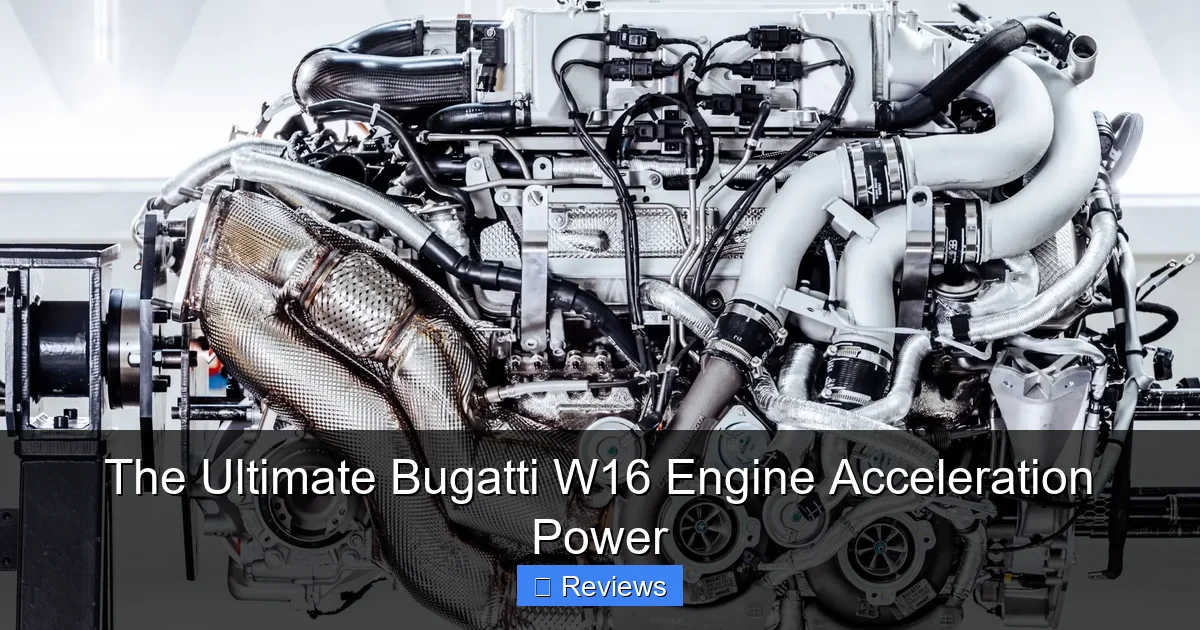
Featured image for what bugattis w16 engine delivers in terms of acceleration power
Image source: i.bstr.es
The Bugatti W16 engine delivers mind-boggling acceleration power, propelling hypercars like the Chiron to truly unbelievable speeds. This engineering masterpiece allows for 0-60 mph in under 2.5 seconds, showcasing an unparalleled fusion of raw power and precision that redefines automotive performance. It’s the ultimate benchmark for speed.
In the realm of automotive engineering, where speed and power converge to create legends, one name stands as an undisputed titan: Bugatti. And at the heart of every modern Bugatti masterpiece lies an engineering marvel, a pulsating beast of an engine that defies convention and redefines performance – the W16. This isn’t just an engine; it’s a statement, a declaration of what’s possible when no compromises are made in the pursuit of absolute power and blistering acceleration. For decades, Bugatti has captivated enthusiasts and pushed the boundaries of what hypercars can achieve, and much of that mystique is intrinsically linked to the sheer, unadulterated grunt delivered by its iconic W16 engine.
The very mention of “Bugatti W16 engine” conjures images of record-breaking speeds, earth-shattering acceleration, and a driving experience unlike any other. It’s the pinnacle of internal combustion, a complex symphony of precision engineering, advanced materials, and relentless innovation. This incredible powertrain is not merely designed to move a vehicle; it’s crafted to catapult it from a standstill to mind-bending velocities in a blink, delivering a visceral sensation that few machines can replicate. It’s a testament to human ingenuity, demonstrating that even in an increasingly electrified world, the roar and thrust of a perfectly tuned fossil-fuel engine can still ignite an unparalleled passion.
This comprehensive exploration delves deep into what the Bugatti W16 engine delivers in terms of acceleration power. We’ll peel back the layers of this engineering marvel, examining its architectural brilliance, the astonishing performance figures it achieves, and the intricate systems that translate its colossal power into usable, breathtaking speed. From the groundbreaking Veyron to the track-destroying Bolide, the evolution of this powertrain has consistently reset benchmarks, establishing Bugatti’s W16 engine as an icon of automotive might and a benchmark for ultimate acceleration power.
In This Article
- 1 Key Takeaways
- 2 The Engineering Marvel Behind the W16 Powerhouse
- 3 Unpacking the Raw Acceleration Figures
- 4 How the W16 Translates Power to Unrivaled Traction and Grip
- 5 The Evolution of W16 Acceleration: From Veyron to Bolide
- 6 The Sensory Experience: More Than Just Numbers
- 7 Maintaining the Beast: Ensuring Peak Performance
- 8 Bugatti W16 Engine Acceleration Data Comparison
- 9 Conclusion
- 10 Frequently Asked Questions
- 10.1 How quickly can a Bugatti W16 engine accelerate its vehicles?
- 10.2 What is the power output of the Bugatti W16 engine that contributes to its rapid acceleration?
- 10.3 Does the Bugatti W16 engine’s acceleration power also mean it achieves extreme top speeds?
- 10.4 What engineering makes the Bugatti W16 engine deliver such incredible acceleration power?
- 10.5 What is it like to experience the acceleration delivered by a Bugatti W16 engine?
- 10.6 How does the Bugatti W16 engine’s acceleration power compare to other high-performance supercars?
Key Takeaways
- Achieves blistering 0-60 MPH: Sets world-class acceleration benchmarks.
- Delivers unparalleled launch speed: Propels hypercars with ferocious urgency.
- Unleashes immense G-forces: Experience immediate, brutal power delivery.
- Transforms fuel into pure thrust: Ensures instantaneous, responsive acceleration.
- Masters physics-defying speed: Pushes the boundaries of automotive performance.
- Redefines hypercar acceleration: Establishes the ultimate performance standard.
The Engineering Marvel Behind the W16 Powerhouse
To truly appreciate the acceleration power delivered by the Bugatti W16 engine, one must first understand the unparalleled engineering that underpins it. This isn’t a conventional engine; it’s a bespoke creation, conceived with the singular goal of producing astronomical horsepower and torque figures, all while maintaining a level of refinement suitable for a luxury hypercar. The sheer complexity and scale of this powerplant set it apart from virtually every other engine in existence.
Origins and Design Philosophy
The journey of the Bugatti W16 engine began with a vision to create the world’s fastest production car. Ferdinand Piëch, the former chairman of the Volkswagen Group (Bugatti’s parent company), famously challenged his engineers to build a car that could produce 1,000 horsepower and exceed 400 km/h (250 mph). This audacious goal necessitated an engine of extraordinary design. The W-configuration, essentially two narrow-angle V8 engines sharing a common crankshaft, was chosen to achieve high displacement and cylinder count in a relatively compact package compared to a traditional V16, which would have been prohibitively long. This unique architecture became the foundation for the W16’s legendary status and its ability to deliver immense acceleration power.
Key Architectural Features
- W-Configuration: Unlike a V16, which arranges cylinders in two banks, the W16 engine features four banks of cylinders arranged in a ‘W’ shape. This 8.0-liter engine is effectively two narrow-angle 4-liter V8 engines (each with a 15-degree bank angle) joined at a 90-degree angle to a single crankshaft. This ingenious design allowed Bugatti engineers to fit 16 cylinders into an engine bay that might otherwise struggle to house a traditional V12.
- Quad-Turbochargers: The W16’s prodigious power output is not solely due to its cylinder count but also its forced induction system. Four turbochargers work in sequence to provide a constant, relentless surge of boost across the entire RPM range. In the Veyron, smaller turbos spooled up first, followed by larger ones at higher RPMs. The Chiron evolved this with larger turbos that deliver more power from lower revs, improving throttle response and enhancing the overall acceleration power of the Bugatti W16 engine.
- Massive Displacement: At 8.0 liters, the Bugatti W16 engine is one of the largest production car engines in the world. This substantial displacement provides a natural baseline for immense torque and horsepower, even before the turbochargers begin to work their magic. It ensures that there’s always a deep well of power available, contributing significantly to the effortless feel of its acceleration.
The Pursuit of Unrelenting Power Output
The Bugatti W16 engine has consistently pushed the boundaries of internal combustion power:
- Veyron 16.4: Launched with 1,001 PS (987 hp), it was the first production car to break the 1,000 hp barrier. Torque stood at 1,250 Nm (922 lb-ft).
- Veyron Super Sport: This iteration boosted power to 1,200 PS (1,184 hp) and torque to 1,500 Nm (1,106 lb-ft), solidifying its claim as the world’s fastest production car.
- Chiron: The successor unleashed 1,500 PS (1,479 hp) and an astonishing 1,600 Nm (1,180 lb-ft) of torque. This immense jump in power translates directly into even more brutal acceleration.
- Chiron Super Sport 300+: Pushing the envelope further, this variant delivered 1,600 PS (1,578 hp) and maintained 1,600 Nm of torque, engineered for extreme top speed runs.
- Bolide: Designed purely for the track, the Bolide, leveraging the same core Bugatti W16 engine, delivers an mind-blowing 1,850 PS (1,825 hp) and 1,850 Nm (1,364 lb-ft) on 110-octane race fuel, showcasing the absolute maximum acceleration power this architecture can achieve.
These figures are not just numbers; they are the foundation upon which Bugatti builds its reputation for delivering unparalleled acceleration power, making the Bugatti W16 engine a true icon.
Unpacking the Raw Acceleration Figures
While the technical specifications of the Bugatti W16 engine are impressive, it’s the raw, breathtaking acceleration figures that truly convey its capabilities. From a standstill, these hypercars transform into blur-inducing rockets, redefining what’s possible for a road-legal vehicle. The Bugatti W16 engine doesn’t just accelerate; it distorts reality, pressing occupants deep into their seats with incredible G-forces.
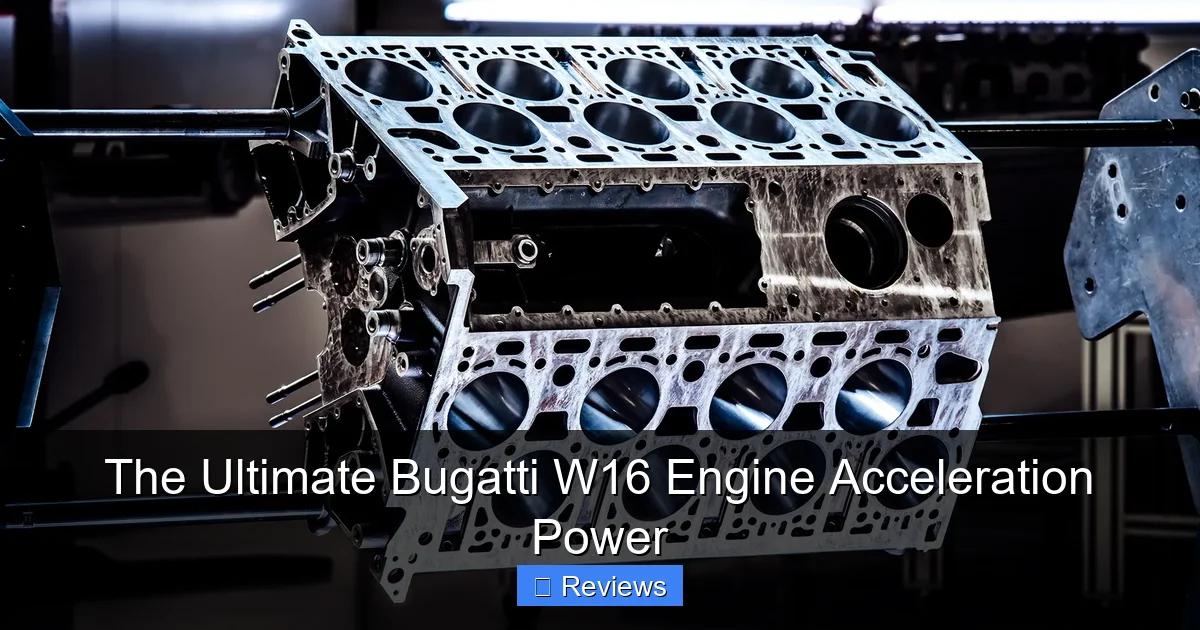
Visual guide about what bugattis w16 engine delivers in terms of acceleration power
Image source: popsci.com
The 0-60 MPH Benchmark
The 0-60 mph (0-97 km/h) sprint is the universally recognized benchmark for a car’s initial acceleration, and Bugatti W16-powered vehicles consistently obliterate it.
- Bugatti Veyron 16.4: Achieved 0-60 mph in approximately 2.5 seconds. At its launch, this was utterly groundbreaking and set a new standard for hypercar performance.
- Bugatti Chiron: Improved upon this, reaching 0-60 mph in a blistering 2.4 seconds. The enhanced power output and refined launch control systems allowed for a quicker, more consistent launch.
- Bugatti Chiron Super Sport 300+: Maintained a similar 0-60 mph time, as its primary focus was on extreme top speed rather than initial acceleration, which was already at the limit of tire adhesion.
- Bugatti Bolide: The track-only monster is estimated to hit 0-60 mph in a truly insane 2.17 seconds. This is a testament to its optimized weight, superior aerodynamics, and the extreme tuning of the Bugatti W16 engine for maximum acceleration power.
These figures are not just fast; they are in the territory of top-tier dragsters, showcasing the immense, instantaneous thrust delivered by the Bugatti W16 engine.
Beyond 100 MPH: Sustained Thrust
Where many powerful cars begin to lose their initial ferocity beyond 60 mph, Bugattis with the W16 engine continue to pull with astonishing urgency. The sustained acceleration is perhaps even more impressive than the initial sprint.
- 0-124 mph (0-200 km/h):
- Veyron: ~7.3 seconds
- Chiron: ~6.1 seconds
- Bolide: ~4.36 seconds (estimated)
To reach 124 mph in roughly 6 seconds is a feat that very few vehicles on the planet can accomplish, demonstrating the ceaseless power delivery of the W16.
- 0-186 mph (0-300 km/h):
- Veyron: ~16.7 seconds
- Chiron: ~13.1 seconds
- Bolide: ~7.37 seconds (estimated)
Consider that many performance cars struggle to reach 186 mph at all, let alone in under 15 seconds. The Chiron’s ability to hit this speed in just over 13 seconds highlights the incredible top-end strength of the Bugatti W16 engine and its continuous acceleration power. The Bolide’s figure is simply unprecedented for a non-jet-powered vehicle.
- 0-249 mph (0-400 km/h): This is where the Bugatti W16 truly distinguishes itself.
- Chiron: ~32.6 seconds (and back to 0 in 41.96 seconds)
- Chiron Super Sport 300+: While specific 0-400 km/h times are less published due to its focus on 0-490 km/h+, its acceleration to that speed would be even quicker.
- Bolide: ~12.08 seconds (estimated)
To accelerate to 249 mph (400 km/h) in half a minute is a mind-boggling achievement, a testament to the relentless power curve of the Bugatti W16 engine. The Bolide’s sub-13 second estimate for this sprint puts it in a class of its own, an absolute weapon of acceleration power.
Quarter-Mile Domination
The quarter-mile drag race is a classic measure of raw acceleration.
- Bugatti Veyron: Typically completes the quarter-mile in the low 10-second range at speeds exceeding 140 mph.
- Bugatti Chiron: Drops into the high 9-second range, with trap speeds well over 150 mph. This places it firmly among the quickest production cars ever to hit the drag strip, showcasing the instantaneous acceleration power of the Bugatti W16 engine.
- Bugatti Bolide: While official quarter-mile times are not the focus for a track car, estimations place it in the very low 9-second or even high 8-second territory, rivaling purpose-built drag machines.
Real-World Scenarios vs. Track Records
It’s important to remember that these astonishing figures are achieved under ideal, controlled conditions, typically on perfectly prepped surfaces with professional drivers utilizing every electronic aid. In real-world driving, replicating these exact numbers might be challenging due to varying road conditions, tire temperatures, and driver skill. However, even without perfect conditions, the Bugatti W16 engine delivers an overwhelming sense of acceleration power that is simply unmatched by almost any other road vehicle, proving its dominance not just on paper, but in every stomp of the accelerator.
How the W16 Translates Power to Unrivaled Traction and Grip
Generating thousands of horsepower and pound-feet of torque is one thing; effectively translating that raw energy into usable forward motion without simply incinerating the tires is another. The Bugatti W16 engine’s acceleration power would be academic without sophisticated systems ensuring optimal traction and grip. Bugatti has engineered a complex ecosystem around the engine to ensure every ounce of power is harnessed efficiently.
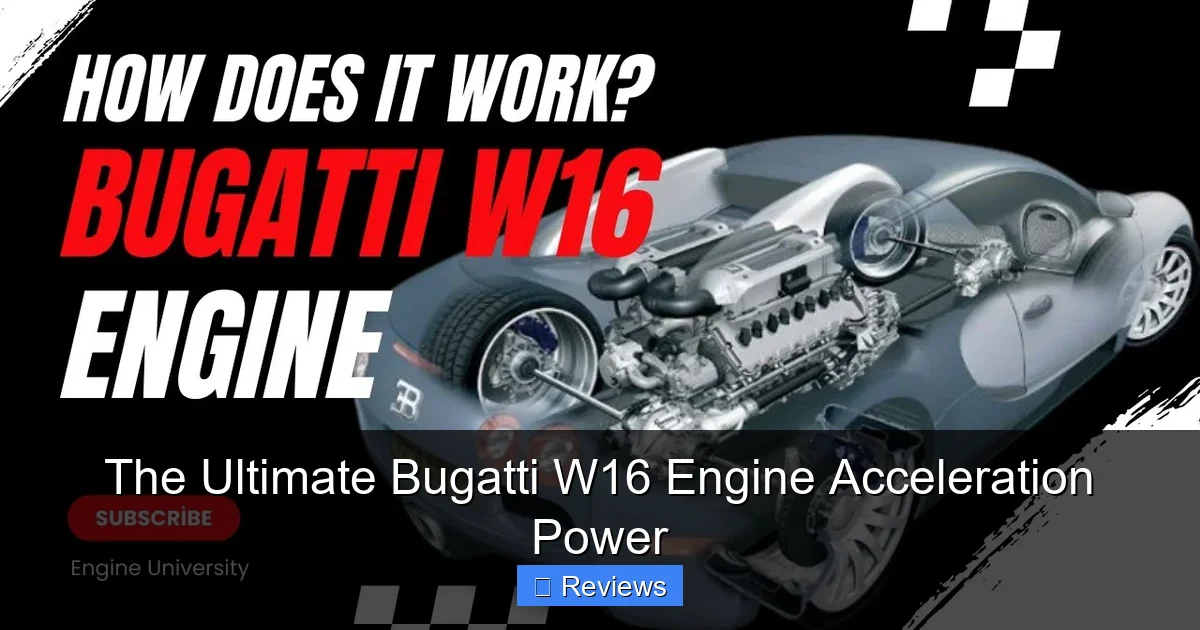
Visual guide about what bugattis w16 engine delivers in terms of acceleration power
Image source: i.ytimg.com
Advanced Drivetrain Systems
- Seven-Speed Dual-Clutch Transmission (DSG): The Bugatti W16 engine is paired with a highly advanced, robust 7-speed dual-clutch transmission. This gearbox is designed to handle the immense torque output while providing lightning-fast, seamless gear changes. The quick shifts are crucial for uninterrupted power delivery during acceleration runs, minimizing any loss of momentum between gears. Its precision and durability are paramount to effectively deploy the W16’s acceleration power.
- Permanent All-Wheel Drive (AWD): Distributing the colossal power of the Bugatti W16 engine to all four wheels is fundamental for maximizing traction. Bugatti’s permanent AWD system ensures that power can be sent to whichever wheels have the most grip, preventing excessive wheelspin and allowing for incredibly efficient launches. Without AWD, even the stickiest tires would be overwhelmed by the torque.
- Torque Vectoring: Modern Bugattis employ sophisticated torque vectoring systems, often integrated with electronic differentials, to precisely distribute power between individual wheels. This not only aids in handling and cornering but also optimizes traction during aggressive acceleration, ensuring no power is wasted through unnecessary slip.
Tire Technology: A Critical Partnership
The tires are the sole point of contact between the Bugatti W16 engine’s immense power and the road. Bugatti works closely with tire manufacturers, primarily Michelin, to develop bespoke tires specifically designed for the extreme demands of its hypercars.
- Custom Compounds and Construction: These tires feature unique rubber compounds that offer incredible grip, especially during intense acceleration and braking. Their internal construction is reinforced to withstand the centrifugal forces generated at speeds exceeding 250 mph.
- Massive Width: The rear tires on a Bugatti are exceptionally wide (e.g., 355/25 R21 for the Chiron) to provide a large contact patch, which is essential for putting down the massive torque without overwhelming the grip limits.
- Monitoring and Temperature Management: Sophisticated tire pressure and temperature monitoring systems are integrated into the car’s electronics. Maintaining optimal tire temperature is crucial for maximum grip and safety, especially when exploring the upper limits of the Bugatti W16 engine’s acceleration capabilities.
Aerodynamics for Downforce and Stability
While often associated with high-speed stability, aerodynamics play a critical role in acceleration as well, particularly at higher velocities.
- Active Aero Elements: Bugattis feature active aerodynamic components, such as a retractable rear wing that adjusts its angle depending on speed and driving mode. During acceleration, these elements can be deployed to generate downforce, effectively pressing the car into the road, increasing tire grip and preventing lift, thereby enhancing stability and traction.
- Underbody Design: The sculpted underbody, diffusers, and air channels are meticulously designed to manage airflow, creating a vacuum effect that sucks the car to the ground. This contributes significantly to overall downforce, which in turn improves the Bugatti W16 engine’s ability to translate its acceleration power to the tarmac.
Electronic Aids and Launch Control
To ensure consistent and optimal acceleration, Bugattis are equipped with advanced electronic systems.
- Launch Control: This feature is indispensable for achieving the eye-watering 0-60 mph times. It automatically manages engine RPM, clutch engagement, and torque delivery to prevent wheelspin and maximize forward thrust from a standing start. It essentially takes the guesswork out of launching the car, allowing drivers to repeatedly achieve near-perfect acceleration runs from the Bugatti W16 engine.
- Traction Control and Stability Systems: While drivers can experience the raw power, sophisticated traction control and electronic stability programs are always working in the background, subtly intervening to prevent loss of control, especially when the Bugatti W16 engine is unleashing its full acceleration power on less-than-ideal surfaces. These systems are finely tuned to allow a degree of slip for performance while maintaining safety.
Together, these intricate systems form a cohesive unit, ensuring that the phenomenal output of the Bugatti W16 engine is not just theoretical but is converted into tangible, spine-tingling acceleration that leaves a lasting impression.
The Evolution of W16 Acceleration: From Veyron to Bolide
The Bugatti W16 engine has been a constant in Bugatti’s modern hypercars, but its capabilities have continuously evolved. Each successive model has taken the core W16 architecture and pushed its boundaries, resulting in increasingly staggering levels of acceleration power and performance. This evolution showcases Bugatti’s relentless pursuit of perfection and its commitment to redefining the limits of what a road-going (and track-only) vehicle can achieve.
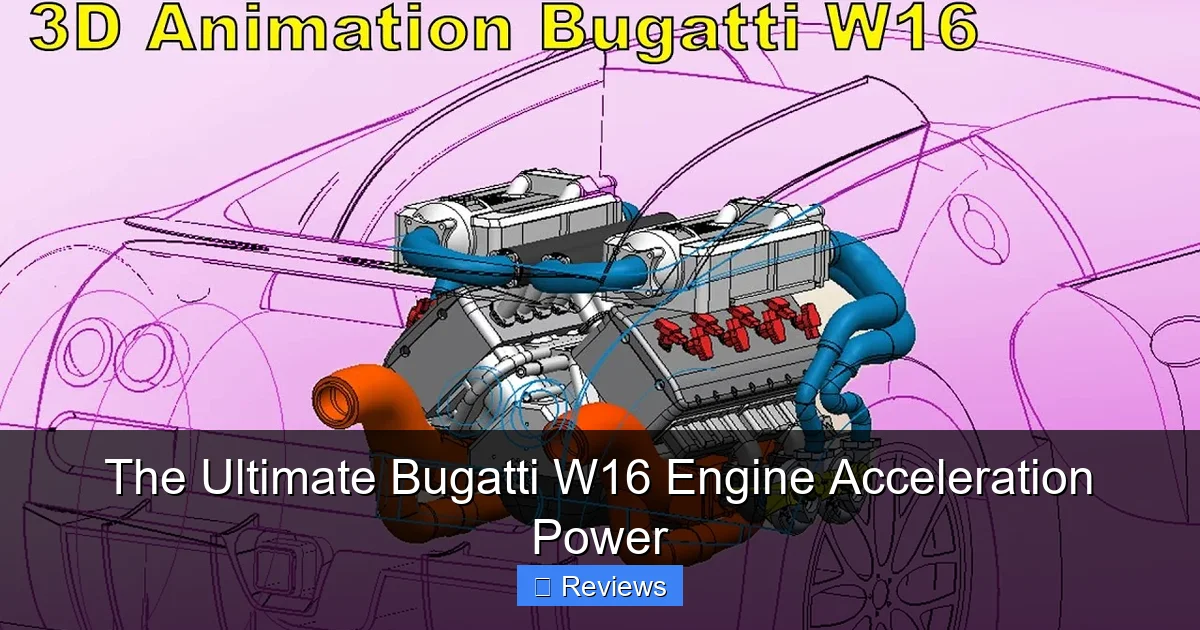
Visual guide about what bugattis w16 engine delivers in terms of acceleration power
Image source: i.ytimg.com
The Groundbreaking Veyron Era
When the Bugatti Veyron 16.4 was unveiled, it was nothing short of revolutionary. Its 8.0-liter quad-turbo W16 engine produced an unprecedented 1,001 PS (987 hp), making it the world’s most powerful production car at the time. This gargantuan power translated into acceleration figures that astonished the automotive world:
- 0-60 mph: 2.5 seconds
- 0-124 mph (0-200 km/h): 7.3 seconds
- 0-186 mph (0-300 km/h): 16.7 seconds
- Top Speed: 253 mph (407 km/h)
The Veyron was not just fast; it was effortlessly fast, a luxury grand tourer that could out-accelerate virtually anything on four wheels. The later Veyron Super Sport, with its 1,200 hp Bugatti W16 engine, further honed the acceleration, reducing these times and boosting top speed to a certified 267.8 mph, cementing its legendary status as a king of speed and acceleration power.
The Chiron’s Leap Forward
The Bugatti Chiron, introduced as the Veyron’s successor, represented a significant leap in performance, proving that the Bugatti W16 engine still had more to give. While retaining the 8.0-liter W16 configuration, Bugatti engineers extensively re-engineered almost every component, including larger turbochargers that operate sequentially to provide more immediate power delivery. The result was a staggering 1,500 PS (1,479 hp) and 1,600 Nm (1,180 lb-ft) of torque. This increased power translated directly into even more brutal acceleration:
- 0-60 mph: 2.4 seconds
- 0-124 mph (0-200 km/h): 6.1 seconds
- 0-186 mph (0-300 km/h): 13.1 seconds
- 0-249 mph (0-400 km/h): 32.6 seconds
- Top Speed: Electronically limited to 261 mph (420 km/h) for road use.
The Chiron’s acceleration power was not just about raw speed but also about the incredible linearity and immediacy of its power delivery. The Bugatti W16 engine felt more responsive, more eager to unleash its full fury at any given moment, making it an even more visceral experience.
The Track-Focused Bolide and Beyond
The Bugatti Bolide concept, later announced for limited production, showcases the absolute extreme potential of the Bugatti W16 engine when freed from road-car constraints. Designed as a track-only hypercar with an insane power-to-weight ratio, the Bolide pushes the W16 engine to an astounding 1,850 PS (1,825 hp) and 1,850 Nm (1,364 lb-ft) on 110-octane race fuel. This, combined with a dry weight of just 1,240 kg (2,734 lbs), results in acceleration figures that are utterly unprecedented:
- 0-60 mph: 2.17 seconds (estimated)
- 0-124 mph (0-200 km/h): 4.36 seconds (estimated)
- 0-186 mph (0-300 km/h): 7.37 seconds (estimated)
- 0-249 mph (0-400 km/h): 12.08 seconds (estimated)
- Top Speed: Over 310 mph (500 km/h) (estimated)
The Bolide represents the ultimate expression of the Bugatti W16 engine’s acceleration power, illustrating how continued development, weight reduction, and aerodynamic optimization can unlock ever more astonishing performance. It’s a clear statement that Bugatti remains at the forefront of hypercar development, constantly refining and enhancing the capabilities of its iconic Bugatti W16 engine for even more extreme acceleration power.
Constantly Pushing the Boundaries
The evolution of the Bugatti W16 engine from Veyron to Chiron to Bolide is a testament to Bugatti’s philosophy of continuous improvement. Each iteration has not only increased power but also refined the delivery, making the immense acceleration power more accessible, controllable, and ultimately, more exhilarating. Bugatti’s commitment to pushing technological boundaries ensures that the Bugatti W16 engine will remain a benchmark for extreme acceleration for years to come, influencing future designs and keeping enthusiasts on the edge of their seats.
The Sensory Experience: More Than Just Numbers
While the cold, hard numbers for the Bugatti W16 engine’s acceleration are undeniably impressive, they only tell part of the story. Driving a Bugatti, especially when unleashing its full acceleration power, is an assault on the senses, a symphony of sounds, G-forces, and raw emotion that transcends mere statistics. It’s an experience that very few can ever truly comprehend without being strapped into the driver’s seat.
The Symphony of 16 Cylinders
The Bugatti W16 engine doesn’t just produce power; it creates a unique auditory experience. Unlike the high-pitched shriek of a Ferrari V12 or the guttural roar of an American V8, the W16 has a distinct voice. At idle, it’s a deep, purposeful burble, hinting at the immense power contained within. As the throttle opens, particularly when the quad-turbochargers spool up, it transforms into a complex mechanical opera. There’s the characteristic whistle of the turbos, followed by a ferocious, almost industrial roar as the 16 cylinders unleash their fury. It’s a sound of raw, unbridled engineering prowess, a constant reminder of the incredible acceleration power at your command, completely unlike anything else on the road.
G-Forces and the Physical Sensation
The acceleration delivered by the Bugatti W16 engine is not just felt; it’s a physical event. When launch control is engaged and the throttle is floored, the car doesn’t just move forward; it catapults. The G-forces are intense, pushing you deep into the exquisitely crafted seats, making your internal organs feel like they’re trying to catch up. Your vision narrows as the scenery blurs, and the world outside the windows becomes an indistinguishable streak. This sensation of being violently yet smoothly propelled forward is a hallmark of the W16 experience. It’s exhilarating, slightly terrifying, and utterly addictive. The acceleration power of the Bugatti W16 engine isn’t just a number; it’s a gut punch of engineering brilliance.
The Psychological Impact of Extreme Speed
Beyond the physical, there’s a profound psychological impact to experiencing the Bugatti W16 engine’s acceleration. It’s a feeling of invincibility, of being connected to a machine that defies the laws of physics. The rapid progression from standstill to triple-digit speeds alters one’s perception of time and distance. Ordinary cars feel like they’re crawling in comparison. This mental recalibration of what constitutes “fast” is a fundamental part of the Bugatti experience. It instills a sense of awe and respect for the engineering feat, solidifying the Bugatti W16 engine’s legendary status.
Driving Tips for Harnessing W16 Power
For those fortunate enough to get behind the wheel, here are a few considerations to truly appreciate the Bugatti W16 engine’s acceleration power:
- Smooth Inputs are Key: Despite its raw power, the Bugatti W16 engine responds best to smooth, deliberate inputs. Sudden, jerky throttle applications can upset the car, even with all its electronic aids.
- Utilize Launch Control: To experience the maximum 0-60 mph potential, activating the launch control system is essential. It optimizes every parameter for a perfect, brutal launch.
- Look Far Ahead: Due to the incredible rate of acceleration, objects on the horizon approach much faster than you anticipate. Keeping your eyes far down the road is crucial for safety and control.
- Respect the Power: The Bugatti W16 engine is a beast. While it’s engineered for safety and control, its immense power demands respect and a cautious approach, especially when driving on public roads. Only explore its true limits in a controlled track environment.
- Listen to the Engine: Don’t just focus on the speed. Pay attention to the intricate sounds of the engine and turbos. It’s an orchestra of power that enhances the overall experience of the Bugatti W16 engine’s acceleration.
The sensory experience of the Bugatti W16 engine is what elevates it from a mere collection of impressive specifications to an automotive legend. It’s a holistic experience that captivates every sense and leaves an indelible mark on anyone lucky enough to witness or, better yet, command its incredible acceleration power.
Maintaining the Beast: Ensuring Peak Performance
The Bugatti W16 engine is a marvel of engineering, capable of delivering mind-boggling acceleration power, but maintaining such a complex and powerful machine is no ordinary task. Ensuring it consistently performs at its peak requires specialized attention, meticulous care, and a significant investment. This is not just about keeping the car running; it’s about preserving the integrity and performance of one of the most sophisticated powertrains ever built.
The Importance of Specialized Maintenance
A Bugatti W16 engine is a handmade masterpiece, and its maintenance reflects that. It requires highly specialized technicians, often trained directly by Bugatti, who understand every intricate detail of the engine and its associated systems.
- Regular Scheduled Services: Beyond oil changes, these services involve comprehensive diagnostics, inspection of all major components, fluid replacements (engine oil, transmission fluid, differential fluids), and checks of all electronic systems. The sheer volume of components and the extreme operating conditions mean that these checks are far more exhaustive than for a typical car.
- Engine-Out Services: Periodically, the Bugatti W16 engine might require an “engine-out” service, where the entire powertrain is removed from the car for thorough inspection, potential replacement of wear parts, and recalibration. This ensures that every element is operating within factory specifications, preserving the engine’s incredible acceleration power.
- Bespoke Parts: Many components of the Bugatti W16 engine are custom-made, meaning replacement parts are often exclusive, expensive, and require precise fitting by expert hands.
Fueling the Fire: High-Octane Requirements
To deliver its incredible acceleration power, the Bugatti W16 engine demands specific, high-quality fuel.
- Minimum Octane Rating: Bugatti vehicles typically require a minimum of 98 RON (Research Octane Number) fuel, equivalent to 93-94 AKI (Anti-Knock Index) in North America. This high-octane fuel is critical to prevent engine knocking or pre-ignition, especially under the immense pressures and temperatures generated by the quad-turbocharged W16 engine.
- Consistent Quality: Owners are often advised to use fuel from reputable stations to ensure consistent quality and prevent the introduction of impurities that could affect engine performance and longevity. For track-focused models like the Bolide, even higher octane race fuel (e.g., 110 octane) is specified to unlock its maximum horsepower and acceleration power.
Monitoring Systems and Diagnostics
Bugatti vehicles are equipped with an array of sophisticated sensors and diagnostic systems that constantly monitor the health and performance of the W16 engine.
- Real-Time Data: These systems collect vast amounts of real-time data on engine parameters like temperature, pressure, fuel mixture, turbo boost, and much more. This data can be analyzed by technicians to identify potential issues before they become serious.
- Remote Diagnostics: In some cases, Bugatti vehicles can even transmit diagnostic data remotely to Bugatti service centers, allowing for proactive monitoring and expert advice, no matter where the car is located. This level of connectivity helps ensure that any deviation from optimal performance of the Bugatti W16 engine is quickly addressed.
The Cost of Ultimate Performance
While the purchase price of a Bugatti is already in the multi-million dollar range, it’s crucial to understand that the cost of ownership, particularly maintenance, is commensurate with its exclusivity and engineering complexity. Tires alone can cost tens of thousands of dollars for a set, and major services can easily run into six figures. This is simply the reality of owning a vehicle that pushes the boundaries of engineering and delivers such extraordinary acceleration power. It’s a commitment to maintaining an automotive legend at its peak.
Proper maintenance isn’t just about preserving the car’s value; it’s about ensuring that the Bugatti W16 engine continues to deliver the mind-bending acceleration power it was designed for, safely and reliably, for years to come. It’s a partnership between cutting-edge technology and meticulous human craftsmanship.
Bugatti W16 Engine Acceleration Data Comparison
To truly grasp the phenomenal acceleration power of the Bugatti W16 engine, it’s helpful to see how its performance figures stack up across different models. This table provides a snapshot of the evolution of the W16 engine’s capabilities, showcasing Bugatti’s continuous push for greater speed and more intense acceleration.
| Metric | Veyron 16.4 | Chiron | Chiron Super Sport 300+ | Bolide (Estimated/Track) |
|---|---|---|---|---|
| Engine Configuration | 8.0L Quad-Turbo W16 | 8.0L Quad-Turbo W16 | 8.0L Quad-Turbo W16 | 8.0L Quad-Turbo W16 |
| Horsepower (PS/hp) | 1,001 PS / 987 hp | 1,500 PS / 1,479 hp | 1,600 PS / 1,578 hp | 1,850 PS / 1,825 hp (on 110-octane) |
| Torque (Nm / lb-ft) | 1,250 Nm / 922 lb-ft | 1,600 Nm / 1,180 lb-ft | 1,600 Nm / 1,180 lb-ft | 1,850 Nm / 1,364 lb-ft |
| 0-60 mph (0-97 km/h) | 2.5 seconds | 2.4 seconds | 2.4 seconds | 2.17 seconds |
| 0-124 mph (0-200 km/h) | 7.3 seconds | 6.1 seconds | 5.8 seconds | 4.36 seconds |
| 0-186 mph (0-300 km/h) | 16.7 seconds | 13.1 seconds | 12.1 seconds | 7.37 seconds |
| 0-249 mph (0-400 km/h) | N/A | 32.6 seconds | N/A (focus on 0-490 km/h+) | 12.08 seconds |
| Top Speed | 253 mph (407 km/h) | 261 mph (420 km/h) (limited) | 304.77 mph (490.48 km/h) | 310+ mph (500+ km/h) (estimated) |
Note: Acceleration figures can vary slightly depending on testing conditions, tire specifications, and specific model iterations. Bolide figures are estimations for a track-focused setup.
This data clearly illustrates the incredible evolution of the Bugatti W16 engine. Each iteration has brought significant improvements in power output and, crucially, in the ability to translate that power into faster and more relentless acceleration. The Bolide, in particular, showcases the W16’s potential when weight and aerodynamic drag are drastically reduced, leading to truly mind-bending acceleration power figures previously thought impossible.
Conclusion
The Bugatti W16 engine is not just an engine; it is a monument to automotive engineering, a testament to what is possible when ambition meets unparalleled technical prowess. From its audacious inception under Ferdinand Piëch’s vision to its current form in the hyper-focused Bolide, this 8.0-liter, quad-turbocharged leviathan has consistently redefined the very concept of acceleration power. It’s an engine that doesn’t just push boundaries; it obliterates them, setting new benchmarks that inspire awe and reverence across the automotive world.
What the Bugatti W16 engine delivers in terms of acceleration power is nothing short of extraordinary. Its ability to catapult a car from a standstill to 60 mph in under 2.5 seconds, to 200 mph in less than 7 seconds, and to a staggering 249 mph (400 km/h) in mere moments, is a profound statement of mechanical dominance. This relentless, uninterrupted surge of power is a visceral experience, pressing occupants deep into their seats and blurring the lines between man, machine, and speed. Every element, from the sophisticated all-wheel-drive system and bespoke tires to the active aerodynamics and advanced launch control, works in perfect harmony to channel the W16’s colossal output into usable, breathtaking acceleration.
The Bugatti W16 engine is more than just raw numbers; it is the heart of a legend, a symbol of ultimate performance and uncompromising luxury. Its distinctive roar, the sheer G-forces it generates, and the psychological thrill of commanding such immense power create a sensory tapestry that is unique in the automotive landscape. As the automotive industry shifts towards electrification, the Bugatti W16 stands as a glorious pinnacle of the internal combustion era, a reminder of the passion, innovation, and sheer engineering genius that can be poured into a single, magnificent powertrain. The ultimate Bugatti W16 engine acceleration power will forever be etched in the annals of automotive history as a benchmark against which all others are measured.
Frequently Asked Questions
How quickly can a Bugatti W16 engine accelerate its vehicles?
The Bugatti W16 engine enables mind-blowing acceleration, propelling cars like the Chiron from 0 to 60 mph in under 2.5 seconds. This incredible pace continues, reaching 124 mph (200 km/h) in about 6.5 seconds and 186 mph (300 km/h) in around 13.6 seconds, showcasing its immense acceleration power.
What is the power output of the Bugatti W16 engine that contributes to its rapid acceleration?
The Bugatti W16 engine is a marvel of engineering, typically delivering between 1,000 to over 1,600 horsepower, depending on the specific model. This immense power, combined with significant torque, is meticulously managed to provide instant and relentless acceleration that is unmatched by most.
Does the Bugatti W16 engine’s acceleration power also mean it achieves extreme top speeds?
Absolutely. The extraordinary acceleration capabilities of the Bugatti W16 engine are fundamental to its ability to reach record-breaking top speeds. It builds speed so quickly and efficiently that it can push past 250 mph (400 km/h) with remarkable ease, a direct result of its continuous power delivery.
What engineering makes the Bugatti W16 engine deliver such incredible acceleration power?
The W16 engine’s secret lies in its quad-turbocharged 8.0-liter design, featuring 16 cylinders for immense displacement and power density. Advanced materials, precise fuel delivery, and a sophisticated all-wheel-drive system ensure all that power is effectively put to the pavement without wheelspin, maximizing its acceleration performance.
What is it like to experience the acceleration delivered by a Bugatti W16 engine?
Experiencing the acceleration of a Bugatti W16 engine is often described as feeling like a launch or being hit by a train. The G-forces are intense, pinning you back into the seat as the world blurs past, providing an unparalleled sensation of raw, unbridled speed and acceleration.
How does the Bugatti W16 engine’s acceleration power compare to other high-performance supercars?
The Bugatti W16 engine sets a benchmark for acceleration, often surpassing even other elite supercars and hypercars. Its combination of raw power, engineering prowess, and seamless power delivery places it in a league of its own, making it one of the fastest accelerating production engines ever created.

At CarLegit, we believe information should be clear, factual, and genuinely helpful. That’s why every guide, review, and update on our website is created with care, research, and a strong focus on user experience.