
Bentley and Rolls Royce are not the same company, despite their shared British heritage and luxury status. While they were once closely linked and even merged in the early 20th century, they are now owned by different multinational corporations—Bentley by Volkswagen and Rolls Royce by BMW.
In This Article
- 1 Key Takeaways
- 2 📑 Table of Contents
- 3 Are Bentley and Rolls Royce the Same Company?
- 4 A Brief History of Bentley and Rolls Royce
- 5 Ownership Changes and the Split
- 6 Current Ownership and Corporate Structures
- 7 Brand Identities: Performance vs. Luxury
- 8 Manufacturing and Production Differences
- 9 Model Lineups and Product Offerings
- 10 Market Position and Global Presence
- 11 Conclusion: Two Icons, One Legacy
- 12 Frequently Asked Questions
Key Takeaways
- Different Ownership: Bentley is owned by Volkswagen Group, while Rolls Royce Motor Cars is owned by BMW.
- Shared History: The two brands were under the same ownership from 1931 to 1998, creating confusion about their relationship.
- Distinct Brand Identities: Bentley emphasizes performance and driving dynamics, while Rolls Royce focuses on ultra-luxury and comfort.
- Manufacturing Locations: Bentley vehicles are made in Crewe, England, and now in Germany; Rolls Royce cars are built in Goodwood, England.
- Target Markets: Bentley appeals to younger, performance-oriented buyers; Rolls Royce targets ultra-high-net-worth individuals seeking exclusivity.
- Model Lineups Differ: Bentley offers sportier models like the Continental GT; Rolls Royce produces grand tourers like the Phantom and Ghost.
- Licensing Agreements: BMW holds the rights to the Rolls Royce name and logo, while Volkswagen owns Bentley outright.
📑 Table of Contents
- Are Bentley and Rolls Royce the Same Company?
- A Brief History of Bentley and Rolls Royce
- Ownership Changes and the Split
- Current Ownership and Corporate Structures
- Brand Identities: Performance vs. Luxury
- Manufacturing and Production Differences
- Model Lineups and Product Offerings
- Market Position and Global Presence
- Conclusion: Two Icons, One Legacy
Are Bentley and Rolls Royce the Same Company?
If you’ve ever admired a sleek, powerful luxury car gliding down a country road or turning heads in a city center, chances are you were looking at either a Bentley or a Rolls Royce. Both brands evoke images of wealth, craftsmanship, and timeless elegance. But despite their similar reputations and British roots, many people wonder: Are Bentley and Rolls Royce the same company?
The short answer is no—they are not the same company. However, their intertwined histories, shared heritage, and overlapping timelines have led to widespread confusion. To truly understand the relationship between these two iconic automakers, we need to dive into their origins, ownership changes, brand philosophies, and current market positions.
This guide will walk you through everything you need to know about Bentley and Rolls Royce—from their early days as rivals to their modern-day identities as separate luxury powerhouses. Whether you’re a car enthusiast, a potential buyer, or just curious about high-end automotive history, this article will clarify the myths and facts behind these legendary brands.
A Brief History of Bentley and Rolls Royce
Visual guide about Are Bentley and Rolls Royce the Same Company
Image source: millermotorcars.com
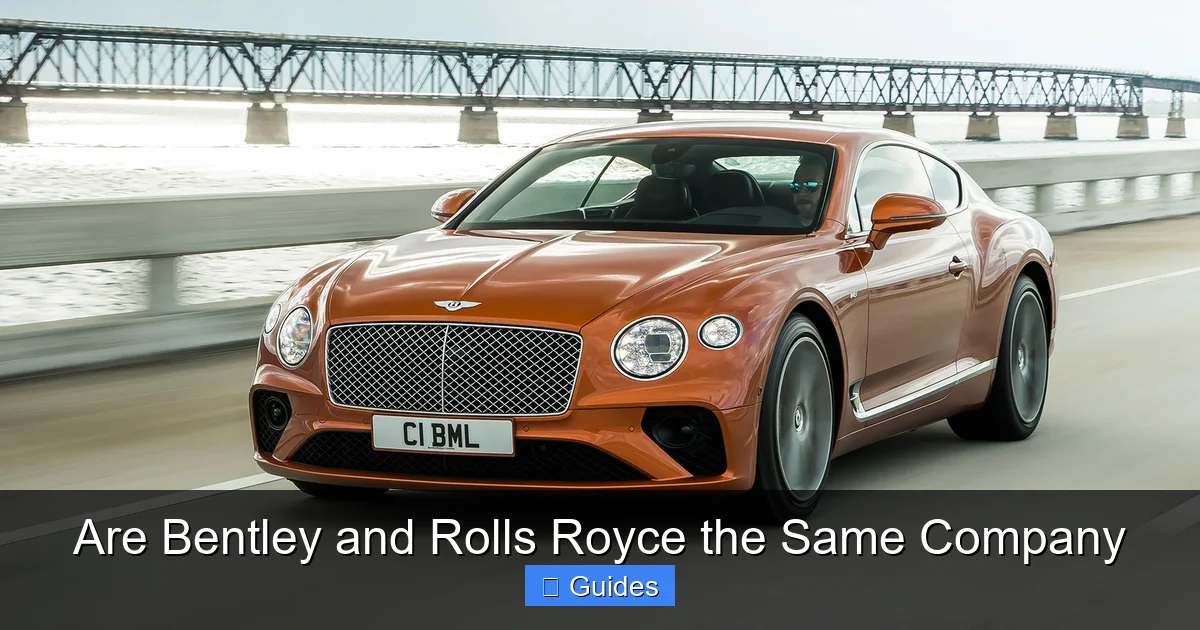
To understand why people often confuse Bentley and Rolls Royce, it helps to look back at where they came from. Both companies were founded in the early 20th century in Britain, during a golden age of automotive innovation and craftsmanship.
Bentley Motors was established in 1919 by W.O. Bentley, an engineer with a passion for performance and engineering excellence. The brand quickly gained fame for its racing successes, especially at the 24 Hours of Le Mans, where Bentley won five times between 1924 and 1930. These victories cemented Bentley’s reputation as a builder of fast, durable, and driver-focused vehicles.
Meanwhile, Rolls Royce was founded in 1906 by Charles Rolls and Henry Royce. The partnership combined Rolls’s salesmanship and vision with Royce’s engineering genius. Their first car, the Rolls Royce 10 hp, set the tone for the brand: quiet, smooth, and built with meticulous attention to detail. The company’s motto, “Strive for perfection in everything you do,” became a hallmark of its identity.
For the first few decades, Bentley and Rolls Royce operated as competitors. Bentley was known for speed and agility, while Rolls Royce was synonymous with refinement and luxury. But the Great Depression and changing market conditions would soon bring these two giants together.
The Merger: When Bentley Joined Rolls Royce
In 1931, Bentley Motors faced financial difficulties and was acquired by Rolls Royce. This merger marked the beginning of a long period during which the two brands operated under the same corporate umbrella. For nearly seven decades, Bentley existed as a subsidiary of Rolls Royce, producing cars that shared platforms, engines, and design philosophies.
During this time, Bentley models often used Rolls Royce chassis and powertrains but were marketed as more driver-oriented alternatives. For example, the Bentley T-Series of the 1960s was essentially a sportier version of the Rolls Royce Silver Shadow. This close relationship led many to believe the brands were one and the same.
The merger also influenced branding and marketing. Both companies emphasized handcrafted interiors, bespoke customization, and exclusivity. However, subtle differences remained: Bentley leaned slightly toward performance, while Rolls Royce prioritized comfort and silence.
Ownership Changes and the Split
Visual guide about Are Bentley and Rolls Royce the Same Company
Image source: wallpaperaccess.com
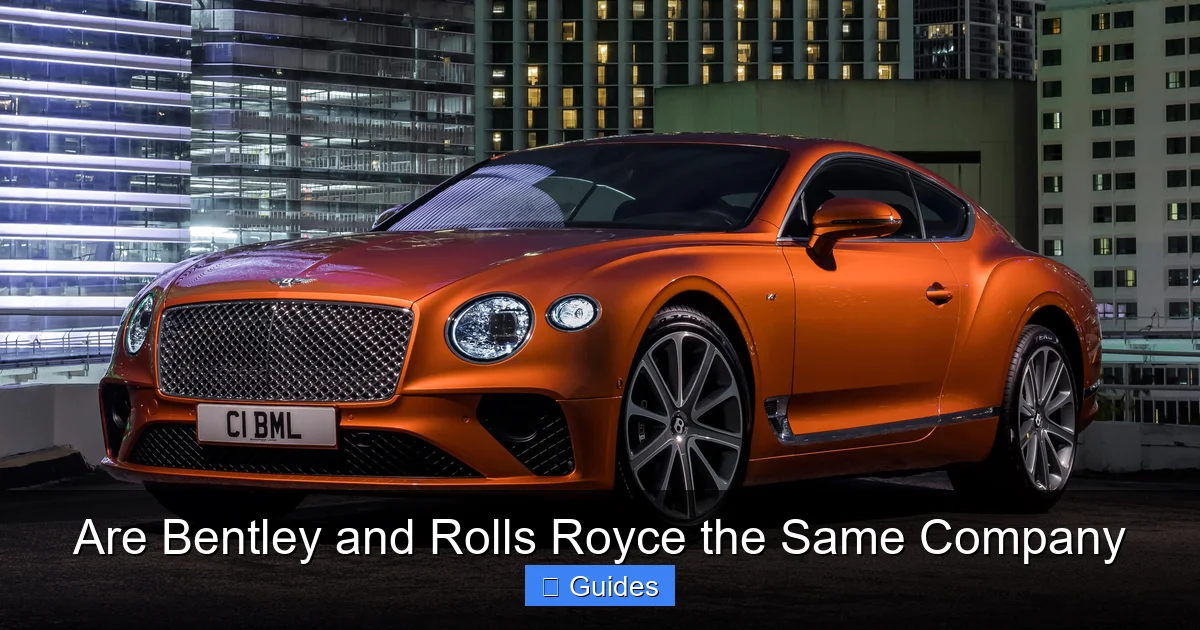
The real turning point came in the late 1990s. In 1998, Rolls Royce Motors was put up for sale by its parent company, Vickers plc. Two major automotive groups—BMW and Volkswagen—were interested in acquiring the brand.
Volkswagen ultimately won the bidding war and acquired Rolls Royce Motors in 1998. However, there was a catch: BMW had already secured a licensing agreement for the Rolls Royce name and logo in 1994, due to a prior partnership with Rolls Royce plc (the aerospace engine manufacturer, which was a separate entity).
This created a complex legal and branding dilemma. Volkswagen owned the car manufacturing assets, including the factory in Crewe and the rights to the Bentley brand, but BMW held the rights to the Rolls Royce name, logo, and Spirit of Ecstasy mascot.
After months of negotiations, a compromise was reached in 1999. Volkswagen would keep the Crewe factory and continue producing cars under the Bentley name. BMW would take ownership of the Rolls Royce brand and build a new factory in Goodwood, England, to manufacture Rolls Royce vehicles starting in 2003.
This split marked the official separation of Bentley and Rolls Royce as independent brands under different ownership. From that point on, they would develop distinct identities, strategies, and product lines.
Current Ownership and Corporate Structures
Visual guide about Are Bentley and Rolls Royce the Same Company
Image source: wallpapercat.com
Today, Bentley and Rolls Royce operate as separate entities with clear ownership structures.
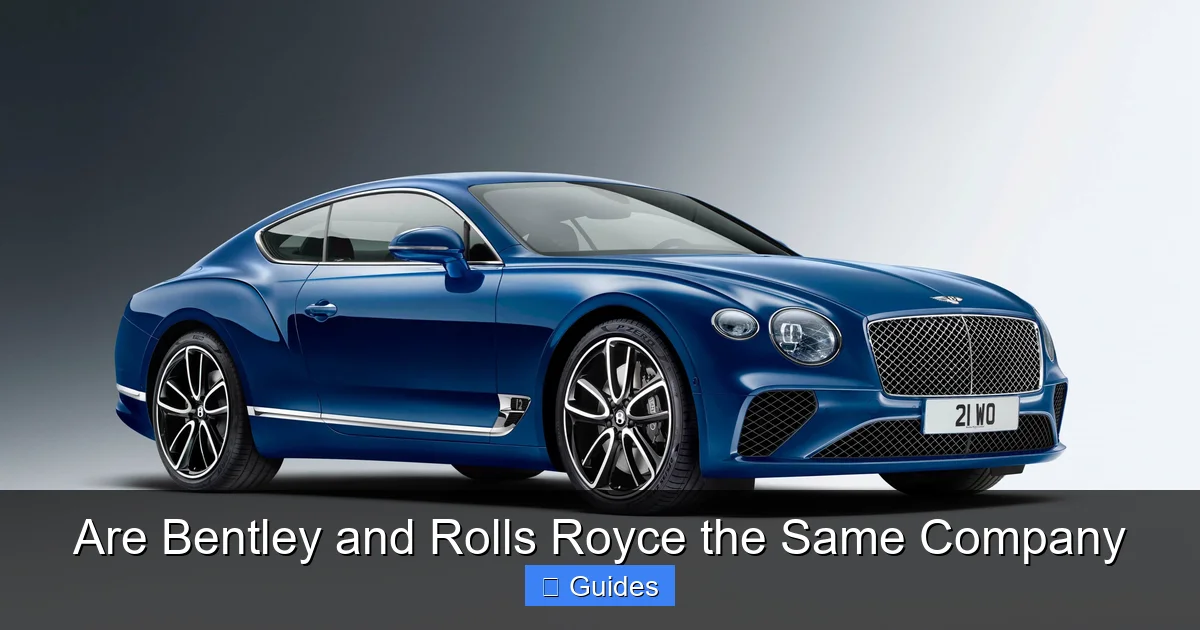
Bentley Motors is a wholly-owned subsidiary of the Volkswagen Group, one of the world’s largest automotive manufacturers. Volkswagen acquired Bentley in 1998 and has since invested heavily in modernizing its production facilities, expanding its model lineup, and pushing into new markets like SUVs and electric vehicles.
Rolls Royce Motor Cars, on the other hand, is owned by BMW. Since 2003, all Rolls Royce vehicles have been designed, engineered, and built at the state-of-the-art facility in Goodwood, West Sussex. BMW’s ownership has allowed Rolls Royce to focus exclusively on ultra-luxury vehicles without the constraints of mass-market production.
This separation has enabled both brands to pursue their unique visions. Volkswagen has encouraged Bentley to embrace performance and innovation, while BMW has empowered Rolls Royce to remain the pinnacle of automotive luxury.
How Ownership Affects Brand Direction
Ownership plays a significant role in shaping a brand’s identity and strategy. Under Volkswagen, Bentley has evolved into a more dynamic and performance-focused marque. Models like the Continental GT and Bentayga SUV blend luxury with driving excitement, appealing to a younger, more active clientele.
BMW’s influence on Rolls Royce has been more conservative but equally impactful. The brand continues to prioritize silence, comfort, and exclusivity. The Phantom, Ghost, and Cullinan are designed for owners who value privacy, craftsmanship, and status above all else.
Both companies benefit from their parent groups’ resources. Volkswagen provides Bentley with access to advanced engineering, global distribution, and economies of scale. BMW offers Rolls Royce cutting-edge technology, design expertise, and a strong reputation for quality.
Brand Identities: Performance vs. Luxury
One of the clearest ways to distinguish Bentley from Rolls Royce is by looking at their brand identities. While both are luxury automakers, they cater to different tastes and lifestyles.
Bentley positions itself as the “luxury performance” brand. Its vehicles are engineered to deliver thrilling driving experiences without sacrificing comfort. The Continental GT, for example, can accelerate from 0 to 60 mph in under 4 seconds, making it one of the fastest grand tourers on the market. Bentley also emphasizes craftsmanship, with hand-stitched leather interiors and wood veneers, but the driving experience remains central.
Rolls Royce, by contrast, is the epitome of “effortless luxury.” Its cars are designed to isolate occupants from the outside world, offering a serene and opulent environment. The brand’s tagline, “The Best Car in the World,” reflects its commitment to perfection in comfort, refinement, and exclusivity. The Phantom, for instance, features a silent cabin, air suspension that glides over bumps, and customizable features like starlight headliners and champagne coolers.
Target Audiences and Buyer Profiles
The difference in brand identity is reflected in their target audiences. Bentley tends to attract successful entrepreneurs, executives, and car enthusiasts who enjoy driving. Many Bentley owners are under 50 and value both performance and prestige.
Rolls Royce buyers, on the other hand, are often older, ultra-wealthy individuals who prioritize privacy, comfort, and status. They may not drive the car themselves—many use chauffeurs—and instead view the vehicle as a symbol of achievement and taste.
This distinction is also evident in marketing. Bentley’s ads often feature dynamic driving scenes, scenic roads, and a sense of adventure. Rolls Royce campaigns emphasize elegance, heritage, and bespoke craftsmanship, often set in luxurious interiors or exclusive locations.
Manufacturing and Production Differences
Another key difference between Bentley and Rolls Royce lies in how and where their cars are made.
Bentley’s primary manufacturing facility is in Crewe, England, where the brand has been based since 1946. The Crewe plant produces all current Bentley models, including the Flying Spur, Continental GT, and Bentayga. In recent years, Volkswagen has invested over £1 billion in modernizing the facility, incorporating advanced robotics and sustainable practices.
Rolls Royce vehicles are built at the Goodwood plant in West Sussex, which opened in 2003. This purpose-built facility was designed specifically for Rolls Royce and reflects the brand’s commitment to craftsmanship and exclusivity. Each car is hand-assembled by skilled artisans, with production limited to around 5,000 units per year to maintain rarity.
Customization and Bespoke Services
Both brands offer extensive customization options, but the approach differs. Bentley’s Mulliner division provides bespoke services, allowing customers to personalize everything from paint colors to interior materials. However, the process is more streamlined and production-oriented.
Rolls Royce takes customization to another level. Its Bespoke program enables clients to create truly one-of-a-kind vehicles. Examples include a Phantom with a hand-painted mural of the owner’s yacht, or a Cullinan with a built-in humidor. The level of personalization is virtually limitless, and each car can take months or even years to complete.
This focus on exclusivity is a hallmark of Rolls Royce’s brand identity. While Bentley also offers high-end customization, it remains more accessible and performance-driven.
Model Lineups and Product Offerings
Bentley and Rolls Royce offer different types of vehicles, reflecting their distinct brand philosophies.
Bentley’s current lineup includes:
– **Continental GT**: A high-performance grand tourer available in coupe and convertible versions.
– **Flying Spur**: A luxury sedan with powerful engines and advanced technology.
– **Bentayga**: A luxury SUV that combines off-road capability with opulent interiors.
These models emphasize speed, agility, and driving enjoyment. Bentley also offers hybrid versions of some models, signaling a move toward sustainability.
Rolls Royce’s lineup includes:
– **Phantom**: The flagship sedan, known for its size, silence, and prestige.
– **Ghost**: A slightly smaller, more driver-focused luxury sedan.
– **Cullinan**: The brand’s first SUV, offering unmatched luxury and off-road capability.
– **Wraith**: A fastback coupe with a sportier character.
Rolls Royce vehicles are less about performance and more about presence. Even the Wraith, while faster than most luxury cars, is designed for comfort and elegance rather than track prowess.
Technology and Innovation
Both brands incorporate cutting-edge technology, but with different priorities. Bentley integrates advanced driver aids, infotainment systems, and performance enhancements to improve the driving experience. The Continental GT, for example, features all-wheel steering and adaptive suspension for better handling.
Rolls Royce focuses on technology that enhances comfort and convenience. Features like the “Magic Carpet Ride” suspension system use satellite data to anticipate road conditions and adjust the ride accordingly. The brand also offers digital services like Rolls Royce Connected, which provides remote vehicle monitoring and concierge support.
Market Position and Global Presence
Bentley and Rolls Royce occupy the top tier of the luxury automotive market, but their market strategies differ.
Bentley has a broader global presence, with strong sales in the United States, China, and the Middle East. The brand has embraced SUVs and younger buyers, helping it achieve record sales in recent years. In 2022, Bentley delivered over 14,000 vehicles worldwide.
Rolls Royce maintains a more exclusive image, with annual production capped to preserve rarity. Its strongest markets are also the U.S., China, and the Middle East, but the brand emphasizes personal relationships with clients and private events. In 2022, Rolls Royce sold approximately 6,000 vehicles.
Pricing and Exclusivity
Pricing reflects the difference in market positioning. Bentley models start around $200,000, with fully loaded versions exceeding $300,000. Rolls Royce vehicles begin at around $350,000, with bespoke models often costing over $500,000.
This price gap underscores Rolls Royce’s focus on ultra-exclusivity. While both brands are expensive, Rolls Royce is positioned as the ultimate status symbol.
Conclusion: Two Icons, One Legacy
So, are Bentley and Rolls Royce the same company? The answer is a clear no. While they share a rich history and British heritage, they are now independent brands with different owners, identities, and strategies.
Bentley, under Volkswagen, is a luxury performance brand that appeals to drivers who want speed, style, and sophistication. Rolls Royce, owned by BMW, is the pinnacle of automotive luxury, designed for those who value comfort, craftsmanship, and exclusivity above all else.
Their shared past may have blurred the lines, but their present and future are distinctly separate. Whether you’re drawn to the roar of a Bentley engine or the whisper-quiet cabin of a Rolls Royce, both brands offer an unparalleled experience—just in different ways.
Understanding the difference between them not only clears up a common misconception but also deepens your appreciation for what makes each brand truly special.
Frequently Asked Questions
Are Bentley and Rolls Royce owned by the same company?
No, they are not. Bentley is owned by the Volkswagen Group, while Rolls Royce Motor Cars is owned by BMW. They have been under separate ownership since 1998.
Did Bentley and Rolls Royce used to be the same company?
Yes, from 1931 to 1998, Bentley was a subsidiary of Rolls Royce. The two brands operated under the same corporate structure during that time.
Can you buy a Bentley or Rolls Royce with a chauffeur?
Yes, both brands offer chauffeur-driven services and are popular choices for luxury transportation. Rolls Royce is especially known for its chauffeur-focused design.
Which brand is more expensive: Bentley or Rolls Royce?
Rolls Royce is generally more expensive. While Bentley models start around $200,000, Rolls Royce vehicles begin at approximately $350,000 and can exceed $500,000 with customization.
Not anymore. Since the 1998 split, the brands have developed independent platforms and powertrains. Bentley uses Volkswagen Group technology, while Rolls Royce uses BMW engineering.
Where are Bentley and Rolls Royce cars made?
Bentley vehicles are manufactured in Crewe, England. Rolls Royce cars are built at the Goodwood plant in West Sussex, England.

At CarLegit, we believe information should be clear, factual, and genuinely helpful. That’s why every guide, review, and update on our website is created with care, research, and a strong focus on user experience.