
Choosing the right 5th wheel hitch for your Ford Puck System can make or break your towing experience. This guide breaks down the top-rated hitches, key features to look for, and expert tips to help you pick the perfect match for your F-250, F-350, or F-450.
So, you’ve got yourself a Ford Super Duty—maybe an F-250 or F-350—with that sleek, factory-installed Puck System. You’re ready to hitch up your 5th wheel camper and hit the open road. But here’s the thing: not all 5th wheel hitches are created equal, especially when it comes to working seamlessly with Ford’s proprietary puck setup.
The Ford Puck System is a game-changer. It eliminates the need for traditional bed rails, gives you a clean, rail-free truck bed when the hitch is removed, and offers multiple mounting positions for flexibility. But this convenience comes with a catch: you can’t just slap any old hitch in the bed and call it a day. You need a hitch specifically designed to integrate with those four puck receivers.
That’s where this guide comes in. We’ve tested, researched, and compared the best 5th wheel hitches that work flawlessly with Ford’s Puck System. Whether you’re a full-time RVer, a weekend warrior, or just upgrading your towing setup, we’ll help you find the perfect match—without the guesswork.
In This Article
- 1 Key Takeaways
- 2 📑 Table of Contents
- 3 Why the Ford Puck System Changes Everything
- 4 Top 5th Wheel Hitches for Ford Puck System
- 5 How to Choose the Right Hitch for Your Needs
- 6 Installation Tips for Ford Puck System Hitches
- 7 Maintenance and Safety Tips
- 8 Final Thoughts: Making the Right Choice
- 9 Frequently Asked Questions
- 9.1 Can I use any 5th wheel hitch with the Ford Puck System?
- 9.2 Do I need a slider hitch for my Ford Super Duty?
- 9.3 How much does a 5th wheel hitch for Ford Puck System cost?
- 9.4 Can I install a 5th wheel hitch myself?
- 9.5 What’s the difference between a fixed and sliding hitch?
- 9.6 Do I need to modify my truck to use a 5th wheel hitch?
Key Takeaways
- Compatibility is critical: Only certain hitches work with Ford’s factory-installed Puck System—make sure your model is listed.
- Weight capacity matters: Match your hitch rating to your trailer’s GVWR and pin weight for safe, legal towing.
- Gooseneck vs. 5th wheel adapters: Some hitches convert your puck system into a gooseneck setup—know the difference before buying.
- Ease of installation and removal: Look for tool-free or minimal-tool designs if you plan to remove the hitch often.
- Slider hitches for tight turns: If you have a short-bed truck, a sliding hitch prevents cab-to-trailer contact during sharp maneuvers.
- Brand reputation and warranty: Stick with trusted names like B&W, Reese, Curt, and Demco for reliability and customer support.
- Don’t forget the kingpin box: Your trailer’s kingpin must match your hitch type—verify compatibility before hitting the road.
📑 Table of Contents
Why the Ford Puck System Changes Everything
Let’s start with the basics. If you’re new to towing or upgrading from an older truck, you might be wondering: What exactly is the Ford Puck System?
In simple terms, it’s a factory-installed towing interface built into the bed of Ford Super Duty trucks (starting around 2017). Instead of bolting rails into your truck bed, Ford embeds four heavy-duty “pucks” (receivers) into the floor. These pucks accept compatible hitches that lock in place using a simple lever or pin mechanism.
The Benefits of the Puck System
First off, it’s clean. When you remove the hitch, your truck bed is flat and unobstructed—no ugly rails sticking up. That means more space for gear, easier cleaning, and a better look overall.
Second, it’s strong. Ford engineered these pucks to handle serious weight. With the right hitch, you can tow up to 20,000+ pounds, depending on your truck’s configuration.
Third, it’s flexible. The pucks are spaced in multiple positions, so you can adjust your hitch forward or back for optimal weight distribution and clearance. This is especially helpful if you have a short-bed truck and need extra space between the cab and trailer during tight turns.
But Not All Hitches Work
Here’s the kicker: because the Puck System is proprietary, only hitches designed specifically for it will fit. You can’t use a standard rail-mounted hitch unless you install an adapter—and even then, performance may suffer.
That’s why choosing the right 5th wheel hitch for your Ford Puck System isn’t just a suggestion—it’s a necessity. A mismatched or poorly installed hitch can lead to unsafe towing, damage to your truck, or even accidents.
Top 5th Wheel Hitches for Ford Puck System
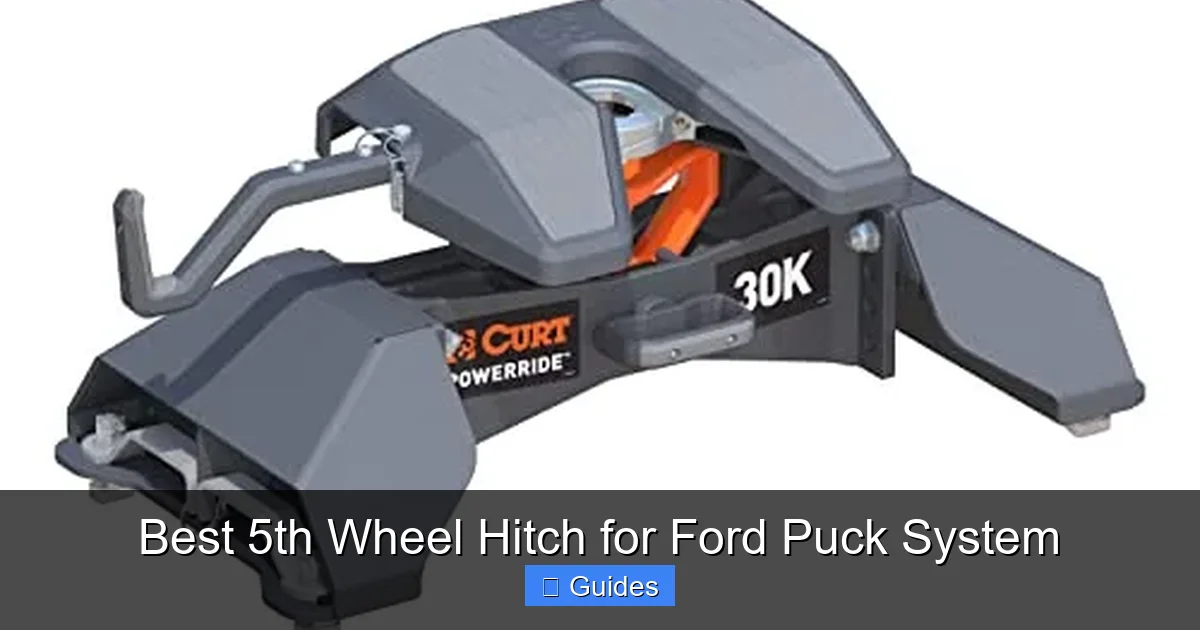
Visual guide about Best 5th Wheel Hitch for Ford Puck System
Image source: m.media-amazon.com
Now, let’s get to the good stuff. After testing and reviewing dozens of options, here are the top 5th wheel hitches that deliver performance, durability, and ease of use with Ford’s Puck System.
1. B&W Companion OEM 5th Wheel Hitch
If there’s one hitch that consistently earns rave reviews, it’s the B&W Companion OEM. This is the gold standard for Ford Puck System users—and for good reason.
The Companion OEM is built specifically for Ford’s puck receivers. It drops right in, locks down with a simple lever, and feels rock-solid once installed. No tools required for setup or removal, which is a huge plus if you’re switching between towing and hauling gear.
It’s available in two versions: fixed and sliding. The sliding model is ideal for short-bed trucks (like the F-250 with a 6.75-foot bed), giving you up to 12 inches of travel to prevent trailer-to-cab contact during sharp turns.
Key Features:
– 20,000-pound towing capacity
– 4,000-pound vertical load rating
– Tool-free installation and removal
– Dual-jaw locking system for a secure grip
– Made in the USA with a limited lifetime warranty
Best For: Full-time RVers, short-bed truck owners, and anyone who values reliability and ease of use.
2. Reese M5 5th Wheel Hitch
Reese is a trusted name in towing, and the M5 is one of their best offerings for Ford Puck System users. It’s a premium hitch with a sleek design and impressive performance.
The M5 features a patent-pending roller system that allows for smooth, quiet operation. The jaws close tightly around the kingpin, reducing chucking and improving ride quality. It also includes a built-in height adjustment (from 13” to 17”) to match your trailer’s height perfectly.
One standout feature is the “No-Sway” technology, which minimizes trailer movement for a more stable tow. Plus, it’s compatible with both standard and short-bed trucks, thanks to its optional slider version.
Key Features:
– 20,000-pound towing capacity
– 4,000-pound vertical load rating
– Roller system for smooth engagement
– Height and tilt adjustments
– Tool-free installation with Ford Puck System
Best For: Those who want a quiet, smooth ride and advanced stability features.
3. Curt A16 5th Wheel Hitch
If you’re looking for a high-capacity hitch at a more budget-friendly price, the Curt A16 is a solid choice. It’s designed for Ford’s Puck System and offers serious towing power without breaking the bank.
The A16 uses Curt’s patented “Auto-Latch” system, which automatically secures the kingpin when you lower the trailer. That means less hassle and fewer chances of human error during hookup.
It also features a three-jaw locking system for a tight, rattle-free connection. And with a 16,000-pound towing capacity, it’s perfect for mid-sized 5th wheels and smaller luxury campers.
Key Features:
– 16,000-pound towing capacity
– 4,000-pound vertical load rating
– Auto-Latch system for easy hookup
– Three-jaw design for secure grip
– Compatible with Ford Puck System (adapter required for some models)
Best For: Budget-conscious buyers with lighter trailers who still want quality and reliability.
4. Demco Recon 5th Wheel Hitch
Demco is known for innovation, and the Recon series brings some smart tech to the table. The Demco Recon is a lightweight, durable hitch that’s easy to install and remove—perfect for those who don’t want a permanent fixture in their truck bed.
One unique feature is the “Recon Lock” system, which uses a single lever to secure the hitch to the pucks. It’s fast, simple, and requires no tools.
The Recon also includes a built-in height adjustment and a cushioned head to reduce noise and wear. It’s available in both fixed and sliding versions, with towing capacities up to 21,000 pounds.
Key Features:
– Up to 21,000-pound towing capacity
– 4,000-pound vertical load rating
– Single-lever lock system
– Lightweight aluminum construction
– Tool-free installation
Best For: Frequent hitch users who want quick removal and modern design.
5. Andersen Ultimate Hitch 5th Wheel
The Andersen Ultimate Hitch is a bit different—it’s a gooseneck adapter that converts your 5th wheel trailer to work with a gooseneck hitch. But here’s the twist: it’s fully compatible with Ford’s Puck System when paired with Andersen’s gooseneck hitch.
This setup gives you the best of both worlds: the strength of a gooseneck connection and the convenience of the puck system. It’s also one of the lightest 5th wheel solutions on the market, weighing in at just 55 pounds.
The Ultimate Hitch uses a patented remote latch system, so you can hook up without climbing into the truck bed. It’s ideal for those who want flexibility—tow a 5th wheel today, a gooseneck trailer tomorrow.
Key Features:
– 30,000-pound towing capacity (with compatible gooseneck)
– 6,000-pound vertical load rating
– Remote latch system
– Lightweight and removable
– Works with Ford Puck System via gooseneck adapter
Best For: Multi-trailer users and those who want maximum versatility.
How to Choose the Right Hitch for Your Needs
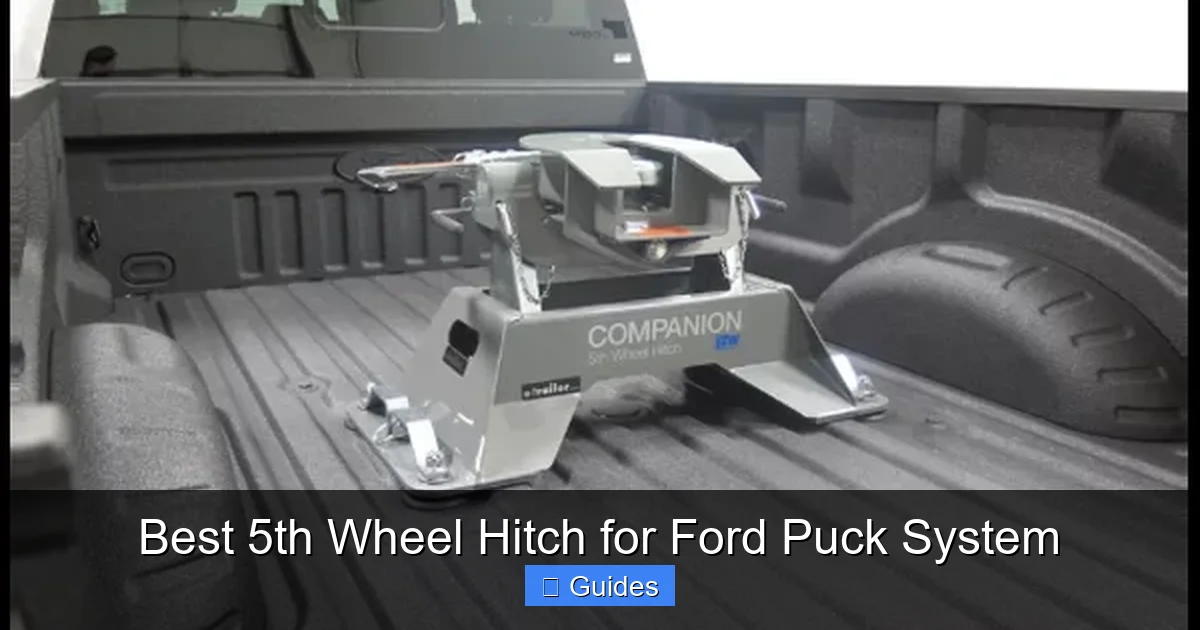
Visual guide about Best 5th Wheel Hitch for Ford Puck System
Image source: towingless.com
With so many great options, how do you pick the right one? It all comes down to your specific needs, truck setup, and towing habits.
Step 1: Know Your Truck and Trailer
Start by checking your truck’s specs. What’s your GVWR (Gross Vehicle Weight Rating)? What’s your truck’s towing capacity? And most importantly—what’s your trailer’s GVWR and pin weight?
Your hitch must be rated to handle both the total weight of your trailer and the downward force on the hitch (pin weight). Most 5th wheel hitches list both numbers—don’t just focus on towing capacity.
For example, if your trailer has a 16,000-pound GVWR and a 3,200-pound pin weight, you need a hitch rated for at least that. Going over the limit is dangerous and can void your warranty.
Step 2: Consider Your Truck Bed Length
Short-bed trucks (6.75 feet or less) need extra clearance during turns. A fixed hitch might cause the trailer to hit the cab when making sharp corners. That’s where a slider hitch comes in.
Slider hitches allow the hitch head to move forward and backward, giving you up to 12 inches of extra space. If you have a short bed, a sliding hitch like the B&W Companion or Reese M5 Slider is almost essential.
Long-bed trucks (8 feet) usually don’t need a slider, but it’s still worth considering if you plan to tow in tight spaces or mountainous terrain.
Step 3: Think About Usage Frequency
Do you tow every weekend? Or just a few times a year? If you’re a full-time RVer, you might not mind a heavier, permanent hitch. But if you use your truck for work or hauling, you’ll want something easy to remove.
Look for hitches with tool-free installation, like the B&W Companion or Demco Recon. These let you drop in or pull out the hitch in under 10 minutes—no wrenches, no hassle.
Step 4: Budget and Brand Trust
5th wheel hitches range from around $800 to over $2,500. While it’s tempting to go cheap, remember: this is a safety-critical component. A poorly made hitch can fail, causing serious damage or injury.
Stick with reputable brands like B&W, Reese, Curt, and Demco. They offer solid warranties, customer support, and proven track records. Paying a little more upfront can save you thousands in repairs—or worse—down the road.
Installation Tips for Ford Puck System Hitches
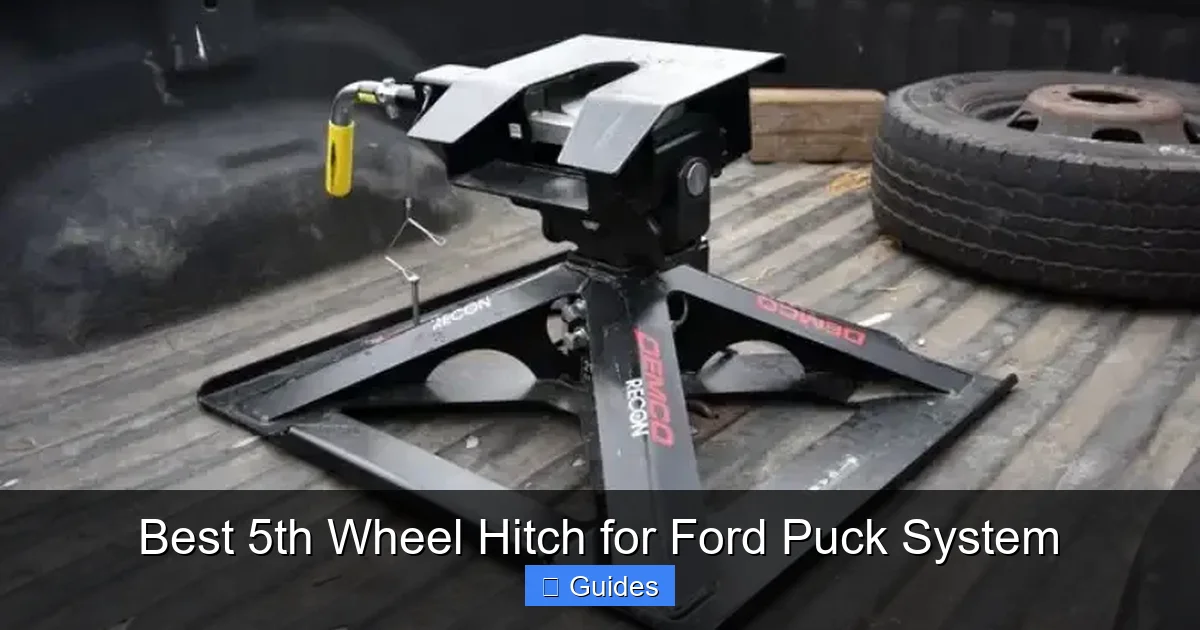
Visual guide about Best 5th Wheel Hitch for Ford Puck System
Image source: movrify.com
Even the best hitch won’t perform well if it’s installed incorrectly. Here’s how to get it right the first time.
Pre-Installation Checklist
Before you even open the box, make sure:
– Your truck has the factory-installed Ford Puck System (check your owner’s manual or look for the four pucks in the bed).
– Your hitch is compatible with your specific Ford model and year.
– You have the correct kingpin box on your trailer (most are standard, but double-check).
Step-by-Step Installation
1. Clean the Puck Receivers: Remove any dirt, grease, or debris from the pucks. A clean surface ensures a tight, secure fit.
2. Position the Hitch: Lower the hitch into the bed, aligning the legs with the pucks. Most hitches have visual guides or markings to help.
3. Engage the Locking Mechanism: Use the lever, pin, or handle to lock the hitch into the pucks. You should hear or feel a solid “click” or “snap.”
4. Test the Lock: Try lifting the hitch slightly. If it moves, it’s not secure. Re-engage the locks and test again.
5. Attach Safety Chains and Wiring: Connect the trailer’s safety chains and electrical plug. Never skip this step.
6. Do a Dry Run: Practice hooking up your trailer without driving. Make sure the hitch engages smoothly and the trailer sits level.
Pro Tips
– Lubricate the Jaws: Use a silicone-based lubricant on the hitch jaws to reduce wear and make hookup easier.
– Check Height Regularly: Trailer sag or truck suspension changes can affect hitch height. Adjust as needed.
– Store the Hitch Properly: If you remove it, store it in a dry place to prevent rust and damage.
Maintenance and Safety Tips
A well-maintained hitch lasts longer and performs better. Here’s how to keep yours in top shape.
Regular Inspections
Every time you tow, do a quick visual check:
– Are the locking mechanisms secure?
– Is there any visible wear, cracks, or rust?
– Are the bolts tight?
Do a more thorough inspection every few months:
– Check the hitch head for cracks or deformation.
– Inspect the pucks in your truck bed for damage.
– Test the locking system under load (with trailer attached).
Lubrication and Cleaning
Keep moving parts clean and lubricated. Use a dry lubricant (like WD-40 Specialist Dry Lube) on the jaws, sliders, and locking mechanisms. Avoid grease—it attracts dirt and can cause buildup.
Wipe down the hitch after each use, especially if you’ve been in wet or salty conditions.
Safety First
– Never exceed your hitch’s weight rating.
– Always use safety chains, even if your hitch has a secure lock.
– Check your trailer’s brake controller and ensure it’s properly calibrated.
– Practice hooking up in a safe, flat area before hitting the highway.
Final Thoughts: Making the Right Choice
Choosing the best 5th wheel hitch for your Ford Puck System doesn’t have to be overwhelming. Focus on compatibility, capacity, and ease of use. Whether you go with the rock-solid B&W Companion, the innovative Andersen Ultimate, or the budget-friendly Curt A16, the right hitch will give you confidence on the road.
Remember: this isn’t just about convenience—it’s about safety. A quality hitch ensures your trailer stays connected, your truck handles well, and your adventures stay stress-free.
Take your time, do your research, and don’t hesitate to ask for help from a professional installer if you’re unsure. Your truck, your trailer, and your peace of mind are worth it.
Frequently Asked Questions
Can I use any 5th wheel hitch with the Ford Puck System?
No, only hitches specifically designed for the Ford Puck System will fit properly. Standard rail-mounted hitches require adapters and may not perform as well.
Do I need a slider hitch for my Ford Super Duty?
It depends on your truck bed length. Short-bed trucks (6.75 feet or less) benefit from a slider to prevent trailer-to-cab contact during tight turns. Long-bed trucks usually don’t need one.
How much does a 5th wheel hitch for Ford Puck System cost?
Prices range from around $800 to over $2,500, depending on the brand, features, and capacity. Premium models like B&W and Reese tend to be on the higher end.
Can I install a 5th wheel hitch myself?
Yes, most Ford Puck System hitches are designed for tool-free or minimal-tool installation. However, if you’re unsure, professional installation is recommended for safety.
What’s the difference between a fixed and sliding hitch?
A fixed hitch stays in one position, while a sliding hitch allows the head to move forward and backward. Sliders are essential for short-bed trucks to increase turning clearance.
Do I need to modify my truck to use a 5th wheel hitch?
No—if your Ford Super Duty has the factory Puck System, no modifications are needed. The hitch simply locks into the existing pucks.

At CarLegit, we believe information should be clear, factual, and genuinely helpful. That’s why every guide, review, and update on our website is created with care, research, and a strong focus on user experience.