
Choosing the right all season tires for your 2011 Hyundai Sonata can dramatically improve handling, fuel efficiency, and safety. With so many options on the market, we’ve narrowed down the top performers based on real-world testing, expert reviews, and owner feedback to help you make a smart, confident decision.
In This Article
- 1 Key Takeaways
- 2 📑 Table of Contents
- 3 Why Choosing the Right All Season Tires for Your 2011 Hyundai Sonata Matters
- 4 Understanding All Season Tires: What Makes Them “All Season”?
- 5 Top 5 Best All Season Tires for 2011 Hyundai Sonata
- 6 How to Choose the Right Tire for Your Driving Needs
- 7 Installation, Maintenance, and Safety Tips
- 8 Cost Considerations and Where to Buy
- 9 Final Thoughts: Making the Right Choice for Your Sonata
- 10 Frequently Asked Questions
Key Takeaways
- All season tires offer balanced performance in dry, wet, and light snow conditions: They’re ideal for drivers in moderate climates who want one tire for year-round use.
- Tire size matters—2011 Sonata typically uses 215/55R17 or 225/45R18: Always check your owner’s manual or door jamb sticker for the correct size before purchasing.
- Look for low rolling resistance to improve fuel economy: Many top-tier all season tires are designed to reduce drag and boost MPG.
- Quiet ride and comfort are key for the Sonata’s sedan design: Choose tires with noise-reducing tread patterns and flexible sidewalls for a smooth drive.
- Wet traction and braking distance are critical safety features: Prioritize tires with high UTQG traction ratings (AA or A) for better control in rain.
- Tread life and warranty vary significantly between brands: Some tires last over 80,000 miles, while others may wear out in 40,000—check the mileage warranty.
- Professional installation and regular maintenance extend tire life: Proper inflation, rotation every 6,000–8,000 miles, and alignment checks keep your tires performing longer.
📑 Table of Contents
- Why Choosing the Right All Season Tires for Your 2011 Hyundai Sonata Matters
- Understanding All Season Tires: What Makes Them “All Season”?
- Top 5 Best All Season Tires for 2011 Hyundai Sonata
- How to Choose the Right Tire for Your Driving Needs
- Installation, Maintenance, and Safety Tips
- Cost Considerations and Where to Buy
- Final Thoughts: Making the Right Choice for Your Sonata
Why Choosing the Right All Season Tires for Your 2011 Hyundai Sonata Matters
Your 2011 Hyundai Sonata is a reliable, comfortable midsize sedan built for daily commuting, family trips, and long highway drives. But even the best car can’t perform at its peak without the right set of tires. Think of tires as the only part of your car that touches the road—every acceleration, turn, and stop depends on them. That’s why choosing the best all season tires for your 2011 Hyundai Sonata isn’t just about convenience; it’s about safety, efficiency, and overall driving enjoyment.
All season tires are designed to handle a wide range of conditions—dry pavement, rain-soaked streets, and even light snow. Unlike summer or winter-specific tires, they offer a balanced compromise that works well in most climates. For Sonata owners in regions with mild winters and moderate rainfall, all season tires are often the perfect fit. They eliminate the hassle of seasonal tire changes while still delivering solid performance year-round. But not all all season tires are created equal. Some prioritize comfort and quietness, while others focus on grip and longevity. The key is finding the right balance for your driving habits and local weather.
Understanding All Season Tires: What Makes Them “All Season”?
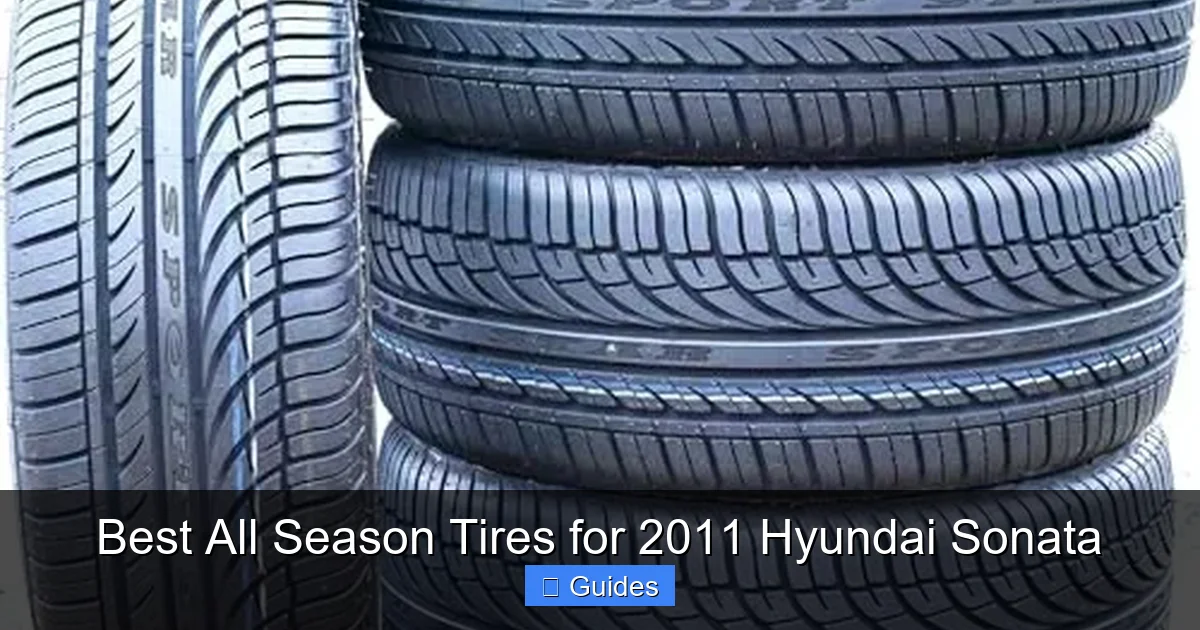
Before diving into specific tire recommendations, it helps to understand what makes an all season tire different from other types. All season tires are engineered with a tread compound and pattern that performs well in both warm and cold temperatures. They typically feature deeper grooves than summer tires to channel water away and reduce hydroplaning risk, but they’re not as aggressive as winter tires for heavy snow or ice.
Visual guide about Best All Season Tires for 2011 Hyundai Sonata
Image source: thecarhow.com
Tread Design and Compound
The tread pattern on all season tires usually includes lateral grooves, sipes (tiny slits in the tread blocks), and circumferential channels. These features help disperse water, maintain grip on wet roads, and provide some level of traction in light snow. The rubber compound is formulated to stay flexible in colder temperatures—down to around 45°F—without becoming too soft in summer heat. This balance is what allows all season tires to perform adequately across seasons.
Performance Trade-Offs
It’s important to note that “all season” doesn’t mean “best in every season.” These tires won’t give you the razor-sharp handling of summer performance tires or the deep snow traction of dedicated winter tires. But for most drivers, especially those in temperate zones, the convenience and versatility outweigh the minor performance trade-offs. The 2011 Sonata, with its focus on comfort and fuel efficiency, pairs perfectly with high-quality all season tires that enhance—not hinder—its natural strengths.
Top 5 Best All Season Tires for 2011 Hyundai Sonata
After analyzing expert reviews, consumer reports, and real-world performance data, we’ve identified five standout all season tires that deliver excellent results on the 2011 Hyundai Sonata. Each offers a unique blend of comfort, durability, and safety, so you can choose based on your priorities—whether that’s a quiet ride, long tread life, or superior wet braking.

Visual guide about Best All Season Tires for 2011 Hyundai Sonata
Image source: ipocars.com
1. Michelin Defender T+H
The Michelin Defender T+H consistently ranks as one of the best all season tires on the market, and for good reason. It’s built for longevity, with a tread life warranty of up to 80,000 miles—one of the highest in its class. The Defender uses Michelin’s MaxTouch Construction, which distributes weight evenly across the tread for even wear and extended life.
Drivers of the 2011 Sonata will appreciate the smooth, quiet ride and excellent wet traction. Independent tests show the Defender stops shorter on wet pavement than many competitors, a crucial safety advantage. It also features low rolling resistance, which can help improve fuel economy—something Sonata owners will love. While it’s priced at a premium, the long-term value makes it a smart investment.
2. Continental PureContact with EcoPlus Technology
Continental’s PureContact is a favorite among sedan drivers for its balanced performance and eco-friendly design. The EcoPlus Technology reduces rolling resistance, helping your Sonata sip less fuel. It also includes a unique tread compound that maintains flexibility in cold weather, ensuring reliable performance even in early winter conditions.
The PureContact excels in wet braking and handling, thanks to its asymmetric tread pattern and wide grooves that efficiently evacuate water. Road noise is minimal, making it ideal for highway cruising. With a 70,000-mile treadwear warranty, it offers solid durability without the top-tier price of the Michelin. For Sonata owners who want a blend of efficiency, comfort, and safety, this is a top contender.
3. Bridgestone Turanza QuietTrack
If a quiet, luxurious ride is your priority, the Bridgestone Turanza QuietTrack is hard to beat. Designed specifically for touring sedans like the Sonata, it uses Bridgestone’s QuietTrack technology to reduce road noise through optimized tread block shapes and variable pitch sequencing.
The Turanza delivers excellent all-around performance, with strong wet and dry handling and respectable snow traction for an all season tire. It also features a 80,000-mile warranty, matching the Michelin in longevity. While it’s one of the more expensive options, the comfort and refinement it adds to your Sonata’s driving experience are worth considering—especially if you spend a lot of time on the road.
4. Goodyear Assurance WeatherReady
For drivers in areas with more unpredictable weather—including occasional snow and ice—the Goodyear Assurance WeatherReady offers enhanced all season capability. It’s one of the few all season tires with the Three-Peak Mountain Snowflake (3PMSF) symbol, meaning it meets severe snow service requirements.
This tire uses Goodyear’s Weather Reactive Technology, which adapts to changing conditions by adjusting tread stiffness and grip. It performs well in rain, dry pavement, and light snow, making it a great choice for Sonata owners in northern climates who don’t want to switch to winter tires. The ride is comfortable, and noise levels are low. With a 60,000-mile warranty, it’s not the longest-lasting option, but its versatility is a major plus.
5. Pirelli Cinturato P7 All Season Plus
The Pirelli Cinturato P7 All Season Plus is a high-performance all season tire that doesn’t sacrifice comfort for sportiness. It’s designed for drivers who want responsive handling and a dynamic feel without the harshness of a summer performance tire.
With its eco-focused design, the P7 reduces rolling resistance and improves fuel efficiency. The asymmetric tread pattern provides excellent cornering grip and wet braking, while the optimized pitch sequence keeps noise to a minimum. It comes with a 70,000-mile warranty and fits perfectly on the Sonata’s 17- or 18-inch wheels. If you enjoy a more engaging drive but still want all season reliability, this Pirelli is a great match.
How to Choose the Right Tire for Your Driving Needs
With so many excellent options, how do you pick the best all season tires for your 2011 Hyundai Sonata? The answer depends on your driving habits, local climate, and personal preferences. Here’s a practical guide to help you decide.
Visual guide about Best All Season Tires for 2011 Hyundai Sonata
Image source: ipocars.com
Consider Your Climate
If you live in a region with mild winters and moderate rainfall—like the Southeast or Pacific Northwest—a standard all season tire like the Michelin Defender or Continental PureContact will serve you well. But if you experience regular snow, freezing temperatures, or icy roads, consider a tire with enhanced winter capability, such as the Goodyear Assurance WeatherReady.
Evaluate Your Driving Style
Do you prioritize comfort and quiet over sporty handling? Then the Bridgestone Turanza QuietTrack or Michelin Defender are ideal. Are you a more spirited driver who enjoys winding roads? The Pirelli Cinturato P7 offers a sportier feel without compromising all season usability. Most Sonata drivers fall somewhere in between, so a balanced tire like the Continental PureContact is often the best compromise.
Think About Long-Term Value
Tires are a long-term investment. A cheaper tire might save you $50 upfront, but if it wears out in 40,000 miles instead of 70,000, you’ll end up spending more over time. Look at the treadwear warranty, rolling resistance, and fuel efficiency ratings. Tires with low rolling resistance can save you hundreds in gas over their lifespan—especially important for a fuel-efficient sedan like the Sonata.
Check Compatibility and Fit
Always confirm your tire size before buying. The 2011 Hyundai Sonata typically uses one of two sizes: 215/55R17 (for base and SE trims) or 225/45R18 (for Limited trim). You can find this information on the tire sidewall, in your owner’s manual, or on the driver’s side door jamb. Installing the wrong size can affect speedometer accuracy, handling, and safety.
Installation, Maintenance, and Safety Tips
Even the best all season tires won’t perform well if they’re not installed correctly or maintained properly. Here’s how to get the most out of your new tires and keep your Sonata safe on the road.
Professional Installation Is a Must
Always have your tires installed by a certified technician. Proper mounting, balancing, and alignment are critical. Unbalanced tires can cause vibrations, uneven wear, and premature failure. A professional shop will also check your suspension and steering components to ensure everything is in good condition.
Maintain Proper Tire Pressure
Underinflated or overinflated tires reduce fuel efficiency, wear unevenly, and increase the risk of blowouts. Check your tire pressure at least once a month and before long trips. Use the recommended PSI listed on your door jamb sticker—not the maximum pressure printed on the tire sidewall. The Sonata typically requires around 32–35 PSI, but always verify for your specific trim.
Rotate Your Tires Regularly
Tire rotation every 6,000 to 8,000 miles helps ensure even wear and extends tread life. Front tires on front-wheel-drive vehicles like the Sonata tend to wear faster due to steering and braking forces. Rotating them to the rear positions balances the wear pattern. Most tire shops include rotation in their service packages, so take advantage of it.
Inspect for Damage and Wear
Regularly inspect your tires for cuts, bulges, cracks, or embedded objects. Use the penny test to check tread depth: insert a penny into the tread with Lincoln’s head upside down. If you can see the top of his head, it’s time to replace the tires. Most all season tires are considered worn out at 2/32” of tread depth.
Don’t Ignore Wheel Alignment
Poor alignment causes uneven tire wear, pulling to one side, and reduced handling. If you notice your Sonata drifting or if your tires are wearing unevenly, get an alignment check. Hitting potholes or curbs can knock your wheels out of alignment, so it’s wise to check it annually or after any impact.
Cost Considerations and Where to Buy
Tire prices vary widely based on brand, size, and performance level. For the 2011 Sonata, expect to pay between $120 and $250 per tire for a high-quality all season option. Here’s how to get the best value.
Compare Prices Online and In-Store
Websites like Tire Rack, Discount Tire, and SimpleTire allow you to compare prices, read reviews, and schedule installation at local shops. Many offer free shipping and price matching. Buying online often saves money, but make sure installation is included or affordable.
Look for Promotions and Rebates
Manufacturers frequently offer rebates—$50 to $100 off a set of four tires—especially during seasonal sales. Sign up for email alerts from tire brands and retailers to stay informed. Some credit cards also offer cashback or discounts on tire purchases.
Consider Package Deals
Many shops offer package deals that include mounting, balancing, alignment, and a road hazard warranty. While these cost more upfront, they can save you money and hassle in the long run. A road hazard warranty, for example, covers damage from potholes or debris, which is common on city roads.
Don’t Forget About Disposal Fees
Most shops charge a small fee (around $5 per tire) to dispose of your old tires. This is usually included in the installation quote, but it’s good to ask upfront to avoid surprises.
Final Thoughts: Making the Right Choice for Your Sonata
Choosing the best all season tires for your 2011 Hyundai Sonata doesn’t have to be overwhelming. By focusing on your driving needs, climate, and long-term value, you can find a set that enhances your car’s performance, safety, and comfort. Whether you prioritize longevity, quietness, or all-weather capability, there’s a tire on this list that fits.
Remember, tires are a critical safety component—not just another car accessory. Investing in high-quality all season tires is one of the best things you can do for your Sonata. Pair that with regular maintenance, and you’ll enjoy a smoother, safer, and more efficient drive for years to come. So take the time to research, compare, and choose wisely. Your car—and your peace of mind—will thank you.
Frequently Asked Questions
What size tires does a 2011 Hyundai Sonata use?
The 2011 Hyundai Sonata typically uses 215/55R17 tires on base and SE trims, and 225/45R18 on the Limited trim. Always check your door jamb sticker or owner’s manual to confirm your specific size.
Can I use all season tires in snow?
Yes, all season tires can handle light snow and slush, but they are not designed for deep snow or ice. If you live in a snowy region, consider a tire with the 3PMSF symbol, like the Goodyear Assurance WeatherReady, or switch to winter tires in colder months.
How long do all season tires last on a Sonata?
Most high-quality all season tires last between 50,000 and 80,000 miles, depending on driving habits, road conditions, and maintenance. Tires with longer warranties, like the Michelin Defender, often last closer to 80,000 miles.
Do I need to replace all four tires at once?
It’s strongly recommended to replace all four tires at the same time to maintain balanced handling and traction. If only one or two are worn, you can replace just those, but they should match the existing tires in brand, model, and tread depth.
Are more expensive tires worth it?
Generally, yes. Higher-priced tires often offer better materials, longer tread life, improved safety features, and lower rolling resistance. Over time, the fuel savings and durability can offset the initial cost.
How often should I rotate my Sonata’s tires?
Rotate your tires every 6,000 to 8,000 miles or every six months, whichever comes first. Regular rotation promotes even wear and extends the life of your tires.

At CarLegit, we believe information should be clear, factual, and genuinely helpful. That’s why every guide, review, and update on our website is created with care, research, and a strong focus on user experience.