
Looking for the best EV car lease deals? You’re in the right place. We’ve rounded up the most affordable, feature-packed electric vehicle leases available this year—perfect for saving money while going green. From Tesla to Hyundai, find your ideal EV lease with low down payments and federal tax credits.
So, you’re thinking about going electric—smart move. Not only are EVs better for the planet, but they’re also becoming more affordable than ever, especially when you lease. And right now? There’s never been a better time to lock in one of the best EV car lease deals. With rising gas prices, growing environmental awareness, and a wave of new electric models hitting the market, leasing an EV is a practical, budget-friendly way to enjoy cutting-edge technology without the long-term commitment of ownership.
But here’s the thing: not all EV leases are created equal. Some offer jaw-dropping monthly payments under $250, while others sneak in hidden fees or restrictive terms. The key is knowing what to look for—and where to find the real bargains. Whether you’re eyeing a sleek Tesla Model 3, a practical Chevrolet Bolt, or a stylish Hyundai Ioniq 5, the right lease can save you thousands over three years. Plus, with federal tax credits and state rebates still in play, your out-of-pocket cost could be far lower than you think.
In this guide, we’ll walk you through everything you need to know to snag the best EV car lease deals in 2024. From understanding how leasing works to comparing top models and negotiating like a pro, we’ve got you covered. Let’s plug in and power up your savings.
In This Article
Key Takeaways
- Federal and state incentives can slash your lease cost: Many EV leases qualify for tax credits up to $7,500, reducing your monthly payment significantly.
- Lease terms typically range from 24 to 36 months: Shorter leases offer flexibility, while longer ones often come with lower monthly rates.
- Top brands like Tesla, Chevrolet, and Hyundai offer competitive deals: Look for promotions with $0 down and under $300/month.
- Mileage limits matter: Most leases cap annual mileage at 10,000–15,000 miles—choose wisely based on your driving habits.
- Maintenance and charging costs are lower with EVs: Fewer moving parts mean less wear and tear, saving you money over time.
- Early termination fees can be steep: Stick to your lease term unless you’re prepared for potential penalties.
- Shop around and negotiate: Dealers often have wiggle room on money factor, residual value, and down payment.
📑 Table of Contents
Why Lease an EV Instead of Buying?
Leasing an electric vehicle might sound like a compromise, but for many drivers, it’s actually the smarter financial move. Unlike buying, where you’re stuck with depreciation and long-term maintenance, leasing lets you enjoy a new EV every few years with minimal hassle. And with rapid advancements in battery tech and charging infrastructure, leasing ensures you’re always driving the latest and greatest—without the risk of owning outdated hardware.
One of the biggest advantages? Lower monthly payments. Because you’re only paying for the vehicle’s depreciation during the lease term (not the full value), your monthly cost is typically 20–30% less than a loan payment for the same car. For example, a $45,000 Tesla Model 3 might cost $600/month to finance, but lease for just $350/month. That’s a $250 difference—every single month.
Another perk? EVs are cheaper to maintain. No oil changes, no exhaust systems, fewer brake replacements thanks to regenerative braking. Over a three-year lease, you could save $1,000 or more on maintenance alone. And let’s not forget the environmental benefit: zero tailpipe emissions mean you’re doing your part for cleaner air and a healthier planet.
Tax Credits and Incentives Make Leasing Even Better
Here’s where leasing gets really exciting: federal tax credits. Thanks to the Inflation Reduction Act, many new EVs qualify for a $7,500 federal tax credit—and when you lease, that credit often goes directly to the dealer, lowering your monthly payment. Unlike buying, where you have to wait to file your taxes, leasing lets you benefit from the credit immediately.
For example, if you lease a qualifying EV like the Ford Mustang Mach-E or the Hyundai Ioniq 5, the dealer can apply the $7,500 credit to reduce your capitalized cost (the amount you’re financing). That could drop your monthly payment by $100 or more. Some states sweeten the deal even further: California offers up to $2,000 in rebates, Colorado gives $5,000, and New York has a $2,000 incentive. Combine these with the federal credit, and your effective lease cost could plummet.
Just remember: not all EVs qualify. The vehicle must be assembled in North America, meet battery component requirements, and have a manufacturer’s suggested retail price (MSRP) under $55,000 for cars or $80,000 for SUVs and trucks. Always check the IRS’s official list before signing.
Top EV Lease Deals of 2024
Visual guide about Best Ev Car Lease Deals
Image source: s1.cdn.autoevolution.com
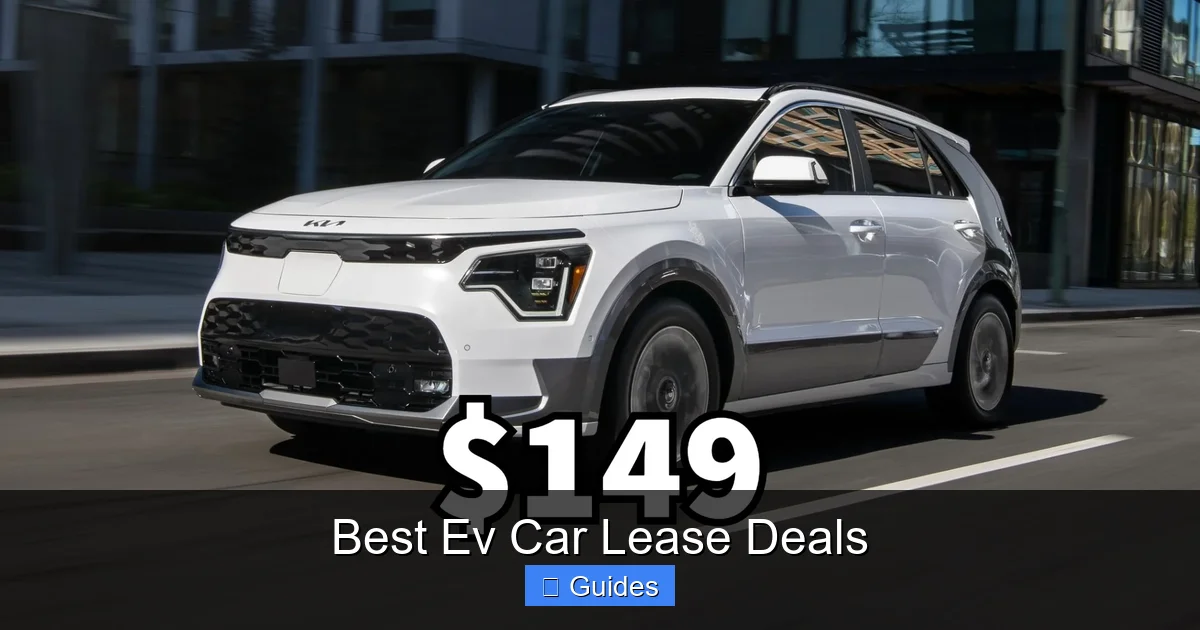
Now for the fun part: the deals. We’ve scoured dealerships, manufacturer websites, and lease comparison tools to bring you the best EV car lease deals available right now. These offers combine low monthly payments, minimal down payments, and strong incentives—perfect for budget-conscious drivers who want to go electric without breaking the bank.
1. Tesla Model 3 – Starting at $299/month
Tesla may not advertise leases as heavily as other brands, but they still offer some of the most competitive deals in the EV space. The Model 3, their best-selling sedan, is currently available for as little as $299/month with $2,999 due at signing (36-month term, 10,000 miles/year). That’s an incredible value for a car with over 300 miles of range, supercharging access, and cutting-edge Autopilot features.
While Tesla doesn’t pass the full $7,500 federal credit to lessees (due to their direct-to-consumer model), they do offer competitive money factors and strong residual values, which keep payments low. Plus, with over 1,000 Supercharger stations across the U.S., charging is convenient and fast.
2. Chevrolet Bolt EV – Starting at $249/month
The Chevy Bolt remains one of the most affordable EVs on the market—and its lease deals reflect that. Right now, you can lease a 2024 Bolt EV for just $249/month with $2,499 down (36 months, 10,000 miles/year). That’s under $250 for a car with 259 miles of range, a spacious interior, and Apple CarPlay/Android Auto.
Even better? The Bolt qualifies for the full $7,500 federal tax credit, which GM applies directly to your lease. Combined with state incentives, this could be one of the cheapest ways to drive a new EV in 2024. Just note: GM is phasing out the Bolt in favor of the new Equinox EV, so these deals may not last long.
3. Hyundai Ioniq 5 – Starting at $279/month
The Ioniq 5 is a standout in the compact SUV category, blending retro-futuristic design with impressive performance. Hyundai is currently offering leases starting at $279/month with $2,999 due at signing (36 months, 10,000 miles/year). That’s a steal for a vehicle with 303 miles of range, ultra-fast 800V charging, and a luxurious interior.
Like the Bolt, the Ioniq 5 qualifies for the full federal credit, and Hyundai often includes additional dealer cash or loyalty bonuses. If you’re looking for style, speed, and savings, this is one of the best EV car lease deals available.
4. Ford Mustang Mach-E – Starting at $329/month
Ford’s electric SUV has won over critics and customers alike with its sporty handling and long range. Current lease offers start at $329/month with $3,499 down (36 months, 10,000 miles/year). While slightly pricier than the others, the Mach-E delivers premium features, including a 15.5-inch touchscreen, hands-free driving assist, and up to 314 miles of range.
Ford applies the $7,500 federal credit to leases, and some dealers offer additional incentives for recent graduates or military personnel. If you want a fun-to-drive EV with SUV versatility, the Mach-E is a top contender.
5. Nissan Leaf – Starting at $219/month
The Leaf has been around since 2010, but it’s still a solid choice for budget-minded drivers. Nissan is currently leasing the 2024 Leaf for just $219/month with $2,199 due at signing (36 months, 10,000 miles/year). That’s under $220 for a reliable, city-friendly EV with 149–212 miles of range, depending on the trim.
While it doesn’t qualify for the full federal credit (due to foreign assembly), it may still be eligible for partial incentives in some states. Plus, with a proven track record and low maintenance costs, the Leaf is a no-brainer for commuters and urban drivers.
How to Get the Best EV Lease Deal
Visual guide about Best Ev Car Lease Deals
Image source: i.ytimg.com
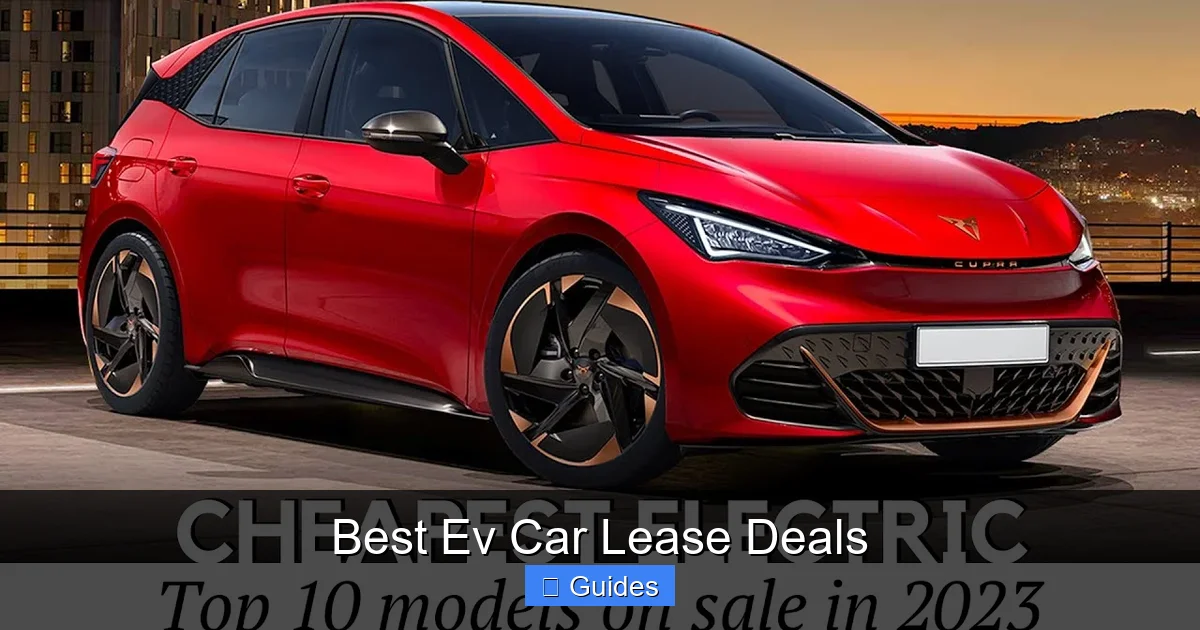
Finding a great lease is only half the battle—getting the best possible terms is where the real savings happen. Here’s how to maximize your deal and avoid common pitfalls.
1. Know Your Credit Score
Your credit score directly affects your lease terms. Lessees with scores above 720 typically qualify for the lowest money factors (the lease equivalent of an interest rate). If your score is below 650, you may face higher payments or require a larger down payment. Check your score for free at sites like Credit Karma or Experian, and consider improving it before applying.
2. Compare Multiple Offers
Don’t settle for the first deal you see. Use lease comparison tools like Leasehackr, Edmunds, or Cars.com to compare offers from different dealers and manufacturers. Look at the total cost over the lease term, not just the monthly payment. A $299/month lease with $5,000 down is more expensive than a $349/month lease with $1,000 down.
3. Negotiate the Capitalized Cost
The capitalized cost is the amount you’re financing—essentially the car’s price minus any down payment or trade-in. Always negotiate this number, just like you would when buying. Aim to get it as close to the invoice price as possible. Use pricing guides like Kelley Blue Book or TrueCar to know what dealers paid.
4. Watch Out for Excess Mileage Fees
Most leases include an annual mileage limit—typically 10,000, 12,000, or 15,000 miles. If you exceed it, you’ll pay 15–25 cents per extra mile. If you drive more than average, consider paying a little extra upfront for a higher mileage allowance. It’s almost always cheaper than paying overage fees later.
5. Avoid Unnecessary Add-Ons
Dealers may try to sell you extras like tire protection, fabric coating, or gap insurance. While some (like gap insurance) can be useful, many are overpriced and unnecessary. Read the fine print and only agree to what you truly need.
What to Watch Out For When Leasing an EV
Leasing an EV is generally straightforward, but there are a few red flags to avoid.
Battery Degradation Clauses
Some leases include clauses that penalize you for excessive battery wear. While all EV batteries degrade over time, most manufacturers guarantee 70–80% capacity after 8 years. Make sure your lease doesn’t hold you liable for normal degradation.
Limited Charging Access
If you don’t have home charging, relying on public stations can be a hassle. Before leasing, map out nearby chargers and consider the cost of fast charging vs. home charging. Some leases include free charging credits—take advantage of them.
Early Termination Fees
Ending your lease early can cost thousands. Most contracts charge a fee equal to the remaining payments plus a penalty. Only lease if you’re confident you’ll keep the car for the full term.
Is an EV Lease Right for You?
Leasing an EV makes sense if you:
– Want lower monthly payments
– Prefer driving a new car every few years
– Have access to home or workplace charging
– Don’t drive more than 12,000 miles per year
– Want to take advantage of tax credits without waiting
It may not be ideal if you:
– Drive long distances regularly
– Prefer to build equity in a vehicle
– Plan to keep the car for 5+ years
– Live in an area with limited charging infrastructure
Ultimately, the best EV car lease deals offer a perfect blend of affordability, convenience, and sustainability. With the right research and negotiation, you can enjoy all the benefits of electric driving—without the long-term commitment.
Final Thoughts
The electric vehicle revolution is here, and leasing is one of the smartest ways to join it. With federal tax credits, low maintenance costs, and increasingly competitive deals, there’s never been a better time to go electric. Whether you choose the sleek Tesla Model 3, the practical Chevy Bolt, or the stylish Hyundai Ioniq 5, you’re not just saving money—you’re driving toward a cleaner, greener future.
So don’t wait. Start comparing offers, check your incentives, and get behind the wheel of your next EV. The road ahead is electric—and it’s more affordable than you think.
Frequently Asked Questions
Can I get the $7,500 tax credit when leasing an EV?
Yes, in most cases. When you lease, the leasing company (usually the manufacturer’s finance arm) claims the federal tax credit and typically passes the savings to you in the form of a lower monthly payment. This is different from buying, where you must wait to file your taxes to receive the credit.
What happens if I go over my mileage limit?
You’ll be charged an excess mileage fee, usually between 15 and 25 cents per mile. For example, driving 1,000 extra miles on a 10,000-mile lease could cost you $150–$250. To avoid this, choose a higher mileage allowance upfront or stay within your limit.
Can I buy my leased EV at the end of the term?
Yes, most leases give you the option to purchase the vehicle at its residual value (the estimated worth at the end of the lease). This can be a good deal if the car has held its value well, but compare it to market prices before deciding.
Do I need special insurance for a leased EV?
You’ll need full coverage insurance, just like with any leased vehicle. Some insurers offer discounts for EVs due to their safety features and lower risk profiles. Shop around for the best rate.
Are EV leases available in all states?
Most major manufacturers offer EV leases nationwide, but availability and incentives vary by state. Check with local dealers and your state’s energy office for specific programs and eligibility.
What if my EV battery fails during the lease?
EV batteries are covered under warranty—typically 8 years or 100,000 miles. If your battery fails due to a defect, the manufacturer will repair or replace it at no cost. Normal degradation is not considered a failure.

At CarLegit, we believe information should be clear, factual, and genuinely helpful. That’s why every guide, review, and update on our website is created with care, research, and a strong focus on user experience.