
Upgrading the shocks on your 1999 Ford F250 Super Duty can dramatically improve ride quality, stability, and safety—especially when towing or hauling heavy loads. Whether you’re tackling rough terrain or cruising the highway, the right shocks make all the difference in control and comfort.
In This Article
- 1 Key Takeaways
- 2 📑 Table of Contents
- 3 Why Upgrading Shocks on Your 1999 Ford F250 Super Duty Matters
- 4 Understanding Shock Absorber Basics
- 5 Top Factors to Consider When Choosing Shocks
- 6 Top 5 Best Shocks for 1999 Ford F250 Super Duty
- 7 Installation Tips and What to Expect
- 8 Maintenance and Longevity
- 9 Final Thoughts: Making the Right Choice
- 10 Frequently Asked Questions
- 10.1 How often should I replace the shocks on my 1999 Ford F250 Super Duty?
- 10.2 Can I install shocks myself, or do I need a professional?
- 10.3 Do I need different shocks for 2WD and 4WD models?
- 10.4 Will new shocks improve my truck’s towing capacity?
- 10.5 Are adjustable shocks worth the extra cost?
- 10.6 Can I use stock shocks if I have a lift kit?
Key Takeaways
- Shocks are critical for ride control: They absorb bumps, reduce body roll, and keep tires in contact with the road for better handling.
- Heavy-duty shocks are a must for F250s: The Super Duty’s weight and towing capacity demand durable, high-performance shock absorbers.
- Consider your driving conditions: Off-road, towing, or daily driving each require different shock characteristics.
- Gas-charged shocks offer better performance: They reduce fade and provide consistent damping under load compared to hydraulic shocks.
- Adjustable shocks add versatility: Some models let you tune firmness for different loads or terrain.
- Installation is straightforward: Most shocks bolt on with basic tools, but professional help ensures proper alignment and safety.
- Regular inspection prevents problems: Worn shocks reduce braking efficiency and increase tire wear—check them every 50,000 miles.
📑 Table of Contents
Why Upgrading Shocks on Your 1999 Ford F250 Super Duty Matters
If you own a 1999 Ford F250 Super Duty, you already know it’s a beast of a truck. Built for heavy-duty work, towing, and off-road adventures, this rig was designed to handle serious punishment. But over time, even the toughest trucks start to show their age—especially when it comes to suspension components like shock absorbers.
Shocks might not be the flashiest part of your truck, but they play a vital role in how your F250 rides, handles, and responds under load. Worn-out shocks can turn a smooth highway cruise into a bouncy, unsettling experience. They can make towing a trailer feel unpredictable, increase stopping distances, and even contribute to uneven tire wear. In short, they’re not something you want to ignore.
Upgrading to the best shocks for your 1999 Ford F250 Super Duty isn’t just about comfort—it’s about safety and performance. Whether you’re hauling a fifth-wheel camper, plowing snow, or just driving daily, the right shocks keep your truck stable, responsive, and in control. Think of them as the unsung heroes of your suspension system: they don’t get much attention, but when they’re working well, you barely notice them. When they’re not, every bump and turn becomes a reminder.
Signs It’s Time to Replace Your Shocks
How do you know if your shocks are due for a replacement? Look for these common warning signs:
- Excessive bouncing: If your truck continues to bounce up and down after hitting a bump—more than once or twice—it’s a clear sign your shocks aren’t damping properly.
- Nose diving during braking: When you hit the brakes and the front end dips dramatically, your front shocks are likely worn.
- Body roll in corners: Feeling like your truck leans heavily when turning? That’s a sign the shocks aren’t controlling suspension movement.
- Poor ride quality: A harsh, jarring ride—even on smooth roads—can indicate failing shocks.
- Fluid leaks: Check under your truck. If you see oily residue around the shock body, the seals are likely broken.
- Uneven tire wear: Worn shocks can cause tires to lose contact with the road, leading to cupping or scalloping patterns.
If you notice any of these issues, it’s time to consider an upgrade. And not just any shocks—ones specifically designed for the weight, workload, and driving style of a 1999 F250 Super Duty.
Understanding Shock Absorber Basics

Visual guide about Best Shocks for 1999 Ford F250 Super Duty
Image source: jeepzine.com
Before diving into specific product recommendations, it helps to understand how shock absorbers work and what makes one better than another for your truck.
Shock absorbers, or shocks, are hydraulic devices that control the movement of your suspension. When your wheels hit a bump, the suspension compresses and rebounds. Without shocks, your truck would keep bouncing like a basketball. Shocks convert the kinetic energy from suspension movement into heat, which is then dissipated—keeping your ride smooth and controlled.
There are two main types of shocks: hydraulic and gas-charged.
Hydraulic vs. Gas-Charged Shocks
Hydraulic shocks use only fluid (oil) to dampen movement. They’re simple, affordable, and work fine for light-duty use. But under heavy loads or repeated stress—like towing or off-roading—they can overheat and lose effectiveness, a condition known as “fade.”
Gas-charged shocks, on the other hand, contain a small amount of pressurized gas (usually nitrogen) in addition to oil. This gas prevents foaming of the oil during rapid movement, which maintains consistent damping performance even under extreme conditions. For a heavy-duty truck like the F250, gas-charged shocks are almost always the better choice.
Monotube vs. Twin-Tube Designs
Shocks also come in monotube and twin-tube designs. Monotube shocks have a single tube with a piston and gas chamber separated by a floating divider. They offer better heat dissipation and more consistent performance, making them ideal for performance and heavy-duty applications.
Twin-tube shocks have an inner and outer tube. The piston moves inside the inner tube, while the outer tube holds excess fluid. They’re generally more affordable and provide a softer ride, but they’re more prone to fade under heavy use.
For a 1999 F250 Super Duty—especially one used for towing, hauling, or off-roading—monotube, gas-charged shocks are typically the best option.
Top Factors to Consider When Choosing Shocks
Visual guide about Best Shocks for 1999 Ford F250 Super Duty
Image source: autoexpro.com
Not all shocks are created equal, and what works for a light-duty pickup might not cut it for a Super Duty. Here are the key factors to keep in mind when shopping for the best shocks for your 1999 Ford F250.
Vehicle Weight and Load Capacity
The F250 Super Duty is a heavy truck—often weighing over 6,000 pounds when fully loaded. It’s also designed to tow up to 12,500 pounds (depending on configuration). That means your shocks need to handle significant weight and dynamic loads.
Look for shocks labeled as “heavy-duty” or “HD.” These are built with stronger components, larger pistons, and higher-pressure gas charges to manage the extra stress.
Driving Conditions and Usage
Your driving habits play a big role in shock selection.
- Daily driving on paved roads: You’ll want a balance of comfort and control. A quality gas-charged shock with a smooth ride profile is ideal.
- Towing and hauling: Look for shocks with enhanced damping force and load-leveling features. Some models even have built-in air assist or can be paired with air suspension.
- Off-road or rough terrain: You need shocks with long travel, high heat resistance, and rugged construction. Remote reservoir shocks are a premium option for extreme off-roading.
- Mixed use: If you do a bit of everything, consider adjustable shocks that let you tune the firmness based on your needs.
Shock Length and Mounting
The 1999 F250 Super Duty uses different shock lengths depending on whether it’s a 2WD or 4WD model, and whether it has a standard or lifted suspension. Always double-check your truck’s specifications before buying.
If you’ve installed a lift kit, you’ll need longer shocks designed for that lift height. Using stock-length shocks on a lifted truck can limit suspension travel and cause damage.
Also, pay attention to mounting style. Most F250s use eye-to-eye or eye-to-pin mounts. Make sure the shocks you buy match your truck’s mounting points.
Brand Reputation and Warranty
Stick with reputable brands known for quality and durability. Companies like Bilstein, Rancho, Fox, KYB, and Monroe have long histories of producing reliable shocks for trucks.
Also, check the warranty. A good shock should last 50,000 to 100,000 miles. Many premium brands offer limited lifetime warranties, which is a strong indicator of confidence in their product.
Top 5 Best Shocks for 1999 Ford F250 Super Duty
Visual guide about Best Shocks for 1999 Ford F250 Super Duty
Image source: suspensionlifts.com
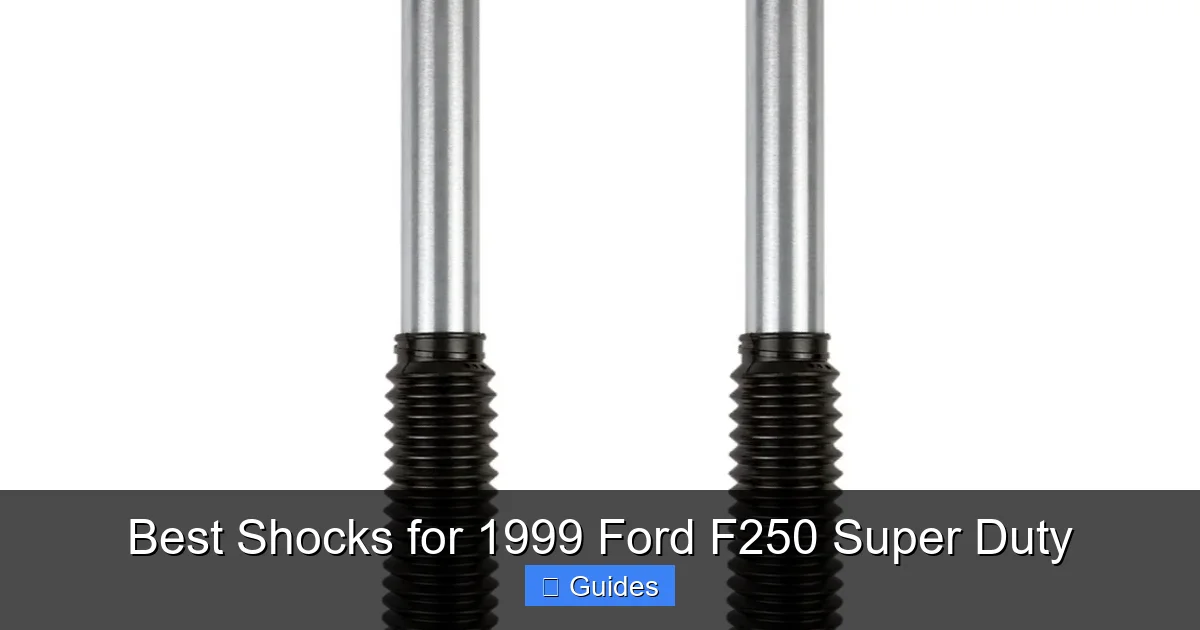
Now that you know what to look for, here are five of the best shock options for your 1999 F250 Super Duty—each tailored to different needs and budgets.
1. Bilstein 5100 Series (Best Overall)
The Bilstein 5100 is a favorite among F250 owners for good reason. These monotube, gas-charged shocks offer excellent damping, durability, and a smooth ride—even under heavy loads.
- Pros: Superior heat dissipation, consistent performance, easy bolt-on installation, great for towing and daily driving.
- Cons: Slightly stiffer ride than stock, higher price point.
- Best for: Daily drivers who tow occasionally or want a balanced upgrade.
Many users report a noticeable improvement in handling and reduced body roll after installing Bilstein 5100s. They’re also compatible with mild lift kits (up to 2 inches), making them a versatile choice.
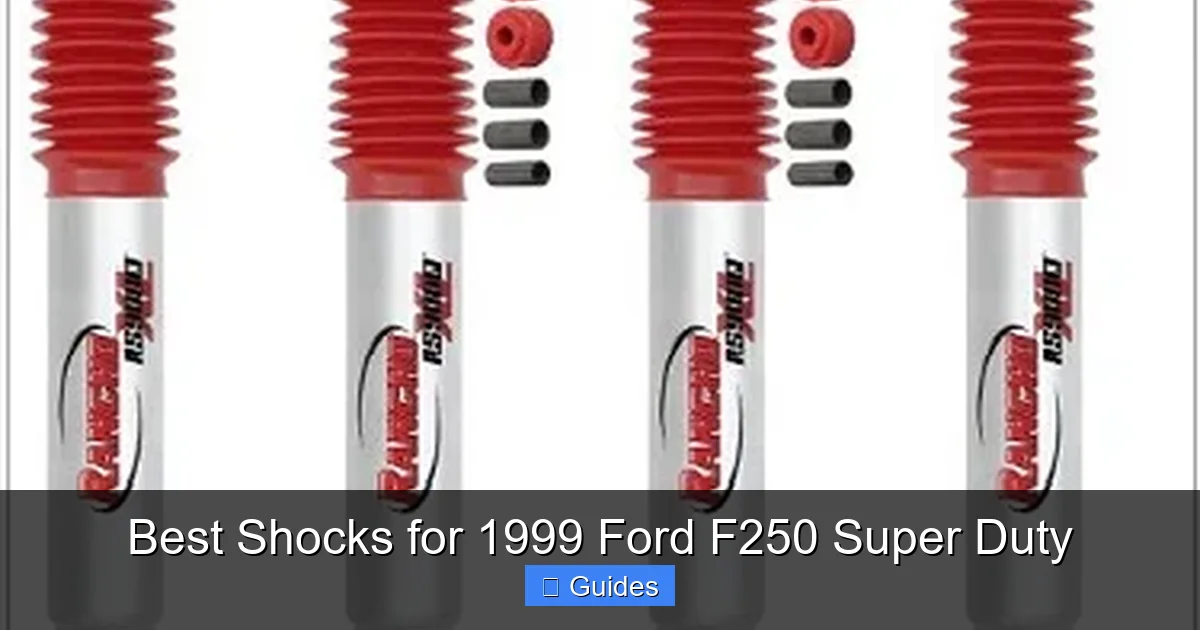
2. Rancho RS9000XL (Best Adjustable Shocks)
If you want control over your ride quality, the Rancho RS9000XL is hard to beat. These shocks feature nine levels of adjustable damping, allowing you to go from soft and comfortable to firm and sporty with a turn of a knob.
- Pros: Adjustable firmness, great for mixed use, durable construction, excellent for towing and off-roading.
- Cons: More expensive, requires manual adjustment (no remote control).
- Best for: Owners who tow, haul, and off-road—and want to fine-tune their ride.
The RS9000XL is a twin-tube design with a high-pressure gas charge. While not as heat-resistant as monotube shocks, the adjustability makes up for it in versatility.
3. Fox 2.0 Performance Series (Best for Off-Road)
For serious off-roaders, the Fox 2.0 Performance Series shocks are a top-tier choice. These monotube shocks feature aluminum bodies, nitrogen gas charging, and high-flow pistons for maximum performance on rough terrain.
- Pros: Exceptional durability, long travel, excellent heat management, ideal for rock crawling and desert running.
- Cons: Expensive, overkill for daily driving, may require professional installation.
- Best for: Off-road enthusiasts and overlanders.
Fox shocks are used by professional racers and overland builders for a reason—they’re built to handle extreme conditions. If you’re taking your F250 off the beaten path, these are worth the investment.
4. KYB MonoMax (Best Heavy-Duty Option)
The KYB MonoMax is a heavy-duty monotube shock designed specifically for trucks and SUVs that work hard. With a large piston diameter and high-pressure gas charge, it delivers strong damping for towing and hauling.
- Pros: Excellent load control, affordable for a monotube shock, easy installation, great for work trucks.
- Cons: Firmer ride than stock, not ideal for comfort-focused drivers.
- Best for: Work trucks, fleet vehicles, and frequent towers.
KYB is known for OEM-quality parts, and the MonoMax lives up to that reputation. It’s a no-frills, high-performance shock that gets the job done.
5. Monroe Reflex (Best Budget Option)
If you’re on a tight budget but still want an upgrade over stock, the Monroe Reflex is a solid choice. These gas-charged shocks offer improved control and a smoother ride without breaking the bank.
- Pros: Affordable, easy to find, good for daily driving, decent performance for light towing.
- Cons: Not as durable as premium brands, shorter lifespan, less effective under heavy loads.
- Best for: Budget-conscious owners with light-duty needs.
While not as robust as Bilstein or Fox, the Monroe Reflex is a reliable entry-level upgrade that beats worn-out stock shocks.
Installation Tips and What to Expect
Installing new shocks on your 1999 F250 Super Duty is a job most DIYers can handle with basic tools. Here’s what you need to know.
Tools and Preparation
You’ll need:
- Jack and jack stands (or a lift)
- Socket wrench set
- Torque wrench
- Penetrating oil (like PB Blaster)
- New shocks (obviously!)
Start by parking on a level surface and engaging the parking brake. Lift the truck and secure it with jack stands—never rely on just a jack.
Step-by-Step Installation
- Remove the old shocks: Spray the mounting bolts with penetrating oil and let it sit. Then, use your socket wrench to remove the upper and lower bolts. You may need to compress the shock slightly to get it out.
- Install the new shocks: Position the new shock and hand-tighten the bolts. Make sure the shock is oriented correctly (most have a top and bottom).
- Torque to spec: Use a torque wrench to tighten the bolts to the manufacturer’s specifications (usually around 70-90 ft-lbs for the F250).
- Lower the truck and test: Take it for a short drive to settle the suspension. Listen for unusual noises and check for proper alignment.
Professional Installation
If you’re not comfortable doing the job yourself, most mechanics can install shocks in under an hour. It’s a relatively quick and inexpensive service—usually $100–$200 for labor. Given the safety implications of suspension work, it’s often worth the peace of mind.
Maintenance and Longevity
Once your new shocks are installed, a little maintenance goes a long way.
Inspect Regularly
Check your shocks every 10,000 to 15,000 miles. Look for leaks, dents, or loose mounts. Also, pay attention to how your truck rides—any change in handling or comfort could signal a problem.
Avoid Overloading
Even the best shocks have limits. Don’t exceed your truck’s GVWR or tow rating. Overloading puts extra stress on shocks and can shorten their lifespan.
Clean After Off-Roading
If you take your F250 off-road, rinse off mud and debris after each trip. Dirt can damage seals and reduce performance over time.
With proper care, quality shocks should last 50,000 to 100,000 miles—or even longer for light-duty use.
Final Thoughts: Making the Right Choice
Choosing the best shocks for your 1999 Ford F250 Super Duty isn’t just about picking the most expensive or popular brand. It’s about matching the right shock to your truck’s weight, your driving habits, and your performance goals.
If you’re a daily driver who occasionally tows, the Bilstein 5100 offers the best balance of comfort and control. For those who need adjustability, the Rancho RS9000XL is a standout. Off-road enthusiasts should consider the Fox 2.0, while work truck owners will appreciate the durability of the KYB MonoMax. And if you’re on a budget, the Monroe Reflex is a solid entry point.
No matter which shocks you choose, upgrading from worn-out stock units will make a noticeable difference in how your F250 handles, rides, and responds under load. It’s one of the most cost-effective upgrades you can make for safety, comfort, and performance.
So don’t wait until your truck starts bouncing down the road like a carnival ride. Invest in quality shocks today—and enjoy every mile with confidence.
Frequently Asked Questions
How often should I replace the shocks on my 1999 Ford F250 Super Duty?
Most experts recommend inspecting shocks every 50,000 miles and replacing them if signs of wear appear. However, if you frequently tow, haul, or drive off-road, consider checking them more often—every 25,000 to 30,000 miles.
Can I install shocks myself, or do I need a professional?
Yes, you can install shocks yourself with basic tools and mechanical knowledge. The job typically takes 1-2 hours. However, if you’re unsure or want to ensure proper torque and alignment, a professional installation is a safe and affordable option.
Do I need different shocks for 2WD and 4WD models?
Yes. The suspension geometry and shock lengths differ between 2WD and 4WD F250s. Always verify your truck’s drivetrain and suspension setup before purchasing shocks to ensure compatibility.
Will new shocks improve my truck’s towing capacity?
No, shocks don’t increase towing capacity—that’s determined by your engine, transmission, and frame. However, better shocks improve stability, reduce sway, and enhance control when towing, making the experience safer and more comfortable.
Are adjustable shocks worth the extra cost?
If you frequently switch between light loads and heavy towing or off-roading, adjustable shocks like the Rancho RS9000XL are worth it. They let you fine-tune ride firmness for different conditions, offering versatility that fixed shocks can’t match.
Can I use stock shocks if I have a lift kit?
No. Lift kits increase suspension travel, so stock-length shocks will bottom out and fail prematurely. Always use shocks designed for your specific lift height to avoid damage and ensure proper performance.

At CarLegit, we believe information should be clear, factual, and genuinely helpful. That’s why every guide, review, and update on our website is created with care, research, and a strong focus on user experience.