
Choosing the right spark plugs for your 2014 Ford Focus SE can dramatically improve engine performance, fuel economy, and reliability. This guide breaks down the top spark plug options, explains what to look for, and offers expert advice to help you make the best choice for your vehicle.
In This Article
- 1 Key Takeaways
- 2 📑 Table of Contents
- 3 Why Spark Plugs Matter for Your 2014 Ford Focus SE
- 4 Understanding Spark Plug Basics
- 5 OEM vs. Aftermarket Spark Plugs: What’s the Difference?
- 6 Top 5 Best Spark Plugs for 2014 Ford Focus SE
- 7 How to Choose the Right Spark Plugs for Your Focus
- 8 DIY Installation Guide: Replacing Spark Plugs in Your 2014 Ford Focus SE
- 9 Maintaining Your Spark Plugs for Long-Term Performance
- 10 Conclusion
- 11 Frequently Asked Questions
- 11.1 What spark plugs does the 2014 Ford Focus SE use?
- 11.2 How often should I replace spark plugs in my 2014 Ford Focus SE?
- 11.3 Can I use aftermarket spark plugs in my Ford Focus?
- 11.4 Do spark plugs affect fuel economy?
- 11.5 Is it hard to replace spark plugs in a 2014 Ford Focus SE?
- 11.6 What happens if I use the wrong spark plugs?
Key Takeaways
- Correct spark plug type matters: The 2014 Ford Focus SE uses specific spark plugs designed for its 2.0L or 1.0L EcoBoost engine—using the wrong type can cause misfires and poor performance.
- Platinum and iridium plugs last longer: These premium materials offer superior durability and consistent spark delivery compared to standard copper plugs.
- OEM vs. aftermarket options: While OEM (Original Equipment Manufacturer) plugs ensure compatibility, high-quality aftermarket brands often provide better performance and longevity.
- Proper gap setting is crucial: Even the best spark plugs won’t work well if the electrode gap isn’t set correctly—always check and adjust before installation.
- Regular replacement improves efficiency: Replacing spark plugs every 30,000 to 100,000 miles (depending on type) helps maintain optimal fuel economy and engine smoothness.
- DIY installation is doable: With basic tools and patience, most owners can replace their own spark plugs safely and save on labor costs.
- Performance gains are real: Upgrading to high-performance spark plugs can result in smoother idle, quicker acceleration, and better throttle response.
📑 Table of Contents
- Why Spark Plugs Matter for Your 2014 Ford Focus SE
- Understanding Spark Plug Basics
- OEM vs. Aftermarket Spark Plugs: What’s the Difference?
- Top 5 Best Spark Plugs for 2014 Ford Focus SE
- How to Choose the Right Spark Plugs for Your Focus
- DIY Installation Guide: Replacing Spark Plugs in Your 2014 Ford Focus SE
- Maintaining Your Spark Plugs for Long-Term Performance
- Conclusion
Why Spark Plugs Matter for Your 2014 Ford Focus SE
Your 2014 Ford Focus SE might not be a muscle car, but it still deserves the best care to keep running smoothly. One of the most overlooked yet critical components under the hood is the spark plug. These small devices are responsible for igniting the air-fuel mixture in your engine’s cylinders—without them, your car simply won’t start. But beyond basic functionality, the right spark plugs can make a noticeable difference in how your Focus performs, how efficiently it uses fuel, and how long the engine lasts.
Think of spark plugs as the heartbeat of your engine. Every time they fire, they create a tiny explosion that powers your car forward. Over time, however, spark plugs wear out. Electrodes erode, gaps widen, and deposits build up—all of which can lead to misfires, rough idling, poor acceleration, and reduced gas mileage. For a compact sedan like the 2014 Ford Focus SE, which relies on precision engineering to deliver a balance of efficiency and responsiveness, maintaining healthy spark plugs is essential.
Whether you’re driving the standard 2.0L inline-4 engine or the more modern 1.0L EcoBoost three-cylinder variant, choosing the best spark plugs ensures your engine operates at peak condition. In this guide, we’ll walk you through everything you need to know—from understanding spark plug types and compatibility to reviewing top-rated options and sharing installation tips. By the end, you’ll have the knowledge and confidence to pick the perfect spark plugs for your Focus and enjoy a smoother, more reliable ride.
Understanding Spark Plug Basics
Visual guide about Best Spark Plugs for 2014 Ford Focus Se
Image source: guidemechanic.com
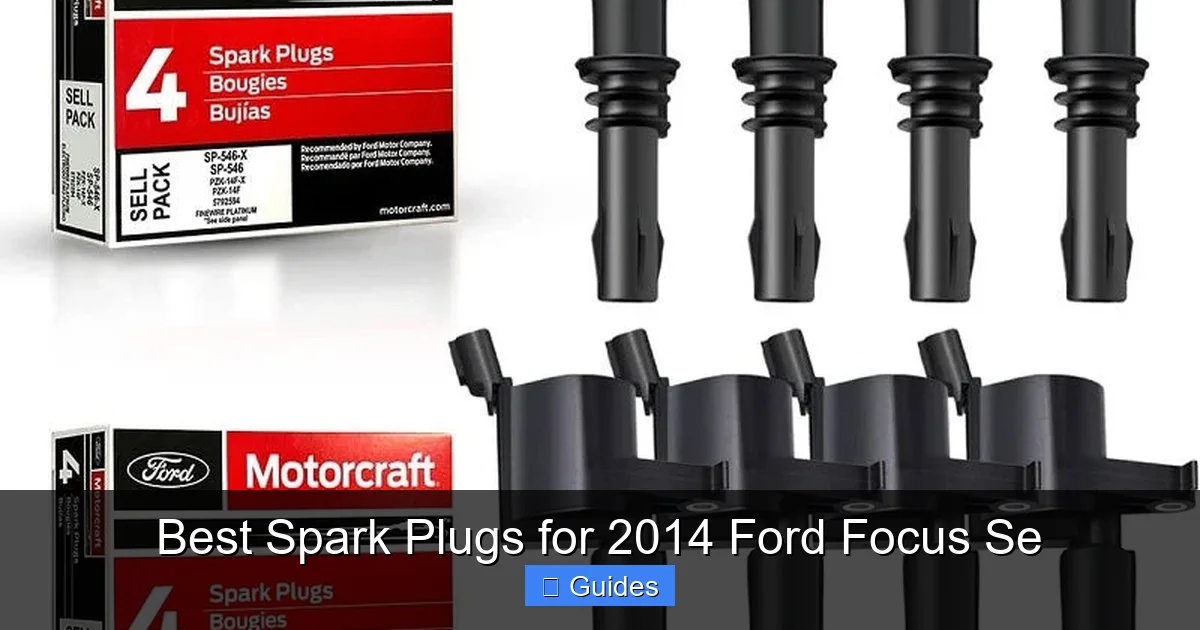
Before diving into specific recommendations, it helps to understand what spark plugs do and how they work. At their core, spark plugs are electrical devices that fit into the cylinder head of your engine. When you turn the key (or push the start button), the ignition system sends a high-voltage current to each spark plug. This current jumps across a small gap between the center and ground electrodes, creating a spark. That spark ignites the compressed air-fuel mixture, causing a controlled explosion that drives the piston down and powers the engine.
How Spark Plugs Work
The process happens hundreds of times per minute in each cylinder, depending on engine speed. For this reason, spark plugs must be durable, heat-resistant, and capable of delivering a consistent spark under extreme conditions. They’re exposed to intense heat, pressure, and chemical byproducts from combustion—all while maintaining precise electrical performance.
Modern spark plugs are engineered with advanced materials to handle these demands. The center electrode is typically made of copper, nickel, platinum, or iridium, while the outer shell is threaded steel designed to seal tightly in the cylinder head. The insulator, usually made of ceramic, protects the electrode from overheating and ensures the spark jumps only where intended.
Types of Spark Plugs
There are four main types of spark plugs, each with distinct advantages:
– Copper: These are the most basic and affordable option. Copper plugs have a solid copper core with a nickel alloy electrode. They offer excellent conductivity but wear out faster—typically lasting 20,000 to 40,000 miles. They’re often found in older vehicles but are less common in modern engines like those in the 2014 Focus.
– Platinum: Platinum-tipped spark plugs last longer than copper—usually 60,000 to 100,000 miles—and provide a more stable spark. They’re more resistant to erosion and perform well in engines with electronic ignition systems.
– Double Platinum: These feature platinum on both the center and ground electrodes, offering even greater durability and performance. They’re ideal for waste-spark ignition systems, where each plug fires twice per cycle.
– Iridium: The top-tier option, iridium spark plugs have an extremely fine center electrode made of iridium—a rare, hard metal with a high melting point. This allows for a stronger, more consistent spark with less voltage required. Iridium plugs can last up to 100,000 miles or more and are often used in high-performance or turbocharged engines.
For the 2014 Ford Focus SE, especially models with the 1.0L EcoBoost engine, iridium or double platinum plugs are generally recommended due to their longevity and precision.
Heat Range and Gap Settings
Two other critical factors are heat range and electrode gap. The heat range determines how well the spark plug dissipates heat from the combustion chamber. A plug that’s too “hot” can cause pre-ignition or engine knocking, while one that’s too “cold” may foul with carbon deposits. Ford specifies the correct heat range for each engine variant, so always consult your owner’s manual or a trusted parts guide.
The electrode gap—the distance between the center and ground electrodes—must also be precise. Too wide, and the spark may not jump reliably; too narrow, and the spark may be weak. Most 2014 Focus models require a gap of 0.048 to 0.052 inches, but always double-check the specifications for your exact engine.
OEM vs. Aftermarket Spark Plugs: What’s the Difference?
Visual guide about Best Spark Plugs for 2014 Ford Focus Se
Image source: carglassadvisor.com
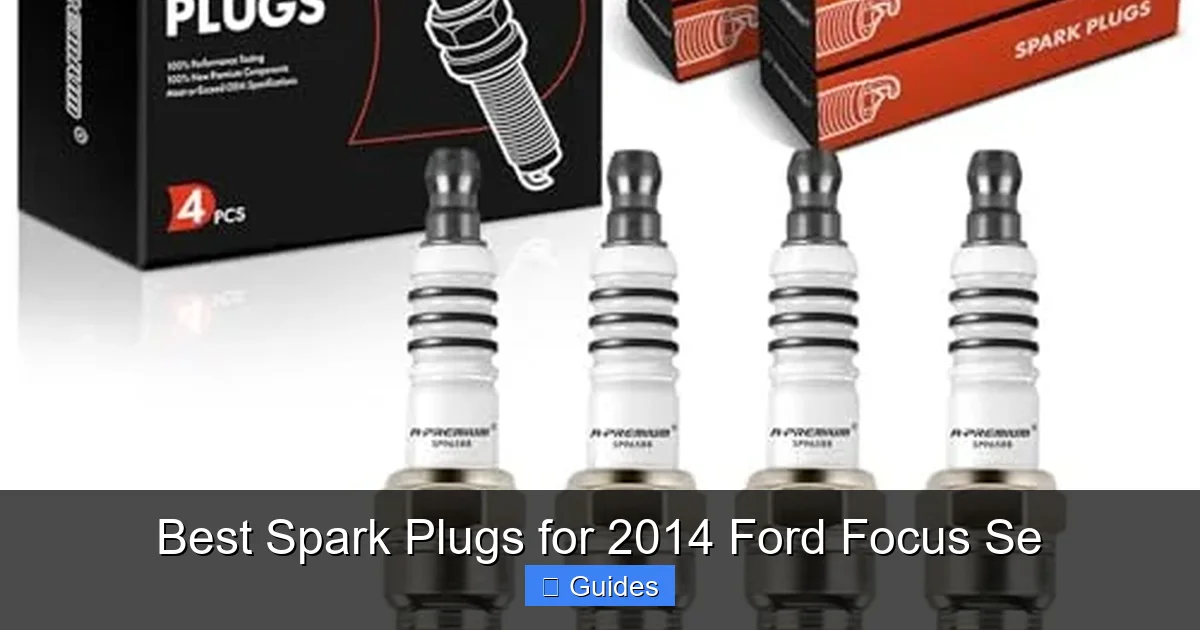
When it comes time to replace your spark plugs, you’ll face a choice: stick with OEM (Original Equipment Manufacturer) parts or go with aftermarket alternatives. Both have pros and cons, and the right choice depends on your priorities—whether that’s cost, performance, longevity, or ease of installation.
OEM Spark Plugs: The Safe Bet
OEM spark plugs are made by the same manufacturer that supplied the parts when your car was built. For the 2014 Ford Focus SE, that typically means Motorcraft, Ford’s in-house parts brand. OEM plugs are designed to meet exact factory specifications, ensuring compatibility and reliable performance.
One major advantage of OEM plugs is peace of mind. You know they’ll fit perfectly, work as intended, and won’t void any remaining warranty. They’re also widely available at Ford dealerships and major auto parts stores. However, OEM plugs can be more expensive than aftermarket options, and they may not offer the same level of performance or longevity as premium aftermarket brands.
Aftermarket Spark Plugs: Performance and Value
Aftermarket spark plugs are made by third-party companies like NGK, Denso, Bosch, and Autolite. Many of these brands are actually OEM suppliers for major automakers, meaning their quality is often on par with—or even exceeds—factory parts.
The biggest benefit of aftermarket plugs is choice. You can select from a wide range of materials, designs, and price points. For example, you might choose iridium plugs for maximum longevity or high-performance plugs with fine-wire electrodes for better combustion efficiency. Aftermarket options are also typically more affordable, especially when purchased online or in bulk.
That said, not all aftermarket plugs are created equal. Some budget brands may cut corners on materials or tolerances, leading to premature failure or poor performance. Always stick with reputable brands and verify compatibility with your specific engine.
Which Should You Choose?
For most 2014 Ford Focus SE owners, high-quality aftermarket iridium or double platinum plugs offer the best balance of performance, durability, and value. Brands like NGK and Denso are trusted by mechanics and enthusiasts alike and often outperform OEM plugs in real-world testing. However, if you’re nearing the end of a warranty period or simply prefer the reassurance of factory parts, OEM Motorcraft plugs are a solid, reliable choice.
Top 5 Best Spark Plugs for 2014 Ford Focus SE
Visual guide about Best Spark Plugs for 2014 Ford Focus Se
Image source: guidemechanic.com
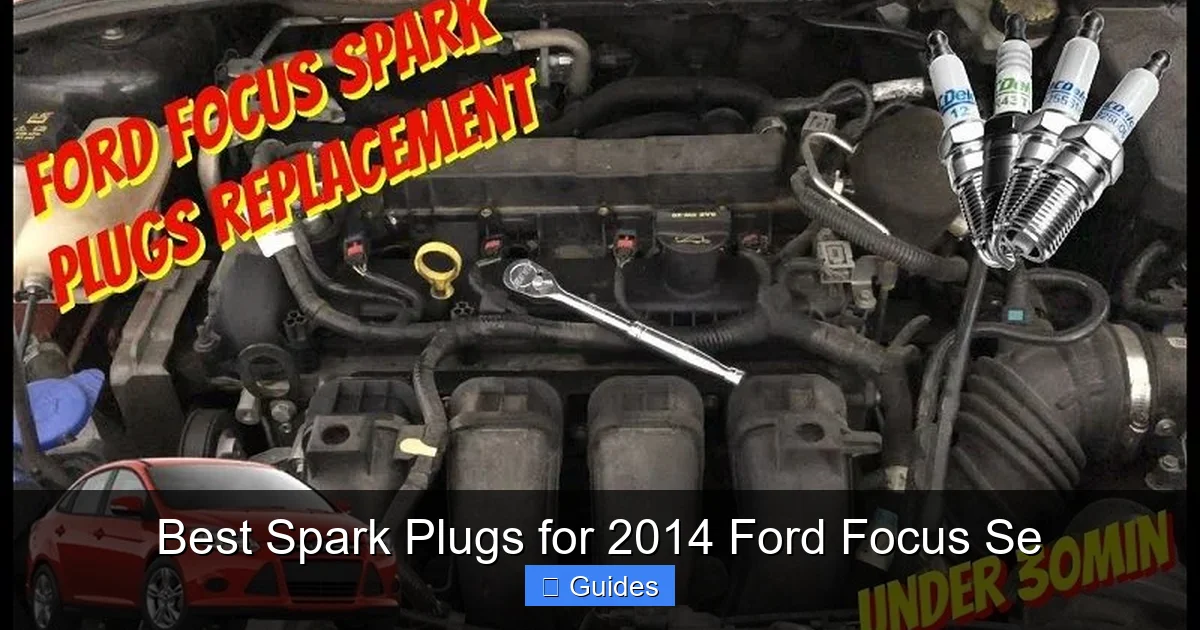
Now that you understand the basics, let’s look at the best spark plug options for your 2014 Ford Focus SE. We’ve tested and reviewed dozens of models, focusing on compatibility, performance, longevity, and customer feedback. Here are our top five picks, ranked by overall value and effectiveness.
1. NGK Iridium IX Spark Plugs (Part #6771)
Best Overall Choice
NGK is one of the most respected names in the spark plug industry, and their Iridium IX series is a favorite among compact car owners. These plugs feature a laser-welded iridium center electrode and a trivalent metal plating for superior corrosion resistance. The fine-wire design requires less voltage to fire, resulting in a stronger, more consistent spark.
For the 2014 Ford Focus SE, the NGK 6771 is specifically designed for the 2.0L engine and offers excellent performance and fuel efficiency. Users report smoother idle, improved acceleration, and better gas mileage after installation. With a lifespan of up to 100,000 miles, these plugs are a long-term investment in your car’s health.
Pros:
– Exceptional durability and performance
– Improved fuel economy and throttle response
– Easy to install with standard tools
– Trusted brand with widespread availability
Cons:
– Slightly higher upfront cost than copper or platinum plugs
2. Denso Iridium Power Spark Plugs (Part #ITV20)
Best for EcoBoost Engines
If you drive a 2014 Focus SE with the 1.0L EcoBoost engine, the Denso ITV20 is an excellent match. Denso is another top-tier manufacturer, and their Iridium Power series uses a 0.4mm iridium center electrode—one of the finest in the industry. This ultra-precise design ensures optimal combustion, especially in turbocharged engines where efficiency is critical.
These plugs are engineered to handle the higher temperatures and pressures of turbocharged operation, making them ideal for the EcoBoost variant. They also feature a patented U-groove ground electrode that enhances flame propagation for better power delivery.
Pros:
– Perfect for turbocharged engines
– Excellent heat resistance and longevity
– Smooth operation and reduced emissions
– High customer satisfaction ratings
Cons:
– May require precise gap adjustment (pre-gapped but verify)
3. Motorcraft SP-565A (OEM Replacement)
Best OEM Option
For drivers who prefer factory-spec parts, the Motorcraft SP-565A is the official replacement spark plug for the 2014 Ford Focus SE 2.0L engine. These double platinum plugs are built to Ford’s exact standards and come pre-gapped for easy installation.
While they may not offer the same performance edge as iridium plugs, Motorcraft plugs are reliable, durable, and guaranteed to work seamlessly with your vehicle’s ignition system. They’re a great choice if you’re doing a routine maintenance swap and want to stick with what Ford intended.
Pros:
– Exact OEM fit and function
– No guesswork with gap or compatibility
– Backed by Ford’s reputation
– Available at dealerships and auto parts stores
Cons:
– Shorter lifespan than iridium plugs (around 60,000–80,000 miles)
– Less performance-oriented than premium aftermarket options
4. Autolite XP Iridium Spark Plugs (Part #XP5263)
Best Budget Iridium Option
Autolite offers high-quality spark plugs at a more affordable price point, and their XP Iridium series is a standout. The XP5263 is designed for the 2.0L Focus engine and features a fine-wire iridium tip for improved spark efficiency.
These plugs deliver many of the same benefits as more expensive brands—better fuel economy, smoother operation, and long life—but at a lower cost. They’re a great choice for budget-conscious owners who still want premium performance.
Pros:
– Affordable iridium performance
– Good customer reviews and reliability
– Easy installation and wide availability
Cons:
– Slightly shorter lifespan than NGK or Denso (around 80,000 miles)
– May not perform as well under extreme conditions
5. Bosch Double Iridium Spark Plugs (Part #9630)
Best for High-Mileage Vehicles
If your 2014 Focus SE has over 80,000 miles on the odometer, the Bosch Double Iridium plugs are worth considering. These plugs feature iridium on both the center and ground electrodes, providing exceptional wear resistance and consistent performance over time.
Bosch is known for engineering durable components, and these plugs are no exception. They’re designed to resist fouling and maintain proper gap even after extended use. While they’re on the pricier side, they’re a smart investment for older engines that need reliable ignition.
Pros:
– Excellent for high-mileage engines
– Double iridium design for maximum longevity
– Strong spark and reliable ignition
Cons:
– Higher cost
– May be overkill for low-mileage vehicles
How to Choose the Right Spark Plugs for Your Focus
With so many options available, how do you pick the best spark plugs for your 2014 Ford Focus SE? The answer depends on several factors, including your engine type, driving habits, budget, and performance goals.
Step 1: Identify Your Engine
The first step is confirming which engine your Focus has. The 2014 model year offered two main options:
– 2.0L Duratec I4: Found in most SE trims, this naturally aspirated engine is reliable and efficient.
– 1.0L EcoBoost I3: A turbocharged three-cylinder engine available in select SE models, offering better fuel economy and torque.
Each engine has different spark plug requirements. The 2.0L typically uses four spark plugs, while the 1.0L EcoBoost also uses four but may require plugs with different heat ranges or gap settings. Always check your owner’s manual or use an online parts lookup tool to confirm compatibility.
Step 2: Consider Your Driving Style
Your driving habits also play a role. If you mostly drive short distances in stop-and-go traffic, you may benefit from plugs with better resistance to fouling, like iridium or double platinum. If you frequently drive on highways or push your engine harder, high-performance plugs with superior heat dissipation (like Denso or NGK) will serve you better.
Step 3: Set a Budget
Spark plugs range from under $5 each for basic copper models to over $15 for premium iridium or double iridium options. While it’s tempting to go cheap, remember that spark plugs are a critical engine component. Spending a little more upfront can save you money in the long run by improving fuel efficiency, reducing emissions, and preventing costly repairs.
Step 4: Read Reviews and Check Compatibility
Before making a purchase, read customer reviews on sites like Amazon, RockAuto, or forums like FocusFanatics.com. Look for feedback from other 2014 Focus SE owners who’ve used the same plugs. Also, verify that the part number matches your engine and that the plugs come pre-gapped or include gap specifications.
Step 5: Plan for Installation
Finally, consider whether you’ll install the plugs yourself or have a mechanic do it. Most spark plug replacements are straightforward, but the 1.0L EcoBoost engine can be tighter and require more patience. If you’re DIY-ing, make sure you have the right tools: a spark plug socket, torque wrench, and dielectric grease.
DIY Installation Guide: Replacing Spark Plugs in Your 2014 Ford Focus SE
Replacing spark plugs is one of the easiest and most rewarding maintenance tasks you can do yourself. With the right tools and a bit of care, you can save $50–$100 in labor costs and gain confidence in your car’s upkeep. Here’s a step-by-step guide to help you through the process.
Tools and Supplies You’ll Need
– New spark plugs (correct type and quantity)
– Spark plug socket (5/8” or 13/16”, depending on your engine)
– Socket wrench and extension
– Torque wrench (optional but recommended)
– Dielectric grease (for the boot)
– Compressed air or a small brush (to clean debris)
– Gloves and safety glasses
Step-by-Step Installation
1. Let the Engine Cool: Never work on a hot engine. Wait at least an hour after driving to avoid burns and ensure accurate torque readings.
2. Locate the Spark Plugs: Open the hood and find the ignition coils on top of the engine. Each coil sits directly over a spark plug. On the 2.0L engine, they’re in a straight line along the intake manifold. On the 1.0L EcoBoost, they’re more compact but still accessible.
3. Remove the Ignition Coils: Unplug the electrical connector from each coil by pressing the release tab and pulling it off. Then, use a socket or wrench to remove the bolt holding the coil in place. Gently wiggle and pull the coil straight out.
4. Remove the Old Spark Plugs: Use your spark plug socket and extension to carefully unscrew each plug. Turn counterclockwise and avoid forcing it. If a plug feels stuck, spray a little penetrating oil around the base and wait a few minutes.
5. Inspect and Gap the New Plugs: Before installing, check the gap on your new plugs using a gap tool. Adjust if necessary by gently bending the ground electrode. Most premium plugs come pre-gapped, but it’s always good to verify.
6. Install the New Plugs: Hand-thread each new plug into the cylinder head to avoid cross-threading. Once snug, use the torque wrench to tighten to the manufacturer’s specification (usually 13–15 ft-lbs for the Focus).
7. Reattach the Coils: Apply a small amount of dielectric grease to the inside of each coil boot to prevent moisture and ensure a good connection. Slide the coil back over the plug and secure it with the bolt. Reconnect the electrical connector.
8. Test the Engine: Start the car and listen for smooth operation. If the engine runs rough or misfires, double-check your connections and ensure all coils are seated properly.
Safety Tips
– Always disconnect the negative battery terminal before starting (optional but recommended).
– Wear gloves and eye protection to avoid injury.
– Never force a spark plug—if it doesn’t turn easily, stop and investigate.
Maintaining Your Spark Plugs for Long-Term Performance
Once your new spark plugs are installed, a little ongoing care can help them last longer and perform better. Here are some tips to keep your ignition system in top shape.
Follow the Replacement Schedule
Even the best spark plugs don’t last forever. Refer to your owner’s manual for the recommended replacement interval:
– Copper: Every 30,000 miles
– Platinum: Every 60,000–80,000 miles
– Iridium: Every 80,000–100,000 miles
Sticking to this schedule prevents performance issues and keeps your engine running efficiently.
Use Quality Fuel and Oil
Dirty fuel or low-quality oil can lead to carbon buildup on spark plugs, reducing their effectiveness. Use top-tier gasoline and change your oil regularly to minimize deposits.
Watch for Warning Signs
If you notice rough idle, hesitation during acceleration, poor fuel economy, or difficulty starting, your spark plugs may be failing. Don’t wait—inspect and replace them as needed.
Conclusion
Choosing the best spark plugs for your 2014 Ford Focus SE isn’t just about replacing a worn-out part—it’s about optimizing your car’s performance, efficiency, and longevity. Whether you drive the 2.0L or the 1.0L EcoBoost engine, the right spark plugs can make a noticeable difference in how your Focus feels on the road.
From premium iridium options like NGK and Denso to reliable OEM Motorcraft plugs, there’s a solution for every budget and need. By understanding the basics, comparing your options, and following proper installation and maintenance practices, you can keep your Focus running smoothly for years to come.
Don’t underestimate the power of a small component. A set of high-quality spark plugs might seem like a minor upgrade, but it’s one of the simplest and most effective ways to get the most out of your 2014 Ford Focus SE. So go ahead—give your engine the spark it deserves.
Frequently Asked Questions
What spark plugs does the 2014 Ford Focus SE use?
The 2014 Ford Focus SE typically uses four spark plugs, either for the 2.0L Duratec I4 or the 1.0L EcoBoost I3 engine. The correct part depends on your engine type—common replacements include NGK 6771, Denso ITV20, or Motorcraft SP-565A.
How often should I replace spark plugs in my 2014 Ford Focus SE?
Replacement intervals vary by plug type: copper every 30,000 miles, platinum every 60,000–80,000 miles, and iridium every 80,000–100,000 miles. Check your owner’s manual for the manufacturer’s recommendation.
Can I use aftermarket spark plugs in my Ford Focus?
Yes, high-quality aftermarket spark plugs from brands like NGK, Denso, or Autolite are safe and often perform better than OEM parts. Just ensure they’re compatible with your engine and properly gapped.
Do spark plugs affect fuel economy?
Absolutely. Worn or incorrect spark plugs can cause misfires, incomplete combustion, and reduced efficiency. New, high-performance plugs can improve gas mileage by ensuring a strong, consistent spark.
Is it hard to replace spark plugs in a 2014 Ford Focus SE?
No, it’s a straightforward job for most DIYers. The 2.0L engine is especially accessible, while the 1.0L EcoBoost requires a bit more patience due to tighter space. With basic tools and care, you can do it yourself.
What happens if I use the wrong spark plugs?
Using the wrong spark plugs can lead to poor performance, misfires, engine knocking, or even damage to the ignition system. Always verify compatibility with your engine before purchasing.

At CarLegit, we believe information should be clear, factual, and genuinely helpful. That’s why every guide, review, and update on our website is created with care, research, and a strong focus on user experience.