
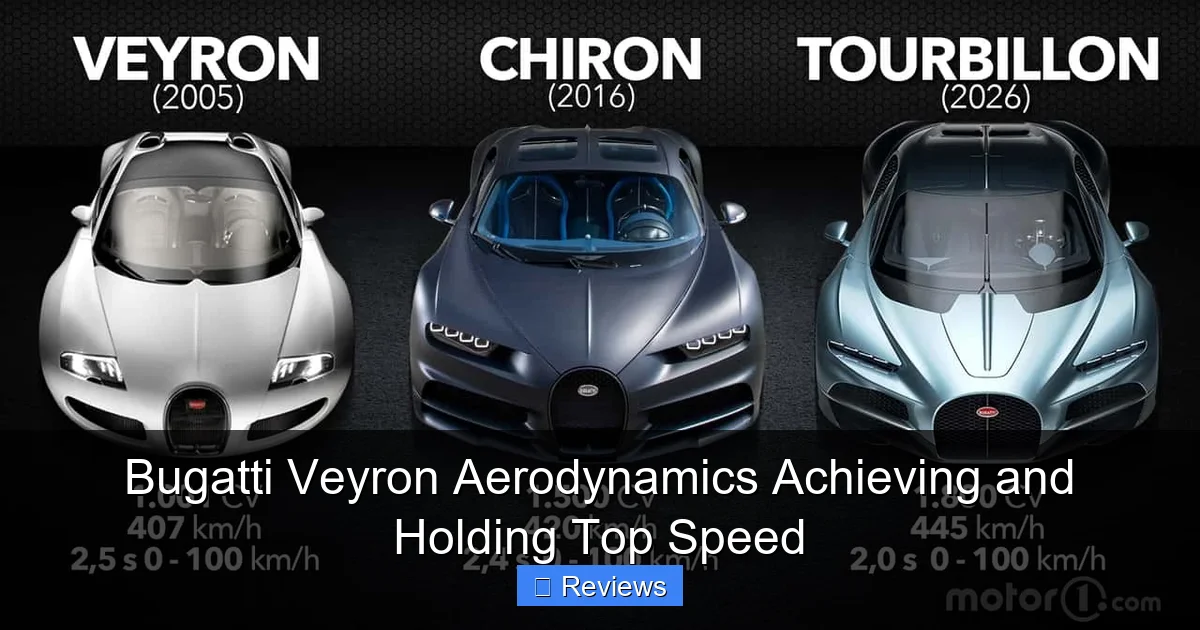
Featured image for how bugatti veyrons aerodynamics impact achieving and maintaining top speed
Image source: cdn.motor1.com
The Bugatti Veyron’s unprecedented top speed is fundamentally achieved and maintained through its extraordinarily complex and adaptive aerodynamic system. This intricate engineering marvel masterfully balances the conflicting demands of generating immense downforce for stability while minimizing drag, crucially adapting its shape to optimize performance from acceleration to sustaining over 400 km/h. Its active aerodynamics are the silent force battling physics to keep the Veyron glued to the road and moving forward at incredible velocity.
The automotive world is replete with marvels of engineering, but few vehicles command the same awe and respect as the Bugatti Veyron. A machine conceived with a singular, audacious goal: to shatter existing speed records and redefine what a road-legal car could achieve. Yet, the pursuit of otherworldly velocity isn’t simply about raw power; it’s a delicate and intricate dance with the very air we breathe. For the Bugatti Veyron, achieving and maintaining its legendary top speed hinged not just on its colossal 16-cylinder engine, but on an aerodynamic mastery so profound it borders on artistry.
At speeds exceeding 400 kilometers per hour, the air ceases to be an invisible medium and transforms into a solid, unforgiving wall. This immense resistance, coupled with the critical need for stability and control, presents a monumental challenge to engineers. The Bugatti Veyron was designed from the ground up to conquer this challenge, integrating a suite of passive and active aerodynamic solutions that allowed it to slice through the atmosphere with minimal drag while simultaneously generating the necessary downforce to remain firmly planted on the tarmac. Understanding this intricate interplay is key to appreciating the Veyron’s unparalleled engineering prowess.
This comprehensive review delves into the sophisticated world of Bugatti Veyron aerodynamics, exploring how every curve, vent, and movable panel contributes to its ability to not only reach mind-boggling speeds but also to hold them with unwavering confidence. We will dissect the innovative solutions that allowed the Veyron to redefine the hypercar segment, making it a true icon of speed and aerodynamic ingenuity. From the sculpted bodywork to the active rear wing and underbody diffusers, we examine how the Veyron masterfully manipulates airflow to achieve and maintain its legendary top speed, a testament to the relentless pursuit of perfection.
In This Article
- 1 Key Takeaways
- 2 The Aerodynamic Imperative: Battling the Invisible Wall
- 3 Drag Reduction Strategies: Slicing Through the Atmosphere
- 4 Downforce Generation: Gluing the Veyron to the Road
- 5 Active Aerodynamics: The Dynamic Dance of Airflow Management
- 6 Thermal Management and Airflow: A Symphony of Cooling and Speed
- 7 From Design to Reality: Wind Tunnel, CFD, and Road Testing
- 8 Data Table: Illustrative Aerodynamic Parameters of the Bugatti Veyron
- 9 Conclusion: The Aerodynamic Legacy of the Bugatti Veyron
- 10 Frequently Asked Questions
- 10.1 How do Bugatti Veyron aerodynamics enable its incredible top speed?
- 10.2 What active aerodynamic features does the Bugatti Veyron use to achieve and maintain top speed?
- 10.3 How does the Bugatti Veyron manage immense air resistance and drag when pursuing its top speed?
- 10.4 Why is downforce crucial for the Bugatti Veyron to maintain stability at extreme top speeds?
- 10.5 Does the Bugatti Veyron have a specific ‘Top Speed Mode’ and how does it affect its aerodynamics?
- 10.6 Beyond downforce and drag, how do Bugatti Veyron aerodynamics assist in cooling its powerful engine and brakes at high velocities?
Key Takeaways
- Minimize Drag: Aerodynamic slipperiness is crucial for overcoming air resistance to reach top speed.
- Generate Downforce: Stable high-speed performance relies on precise aerodynamic downforce for grip.
- Utilize Active Aero: Dynamic wings and diffusers constantly optimize drag and stability.
- Prioritize Cooling: Strategic airflow manages engine and brake temperatures during sustained speed.
- Optimize Ride Height: Adjustable suspension precisely balances drag reduction with necessary downforce.
- Smooth Underbody Flow: A flat chassis underside streamlines airflow, significantly reducing lift and drag.
- Control Airflow: Directing air precisely prevents turbulence, enhancing both speed and stability.
The Aerodynamic Imperative: Battling the Invisible Wall
For any vehicle aiming to achieve unprecedented speeds, aerodynamics isn’t just a design consideration; it’s the absolute foundation upon which performance is built. At lower speeds, air resistance is negligible, but as a vehicle accelerates, this resistance grows exponentially. The Bugatti Veyron, designed to reach speeds well over 400 km/h, faced an aerodynamic challenge unlike almost any other road car before it. The sheer force of air pushing against the car at such velocities demands an unparalleled understanding and manipulation of airflow.
The Four Forces of Flight (and Automotive)
Just like an aircraft, a high-speed car like the Bugatti Veyron is subject to four primary aerodynamic forces:
- Lift: The upward force generated by airflow over the car’s body. At high speeds, lift can reduce tire grip and stability, which is highly undesirable for a car.
- Drag: The resistive force acting opposite to the direction of motion. This is the primary enemy of top speed, requiring immense power to overcome.
- Thrust: The propelling force generated by the engine, which in the Veyron’s case, is a staggering 1,001 or 1,200 horsepower.
- Weight: The downward force due to gravity, which helps maintain tire contact, but too much can hinder acceleration and increase tire wear.
The core objective for the Bugatti Veyron’s engineers was to minimize drag while simultaneously creating negative lift, or “downforce,” to keep the car glued to the road. This delicate balance is what allows for both the incredible top speed and the equally critical stability required to control the car at those velocities.
The Veyron’s Unique Challenge
The Bugatti Veyron’s colossal power output could, theoretically, propel it to even higher speeds if it weren’t for the omnipresent air resistance. At 400 km/h, approximately 80% of the engine’s power is used simply to overcome aerodynamic drag. This means that reducing drag by even a small percentage translates into significant gains in achievable top speed or a reduction in the power required to maintain that speed. Furthermore, managing the airflow around the car is critical not just for speed, but also for vital functions like engine cooling, brake cooling, and ensuring clean air delivery to the monstrous engine. The designers had to integrate these complex requirements into a cohesive, aesthetically pleasing, and highly functional package, making the Veyron’s aerodynamics a masterclass in multi-objective optimization.
Drag Reduction Strategies: Slicing Through the Atmosphere
To achieve its monumental top speed, the Bugatti Veyron employed an array of sophisticated drag reduction strategies. Every surface, every curve, and every opening was meticulously sculpted and placed to minimize the aerodynamic resistance, allowing the car to cut through the air with astonishing efficiency. This relentless pursuit of low drag was paramount to hitting and exceeding the 400 km/h barrier.
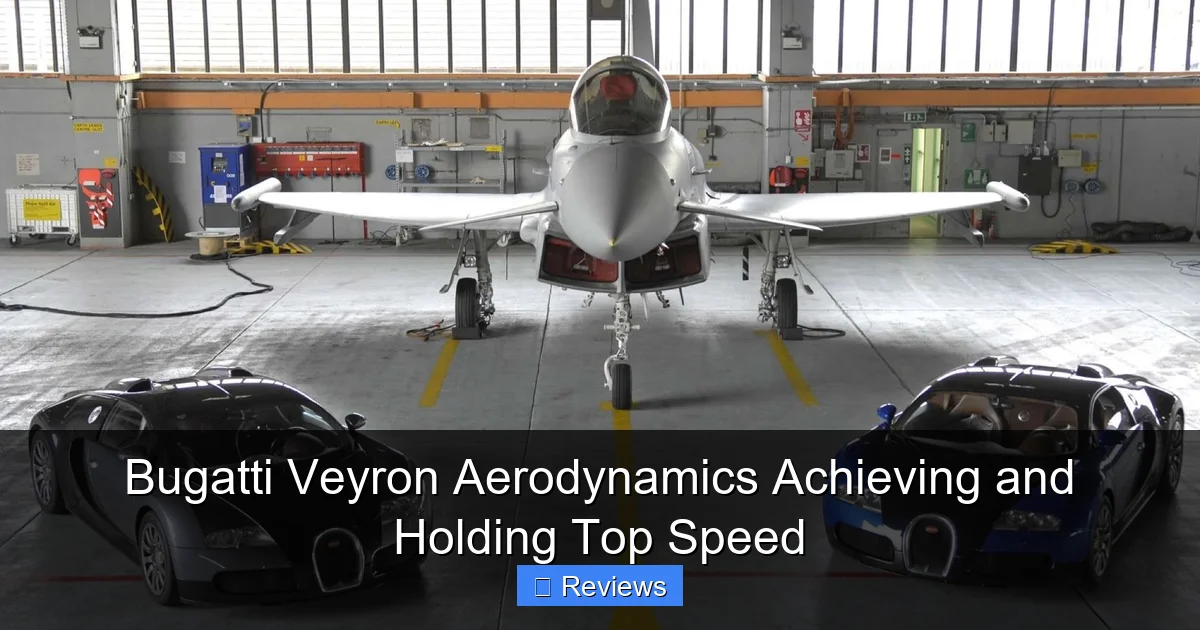
Visual guide about how bugatti veyrons aerodynamics impact achieving and maintaining top speed
Image source: i86.servimg.com
Streamlined Bodywork and Low Frontal Area
The most fundamental aspect of drag reduction is the car’s overall shape. The Bugatti Veyron boasts an incredibly streamlined profile, characterized by its smooth, flowing lines and minimal protrusions. The teardrop shape, often considered the most aerodynamically efficient, is subtly integrated into its design. A key metric here is the frontal area – the cross-sectional area of the car when viewed from the front. A smaller frontal area means less air to push out of the way. While the Veyron is a wide car, its designers worked diligently to keep its effective frontal area as small as possible without compromising internal component packaging, passenger comfort, or the necessary air intakes.
- Smooth Surfaces: The Veyron’s body panels are meticulously crafted to ensure seamless transitions, preventing turbulence and eddies that create drag. Panel gaps are minimized, and components like headlights are faired into the bodywork.
- Curved Windshield: The steeply raked and heavily curved windshield smoothly guides air over the cabin, preventing separation and reducing drag.
Underbody Management and Smooth Flow
Often overlooked, the underside of a car plays a crucial role in its aerodynamics. A rough or cluttered underbody can generate significant turbulence and drag. The Bugatti Veyron features an almost completely flat underbody. This creates a smooth, uninterrupted path for air to flow beneath the car, significantly reducing aerodynamic drag and contributing to stability. Special tunnels and diffusers are integrated into this flat floor to manage airflow efficiently, guiding it towards the rear where it can be used to generate downforce.
- Flat Floor: A smooth, enclosed underbody minimizes turbulent air, which causes drag.
- Integrated Components: Exhaust systems and other underbody components are either hidden or shaped to prevent disrupting airflow.
Wheel Design and Air Curtains
Wheels, tires, and wheel wells are notorious sources of aerodynamic drag due to their complex, rotating geometry and the turbulence they generate. The Bugatti Veyron addresses this through specific design choices:
- Aerodynamic Wheels: The design of the Veyron’s wheels themselves contributes to aerodynamic efficiency, often featuring smoother surfaces or specific spoke designs to channel air effectively.
- Tire Selection: Custom-developed Michelin PAX tires, besides their structural integrity, also have an aerodynamic profile that works in harmony with the car’s body.
- Air Curtains/Channels: Though not always explicitly visible, hypercars often employ subtle air channels or “curtains” around the wheel wells to smooth airflow, reducing the turbulence created by the spinning wheels. These manage to guide air around the turbulent area, thus minimizing energy loss and drag for the Bugatti Veyron at its maximum velocities.
By meticulously optimizing these elements, the Bugatti Veyron achieves an impressively low drag coefficient for a car of its power and dimensions, allowing its formidable engine to dedicate more power to outright acceleration and maintaining top speed.
Downforce Generation: Gluing the Veyron to the Road
While minimizing drag is essential for achieving top speed, generating sufficient downforce is equally critical for maintaining control and stability at those velocities. Without it, the Bugatti Veyron would risk becoming airborne, or at the very least, exhibit dangerously unstable handling. Downforce essentially pushes the car into the road, increasing tire grip and allowing the driver to maintain control and corner at higher speeds. The Veyron integrates several sophisticated mechanisms to achieve this vital aerodynamic characteristic.
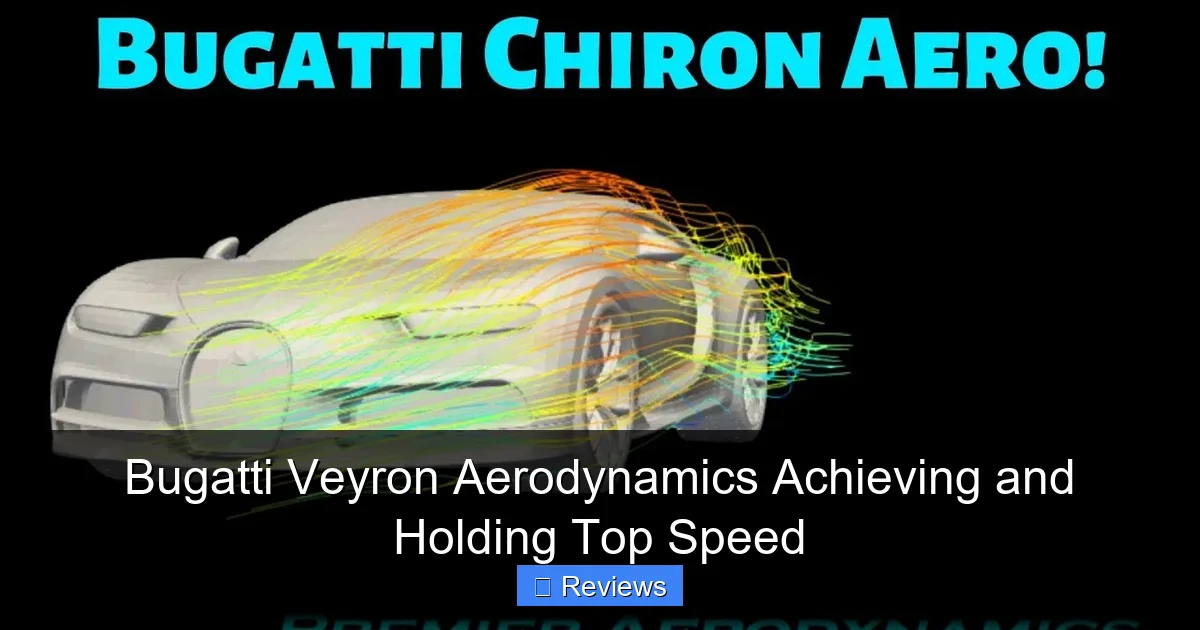
Visual guide about how bugatti veyrons aerodynamics impact achieving and maintaining top speed
Image source: i.ytimg.com
The Rear Wing’s Dual Role
The Bugatti Veyron’s active rear wing is perhaps the most iconic and dynamic element of its aerodynamic system. It doesn’t just sit there; it adapts. Its primary functions are to generate significant downforce and to act as an airbrake when needed.
- Standard Operation: In standard driving modes, the wing might be partially deployed to generate moderate downforce, enhancing grip during spirited driving.
- Handling Mode: For track driving or high-speed maneuvers where cornering grip is paramount, the wing deploys to a steeper angle, creating substantial downforce over the rear axle. This significantly increases traction and stability.
- Top Speed Mode: Crucially, when the car enters “Top Speed Mode” (requiring a special key and a safety checklist), the rear wing retracts almost entirely into the body. This minimizes drag to allow the car to reach its absolute maximum velocity. However, a smaller “top speed spoiler” remains partially deployed to provide just enough stability without generating excessive drag.
This dynamic adjustment highlights the Veyron’s ability to optimize its aerodynamic profile for different performance requirements, a key aspect in both achieving and safely maintaining its top speed.
Front Splitters and Air Dams
Downforce isn’t just a rear-end affair. The front of the car also plays a vital role. The Bugatti Veyron utilizes subtle yet effective front aerodynamic elements:
- Front Splitter: Integrated into the front bumper, the splitter extends slightly forward and downward. Its primary role is to separate the airflow passing over the car from the airflow passing underneath. By creating a high-pressure zone above the splitter and a low-pressure zone beneath it, it generates downforce at the front axle, balancing the downforce generated at the rear.
- Air Dams: These features direct air into specific channels for cooling or manipulate airflow to reduce lift at the front of the vehicle. By reducing the volume of air flowing under the car, they can increase the velocity of that air, contributing to the venturi effect and generating downforce.
Diffuser Dynamics
The rear diffuser is a critical, often underestimated, component in generating downforce. It’s the large, often finned, structure located at the very rear of the car’s underbody. The Bugatti Veyron’s diffuser is meticulously designed to:
- Accelerate Airflow: It works by expanding the volume through which air flows at the rear of the car. As the air exits from under the flat floor and enters the diffuser’s expanding channel, it accelerates, creating a low-pressure zone beneath the car.
- Suck the Car Down: This low-pressure zone effectively “sucks” the car down onto the road, generating significant downforce without adding substantial drag. The Veyron’s diffuser design is particularly sophisticated, integrated seamlessly with the underbody to maximize this effect.
The combination of these elements ensures that whether the Bugatti Veyron is accelerating, cornering, or maintaining its top speed, it remains firmly planted, providing the driver with the confidence and control necessary for such extreme performance.
Active Aerodynamics: The Dynamic Dance of Airflow Management
The true genius of the Bugatti Veyron’s aerodynamics lies in its active systems. Unlike static aero components, active aerodynamics dynamically adjust to different driving conditions, optimizing the car’s interaction with the air for various purposes – from minimizing drag for top speed to maximizing downforce for handling, and even acting as a powerful brake. This constant, intelligent adaptation is what elevates the Veyron’s performance beyond mere brute force.
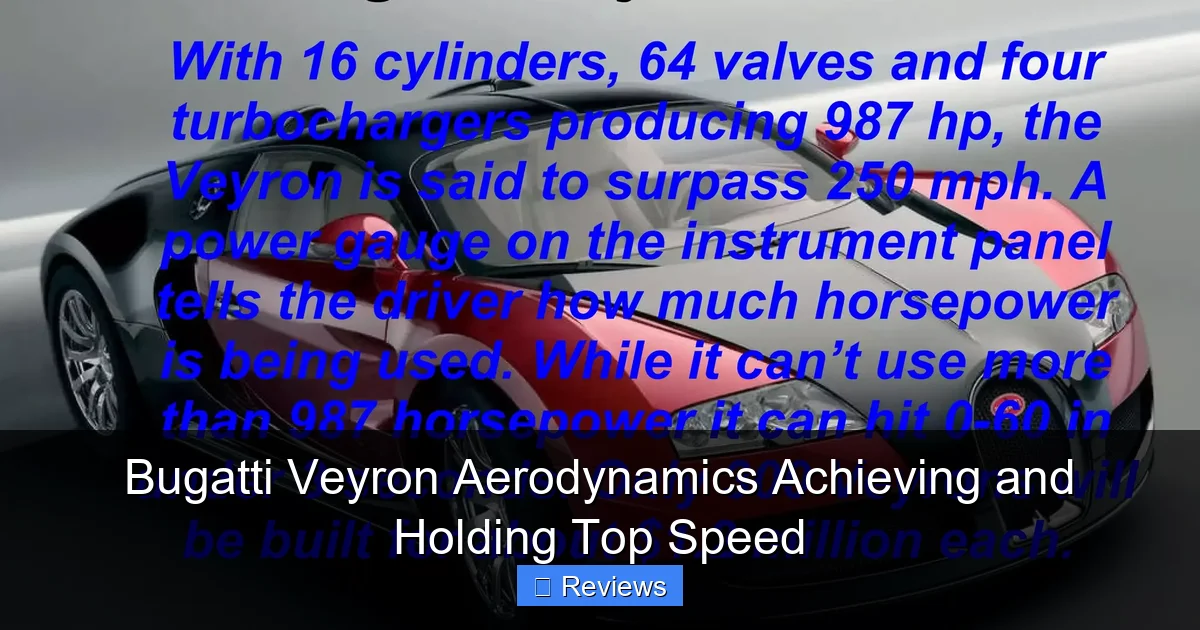
Visual guide about how bugatti veyrons aerodynamics impact achieving and maintaining top speed
Image source: image.slidesharecdn.com
Top Speed Key (Deployment Modes)
To fully unlock the Bugatti Veyron’s potential and achieve its legendary top speed, a special “Top Speed Key” is required. This isn’t just a gimmick; it initiates a critical aerodynamic transformation. When inserted and the car passes a series of safety checks, the vehicle dramatically alters its posture:
- Ride Height Adjustment: The hydraulic suspension system lowers the car’s ride height significantly. This reduces the amount of air flowing beneath the car, further reducing drag and enhancing the ground effect, which contributes to downforce. In Top Speed Mode, the car sits just 6.5 cm off the ground at the front and 7.0 cm at the rear.
- Rear Wing Retraction: The large active rear wing, which normally provides significant downforce for handling, retracts almost completely into the bodywork. A smaller, less intrusive spoiler remains partially deployed, providing just enough stability without introducing excessive drag. This configuration drastically lowers the overall drag coefficient, enabling the Veyron to slice through the air with minimal resistance and achieve its maximum velocity.
This coordinated sequence ensures that the Bugatti Veyron is in its absolute lowest-drag configuration, allowing every horsepower from its W16 engine to contribute to the pursuit of top speed, while still maintaining essential stability.
Airbrake Functionality
Perhaps one of the most dramatic active aerodynamic features of the Bugatti Veyron is its ability to transform its rear wing into a massive airbrake. When the driver brakes hard from high speeds, the rear wing deploys at a steep 55-degree angle in just 0.4 seconds. This sudden increase in frontal area and disruption of smooth airflow generates immense aerodynamic drag, supplementing the conventional braking system.
- Deceleration Enhancement: The airbrake provides up to 0.6 G of additional deceleration force, effectively shaving critical meters off the braking distance from extreme speeds. This is invaluable when slowing down from the Veyron’s incredible top speed.
- Stability During Braking: Beyond just slowing the car, the deployed airbrake also shifts the aerodynamic center of pressure rearward, stabilizing the car during heavy braking and preventing the rear from becoming light or unstable. This is crucial for safety and driver confidence at high deceleration rates.
Adaptive Suspension and Ride Height
The Veyron’s active suspension system is integral to its aerodynamic prowess. Beyond the Top Speed Mode, the suspension continuously adapts to driving conditions:
- Variable Ride Height: The suspension automatically adjusts the ride height based on speed and selected driving mode. At higher speeds, the car lowers itself to reduce air turbulence underneath and optimize the effectiveness of the underbody aerodynamics and diffuser.
- Cornering Support: During cornering, the system can stiffen or adjust individual dampers to minimize body roll and maintain an optimal aerodynamic profile, ensuring consistent downforce and tire contact.
This continuous, intelligent adjustment of the Bugatti Veyron’s physical form in response to driving demands exemplifies the car’s status as an aerodynamic tour de force, enabling it to excel in a multitude of high-performance scenarios.
Thermal Management and Airflow: A Symphony of Cooling and Speed
Achieving and maintaining top speed is not just about overcoming aerodynamic drag and generating downforce; it’s also about managing the immense heat generated by a 1,001 or 1,200 horsepower engine and its associated components. The Bugatti Veyron’s thermal management system is an aerodynamic marvel in itself, as it must efficiently cool the powertrain and brakes without introducing excessive drag that would hinder its ultimate performance. This complex balancing act requires a sophisticated integration of airflow for both performance and preservation.
Radiator Placement and Efficiency
The Bugatti Veyron is legendary for its ten radiators, a number almost unheard of in a road car. These radiators are not simply scattered around; their placement and the airflow directed to them are critical to the Veyron’s ability to sustain high speeds:
- Frontal Intakes: Large, sculpted air intakes at the front of the car channel a massive volume of air directly to the primary radiators, which are responsible for cooling the engine. The design of these intakes ensures maximum air capture while minimizing drag penalty.
- Side Scoops: Additional intakes on the sides of the car, notably the iconic horseshoe grille, feed air to intercoolers and other auxiliary cooling systems. These are precisely shaped to scoop air efficiently without causing significant turbulence.
- Exhaust Heat Management: The airflow around the rear of the car also helps to dissipate heat from the massive quad-turbo exhaust system, preventing heat soak and maintaining engine efficiency.
Every intake, duct, and vent on the Veyron serves a dual purpose: to manage airflow for aerodynamic efficiency and to provide a constant supply of cooling air to keep the mechanical components within optimal operating temperatures, even during sustained top speed runs. Without this meticulous thermal management, the engine would quickly overheat, making achieving and holding top speed impossible.
Engine Bay Ventilation
The engine bay of the Bugatti Veyron, housing the colossal W16 engine, is a hot zone. Efficient ventilation is crucial to expel hot air and prevent heat buildup that could degrade performance or damage components. The Veyron achieves this through carefully designed outlets:
- Rear Grilles: Prominent grilles and mesh panels at the rear of the car allow hot air to exit the engine bay. These are positioned and shaped to ensure hot air flows out smoothly, ideally creating a low-pressure zone that helps draw more air through the radiators and intercoolers, rather than hindering the car’s aerodynamics.
- Underbody Vents: Some designs also incorporate vents on the underbody to assist in hot air extraction, complementing the rear outlets.
Brake Cooling
Stopping a 2-ton car from over 400 km/h generates an enormous amount of heat in the braking system. Without adequate cooling, the brakes would quickly fade, rendering them ineffective and dangerous. The Bugatti Veyron’s aerodynamics plays a significant role here:
- Dedicated Ducts: Air is channeled from the front bumper and other areas through dedicated ducts directly to the massive carbon-ceramic brake discs and calipers.
- Wheel Design for Cooling: The design of the Veyron’s wheels is not just for aesthetics or low drag; it also facilitates the flow of cooling air over the brakes, ensuring they remain within optimal operating temperatures even under extreme use.
The seamless integration of these thermal management features within the Bugatti Veyron’s aerodynamic envelope is a testament to the comprehensive engineering approach taken by Bugatti. It ensures that the car can perform at its absolute peak, achieving and maintaining top speed, without succumbing to the immense heat challenges inherent in such extreme performance.
From Design to Reality: Wind Tunnel, CFD, and Road Testing
The journey from a conceptual sketch to a hypercar capable of achieving and maintaining top speed like the Bugatti Veyron is paved with relentless testing and refinement. The Veyron’s aerodynamic excellence wasn’t achieved by chance but through a rigorous, iterative process involving cutting-edge simulation, exhaustive physical testing, and real-world validation. This multi-faceted approach ensured that every aerodynamic nuance was understood, optimized, and ultimately perfected.
Computational Fluid Dynamics (CFD)
Before a single physical prototype was built, Bugatti engineers extensively utilized Computational Fluid Dynamics (CFD). CFD software simulates the flow of fluids (in this case, air) around and through a virtual model of the car. This powerful tool allowed designers to:
- Early Optimization: Test numerous design variations rapidly and cost-effectively in a virtual environment. They could analyze drag, downforce, and airflow patterns, identifying optimal shapes for various components before committing to physical prototypes.
- Detailed Analysis: Visualize complex airflow phenomena, such as turbulence, pressure zones, and boundary layers, which are critical for fine-tuning aerodynamic surfaces.
- Cooling System Design: Model the airflow through radiators, intercoolers, and brake ducts to ensure efficient cooling while minimizing aerodynamic penalties.
CFD played a foundational role in shaping the Bugatti Veyron’s initial aerodynamic profile, allowing engineers to address fundamental challenges related to achieving and maintaining top speed long before the car hit a test track.
Wind Tunnel Testing Rigor
While CFD provides invaluable insights, physical wind tunnel testing remains indispensable for validating simulation results and discovering real-world phenomena. The Bugatti Veyron spent countless hours in state-of-the-art wind tunnels, where:
- Scale and Full-Size Models: Both scaled models and full-size prototypes were subjected to powerful airflows, replicating real-world driving conditions up to and beyond the Veyron’s projected top speed.
- Force Measurement: Sensors precisely measured aerodynamic forces like lift, drag, and side forces, providing empirical data to refine the car’s shape and active aerodynamic systems.
- Flow Visualization: Techniques like smoke visualization and pressure mapping revealed exact airflow paths, allowing engineers to identify areas of turbulence or separation and make precise adjustments to bodywork, vents, and wing profiles.
- Active Aero Validation: The deployment of the active rear wing and ride height adjustments were meticulously tested to ensure they performed as intended across the full speed range, critically ensuring the Bugatti Veyron’s stability and drag reduction for top speed runs.
The wind tunnel provided the definitive proof points for the Veyron’s aerodynamic design, confirming its ability to manage air at extreme velocities.
Real-World Validation and Speed Runs
The ultimate test for the Bugatti Veyron’s aerodynamics was, of course, on the road. High-speed test tracks, most famously Volkswagen Group’s Ehra-Lessien facility, became the crucible where the Veyron’s theoretical and wind-tunnel-validated performance met the harsh realities of real-world physics. During these grueling top speed runs:
- Data Acquisition: Telemetry systems continuously monitored hundreds of parameters, including air speed, vehicle speed, engine performance, tire temperatures, and crucial aerodynamic data, validating the effectiveness of every component.
- Driver Feedback: Professional test drivers provided invaluable qualitative feedback on stability, steering feel, and braking performance at extreme speeds, guiding further refinements.
- Environmental Factors: Testing accounted for varying atmospheric conditions, crosswinds, and road surface irregularities, ensuring the Veyron’s aerodynamic package performed robustly under diverse circumstances.
This exhaustive validation process, from initial CFD models to the final record-breaking speed runs, underscores the scientific rigor and unwavering commitment to engineering excellence that defined the development of the Bugatti Veyron. It’s how the car’s aerodynamics were not just designed but truly forged to achieve and maintain top speed with unparalleled confidence.
Data Table: Illustrative Aerodynamic Parameters of the Bugatti Veyron
While Bugatti maintains some proprietary figures, the following table provides illustrative examples of how the Bugatti Veyron’s aerodynamic parameters might shift across its different driving modes, highlighting the dynamic nature of its design in achieving and maintaining top speed. These values are representative and simplified for illustrative purposes, demonstrating the principles discussed.
The data below showcases the Veyron’s sophisticated approach to aerodynamics, illustrating how it adapts its profile to either minimize drag for maximum speed or maximize downforce for stability and handling. The change in drag coefficient (Cd) and downforce (N) across these modes is critical to the car’s versatile performance envelope.
| Aerodynamic Mode | Approx. Ride Height (Front/Rear) | Illustrative Drag Coefficient (Cd) | Illustrative Downforce @ 250 km/h (N) | Illustrative Downforce @ 400 km/h (N) | Primary Aerodynamic Goal |
|---|---|---|---|---|---|
| Standard Mode | 12.5 cm / 12.5 cm | 0.39 | ~1,000 N | ~2,500 N | Balanced performance, comfort, and stability. |
| Handling Mode | 8.0 cm / 9.0 cm | 0.41 | ~2,500 N | ~5,000 N | Maximum downforce for cornering and high-speed stability. |
| Top Speed Mode | 6.5 cm / 7.0 cm | 0.36 | ~400 N | ~900 N | Minimum drag for achieving absolute maximum velocity. |
| Airbrake Deployed (Braking) | (Varies, usually in Handling or Standard) | ~0.60+ | N/A (Focus on drag for deceleration) | N/A (Focus on drag for deceleration) | Maximize aerodynamic drag for rapid deceleration and stability. |
Note: Actual Bugatti Veyron aerodynamic figures are often proprietary and vary slightly between specific models (e.g., Veyron 16.4 vs. Super Sport). These values are for illustrative purposes to demonstrate the principles of active aerodynamics.
This table provides a glimpse into the sophisticated control systems at play. The Bugatti Veyron dynamically adjusts its physical form to optimize its interaction with the air, a critical factor in both reaching and safely maintaining its incredible top speed. The low drag coefficient in “Top Speed Mode” is what allows the powerful engine to convert its output into forward motion rather than just battling air resistance, while the higher downforce in “Handling Mode” ensures the car remains glued to the road when agility is paramount. The dramatic increase in Cd for the “Airbrake Deployed” scenario highlights its effectiveness as a braking aid.
Conclusion: The Aerodynamic Legacy of the Bugatti Veyron
The Bugatti Veyron stands as an undisputed titan in the automotive landscape, a machine that transcended mere transportation to become a symbol of engineering impossibility made real. While its colossal W16 engine often garners the most attention, the true genius behind its record-breaking performance and unwavering stability at stratospheric velocities lies in its masterful deployment of aerodynamics. The Bugatti Veyron didn’t just have a powerful engine; it had an entire aerodynamic system meticulously crafted to conquer the invisible wall of air.
From its sleek, drag-reducing bodywork and meticulously managed underbody to its sophisticated active aerodynamic elements like the adaptive rear wing and variable ride height, every aspect of the Bugatti Veyron was designed to work in concert. This intricate dance with airflow allowed it to minimize resistance when hurtling towards its top speed, yet simultaneously generate immense downforce to keep it firmly planted on the tarmac, instilling confidence in the driver. The integration of thermal management within this aerodynamic envelope further solidified its capability to sustain extreme performance without compromise.
The development of the Veyron, marked by countless hours in CFD simulations, rigorous wind tunnel testing, and painstaking real-world validation, exemplifies a commitment to engineering excellence rarely seen. It proved that achieving and maintaining a top speed of over 400 km/h wasn’t just about raw horsepower; it was about an intelligent, adaptive, and scientifically optimized interaction with the very air it moved through. The Bugatti Veyron’s aerodynamics are not just a feature; they are the bedrock of its identity, a testament to what is possible when boundaries are pushed, and the forces of nature are tamed with ingenuity and precision. Its legacy continues to inspire, reminding us that true speed is born from a harmonious blend of power and unparalleled aerodynamic mastery.
Frequently Asked Questions
How do Bugatti Veyron aerodynamics enable its incredible top speed?
The Bugatti Veyron’s aerodynamics are meticulously engineered to slice through the air with minimal resistance while simultaneously generating crucial downforce. This precise balance minimizes drag, allowing the car to accelerate rapidly to its peak velocity, while ensuring it remains firmly planted on the road.
What active aerodynamic features does the Bugatti Veyron use to achieve and maintain top speed?
The Bugatti Veyron employs several active aerodynamic elements, most notably a rear spoiler that adjusts its angle depending on speed and driving mode. In ‘Top Speed Mode,’ this spoiler flattens to reduce drag, while also serving as an air brake when needed, significantly impacting achieving and maintaining top speed.
How does the Bugatti Veyron manage immense air resistance and drag when pursuing its top speed?
The Bugatti Veyron counters immense air resistance through a remarkably smooth underbody, minimal frontal area, and the ability to lower its ride height. These features collectively reduce parasitic drag, allowing the car to overcome the substantial forces working against it as it pushes towards its maximum velocity.
Why is downforce crucial for the Bugatti Veyron to maintain stability at extreme top speeds?
Downforce is absolutely critical for the Bugatti Veyron to maintain stability and grip at extreme top speeds, preventing it from losing contact with the road. Without sufficient downforce, the car would risk becoming unstable, losing traction, or even generating lift, making its top speed unattainable and unsafe.
Does the Bugatti Veyron have a specific ‘Top Speed Mode’ and how does it affect its aerodynamics?
Yes, the Bugatti Veyron features a dedicated ‘Top Speed Mode’ activated via a special key, which profoundly affects its aerodynamics. In this mode, the car’s ride height is significantly lowered, the rear spoiler flattens, and front diffuser flaps close to optimize for minimal drag and maximum straight-line velocity.
Beyond downforce and drag, how do Bugatti Veyron aerodynamics assist in cooling its powerful engine and brakes at high velocities?
Bugatti Veyron aerodynamics play a vital role in cooling by efficiently directing vast amounts of airflow to various heat exchangers. Strategically placed air intakes and vents channel air to cool the engine, intercoolers, and brakes, all of which are under tremendous thermal stress during sustained high-speed runs.

At CarLegit, we believe information should be clear, factual, and genuinely helpful. That’s why every guide, review, and update on our website is created with care, research, and a strong focus on user experience.