
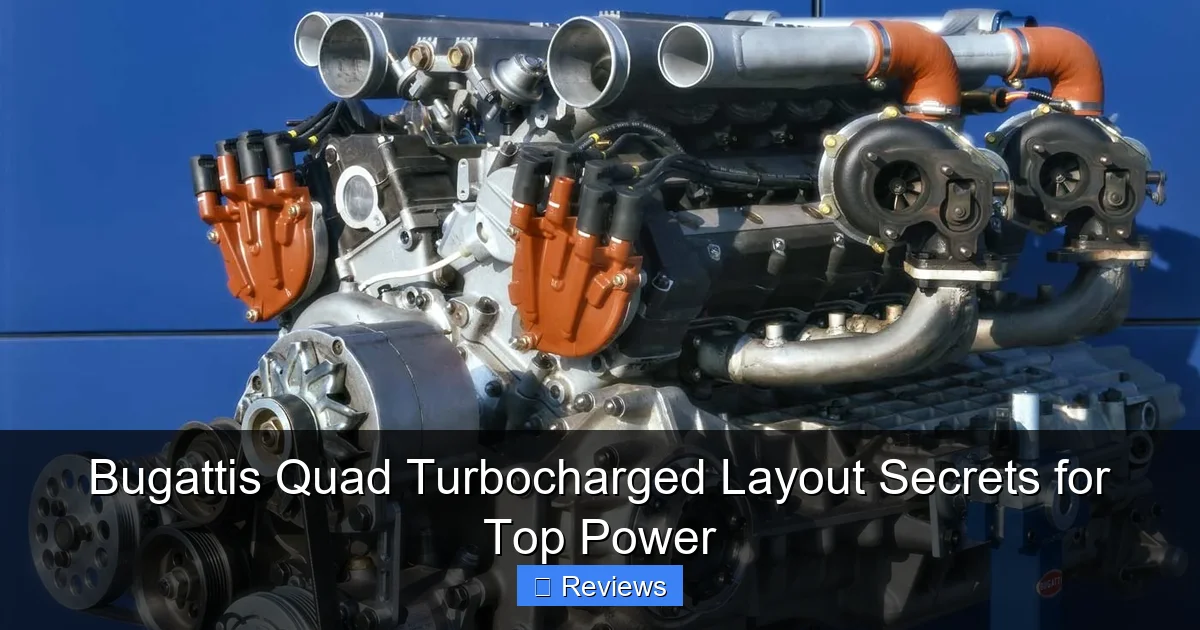
Featured image for how bugattis quad turbocharged engine layout achieves top tier performance
Image source: d192n709vt6a6d.cloudfront.net
Bugatti’s quad-turbocharged engine layout is an engineering marvel, masterfully orchestrating four turbochargers to unlock unparalleled power and top-tier performance. This sophisticated design strategically manages exhaust gases and boost pressure, ensuring instantaneous throttle response and relentless acceleration across the entire RPM range. It’s the ingenious secret behind their hypercars’ record-breaking capabilities.
Welcome to the electrifying world of Bugatti, where the pursuit of ultimate speed and luxury converges into automotive artistry. For decades, the name Bugatti has been synonymous with unparalleled performance, groundbreaking engineering, and a relentless quest to push the boundaries of what’s possible on four wheels. At the heart of this legend lies an engine unlike any other: a beast of burden and beauty, a marvel of modern mechanics that has captivated enthusiasts and confounded competitors alike. This is the story of an engine that doesn’t just produce power; it redefines it.
Imagine a symphony of precisely engineered components, working in perfect harmony to generate well over a thousand horsepower. This is not mere speculation; it is the daily reality for every Bugatti hypercar. The secret sauce, the crown jewel in Bugatti’s engineering arsenal, is its distinctive quad-turbocharged engine layout. This intricate, immensely powerful system isn’t just about bolting on more turbos; it’s a meticulously designed architecture that addresses the inherent challenges of forced induction on an epic scale, delivering a smooth, relentless surge of power that is both awe-inspiring and utterly unique. It’s a testament to human ingenuity, transforming raw energy into a controllable, exhilarating experience.
In this comprehensive exploration, we will delve deep into the technical brilliance behind Bugatti’s quad turbocharged engine layout. We’ll uncover the secrets of its W16 configuration, dissect its sophisticated multi-stage turbocharging system, examine the critical role of thermal management, and appreciate the meticulous precision of its electronic controls. Join us as we lift the veil on how this extraordinary engine achieves its top-tier performance, cementing Bugatti’s position at the apex of automotive engineering and forever changing our understanding of what a combustion engine can truly accomplish. Prepare to be fascinated by the sheer audacity and elegance of Bugatti’s quad-turbocharged heart.
In This Article
- 1 Key Takeaways
- 2 The W16 Masterpiece: More Than Just Cylinders
- 3 The Quad-Turbocharging System: A Symphony of Boost
- 4 Managing Heat and Airflow: The Lifeline of Performance
- 5 Fuel Delivery and Engine Management: Precision at Peak Power
- 6 The Drivetrain and Aerodynamics: Harnessing the Power
- 7 Bugatti W16 Quad-Turbo Engine Key Specifications
- 8 Conclusion: The Zenith of Internal Combustion Engineering
- 9 Frequently Asked Questions
- 9.1 Why does Bugatti choose a quad-turbocharged layout for its engines instead of fewer, larger turbos?
- 9.2 How does Bugatti’s quad-turbocharged layout manage to deliver such immense power smoothly?
- 9.3 What are the main engineering challenges in designing and integrating Bugatti’s quad-turbocharged engine layout?
- 9.4 How does Bugatti’s quad-turbocharged engine layout directly contribute to its top-tier performance figures?
- 9.5 Beyond the quad-turbocharging, what engine configuration does Bugatti combine with this layout for maximum power?
- 9.6 What makes Bugatti’s quad-turbocharged engine layout a unique selling point compared to other high-performance engines?
Key Takeaways
- Sequential turbo strategy: Eliminates lag, providing instant, continuous power delivery.
- Two-stage boosting: Utilizes small and large turbos for broad RPM power.
- W16 engine architecture: Compactly houses four turbos, enabling immense displacement.
- Optimized exhaust routing: Efficiently feeds turbines, maximizing boost response.
- Advanced intercooling systems: Maintains dense, cool air for consistent peak output.
- Precision boost control: Wastegates manage pressure, ensuring reliability and power output.
- Integrated thermal management: Dissipates extreme heat, vital for sustained performance.
The W16 Masterpiece: More Than Just Cylinders
The foundation of Bugatti’s legendary power output is its monstrous W16 engine. This isn’t just a large engine; it’s an engineering marvel, a testament to the idea that sometimes, more truly is more – especially when designed with such meticulous precision. The W16 engine is not simply a collection of cylinders; it’s a carefully balanced symphony of components orchestrated to produce unimaginable power with surprising refinement. Understanding this base engine is crucial to appreciating how Bugatti’s quad turbocharged engine layout takes it to the next level. The sheer scale and complexity of the W16 lay the groundwork for the extreme boost pressures and power figures that follow, making it a truly unique piece of automotive engineering.
Unpacking the W-Configuration
Unlike conventional V-shaped engines, which arrange cylinder banks at an angle to each other, the Bugatti engine employs a “W” configuration. This essentially involves two narrow-angle V8 engines joined at a common crankshaft, forming a “WW” shape when viewed from the front, or a “W” if you consider the overall layout. This design is incredibly complex but offers several distinct advantages critical for Bugatti’s quad turbocharged engine layout. Firstly, its compactness is astonishing given its 16 cylinders and 8.0-liter displacement. By tucking the cylinder banks closer together, the W16 engine is significantly shorter and more compact than a traditional V16 or even a pair of inline-8 engines, which would be prohibitively long for a hypercar chassis. This compactness not only aids packaging within the tightly constrained engine bay but also contributes to chassis rigidity and weight distribution. Imagine trying to fit two separate V8 engines, each with its own turbocharging system, into such a space; the W-configuration makes it feasible. The W-configuration also benefits from a shorter crankshaft compared to a conventional V16, leading to increased rigidity and reduced vibrational modes, which are critical for an engine operating at such high RPMs and producing immense power. This inherent stiffness contributes to the engine’s durability and its ability to handle the extreme stresses induced by Bugatti’s quad turbocharged engine layout.
The Core Design Philosophy
The design philosophy behind the W16 engine extends far beyond just cylinder count. It is a philosophy rooted in uncompromising performance, unwavering reliability, and an almost artistic level of refinement. From its inception, the engineers at Bugatti understood that merely building a large engine wouldn’t suffice; it had to be an engine capable of sustained, extreme output without faltering. Every component, from the forged crankshaft to the highly optimized valvetrain, is engineered to withstand the colossal forces generated by over 1,500 horsepower and an equivalent amount of torque. The choice of materials is paramount, with extensive use of high-strength alloys and advanced manufacturing techniques to ensure durability under boost pressures that would shatter lesser engines. Furthermore, despite its raw power, the W16 is designed to be remarkably smooth and tractable. This isn’t a race engine that’s rough at low speeds; it’s a grand touring engine capable of civilized behavior, transforming into a savage beast at the flick of a throttle. This dual nature is a hallmark of Bugatti engineering and is deeply intertwined with the sophisticated operation of Bugatti’s quad turbocharged engine layout. The engine must provide instantaneous response and seamless power delivery, whether cruising through city streets or hurtling towards 250 mph. This balance between brute force and elegant control is a defining characteristic of the Bugatti driving experience and a direct result of its meticulous design.
The Quad-Turbocharging System: A Symphony of Boost
While the W16 engine provides an incredible base, it is the ingenious quad-turbocharging system that truly unleashes its full potential, transforming it from a powerful engine into an automotive legend. This isn’t merely about adding four turbos; it’s about a highly sophisticated, multi-stage boost delivery network designed to overcome the inherent challenges of forced induction, namely turbo lag, and deliver a smooth, continuous wave of monstrous power. The integration of Bugatti’s quad turbocharged engine layout with the W16 is what differentiates it from virtually every other high-performance vehicle on the planet, enabling it to achieve performance figures previously thought impossible for a road car. This complex setup requires immense precision and a deep understanding of fluid dynamics and thermal management.
Visual guide about how bugattis quad turbocharged engine layout achieves top tier performance
Image source: ridecove.com
Staged Turbocharging Explained
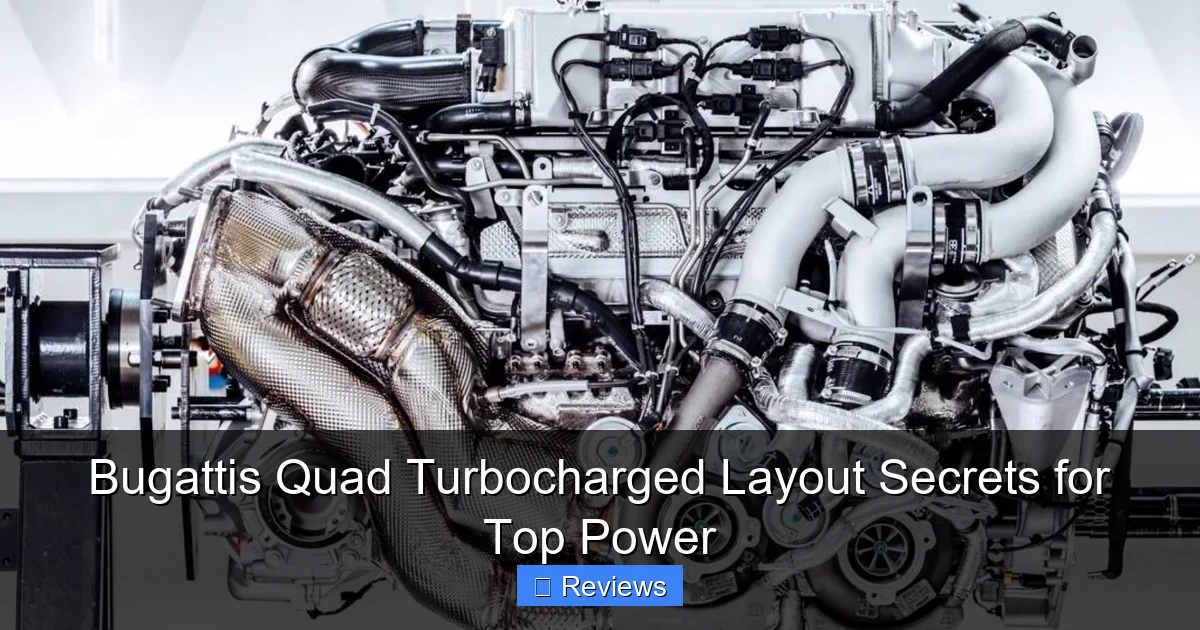
One of the biggest hurdles for any high-performance turbocharged engine is turbo lag – the delay between pressing the accelerator and the turbochargers spooling up to deliver full boost. With an engine as large and powerful as Bugatti’s W16, and the colossal amount of exhaust gases required to spin four large turbos, this lag could be debilitating. Bugatti’s solution is a sophisticated staged turbocharging system, often described as a series-parallel arrangement. In earlier models like the Veyron, and refined further in the Chiron, the engine is equipped with four turbochargers, but they don’t all operate simultaneously from the outset. Instead, at lower engine speeds and loads, only two of the smaller turbochargers are active. These smaller turbos, with their lower inertia, spool up very quickly, providing almost instantaneous boost and crisp throttle response. This ensures that the car feels responsive and powerful even at everyday driving speeds, defying the common perception of a large turbocharged engine feeling sluggish off the line. As the engine RPMs climb and more exhaust gas becomes available, the remaining two larger turbochargers are gradually brought online. This transition is managed seamlessly by the engine’s electronic control unit (ECU), which opens specific valves in the exhaust system to divert gases to the larger turbos. Once all four turbos are engaged and spinning at full speed, they collectively force an immense volume of air into the engine, allowing it to generate its peak power figures. This phased approach effectively eliminates turbo lag, providing a relentless, linear acceleration that feels more akin to a naturally aspirated engine, but with vastly more power. This is a crucial aspect of Bugatti’s quad turbocharged engine layout, making its colossal power not just achievable but also incredibly usable.
Turbocharger Placement and Plumbing
Fitting four substantial turbochargers, along with their associated plumbing, intercoolers, and wastegates, into the relatively compact space of the W16 engine bay is an engineering feat in itself. The design team had to meticulously plan the placement of each component to optimize airflow, minimize pressure drop, and ensure adequate cooling. Typically, two turbochargers are positioned on each side of the W16 engine, feeding their respective banks of cylinders. The exhaust manifolds are custom-designed to route hot exhaust gases efficiently to the turbines, ensuring that each turbo receives sufficient energy to spool up quickly. The intake system is equally complex, designed to channel the highly pressurized, intercooled air into the intake manifolds with minimal restriction. This involves carefully crafted charge pipes that snake around the engine, often made from lightweight, high-strength materials to withstand the immense boost pressures. The plumbing for Bugatti’s quad turbocharged engine layout also includes intricate bypass valves and wastegates, which are critical for controlling boost pressure and preventing overboost conditions. These components work in conjunction with the staged turbocharging system, directing exhaust gases away from the turbines when maximum boost is not required or when the larger turbos are not yet active. The sheer volume of air and exhaust gases moving through this system at peak performance is staggering, requiring robust materials and precise manufacturing tolerances to prevent leaks and ensure long-term reliability. The layout is not just about power; it’s about managing extreme conditions and ensuring every component contributes to the overall efficiency and performance of Bugatti’s engine architecture.
Managing Heat and Airflow: The Lifeline of Performance
Generating over 1,500 horsepower from Bugatti’s quad turbocharged engine layout creates an immense amount of heat – an engine’s biggest enemy. Efficiently managing this heat and ensuring a constant supply of dense, cool air is not just important; it’s absolutely critical for both performance and reliability. Without an advanced and comprehensive thermal management system, the W16 engine would quickly suffer from detonation, overheating, and ultimately, catastrophic failure. Bugatti’s approach to cooling is as intricate and over-engineered as the engine itself, involving a network of intercoolers, radiators, and carefully designed airflow paths that are integral to the quad-turbocharged system’s success. This is where the engineering truly shines, turning potential disaster into a controlled, high-performance environment.

Visual guide about how bugattis quad turbocharged engine layout achieves top tier performance
Image source: cdn.motor1.com
The Intercooler Network
Turbochargers compress air, and compression inevitably generates heat. Hot air is less dense than cool air, meaning it contains fewer oxygen molecules, which directly reduces engine power. To counteract this, Bugatti employs an incredibly elaborate intercooler network. The W16 engine utilizes not one, but multiple liquid-to-air intercoolers, strategically placed within the engine bay and fed by their own dedicated cooling circuits. This system is exceptionally effective: hot, compressed air from the turbochargers passes through these intercoolers, where it is cooled by a separate liquid coolant circuit before entering the engine’s intake manifolds. The cooled charge air is significantly denser, allowing the engine to combust more fuel and air efficiently, thereby increasing power output and reducing the risk of pre-ignition (knock). The complexity extends to the sheer number of radiators required; the Bugatti Chiron, for example, boasts ten radiators dedicated to cooling various components, including multiple radiators for the intercooler system alone. These radiators are often enormous and require massive airflow through the car’s bodywork, which significantly influences the vehicle’s aerodynamic design. The efficiency of these intercoolers is paramount to maintaining the high power output and ensuring the longevity of Bugatti’s quad turbocharged engine layout, allowing it to perform consistently even under the most strenuous conditions. Without this robust cooling, the engine simply couldn’t sustain its extreme performance levels.
Exhaust Gas Management and Wastegates
The exhaust system in Bugatti’s quad turbocharged engine layout is another masterpiece of engineering, designed to manage extreme temperatures and precisely control boost pressure. The exhaust gases exiting the W16 cylinders are incredibly hot and highly corrosive, requiring exotic materials like Inconel for the manifolds and turbocharger housings. These materials can withstand temperatures exceeding 1,000 degrees Celsius without deforming or failing. Wastegates are crucial components in any turbocharged system, and Bugatti’s are engineered for precision and durability. These valves divert a portion of the exhaust gases away from the turbocharger’s turbine, thereby regulating how fast the turbine spins and, consequently, the boost pressure produced. In Bugatti’s staged turbocharging system, wastegates play a vital role in smoothly transitioning between the smaller and larger turbos, ensuring a seamless power delivery curve. They also act as a safety mechanism, preventing overboost conditions that could severely damage the engine. The precise electronic control of these wastegates allows the ECU to fine-tune boost pressure across the entire RPM range, optimizing power delivery and efficiency. Furthermore, the exhaust system is not just about functionality; it’s also about sound. Bugatti engineers meticulously tune the exhaust note to be distinctive and exhilarating, a deep growl at idle transforming into a furious roar at full throttle, adding another layer to the sensory experience of driving a quad-turbocharged Bugatti.
Fuel Delivery and Engine Management: Precision at Peak Power
The sheer volume of air being force-fed into Bugatti’s quad turbocharged engine layout necessitates an equally sophisticated and robust fuel delivery system and an incredibly intelligent engine management unit. Delivering over 1,500 horsepower requires precisely the right amount of fuel at the right time, under immense pressure, and with unwavering reliability. This level of precision is not accidental; it’s the result of cutting-edge technology and relentless development, ensuring that every combustion event is perfectly optimized. The synergy between the fuel system and the ECU is what allows Bugatti’s quad-turbo engine to operate at such extreme limits while remaining remarkably tractable and durable, solidifying its reputation for top-tier performance.

Visual guide about how bugattis quad turbocharged engine layout achieves top tier performance
Image source: detoxicrecenze.com
Advanced Fuel Injection Systems
To cope with the demands of such a high-performance engine, Bugatti employs a highly advanced fuel injection system, combining the best of both worlds. The W16 engine typically features a dual-injection system, utilizing both port injection and direct injection. Port injection delivers fuel into the intake manifold before the intake valve, which helps with cooling the intake charge and preventing carbon buildup on the intake valves, especially at lower RPMs. However, for the extreme demands of Bugatti’s quad turbocharged engine layout at high boost and high RPM, direct injection becomes crucial. Direct injection sprays fuel directly into the combustion chamber at very high pressures (often hundreds of bar), allowing for precise control over the air-fuel mixture and enabling higher compression ratios without pre-ignition. This results in more efficient combustion, increased power, and better fuel economy. To support this, multiple high-pressure fuel pumps are required, often working in parallel, along with an array of robust fuel injectors capable of accurately delivering massive quantities of fuel per combustion cycle. The complexity extends to ensuring consistent fuel pressure across all 16 cylinders, even under conditions of extreme acceleration and G-forces. The fuel system is designed with multiple redundancies to guarantee reliability, a critical factor when a car is capable of reaching speeds well over 250 mph. This intricate dance of fuel delivery is fundamental to maximizing the output of Bugatti’s quad-turbo engine.
Sophisticated Engine Control Units (ECUs)
The brain behind the brawn of Bugatti’s quad turbocharged engine layout is its exceptionally sophisticated Engine Control Unit (ECU). This isn’t a single computer but often a network of interconnected processors, constantly monitoring and adjusting thousands of parameters in real-time, hundreds of times per second. The ECU analyzes inputs from a myriad of sensors – including boost pressure, throttle position, engine speed, air mass, exhaust gas temperature, coolant temperature, knock sensors, and individual cylinder pressures. Based on these inputs, it precisely controls fuel injection timing and quantity, ignition timing, wastegate operation, variable valve timing (if applicable), and even the operation of the staged turbocharging system. The complexity of managing four turbos, 16 cylinders, and a dual-injection system demands algorithms that are nothing short of aerospace-grade. The ECU ensures that the engine operates at its peak efficiency and power, while also maintaining critical safety margins. For instance, if a sensor detects even the slightest hint of knock, the ECU can instantly retard ignition timing or slightly reduce boost to prevent engine damage. Furthermore, Bugatti ECUs often incorporate different driving modes, such as a “Top Speed Key” mode in the Chiron, which prepares the car for its maximum velocity by optimizing all engine and aerodynamic parameters. This level of control allows the Bugatti W16 quad-turbo engine to deliver its monumental power in a remarkably smooth, predictable, and incredibly safe manner, making it not just fast, but also incredibly intelligent. It’s the ultimate example of how advanced electronics unlock the full potential of mechanical engineering.
The Drivetrain and Aerodynamics: Harnessing the Power
An engine, no matter how powerful, is only as good as its ability to transmit that power to the road and manage the forces it creates. For Bugatti, this means an incredibly robust drivetrain and an aerodynamic package meticulously designed to work in synergy with Bugatti’s quad turbocharged engine layout. The challenge is immense: transferring over 1,500 horsepower and an equivalent amount of torque without overwhelming the tires or tearing the gearbox apart, all while keeping the car stable at speeds that most aircraft only dream of. This is where Bugatti’s engineering prowess extends beyond the engine bay, encompassing every aspect of the vehicle’s design to create a cohesive, record-breaking machine. The effectiveness of the quad-turbocharged W16 hinges on these supporting systems.
The Robust Drivetrain
The power generated by Bugatti’s quad turbocharged engine layout is simply too immense for a conventional transmission. Bugatti employs a bespoke, highly reinforced dual-clutch transmission (DSG) specifically engineered to handle the colossal torque output of the W16. This gearbox is an engineering marvel in itself, capable of executing lightning-fast shifts while withstanding forces that would shatter most other transmissions. The dual-clutch design allows for pre-selection of the next gear, ensuring seamless and uninterrupted power delivery during acceleration, which is critical for achieving Bugatti’s mind-boggling 0-60 mph times. To ensure traction and stability, Bugatti hypercars are equipped with a sophisticated all-wheel-drive (AWD) system. This isn’t just a simple AWD system; it’s an intelligent setup that continuously monitors wheel slip and distributes power precisely to each wheel, maximizing grip under all conditions. Without AWD, the Bugatti W16 quad-turbo engine’s power would simply overwhelm the rear tires, making the car uncontrollable. The entire drivetrain – from the crankshaft to the differential and half-shafts – is constructed from high-strength, lightweight materials, designed to transmit power with minimal losses and maximum durability. Every component is over-engineered to cope with the extreme stresses, ensuring that the legendary power from Bugatti’s quad turbocharged engine layout is translated into usable, breathtaking acceleration on the pavement.
Aerodynamic Synergy with Engine Performance
At speeds exceeding 200 mph, aerodynamics become as crucial as engine power. For Bugatti, the bodywork is not merely aesthetic; it’s a functional extension of the engine’s performance, serving multiple critical roles. Firstly, cooling demands dictate a significant portion of the car’s aerodynamic profile. The ten or more radiators and intercoolers require a colossal amount of airflow to keep the W16 quad-turbo engine operating within optimal temperature ranges. Massive air intakes and carefully sculpted channels are integrated into the body to feed cool air to these heat exchangers, and equally important, to efficiently extract hot air, preventing heat soak in the engine bay. These cooling needs often conflict with drag reduction, creating a delicate balance that Bugatti engineers masterfully achieve. Secondly, at extreme speeds, lift becomes a serious concern, potentially leading to a loss of control. Bugatti’s aerodynamic package is designed to generate significant downforce, pressing the car onto the road, enhancing stability and grip. This includes active aerodynamic elements like a massive rear wing that can adjust its angle, acting as an airbrake or increasing downforce as needed. The car’s flat underbody, diffusers, and carefully sculpted lines further contribute to generating downforce and minimizing aerodynamic drag, allowing the car to cut through the air with astonishing efficiency. The quad-turbocharged engine’s power enables these extreme speeds, but it’s the sophisticated aerodynamics that make those speeds achievable and, more importantly, controllable and safe. The design of the car is therefore an intricate ballet between raw power, thermal management, and aerodynamic stability, all working in concert to harness the immense potential of Bugatti’s quad turbocharged engine layout.
Bugatti W16 Quad-Turbo Engine Key Specifications
To truly appreciate the engineering marvel that is Bugatti’s quad turbocharged engine layout, it’s helpful to look at the numbers. The following table provides a comparison of key specifications for two of Bugatti’s most iconic hypercars, the Veyron and the Chiron, both powered by variations of the legendary W16 quad-turbo engine. These figures underscore the relentless pursuit of power and performance that defines the brand.
| Specification | Bugatti Veyron 16.4 (Original) | Bugatti Chiron (Original) |
|---|---|---|
| Engine Type | W16, 8.0L, Quad-Turbocharged | W16, 8.0L, Quad-Turbocharged |
| Displacement | 7,993 cm³ (8.0 Liters) | 7,993 cm³ (8.0 Liters) |
| Number of Turbos | 4 (two small, two large, staged) | 4 (larger than Veyron, staged) |
| Horsepower | 1,001 PS (987 bhp / 736 kW) | 1,500 PS (1,479 bhp / 1,103 kW) |
| Torque | 1,250 Nm (922 lb-ft) | 1,600 Nm (1,180 lb-ft) |
| 0-100 km/h (0-62 mph) | 2.5 seconds | 2.4 seconds |
| Top Speed | 407 km/h (253 mph) | 420 km/h (261 mph) electronically limited |
| Fuel Injection | Multi-point fuel injection | Dual (port and direct) fuel injection |
| Intercoolers | Multiple liquid-to-air | Multiple liquid-to-air, highly efficient |
| Number of Radiators | 10 | 10 |
This table highlights the incredible progression of Bugatti’s quad turbocharged engine layout. While the core architecture remained the same, the Chiron’s W16 represents a significant evolution, extracting nearly 50% more horsepower from the same displacement. This improvement was achieved through larger turbos, a more sophisticated dual-injection system, optimized exhaust gas recirculation, and extensive improvements in cooling and engine management. Each iteration of this legendary engine, with its unique quad-turbocharged setup, has redefined what is possible in a production road car, setting benchmarks that continue to inspire and challenge the automotive world.
Conclusion: The Zenith of Internal Combustion Engineering
The journey through Bugatti’s quad turbocharged engine layout reveals not just an engine, but a symphony of engineering excellence, a testament to what is achievable when vision meets unparalleled technical prowess. From the ingenious compactness and inherent strength of the W16 configuration to the seamless power delivery facilitated by its staged quad-turbocharging system, every aspect is meticulously crafted for one purpose: to deliver top-tier performance that leaves an indelible mark on anyone fortunate enough to experience it. This isn’t merely about raw power; it’s about the precision with which that power is harnessed, managed, and delivered to the driver, transforming a complex mechanical beast into an intuitive, exhilarating experience. The relentless pursuit of perfection in thermal management, fuel delivery, and electronic control ensures that this monumental power is not only achievable but also consistently reliable and surprisingly refined.
The success of Bugatti’s quad turbocharged engine layout lies in its holistic design philosophy, where the engine is not an isolated component but an integral part of a larger, perfectly synchronized machine. The drivetrain, meticulously engineered to transmit unfathomable torque, and the aerodynamic bodywork, sculpted to both cool the engine and stabilize the car at warp speeds, all play critical roles in completing the performance puzzle. Together, these elements create a hypercar that is more than the sum of its parts; it is a rolling masterpiece of engineering, capable of rewriting the rules of automotive performance and setting new benchmarks for speed, luxury, and technological innovation. It stands as a pinnacle of internal combustion engine development, showcasing the extraordinary lengths to which engineers will go to extract every last ounce of performance.
As the automotive world increasingly shifts towards electrification, the W16 quad-turbocharged engine stands as a magnificent ode to the combustion era, a powerful reminder of what human ingenuity can achieve with fossil fuels. It is a legacy that will undoubtedly influence future generations of engineers and enthusiasts alike, a symbol of extreme performance and uncompromised luxury. Bugatti’s quad turbocharged engine layout is more than just a power plant; it is a legend, a benchmark, and a profound statement in the annals of automotive history, forever etched as one of the most remarkable and successful engine architectures ever conceived.
Frequently Asked Questions
Why does Bugatti choose a quad-turbocharged layout for its engines instead of fewer, larger turbos?
Bugatti employs a quad-turbocharged system to achieve optimal power delivery and minimize turbo lag. By using four smaller turbos, two for each bank of cylinders, the system can spool up much faster than a single large turbo, providing instant torque. This design ensures immense power across the entire RPM range, crucial for their hypercars’ incredible acceleration and top speeds.
How does Bugatti’s quad-turbocharged layout manage to deliver such immense power smoothly?
The quad-turbocharged layout in Bugatti engines typically operates in a two-stage sequential manner. At lower RPMs, two smaller turbos spool up quickly to provide initial boost, while at higher RPMs, all four turbos engage to deliver the full, colossal power output. This intelligent system ensures a broad powerband and seamless acceleration, avoiding the typical lag associated with high-power forced induction.
What are the main engineering challenges in designing and integrating Bugatti’s quad-turbocharged engine layout?
Integrating Bugatti’s quad-turbocharged engine layout presents significant challenges, primarily in managing heat dissipation, packaging all components within a confined space, and maintaining reliability. The sheer volume of exhaust gases and the heat generated by four turbos demand advanced cooling systems and robust materials. Additionally, the complexity of the plumbing and control systems for sequential operation requires meticulous engineering.
How does Bugatti’s quad-turbocharged engine layout directly contribute to its top-tier performance figures?
The quad-turbocharged engine layout is fundamental to Bugatti’s top-tier performance by enabling massive power output with minimal turbo lag. It allows the W16 engine to produce over 1,500 horsepower, propelling their hypercars to speeds well over 250 mph. This system ensures blistering acceleration and relentless power delivery, making Bugatti vehicles some of the fastest production cars in the world.
Beyond the quad-turbocharging, what engine configuration does Bugatti combine with this layout for maximum power?
Bugatti combines its advanced quad-turbocharged layout with a massive 8.0-liter W16 engine configuration. This unique W-shaped engine, essentially two narrow-angle V8s sharing a common crankshaft, provides a large displacement foundation for the four turbos to pressurize. This combination is key to achieving the monumental horsepower and torque figures synonymous with Bugatti hypercars.
What makes Bugatti’s quad-turbocharged engine layout a unique selling point compared to other high-performance engines?
Bugatti’s quad-turbocharged engine layout stands out due to its unparalleled combination of power, smoothness, and engineering sophistication in a production vehicle. While other manufacturers use twin-turbo systems, the W16 engine paired with four turbos pushes the boundaries, delivering a level of accessible, gargantuan power that few others can match. It embodies Bugatti’s commitment to ultimate performance without compromise.

At CarLegit, we believe information should be clear, factual, and genuinely helpful. That’s why every guide, review, and update on our website is created with care, research, and a strong focus on user experience.