
A bad timing belt doesn’t directly cause overheating, but its failure can lead to severe engine damage that results in overheating. When the timing belt breaks or slips, it disrupts the engine’s valve and piston timing, potentially causing internal collisions and coolant system damage. Understanding this connection helps prevent costly repairs and keeps your car running safely.
In This Article
- 1 Key Takeaways
- 2 📑 Table of Contents
- 3 Can a Bad Timing Belt Cause Car to Overheat?
- 4 What Is a Timing Belt and Why Does It Matter?
- 5 How a Bad Timing Belt Can Lead to Overheating
- 6 Signs Your Timing Belt Might Be Failing
- 7 What to Do If Your Car Overheats After Timing Belt Failure
- 8 How to Prevent Timing Belt-Related Overheating
- 9 Real-World Example: The $4,000 Lesson
- 10 Conclusion
- 11 Frequently Asked Questions
- 11.1 Can a bad timing belt cause car to overheat immediately?
- 11.2 How do I know if my timing belt is causing overheating?
- 11.3 Can I drive with a broken timing belt?
- 11.4 Does every car have a timing belt?
- 11.5 How much does it cost to replace a timing belt?
- 11.6 Can low coolant cause timing belt failure?
Key Takeaways
- A bad timing belt doesn’t directly overheat your car: Overheating is usually caused by cooling system issues, not the timing belt itself.
- Timing belt failure can indirectly cause overheating: If the belt breaks, it can damage engine components like valves and pistons, leading to coolant leaks or combustion gas leaks into the cooling system.
- Interference engines are at higher risk: In these engines, a broken timing belt often causes pistons to hit valves, which can crack cylinder heads or damage head gaskets—both leading to overheating.
- Watch for warning signs: Rattling noises, engine misfires, oil leaks near the timing cover, or difficulty starting your car may indicate a failing timing belt.
- Regular maintenance is crucial: Most manufacturers recommend replacing the timing belt every 60,000 to 100,000 miles—don’t skip this service.
- Overheating after timing belt failure requires immediate attention: Continuing to drive can destroy the engine, so pull over and call a tow truck if you suspect belt failure.
- Prevention beats repair: Replacing a timing belt is far cheaper than rebuilding an engine after catastrophic failure.
📑 Table of Contents
- Can a Bad Timing Belt Cause Car to Overheat?
- What Is a Timing Belt and Why Does It Matter?
- How a Bad Timing Belt Can Lead to Overheating
- Signs Your Timing Belt Might Be Failing
- What to Do If Your Car Overheats After Timing Belt Failure
- How to Prevent Timing Belt-Related Overheating
- Real-World Example: The $4,000 Lesson
- Conclusion
Can a Bad Timing Belt Cause Car to Overheat?
You’re driving down the highway, enjoying the breeze through your open window, when suddenly your temperature gauge spikes into the red. Your car starts to smell hot, steam rises from under the hood, and panic sets in. You pull over, pop the hood, and wonder: “What went wrong?” One question that might cross your mind is, “Can a bad timing belt cause car to overheat?”
It’s a smart question—and one that many drivers ask when faced with sudden overheating. The short answer? Not directly. A worn or damaged timing belt doesn’t make your engine run hot like a clogged radiator or low coolant would. But here’s the twist: while the timing belt itself isn’t a cooling system component, its failure can trigger a chain reaction that leads to overheating. Think of it like a domino effect—knock over the first piece, and the rest come tumbling down.
In this guide, we’ll break down exactly how a bad timing belt can indirectly cause your car to overheat, what signs to look for, and how to prevent catastrophic engine damage. Whether you’re a weekend mechanic or just someone who wants to keep their car running smoothly, understanding this connection could save you thousands in repairs.
What Is a Timing Belt and Why Does It Matter?
Visual guide about Can a Bad Timing Belt Cause Car to Overheat
Image source: i.ytimg.com
Before we dive into overheating, let’s get clear on what a timing belt actually does. If your car’s engine were a symphony, the timing belt would be the conductor—keeping all the instruments (or in this case, engine parts) in perfect harmony.
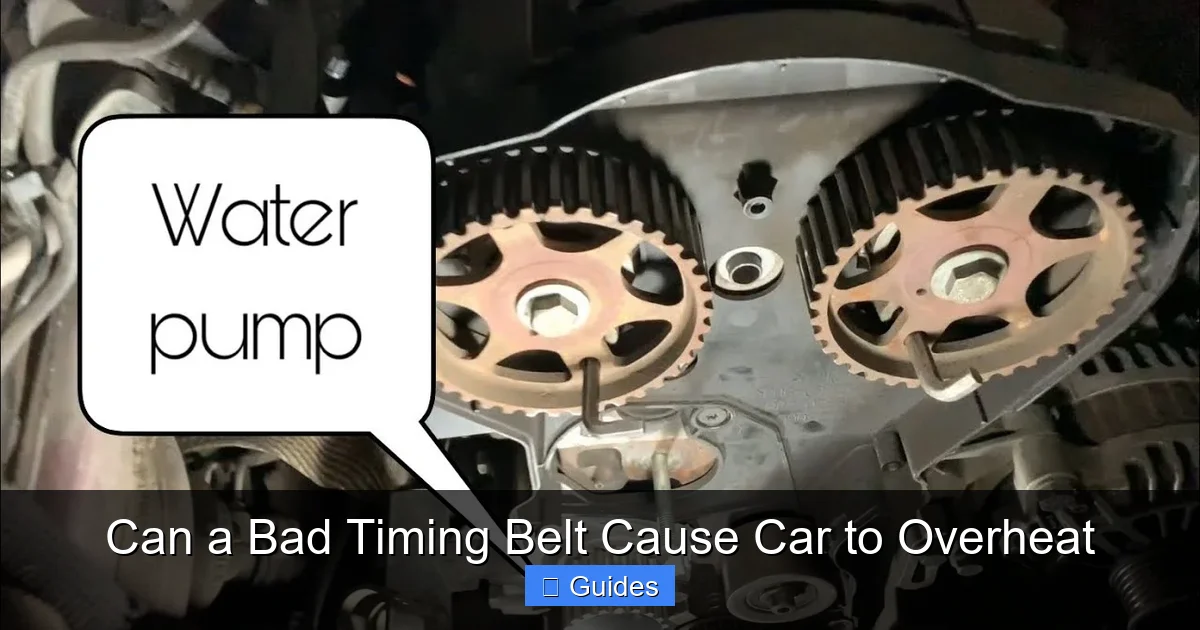
The timing belt is a reinforced rubber belt with teeth that connects the crankshaft to the camshaft(s). Its job is to synchronize the opening and closing of the engine’s valves with the movement of the pistons. This precise timing ensures that fuel and air enter the combustion chamber at the right moment, and exhaust gases exit smoothly. Without this coordination, your engine simply can’t run.
Most modern gasoline engines use either a timing belt or a timing chain. Belts are quieter and lighter but need periodic replacement. Chains are more durable but can be noisier and heavier. If your car has a timing belt (common in Honda, Toyota, Ford, and many other brands), it’s critical to maintain it.
How the Timing Belt Keeps Your Engine in Sync
Imagine the pistons moving up and down in the cylinders while the valves open and close at the top. If the valves open too early or too late relative to the piston’s position, they could collide—causing bent valves, damaged pistons, or even a cracked cylinder head. That’s why the timing belt must rotate the camshaft at exactly half the speed of the crankshaft, maintaining perfect synchronization.
This precision is especially vital in interference engines—engines where the pistons and valves occupy the same space at different times. In these engines, a broken timing belt almost guarantees internal damage. Non-interference engines are more forgiving, but even then, a failed belt will leave you stranded.
Common Causes of Timing Belt Failure
Timing belts don’t last forever. Over time, they wear out due to heat, friction, and age. Here are the main reasons they fail:
– Aging and cracking: Rubber degrades over time. Even if the belt looks fine, it can become brittle and snap without warning.
– Oil contamination: If engine oil leaks onto the belt (often from a faulty seal), it can cause the rubber to swell and lose grip.
– Misalignment: Improper installation during a previous repair can cause uneven wear or slippage.
– Tensioner failure: The belt relies on a tensioner to stay tight. If the tensioner fails, the belt can loosen and skip teeth.
– Excessive heat: Engines that frequently overheat can accelerate belt deterioration.
Most manufacturers recommend replacing the timing belt every 60,000 to 100,000 miles, though some go up to 120,000. Always check your owner’s manual—don’t rely on guesswork.
How a Bad Timing Belt Can Lead to Overheating
Visual guide about Can a Bad Timing Belt Cause Car to Overheat
Image source: i.ytimg.com
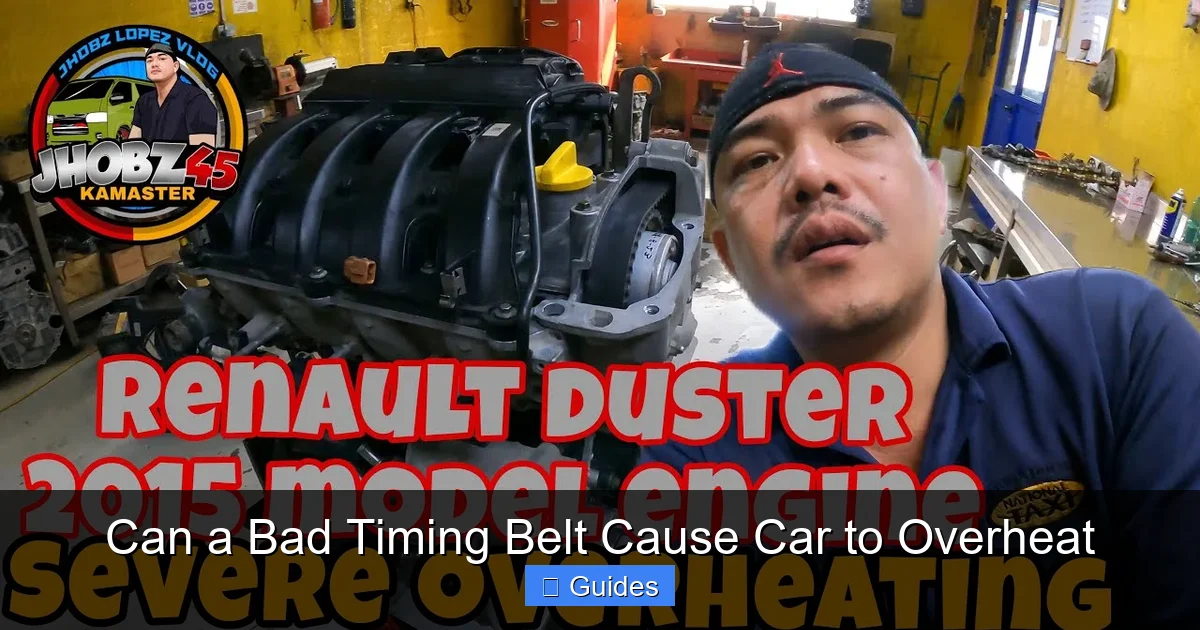
Now, let’s tackle the core question: Can a bad timing belt cause car to overheat? As mentioned, the belt itself doesn’t regulate temperature. But when it fails, the resulting engine damage can absolutely lead to overheating. Here’s how.
Engine Seizure and Friction Overheating
When a timing belt breaks or slips, the engine’s internal components lose synchronization. In interference engines, this often means pistons collide with open valves. The result? Bent valves, damaged pistons, and possibly a warped or cracked cylinder head.
These metal-on-metal impacts create intense friction and heat. Even if the engine doesn’t seize immediately, the added resistance and misalignment can cause it to run hotter than normal. In extreme cases, the engine may lock up entirely, generating so much heat that coolant boils and the system overheats rapidly.
Think of it like trying to run with a broken leg—your body overcompensates, strains, and eventually overheats. The same principle applies to your engine.
Coolant System Damage from Internal Engine Failure
One of the most serious consequences of timing belt failure is damage to the cylinder head or head gasket. When valves bend or pistons crack, combustion gases can escape into places they shouldn’t—like the coolant passages.
This is known as a “head gasket failure” or “combustion leak.” High-pressure exhaust gases enter the cooling system, causing coolant to boil, pressure to spike, and air pockets to form. These air pockets prevent proper coolant circulation, leading to localized hot spots and overall overheating.
You might notice symptoms like:
– White smoke from the exhaust (steam from boiling coolant)
– Milky oil (coolant mixing with engine oil)
– Coolant loss without visible leaks
– Bubbling in the radiator or overflow tank
In this scenario, the overheating isn’t caused by the timing belt directly—but the belt failure triggered the chain of events that led to it.
Water Pump Failure Due to Belt-Driven Design
Here’s a lesser-known but critical point: in many vehicles, the timing belt also drives the water pump. Yes, the same belt that times your engine also powers the pump that circulates coolant.
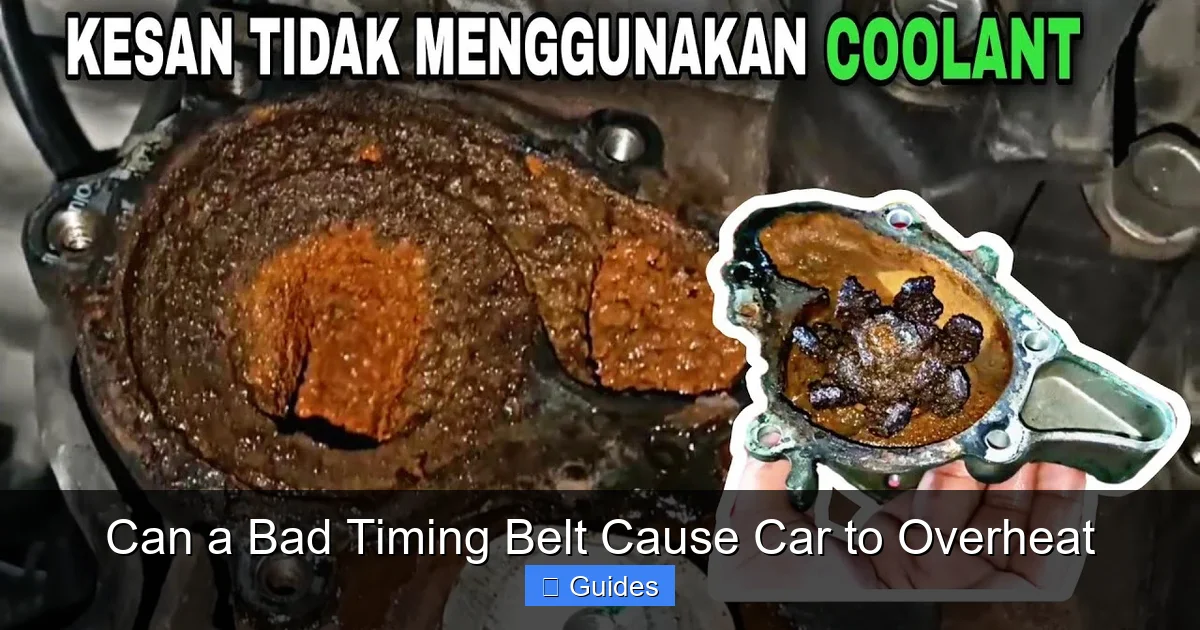
If the timing belt is worn, loose, or damaged, it can cause the water pump to spin erratically or stop altogether. Without proper coolant flow, your engine will overheat—even if the cooling system is otherwise intact.
For example, in a Honda Civic or Toyota Camry with a belt-driven water pump, a slipping timing belt might reduce pump speed by 20–30%. That’s enough to drop coolant circulation below safe levels, especially under load or in hot weather.
So while the belt isn’t “causing” overheating in the traditional sense, it’s acting as the lifeline for both engine timing and cooling. Cut that lifeline, and both systems suffer.
Signs Your Timing Belt Might Be Failing
Visual guide about Can a Bad Timing Belt Cause Car to Overheat
Image source: i.ytimg.com
Catching a bad timing belt before it breaks is the best way to avoid overheating and engine damage. Unfortunately, timing belts often fail without warning—but there are clues if you know what to look for.
Unusual Noises from the Engine
Listen for a ticking, rattling, or slapping sound coming from the front of the engine, especially near the timing cover. This could indicate a loose belt or a failing tensioner. A worn belt may also produce a high-pitched squealing noise when the engine is cold.
Keep in mind: some noise is normal, especially on startup. But if the sound is new, persistent, or getting worse, it’s time for an inspection.
Engine Misfires or Rough Running
If the timing belt has slipped even a few teeth, the engine’s valve timing will be off. This can cause misfires, hesitation, or a rough idle. You might notice:
– Loss of power during acceleration
– Engine stalling at low speeds
– Check Engine Light with codes like P0300 (random misfire)
These symptoms mimic spark plug or fuel system issues, so a professional diagnosis is key.
Oil Leaks Near the Timing Cover
Oil leaking from the front of the engine, particularly around the timing belt cover, can soak the belt and degrade it over time. Look for dark, slick patches on the underside of the hood or on the engine block.
Common leak sources include the crankshaft seal, camshaft seal, or valve cover gasket. Even a small leak can ruin a timing belt if left unchecked.
Difficulty Starting the Engine
A worn timing belt may not rotate the camshaft efficiently, making it harder for the engine to start. You might notice longer cranking times, especially when the engine is cold.
In severe cases, the engine may not start at all—particularly if the belt has slipped enough to cause valve damage.
Visible Wear During Inspection
If you’re comfortable removing the timing cover (or if your mechanic does), inspect the belt for:
– Cracks or fraying along the edges
– Missing or worn teeth
– Glazing or shiny spots (indicating slippage)
– Soft or spongy texture (sign of oil contamination)
Even if the belt looks okay, age is a factor. Most experts recommend replacement at 10 years, regardless of mileage.
What to Do If Your Car Overheats After Timing Belt Failure
So, your timing belt broke, and now your car is overheating. What now? Acting quickly can prevent total engine failure.
Pull Over Immediately
If you notice steam, hear strange noises, or see the temperature gauge spike, pull over safely and turn off the engine. Continuing to drive can warp the cylinder head or destroy the engine block.
Do not open the radiator cap while the engine is hot—pressurized coolant can spray out and cause severe burns.
Call for a Tow
Do not attempt to drive the car, even if it seems to run. Internal damage may not be obvious, and further operation can worsen the problem. Have the vehicle towed to a trusted repair shop.
Diagnose the Full Extent of Damage
A qualified mechanic should perform a compression test, leak-down test, and visual inspection to assess:
– Valve and piston condition
– Cylinder head integrity
– Head gasket status
– Water pump function
If the engine is an interference design and the belt broke, assume internal damage until proven otherwise.
Repair or Replace?
Depending on the damage, you may need:
– Timing belt and component replacement (tensioner, idler pulleys, water pump)
– Valve repair or replacement
– Cylinder head resurfacing or replacement
– Head gasket replacement
– In severe cases, engine rebuild or replacement
The cost can range from $1,500 to $5,000 or more. Compare this to the $500–$1,000 cost of a preventive timing belt replacement—maintenance is always cheaper than repair.
How to Prevent Timing Belt-Related Overheating
The best defense is proactive maintenance. Here’s how to keep your timing belt—and your engine—in top shape.
Follow the Manufacturer’s Replacement Schedule
Check your owner’s manual for the recommended timing belt replacement interval. Common ranges:
– Honda: 60,000–100,000 miles
– Toyota: 90,000–100,000 miles
– Ford: 60,000–100,000 miles
– Subaru: 105,000 miles
Some vehicles use timing chains, which typically last the life of the engine—but even chains can fail, so don’t ignore unusual noises.
Replace Related Components Together
When replacing the timing belt, it’s smart to also replace:
– Water pump (if belt-driven)
– Tensioner and idler pulleys
– Camshaft and crankshaft seals
These parts wear out around the same time, and replacing them together saves labor costs and prevents future failures.
Use Quality Parts
Don’t skimp on cheap belts or knockoff components. OEM (original equipment manufacturer) or high-quality aftermarket parts are worth the investment. A $200 belt is a small price to pay to avoid a $5,000 engine repair.
Monitor Coolant and Oil Levels
Regularly check your coolant and oil levels. Low coolant can lead to overheating, while oil leaks can damage the timing belt. Address any leaks promptly.
Listen to Your Car
Pay attention to changes in engine sound, performance, or temperature. Early detection of timing belt issues can prevent catastrophic failure.
Real-World Example: The $4,000 Lesson
Let’s look at a real scenario. Sarah, a 35-year-old teacher, drove a 2010 Honda Accord with 98,000 miles. She’d never replaced the timing belt, assuming it would last forever. One summer afternoon, while stuck in traffic, her engine suddenly made a loud “clunk” and died. Steam poured from under the hood.
She called a tow truck, and the mechanic discovered the timing belt had snapped. Because the Accord has an interference engine, the pistons had struck the valves, bending several and cracking the cylinder head. Coolant had mixed with oil, and combustion gases had entered the cooling system.
The repair? A new timing belt, water pump, tensioner, valves, cylinder head, and head gasket—total cost: $4,200. Sarah later learned that a preventive timing belt replacement at 90,000 miles would have cost around $800.
Her story is a powerful reminder: a bad timing belt doesn’t just strand you—it can destroy your engine and your budget.
Conclusion
So, can a bad timing belt cause car to overheat? Not directly—but its failure can trigger a cascade of engine problems that lead to overheating, especially in interference engines. From valve-piston collisions to coolant system contamination and water pump failure, the consequences of a broken timing belt are serious and costly.
The good news? This is entirely preventable. By following your manufacturer’s maintenance schedule, listening for warning signs, and replacing the timing belt and related components on time, you can avoid catastrophic engine damage and keep your car running cool and reliable.
Don’t wait for the steam to rise. Be proactive. Your engine—and your wallet—will thank you.
Frequently Asked Questions
Can a bad timing belt cause car to overheat immediately?
A bad timing belt doesn’t cause immediate overheating, but if it breaks, the resulting engine damage can lead to rapid overheating within minutes. Internal friction, coolant leaks, or water pump failure may cause the temperature to spike quickly.
How do I know if my timing belt is causing overheating?
If your car overheats after strange engine noises, misfires, or difficulty starting, a failed timing belt could be the culprit. A mechanic can inspect the belt and test for internal engine damage to confirm.
Can I drive with a broken timing belt?
No. Driving with a broken timing belt can destroy your engine, especially in interference engines. Pull over immediately and call a tow truck to avoid costly damage.
Does every car have a timing belt?
No. Some cars use timing chains instead of belts. Chains are more durable and often last the life of the engine, but they can still fail. Check your owner’s manual to see which your car uses.
How much does it cost to replace a timing belt?
Timing belt replacement typically costs between $500 and $1,000, depending on the vehicle and whether the water pump and other components are replaced at the same time.
Can low coolant cause timing belt failure?
Low coolant doesn’t directly damage the timing belt, but overheating can accelerate belt deterioration. Additionally, coolant leaks near the timing cover can soak the belt and cause premature wear.

At CarLegit, we believe information should be clear, factual, and genuinely helpful. That’s why every guide, review, and update on our website is created with care, research, and a strong focus on user experience.