
Yes, under certain conditions, police officers can search your car without a warrant. The Fourth Amendment protects against unreasonable searches, but courts have carved out specific exceptions—like probable cause or the “automobile exception”—that allow warrantless vehicle searches. Knowing these rules can help you protect your rights during a traffic stop.
In This Article
- 1 Key Takeaways
- 2 📑 Table of Contents
- 3 Can an Officer Search Your Car Without a Warrant?
- 4 The Fourth Amendment and Your Right to Privacy
- 5 When Can Police Legally Search Your Car Without a Warrant?
- 6 What Happens If You Refuse a Search?
- 7 Common Misconceptions About Car Searches
- 8 What to Do If You’re Pulled Over
- 9 What If Your Rights Were Violated?
- 10 Conclusion
- 11 Frequently Asked Questions
- 11.1 Can police search my car if I’m not arrested?
- 11.2 Do I have to let police search my car?
- 11.3 Can police search my trunk without a warrant?
- 11.4 What if I say no but the officer searches anyway?
- 11.5 Can police search my phone during a car stop?
- 11.6 What should I do if I think my rights were violated?
Key Takeaways
- Warrantless car searches are legal in specific situations: Officers don’t always need a warrant to search your vehicle, thanks to legal exceptions like the automobile exception and probable cause.
- Probable cause is key: If an officer has reasonable grounds to believe your car contains evidence of a crime, contraband, or illegal items, they can search it without a warrant.
- Consent matters: If you voluntarily agree to a search, the officer doesn’t need a warrant—but you have the right to say no.
- Search incident to arrest allows limited searches: After a lawful arrest, officers can search the passenger compartment and areas within the suspect’s reach for weapons or evidence.
- Plain view and smell can justify a search: If an officer sees or smells something illegal (like drugs or alcohol) during a lawful stop, that can create probable cause.
- Know your rights during a traffic stop: Stay calm, be respectful, and avoid escalating the situation—but don’t feel pressured to consent to a search.
- When in doubt, consult a lawyer: If you believe your rights were violated during a car search, seek legal advice to explore your options.
📑 Table of Contents
- Can an Officer Search Your Car Without a Warrant?
- The Fourth Amendment and Your Right to Privacy
- When Can Police Legally Search Your Car Without a Warrant?
- What Happens If You Refuse a Search?
- Common Misconceptions About Car Searches
- What to Do If You’re Pulled Over
- What If Your Rights Were Violated?
- Conclusion
Can an Officer Search Your Car Without a Warrant?
Imagine you’re driving home from work, listening to your favorite podcast, when suddenly you see flashing lights in your rearview mirror. Your heart skips a beat. You pull over, roll down the window, and the officer approaches. After checking your license and registration, they ask, “Mind if I take a look inside your car?”
Now you’re faced with a critical decision: Do you say yes? Do you say no? And more importantly—can they legally search your vehicle without a warrant?
The short answer is: **yes, under certain conditions, police officers can search your car without a warrant.** But it’s not a free-for-all. The U.S. Constitution, specifically the Fourth Amendment, protects citizens from unreasonable searches and seizures. However, over time, courts have recognized that vehicles present unique challenges—like mobility and the risk of evidence being destroyed—so they’ve created specific exceptions to the warrant requirement.
Understanding these exceptions isn’t just for lawyers or law students. It’s practical knowledge every driver should have. Whether you’re a daily commuter, a weekend road-tripper, or just someone who values personal privacy, knowing your rights can help you stay calm, confident, and in control during a traffic stop.
In this guide, we’ll break down the legal landscape of warrantless car searches. We’ll explore when officers can legally search your vehicle, what your rights are, and how to respond if you’re ever in this situation. We’ll also share real-life examples, practical tips, and common misconceptions to help you navigate these encounters with clarity and confidence.
The Fourth Amendment and Your Right to Privacy
Visual guide about Can an Officer Search Your Car Without a Warrant
Image source: carleasecanada.ca
At the heart of this issue is the Fourth Amendment to the U.S. Constitution, which states:
“The right of the people to be secure in their persons, houses, papers, and effects, against unreasonable searches and seizures, shall not be violated, and no Warrants shall issue, but upon probable cause…”
This means that, in general, law enforcement needs a warrant—signed by a judge and based on probable cause—to search your property. But the key word here is *unreasonable*. The courts have long held that not all searches are unreasonable, especially when it comes to vehicles.
Why? Because cars are mobile. Evidence can be quickly moved, hidden, or destroyed. A suspect could drive away before a warrant is obtained. So, the Supreme Court has ruled that the “automobile exception” allows officers to search a vehicle without a warrant if they have probable cause to believe it contains evidence of a crime.
But this doesn’t give police unlimited power. The search must still be justified. For example, if an officer smells marijuana during a traffic stop, that could provide probable cause to search the car—even without a warrant. But if they just don’t like your bumper stickers, that’s not enough.
It’s also important to note that the Fourth Amendment protects *reasonable* expectations of privacy. You have a strong expectation of privacy in your home, but less so in your car, especially in areas visible from outside (like the backseat or glove compartment). This distinction plays a big role in what officers can and cannot do during a search.
When Can Police Legally Search Your Car Without a Warrant?
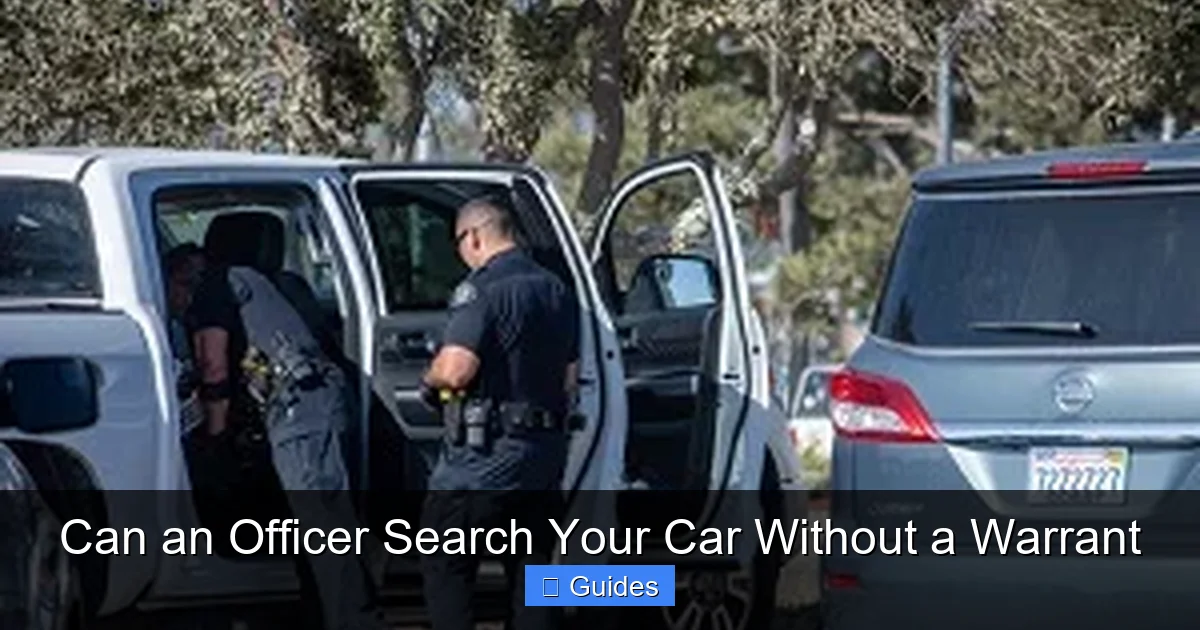
Visual guide about Can an Officer Search Your Car Without a Warrant
Image source: brownfirmpllc.com
Now that we’ve covered the constitutional foundation, let’s dive into the specific situations where officers can search your vehicle without a warrant. These are not loopholes—they’re well-established legal exceptions that have been tested and upheld in court.
1. The Automobile Exception
This is one of the most common justifications for a warrantless car search. The automobile exception allows police to search a vehicle without a warrant if they have probable cause to believe it contains evidence of a crime, contraband, or illegal items.
Probable cause means the officer has specific, articulable facts that would lead a reasonable person to believe a crime has been committed or that evidence is present. For example:
– An officer sees a bag of white powder on the passenger seat.
– They smell a strong odor of marijuana coming from the car.
– They observe a weapon in plain view.
– A drug-sniffing dog alerts to the presence of narcotics.
In these cases, the officer doesn’t need to wait for a warrant. They can search the entire vehicle—including the trunk, glove box, and containers inside—because the mobility of the car creates an urgent need to preserve evidence.
But here’s a key point: the search must be limited to areas where the suspected evidence could reasonably be found. If the officer suspects drugs, they can’t tear apart your engine. But they *can* open a backpack or check under the seats.
2. Consent to Search
One of the simplest ways a car can be searched without a warrant is if the driver gives consent. If an officer asks, “Can I look in your car?” and you say yes, that’s all the legal permission they need.
But here’s the catch: **you don’t have to say yes.** You have the right to refuse. And in many cases, it’s in your best interest to do so—unless you’re confident there’s nothing illegal in the vehicle.
Officers are trained to ask politely, but they may also use psychological tactics to make you feel obligated to agree. For example, they might say, “I just want to make sure you’re not carrying anything dangerous,” or “It’ll only take a minute.”
Remember: consent must be voluntary. If you feel coerced or threatened, the search could be challenged in court. But if you clearly and willingly agree, the officer can proceed—even if later evidence is found that you didn’t know about.
3. Search Incident to a Lawful Arrest
If you’re arrested during a traffic stop, officers can search your car—but only under specific conditions. This is known as a “search incident to arrest.”
The Supreme Court has ruled that after a lawful arrest, officers can search the passenger compartment of the vehicle and any areas within the suspect’s immediate reach. The purpose is twofold:
1. To ensure officer safety by checking for weapons.
2. To prevent the destruction of evidence.
For example, if you’re arrested for driving under the influence (DUI), the officer can search the area around the driver’s seat, the glove box, and any open containers. But they can’t search the trunk unless there’s another justification, like probable cause.
It’s worth noting that this rule has limits. In the 2014 case *Arizona v. Gant*, the Court clarified that officers can only conduct this type of search if the arrestee is within reaching distance of the passenger compartment *at the time of the search*, or if it’s reasonable to believe the vehicle contains evidence related to the crime of arrest.
So if you’re already handcuffed and sitting in the back of a police car, the officer generally can’t search the vehicle unless they have another reason to do so.
4. Plain View and Plain Smell Doctrine
Sometimes, officers don’t need to search at all—because the evidence is already visible or detectable.
The “plain view” doctrine allows officers to seize evidence that is clearly visible during a lawful observation. For example, if an officer shines a flashlight into your car during a nighttime stop and sees a handgun on the backseat, they can legally seize it—even without a warrant.
Similarly, the “plain smell” doctrine (sometimes called “plain odor”) allows officers to act on what they smell. If an officer detects the strong scent of marijuana or alcohol, that can establish probable cause for a search.
These doctrines only apply when the officer is lawfully present—such as during a routine traffic stop—and the evidence is immediately apparent. They can’t use a flashlight to peer into tinted windows or use a drug dog without reasonable suspicion.
5. Exigent Circumstances
In rare cases, officers may search a vehicle without a warrant if there’s an emergency—known as “exigent circumstances.”
Examples include:
– Hearing screams or signs of a struggle inside the car.
– Seeing smoke or smelling gas, suggesting a fire hazard.
– Believing that evidence is about to be destroyed (e.g., someone is flushing drugs down a portable toilet in the vehicle).
These situations require immediate action, and waiting for a warrant could put lives or evidence at risk. However, the burden is on the officer to prove that the circumstances truly justified the warrantless search.
What Happens If You Refuse a Search?
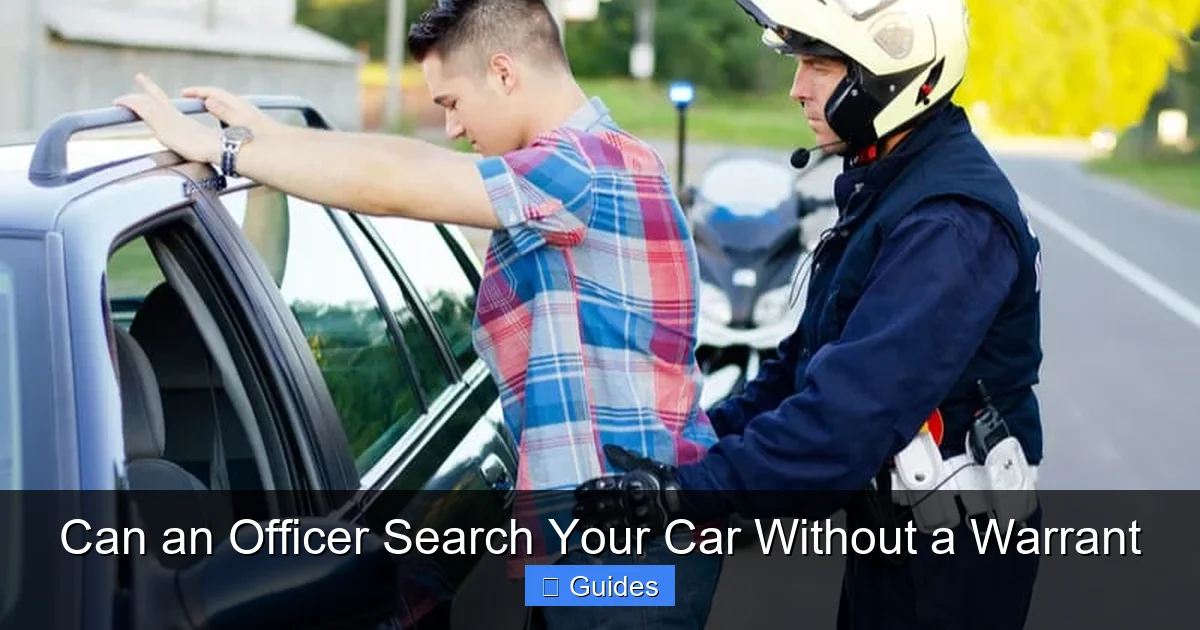
Visual guide about Can an Officer Search Your Car Without a Warrant
Image source: aitalawllc.com
So, what if an officer asks to search your car and you say no? Can they still do it?
The answer depends on whether they have another legal justification—like probable cause or an arrest.
If they don’t have probable cause and you refuse consent, they generally cannot search your vehicle without a warrant. However, they may escalate the situation. For example:
– They might call for a drug-sniffing dog.
– They could detain you longer while they investigate.
– In some cases, they might arrest you for obstruction—though this is controversial and often challenged in court.
It’s important to stay calm and respectful. You can politely say, “I do not consent to a search,” and then remain silent. Avoid arguing, reaching for your phone, or making sudden movements, as these could be misinterpreted as threats.
Remember: refusing a search doesn’t make you look guilty. It’s your constitutional right. And in many cases, it’s the smartest move—especially if you’re unsure what’s in the car.
Common Misconceptions About Car Searches
There’s a lot of misinformation out there about police searches. Let’s clear up some of the most common myths.
Myth 1: “If I’m not under arrest, they can’t search my car.”
False. You don’t need to be arrested for your car to be searched. If an officer has probable cause—like seeing drugs or smelling marijuana—they can search the vehicle even if you’re just being cited for a traffic violation.
Myth 2: “They need a warrant to search my trunk.”
Not necessarily. Under the automobile exception, if there’s probable cause to believe evidence is in the trunk, officers can open it—even without a warrant. The same goes for locked containers inside the car.
Myth 3: “I have to answer their questions.”
No. You have the right to remain silent. You must provide your license, registration, and proof of insurance, but you’re not required to answer questions about where you’re going, what’s in your car, or whether you’ve been drinking.
In fact, anything you say can be used against you in court. So it’s often best to politely decline: “I’d prefer not to answer questions without a lawyer present.”
Myth 4: “If they find something, I’m automatically guilty.”
Not true. Even if evidence is found, you have the right to challenge the legality of the search in court. If the judge rules that the search violated your Fourth Amendment rights, the evidence could be suppressed—meaning it can’t be used against you.
What to Do If You’re Pulled Over
Knowing your rights is one thing—putting them into practice is another. Here’s a step-by-step guide to help you stay safe and protect your rights during a traffic stop.
1. Stay Calm and Pull Over Safely
As soon as you see the lights, signal and pull over in a safe, well-lit area. Turn off your engine, roll down your window, and keep your hands visible on the steering wheel. This shows the officer you’re not a threat.
2. Provide Required Documents
When the officer approaches, be polite and provide your license, registration, and proof of insurance when asked. You don’t need to volunteer additional information.
3. Know When to Say No
If the officer asks to search your car, you can say: “I do not consent to a search.” You don’t need to explain why. Just be clear and firm.
4. Avoid Sudden Movements
Keep your hands in view at all times. Don’t reach for your glove box or backseat unless instructed. Sudden movements can be misinterpreted as reaching for a weapon.
5. Record the Interaction (If Possible)
Many states allow you to record police interactions as long as you don’t interfere. Use your phone to record audio or video—this can protect you if there’s a dispute later.
6. Stay Silent If Arrested
If you’re arrested, say: “I want to remain silent. I want a lawyer.” Then stop talking. Anything else you say can be used against you.
What If Your Rights Were Violated?
If you believe an officer searched your car illegally—without probable cause, consent, or a valid exception—you may have grounds to challenge the search in court.
The remedy is often the “exclusionary rule,” which prevents illegally obtained evidence from being used in a criminal trial. This means that if drugs, weapons, or other evidence were found during an unlawful search, they could be thrown out—potentially leading to charges being dropped.
To pursue this, you’ll need to file a motion to suppress evidence. This is a legal request asking the court to exclude the evidence from your case. A criminal defense attorney can help you with this process.
Keep in mind: even if the search was unlawful, it doesn’t automatically mean you’ll win your case. But it’s an important tool for holding law enforcement accountable and protecting your constitutional rights.
Conclusion
So, can an officer search your car without a warrant? The answer is yes—but only under specific, legally justified circumstances. The automobile exception, consent, search incident to arrest, plain view, and exigent circumstances all allow warrantless searches when properly applied.
But that doesn’t mean you have to roll over. You have rights, and knowing them can make a big difference during a traffic stop. Stay calm, be respectful, and don’t feel pressured to consent to a search. If you’re unsure, it’s always safer to say no and let the officer obtain a warrant—if they have the legal grounds to do so.
Remember: the law is designed to balance public safety with individual privacy. By understanding how that balance works, you can protect yourself while respecting the role of law enforcement. And if you ever feel your rights were violated, don’t hesitate to consult a qualified attorney.
Knowledge is power—especially when you’re behind the wheel.
Frequently Asked Questions
Can police search my car if I’m not arrested?
Yes, if they have probable cause to believe your vehicle contains evidence of a crime, they can search it without a warrant—even if you’re not under arrest. Probable cause could include seeing illegal items, smelling drugs, or a drug dog alert.
Do I have to let police search my car?
No, you have the right to refuse a search. Simply say, “I do not consent to a search.” However, if the officer has probable cause or another legal justification, they may still search the vehicle without your permission.
Can police search my trunk without a warrant?
Yes, under the automobile exception, if officers have probable cause to believe evidence is in the trunk, they can open it without a warrant. The same applies to locked containers inside the car.
What if I say no but the officer searches anyway?
If the officer lacks probable cause or another valid exception, the search may be illegal. You can challenge the evidence in court through a motion to suppress, which could lead to the evidence being excluded.
Can police search my phone during a car stop?
Generally, no. The Supreme Court has ruled that police need a warrant to search a cell phone, even during an arrest. However, they may seize the phone as evidence and seek a warrant later.
What should I do if I think my rights were violated?
Stay calm, avoid confrontation, and consult a criminal defense attorney. They can review the details of the search and help you determine if your rights were violated and what legal options you have.

At CarLegit, we believe information should be clear, factual, and genuinely helpful. That’s why every guide, review, and update on our website is created with care, research, and a strong focus on user experience.