
Bad tires are a common—and often overlooked—cause of car shaking. Whether it’s uneven wear, imbalance, or damage, your tires directly impact ride comfort and safety. This guide breaks down why it happens, how to spot it, and what you can do to fix it fast.
In This Article
- 1 Key Takeaways
- 2 📑 Table of Contents
- 3 Can Bad Tires Make Your Car Shake? The Surprising Truth
- 4 How Tires Affect Your Car’s Stability and Ride Quality
- 5 Common Signs That Your Tires Are Causing the Shake
- 6 Top Causes of Tire-Related Car Shaking
- 7 How to Diagnose and Fix Tire Shaking
- 8 Preventing Tire Shaking: Maintenance Tips
- 9 When to Replace Your Tires
- 10 Conclusion: Don’t Let Bad Tires Shake Up Your Drive
- 11 Frequently Asked Questions
Key Takeaways
- Uneven tire wear causes vibrations: Tread wear patterns like cupping or feathering create imbalances that shake your car, especially at higher speeds.
- Improper wheel balance leads to shaking: When weights are missing or tires aren’t balanced correctly, vibrations start around 50–70 mph.
- Damaged or bent rims worsen the issue: Even small bends in the wheel can cause wobbling that feels like a tire problem.
- Old or dry-rotted tires lose stability: Cracks in the sidewall or tread reduce structural integrity, leading to shaking and blowout risks.
- Misalignment affects tire performance: Poor alignment causes uneven wear and steering pull, contributing to vibrations over time.
- Regular maintenance prevents shaking: Rotate, balance, and inspect tires every 5,000–7,000 miles to avoid problems.
- Ignoring the shake can be dangerous: What starts as a minor vibration can lead to tire failure, loss of control, or accidents.
📑 Table of Contents
- Can Bad Tires Make Your Car Shake? The Surprising Truth
- How Tires Affect Your Car’s Stability and Ride Quality
- Common Signs That Your Tires Are Causing the Shake
- Top Causes of Tire-Related Car Shaking
- How to Diagnose and Fix Tire Shaking
- Preventing Tire Shaking: Maintenance Tips
- When to Replace Your Tires
- Conclusion: Don’t Let Bad Tires Shake Up Your Drive
Can Bad Tires Make Your Car Shake? The Surprising Truth
If your car starts shaking while driving—especially when you hit the highway—you might blame the engine, suspension, or even bad luck. But here’s the truth: **bad tires are one of the most common causes of car vibrations**. And the scary part? Many drivers ignore the warning signs until it’s too late.
Tires are the only part of your vehicle that touches the road. They support the weight of your car, absorb bumps, and help you steer, brake, and accelerate safely. When they’re worn, damaged, or improperly maintained, they can’t do their job. The result? A shaky, uncomfortable ride that can compromise your safety.
You might feel the vibration in the steering wheel, the seat, or even the entire cabin. It could happen at certain speeds, when braking, or all the time. While some shaking is normal on rough roads, persistent or worsening vibrations are a red flag. And yes—bad tires are often the culprit.
In this guide, we’ll dive deep into how and why bad tires make your car shake. We’ll cover the most common causes, how to identify them, and what you can do to fix the problem. Whether you’re a daily commuter or weekend road-tripper, understanding tire health is essential for smooth, safe driving.
How Tires Affect Your Car’s Stability and Ride Quality

Visual guide about Can Bad Tires Make Your Car Shake 2
Image source: thedailyautomotive.com
Your tires are more than just rubber circles—they’re a critical part of your car’s suspension and handling system. They’re designed to maintain consistent contact with the road, provide grip, and absorb shocks from potholes, bumps, and uneven surfaces. When tires are in good condition, they work seamlessly with your shocks, struts, and alignment to deliver a smooth, controlled ride.
But when tires degrade, that harmony breaks down. A single worn or damaged tire can throw off the balance of your entire vehicle. Think of it like walking with one shoe worn down more than the other—your gait changes, and you feel off-balance. The same principle applies to your car.
Tires also play a key role in maintaining proper weight distribution. If one tire is underinflated or has internal damage, it can’t support its share of the load. This imbalance creates uneven forces that translate into vibrations. Over time, these vibrations can stress other components like wheel bearings, suspension joints, and even the drivetrain.
Even small issues—like a missing wheel weight or a slight bulge in the sidewall—can amplify into noticeable shaking. And because tires rotate at high speeds, even minor imperfections get multiplied. That’s why a problem that seems small can feel much bigger when you’re cruising at 70 mph.
The Science Behind Tire Vibrations
Tire vibrations occur when there’s an imbalance in the rotating mass of the wheel and tire assembly. Every tire and wheel has a specific weight distribution. During manufacturing, technicians use precision tools to ensure balance. But over time, that balance can be disrupted.
For example, if a small piece of tread wears off unevenly, it creates a heavy spot. When that spot rotates, it generates a centrifugal force that pushes outward. Your car’s suspension tries to absorb it, but if the force is strong enough, you feel it as a shake.
Similarly, if your tire develops a flat spot from hard braking or sitting in one position for too long, it won’t roll smoothly. The repeated bump from that flat spot creates a rhythmic vibration—often described as a “thumping” sensation.
These vibrations aren’t just annoying—they’re a sign that your tires aren’t performing as they should. Left unchecked, they can lead to faster wear, reduced fuel efficiency, and even dangerous blowouts.
Why Ignoring the Shake Is a Bad Idea
Some drivers brush off tire vibrations as “just a rough road” or “normal for an older car.” But ignoring the problem can have serious consequences. Persistent shaking puts extra stress on your suspension, steering, and braking systems. Over time, this can lead to costly repairs.
More importantly, bad tires increase your risk of accidents. A tire that’s severely worn or damaged can lose grip during sudden maneuvers, especially in wet or icy conditions. And if a tire blows out at high speed, it can cause you to lose control of the vehicle.
Even if you don’t have a blowout, vibrations can affect your ability to steer accurately. You might notice your car pulling to one side or feeling “loose” on the road. These are signs that your tires—and possibly your alignment—are compromised.
The bottom line? Don’t wait for the shaking to get worse. Address it early to protect your safety, your wallet, and your peace of mind.
Common Signs That Your Tires Are Causing the Shake
Visual guide about Can Bad Tires Make Your Car Shake 2
Image source: i.ytimg.com
Not all car vibrations are caused by bad tires—but many are. The key is knowing what to look for. Here are the most common signs that your tires are the source of the problem.
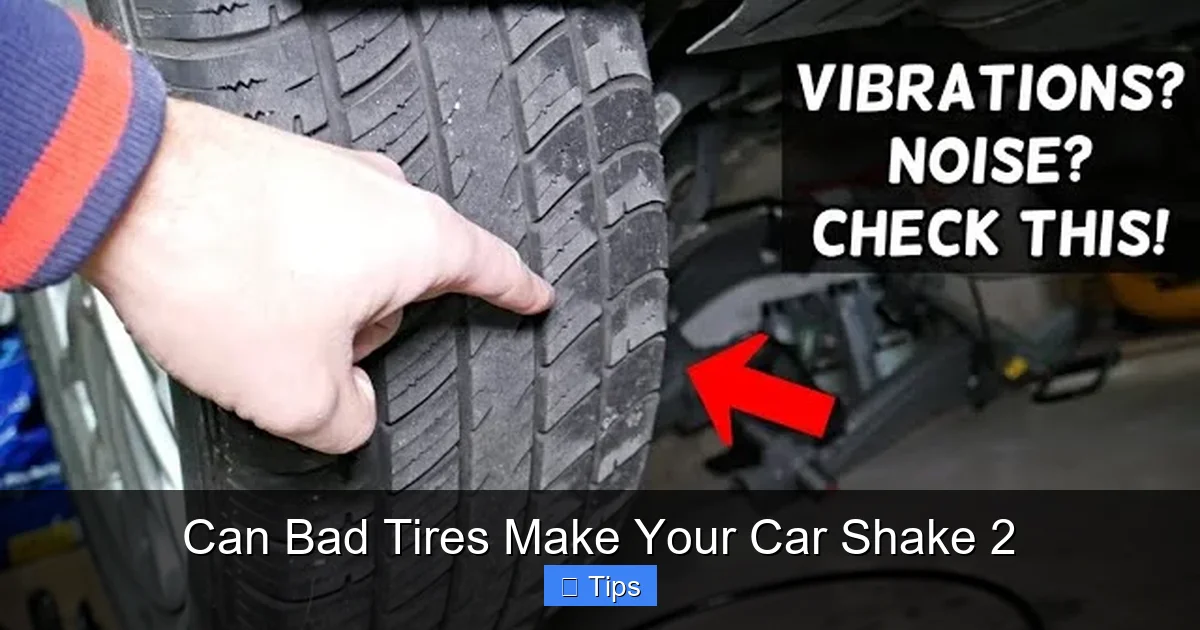
First, pay attention to **when** the shaking occurs. If it starts around 50–70 mph and gets worse as you speed up, it’s often a sign of wheel imbalance or uneven tire wear. If the vibration happens when you brake, it could indicate warped rotors—but it might also point to tire issues like flat spots or tread separation.
Next, notice **where** you feel the shake. A vibration in the steering wheel usually points to front tire problems. If you feel it through the seat or floor, it’s more likely coming from the rear tires. A shake that affects the whole car could mean multiple tires are involved.
Also, listen for unusual noises. A rhythmic thumping or humming sound that changes with speed is a classic sign of tire trouble. You might also hear a flapping noise if the tread is separating from the tire casing.
Finally, inspect your tires visually. Look for:
– Uneven tread wear (like cupping, feathering, or bald spots)
– Cracks in the sidewall or tread
– Bulges or bubbles on the sidewall
– Missing or damaged valve stems
– Objects stuck in the tread (nails, screws, etc.)
If you spot any of these, it’s time to take action.
Speed-Specific Vibrations: What They Mean
One of the best ways to diagnose tire-related shaking is by noting the speed at which it occurs.
– **Below 30 mph:** Shaking at low speeds is less likely to be tire-related. It could point to engine mounts, suspension issues, or brake problems.
– **30–50 mph:** This range often indicates minor imbalances or early wear. It might not be severe, but it’s worth checking.
– **50–70 mph:** This is the “sweet spot” for tire imbalance. If your car shakes in this range, wheel balancing is likely needed.
– **Above 70 mph:** Severe shaking at high speeds suggests major tire damage, such as tread separation or a bent rim.
Keep a log of when and where you feel the vibration. This information can help your mechanic pinpoint the issue faster.
Front vs. Rear Tire Shaking
The location of the vibration can tell you a lot.
– **Steering wheel shake:** Almost always points to front tire issues. Common causes include unbalanced tires, worn suspension components, or alignment problems.
– **Seat or floor vibration:** Usually indicates rear tire problems. This could be due to unbalanced rear wheels, worn rear suspension, or drivetrain issues.
– **Whole-body shake:** Suggests multiple tires are involved, or there’s a serious imbalance in the drivetrain.
If you’re unsure, try swapping front and rear tires (if they’re the same size) to see if the vibration moves. This simple test can help confirm whether the tires are the source.
Top Causes of Tire-Related Car Shaking

Visual guide about Can Bad Tires Make Your Car Shake 2
Image source: thedailyautomotive.com
Now that you know the signs, let’s look at the most common reasons bad tires make your car shake.
1. Uneven Tire Wear
Tires are designed to wear evenly across the tread. But when alignment is off, suspension parts are worn, or inflation is inconsistent, wear patterns become irregular.
Common uneven wear patterns include:
– **Cupping (scalloping):** Dips or scallops around the tread. Caused by worn shocks or struts.
– **Feathering:** Tread blocks are worn on one side more than the other. Often due to misalignment.
– **Center wear:** Excessive wear in the middle of the tread. Usually from overinflation.
– **Edge wear:** Wear on the outer edges. Typically caused by underinflation or aggressive cornering.
These patterns create high and low spots on the tire surface. As the tire rolls, these spots hit the road unevenly, causing vibrations.
2. Wheel Imbalance
Every tire and wheel assembly should be balanced so that weight is evenly distributed around the axle. Mechanics do this by attaching small weights to the rim.
But over time, these weights can fall off. Road hazards like potholes can also knock the assembly out of balance. When this happens, the heavy spot creates a wobble as it rotates.
Imbalance usually causes shaking between 50 and 70 mph. You’ll feel it most in the steering wheel if it’s a front tire, or in the seat if it’s a rear tire.
3. Damaged or Bent Rims
Hitting a pothole, curb, or railroad track can bend your wheel rim—even if it’s not visibly damaged. A bent rim causes the tire to wobble as it spins, leading to vibrations.
Sometimes, the bend is so slight you can’t see it. But your car will feel it. A professional can check for runout (side-to-side wobble) using a dial indicator.
4. Tread Separation or Internal Damage
Tires are made of layers of rubber, steel, and fabric. If these layers separate—due to age, heat, or manufacturing defects—the tire can bulge or deform.
This is especially dangerous. A separated tire can lose air suddenly or blow out at high speed. You might feel a rhythmic thumping or see a bulge on the sidewall.
5. Dry Rot and Aging Tires
Even if a tire looks fine, it can be unsafe if it’s old. Rubber degrades over time, losing flexibility and developing cracks—especially in hot or sunny climates.
Dry rot weakens the tire structure, making it more prone to failure. It can also cause uneven flexibility, leading to vibrations.
Most tire manufacturers recommend replacing tires every 6–10 years, regardless of tread depth.
6. Improper Inflation
Both overinflation and underinflation can cause shaking.
– **Overinflation:** Makes the tire too stiff, reducing contact with the road. This can lead to center wear and a bumpy ride.
– **Underinflation:** Causes the sidewalls to flex excessively, leading to edge wear and overheating. It also increases the risk of blowouts.
Check your tire pressure monthly and adjust it according to the manufacturer’s recommendations (found on the driver’s door jamb or in the owner’s manual).
How to Diagnose and Fix Tire Shaking
If your car is shaking, don’t panic. Start with these simple steps to diagnose and fix the problem.
Step 1: Check Tire Pressure
Grab a tire pressure gauge and check all four tires (plus the spare). Compare the readings to the recommended PSI. Adjust as needed.
Low pressure? Inflate to the correct level. High pressure? Let some air out. Then test drive to see if the shaking improves.
Step 2: Inspect Tires Visually
Look for:
– Cracks, bulges, or cuts
– Uneven tread wear
– Objects stuck in the tread
– Missing valve caps
Take photos if you’re unsure. A mechanic can help interpret what you’re seeing.
Step 3: Test Drive at Different Speeds
Drive on a smooth, flat road and note:
– When the shaking starts
– Where you feel it (steering wheel, seat, floor)
– Whether it changes with speed or braking
This info will help your mechanic diagnose the issue.
Step 4: Visit a Tire Professional
Take your car to a trusted tire shop or mechanic. They can:
– Check wheel balance and rebalance if needed
– Inspect for bent rims or suspension damage
– Measure tread depth and wear patterns
– Perform a road force balance (a more advanced test that simulates real driving conditions)
Most shops offer free inspections, so there’s no reason to skip this step.
Step 5: Rotate, Balance, and Align
Regular maintenance is key to preventing tire shaking.
– **Rotate tires** every 5,000–7,000 miles to promote even wear.
– **Balance wheels** whenever you notice vibrations or after hitting a pothole.
– **Align wheels** if your car pulls to one side or you notice uneven wear.
These services are relatively inexpensive and can save you from costly repairs down the road.
Step 6: Replace Worn or Damaged Tires
If your tires are worn, cracked, or damaged, replacement is the only safe option.
Don’t just replace one tire—replace in pairs (front or rear) to maintain balance. If all four are worn, replace them together.
Choose high-quality tires that match your driving needs (all-season, performance, winter, etc.). Investing in good tires pays off in safety, comfort, and longevity.
Preventing Tire Shaking: Maintenance Tips
The best way to avoid tire-related shaking is through regular maintenance. Here’s how to keep your tires in top shape.
Check Tire Pressure Monthly
Use a reliable gauge and check pressure when tires are cold (before driving). Adjust as needed. Don’t rely on the tire’s sidewall number—use the vehicle manufacturer’s recommendation.
Rotate Tires Regularly
Follow your owner’s manual for rotation patterns (usually front-to-back or cross-pattern). Rotation helps even out wear and extends tire life.
Inspect Tires Weekly
Look for cuts, bulges, cracks, and embedded objects. Feel the tread with your hand to detect uneven wear.
Align Wheels Annually
Get a wheel alignment at least once a year, or after hitting a major pothole or curb. Proper alignment prevents uneven wear and improves handling.
Balance Wheels After Repairs
Whenever you get new tires, repair a puncture, or hit a pothole, have your wheels rebalanced.
Avoid Overloading Your Vehicle
Check your vehicle’s load rating and don’t exceed it. Overloading puts extra stress on tires and can cause overheating and failure.
Store Tires Properly
If you use seasonal tires, store them in a cool, dry place away from sunlight and chemicals. Use tire racks or hang them to prevent deformation.
When to Replace Your Tires
Knowing when to replace tires is crucial for safety. Here are the signs it’s time for new ones.
Tread Depth Below 2/32 Inch
Use a tread depth gauge or the “penny test” (insert a penny into the tread with Lincoln’s head upside down—if you see the top of his head, it’s time to replace).
Visible Cracks or Dry Rot
Cracks in the sidewall or tread indicate aging and weakening. Replace immediately.
Bulges or Blisters
These are signs of internal damage. The tire could fail at any time.
Uneven Wear That Can’t Be Corrected
If rotation and alignment don’t fix the wear pattern, the tires are likely too far gone.
Age Over 6–10 Years
Check the DOT code on the sidewall (the last four digits show the week and year of manufacture). Replace tires older than 10 years, even if they look good.
Frequent Vibrations Despite Maintenance
If you’ve balanced, aligned, and rotated your tires but still feel shaking, it’s time for new ones.
Conclusion: Don’t Let Bad Tires Shake Up Your Drive
Yes, bad tires can make your car shake—and the problem is more common than you think. From uneven wear to imbalance, damaged rims, and dry rot, there are many ways tires can compromise your ride quality and safety.
The good news? Most tire-related shaking is preventable and fixable. With regular maintenance, proper inflation, and timely replacements, you can keep your car running smoothly for years.
Don’t ignore the signs. If your car is shaking, take it seriously. A quick inspection could save you from a blowout, an accident, or a costly repair.
Your tires are your connection to the road. Treat them well, and they’ll take you where you need to go—safely and smoothly.
Frequently Asked Questions
Can a single bad tire cause my car to shake?
Yes, even one bad tire can cause noticeable shaking. Whether it’s worn, unbalanced, or damaged, a single tire can create enough imbalance to affect the entire vehicle’s stability.
How often should I balance my tires?
Balance your tires every 5,000–7,000 miles, or whenever you notice vibrations. Also rebalance after hitting a pothole or getting new tires.
Is it safe to drive with a shaking car?
It depends on the severity. Mild shaking might be manageable short-term, but persistent or worsening vibrations can lead to tire failure or loss of control. Get it checked as soon as possible.
Can tire shaking damage other parts of my car?
Yes. Vibrations stress suspension, steering, and drivetrain components. Over time, this can lead to premature wear and expensive repairs.
Do all tire shops offer free inspections?
Most reputable tire shops offer free visual inspections and basic diagnostics. Call ahead to confirm, but don’t skip this valuable service.
How much does it cost to fix tire shaking?
Costs vary. Wheel balancing is typically $15–$50 per tire. Alignment runs $75–$200. Tire replacement can range from $100 to $500+ per tire, depending on size and quality.

At CarLegit, we believe information should be clear, factual, and genuinely helpful. That’s why every guide, review, and update on our website is created with care, research, and a strong focus on user experience.