
Bullets won’t spontaneously explode in a hot car, but extreme heat can degrade ammunition and increase risks. Understanding how temperature affects gun components helps prevent accidents and ensures safe storage.
In This Article
- 1 Key Takeaways
- 2 📑 Table of Contents
- 3 Can Bullets Go Off in a Hot Car? The Truth Behind the Myth
- 4 How Bullets Work: The Basics of Ammunition
- 5 The Science of Heat and Ammunition
- 6 Myth vs. Reality: Can Bullets Explode in a Hot Car?
- 7 Risks of Storing Firearms and Ammo in Hot Cars
- 8 Best Practices for Storing Ammo and Firearms in Hot Weather
- 9 Legal and Safety Considerations
- 10 Conclusion: Stay Smart, Stay Safe
- 11 Frequently Asked Questions
Key Takeaways
- Bullets don’t “go off” from heat alone: Modern ammunition requires a firing pin strike to ignite; heat alone won’t cause detonation.
- High temperatures degrade components: Prolonged exposure to heat can weaken primers, warp casings, and spoil gunpowder.
- Car interiors get dangerously hot: On an 80°F day, a car’s interior can exceed 120°F, creating unsafe storage conditions.
- Stored firearms are at higher risk: Guns left in hot cars may experience mechanical stress, corrosion, or accidental discharge if mishandled.
- Proper storage prevents accidents: Use lockboxes, avoid direct sunlight, and never leave ammo in glove compartments or trunks.
- Know the signs of heat damage: Swollen casings, discolored primers, or sticky powder indicate compromised ammo.
- Education and awareness save lives: Understanding ammo safety reduces risks for gun owners and bystanders.
📑 Table of Contents
- Can Bullets Go Off in a Hot Car? The Truth Behind the Myth
- How Bullets Work: The Basics of Ammunition
- The Science of Heat and Ammunition
- Myth vs. Reality: Can Bullets Explode in a Hot Car?
- Risks of Storing Firearms and Ammo in Hot Cars
- Best Practices for Storing Ammo and Firearms in Hot Weather
- Legal and Safety Considerations
- Conclusion: Stay Smart, Stay Safe
Can Bullets Go Off in a Hot Car? The Truth Behind the Myth
You’ve probably heard the warning: “Don’t leave your gun in the car—it’s too hot!” Maybe you’ve seen viral videos or read alarming stories about bullets exploding in parked vehicles. It’s a common concern, especially during summer months when temperatures soar. But is there any truth to the idea that bullets can “go off” in a hot car?
The short answer? No—bullets won’t spontaneously explode just because they’re left in a hot vehicle. But that doesn’t mean heat isn’t a serious concern. While modern ammunition is engineered to be stable under normal conditions, extreme and prolonged heat can degrade its components, potentially leading to malfunctions or dangerous situations. Understanding the science behind how heat affects bullets and firearms is essential for anyone who owns or transports guns.
This article will break down the facts, dispel myths, and offer practical safety tips to help you protect yourself, your loved ones, and your equipment. Whether you’re a seasoned gun owner or just curious about firearm safety, knowing how temperature impacts ammunition can make a real difference in preventing accidents.
How Bullets Work: The Basics of Ammunition

Visual guide about Can Bullets Go Off in a Hot Car
Image source: static01.nyt.com
Before we dive into heat-related risks, it helps to understand how bullets actually function. A typical cartridge—what most people call a “bullet”—is made up of four main parts: the bullet (the projectile), the casing, the gunpowder (or propellant), and the primer.
When you pull the trigger, the firing pin strikes the primer, which ignites the gunpowder inside the casing. The burning gunpowder creates rapidly expanding gas, which forces the bullet down the barrel and out of the gun. This entire process happens in milliseconds and requires precise timing and pressure.
The key point here is that ignition requires a deliberate mechanical action—the strike of a firing pin. Heat alone, even very high heat, does not provide the kind of impact or friction needed to set off the primer in most modern ammunition. That’s why bullets don’t just “go off” when left in a hot car.
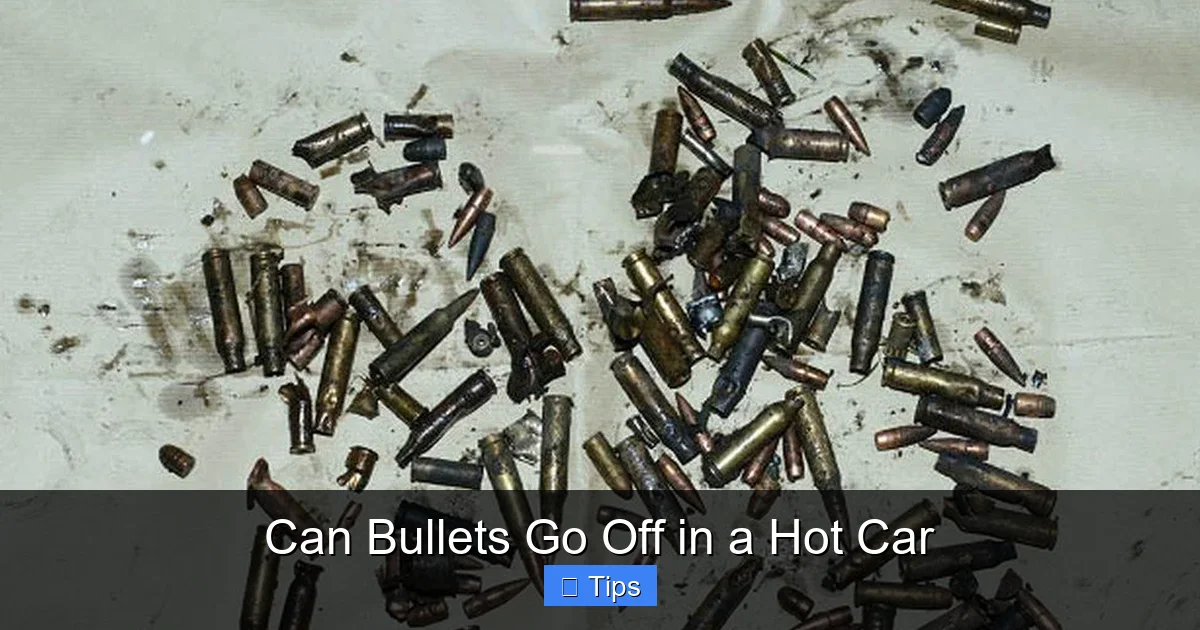
However, while heat won’t cause spontaneous detonation, it can still affect the integrity of the components over time. For example, gunpowder can degrade when exposed to high temperatures, losing its potency or becoming unstable. Casings may warp or expand, and primers can become brittle or less reliable. These changes don’t make the bullet explode, but they can lead to misfires, squib loads (where the bullet gets stuck in the barrel), or other dangerous malfunctions.
Types of Ammunition and Their Heat Sensitivity
Not all bullets are created equal when it comes to heat resistance. Different types of ammunition use varying formulations of gunpowder and primer compounds, which can react differently to temperature changes.
For instance, military-grade ammunition is often designed to withstand a wider range of environmental conditions, including extreme heat and cold. Civilian ammunition, on the other hand, may be more sensitive, especially if it’s older or stored improperly.
Some specialty rounds, like those used in high-powered rifles or armor-piercing bullets, may contain more volatile propellants. While still safe under normal conditions, these can be more susceptible to degradation in high heat.
It’s also worth noting that reloaded ammunition—bullets that have been disassembled and reassembled by hand—can be more vulnerable to heat damage if not done correctly. Improperly seated primers or inconsistent powder charges can increase the risk of malfunctions when exposed to temperature extremes.
The Science of Heat and Ammunition
Visual guide about Can Bullets Go Off in a Hot Car
Image source: ichef.bbci.co.uk
So, what exactly happens to bullets when they’re exposed to high temperatures? To answer that, we need to look at the materials involved and how they respond to heat.
Gunpowder, or smokeless powder, is a chemical compound that burns rapidly when ignited. Most modern gunpowders are designed to be stable at room temperature, but they can begin to break down when exposed to sustained heat above 150°F (65°C). This degradation can cause the powder to lose its burning efficiency, leading to inconsistent bullet velocity or failure to fire.
Primers, which contain sensitive explosive compounds, are another concern. While they require a sharp impact to ignite, prolonged exposure to heat can cause the chemicals inside to deteriorate. This might result in a “hard primer” that doesn’t ignite easily—or worse, a primer that becomes overly sensitive and could ignite under minor friction or pressure.
Casings, typically made of brass, steel, or aluminum, can also be affected. Brass expands when heated, which might seem harmless, but repeated expansion and contraction can weaken the metal over time. In extreme cases, a warped casing could cause a jam or even rupture inside the firearm.
Real-World Temperatures in Cars
To understand the risk, consider how hot a car can actually get. On a sunny day with an outside temperature of 80°F (27°C), the interior of a parked car can reach 110–120°F (43–49°C) within an hour. On a 90°F (32°C) day, that number can climb to 130–140°F (54–60°C) or higher.
These temperatures are well within the range that can begin to affect ammunition components. While it’s unlikely to cause an explosion, the cumulative effect of repeated heat exposure—especially over days or weeks—can significantly reduce the reliability and safety of stored bullets.
Trunks tend to be slightly cooler than the passenger cabin, but they’re still far from ideal. And if your car is parked in direct sunlight with windows closed, the heat buildup can be extreme, particularly in summer months or in hot climates like Arizona, Texas, or Florida.
Myth vs. Reality: Can Bullets Explode in a Hot Car?
Visual guide about Can Bullets Go Off in a Hot Car
Image source: a57.foxnews.com
Let’s address the big question head-on: Can bullets actually explode in a hot car?
The answer is no—not in the way most people imagine. You won’t walk up to your car and find it blown apart because a bullet “went off” in the glove box. Modern ammunition is designed with safety in mind, and the primer requires a specific amount of force to ignite. Heat alone doesn’t provide that.
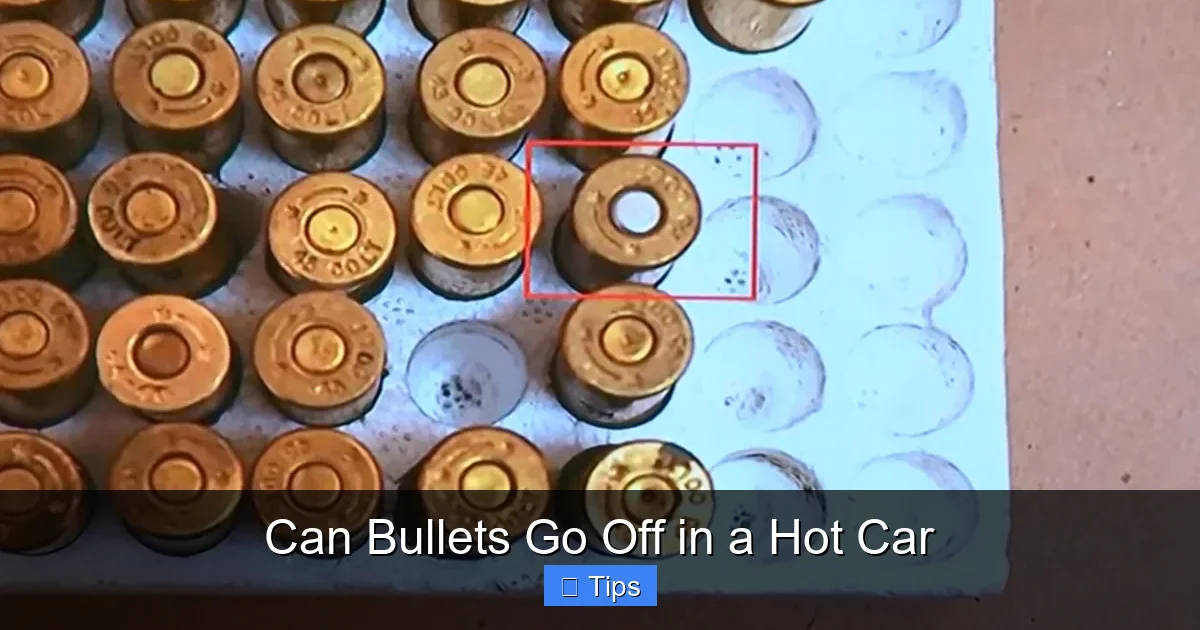
However, there are rare scenarios where extreme conditions could lead to dangerous outcomes. For example, if a large quantity of ammunition is stored in a confined space and exposed to intense, sustained heat—such as in a fire—the gunpowder could ignite and cause a rapid burn or even a small explosion. But this is more about fire than ambient car heat.
Another misconception is that bullets can “cook off” like in movies, where a gun left in a hot car suddenly fires on its own. This is physically impossible with standard firearms. The firing mechanism requires human intervention or a mechanical trigger pull. Without that, nothing happens—no matter how hot it gets.
That said, heat can increase the risk of accidental discharge in other ways. For example, if a loaded gun is left in a hot car and someone—especially a child—finds it and handles it improperly, the combination of heat-damaged components and mishandling could lead to a dangerous situation. A weakened firing pin or sticky action might cause a gun to fire when it shouldn’t.
Case Studies and Real Incidents
While spontaneous bullet explosions are rare, there have been documented cases where heat contributed to firearm malfunctions.
In one incident, a police officer left his service weapon in a patrol car during a heatwave. When he returned, the gun failed to fire during a routine check. Upon inspection, the primer was found to be degraded, likely due to prolonged exposure to high temperatures.
In another case, a hunter stored a box of rifle ammunition in his truck bed during a summer camping trip. After several days in direct sunlight, several rounds failed to fire, and one produced a noticeably weaker shot. The gunpowder had likely lost some of its potency.
These examples highlight that while bullets won’t explode, heat can still compromise their performance and safety.
Risks of Storing Firearms and Ammo in Hot Cars
Even if bullets don’t explode, storing firearms and ammunition in hot cars comes with real risks. Let’s break them down.
First, there’s the risk of degradation. As we’ve discussed, heat can weaken primers, spoil gunpowder, and warp casings. Over time, this can lead to misfires, squib loads, or complete failure to fire. A squib load—where a bullet is fired but doesn’t have enough force to exit the barrel—can be especially dangerous. If the next round is fired, it can cause the barrel to burst.
Second, there’s the risk of theft. Leaving a gun in a car, even for a short time, increases the chance of it being stolen. Stolen firearms often end up in the wrong hands, contributing to crime and accidents. And if a thief takes heat-damaged ammo, they might unknowingly use it in a way that leads to injury.
Third, there’s the risk of accidental discharge due to mishandling. A child or untrained person who finds a gun in a hot car might not realize it’s dangerous. If the gun is loaded and the components are compromised, the risk of an accident increases.
Finally, there’s the risk of legal and insurance issues. Many states have laws requiring firearms to be stored securely, especially in vehicles. If a gun is stolen from your car and used in a crime, you could face legal consequences. Insurance companies may also deny claims if they determine the gun was stored improperly.
How Heat Affects Different Firearm Types
Not all guns are equally affected by heat. Semi-automatic pistols and rifles, which rely on precise mechanical actions, may be more sensitive to heat-induced expansion and warping. Bolt-action rifles, with fewer moving parts, might be slightly more resilient.
Revolvers, which store ammunition in individual chambers, can also be affected. If the chambers expand due to heat, it could cause alignment issues or make it difficult to eject spent casings.
Shotguns, which often use plastic hulls, are particularly vulnerable. Plastic can warp or melt in high heat, potentially jamming the action or causing misfires.
In all cases, the key is consistency. Sudden temperature changes—like moving a gun from a hot car to a cool room—can cause condensation, leading to rust and corrosion. This is especially true in humid climates.
Best Practices for Storing Ammo and Firearms in Hot Weather
Now that we understand the risks, let’s talk about how to stay safe. Here are some practical tips for storing ammunition and firearms in hot weather.
First, never leave guns or ammo in your car for extended periods. If you must transport them, do so quickly and store them in a secure, climate-controlled location as soon as possible.
Use a lockable gun case or safe. These not only prevent unauthorized access but also provide some insulation against temperature extremes. Look for cases with foam padding and weather-resistant seals.
Avoid direct sunlight. If you’re storing guns at home, keep them away from windows, attics, or garages that get very hot. A closet or basement is usually a better option.
Consider using desiccants. Moisture is another enemy of ammunition. Silica gel packs can help absorb excess humidity and prevent corrosion.
Rotate your ammo. If you store ammunition long-term, use the “first in, first out” rule. This ensures older rounds are used before they degrade.
Inspect your ammo regularly. Look for signs of damage: swollen casings, discolored primers, or powder that looks clumped or sticky. If you see any of these, dispose of the rounds safely.
Safe Disposal of Damaged Ammunition
If you find heat-damaged bullets, don’t try to fire them. Instead, contact your local police department or fire department. Many have protocols for safely disposing of old or compromised ammunition.
Never throw ammo in the trash or pour gunpowder down the drain. These actions can be dangerous and are often illegal.
Some shooting ranges or gun shops also offer disposal services. Call ahead to check.
Legal and Safety Considerations
Firearm storage laws vary by state, but many require guns to be secured when not in use—especially in vehicles. For example, some states mandate that firearms be locked in a container or trunk when transported.
Even if your state doesn’t have strict laws, responsible gun ownership includes safe storage. This protects not only you but also others who might come into contact with your weapons.
Insurance companies may also require proof of secure storage to cover firearm-related incidents. Keeping records of where and how you store your guns can help in case of theft or damage.
Teaching Kids About Gun Safety
If you have children, it’s crucial to talk to them about gun safety—even if you don’t own a firearm. The “Stop, Don’t Touch, Run Away, Tell an Adult” rule is a simple but effective way to teach kids what to do if they find a gun.
Make sure they understand that guns are not toys and should never be handled without adult supervision.
Conclusion: Stay Smart, Stay Safe
So, can bullets go off in a hot car? The answer is clear: not on their own. But that doesn’t mean you should ignore the risks. Extreme heat can degrade ammunition, compromise firearm function, and increase the chances of accidents—especially when combined with poor storage or handling.
By understanding how temperature affects bullets and guns, you can make smarter choices about storage and transportation. Use lockboxes, avoid leaving firearms in vehicles, inspect your ammo regularly, and educate yourself and others about safe practices.
Firearm safety isn’t just about preventing explosions—it’s about responsibility, awareness, and respect for the power of these tools. Whether you’re a daily carrier or a weekend shooter, taking a few extra precautions can make all the difference.
Stay cool, stay informed, and always prioritize safety.
Frequently Asked Questions
Can a bullet explode if left in a hot car?
No, bullets will not explode from heat alone. Modern ammunition requires a firing pin strike to ignite the primer. However, extreme heat can degrade components and increase risks.
How hot does a car have to get to damage ammunition?
Car interiors can exceed 120°F on an 80°F day. Prolonged exposure to temperatures above 150°F can degrade gunpowder and primers, reducing reliability.
Is it safe to store guns in a car trunk?
Trunks are slightly cooler than cabins but still get very hot. It’s best to avoid storing firearms in vehicles. Use a lockbox and store guns in climate-controlled areas.
What are the signs of heat-damaged ammunition?
Look for swollen casings, discolored primers, or clumped gunpowder. These indicate the ammo may be unsafe to fire.
Can heat cause a gun to fire by itself?
No. Guns require a trigger pull or mechanical action to fire. Heat alone cannot cause accidental discharge.
What should I do if I find old ammo in my car?
Do not fire it. Contact local law enforcement or a gun shop for safe disposal. Never throw ammo in the trash.

At CarLegit, we believe information should be clear, factual, and genuinely helpful. That’s why every guide, review, and update on our website is created with care, research, and a strong focus on user experience.