
Yes, you can charge your Hyundai Kona Electric at Tesla Supercharger V2 stations—but not directly. With the right adapter and access through Tesla’s Magic Dock or third-party solutions, Kona owners can tap into Tesla’s extensive fast-charging network. This guide breaks down everything you need to know about compatibility, costs, and real-world charging tips.
If you’re a Hyundai Kona Electric owner, you’ve probably wondered: *Can I charge my Kona at a Tesla Supercharger?* It’s a smart question—after all, Tesla’s Supercharger network is one of the most reliable, widespread, and fast-charging infrastructures in North America and beyond. But here’s the catch: Tesla uses its proprietary connector, while the Hyundai Kona Electric relies on the CCS (Combined Charging System) standard. So, can these two worlds collide?
The short answer is **yes—but with conditions**. Thanks to recent changes in Tesla’s strategy and the rollout of the “Magic Dock” adapter at many Supercharger V2 locations, non-Tesla electric vehicles (EVs), including the Hyundai Kona, can now access select Tesla charging stations. However, it’s not as simple as pulling up and plugging in. You’ll need the right equipment, know which stations support CCS, and understand the potential costs and limitations.
In this guide, we’ll walk you through everything you need to know about charging your Hyundai Kona at a Tesla Supercharger V2. From compatibility and adapters to real-world tips and cost comparisons, we’ve got you covered. Whether you’re planning a cross-country road trip or just want backup charging options near home, this information will help you make the most of Tesla’s growing open network.
In This Article
- 1 Key Takeaways
- 2 📑 Table of Contents
- 3 Understanding Charging Standards: CCS vs. Tesla Connector
- 4 Using Third-Party Adapters for Older Supercharger V2 Stations
- 5 Costs and Pricing: What You’ll Pay to Charge
- 6 How to Find Compatible Tesla Supercharger V2 Stations
- 7 Charging Speed and Performance: What to Expect
- 8 Tips for a Smooth Charging Experience
- 9 The Future of Cross-Network Charging
- 10 Conclusion
- 11 Frequently Asked Questions
- 11.1 Can I charge my Hyundai Kona directly at a Tesla Supercharger V2?
- 11.2 Do all Tesla Supercharger V2 stations support CCS charging?
- 11.3 What adapter do I need to charge my Kona at a Tesla Supercharger?
- 11.4 Is charging at a Tesla Supercharger more expensive for non-Tesla drivers?
- 11.5 How fast can my Hyundai Kona charge at a Tesla Supercharger V2?
- 11.6 Will Hyundai ever make the Kona compatible with Tesla Superchargers without an adapter?
Key Takeaways
- Tesla Supercharger V2 compatibility: The Hyundai Kona Electric cannot plug directly into Tesla Superchargers without an adapter due to different connector types.
- Magic Dock enables access: Many newer Tesla Supercharger V2 stations include a CCS-compatible Magic Dock, allowing non-Tesla EVs like the Kona to charge.
- Third-party adapters work: CCS-to-Tesla adapters (like the Lectron or EVoila) let you use older Supercharger V2 stalls that lack the Magic Dock.
- Charging speed varies: The Kona supports up to 100 kW DC fast charging, but actual speed depends on battery state, temperature, and charger output.
- Costs may differ: Non-Tesla drivers often pay higher per-kWh rates at Superchargers, so compare pricing with other networks like Electrify America.
- Plan ahead with apps: Use PlugShare, ABRP, or Tesla’s app to locate compatible Supercharger V2 stations with CCS support.
- Future-proofing matters: As Tesla opens more of its network to non-Tesla EVs, Kona owners will gain greater flexibility on long trips.
📑 Table of Contents
- Understanding Charging Standards: CCS vs. Tesla Connector
- Using Third-Party Adapters for Older Supercharger V2 Stations
- Costs and Pricing: What You’ll Pay to Charge
- How to Find Compatible Tesla Supercharger V2 Stations
- Charging Speed and Performance: What to Expect
- Tips for a Smooth Charging Experience
- The Future of Cross-Network Charging
- Conclusion
Understanding Charging Standards: CCS vs. Tesla Connector
Before diving into whether your Kona can use a Tesla Supercharger, it’s important to understand the fundamental difference between charging standards. The Hyundai Kona Electric uses the **CCS (Combined Charging System)** Type 1 connector, which is the dominant fast-charging standard in North America for non-Tesla EVs. CCS combines AC and DC charging into a single port and supports high-power DC fast charging—up to 100 kW for the Kona.
On the other hand, Tesla uses its own proprietary connector, often referred to as the “Tesla plug” or “North American Charging Standard” (NACS). While Tesla has started licensing NACS to other automakers, most non-Tesla EVs still rely on CCS. This mismatch means that, out of the box, a Kona cannot physically plug into a Tesla Supercharger stall.
However, Tesla has been gradually opening its Supercharger network to non-Tesla vehicles. Starting in 2021, Tesla began installing **Magic Dock adapters** at select Supercharger V2 locations. These docks include a built-in CCS adapter, allowing CCS-equipped vehicles like the Hyundai Kona to connect directly. As of 2024, hundreds of Supercharger V2 stations across the U.S. and Canada feature Magic Docks, with plans for continued expansion.
What Is the Magic Dock?
The Magic Dock is Tesla’s solution for enabling non-Tesla EVs to use its Supercharger network. It’s essentially a CCS adapter integrated into the charging stall itself. When you pull up in a compatible EV, you simply plug your CCS cable into the Magic Dock, and the system recognizes your vehicle and begins charging—just like a Tesla would.
For Hyundai Kona owners, this is a game-changer. Instead of being limited to networks like Electrify America, EVgo, or ChargePoint, you can now access Tesla’s fast, reliable, and often conveniently located Superchargers. The Magic Dock supports DC fast charging up to 150 kW, which is more than enough for the Kona’s 100 kW max capability.
Limitations of the Magic Dock
While the Magic Dock is a major step forward, it’s not available at every Supercharger V2 location. Tesla has prioritized high-traffic corridors and major travel routes, but rural or older stations may still lack CCS compatibility. Additionally, not all Supercharger V2 stalls at a given location may have the Magic Dock—some may still be Tesla-only.
This means you can’t assume every Tesla Supercharger you pass will work with your Kona. You’ll need to check ahead using apps or Tesla’s website to confirm CCS availability.
Using Third-Party Adapters for Older Supercharger V2 Stations
Visual guide about Can I Charge Hyundai Kona at Tesla Supercharger 2
Image source: autozonic.com
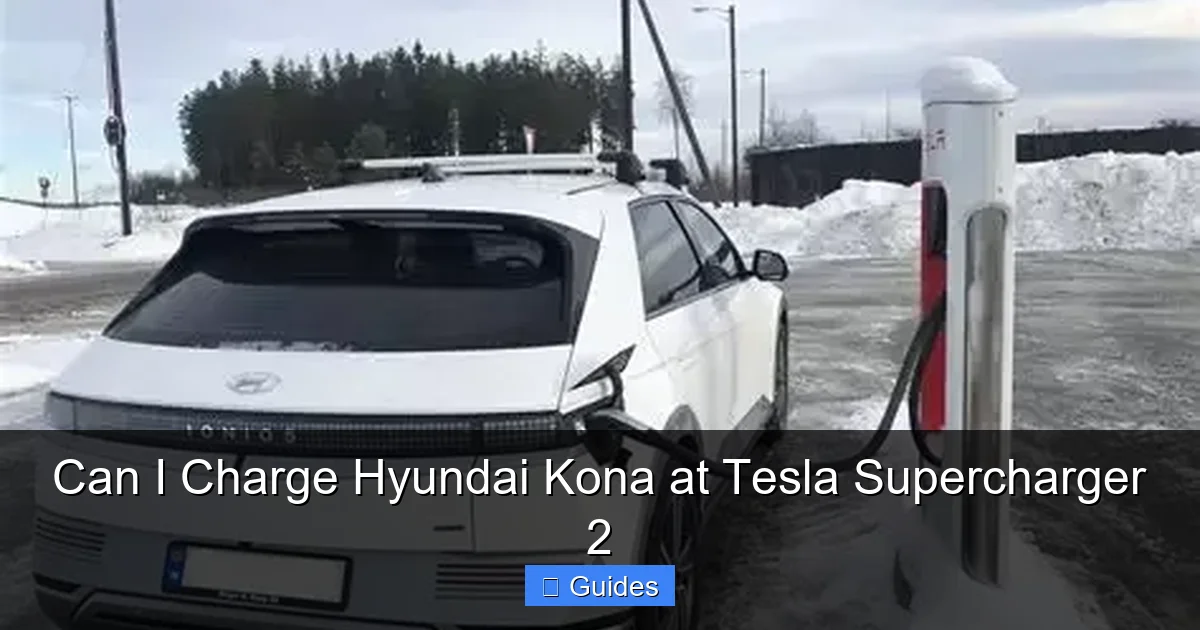
What if you’re at a Tesla Supercharger V2 station that doesn’t have a Magic Dock? Can you still charge your Hyundai Kona? The answer is **yes—if you have a CCS-to-Tesla adapter**.
Several third-party companies now manufacture high-quality adapters that allow CCS-equipped vehicles to connect to Tesla’s proprietary charging port. Popular brands include **Lectron**, **EVoila**, and **Ampire**. These adapters plug into your Kona’s CCS inlet and provide a Tesla-compatible connector on the other end.
How CCS-to-Tesla Adapters Work
The adapter essentially translates the communication protocol between your Kona and the Tesla Supercharger. When you plug the adapter into your car and then connect it to the Tesla charger, the system recognizes the vehicle and initiates charging. Most adapters support DC fast charging up to 150 kW, though your Kona will cap out at its maximum of 100 kW.
It’s important to note that not all adapters are created equal. Look for models that are **CCS1-to-Tesla NACS**, specifically designed for North American vehicles. Avoid cheap, unbranded adapters, as they may not support proper communication or could pose safety risks.
Real-World Example: Charging a Kona at a Non-Magic Dock Supercharger
Let’s say you’re driving through Colorado and stop at a Tesla Supercharger V2 in Denver that doesn’t have a Magic Dock. You have your Lectron CCS-to-Tesla adapter in the trunk. Here’s how it works:
1. Park in an available Supercharger stall.
2. Plug the adapter into your Kona’s CCS port.
3. Connect the Tesla end of the adapter to the Supercharger cable.
4. Open the Tesla app (you’ll need to create a non-Tesla account) and select the stall.
5. The charger authenticates and begins charging.
In this scenario, your Kona charges at up to 100 kW, adding roughly 60–70 miles of range in 20 minutes. The process is seamless, though slightly more involved than using a native CCS station.
Adapter Safety and Compatibility
Always ensure your adapter is certified and compatible with both your vehicle and the Supercharger network. Tesla has not officially endorsed third-party adapters, but many users report reliable performance. However, using an adapter may void certain warranties or affect charging speeds if the handshake between car and charger isn’t optimal.
Keep your adapter clean, dry, and stored securely in your vehicle. Exposure to moisture or extreme temperatures can degrade performance over time.
Costs and Pricing: What You’ll Pay to Charge
Visual guide about Can I Charge Hyundai Kona at Tesla Supercharger 2
Image source: teslarati.com
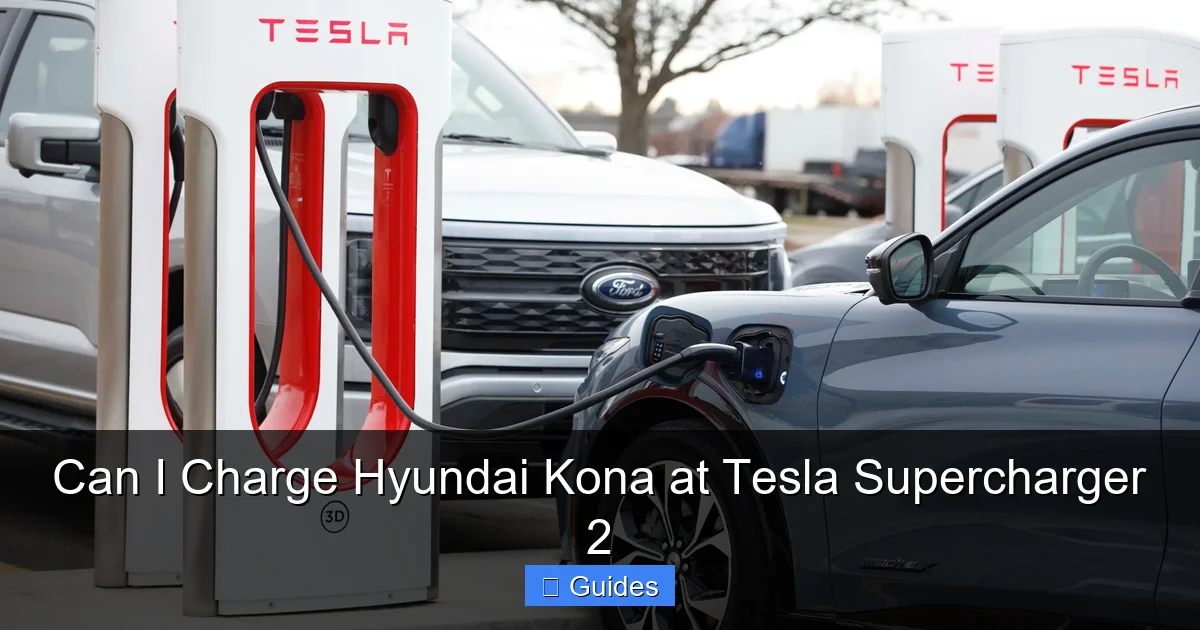
One of the biggest questions Kona owners have is: *Will charging at a Tesla Supercharger cost more than other networks?* The answer is **often yes**—but it depends on location, time of day, and your membership status.
Tesla’s Pricing Model for Non-Tesla EVs
Tesla charges non-Tesla drivers a **per-kWh rate**, which varies by state and station. As of 2024, rates typically range from **$0.45 to $0.65 per kWh** in the U.S. Some locations also impose **session fees** (e.g., $1.00 per charge) or **idle fees** if you don’t move your car after charging is complete.
For comparison, Electrify America charges around **$0.43 to $0.59 per kWh** for non-members, with discounts for Pass+ members. EVgo offers similar pricing, often with lower rates for subscribers.
Example: Charging a Kona from 20% to 80%
Let’s say your Hyundai Kona has a 64 kWh battery and you’re charging from 20% to 80% (a 60% state of charge increase). That’s roughly **38.4 kWh** of energy.
– At a Tesla Supercharger: 38.4 kWh × $0.55/kWh = **$21.12**
– At Electrify America: 38.4 kWh × $0.48/kWh = **$18.43**
So, you might pay **$2–$3 more** at Tesla for the same charge. However, if the Tesla station is more convenient or faster, that premium may be worth it.
Membership and Discounts
Currently, Tesla does not offer membership plans for non-Tesla drivers like Electrify America’s Pass+. However, Tesla has hinted at future subscription models. In the meantime, you pay per use with a credit card or linked payment method in the Tesla app.
Some credit cards offer cashback or rewards for EV charging, which can help offset costs. Always compare pricing across networks before plugging in.
How to Find Compatible Tesla Supercharger V2 Stations
Visual guide about Can I Charge Hyundai Kona at Tesla Supercharger 2
Image source: dragtimes.com
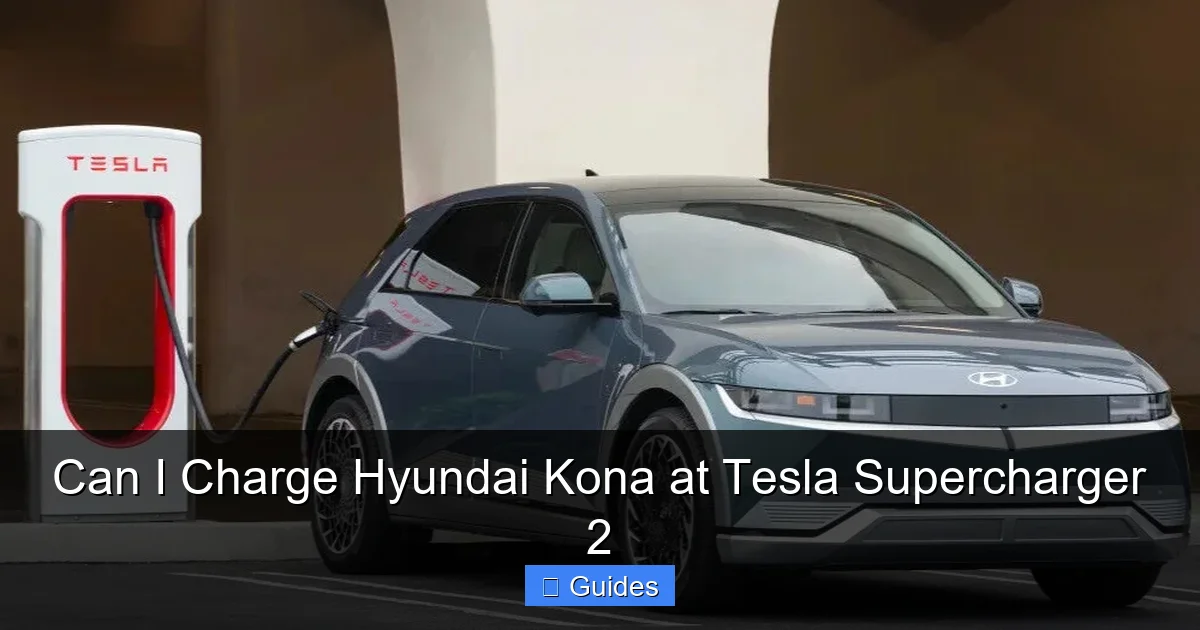
Knowing *that* you can charge your Kona at a Tesla Supercharger is one thing—finding *where* is another. Fortunately, several tools make it easy to locate compatible stations.
Using the Tesla App
The Tesla app now includes a **“Non-Tesla Charging”** feature that shows Supercharger V2 stations with Magic Docks or CCS compatibility. Simply open the app, tap “Charging,” and filter for “Non-Tesla Friendly” locations. The app will show real-time availability, pricing, and stall types.
You’ll need to create a Tesla account (even if you don’t own a Tesla) to use this feature. Once logged in, you can start charging sessions directly from the app.
**PlugShare** is one of the most popular EV charging apps. It allows you to filter stations by connector type (CCS, Tesla, etc.) and see user reviews, photos, and real-time status. Search for “Tesla Supercharger” and look for notes like “Magic Dock available” or “CCS compatible.”
**A Better Routeplanner (ABRP)** is ideal for long trips. Input your Hyundai Kona’s specs, destination, and charging preferences. ABRP will map out the best route, including stops at Tesla Superchargers with CCS support. It even estimates charging time and cost.
Google Maps and Apple Maps
Both Google Maps and Apple Maps now show EV charging stations, including Tesla Superchargers. However, they may not always indicate CCS compatibility. Use them for general navigation, but double-check with the Tesla app or PlugShare before arriving.
Pro Tip: Call Ahead or Check Online
If you’re planning a trip through a less-traveled area, consider calling the Tesla Supercharger location or checking recent reviews on PlugShare. Some stations may have temporary outages or limited CCS availability.
Charging Speed and Performance: What to Expect
The Hyundai Kona Electric supports DC fast charging up to **100 kW**, which allows it to charge from 10% to 80% in about **45–50 minutes** under ideal conditions. But how does that translate at a Tesla Supercharger V2?
Supercharger V2 Output and Kona Compatibility
Tesla Supercharger V2 stations deliver up to **150 kW** per stall, but most operate at **120–140 kW** depending on location and demand. Since the Kona maxes out at 100 kW, it won’t take full advantage of the charger’s peak output—but that’s perfectly normal.
In practice, you can expect your Kona to charge at **80–100 kW** during the bulk of the session (from 20% to 70% state of charge). As the battery fills, the speed tapers off to protect battery health.
Factors That Affect Charging Speed
Several variables can influence how fast your Kona charges at a Tesla Supercharger:
– **Battery temperature:** Cold batteries charge slower. Preconditioning your battery (using the car’s climate control while plugged in) can help.
– **State of charge:** Charging slows significantly above 80%.
– **Charger load:** If multiple stalls are in use, power may be shared, reducing individual output.
– **Cable and adapter quality:** A high-quality CCS-to-Tesla adapter ensures optimal communication and speed.
Real-World Charging Example
Let’s say you arrive at a Tesla Supercharger V2 with a Magic Dock at 25% battery. Here’s what you might experience:
– 25% to 50%: ~90 kW (fastest phase)
– 50% to 70%: ~70–80 kW
– 70% to 80%: ~40–50 kW
– 80%+: tapers to 20 kW or less
Total time: ~40 minutes to reach 80%. Add another 20–30 minutes to reach 100%, though most drivers stop at 80% for efficiency.
Tips for a Smooth Charging Experience
Charging your Hyundai Kona at a Tesla Supercharger can be seamless—if you’re prepared. Here are some practical tips to ensure a hassle-free experience.
1. Always Carry the Right Adapter
If you plan to use non-Magic Dock Superchargers, keep a CCS-to-Tesla adapter in your car at all times. Store it in a dry, secure location—like the trunk or under the rear seat. Label it clearly so you don’t confuse it with other cables.
2. Precondition Your Battery
Use your Kona’s navigation system to route to the Supercharger. Many EVs, including the Kona, will automatically precondition the battery when navigating to a fast charger, improving charging speed.
3. Use the Tesla App
Download the Tesla app and set up a non-Tesla account. This allows you to start charging sessions, monitor progress, and receive notifications—even if you’re not driving a Tesla.
4. Be Mindful of Idle Fees
Tesla charges idle fees if you leave your car plugged in after charging is complete (typically $1.00 per minute after a 5-minute grace period). Move your vehicle promptly to avoid extra costs.
5. Plan for Downtime
Supercharger V2 stations are fast, but not instantaneous. Use the time to stretch, grab a snack, or check your route. Many Tesla stations are located near cafes, restrooms, or shopping centers.
6. Keep Backup Charging Options
Even with Tesla access, it’s smart to have alternatives. Know where nearby CCS stations (like Electrify America) are located in case a Supercharger is full or out of service.
The Future of Cross-Network Charging
The ability to charge a Hyundai Kona at a Tesla Supercharger V2 is more than a convenience—it’s a sign of a shifting EV landscape. As Tesla continues to open its network and more automakers adopt NACS, the lines between charging networks are blurring.
In 2023, Ford, GM, Rivian, and others announced plans to adopt NACS in future vehicles. Hyundai has not yet committed, but the company has expressed interest in expanding charging access. If Hyundai eventually equips the Kona with NACS (or offers an adapter), charging at Tesla stations could become even easier.
Meanwhile, government initiatives like the NEVI (National Electric Vehicle Infrastructure) program are pushing for interoperability and standardized access. The goal is a seamless charging experience, regardless of vehicle brand.
For now, Kona owners have more options than ever. With the right tools and knowledge, you can confidently use Tesla Supercharger V2 stations as part of your charging routine.
Conclusion
So, can you charge your Hyundai Kona at a Tesla Supercharger V2? **Absolutely—with the right setup.** Whether you’re using a Magic Dock at a compatible station or a third-party CCS-to-Tesla adapter, Tesla’s network is increasingly accessible to non-Tesla EVs.
While there are costs and considerations—like higher per-kWh rates and the need for planning—the benefits often outweigh the drawbacks. Tesla Superchargers are known for their reliability, speed, and strategic locations, making them a valuable resource for Kona owners on the go.
By understanding charging standards, using the right tools, and planning ahead, you can make the most of this growing opportunity. The future of EV charging is interconnected, and your Hyundai Kona is already part of the journey.
Frequently Asked Questions
Can I charge my Hyundai Kona directly at a Tesla Supercharger V2?
No, you cannot plug your Hyundai Kona directly into a Tesla Supercharger V2 because it uses a different connector (CCS vs. Tesla’s proprietary plug). However, you can charge using a Magic Dock or a CCS-to-Tesla adapter.
Do all Tesla Supercharger V2 stations support CCS charging?
No, only select Supercharger V2 stations have the Magic Dock or CCS compatibility. Use the Tesla app or PlugShare to find stations that support non-Tesla EVs.
What adapter do I need to charge my Kona at a Tesla Supercharger?
You need a CCS1-to-Tesla NACS adapter, such as those from Lectron or EVoila. These allow your Kona’s CCS port to connect to Tesla’s charging cable.
Is charging at a Tesla Supercharger more expensive for non-Tesla drivers?
Yes, non-Tesla drivers typically pay higher per-kWh rates at Tesla Superchargers—often $0.45 to $0.65/kWh—compared to other networks like Electrify America.
How fast can my Hyundai Kona charge at a Tesla Supercharger V2?
The Kona can charge at up to 100 kW, adding roughly 60–70 miles of range in 20 minutes. Actual speed depends on battery state, temperature, and charger load.
Will Hyundai ever make the Kona compatible with Tesla Superchargers without an adapter?
Hyundai has not announced plans to adopt Tesla’s NACS connector, but the company is exploring broader charging access. For now, adapters and Magic Docks remain the best options.

At CarLegit, we believe information should be clear, factual, and genuinely helpful. That’s why every guide, review, and update on our website is created with care, research, and a strong focus on user experience.