
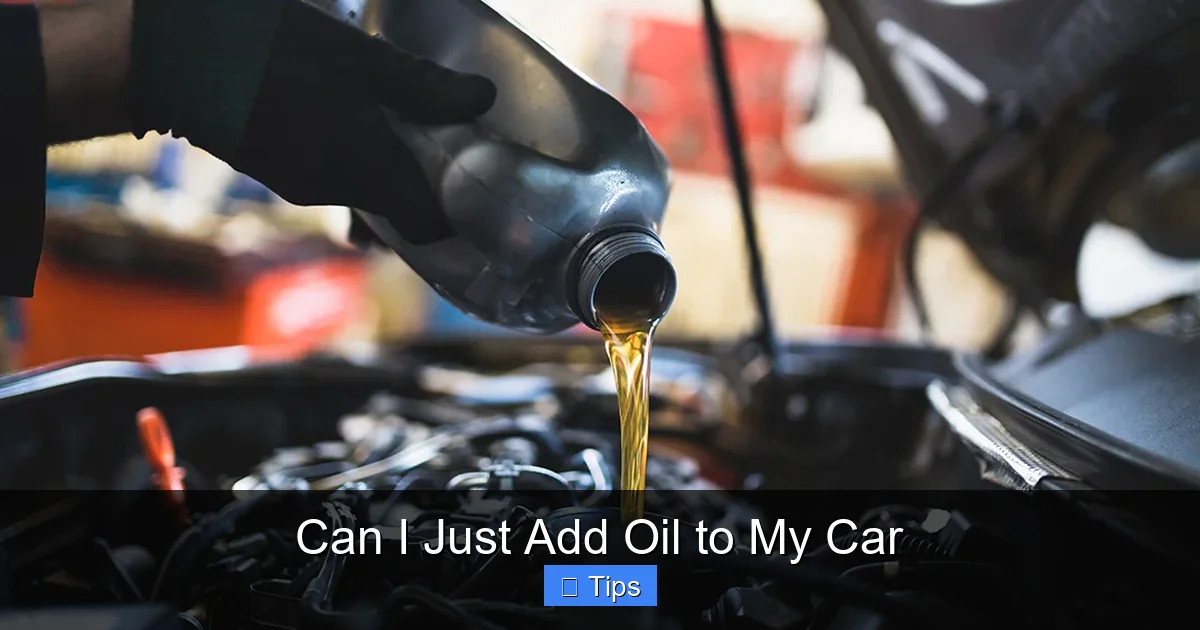
Adding oil to your car seems simple, but it’s not always the right fix. While topping off low oil can prevent engine damage in a pinch, it doesn’t replace a full oil change or address underlying issues. Understanding when and how to add oil—and when to see a mechanic—is key to keeping your engine healthy.
In This Article
- 1 Key Takeaways
- 2 📑 Table of Contents
- 3 Can I Just Add Oil to My Car? The Truth About Topping Off
- 4 Why Engine Oil Matters More Than You Think
- 5 When Is It Okay to Just Add Oil?
- 6 Signs You Need More Than Just a Top-Off
- 7 The Risks of Overfilling Your Engine with Oil
- 8 How to Maintain Proper Oil Levels Long-Term
- 9 Conclusion: Adding Oil Is a Fix—Not a Solution
- 10 Frequently Asked Questions
Key Takeaways
- Topping off oil is a temporary fix: Adding oil when levels are low can prevent immediate engine damage, but it doesn’t replace the need for regular oil changes.
- Check oil level correctly: Always check oil when the engine is cool and the car is on level ground for an accurate reading.
- Use the right oil type: Refer to your owner’s manual to ensure you’re using the correct viscosity and specification (e.g., 5W-30, synthetic vs. conventional).
- Dark or dirty oil needs replacing: If your oil is sludgy, gritty, or has a burnt smell, simply adding more won’t fix the problem—it’s time for a full change.
- Frequent oil top-offs may signal leaks or burning: If you’re constantly adding oil between changes, have your car inspected for leaks, worn piston rings, or valve seals.
- Overfilling can be harmful: Too much oil can cause foaming, reduced lubrication, and damage to engine seals and sensors.
- Regular maintenance prevents bigger issues: Follow your manufacturer’s recommended oil change schedule to keep your engine running smoothly and efficiently.
📑 Table of Contents
- Can I Just Add Oil to My Car? The Truth About Topping Off
- Why Engine Oil Matters More Than You Think
- When Is It Okay to Just Add Oil?
- Signs You Need More Than Just a Top-Off
- The Risks of Overfilling Your Engine with Oil
- How to Maintain Proper Oil Levels Long-Term
- Conclusion: Adding Oil Is a Fix—Not a Solution
Can I Just Add Oil to My Car? The Truth About Topping Off
So, you’ve noticed your car’s oil light came on—or maybe you just pulled out the dipstick and saw the level was low. Your first thought? “Can I just add oil to my car?” It’s a fair question, and one that many drivers ask, especially if they’re short on time or trying to avoid a trip to the mechanic.
The short answer? Yes, you *can* add oil to your car—but it’s not always the best or safest solution. While topping off low oil can prevent immediate engine damage, it’s only a temporary fix. Relying on it instead of proper maintenance can lead to bigger, costlier problems down the road.
Think of engine oil like the lifeblood of your car. It lubricates moving parts, reduces friction, cools the engine, and helps keep contaminants at bay. When oil levels drop too low, those vital functions are compromised. Metal parts start grinding against each other, heat builds up, and wear accelerates. That’s why checking your oil regularly—and knowing when to add it—is so important.
But here’s the catch: adding oil isn’t the same as changing it. Fresh oil does more than just fill a gap—it brings new additives, cleans internal components, and restores proper lubrication. Old, degraded oil loses its effectiveness over time, even if the level looks fine. So while topping off might buy you a few hundred miles, it won’t restore your engine’s health.
In this guide, we’ll break down everything you need to know about adding oil to your car—when it’s okay, when it’s risky, and how to do it the right way. Whether you’re a new driver or just trying to save a few bucks, understanding the role of engine oil will help you make smarter decisions for your vehicle’s longevity.
Why Engine Oil Matters More Than You Think
Visual guide about Can I Just Add Oil to My Car
Image source: justanswer.com
You might think of oil as just a fluid that keeps your engine from overheating—but it’s so much more than that. Engine oil is a complex blend of base oils and additives designed to perform multiple critical functions under extreme conditions.
First and foremost, oil reduces friction between moving parts. Inside your engine, pistons, crankshafts, and valves move at high speeds, generating intense heat and pressure. Without proper lubrication, these parts would wear out in minutes. Oil forms a protective film that keeps metal surfaces from touching, minimizing wear and tear.
But oil doesn’t just lubricate—it also cools. While the coolant system handles most of the engine’s temperature regulation, oil helps carry heat away from critical components like the pistons and cylinder walls. This is especially important in high-performance or turbocharged engines, where heat buildup can be extreme.
Another key role? Cleaning. Modern engine oil contains detergents and dispersants that trap dirt, sludge, and combustion byproducts. Over time, these contaminants can build up and form sludge, which clogs oil passages and reduces efficiency. Fresh oil helps flush these out, keeping the engine clean.
Oil also protects against corrosion and rust. Moisture and acidic compounds can form inside the engine during combustion. Additives in the oil neutralize these acids and prevent metal parts from deteriorating.
Finally, oil helps maintain a proper seal between piston rings and cylinder walls. This ensures optimal compression and prevents blow-by—gases escaping into the crankcase, which can lead to pressure buildup and oil contamination.
When oil breaks down—due to heat, contamination, or age—it loses its ability to perform these functions. That’s why simply adding more oil won’t fix the problem if the existing oil is degraded. You need a full oil change to restore performance and protection.
How Oil Degrades Over Time
Even if you never drive your car, oil doesn’t last forever. Over time, it oxidizes, thickens, and loses its additives. Heat cycles—starting and stopping the engine—accelerate this process. Short trips, stop-and-go traffic, and extreme temperatures all contribute to faster oil breakdown.
One common sign of degraded oil is darkening. Fresh oil is typically amber or light brown. As it ages, it turns dark brown or black due to contamination and oxidation. While color alone isn’t a definitive indicator, it’s a red flag when combined with other symptoms.
Another issue is sludge formation. When oil breaks down and mixes with moisture and debris, it can form a thick, gel-like substance that clogs oil passages. This reduces oil flow, increases engine wear, and can lead to overheating.
Viscosity—the oil’s thickness—also changes over time. High heat can thin the oil, making it less effective at lubricating. Cold weather can thicken it, making it harder to circulate. That’s why using the right viscosity grade (like 5W-30 or 10W-40) is crucial for your climate and driving conditions.
When Is It Okay to Just Add Oil?

Visual guide about Can I Just Add Oil to My Car
Image source: i.pinimg.com
So, back to the original question: Can I just add oil to my car? The answer is yes—but only in specific situations and with the right precautions.
Adding oil is perfectly acceptable when your oil level is slightly low—say, just below the “Add” or “Min” mark on the dipstick. This can happen naturally over time due to minor consumption or evaporation. In this case, topping off with the correct type of oil can restore proper levels and prevent damage.
For example, if you check your oil and notice it’s a quart low, adding a quart of the same oil you used last time is a safe and reasonable step. This is especially true if you’re due for an oil change soon anyway.
But there are limits. If your oil is extremely low—below the dipstick’s minimum mark—or if the oil looks dirty, sludgy, or smells burnt, adding more oil won’t solve the problem. You need a full oil change.
Also, adding oil is only a temporary fix. It doesn’t address the root cause of low oil levels. If you’re constantly needing to top off, there’s likely an underlying issue like a leak, worn piston rings, or a faulty valve seal. Ignoring these problems can lead to engine failure.
How to Safely Add Oil to Your Car
If you’ve determined that topping off is the right move, here’s how to do it safely:
1. **Park on level ground and let the engine cool.** Hot oil expands, so checking or adding oil right after driving can give a false reading. Wait at least 10–15 minutes after turning off the engine.
2. **Locate the oil filler cap.** It’s usually on top of the engine, labeled with an oil can icon. Remove it carefully—some caps can be tight.
3. **Check the current oil level.** Pull out the dipstick, wipe it clean, reinsert it fully, then pull it out again. Look at the oil level marks. If it’s between “Min” and “Max,” you’re fine. If it’s below “Min,” you need to add oil.
4. **Use a funnel.** Pour the oil slowly through a funnel to avoid spills. Add a little at a time—about half a quart—then recheck the level. Overfilling is just as bad as underfilling.
5. **Use the correct oil.** Check your owner’s manual for the recommended viscosity and type (e.g., synthetic, conventional, high-mileage). Mixing different types can reduce performance.
6. **Replace the cap and clean up.** Make sure the filler cap is securely tightened. Wipe away any spills—oil on hot engine parts can smoke or smell.
7. **Recheck after driving.** Drive for a few miles, then check the oil level again to ensure it’s within the safe range.
What Not to Do When Adding Oil
– **Don’t overfill.** Too much oil can cause foaming, which reduces lubrication and can damage seals and sensors.
– **Don’t mix incompatible oils.** Mixing synthetic and conventional oils isn’t ideal, and using the wrong viscosity can harm your engine.
– **Don’t ignore warning signs.** If your oil light is on, your engine is making noise, or you smell burning oil, stop driving and get it checked immediately.
– **Don’t add oil as a substitute for maintenance.** Topping off doesn’t replace the need for regular oil changes.
Signs You Need More Than Just a Top-Off

Visual guide about Can I Just Add Oil to My Car
Image source: i.pinimg.com
While adding oil can help in a pinch, there are times when it’s not enough—and could even be dangerous. Here are key signs that your car needs more than just a quart of oil.
Oil Is Dark, Sludgy, or Has a Burnt Smell
Fresh oil is clean and amber-colored. If your oil is black, gritty, or has a burnt odor, it’s degraded and needs to be changed. Sludge indicates contamination and poor circulation, which can lead to engine damage if ignored.
Oil Level Drops Rapidly Between Changes
If you’re adding oil every few weeks, your engine may be burning or leaking oil. Common causes include worn piston rings, leaking gaskets, or a damaged oil pan. A mechanic can perform a compression test or leak-down test to diagnose the issue.
The Oil Light Stays On After Adding Oil
The oil pressure light indicates low pressure, not just low level. If the light remains on after topping off, there could be a pump failure, clogged filter, or internal engine damage. Continuing to drive in this state can destroy your engine.
You Hear Knocking or Tapping Noises
These sounds often mean the engine isn’t getting enough lubrication. Metal parts are grinding together due to low oil or poor oil flow. This is an emergency—stop driving and call a tow truck.
Exhaust Smoke or Oil Spots Under the Car
Blue or gray smoke from the tailpipe suggests oil is burning in the combustion chamber. Oil spots on your driveway point to a leak. Both require professional inspection.
Mileage Since Last Oil Change Is Too High
Even if your oil looks fine, most manufacturers recommend changing it every 5,000 to 7,500 miles (or 3,000 for older cars or severe driving conditions). Overdue oil loses its protective properties.
The Risks of Overfilling Your Engine with Oil
It’s easy to think, “More oil = better protection,” but that’s not true. Overfilling your engine can cause serious problems.
When there’s too much oil, the crankshaft can dip into the oil pan and whip it into a froth. This creates air bubbles in the oil, reducing its ability to lubricate. Foamy oil doesn’t coat engine parts effectively, leading to increased wear and overheating.
Excess oil can also increase pressure inside the crankcase. This can force oil past seals and gaskets, causing leaks. In extreme cases, it can damage the catalytic converter or oxygen sensors by allowing oil to enter the exhaust system.
Symptoms of overfilling include:
– Oil leaks around the valve cover or oil pan
– White or milky smoke from the exhaust
– Reduced engine performance or rough idling
– Oil smell inside the cabin
If you suspect you’ve overfilled, don’t panic—but don’t ignore it. You can drain the excess oil using a hand pump or by removing the drain plug (if you’re comfortable doing so). Otherwise, visit a mechanic.
How to Maintain Proper Oil Levels Long-Term
The best way to avoid oil problems is through regular maintenance. Here’s how to keep your engine healthy:
Check Your Oil Monthly
Make it a habit to check your oil level once a month—or before long trips. It only takes a few minutes and can prevent major issues.
Follow the Manufacturer’s Oil Change Schedule
Your owner’s manual specifies the recommended oil type and change interval. Stick to it, especially if you drive in harsh conditions (towing, extreme heat/cold, frequent short trips).
Use High-Quality Oil and Filters
Cheap oil may save money upfront but can cost more in repairs. Use oil that meets or exceeds your car’s specifications (e.g., API, ILSAC ratings). Replace the oil filter with every change.
Watch for Leaks and Unusual Symptoms
Regularly inspect under your car for oil spots. Listen for unusual engine noises. Address issues early to avoid costly repairs.
Consider High-Mileage Oil for Older Cars
If your car has over 75,000 miles, high-mileage oil contains additives that condition seals and reduce oil consumption.
Conclusion: Adding Oil Is a Fix—Not a Solution
So, can I just add oil to my car? Yes—but only when it’s appropriate and done correctly. Topping off low oil can prevent engine damage in the short term, but it’s not a substitute for proper maintenance.
Engine oil is essential for lubrication, cooling, cleaning, and protection. When it’s low, degraded, or contaminated, your engine suffers. Adding oil without addressing the root cause can lead to bigger problems, including leaks, sludge buildup, and engine failure.
The key is balance. Check your oil regularly, use the right type, and change it on schedule. If you’re constantly needing to top off, get your car inspected. And never ignore warning lights or unusual noises.
By treating your engine oil with care, you’ll extend your car’s life, improve performance, and save money on repairs. So the next time you pop the hood, remember: adding oil is helpful—but it’s just one piece of the puzzle.
Frequently Asked Questions
Can I just add oil to my car if the light comes on?
If the oil light comes on, stop driving immediately. This usually indicates low oil pressure, not just low level. Adding oil may help if the level is low, but if the light stays on, there could be a serious issue like a failing oil pump or internal damage. Get it checked by a mechanic.
How much oil should I add if my car is low?
Typically, you should add about half a quart at a time, then recheck the dipstick. Most cars take 4–6 quarts total, but only add what’s needed to reach the “Max” mark. Overfilling can cause engine damage.
Can I mix different types of motor oil?
It’s not recommended. Mixing synthetic and conventional oils or different viscosities can reduce performance and protection. If you must top off, use the same type and brand if possible. For best results, stick to one oil type between changes.
How often should I check my oil level?
Check your oil at least once a month, or before long trips. If your car burns oil frequently, check it every two weeks. Regular checks help catch leaks or consumption issues early.
What happens if I drive with low oil?
Driving with low oil can cause increased friction, overheating, and severe engine damage. Metal parts may seize or warp, leading to costly repairs or engine replacement. Always top off low oil promptly.
Is it bad to add oil between oil changes?
No, it’s not bad—it’s actually smart. Adding oil when levels are low helps maintain proper lubrication. Just make sure you’re using the right oil and not ignoring signs that a full change is needed.

At CarLegit, we believe information should be clear, factual, and genuinely helpful. That’s why every guide, review, and update on our website is created with care, research, and a strong focus on user experience.