
Yes, you can use Peak coolant in your BMW—but only if it meets your vehicle’s specific specifications. BMWs require precise coolant formulations to protect their engines, so always check your owner’s manual or consult a professional before making the switch. Using the wrong type can lead to corrosion, overheating, and costly repairs.
In This Article
- 1 Key Takeaways
- 2 📑 Table of Contents
- 3 Can I Use Peak Coolant in My BMW? A Complete Guide
- 4 Understanding BMW Coolant Requirements
- 5 What Is Peak Coolant?
- 6 Can You Safely Use Peak Coolant in Your BMW?
- 7 How to Properly Use Peak Coolant in Your BMW
- 8 Alternatives to Peak Coolant for BMW
- 9 Conclusion: Make the Right Choice for Your BMW
- 10 Frequently Asked Questions
Key Takeaways
- Check your BMW’s coolant specification: BMWs use different coolant types (like G48, HT-12, or BMW Longlife-01), and using the wrong one can damage your engine.
- Peak offers BMW-compatible formulas: Some Peak coolants, like Peak Global Lifetime Antifreeze, meet BMW Longlife-01 standards and are safe to use.
- Never mix coolants without compatibility confirmation: Mixing incompatible types can cause gel formation, clogging, and reduced cooling efficiency.
- Use distilled water for dilution: Always mix concentrated coolant with distilled water—never tap water—to prevent mineral buildup.
- Follow your maintenance schedule: BMW recommends coolant changes every 30,000 to 50,000 miles or every 3–5 years, depending on the model and coolant type.
- Consult your owner’s manual or a BMW specialist: When in doubt, refer to official documentation or a certified technician for guidance.
- Watch for warning signs: Overheating, coolant leaks, or dashboard alerts mean it’s time to inspect your cooling system immediately.
📑 Table of Contents
Can I Use Peak Coolant in My BMW? A Complete Guide
So, you’ve got a BMW—maybe a sleek 3 Series, a powerful M5, or a rugged X5—and you’re wondering if you can use Peak coolant in it. You’re not alone. Many BMW owners look for cost-effective, high-quality alternatives to OEM (Original Equipment Manufacturer) coolants, and Peak is a well-known brand that often comes up in the conversation. But here’s the thing: BMWs are precision machines, and their cooling systems are designed to work with very specific types of coolant. Using the wrong one—even from a reputable brand like Peak—can lead to serious problems.
In this guide, we’ll break down everything you need to know about using Peak coolant in your BMW. We’ll cover what coolant your BMW actually needs, whether Peak offers compatible products, how to safely use them, and what risks to avoid. Whether you’re a DIY mechanic or just trying to save a few bucks on maintenance, this article will help you make an informed decision. Let’s dive in and keep your BMW running cool, efficient, and trouble-free.
Understanding BMW Coolant Requirements
Before we even talk about Peak coolant, it’s crucial to understand why BMW has such strict coolant requirements. Unlike some older or more basic vehicles, BMW engines are engineered for high performance, efficiency, and longevity. That means every component—including the cooling system—must operate under tight tolerances. The coolant doesn’t just keep your engine from overheating; it also protects against corrosion, lubricates the water pump, and prevents freezing in cold climates.
Visual guide about Can I Use Peak Coolant in My Bmw
Image source: thedailyautomotive.com
Types of BMW Coolant
BMW uses several different coolant specifications over the years, and using the correct one is non-negotiable. Here are the most common types you’ll encounter:
- G48 (Blue Coolant): Used in many BMW models from the late 1990s to the mid-2000s. It’s an inorganic acid technology (IAT) coolant with a shorter service life (typically 2–3 years).
- HT-12 (Green or Blue-Green Coolant): Found in some early 2000s models. Also an IAT formula, but with improved corrosion protection.
- BMW Longlife-01 (Pink or Purple Coolant): The most common type used in modern BMWs (2000s to present). It’s an organic acid technology (OAT) coolant with extended service life—up to 5 years or 100,000 miles in some cases.
- BMW Longlife-04 (Yellow Coolant): Used in newer diesel and some high-performance gasoline models. Offers even better protection for aluminum components.
Each of these coolants has a unique chemical composition designed to work with BMW’s specific engine materials, including aluminum heads, plastic water pumps, and rubber hoses. Using the wrong type can cause chemical reactions that lead to corrosion, seal degradation, or even coolant gelation—where the coolant turns into a thick, sludge-like substance that clogs the system.
Why OEM Specifications Matter
BMW doesn’t just make up these specifications to sell more coolant. They’re based on rigorous testing to ensure compatibility with the materials and operating conditions of their engines. For example, BMW Longlife-01 coolant contains specific additives that prevent corrosion in aluminum radiators and cylinder heads—common in modern BMWs. If you use a generic coolant that lacks these additives, you risk pitting, leaks, and premature component failure.
Additionally, BMW’s cooling systems often operate at higher pressures and temperatures than average vehicles. The coolant must maintain its properties under these conditions without breaking down or forming deposits. That’s why even high-quality aftermarket coolants must meet BMW’s exact standards to be considered safe.
What Is Peak Coolant?
Peak is a well-established brand in the automotive aftermarket, known for its wide range of antifreeze and coolant products. Founded in the 1950s, Peak has built a reputation for reliability and performance, offering coolants that meet or exceed industry standards like ASTM D3306 and D4985. Their products are widely available at auto parts stores, big-box retailers, and online, making them a convenient choice for many drivers.

Visual guide about Can I Use Peak Coolant in My Bmw
Image source: i.ytimg.com
Types of Peak Coolant
Peak offers several coolant formulations, each designed for different vehicle types and climates. Here are the most relevant ones for BMW owners:
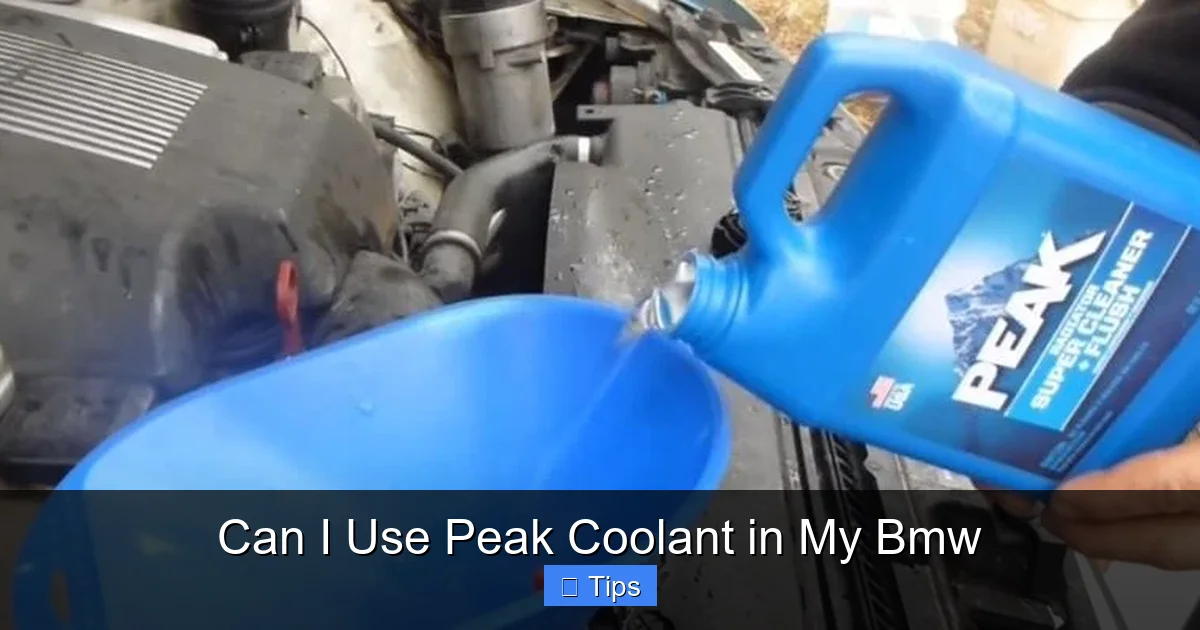
- Peak Global Lifetime Antifreeze/Coolant: A universal OAT formula that’s compatible with all vehicle makes and models, including BMW, Ford, GM, Toyota, and more. It’s pre-mixed 50/50 with distilled water and claims to last up to 150,000 miles or 5 years.
- Peak Extended Life Antifreeze/Coolant: Another OAT-based formula, available in concentrated and pre-mixed forms. Designed for long-life protection and compatible with most modern vehicles.
- Peak Conventional Green Antifreeze: An IAT formula for older vehicles. Not recommended for most modern BMWs.
- Peak European Vehicle Antifreeze: Specifically formulated for European cars, including BMW, Mercedes, and Audi. Meets BMW Longlife-01 specifications.
Among these, the Peak Global Lifetime and Peak European Vehicle Antifreeze are the most likely candidates for BMW use—but only if they meet your specific model’s requirements.
Does Peak Meet BMW Specifications?
This is the million-dollar question. The good news is that some Peak coolants do meet BMW specifications, particularly the Longlife-01 standard. For example, Peak Global Lifetime Antifreeze is often labeled as compatible with BMW Longlife-01, and it’s formulated to protect aluminum components, prevent corrosion, and resist foaming—all critical for BMW engines.
However, not all Peak products are created equal. The conventional green coolant, for instance, is an older IAT formula that’s not suitable for most modern BMWs. Using it could lead to corrosion and reduced cooling efficiency.
Always check the label or product description for compatibility. Look for statements like “Meets or exceeds BMW Longlife-01” or “Suitable for BMW vehicles.” If it doesn’t explicitly say so, don’t assume it’s safe.
Can You Safely Use Peak Coolant in Your BMW?
Now for the big question: Can you use Peak coolant in your BMW? The short answer is: Yes, but only if it’s the right type and properly applied.
Visual guide about Can I Use Peak Coolant in My Bmw
Image source: i.ytimg.com
When It’s Safe to Use Peak Coolant
You can safely use Peak coolant in your BMW if:
- The product is labeled as compatible with your BMW’s coolant specification (e.g., Longlife-01).
- It’s the correct color for your system (usually pink or purple for modern BMWs).
- You’re not mixing it with incompatible coolants.
- You follow proper mixing and flushing procedures.
For example, if you have a 2010 BMW 328i that requires Longlife-01 coolant, and you’re using Peak Global Lifetime Antifreeze (which meets that spec), you’re in the clear. But if you have an older E46 3 Series that uses G48 blue coolant, you’ll need to ensure the Peak product you’re using is compatible with that older formula—or consider a coolant converter if switching types.
Risks of Using the Wrong Coolant
Using the wrong coolant—even from a trusted brand like Peak—can lead to serious issues:
- Corrosion: Incompatible additives can eat away at aluminum components, leading to leaks and engine damage.
- Gel formation: Mixing OAT and IAT coolants can cause a chemical reaction that turns the coolant into a thick gel, clogging radiators and water pumps.
- Overheating: Degraded or clogged coolant can’t transfer heat effectively, causing your engine to overheat.
- Water pump failure: Coolant also lubricates the water pump. The wrong type can cause premature wear or failure.
- Voided warranty: If you’re still under warranty, using non-approved coolant could void coverage for cooling system repairs.
These aren’t hypothetical risks—they’re real problems reported by BMW owners who used the wrong coolant. The cost of repairing a seized water pump or replacing a corroded radiator far outweighs the savings from using a cheaper coolant.
How to Verify Compatibility
Before pouring any coolant into your BMW, take these steps:
- Check your owner’s manual: It will specify the exact coolant type required for your model and year.
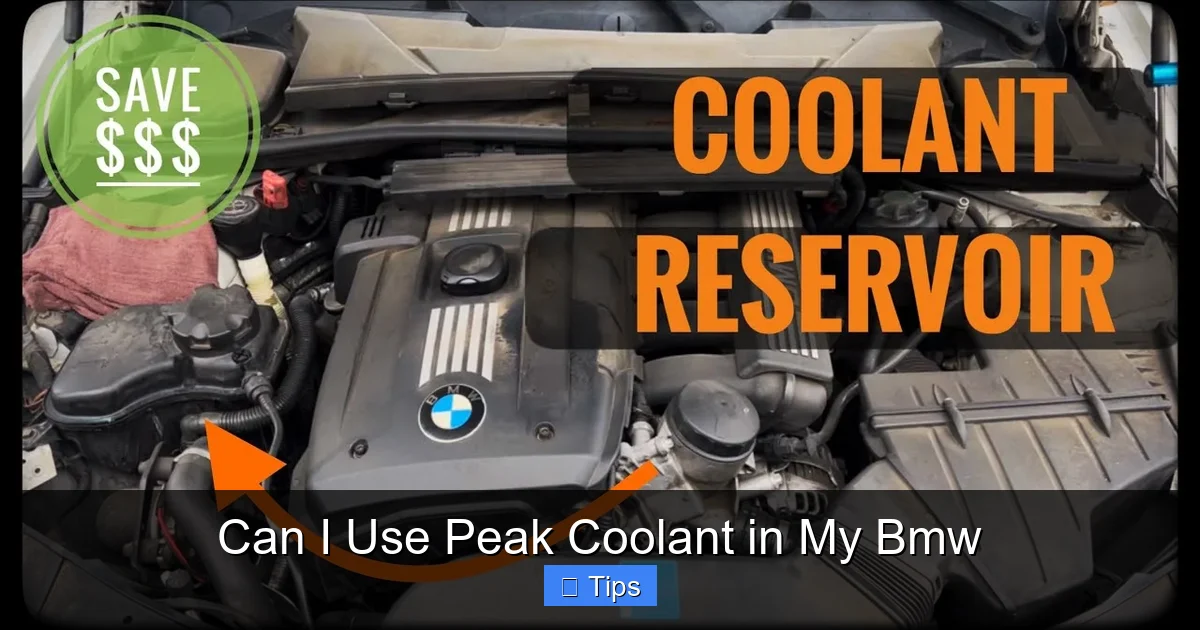
- Look at the coolant reservoir: The cap or reservoir often has a label indicating the coolant type (e.g., “Use only BMW Longlife-01”).
- Read the Peak product label: Confirm it lists your BMW specification as compatible.
- Consult a BMW specialist: If you’re unsure, ask a certified technician or call a BMW service center.
- Use online resources: Websites like BMW forums, coolant compatibility charts, or Peak’s official website can help verify compatibility.
When in doubt, err on the side of caution. It’s better to spend a little extra on the correct coolant than to risk thousands in repairs.
How to Properly Use Peak Coolant in Your BMW
If you’ve confirmed that your Peak coolant is compatible, the next step is using it correctly. Proper application is just as important as choosing the right product.
Step-by-Step Coolant Replacement
Here’s how to safely replace or top off your BMW’s coolant using Peak:
- Let the engine cool: Never open the coolant reservoir when the engine is hot. Pressure and heat can cause burns or coolant spray.
- Locate the drain plug: Most BMWs have a drain plug on the radiator or engine block. Place a drain pan underneath.
- Drain the old coolant: Open the drain plug and let the old coolant flow out completely. Dispose of it properly—coolant is toxic and harmful to the environment.
- Flush the system (if needed): If you’re switching coolant types or the old coolant is dirty, flush the system with distilled water or a radiator flush solution.
- Close the drain plug: Make sure it’s tight but not over-torqued.
- Mix the coolant: If using concentrated Peak coolant, mix it 50/50 with distilled water. Never use tap water—minerals can cause scale and corrosion.
- Fill the reservoir: Pour the mixed coolant into the expansion tank up to the “Max” line. Don’t overfill.
- Bleed the system: Start the engine with the heater on high and let it run until the thermostat opens. This removes air pockets. Top off as needed.
- Check for leaks: Inspect hoses, clamps, and the radiator for any signs of leakage.
- Reset the service indicator (if applicable): Some BMWs have a coolant change reminder that needs to be reset using a diagnostic tool.
Tips for Best Results
- Use only distilled water: Tap water contains calcium, magnesium, and other minerals that can form deposits in the cooling system.
- Don’t overfill: Excess coolant can overflow when the engine heats up, wasting fluid and creating a mess.
- Check levels regularly: Top off as needed between changes, but investigate if you’re losing coolant frequently—it could indicate a leak.
- Keep records: Note the date and mileage of your coolant change for future reference.
When to Seek Professional Help
While many BMW owners handle coolant changes themselves, some situations call for a professional:
- You’re unsure about the correct coolant type.
- The system is difficult to access or requires special tools.
- You suspect a leak or other cooling system issue.
- Your BMW has an electric water pump or advanced thermal management system.
A certified BMW technician can ensure the job is done right and diagnose any underlying problems.
Alternatives to Peak Coolant for BMW
While Peak is a solid option, it’s not the only choice. Here are some alternatives to consider:
OEM BMW Coolant
The safest bet is always the coolant made by BMW. It’s formulated specifically for your vehicle and comes with a guarantee of compatibility. While it’s more expensive, the peace of mind and protection are worth it—especially for high-performance or older models.
Other Aftermarket Brands
Several other brands offer BMW-compatible coolants, including:
- Zerex G-05: Meets BMW Longlife-01 and is widely available.
- Valvoline European Vehicle Coolant: Specifically designed for BMW, Mercedes, and Audi.
- Motorcraft Specialty Green: For older BMWs using G48 or HT-12.
Like Peak, always verify compatibility before use.
DIY Coolant Mixes
Some enthusiasts mix their own coolant using concentrated OAT formulas and distilled water. While this can save money, it requires precise measurements and knowledge of your BMW’s needs. It’s not recommended for beginners.
Conclusion: Make the Right Choice for Your BMW
So, can you use Peak coolant in your BMW? The answer is a cautious yes—but only if you choose the right product, verify compatibility, and follow proper procedures. Peak offers high-quality coolants that meet BMW specifications, making them a viable alternative to OEM fluids. However, cutting corners or using the wrong type can lead to costly damage.
Your BMW is a precision instrument, and its cooling system deserves the same level of care as its engine. Always consult your owner’s manual, check product labels, and when in doubt, consult a professional. By taking the time to do it right, you’ll keep your BMW running smoothly for years to come—whether you’re cruising down the Autobahn or navigating city streets.
Remember: the best coolant is the one that’s right for your car. Don’t let convenience or cost override safety. Your BMW will thank you with reliable performance, fewer repairs, and a longer lifespan.
Frequently Asked Questions
Can I use Peak coolant in my BMW 3 Series?
Yes, you can use Peak coolant in a BMW 3 Series, but only if it meets the coolant specification for your model year. Most modern 3 Series models require BMW Longlife-01 coolant, so look for a Peak product labeled as compatible with that standard.
Is Peak Global Lifetime coolant safe for BMW?
Peak Global Lifetime Antifreeze is generally safe for BMWs that require Longlife-01 coolant. It’s an OAT formula that protects aluminum components and meets industry standards. Always verify compatibility with your specific model before use.
Can I mix Peak coolant with BMW coolant?
Mixing coolants is not recommended unless they are the same type and specification. Mixing incompatible formulas can cause gel formation, corrosion, or reduced performance. If switching brands, flush the system first.
How often should I change coolant in my BMW?
BMW typically recommends changing coolant every 30,000 to 50,000 miles or every 3–5 years, depending on the model and coolant type. Check your owner’s manual for the exact interval.
What happens if I use the wrong coolant in my BMW?
Using the wrong coolant can lead to corrosion, overheating, water pump failure, or coolant gelation. These issues can cause expensive repairs and potentially leave you stranded.
Can I top off my BMW coolant with Peak?
Yes, you can top off with Peak coolant if it matches your BMW’s specification and is the same type already in the system. Use a 50/50 mix with distilled water if using concentrated coolant.

At CarLegit, we believe information should be clear, factual, and genuinely helpful. That’s why every guide, review, and update on our website is created with care, research, and a strong focus on user experience.