
Police can search a parked car on private property under certain conditions, but your Fourth Amendment rights still apply. Understanding when a warrant is required, what constitutes probable cause, and how consent or emergencies play a role can help protect your privacy and avoid legal trouble.
In This Article
- 1 Key Takeaways
- 2 📑 Table of Contents
- 3 Can Police Search a Parked Car on Private Property?
- 4 Understanding Your Fourth Amendment Rights
- 5 When Do Police Need a Warrant?
- 6 Exceptions to the Warrant Requirement
- 7 Special Considerations for Private Property
- 8 What to Do If Police Want to Search Your Parked Car
- 9 Real-Life Examples and Case Studies
- 10 Conclusion
- 11 Frequently Asked Questions
- 11.1 Can police search my car if it’s parked in my driveway?
- 11.2 Do police need a warrant to search a car in a private parking lot?
- 11.3 Can a landlord give police permission to search my parked car?
- 11.4 What if police smell marijuana coming from my parked car?
- 11.5 Can police use a drug-sniffing dog on my parked car in my driveway?
- 11.6 What should I do if police search my car without a warrant?
Key Takeaways
- Fourth Amendment protections apply: Even on private property, your vehicle is protected from unreasonable searches and seizures unless an exception applies.
- A warrant is usually required: Police generally need a search warrant to legally search a parked car on private property, unless an exception like consent or exigent circumstances exists.
- Consent overrides privacy rights: If you or someone with authority gives police permission to search, they can do so without a warrant.
- Probable cause matters: If officers have strong evidence of criminal activity, they may search without a warrant under the “automobile exception.”
- Exigent circumstances allow quick action: In emergencies—like hearing someone in danger or seeing evidence being destroyed—police can act fast without a warrant.
- Location on private property affects legality: A car parked in a driveway, garage, or gated area has stronger privacy protections than one in a public-facing lot.
- Know your rights and stay calm: You have the right to refuse a search, but always remain respectful and avoid physical resistance.
📑 Table of Contents
- Can Police Search a Parked Car on Private Property?
- Understanding Your Fourth Amendment Rights
- When Do Police Need a Warrant?
- Exceptions to the Warrant Requirement
- Special Considerations for Private Property
- What to Do If Police Want to Search Your Parked Car
- Real-Life Examples and Case Studies
- Conclusion
Can Police Search a Parked Car on Private Property?
Imagine this: You’ve just pulled into your driveway after a long day, parked your car, and stepped inside to relax. A few minutes later, you hear a knock at the door. It’s the police. They want to search your vehicle—right there on your private property. Your heart races. Is this legal? Can they really do that?
The short answer is: It depends. While your car is parked on private property—like your driveway, garage, or a private lot—you still have strong constitutional protections under the Fourth Amendment. That means police can’t just search your vehicle without a valid reason. But there are important exceptions, and knowing them could make all the difference in protecting your rights.
In this guide, we’ll walk you through the legal landscape of vehicle searches on private property. We’ll explain when police need a warrant, when they don’t, and what your rights are if officers show up at your home or business. Whether you’re a homeowner, renter, or business owner, understanding these rules can help you respond calmly and confidently—without accidentally giving up your privacy.
Understanding Your Fourth Amendment Rights
Visual guide about Can Police Search a Parked Car on Private Property
Image source: c8.alamy.com
The foundation of your protection against unreasonable searches lies in the Fourth Amendment to the U.S. Constitution. It states that people have the right “to be secure in their persons, houses, papers, and effects, against unreasonable searches and seizures.” This applies to vehicles, even when they’re parked on private property.
But here’s the catch: The Fourth Amendment doesn’t ban all searches—it only bans *unreasonable* ones. So the key question becomes: When is a search of a parked car on private property considered reasonable?
Courts have ruled that vehicles, even when parked at home, have a lower expectation of privacy than your house itself. Why? Because cars are mobile, and that mobility creates a greater risk that evidence could be moved or destroyed. Still, when a car is parked in a private area—like a fenced backyard or closed garage—the expectation of privacy increases significantly.
For example, in the landmark case *California v. Carney* (1985), the Supreme Court said that vehicles are inherently mobile and thus subject to more flexible search rules. But in *Collins v. Virginia* (2018), the Court ruled that police cannot enter the “curtilage” of a home—the area immediately surrounding it, like a driveway—without a warrant to search a vehicle, even if it’s visible from the street.
So while your car isn’t as protected as your living room, it’s still shielded by strong privacy rights—especially when it’s parked close to your home.
What Is “Curtilage” and Why Does It Matter?
The term “curtilage” refers to the area immediately surrounding your home that’s considered part of your private living space. This includes driveways, front yards, backyards, and sometimes even detached garages. Courts look at four factors to determine curtilage:
– The proximity of the area to the home
– Whether the area is enclosed by a fence or other barrier
– How the area is used (e.g., for family activities)
– Steps taken to protect the area from public view
If your parked car is within the curtilage, police generally need a warrant to search it—unless an exception applies. This is a crucial distinction. A car parked in a public street has less protection. But one parked in your fenced backyard? That’s a much stronger privacy zone.
When Do Police Need a Warrant?
Visual guide about Can Police Search a Parked Car on Private Property
Image source: c8.alamy.com
In most cases, yes—police need a search warrant to legally search a parked car on private property. A warrant is a court order signed by a judge that authorizes law enforcement to conduct a search. To get one, officers must show “probable cause”—meaning they have solid, factual evidence that a crime has been committed and that evidence related to that crime will be found in the vehicle.
For example, if police receive a credible tip that a stolen firearm is hidden in a specific car parked in a driveway, and they corroborate that tip with surveillance or witness statements, they can apply for a warrant. Once granted, they can enter the private property (within limits) and search the vehicle.
But getting a warrant takes time. Officers must fill out paperwork, present evidence to a judge, and wait for approval. That’s why police often rely on exceptions to the warrant requirement when they believe evidence might be lost or a suspect could flee.
How to Get a Warrant: The Process
Here’s how it typically works: An officer writes an affidavit—a sworn statement—detailing the facts that support the need for a search. This might include:
– Observations of suspicious behavior
– Tips from informants (if reliable)
– Evidence linking the vehicle to a crime
– Photos or videos showing illegal activity
The affidavit is presented to a judge, who reviews it and decides whether probable cause exists. If the judge agrees, they sign the warrant, specifying exactly what can be searched and seized. Police must follow these limits closely—searching beyond the scope of the warrant can result in evidence being thrown out in court.
It’s important to note that warrants are not always granted. Judges are cautious and require strong evidence. If an officer’s request is too vague or based on speculation, it will likely be denied.
Exceptions to the Warrant Requirement
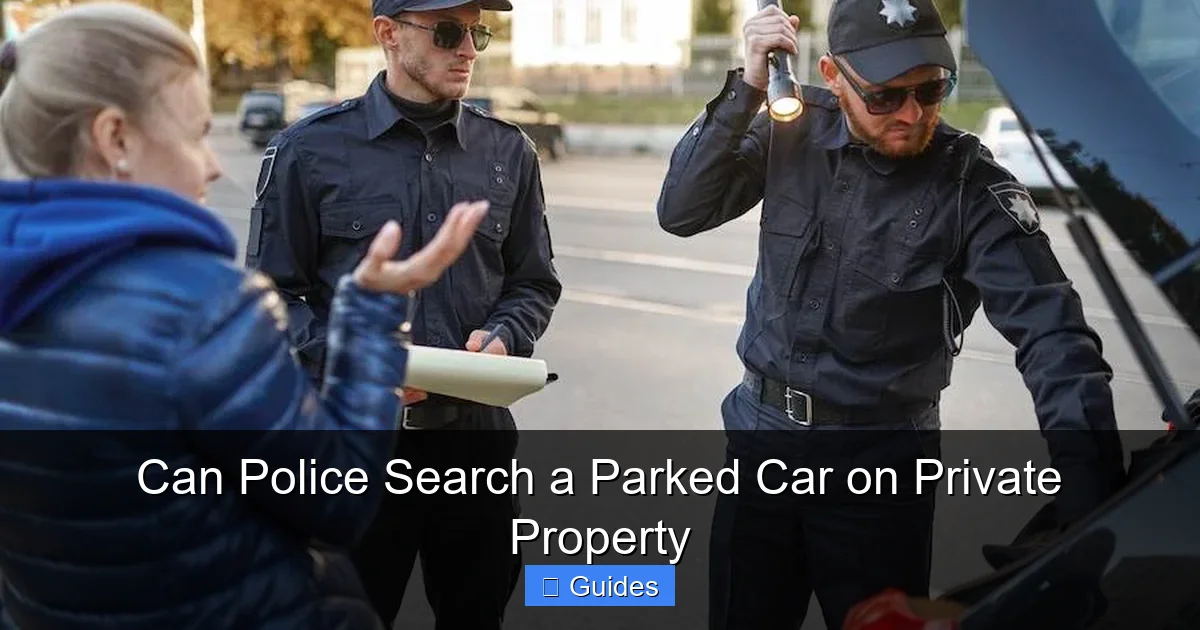
Visual guide about Can Police Search a Parked Car on Private Property
Image source: shouselaw.com
While warrants are the gold standard, the law recognizes several situations where police can search a parked car on private property without one. These exceptions are narrowly defined, but they come up often in real-world scenarios.
Consent: The Most Common Exception
If you—or someone with authority over the vehicle—give police permission to search, they don’t need a warrant. This is called “consent.” And it’s one of the most frequent ways vehicles get searched.
For example, if you’re pulled over and an officer asks, “Can I look in your trunk?” and you say “yes,” that’s consent. The same applies if police come to your home and ask to search your parked car. If you agree, the search is legal—even without probable cause.
But here’s the key: You have the right to say no. You can politely refuse: “I do not consent to a search of my vehicle.” As long as you’re not under arrest and the officer has no other legal basis, they generally cannot proceed.
Important: Only someone with “common authority” over the vehicle can give consent. That usually means the owner or a regular driver. A roommate, friend, or guest may not have the right to consent unless they have joint control over the car.
Probable Cause and the Automobile Exception
Even without a warrant, police can search a vehicle if they have probable cause to believe it contains evidence of a crime. This is known as the “automobile exception,” established in cases like *Carroll v. United States* (1925).
The reasoning? Vehicles are mobile, so evidence could be driven away before a warrant is obtained. This exception applies even on private property—if officers have strong reason to believe drugs, weapons, or stolen goods are in the car.
For instance, if police smell marijuana coming from a parked car in a driveway, that may be enough for probable cause. Or if they see a gun in plain view through the window, they can seize it and potentially search the rest of the vehicle.
But the exception isn’t unlimited. The search must be related to the evidence they’re looking for. If they have probable cause to search for drugs, they can’t open every compartment looking for unrelated items like documents or electronics.
Exigent Circumstances: When Time Is Critical
In emergencies, police can act quickly without a warrant. These are called “exigent circumstances,” and they include situations where:
– Someone is in immediate danger (e.g., a child locked in a hot car)
– Evidence is being destroyed (e.g., someone pouring out drugs)
– A suspect is fleeing
– There’s an imminent threat to public safety
For example, if police arrive at a home and hear screams coming from a parked car, they can enter and search it to rescue the person inside—no warrant needed. Similarly, if they see someone trying to wipe down a car after a hit-and-run, they can intervene to preserve evidence.
But exigent circumstances must be real and urgent. Police can’t claim an emergency just to avoid getting a warrant. Courts will review whether the situation truly justified immediate action.
Plain View Doctrine: What Officers Can See
If police are lawfully present on private property—say, they’re there to speak with you about a noise complaint—and they see something illegal in plain view (like a bag of drugs on the passenger seat), they can seize it without a warrant.
This is the “plain view doctrine.” It allows officers to act when evidence is clearly visible and its incriminating nature is obvious.
However, they can’t move objects to get a better look or use flashlights to peer into tinted windows unless they have reasonable suspicion. The item must be in plain sight from a lawful vantage point.
Special Considerations for Private Property
Where your car is parked on private property makes a big difference in your legal protections. A vehicle in a public parking lot has less privacy than one in a locked garage. Here’s how location affects your rights.
Driveways and Garages: Stronger Privacy
A car parked in your driveway or garage is generally considered within the curtilage of your home. That means police need a warrant—or a valid exception—to search it. Simply driving past your house and seeing your car isn’t enough.
In *Florida v. Jardines* (2013), the Supreme Court ruled that using a drug-sniffing dog on the porch of a home without a warrant violated the Fourth Amendment. The same logic applies to vehicles in driveways: entering that space to search requires justification.
Gated Communities and Private Lots
If your car is parked in a gated community, private business lot, or secured parking area, your expectation of privacy increases. Police can’t just drive in and search vehicles without permission from the property owner or a warrant.
However, if the area is open to the public—like a shopping center parking lot—your privacy expectations are lower. Still, if the car is parked in a reserved or leased spot, you may have stronger rights.
If you’re renting a home or apartment, your rights depend on your lease and the layout. A car parked in a private driveway assigned to your unit is protected. But one in a shared lot may have less privacy.
Landlords generally can’t give police consent to search your vehicle unless they have joint control (e.g., a company-owned car). But if the landlord allows police onto the property, officers may be able to approach your car—though they still need a warrant or exception to search it.
What to Do If Police Want to Search Your Parked Car
Knowing your rights is one thing—acting on them is another. If police show up and want to search your parked car on private property, here’s how to respond calmly and legally.
Stay Calm and Polite
First, remain respectful. Arguing or resisting can escalate the situation. Say something like, “Officer, I’d like to understand why you want to search my vehicle.”
Ask if they have a warrant. If they do, ask to see it. Check that it names your vehicle and specifies what can be searched.
You Have the Right to Refuse
If there’s no warrant and no emergency, you can say: “I do not consent to a search of my vehicle.” This doesn’t stop them from getting a warrant later, but it prevents an immediate search.
Don’t lie or obstruct. Just state your refusal clearly and calmly.
Document the Interaction
If possible, record the encounter on your phone (check local laws about recording police). Note the officers’ names, badge numbers, and what was said. This can be crucial if your rights are violated.
Contact a Lawyer
If your car is searched without a warrant or valid exception, and evidence is taken, speak with a criminal defense attorney immediately. Illegally obtained evidence may be suppressed in court.
Real-Life Examples and Case Studies
Let’s look at a few real-world scenarios to see how these rules play out.
Case 1: The Driveway Search
In *Collins v. Virginia*, police suspected a motorcycle involved in a hit-and-run was hidden in a driveway. Without a warrant, they moved a tarp covering the bike and arrested the owner. The Supreme Court ruled the search unconstitutional because the driveway was curtilage, and no exception applied.
Case 2: The Consent Search
A homeowner was questioned about a stolen laptop. Police asked to search his parked car. He agreed, and they found the laptop in the trunk. Because he gave consent, the search was legal—even though there was no warrant.
Case 3: The Emergency Search
Police responded to a 911 call about a child locked in a car on a hot day. They broke the window and rescued the child. This was justified under exigent circumstances, even though the car was in a private driveway.
Conclusion
So, can police search a parked car on private property? The answer is: It depends on the circumstances. While your Fourth Amendment rights offer strong protection, there are clear exceptions—like consent, probable cause, and emergencies—that allow warrantless searches.
The key is understanding when those exceptions apply and knowing how to assert your rights. If police show up at your home or business, stay calm, ask if they have a warrant, and remember: you have the right to refuse a search.
By staying informed and prepared, you can protect your privacy and avoid unnecessary legal trouble. When in doubt, consult a qualified attorney who can guide you based on your specific situation.
Your car may be parked on private property, but that doesn’t mean it’s a free-for-all for law enforcement. Know your rights—and use them wisely.
Frequently Asked Questions
Can police search my car if it’s parked in my driveway?
Generally, no—unless they have a warrant, your consent, or a valid exception like probable cause or an emergency. Driveways are often considered part of your home’s curtilage, which receives strong privacy protection.
Do police need a warrant to search a car in a private parking lot?
It depends on the level of privacy. If the lot is gated, reserved, or not open to the public, a warrant is usually required. In open, public-facing lots, the expectation of privacy is lower, but a warrant or exception is still typically needed.
Can a landlord give police permission to search my parked car?
Only if the landlord has joint control over the vehicle (e.g., a company car). In most cases, landlords cannot consent to a search of a tenant’s personal vehicle, especially if it’s parked in a private area like a driveway.
What if police smell marijuana coming from my parked car?
That may give them probable cause to search under the automobile exception, especially in states where marijuana is illegal. However, in states where it’s legal, the smell alone may not be enough for a warrantless search.
Can police use a drug-sniffing dog on my parked car in my driveway?
Not without a warrant or consent. In *Florida v. Jardines*, the Supreme Court ruled that using a dog on home curtilage without a warrant violates the Fourth Amendment. The same logic likely applies to vehicles in driveways.
What should I do if police search my car without a warrant?
Stay calm, do not resist, and clearly state that you do not consent to the search. Afterward, contact a criminal defense attorney. Evidence obtained illegally may be excluded from court.

At CarLegit, we believe information should be clear, factual, and genuinely helpful. That’s why every guide, review, and update on our website is created with care, research, and a strong focus on user experience.