
Yes, police can search your car without a warrant under certain conditions. Understanding these legal exceptions—like probable cause, consent, and the automobile exception—can help you protect your rights during traffic stops.
In This Article
- 1 Key Takeaways
- 2 📑 Table of Contents
- 3 Can Police Search Your Car Without a Warrant?
- 4 Understanding the Fourth Amendment and Vehicle Searches
- 5 When Can Police Search Your Car Without Your Consent?
- 6 When Can’t Police Search Your Car Without a Warrant?
- 7 What to Do During a Traffic Stop
- 8 Real-Life Examples and Case Law
- 9 Conclusion
- 10 Frequently Asked Questions
- 10.1 Can police search my car if I refuse consent?
- 10.2 Do police need a warrant to search my car during a traffic stop?
- 10.3 Can police search my trunk without a warrant?
- 10.4 What if police search my car illegally?
- 10.5 Can police use a drug-sniffing dog during a traffic stop?
- 10.6 What should I do if I believe my rights were violated?
Key Takeaways
- Police can search your car without a warrant if they have probable cause: This means they have reasonable grounds to believe the vehicle contains evidence of a crime, such as drugs, weapons, or stolen items.
- Consent is a major factor: If you voluntarily agree to a search, officers don’t need a warrant or probable cause—but you have the right to say no.
- The automobile exception allows warrantless searches: Due to vehicles’ mobility, courts have ruled that cars can be searched without a warrant if there’s probable cause.
- Search incident to arrest is limited: Officers may search your car after an arrest, but only areas within the suspect’s immediate reach (like the passenger compartment).
- Plain view doctrine applies: If an officer sees something illegal or suspicious in plain sight (e.g., a bag of pills on the seat), they can seize it and may expand the search.
- You have the right to remain silent and refuse consent: Politely declining a search request doesn’t automatically give police grounds to search, but it may not stop them if they already have probable cause.
- Knowing your rights empowers you: Being informed helps you stay calm and make better decisions during traffic stops.
📑 Table of Contents
Can Police Search Your Car Without a Warrant?
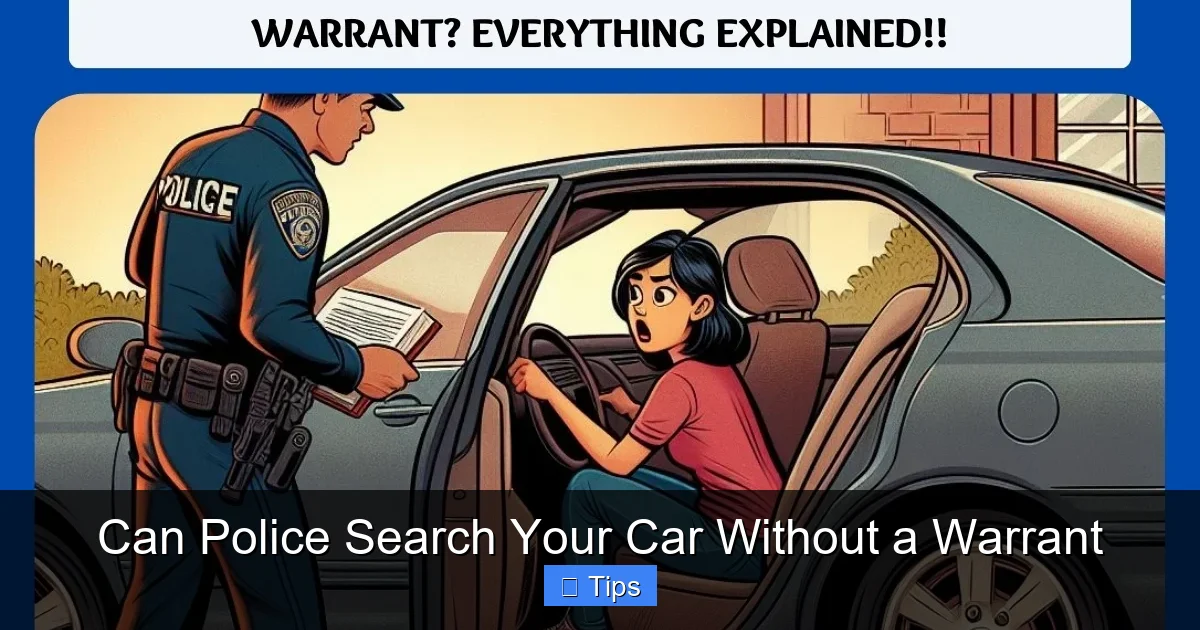
Picture this: You’re driving home from work, music playing, windows down. Suddenly, you see flashing lights in your rearview mirror. Your heart skips a beat. You pull over, hands at ten and two, and the officer approaches. After checking your license and registration, they ask, “Mind if I take a quick look inside your car?”
Your first thought might be: “Wait—don’t they need a warrant?” The short answer? Not always.
In the United States, the Fourth Amendment protects citizens from unreasonable searches and seizures. It generally requires law enforcement to obtain a warrant before searching private property—including your vehicle. But here’s the twist: there are several well-established legal exceptions that allow police to search your car without a warrant. These exceptions are rooted in court rulings, practical realities, and the unique nature of automobiles.
Understanding when and how police can legally search your car is crucial. It’s not just about knowing your rights—it’s about protecting yourself from overreach, avoiding self-incrimination, and staying calm during high-pressure situations. Whether you’re a daily commuter, a weekend road-tripper, or just someone who values personal freedom, this knowledge matters.
In this guide, we’ll break down the key legal principles that govern vehicle searches, explain the most common warrantless search exceptions, and offer practical tips for handling traffic stops with confidence. By the end, you’ll know exactly when police can—and cannot—search your car without a warrant.
Understanding the Fourth Amendment and Vehicle Searches
Visual guide about Can Police Search Your Car Without a Warrant
Image source: policepathfinder.com
At the heart of the debate over warrantless car searches is the Fourth Amendment to the U.S. Constitution. It states:
> “The right of the people to be secure in their persons, houses, papers, and effects, against unreasonable searches and seizures, shall not be violated, and no Warrants shall issue, but upon probable cause…”
This means that, in general, police need a warrant to conduct a search—unless an exception applies. But why are cars treated differently than homes or personal belongings?
The answer lies in a combination of legal precedent and practical reality. Homes are considered private spaces with the highest expectation of privacy. Cars, on the other hand, are mobile, often used in public spaces, and subject to greater regulation. Because vehicles can easily be moved—potentially destroying evidence or fleeing jurisdiction—the courts have recognized that requiring a warrant in every case could hinder law enforcement.
This led to the creation of the “automobile exception,” a legal doctrine established by the U.S. Supreme Court. In the 1925 case *Carroll v. United States*, the Court ruled that vehicles can be searched without a warrant if there is probable cause to believe they contain contraband or evidence of a crime. The reasoning? Vehicles are inherently mobile, and waiting for a warrant could allow suspects to drive away with incriminating evidence.
Over time, this exception has been refined and expanded through additional rulings. Today, it’s one of the most commonly used justifications for warrantless car searches. But it’s not a free pass for police. The key requirement remains: probable cause.
What Is Probable Cause?
Probable cause is a legal standard that means police have reasonable grounds to believe a crime has been committed or that evidence of a crime is present. It’s more than a hunch—it must be based on facts and circumstances that would lead a reasonable person to the same conclusion.
For example, if an officer smells marijuana during a traffic stop, sees drug paraphernalia on the passenger seat, or hears a suspect admit to having illegal items in the car, that could constitute probable cause. Similarly, if a vehicle matches the description of one used in a recent robbery, and the driver behaves suspiciously, that may also justify a search.
But probable cause isn’t the same as suspicion. An officer can’t search your car just because you look nervous or have out-of-state plates. The evidence must be tangible and specific.
The Automobile Exception in Practice
Let’s say you’re pulled over for a broken taillight. The officer approaches and notices a strong odor of alcohol coming from your car. You admit to having one drink earlier. The officer then asks to search your vehicle.
In this scenario, the smell of alcohol, combined with your admission, could give the officer probable cause to believe you’re driving under the influence—and that there might be open containers or other evidence in the car. Under the automobile exception, they may legally search the passenger compartment without a warrant.
But here’s an important limit: the search must be reasonable in scope. Officers can’t tear apart your car or search every nook and cranny unless they have reason to believe evidence is hidden there. For example, if they’re looking for a small bag of drugs, they probably can’t justify dismantling your dashboard.
When Can Police Search Your Car Without Your Consent?
Visual guide about Can Police Search Your Car Without a Warrant
Image source: mattbodmanlaw.com
One of the most common questions people ask is: “Can police search my car if I say no?” The answer depends on whether they have another legal justification—like probable cause or an arrest.
If you refuse consent, police cannot legally search your car unless one of the recognized exceptions applies. Simply saying “no” doesn’t automatically stop them, but it does force them to rely on other grounds. If they don’t have probable cause or another valid reason, your refusal protects your Fourth Amendment rights.
Let’s explore the main scenarios where police can search your car without your consent.
Probable Cause and the Automobile Exception
As discussed earlier, if police have probable cause, they can search your car without a warrant or your permission. This is the most common justification for warrantless searches.
For instance, imagine you’re pulled over for speeding. The officer notices a handgun partially visible under the passenger seat. Even if you haven’t committed a crime, the presence of a weapon—especially if you’re not licensed to carry it—could give the officer probable cause to search the vehicle for additional weapons or illegal items.
Another example: during a routine stop, the officer sees a backpack in the backseat that matches the description of one stolen in a recent burglary. That visual clue, combined with the ongoing investigation, could justify a search.
Search Incident to Arrest
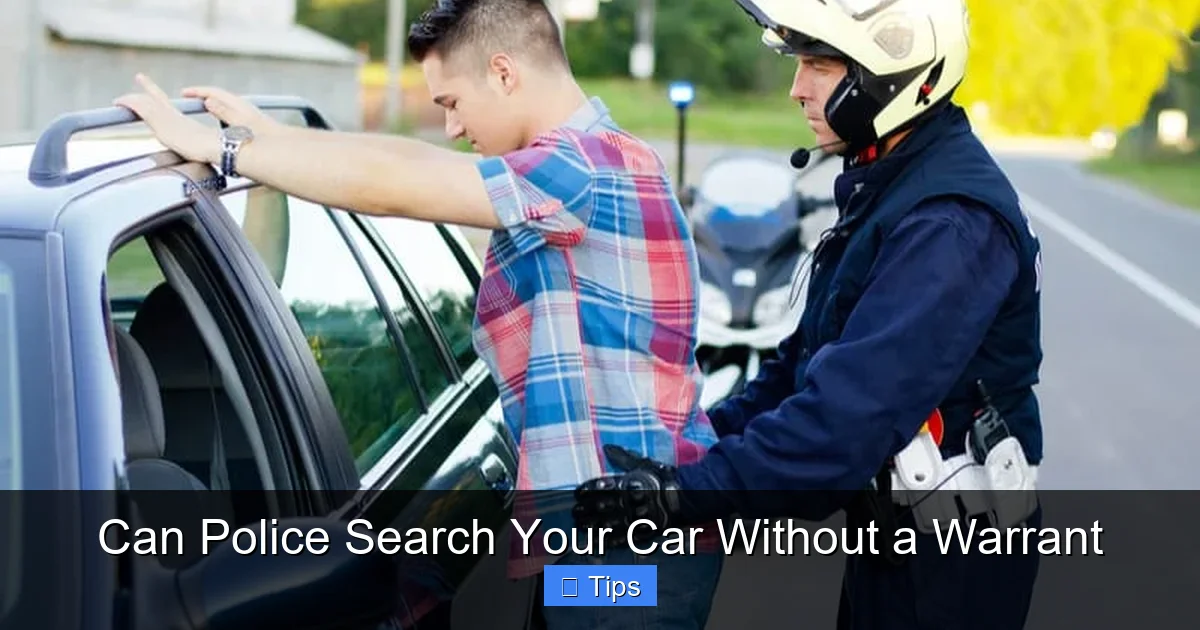
When someone is arrested, police are allowed to search the area within the suspect’s immediate control—this is known as a “search incident to arrest.” The purpose is to ensure officer safety (by checking for weapons) and prevent the destruction of evidence.
In the context of a car, this means officers can search the passenger compartment, including areas like the glove box, center console, and under the seats—but only if the arrestee could reach those areas at the time of the search.
For example, if you’re arrested for driving with a suspended license, the officer may search the front seat area. But if you’re handcuffed and sitting in the back of a police car, they can’t justify searching the trunk unless they have another reason (like probable cause).
It’s worth noting that this exception has limits. In the 2014 case *Arizona v. Gant*, the Supreme Court ruled that police can only conduct a search incident to arrest if the arrestee is within reaching distance of the vehicle or if there’s reason to believe the car contains evidence related to the crime of arrest.
So, if you’re arrested for a minor traffic violation and are secured in a patrol car, the officer generally can’t search your vehicle unless they suspect evidence of that specific crime is inside.
Plain View Doctrine
The plain view doctrine allows officers to seize evidence that is clearly visible without a warrant—if they’re lawfully in a position to see it.
For example, if an officer approaches your car during a traffic stop and sees a bag of white powder on the passenger seat, they can legally seize it. If they reasonably believe it’s drugs, that could give them probable cause to expand the search.
Similarly, if you’re pulled over and the officer notices a weapon in plain sight, they can confiscate it and may search the vehicle for additional threats.
The key here is “plain view.” The officer must not move objects or open containers to see the evidence. If they have to reach into your car or manipulate items, the doctrine doesn’t apply.
Exigent Circumstances
In rare cases, police may search a vehicle without a warrant if there’s an emergency—known as “exigent circumstances.” This includes situations where evidence is at risk of being destroyed, someone is in danger, or a suspect is fleeing.
For instance, if an officer hears screams coming from inside a parked car, they may enter without a warrant to check for a medical emergency or crime in progress. Similarly, if a suspect throws a backpack into a car and speeds away, police may pursue and search the vehicle to prevent the destruction of evidence.
These situations are highly fact-specific and subject to court review. Officers must be able to justify their actions based on immediate, urgent needs.
When Can’t Police Search Your Car Without a Warrant?
Visual guide about Can Police Search Your Car Without a Warrant
Image source: aitalawllc.com
While there are several exceptions, police cannot search your car without a warrant in most routine situations—especially if you haven’t been arrested and they lack probable cause.
Here are key scenarios where a warrantless search would likely be unconstitutional:
– **Random or arbitrary searches:** Police can’t search your car just because they feel like it or because you belong to a certain demographic.
– **Searches based solely on refusal to consent:** Saying “no” to a search request doesn’t give police grounds to search. They need independent justification.
– **Searches beyond the scope of arrest:** If you’re arrested for a minor offense and secured away from the car, officers can’t search the entire vehicle without probable cause.
– **Searches of locked containers or trunks without cause:** Unless there’s reason to believe evidence is hidden in a locked compartment, police generally can’t force it open.
It’s also important to note that police cannot use a minor traffic violation as a pretext to search your car unless they develop probable cause during the stop. For example, pulling you over for a broken headlight and then searching your car because you “look suspicious” isn’t legally justified.
The Role of Consent
Consent is one of the most powerful tools in a police officer’s arsenal—and one of the most misunderstood by the public.
If you voluntarily agree to a search, police don’t need a warrant, probable cause, or any other justification. Your consent overrides Fourth Amendment protections.
But here’s the catch: you have the right to refuse.
Many people feel pressured to say “yes” during a traffic stop, fearing that refusing will make them look guilty or escalate the situation. But legally, you are within your rights to say no—politely and clearly.
For example:
Officer: “Mind if I take a look in your car?”
You: “I’d prefer not to, thank you.”
That’s it. You’ve exercised your right. The officer can still search if they have probable cause, but your refusal alone doesn’t give them that cause.
It’s also important to know that consent must be voluntary. If an officer threatens to call a K-9 unit or impound your car unless you agree, that could be considered coercion, and any evidence found might be suppressed in court.
What to Do During a Traffic Stop
Knowing your rights is one thing—acting on them is another. Here’s how to handle a traffic stop safely and effectively:
Stay Calm and Polite
Even if you’re nervous or frustrated, remain respectful. Officers are more likely to treat you fairly if you’re cooperative. Avoid arguing, reaching for items without warning, or making sudden movements.
Know Your Rights
You have the right to:
– Remain silent (beyond providing license, registration, and insurance)
– Refuse a search of your vehicle
– Ask if you’re free to leave
– Record the interaction (in most states, as long as you don’t interfere)
Be Clear About Consent
If asked to search your car, say: “I do not consent to a search.” This puts the burden on the officer to justify any further action.
Don’t Run or Resist
Even if you believe the search is unlawful, don’t physically resist. You can challenge the legality of the search later in court. Resisting could lead to additional charges.
Document the Interaction
If possible, record the stop on your phone. Note the officer’s name, badge number, and what was said. This can be crucial if your rights are violated.
Real-Life Examples and Case Law
Understanding the law is easier with real-world examples. Here are a few landmark cases that shaped vehicle search rules:
Carroll v. United States (1925)
This case established the automobile exception. Police stopped a car suspected of transporting illegal alcohol during Prohibition. Without a warrant, they searched the vehicle and found contraband. The Supreme Court upheld the search, ruling that vehicles’ mobility justified the exception.
Arizona v. Gant (2009)
This case limited the scope of searches incident to arrest. Police arrested Rodney Gant for driving with a suspended license and searched his car, finding drugs. The Court ruled the search was unlawful because Gant was secured in a patrol car and couldn’t access the vehicle. The decision clarified that such searches are only justified if the arrestee could reach the car or if evidence related to the crime might be inside.
Rodriguez v. United States (2015)
In this case, police extended a traffic stop to conduct a dog sniff without reasonable suspicion. The Court ruled that prolonging a stop beyond its original purpose violates the Fourth Amendment. This reinforces that officers can’t use minor violations as a pretext for unrelated investigations.
Conclusion
So, can police search your car without a warrant? The answer is yes—but only under specific, legally justified circumstances. Probable cause, consent, the automobile exception, and other doctrines provide clear boundaries for when such searches are allowed.
The key takeaway? Know your rights, stay calm, and don’t feel pressured to consent. Saying “no” to a search request is your right, and it doesn’t automatically give police grounds to search. If they proceed without justification, any evidence found could be thrown out in court.
Ultimately, the law is designed to balance public safety with individual privacy. By understanding how that balance works in practice, you can protect yourself while respecting the role of law enforcement. Whether you’re driving across town or across the country, being informed is your best defense.
Frequently Asked Questions
Can police search my car if I refuse consent?
Not unless they have another legal justification, such as probable cause, an arrest, or exigent circumstances. Refusing consent alone does not give police the right to search your vehicle.
Do police need a warrant to search my car during a traffic stop?
Not always. If they have probable cause to believe your car contains evidence of a crime, they can search it without a warrant under the automobile exception.
Can police search my trunk without a warrant?
Only if they have probable cause to believe evidence or contraband is in the trunk. They generally can’t search locked compartments without justification.
What if police search my car illegally?
Evidence obtained from an unlawful search may be excluded from court under the “exclusionary rule.” You can challenge the search with the help of a lawyer.
Can police use a drug-sniffing dog during a traffic stop?
Yes, but only if the stop isn’t unnecessarily prolonged. A dog sniff is not considered a search, but extending the stop just to run a dog violates the Fourth Amendment.
What should I do if I believe my rights were violated?
Stay calm, don’t resist, and document the incident. Contact a criminal defense attorney as soon as possible to discuss your options and potential legal remedies.

At CarLegit, we believe information should be clear, factual, and genuinely helpful. That’s why every guide, review, and update on our website is created with care, research, and a strong focus on user experience.