
Yes, you can add a sunroof to a car—but it’s not as simple as it sounds. While aftermarket sunroof installation is possible, it requires professional expertise, structural considerations, and a solid budget. This guide breaks down everything you need to know before making the leap.
In This Article
- 1 Key Takeaways
- 2 📑 Table of Contents
- 3 Can You Really Add a Sunroof to Any Car?
- 4 Types of Aftermarket Sunroofs
- 5 The Installation Process: What to Expect
- 6 Costs and Budgeting for a Sunroof Installation
- 7 Pros and Cons of Adding a Sunroof
- 8 Maintenance and Care Tips
- 9 Legal and Safety Considerations
- 10 Alternatives to a Sunroof
- 11 Final Thoughts: Should You Add a Sunroof?
- 12 Frequently Asked Questions
Key Takeaways
- Aftermarket sunroofs are possible: You can install a sunroof on most vehicles, but it’s a complex modification that should only be done by certified professionals.
- Cost varies widely: Expect to pay between $800 and $3,000 or more, depending on the type of sunroof, vehicle model, and labor involved.
- Factory vs. aftermarket matters: Factory-installed sunroofs are engineered into the car’s design, while aftermarket versions may affect structural integrity and warranty.
- Types of sunroofs available: Choose from pop-up, inbuilt, panoramic, and electric options—each with different installation needs and benefits.
- Legal and safety considerations: Some regions have regulations about sunroof modifications, and improper installation can compromise safety in a crash.
- Resale value impact: A professionally installed sunroof can boost appeal, but a poorly done one may hurt your car’s value.
- Maintenance is essential: Aftermarket sunroofs require regular cleaning and sealing to prevent leaks and mechanical issues.
📑 Table of Contents
- Can You Really Add a Sunroof to Any Car?
- Types of Aftermarket Sunroofs
- The Installation Process: What to Expect
- Costs and Budgeting for a Sunroof Installation
- Pros and Cons of Adding a Sunroof
- Maintenance and Care Tips
- Legal and Safety Considerations
- Alternatives to a Sunroof
- Final Thoughts: Should You Add a Sunroof?
Can You Really Add a Sunroof to Any Car?
So, you’re driving down the highway, feeling the breeze through your open window, and suddenly you think: “Wouldn’t it be amazing to have a sunroof?” You love the idea of letting in natural light, enjoying fresh air without the wind noise, and adding a touch of luxury to your ride. But here’s the big question: Can you actually add a sunroof to a car that didn’t come with one?
The short answer is yes—but with some major caveats. Unlike swapping out speakers or upgrading your headlights, adding a sunroof isn’t a weekend DIY project. It’s a serious modification that involves cutting into your car’s roof, reinforcing structural components, and ensuring everything is sealed and safe. While it’s technically possible on most vehicles, the process is complex, expensive, and best left to professionals.
Many car owners assume that because sunroofs are common in newer models, they can easily retrofit one. But the reality is that factory sunroofs are integrated into the vehicle’s design from the ground up. The roof structure, wiring, drainage systems, and even the car’s aerodynamics are all engineered with the sunroof in mind. When you add one after the fact, you’re essentially performing surgery on your car’s body—and that requires precision, experience, and the right tools.
Why People Want to Add a Sunroof
There are plenty of reasons why someone might want to add a sunroof. For starters, it enhances the driving experience. Natural light can make the cabin feel more open and inviting, especially on long road trips. On sunny days, you can enjoy the warmth of the sun without rolling down the windows and dealing with wind noise or debris. And let’s be honest—there’s something undeniably cool about gliding open a glass panel and feeling the sky above you.
Beyond aesthetics, a sunroof can also improve ventilation. Instead of relying solely on the AC or cracked windows, you can let in fresh air without creating turbulence inside the car. This is especially useful in warmer climates or during stop-and-go traffic. Plus, some people find that a sunroof helps reduce motion sickness by improving airflow and visibility.
Another big motivator is resale value. A car with a sunroof often appeals to a broader range of buyers. While it won’t necessarily increase the value dramatically, it can make your vehicle stand out in a crowded market. Especially in regions with pleasant weather, a sunroof is seen as a desirable feature—like leather seats or a premium sound system.
Is Your Car a Good Candidate?
Not every car is suitable for a sunroof installation. The first thing to consider is the roof structure. Vehicles with a solid, flat roof panel are generally better candidates than those with curved or reinforced roofs. SUVs, sedans, and coupes often work well, but convertibles, hatchbacks with glass roofs, or cars with roll bars may pose challenges.
You’ll also want to check the thickness of the roof. If it’s too thin or made of lightweight materials, it might not support the weight and stress of a sunroof mechanism. Additionally, cars with existing sunroof pre-wiring or drainage channels (even if the sunroof was never installed) are easier to modify.
Another factor is the interior headroom. Installing a sunroof often requires removing part of the headliner and adding a frame, which can reduce the amount of space between the roof and the passengers’ heads. If you or your passengers are tall, this could be a dealbreaker.
Finally, consider the age and condition of your car. Older vehicles may have rust or corrosion on the roof, which complicates the installation. And if your car has already been in an accident or had bodywork done, the structural integrity might be compromised.
Types of Aftermarket Sunroofs
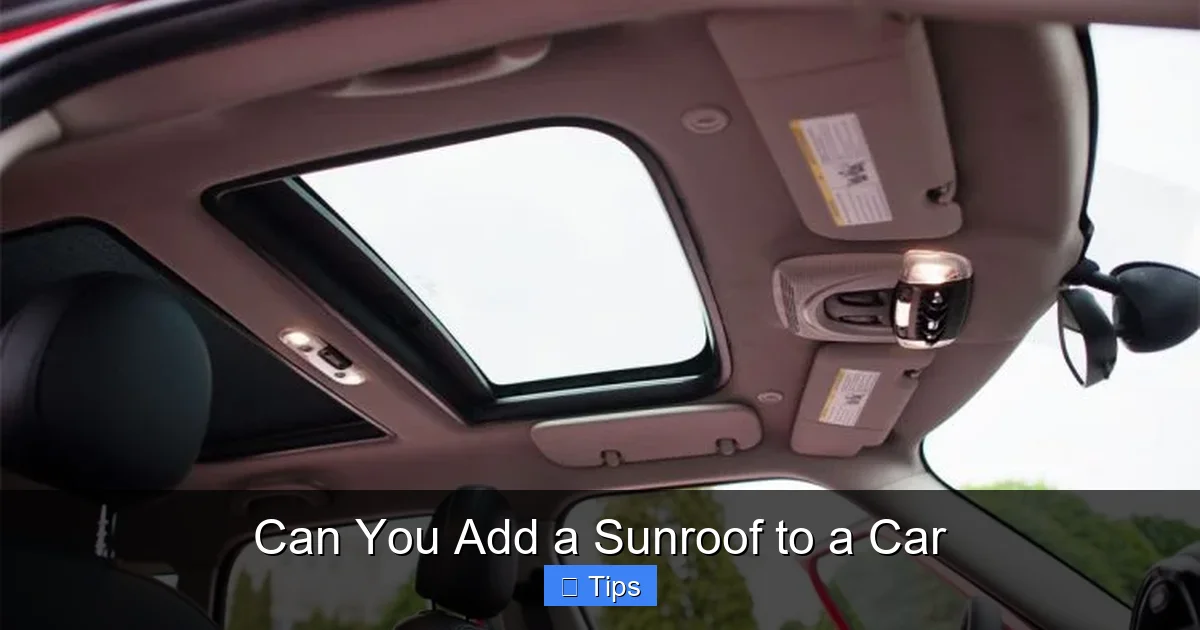
Visual guide about Can You Add a Sunroof to a Car
Image source: tsautoglass.com
If you’ve decided to move forward, the next step is choosing the right type of sunroof. Not all sunroofs are created equal, and each has its own installation requirements, benefits, and drawbacks. Here’s a breakdown of the most common types you’ll encounter in the aftermarket world.
Pop-Up Sunroofs
Pop-up sunroofs are the simplest and most affordable option. They consist of a flat glass or acrylic panel that lifts slightly at the rear when opened, allowing air to flow in. Unlike sliding sunroofs, they don’t retract into the roof—they just tilt upward.
Because they don’t require a complex sliding mechanism, pop-ups are easier to install and less expensive, typically ranging from $800 to $1,500. They’re a great choice if you’re on a budget or just want basic ventilation. However, they don’t offer the full open-roof experience, and some people find the tilted look a bit outdated.
Installation involves cutting a hole in the roof, reinforcing the edges, and mounting the panel with hinges and a manual or electric lift mechanism. Since there’s no sliding track, there’s less risk of mechanical failure, but you’ll still need to ensure a watertight seal.
Inbuilt (Flush) Sunroofs
Inbuilt sunroofs, also known as flush or recessed sunroofs, are the closest thing to a factory-installed unit. When closed, the glass panel sits level with the roof, giving a sleek, integrated look. When opened, it slides back and tucks underneath the roof panel.
These are more complex and expensive, usually costing between $1,500 and $3,000. They require a deeper cut into the roof and a more robust frame to support the sliding mechanism. Because the glass retracts into the roof, you’ll also need to remove part of the headliner and install a motorized track system.
The advantage is a clean, modern appearance and better aerodynamics. But the installation is more invasive, and there’s a higher risk of leaks or mechanical issues if not done correctly. This type is best suited for cars with a solid roof and plenty of interior space.
Panoramic Sunroofs
Panoramic sunroofs are the ultimate luxury upgrade. They cover a large portion of the roof—sometimes stretching from the windshield to the rear window—and often feature dual panels that can open independently. These are popular in high-end SUVs and sedans, and they create an incredibly open, airy feeling inside the cabin.
Adding a panoramic sunroof is a major undertaking. It requires extensive structural modification, including reinforcing the roof rails and installing a complex dual-track system. Costs can easily exceed $3,000, and not all vehicles can accommodate such a large opening.
Because of the size and weight, panoramic sunroofs also impact the car’s center of gravity and structural rigidity. Some manufacturers even use reinforced pillars and additional bracing to compensate. If you’re considering this option, consult with a specialist who has experience with large-scale installations.
Electric vs. Manual Operation
Another decision is whether to go with an electric or manual sunroof. Electric sunroofs are powered by a motor and controlled by a switch inside the car. They offer convenience—especially one-touch open and close features—and are more common in modern vehicles.
Manual sunroofs, on the other hand, are operated by hand, usually with a crank or lever. They’re simpler, cheaper, and less prone to electrical issues, but they’re not as user-friendly. If you’re installing an electric sunroof, you’ll need to run wiring from the motor to the fuse box and possibly integrate it with the car’s electrical system.
Some aftermarket kits come with pre-wired harnesses, but others require custom work. If you’re not comfortable with automotive electronics, it’s best to let a professional handle the wiring.
The Installation Process: What to Expect
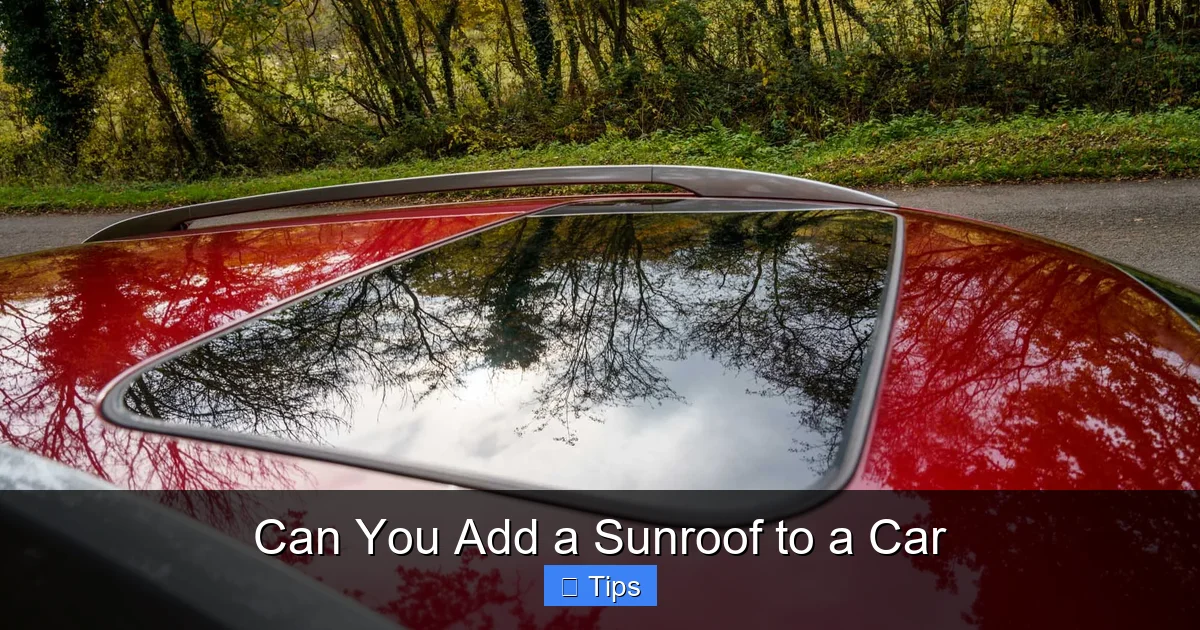
Visual guide about Can You Add a Sunroof to a Car
Image source: motorverso.com
Now that you know the types of sunroofs available, let’s talk about what actually happens during installation. This isn’t something you can do in your garage with a jigsaw and some sealant. It’s a multi-step process that requires precision, the right tools, and a clean workspace.
Step 1: Consultation and Planning
The first step is to consult with a certified sunroof installer. They’ll inspect your vehicle, assess the roof structure, and recommend the best type of sunroof for your car. They’ll also provide a detailed quote, including labor, parts, and any additional modifications.
During this stage, you’ll discuss options like glass type (tempered vs. laminated), tint level, and whether you want a manual or electric system. Some installers offer custom glass with UV protection or privacy tinting, which can be a nice upgrade.
Step 2: Removing the Headliner
To access the roof from the inside, the installer will carefully remove the headliner—the fabric-covered ceiling panel. This requires disconnecting interior trim, visors, and sometimes even the rearview mirror. It’s a delicate process, as the headliner can tear or become misshapen if not handled properly.
Once the headliner is out, the installer can inspect the roof’s internal structure and plan the cut. They’ll mark the exact dimensions of the sunroof opening, ensuring it aligns with the frame and doesn’t interfere with structural supports.
Step 3: Cutting the Roof
This is the most critical—and nerve-wracking—part of the process. Using a specialized cutting tool, the installer will carefully remove a section of the roof panel. The cut must be precise; even a small mistake can compromise the seal or weaken the structure.
After the cut, the edges are smoothed and reinforced with a metal frame. This frame supports the sunroof mechanism and helps distribute weight. Some installers use adhesive bonding in addition to screws or rivets for added strength.
Step 4: Installing the Sunroof Mechanism
Next, the sunroof assembly—glass panel, tracks, motor (if electric), and seals—is installed into the opening. The glass is secured with high-strength adhesive, and the mechanism is tested for smooth operation. Drainage tubes are also installed to channel any water that seeps in, directing it away from the cabin.
For electric sunroofs, the motor is connected to the car’s electrical system. The installer will run wires through the headliner and connect them to a fuse or relay. They’ll also program the control switch and test all functions, including auto-close and pinch protection (if equipped).
Step 5: Reinstalling the Headliner and Testing
Once everything is in place, the headliner is carefully reinstalled. The installer will reattach all trim pieces and ensure the interior looks factory-finished. Then comes the moment of truth: testing for leaks.
Using a water hose or pressure spray, they’ll simulate rain and check for any signs of moisture inside the car. If there’s a leak, they’ll adjust the seals or drainage system until it’s watertight. Finally, the sunroof is operated multiple times to ensure smooth movement and proper alignment.
Costs and Budgeting for a Sunroof Installation
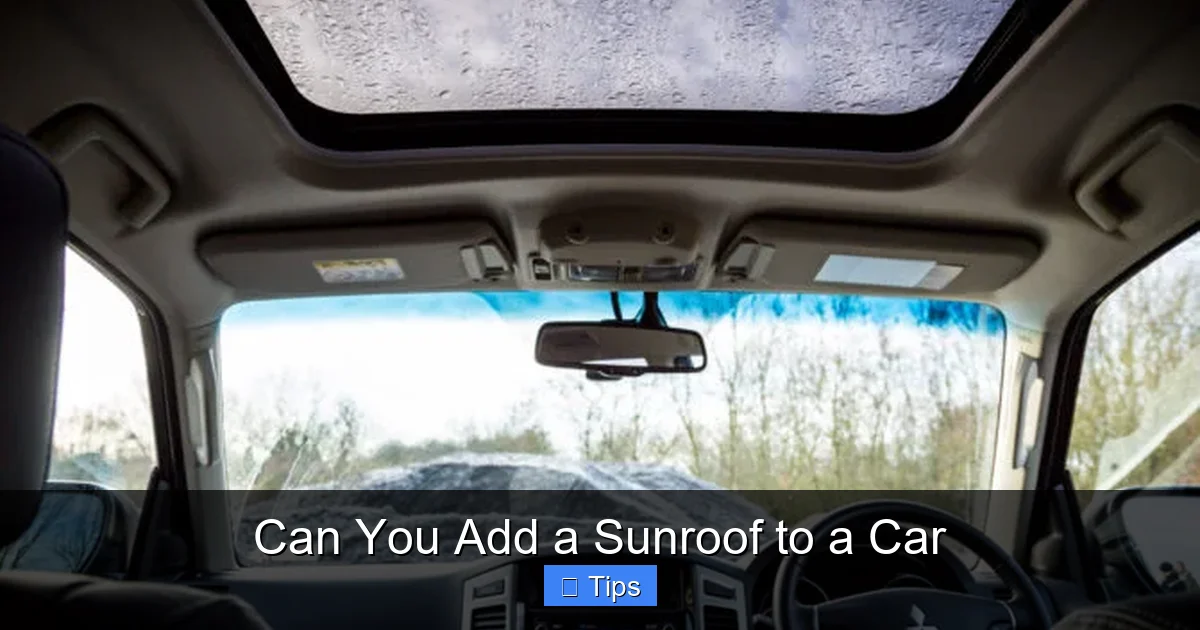
Visual guide about Can You Add a Sunroof to a Car
Image source: motorverso.com
Let’s talk money. Adding a sunroof isn’t cheap, and the cost can vary significantly based on several factors. Here’s a breakdown of what you can expect to pay.
Parts and Materials
The sunroof kit itself is the biggest expense. A basic pop-up kit might cost $300 to $600, while a high-end panoramic system can run $1,500 or more. This includes the glass, frame, seals, and hardware.
If you’re going electric, add $200 to $500 for the motor and wiring harness. Custom glass with tinting or UV protection can add another $100 to $300.
Labor Costs
Labor is where the real cost comes in. Professional installation typically ranges from $500 to $1,500, depending on the complexity. Pop-up sunroofs are on the lower end, while panoramic installations can take 8–12 hours and cost $2,000 or more.
Some shops charge by the hour (usually $80–$150/hour), while others offer flat-rate pricing. Be sure to get a detailed estimate before work begins.
Additional Expenses
Don’t forget about potential extras. If your car needs structural reinforcement, that could add $200 to $500. Upgrading the headliner or interior trim to match the new look might cost another $100 to $300. And if you want a sunshade or wind deflector, plan to spend $50 to $150.
Total Cost Estimate
Here’s a rough guide:
- Pop-up sunroof: $800–$1,500
- Inbuilt sunroof: $1,500–$3,000
- Panoramic sunroof: $3,000–$5,000+
Keep in mind that these are estimates. Prices can vary based on your location, the installer’s reputation, and the specific vehicle. Always get multiple quotes and check reviews before committing.
Pros and Cons of Adding a Sunroof
Like any modification, adding a sunroof has its upsides and downsides. Let’s weigh them so you can make an informed decision.
Advantages
- Enhanced driving experience: Natural light and fresh air make every drive more enjoyable.
- Improved ventilation: Reduces reliance on AC and helps prevent stuffiness.
- Increased resale value: A sunroof can make your car more attractive to buyers.
- Modern look: Adds a touch of luxury and sophistication.
- Customization: Lets you personalize your vehicle to match your style.
Disadvantages
- High cost: Installation is expensive and may not be worth it for older cars.
- Structural risks: Cutting the roof can weaken the car’s frame if not done properly.
- Leak potential: Poor sealing can lead to water damage and mold.
- Reduced headroom: The sunroof mechanism takes up space inside the cabin.
- Insurance and warranty issues: Some insurers may charge more, and modifications can void parts of your warranty.
Is It Worth It?
For many people, the joy of having a sunroof outweighs the drawbacks—especially if the installation is done right. But if you’re on a tight budget or drive an older car, it might not be the best investment. Consider how often you’ll actually use it and whether the cost aligns with your priorities.
Maintenance and Care Tips
Once your sunroof is installed, the work isn’t over. To keep it functioning smoothly and prevent problems, regular maintenance is essential.
Cleaning the Glass and Tracks
Dirt, leaves, and debris can accumulate in the sunroof tracks and cause jams or leaks. Clean the glass with a mild glass cleaner and a soft cloth. For the tracks, use a vacuum or compressed air to remove buildup, then wipe with a damp cloth.
Avoid harsh chemicals or abrasive tools, as they can scratch the glass or damage seals.
Checking the Seals
The rubber seals around the sunroof are critical for preventing leaks. Inspect them regularly for cracks, tears, or wear. If you notice any damage, replace the seals promptly. You can find replacement kits online or through your installer.
Lubricating the Mechanism
For electric sunroofs, apply a small amount of silicone-based lubricant to the tracks and hinges every 6–12 months. This keeps the movement smooth and prevents corrosion. Avoid petroleum-based lubricants, as they can degrade rubber components.
Testing Drainage
Sunroofs have small drainage tubes that channel water away from the cabin. Over time, these can clog with dirt or debris. To test them, pour a small amount of water into the sunroof well and watch if it drains properly. If not, use a thin wire or compressed air to clear the blockage.
Legal and Safety Considerations
Before you proceed, it’s important to understand the legal and safety implications of adding a sunroof.
Local Regulations
Some states or countries have regulations about aftermarket sunroofs. For example, there may be limits on how large the opening can be or requirements for reinforced glass. Check with your local DMV or transportation authority to ensure compliance.
Insurance Implications
Modifying your car can affect your insurance policy. Some insurers consider aftermarket sunroofs a higher risk due to the potential for leaks or structural issues. You may need to update your policy or pay a higher premium.
Safety in a Crash
A poorly installed sunroof can compromise the roof’s strength in a rollover accident. The roof is part of the car’s safety cage, and cutting into it reduces its ability to protect occupants. Always choose a certified installer who uses proper reinforcement techniques.
Alternatives to a Sunroof
If the cost or risks seem too high, there are other ways to enjoy fresh air and natural light.
Tinted Windows
Upgrading to high-quality window tint can reduce glare and heat while still letting in light. It’s much cheaper than a sunroof and doesn’t require structural changes.
Convertible Top or T-Top
For some classic or sports cars, converting to a T-top or full convertible might be an option. This is even more complex and expensive than a sunroof, but it offers a truly open-air experience.
Sunroof Inserts or Simulators
There are decorative sunroof covers that stick to the roof and mimic the look of a real sunroof. These are purely cosmetic and don’t open, but they can give your car a sportier appearance for under $100.
Final Thoughts: Should You Add a Sunroof?
Adding a sunroof to your car is a big decision—one that involves time, money, and careful consideration. While it’s definitely possible, it’s not a project to take lightly. The key is to do your research, choose a reputable installer, and understand the long-term implications.
If you love the idea of driving with the sky above you and are willing to invest in a quality installation, a sunroof can be a fantastic upgrade. But if you’re unsure or on a tight budget, it might be better to save up or consider alternatives.
Ultimately, the best sunroof is one that’s installed correctly, maintained properly, and brings you joy every time you hit the road. So weigh your options, talk to the experts, and make the choice that’s right for you and your car.
Frequently Asked Questions
Can you add a sunroof to any car?
Most cars can have a sunroof added, but it depends on the roof structure, thickness, and available space. Vehicles with flat, solid roofs are better candidates than those with curved or reinforced panels.
How much does it cost to install a sunroof?
Costs range from $800 for a basic pop-up sunroof to $3,000 or more for a panoramic system. Labor, parts, and vehicle type all affect the final price.
Will adding a sunroof void my warranty?
It might. Modifications can void parts of your manufacturer’s warranty, especially if they affect structural integrity. Check with your dealer or warranty provider before proceeding.
Can I install a sunroof myself?
It’s not recommended. Sunroof installation requires precision cutting, electrical work, and sealing. A professional ensures safety, functionality, and a watertight seal.
Will a sunroof leak?
Not if installed correctly. Poor sealing or clogged drains can cause leaks, but a certified installer will test for water intrusion and ensure proper drainage.
Does a sunroof increase insurance costs?
Possibly. Some insurers view aftermarket sunroofs as a higher risk due to potential leaks or structural issues. You may need to update your policy or pay a higher premium.

At CarLegit, we believe information should be clear, factual, and genuinely helpful. That’s why every guide, review, and update on our website is created with care, research, and a strong focus on user experience.