
Driving a car with a misfire is possible in the short term, but it’s risky and can cause serious engine damage. A misfire occurs when one or more cylinders fail to ignite fuel properly, leading to poor performance, reduced fuel economy, and potential harm to critical components like the catalytic converter. While you might make it home or to a mechanic, prolonged driving with a misfire is not recommended.
In This Article
- 1 Key Takeaways
- 2 📑 Table of Contents
- 3 Can You Drive a Car with a Misfire? The Truth You Need to Know
- 4 What Is an Engine Misfire?
- 5 Symptoms of a Misfiring Engine
- 6 Can You Safely Drive with a Misfire?
- 7 Risks of Driving with a Misfire
- 8 Common Causes of Engine Misfires
- 9 How to Diagnose and Fix a Misfire
- 10 Preventing Future Misfires
- 11 Final Thoughts: Should You Drive with a Misfire?
- 12 Frequently Asked Questions
Key Takeaways
- Yes, you can drive short distances with a misfire — but only if it’s mild and you’re heading straight to a repair shop.
- Ignoring a misfire can damage your catalytic converter, which is expensive to replace and often not covered by insurance.
- Symptoms include rough idle, loss of power, and check engine light — don’t ignore these warning signs.
- Common causes are faulty spark plugs, bad ignition coils, or fuel system issues — most are fixable with basic maintenance.
- Driving with a severe misfire is dangerous — it can lead to stalling, poor acceleration, and loss of control.
- Modern cars have sensors that may limit performance to protect the engine, but this doesn’t eliminate the risk.
- Always diagnose the root cause quickly — a simple fix today can prevent a costly repair tomorrow.
📑 Table of Contents
- Can You Drive a Car with a Misfire? The Truth You Need to Know
- What Is an Engine Misfire?
- Symptoms of a Misfiring Engine
- Can You Safely Drive with a Misfire?
- Risks of Driving with a Misfire
- Common Causes of Engine Misfires
- How to Diagnose and Fix a Misfire
- Preventing Future Misfires
- Final Thoughts: Should You Drive with a Misfire?
Can You Drive a Car with a Misfire? The Truth You Need to Know
So your car is running rough, the engine feels like it’s shaking, and maybe the check engine light just came on. You’re wondering: *Can I still drive this thing?* If you suspect a misfire, you’re not alone — it’s one of the most common engine problems drivers face. But before you hop in and head to work, let’s talk about what a misfire really is, why it happens, and whether it’s safe to keep driving.
A misfire happens when one or more of your engine’s cylinders don’t fire correctly. Think of your engine like a team of workers — each cylinder is a worker responsible for burning fuel to create power. If one worker slacks off or fails to do their job, the whole team suffers. The result? A jerky ride, reduced power, and that unsettling vibration you feel through the steering wheel or floorboard.
Now, here’s the big question: *Can you drive a car with a misfire?* The short answer is yes — but with major caveats. You might be able to limp your car home or to the nearest mechanic, especially if the misfire is mild. But driving long distances or ignoring the problem can lead to serious, expensive damage. In this guide, we’ll break down everything you need to know about misfires, from symptoms and causes to safety tips and repair options.
What Is an Engine Misfire?
Before we dive into whether you should drive with a misfire, let’s make sure we understand what it actually is. An engine misfire occurs when the air-fuel mixture in one or more cylinders fails to ignite properly during the combustion cycle. This can happen for several reasons — a weak spark, too much or too little fuel, or even a mechanical issue inside the engine.
Your car’s engine runs on a precise sequence of events: air and fuel enter the cylinder, the piston compresses the mixture, the spark plug ignites it, and the explosion pushes the piston down to create power. When this process goes wrong in even one cylinder, the engine loses balance. The other cylinders have to work harder, which leads to uneven power delivery and that telltale shaking or jerking sensation.
Misfires are often categorized by how severe they are:
– Intermittent misfires come and go, maybe only happening when the engine is cold or under load.
– Constant misfires happen all the time, regardless of driving conditions.
– Severe misfires cause the engine to stall, lose power dramatically, or even refuse to start.
Modern cars are equipped with onboard diagnostics (OBD-II) systems that detect misfires and trigger the check engine light. The system logs a specific trouble code — like P0300 (random misfire) or P0301 (misfire in cylinder 1) — which helps mechanics pinpoint the issue.
Symptoms of a Misfiring Engine
Recognizing the signs of a misfire early can save you time, money, and stress. Here are the most common symptoms to watch for:
Rough Idle
One of the first signs of a misfire is a shaky or uneven idle. When you’re stopped at a red light or parked, the engine should run smoothly. If it feels like it’s vibrating or “hiccupping,” that’s a red flag. You might notice the RPMs fluctuating or the whole car shaking slightly.

Visual guide about Can You Drive a Car with a Misfire
Image source: gekbuzz.com
Visual guide about Can You Drive a Car with a Misfire
Image source: gekbuzz.com
Loss of Power and Acceleration
A misfiring engine can’t deliver full power. You’ll feel it when you press the gas — the car may hesitate, surge, or struggle to pick up speed. Climbing hills or merging onto highways becomes more difficult. This is especially dangerous in traffic situations where quick acceleration is needed.
Check Engine Light
The check engine light is your car’s way of saying, “Hey, something’s wrong.” While it can indicate many issues, a flashing check engine light often points to a severe misfire. A steady light might mean a milder problem, but don’t ignore it — get it checked.
Increased Fuel Consumption
When a cylinder isn’t firing correctly, the engine compensates by burning more fuel. This leads to lower gas mileage. If you notice you’re filling up more often than usual, a misfire could be the culprit.
Unusual Exhaust Smells or Smoke
A misfire can cause unburned fuel to enter the exhaust system. This may result in a strong gasoline smell or black smoke from the tailpipe. In severe cases, you might even see white or blue smoke, indicating oil burning — a sign of a more serious mechanical issue.
Engine Stalling or Difficulty Starting
If the misfire is severe, the engine might stall while driving or have trouble starting. This happens when the imbalance in combustion becomes too great for the engine to sustain operation.
Can You Safely Drive with a Misfire?
Now for the million-dollar question: *Can you drive a car with a misfire?* The answer isn’t a simple yes or no — it depends on the severity of the misfire, how far you need to go, and what’s causing it.
Short Trips: Maybe — But Be Cautious
If the misfire is mild and you only need to drive a short distance — say, 5 to 10 miles — to get to a repair shop, it’s usually safe to do so. Keep your speed low, avoid heavy acceleration, and don’t push the engine. Think of it like limping your car to safety.
Visual guide about Can You Drive a Car with a Misfire
Image source: cararac.com
For example, if you’re at home and the car starts misfiring, you might be able to drive it slowly to your trusted mechanic. But if you’re on the highway 50 miles from the nearest town, that’s a different story.
Long-Distance Driving: Not Recommended
Driving long distances with a misfire is risky. Even if the car seems to be running, the underlying issue can worsen. The extra strain on the engine, combined with unburned fuel entering the exhaust system, can damage critical components — especially the catalytic converter.
Imagine driving 100 miles with a misfire. Every mile puts more stress on the engine and increases the chance of a breakdown. You could end up stranded, or worse — cause irreversible damage that costs thousands to fix.
Severe Misfires: Stop Immediately
If your car is shaking violently, losing power, or the check engine light is flashing, pull over as soon as it’s safe. Continuing to drive could lead to engine failure or a dangerous situation on the road. In these cases, it’s best to call a tow truck and have the car inspected.
Modern Cars and “Limp Mode”
Many newer vehicles have safety systems that detect misfires and put the car into “limp mode.” This limits engine power and speed to protect the vehicle. While this gives you a small window to get to a shop, it’s not a license to drive indefinitely. Limp mode is a warning — not a solution.
Risks of Driving with a Misfire
Driving with a misfire might seem harmless at first, but the risks add up quickly. Here’s what could happen if you ignore the problem:
Damage to the Catalytic Converter
The catalytic converter is one of the most expensive parts to replace — often costing $1,000 or more. Its job is to reduce harmful emissions by burning off excess fuel in the exhaust. But when a misfire sends unburned fuel into the exhaust system, it can overheat and melt the catalyst inside.
Once the catalytic converter is damaged, it can’t be repaired — it must be replaced. And because it’s an emissions component, it’s often not covered by extended warranties or insurance.
Increased Engine Wear
A misfire puts extra stress on the engine’s internal parts. Pistons, connecting rods, and valves have to work harder to compensate for the failed cylinder. Over time, this can lead to premature wear, reduced engine life, and even catastrophic failure.
Poor Fuel Economy
As mentioned earlier, a misfiring engine burns more fuel. This not only costs you more at the pump but also increases your carbon footprint. Fixing the misfire can restore your gas mileage and save money in the long run.
Safety Hazards
A misfiring car can be unpredictable. Sudden loss of power, stalling, or hesitation can put you and others at risk, especially in traffic or at high speeds. Imagine trying to merge onto a busy highway and your car suddenly loses power — that’s a recipe for an accident.
Higher Repair Costs
The longer you wait to fix a misfire, the more damage it can cause. What starts as a $100 spark plug replacement could turn into a $2,000 catalytic converter job. Early diagnosis and repair are always cheaper than waiting.
Common Causes of Engine Misfires
Understanding what causes a misfire can help you prevent it — and know when to seek help. Here are the most common culprits:
Faulty Spark Plugs
Spark plugs are responsible for igniting the air-fuel mixture. Over time, they wear out, get fouled with carbon, or develop gaps that prevent a strong spark. Most spark plugs need to be replaced every 30,000 to 100,000 miles, depending on the type.
For example, a copper spark plug might last 30,000 miles, while an iridium plug can go up to 100,000. If your car is due for a tune-up, worn spark plugs could be the cause of your misfire.
Bad Ignition Coils
Ignition coils convert low-voltage battery power into the high voltage needed to create a spark. If a coil fails, the corresponding cylinder won’t fire. This is especially common in cars with coil-on-plug systems, where each cylinder has its own coil.
Symptoms include a specific cylinder misfire code (like P0302 for cylinder 2) and a rough idle. Replacing a bad coil is usually straightforward and affordable.
Fuel System Issues
Problems with fuel delivery can also cause misfires. A clogged fuel injector, weak fuel pump, or dirty fuel filter can prevent the right amount of fuel from reaching the cylinder. This leads to a lean (too much air) or rich (too much fuel) mixture, both of which can cause misfires.
For instance, if a fuel injector is stuck closed, the cylinder won’t get fuel. If it’s stuck open, too much fuel floods the cylinder, washing away lubrication and causing damage.
Vacuum Leaks
Vacuum leaks allow unmetered air into the engine, disrupting the air-fuel ratio. This can cause a lean condition and lead to misfires, especially at idle. Common leak points include cracked hoses, intake manifold gaskets, or the PCV valve.
A simple smoke test can help locate vacuum leaks, and most are easy to fix with new hoses or gaskets.
Mechanical Problems
In rare cases, a misfire can be caused by internal engine damage — like a worn camshaft, broken valve spring, or blown head gasket. These issues are more serious and often require extensive repairs.
For example, a blown head gasket can allow coolant to enter the combustion chamber, causing a misfire and white smoke from the exhaust. This is a major repair that shouldn’t be ignored.
How to Diagnose and Fix a Misfire
If you suspect a misfire, don’t panic — most causes are fixable. Here’s how to diagnose and address the problem:
Step 1: Read the Trouble Codes
Use an OBD-II scanner to read the check engine light codes. This will tell you which cylinder is misfiring and whether it’s random or specific. You can buy a basic scanner for under $50 or visit an auto parts store — many offer free code reading.
Step 2: Inspect Spark Plugs and Coils
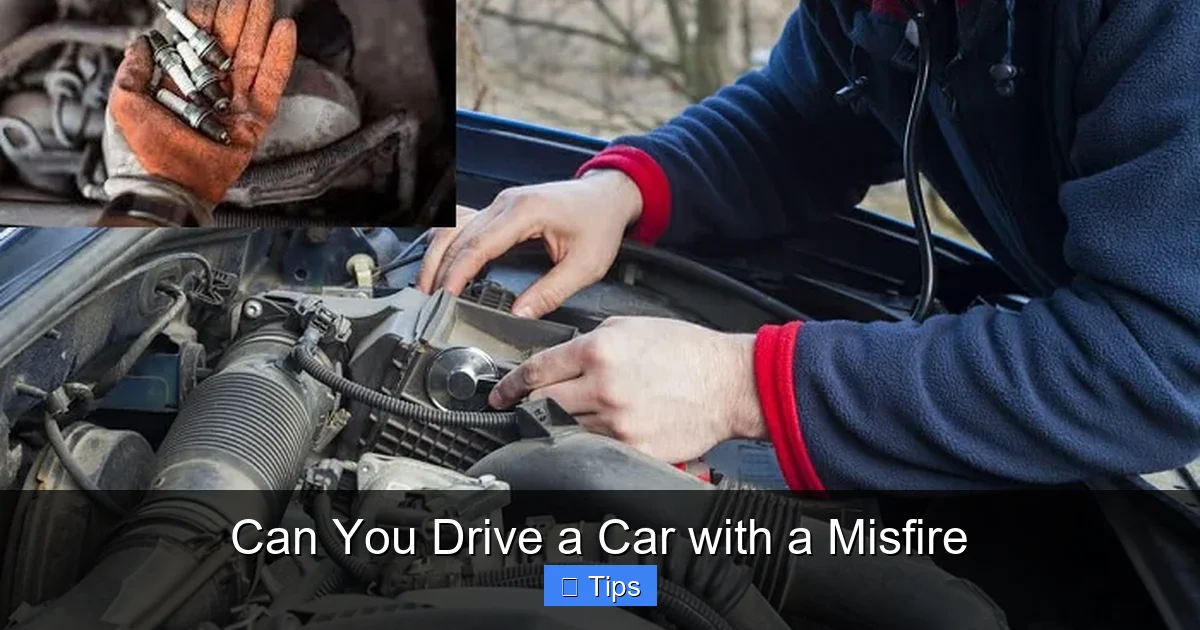
Remove the spark plugs and check their condition. Look for signs of wear, fouling, or damage. If they’re old or dirty, replace them. Also, test the ignition coils with a multimeter or swap them between cylinders to see if the misfire follows the coil.
Step 3: Check Fuel System Components
Inspect the fuel injectors, fuel filter, and fuel pressure. A mechanic can perform a fuel pressure test to ensure the pump is delivering the right amount of fuel. Clogged injectors can often be cleaned with a fuel system cleaner or ultrasonic cleaning.
Step 4: Look for Vacuum Leaks
Listen for hissing sounds around the engine bay, or use a smoke machine to detect leaks. Replace any cracked hoses or damaged gaskets.
Step 5: Seek Professional Help if Needed
If you’re not comfortable diagnosing or repairing the issue, take your car to a trusted mechanic. They have the tools and expertise to pinpoint the problem and recommend the best fix.
Preventing Future Misfires
The best way to deal with a misfire is to prevent it from happening in the first place. Here are some tips to keep your engine running smoothly:
– Follow your maintenance schedule: Replace spark plugs, ignition coils, and fuel filters as recommended by your vehicle’s manufacturer.
– Use quality fuel: Cheap or contaminated gas can lead to carbon buildup and injector problems.
– Keep the air filter clean: A dirty air filter restricts airflow and can cause lean conditions.
– Address check engine lights promptly: Don’t ignore warning signs — early action saves money.
– Drive gently during cold starts: Let the engine warm up before pushing it hard, especially in cold weather.
Final Thoughts: Should You Drive with a Misfire?
So, can you drive a car with a misfire? The answer is: *Yes, but only in limited situations and for short distances.* If the misfire is mild and you’re heading straight to a repair shop, you might be able to make it. But driving long distances or ignoring the problem can lead to serious damage — especially to the catalytic converter.
The key is to act quickly. Recognize the symptoms, diagnose the cause, and get it fixed before it turns into a major repair. Remember, your car is a complex machine, and even small issues can snowball if left unchecked.
In the end, it’s always better to be safe than sorry. If you’re unsure, pull over, call for help, or have the car towed. Your safety, your wallet, and your engine will thank you.
Frequently Asked Questions
Can you drive a car with a misfire?
Yes, but only for short distances if the misfire is mild. Driving long distances or ignoring the problem can cause serious engine damage, especially to the catalytic converter.
How far can you drive with a misfire?
It’s safest to drive no more than 5 to 10 miles with a misfire, and only to reach a repair shop. Avoid highways and heavy acceleration.
Will a misfire damage my engine?
A misfire won’t immediately destroy your engine, but it can cause long-term damage to components like the catalytic converter, pistons, and valves if left untreated.
What does a misfiring engine sound like?
A misfiring engine often sounds like it’s “popping,” “sputtering,” or “hiccupping.” You may also hear a knocking or pinging noise under acceleration.
Can a bad spark plug cause a misfire?
Yes, worn, dirty, or damaged spark plugs are one of the most common causes of engine misfires. Replacing them often fixes the problem.
Is it safe to drive with a flashing check engine light?
No, a flashing check engine light usually indicates a severe misfire. Pull over as soon as it’s safe and have the car towed to avoid engine damage.

At CarLegit, we believe information should be clear, factual, and genuinely helpful. That’s why every guide, review, and update on our website is created with care, research, and a strong focus on user experience.