
Yes, you can drive a car with a salvage title—but only after it’s repaired, inspected, and re-titled as “rebuilt” or “reconstructed.” While salvage vehicles are road-legal in most states once restored, they come with unique challenges like higher insurance costs and lower resale value.
In This Article
- 1 Key Takeaways
- 2 📑 Table of Contents
- 3 What Is a Salvage Title?
- 4 Can You Legally Drive a Salvage-Title Car?
- 5 State-by-State Rules: What You Need to Know
- 6 Pros and Cons of Driving a Salvage-Title Car
- 7 Tips for Buying and Driving a Salvage-Title Car
- 8 Real-Life Example: Turning a Salvage Car into a Daily Driver
- 9 Conclusion
- 10 Frequently Asked Questions
Key Takeaways
- Salvage titles don’t mean a car is unsafe: A salvage title simply means the vehicle was declared a total loss by an insurance company, often due to damage from accidents, floods, or theft.
- You can’t legally drive a salvage-title car until it’s rebuilt: Most states require a rebuilt title and a state inspection before the vehicle can be registered and driven on public roads.
- Insurance is harder and more expensive to get: Many insurers won’t cover salvage-title cars, and those that do often offer limited coverage at higher premiums.
- Resale value is significantly lower: Even after repairs, salvage-title vehicles typically sell for 20–40% less than comparable clean-title cars.
- Buyer beware—inspect thoroughly: Always get a pre-purchase inspection from a trusted mechanic before buying a salvage vehicle to avoid hidden damage.
- State laws vary widely: Requirements for rebuilding and registering a salvage vehicle differ by state, so check your local DMV rules.
- Salvage cars can be a smart buy—if done right: With proper research, repairs, and documentation, a salvage-title car can offer great value for budget-conscious buyers.
📑 Table of Contents
What Is a Salvage Title?
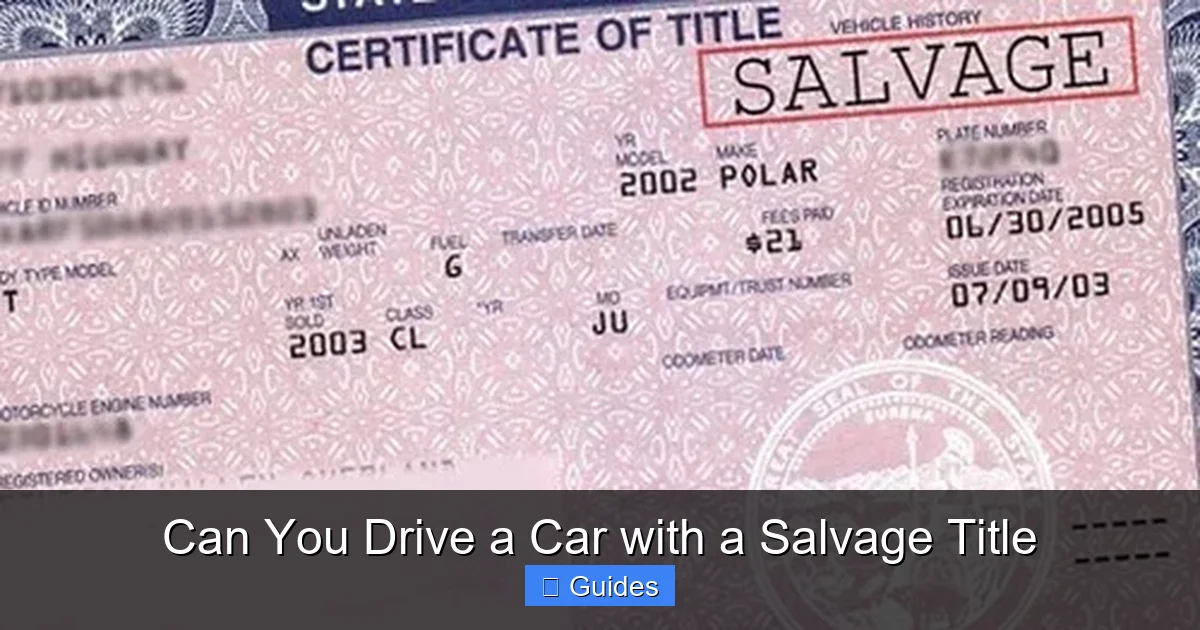
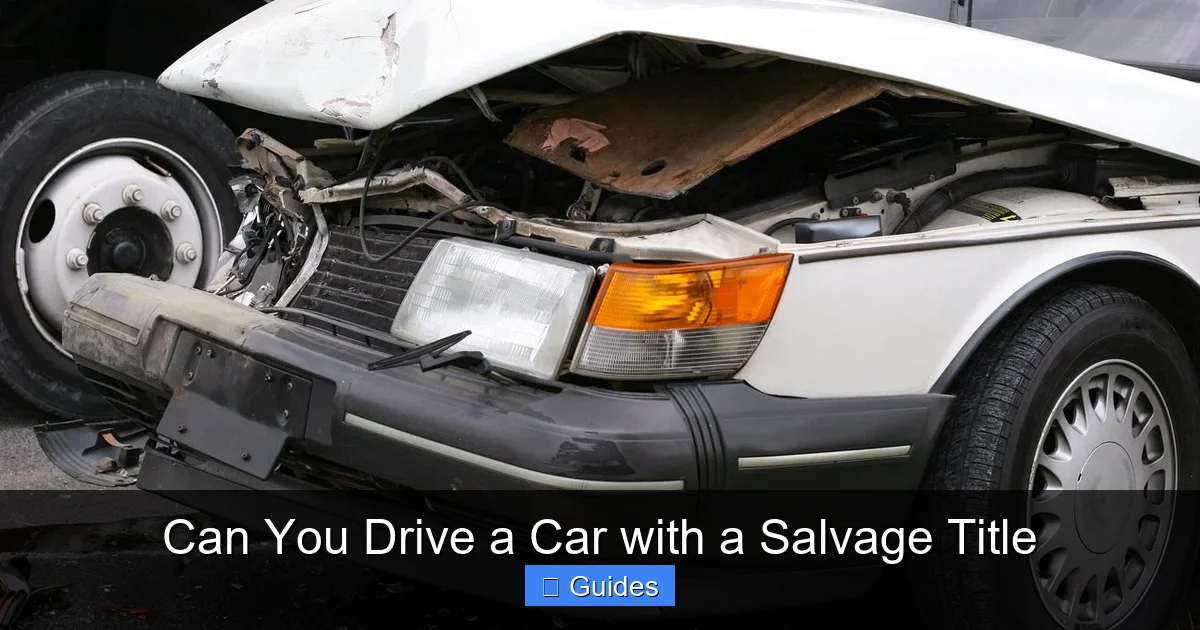
Before we dive into whether you can drive a car with a salvage title, let’s first understand what a salvage title actually means. A salvage title is a designation given to a vehicle that has been severely damaged—usually in an accident, flood, fire, or other disaster—and declared a total loss by an insurance company. This typically happens when the cost to repair the vehicle exceeds a certain percentage of its actual cash value (ACV), often 70% to 75%, though the threshold varies by state.
When an insurance company pays out a claim for a totaled vehicle, they usually take ownership of it and sell it at auction. At that point, the vehicle’s title is branded as “salvage.” This brand stays with the car permanently, even if it’s later repaired and made roadworthy. The purpose of the salvage title is to warn future buyers that the vehicle has a history of significant damage.
Common Reasons for a Salvage Title
Not all salvage titles are created equal. The reason behind the title can give you clues about the extent of the damage and the potential risks involved. Here are the most common causes:
- Collision damage: The most frequent reason. A car involved in a serious crash may have frame damage, airbag deployment, or compromised safety systems.
- Flood or water damage: Vehicles submerged in water—especially saltwater—can suffer electrical failures, rust, and mold. These issues may not appear immediately but can cause long-term problems.
- Fire damage: Heat can warp metal, melt wiring, and destroy interior components. Even if the fire was small, smoke and soot can linger and damage electronics.
- Theft recovery: If a stolen car is recovered after being stripped or damaged, it may be declared a total loss and receive a salvage title.
- Vandalism or hail damage: In some cases, extensive cosmetic damage from hail or intentional vandalism can lead to a salvage declaration, especially if the repair costs are high.
Understanding the cause of the salvage title helps you assess whether the car is worth repairing and driving. For example, a hail-damaged sedan with a clean frame might be a better candidate than a flood-damaged SUV with corroded wiring.
Can You Legally Drive a Salvage-Title Car?
The short answer is: yes, you can drive a car with a salvage title—but not right away. You can’t legally drive a vehicle with a salvage title on public roads until it has been repaired, inspected, and re-titled as “rebuilt,” “reconstructed,” or “repaired salvage,” depending on your state’s terminology.
Visual guide about Can You Drive a Car with a Salvage Title
Image source: images.squarespace-cdn.com
Here’s how the process typically works:
Step 1: Repair the Vehicle
The first step is to fix all the damage that led to the salvage title. This isn’t just about making the car look good—it’s about ensuring it’s safe to drive. That means replacing damaged parts, realigning the frame (if necessary), and restoring all safety systems like airbags, brakes, and lights.
Keep detailed records of all repairs, including receipts, invoices, and photos. These documents will be crucial when you apply for a rebuilt title. Some states even require a certified mechanic to sign off on the repairs.
Step 2: Pass a State Inspection
Once the car is repaired, you’ll need to take it to your state’s Department of Motor Vehicles (DMV) or a certified inspection station for a rebuilt salvage inspection. This inspection is more rigorous than a standard safety check. Inspectors will verify that:
- The vehicle identification number (VIN) matches the title and registration.
- All major components (engine, transmission, frame, etc.) are original or properly replaced.
- Safety systems are functional (seat belts, airbags, lights, brakes).
- There’s no hidden damage or structural issues.
- The car meets emissions standards (if applicable).
If the car passes, you’ll receive a rebuilt title. If it fails, you’ll need to make additional repairs and re-inspect.
Step 3: Register and Insure the Vehicle
With a rebuilt title in hand, you can now register the car and get license plates. However, insurance may be tricky. Many major insurance companies are hesitant to cover rebuilt salvage vehicles, especially for full coverage. You may need to shop around or work with specialty insurers.
Once insured, you’re legally allowed to drive the car on public roads—just like any other vehicle.
State-by-State Rules: What You Need to Know
One of the biggest challenges with salvage-title cars is that laws vary significantly from state to state. What’s allowed in Texas might not be permitted in New York. Here’s a breakdown of key differences:
Visual guide about Can You Drive a Car with a Salvage Title
Image source: creditkarma-cms.imgix.net
Inspection Requirements
Some states require a full mechanical and structural inspection, while others only check the VIN and basic safety features. For example:
- California: Requires a Salvage Vehicle Inspection by the California Highway Patrol (CHP), which includes a VIN verification and safety check.
- Florida: Requires a Rebuilt Salvage Inspection at a DMV office, including proof of repairs and ownership.
- Texas: Allows private inspection stations to perform the rebuilt inspection, making the process faster and more convenient.
Title Branding
States use different terms for rebuilt vehicles:
- Rebuilt: Used in states like Arizona, Georgia, and Ohio.
- Reconstructed: Common in Illinois, Michigan, and Pennsylvania.
- Rebuilt Salvage: Used in Florida and North Carolina.
Regardless of the name, the meaning is the same: the car was once a total loss but has been repaired and deemed roadworthy.
Restrictions on Registration
A few states impose additional restrictions. For example:
- New York: Rebuilt salvage vehicles cannot be registered as “passenger vehicles” if they were originally declared total losses due to flood damage.
- Alaska: Does not issue rebuilt titles for flood-damaged vehicles.
- Massachusetts: Requires a Salvage Inspection and proof that all airbags are original or properly replaced.
Always check your state’s DMV website or contact them directly to understand the specific rules in your area.
Pros and Cons of Driving a Salvage-Title Car
Now that you know it’s possible to drive a salvage-title car, let’s weigh the pros and cons to help you decide if it’s the right choice for you.
Visual guide about Can You Drive a Car with a Salvage Title
Image source: bankrate.com
Advantages
- Lower purchase price: Salvage vehicles are often sold at steep discounts—sometimes 30% to 50% off the market value of a clean-title car. This makes them attractive to budget buyers.
- Great for DIY repairs: If you’re handy with tools, a salvage car can be a rewarding project. You can save money by doing the repairs yourself.
- Ideal for parts or project cars: Even if you don’t plan to drive it daily, a salvage car can be a source of spare parts or a base for a custom build.
- Eco-friendly option: Repairing and reusing a damaged car reduces waste and the demand for new vehicles, which have a larger carbon footprint.
Disadvantages
- Higher insurance costs: As mentioned, many insurers charge more for salvage-title cars—or refuse to cover them altogether. Full coverage (collision and comprehensive) may be unavailable.
- Difficult to resell: Even after repairs, a salvage title significantly reduces resale value. Most buyers prefer clean titles, and financing options are limited.
- Potential hidden damage: Not all damage is visible. Frame misalignment, electrical issues, or water intrusion can cause problems down the road.
- Longer registration process: Getting a rebuilt title requires time, paperwork, and possibly multiple inspections—delays that can be frustrating.
- Limited warranty options: Most salvage cars are sold “as-is,” meaning you won’t get a manufacturer warranty. Extended warranties may also be hard to find.
Ultimately, driving a salvage-title car can be a smart financial move—if you do your homework and understand the risks.
Tips for Buying and Driving a Salvage-Title Car
If you’re considering buying a salvage vehicle, follow these practical tips to protect yourself and ensure a smooth experience.
1. Research the Vehicle’s History
Always run a vehicle history report using services like Carfax or AutoCheck. These reports will show you:
- Why the car was declared a total loss.
- Whether it was involved in multiple accidents.
- If it has a salvage or rebuilt title.
- Odometer readings and ownership history.
Look for red flags like flood damage, frame damage, or repeated salvage declarations.
2. Get a Pre-Purchase Inspection
Never buy a salvage car without a thorough inspection by a trusted mechanic—preferably one experienced with salvage vehicles. They can spot issues that aren’t obvious, such as:
- Frame or structural damage.
- Electrical problems from water exposure.
- Improperly installed parts.
- Signs of previous fire damage.
This inspection could save you thousands in future repairs.
3. Verify the Title and VIN
Make sure the VIN on the car matches the title and registration. Check for signs of tampering, such as scratched or repainted numbers. A mismatched VIN could indicate theft or fraud.
4. Budget for Repairs and Inspections
Even if the car looks good, expect to spend money on repairs. Set aside a buffer in your budget for unexpected issues. Also factor in the cost of inspections, title fees, and registration.
5. Shop Around for Insurance
Contact multiple insurance companies to compare quotes. Be upfront about the salvage title. Some insurers specialize in high-risk or non-standard vehicles and may offer better rates.
6. Keep Detailed Records
Save every receipt, invoice, and photo related to repairs and inspections. These documents will be essential when applying for a rebuilt title and may help if you ever sell the car.
7. Drive Responsibly
Even after repairs, a salvage car may not perform exactly like a clean-title vehicle. Be extra cautious—avoid aggressive driving, and monitor the car for any unusual noises or handling issues.
Real-Life Example: Turning a Salvage Car into a Daily Driver
Let’s look at a real-world scenario to illustrate how this process works.
Meet Sarah: A college student in Ohio looking for an affordable car. She finds a 2015 Honda Civic with a salvage title due to front-end collision damage. The car is listed for $6,000—less than half the price of a similar clean-title model.
Sarah runs a Carfax report and learns the car was totaled after a minor accident. The airbags deployed, but the frame was not bent. She takes it to a trusted mechanic, who confirms the damage is repairable and estimates $2,500 in repairs.
She negotiates the price down to $5,000, buys the car, and spends $2,800 on repairs—new bumper, headlights, airbags, and paint. She keeps all receipts.
Next, she schedules a rebuilt salvage inspection at the Ohio DMV. The inspector verifies the VIN, checks the repairs, and confirms the car is safe. She pays a $50 inspection fee and receives a rebuilt title.
She registers the car, pays $120 in taxes and fees, and gets license plates. She shops around and finds an insurer willing to provide liability and comprehensive coverage for $90/month—higher than average, but manageable.
Today, Sarah drives her Civic to class every day. It runs smoothly, looks great, and cost her less than $8,000 total. She knows it has a salvage history, but she’s confident in its safety and reliability.
Sarah’s story shows that with research, patience, and due diligence, driving a salvage-title car can be a smart and rewarding choice.
Conclusion
So, can you drive a car with a salvage title? The answer is a cautious yes—but only after it’s been properly repaired, inspected, and re-titled as rebuilt. While salvage vehicles come with challenges like higher insurance costs and lower resale value, they can also offer significant savings and value for the right buyer.
The key is to do your homework. Research the vehicle’s history, get a professional inspection, understand your state’s rules, and budget for repairs and fees. If you’re willing to put in the effort, a salvage-title car can be a reliable, affordable, and even eco-friendly option.
Just remember: not all salvage cars are created equal. Some are great deals; others are money pits in disguise. Approach with caution, but don’t let the title scare you away from a potentially smart purchase. With the right knowledge and preparation, you can drive a salvage-title car safely and legally—and maybe even save a few thousand dollars in the process.
Frequently Asked Questions
Can I drive a salvage-title car before it’s rebuilt?
No, you cannot legally drive a car with a salvage title on public roads until it has been repaired, inspected, and issued a rebuilt title. Doing so could result in fines, impoundment, or legal penalties.
Will my insurance cover a salvage-title car?
Some insurers will cover salvage-title cars, but many offer only liability coverage—not full coverage. Premiums are typically higher, and you may need to shop with specialty insurers.
Can I finance a salvage-title car?
Most traditional lenders won’t finance salvage-title vehicles due to their high risk and low resale value. You may need to pay in cash or find a lender that specializes in non-standard vehicles.
Is a rebuilt title the same as a salvage title?
No. A salvage title means the car was declared a total loss. A rebuilt title means it has been repaired, inspected, and deemed roadworthy. Only rebuilt-title cars can be legally driven.
Can I sell a car with a salvage title?
Yes, you can sell a salvage-title car, but you must disclose the title status to buyers. Resale value is typically 20–40% lower than a clean-title vehicle.
Are salvage-title cars safe to drive?
If properly repaired and inspected, salvage-title cars can be safe. However, hidden damage or poor repairs can pose risks. Always get a professional inspection before buying or driving.

At CarLegit, we believe information should be clear, factual, and genuinely helpful. That’s why every guide, review, and update on our website is created with care, research, and a strong focus on user experience.