
You can get a BMW oil change at many locations, but not all are created equal. While independent shops and quick-lube chains may offer convenience, only certified BMW centers guarantee OEM parts, proper procedures, and warranty compliance.
So, you’ve got a BMW—congrats! Whether it’s a sleek 3 Series, a powerful M5, or a rugged X5, you’re driving one of the most respected engineering marvels on the road. But with great performance comes great responsibility—especially when it comes to maintenance. One of the most common questions BMW owners ask is: Can you get a BMW oil change anywhere?
The short answer? Technically, yes. You can walk into just about any auto shop and ask for an oil change. But here’s the catch: not all oil changes are created equal, especially when it comes to a high-performance German luxury vehicle. BMWs aren’t like your average sedan. They’re built with precision, advanced electronics, and engines that demand specific care. Using the wrong oil, skipping a reset procedure, or having an untrained mechanic handle the job can lead to serious problems down the line—like engine sludge, reduced performance, or even voided warranties.
That’s why it’s crucial to understand your options and make informed decisions. In this guide, we’ll walk you through where you can get a BMW oil change, what to look for in a service provider, and why cutting corners might cost you more in the long run. Whether you’re a first-time BMW owner or a seasoned enthusiast, this article will help you keep your Bimmer running smoothly for years to come.
In This Article
- 1 Key Takeaways
- 2 📑 Table of Contents
- 3 Why BMW Oil Changes Are Different
- 4 Where Can You Get a BMW Oil Change?
- 5 What Happens During a Proper BMW Oil Change?
- 6 Cost of a BMW Oil Change: What to Expect
- 7 How Often Should You Change Your BMW’s Oil?
- 8 Final Thoughts: Making the Right Choice
- 9 Frequently Asked Questions
- 9.1 Can I use any synthetic oil in my BMW?
- 9.2 Will getting an oil change at an independent shop void my BMW warranty?
- 9.3 How do I reset the oil service light on my BMW?
- 9.4 Can I go longer than 15,000 miles between oil changes?
- 9.5 Is it safe to do a BMW oil change myself?
- 9.6 Why is BMW oil more expensive than regular car oil?
Key Takeaways
- BMW oil changes require specific synthetic oil: BMW engines are precision machines that need high-quality, low-ash synthetic oil meeting BMW Longlife standards (like LL-01 or LL-04).
- Not all mechanics are trained for BMWs: BMWs have unique systems like electronic oil sensors and turbocharged engines that require specialized knowledge.
- Dealerships offer the most reliable service: BMW-certified technicians use factory tools, genuine parts, and follow exact manufacturer guidelines.
- Independent specialists can be a great alternative: Reputable independent BMW shops often provide high-quality service at lower prices than dealerships.
- Quick-lube chains may cut corners: Many lack the tools, training, or correct oil to properly service BMWs, risking engine damage.
- Using the wrong oil can void your warranty: Always verify that the oil meets BMW specifications to maintain coverage under your vehicle’s warranty.
- Regular oil changes extend engine life: Following the recommended interval (usually every 10,000–15,000 miles) helps prevent sludge, wear, and costly repairs.
📑 Table of Contents
Why BMW Oil Changes Are Different
BMW vehicles are engineered with a level of sophistication that sets them apart from most mainstream cars. From turbocharged engines to advanced fuel injection systems, every component is designed to deliver performance, efficiency, and longevity. But this complexity also means that standard maintenance procedures—like an oil change—need to be handled with extra care.
High-Performance Engines Demand High-Quality Oil
Unlike many economy cars that can run on conventional or basic synthetic oil, BMW engines require full synthetic oil that meets specific BMW Longlife standards. These standards—such as BMW Longlife-01 (LL-01) or Longlife-04 (LL-04)—are designed to protect high-revving engines, turbochargers, and variable valve timing systems. The oil must have the right viscosity, additives, and low ash content to prevent carbon buildup and sludge formation.
For example, using a generic 5W-30 synthetic oil from a big-box store might seem like a money-saving move, but if it doesn’t meet BMW’s specifications, it could lead to premature engine wear. BMW’s turbocharged engines, in particular, generate high heat and stress, which demands oil that can withstand extreme conditions without breaking down.
Electronic Oil Sensors and Service Indicators
Another unique feature of BMWs is their electronic oil level sensors. Unlike older cars that rely on a dipstick, most modern BMWs use sensors to monitor oil level and quality. After an oil change, the system needs to be reset using a diagnostic tool. If this step is skipped, the car may incorrectly display a low oil warning or trigger a service light—even when the oil is full and fresh.
This is where many quick-lube shops fall short. They may change the oil but lack the tools or knowledge to reset the service indicator. Over time, this can lead to confusion, unnecessary service visits, or even missed maintenance alerts.
Turbocharged Engines Need Extra Attention
Many BMW models come equipped with turbocharged engines, which operate under higher temperatures and pressures than naturally aspirated engines. Turbochargers spin at speeds over 100,000 RPM and rely on clean, high-quality oil for lubrication and cooling. If the oil is old, degraded, or the wrong type, it can cause turbo failure—a repair that can cost thousands of dollars.
Additionally, BMW recommends allowing the engine to idle for a short period after shutting it off (especially after hard driving) to let the turbo cool down. While this isn’t directly part of the oil change, it shows how BMW’s engineering requires a different mindset when it comes to maintenance.
Where Can You Get a BMW Oil Change?
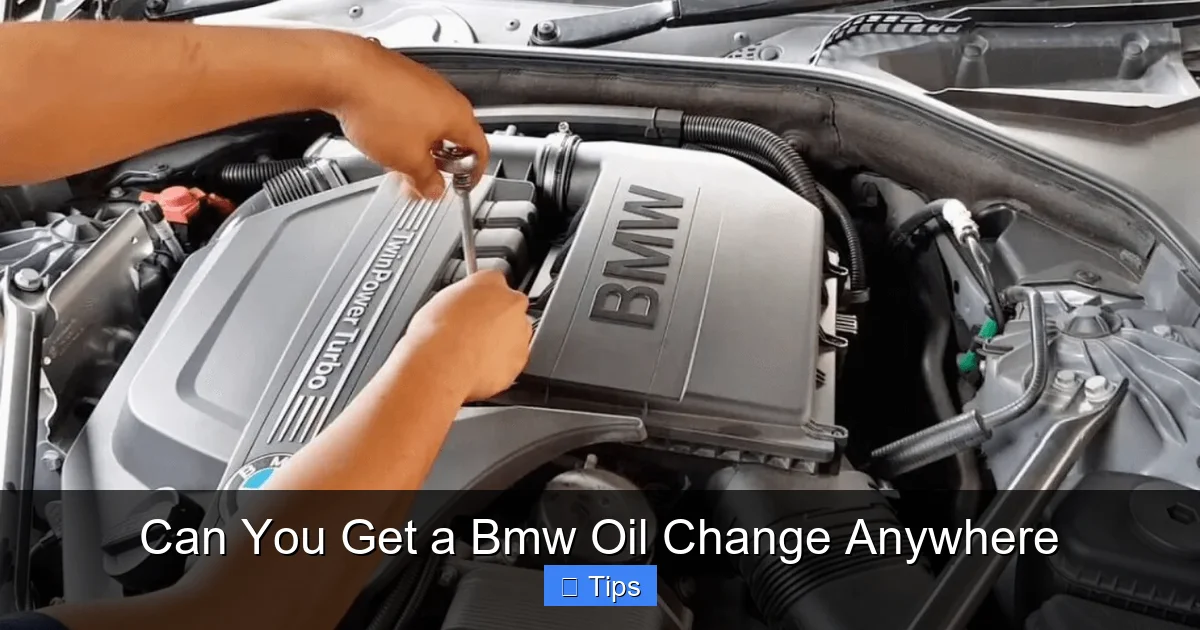
Visual guide about Can You Get a Bmw Oil Change Anywhere
Image source: bmwinsights.com
Now that you understand why BMW oil changes are different, let’s explore your options. You have several choices, each with its own pros and cons. The key is to weigh convenience, cost, and quality to find the best fit for your needs.
BMW Dealerships: The Gold Standard
If you want the most reliable and manufacturer-approved service, a BMW dealership is your best bet. Here’s why:
– Certified Technicians: Dealership mechanics are trained and certified by BMW. They understand the brand’s engineering and have access to the latest technical bulletins and repair procedures.
– OEM Parts and Oil: They use only genuine BMW parts and oil that meet the manufacturer’s exact specifications.
– Advanced Diagnostic Tools: Dealerships have the specialized equipment needed to reset service indicators, run system checks, and diagnose potential issues.
– Warranty Compliance: If your car is still under warranty, getting service at a dealership ensures that your coverage remains intact.
For example, if you drive a 2022 BMW X3 with the B48 engine, the dealership will use BMW-approved 5W-30 LL-01 oil and reset the service interval using ISTA (BMW’s diagnostic software). They’ll also check for software updates and perform a multi-point inspection.
The downside? Dealership service can be expensive. An oil change might cost $150–$250, depending on your location and model. But for many owners, the peace of mind is worth the premium.
Independent BMW Specialists: A Smart Alternative
If you’re looking for high-quality service at a more affordable price, consider an independent shop that specializes in BMWs. These are often run by former dealership technicians or enthusiasts who’ve built their expertise over years of working on German cars.
Benefits include:
– Lower Labor Rates: Independent shops typically charge 20–40% less than dealerships.
– Personalized Service: You’re more likely to speak directly with the technician and get detailed explanations.
– Same-Quality Parts: Many specialists use OEM or equivalent aftermarket parts that meet BMW standards.
For instance, a shop like “EuroTech Motors” in Austin or “Bavarian Auto Works” in Chicago might use the same oil and filters as a dealership but charge $100–$150 for an oil change. They’ll also reset your service indicator and perform a thorough inspection.
Just make sure the shop has good reviews, certifications (like ASE), and experience with your specific BMW model. Ask if they use BMW-approved oil and whether they have the tools to reset the computer.
Quick-Lube Chains: Proceed with Caution
Places like Jiffy Lube, Valvoline Instant Oil Change, or Midas are convenient and fast—but they’re not always the best choice for a BMW.
Here’s why:
– Limited Expertise: Most technicians at these chains are trained for general automotive service, not luxury or European vehicles.
– Incorrect Oil: They may not stock BMW-approved synthetic oil or might use a generic substitute.
– No Diagnostic Tools: They often can’t reset the service indicator, leaving you with a persistent warning light.
– Rushed Service: The focus is on speed, not attention to detail.
We’ve heard stories of BMW owners getting oil changes at quick-lube shops only to find out later that the wrong oil was used or the filter wasn’t properly installed. In one case, a 2018 BMW 430i owner had engine knocking after a Valvoline oil change because the shop used conventional oil instead of synthetic.
That said, some larger chains are improving. For example, certain Jiffy Lube locations now offer “European vehicle service” and stock BMW-approved oil. But you’ll need to call ahead and confirm—don’t just assume.
DIY Oil Changes: For the Enthusiast
If you’re mechanically inclined and enjoy working on your car, doing your own BMW oil change is possible—and can save you money. However, it requires the right tools, knowledge, and parts.
Here’s what you’ll need:
– BMW-approved synthetic oil (e.g., Castrol EDGE 5W-30 LL-01 or Mobil 1 ESP 5W-30)
– OEM oil filter (e.g., Mann or Mahle)
– Oil filter wrench
– Drain pan
– Funnel
– Torque wrench
– OBD2 scanner or BMW-specific tool to reset the service indicator
The process involves draining the old oil, replacing the filter, refilling with new oil, and resetting the service interval. It’s important to torque the drain plug to the correct specification (usually around 23–25 ft-lbs) to avoid leaks.
One tip: Always let the engine cool slightly before draining, but don’t let it get cold. Warm oil flows better and carries more contaminants out of the engine.
While DIY is rewarding, it’s not for everyone. If you’re not confident, it’s better to leave it to the pros.
What Happens During a Proper BMW Oil Change?

Visual guide about Can You Get a Bmw Oil Change Anywhere
Image source: bmwinsights.com
Now that you know where to go, let’s break down what a proper BMW oil change should include. This will help you evaluate whether a shop is doing the job right.
Step 1: Inspection and Preparation
A good technician will start with a visual inspection of the engine bay, checking for leaks, worn belts, or damaged hoses. They’ll also verify the correct oil type for your model and year.
Step 2: Draining the Old Oil
The car is lifted safely (using a lift or ramps), and the oil drain plug is removed. The old oil is collected in a drain pan. The technician should inspect the oil for metal particles or sludge, which could indicate internal engine wear.
Step 3: Replacing the Oil Filter
The old oil filter is removed and replaced with a new one. BMW filters are designed to handle high pressure and flow rates. Using a cheap aftermarket filter can lead to premature failure.
Step 4: Refilling with New Oil
Fresh synthetic oil is added through the oil filler cap. The amount varies by model—typically 6–7 quarts for most BMW engines. Overfilling or underfilling can cause engine damage.
Step 5: Resetting the Service Indicator
This is a critical step. Using a diagnostic tool, the technician resets the oil service interval. Without this, your car will keep showing a service reminder.
Step 6: Final Check and Test Drive
The technician checks for leaks, ensures the oil level is correct, and may take the car for a short test drive to confirm everything is working properly.
Cost of a BMW Oil Change: What to Expect
Visual guide about Can You Get a Bmw Oil Change Anywhere
Image source: bmwinsights.com
The cost of a BMW oil change varies depending on where you go and what model you drive. Here’s a general breakdown:
– Dealership: $150–$250
– Independent BMW Specialist: $100–$180
– Quick-Lube Chain: $70–$120 (but risky)
– DIY: $50–$80 (for oil and filter)
Factors that affect price include:
– Model and engine size (larger engines need more oil)
– Location (urban areas tend to be more expensive)
– Whether additional services are included (e.g., filter replacement, inspection)
While it might be tempting to go for the cheapest option, remember: you get what you pay for. A poorly done oil change can lead to costly repairs down the road.
How Often Should You Change Your BMW’s Oil?
BMW recommends oil changes every 10,000 to 15,000 miles, depending on driving conditions. This is based on the car’s Condition Based Service (CBS) system, which monitors engine load, temperature, and mileage to determine when service is needed.
However, if you frequently drive in severe conditions—such as short trips, stop-and-go traffic, extreme temperatures, or towing—you may need to change the oil more often, perhaps every 7,500 miles.
Always check your owner’s manual or use the iDrive system to see your next service interval. Don’t rely solely on mileage.
Final Thoughts: Making the Right Choice
So, can you get a BMW oil change anywhere? Yes—but should you? That’s the real question.
While convenience and cost are important, your BMW deserves the best care possible. A proper oil change isn’t just about swapping out fluid; it’s about preserving the performance, reliability, and value of your vehicle.
For most owners, we recommend either a BMW dealership or a reputable independent specialist. Both offer the expertise, tools, and parts needed to do the job right. Avoid quick-lube chains unless you’ve confirmed they can handle BMWs properly.
And if you’re handy, DIY is a great way to save money and stay connected to your car—just make sure you have the right knowledge and tools.
At the end of the day, a well-maintained BMW is a joy to drive. By choosing the right place for your oil change, you’re not just protecting your engine—you’re investing in the long-term health of your vehicle.
Frequently Asked Questions
Can I use any synthetic oil in my BMW?
No, you should only use synthetic oil that meets BMW Longlife specifications (like LL-01 or LL-04). Using the wrong oil can lead to engine damage and may void your warranty.
Will getting an oil change at an independent shop void my BMW warranty?
No, as long as the shop uses the correct oil and parts and follows BMW’s maintenance schedule, your warranty remains valid under the Magnuson-Moss Warranty Act.
How do I reset the oil service light on my BMW?
You can reset it using the iDrive system or a diagnostic tool. Some models allow a manual reset via the instrument cluster, but most require a BMW-specific scanner.
Can I go longer than 15,000 miles between oil changes?
It’s not recommended. While BMW’s CBS system allows up to 15,000 miles, driving conditions and oil quality degrade over time. Sticking to the interval helps prevent engine wear.
Is it safe to do a BMW oil change myself?
Yes, if you have the right tools, knowledge, and parts. However, you’ll need a way to reset the service indicator, which may require an OBD2 scanner or BMW-specific tool.
Why is BMW oil more expensive than regular car oil?
BMW-approved synthetic oil is formulated with high-quality base oils and additives to protect high-performance engines, meet strict emissions standards, and prevent sludge and wear.

At CarLegit, we believe information should be clear, factual, and genuinely helpful. That’s why every guide, review, and update on our website is created with care, research, and a strong focus on user experience.