
Keying a car is not just a petty act of vandalism—it’s a criminal offense that can lead to jail time, hefty fines, and a permanent criminal record. Depending on the damage value and local laws, you could face misdemeanor or felony charges, especially if the act is part of a pattern of behavior or targeted harassment.
In This Article
- 1 Key Takeaways
- 2 📑 Table of Contents
- 3 Can You Go to Jail for Keying a Car?
- 4 What Is Keying a Car and Why Is It a Crime?
- 5 Legal Consequences of Keying a Car
- 6 Real-Life Examples of Keying Cases
- 7 Can You Go to Jail for Keying Your Own Car?
- 8 How to Protect Yourself from Car Keying
- 9 What to Do If You’re Accused of Keying a Car
- 10 Conclusion
- 11 Frequently Asked Questions
Key Takeaways
- Keying a car is a criminal act: It’s classified as vandalism or criminal mischief in most jurisdictions and is punishable by law.
- Jail time is possible: Even first-time offenders can face jail sentences, especially if the damage exceeds certain monetary thresholds.
- Fines and restitution are common: Offenders often pay thousands in fines and must compensate the victim for repair costs.
- Felony charges apply for severe damage: If the cost to repair exceeds $1,000–$2,500 (varies by state), the charge may escalate to a felony.
- Criminal record consequences: A conviction can affect employment, housing, and professional licensing.
- Intent matters: Proving malicious intent strengthens the case against the perpetrator.
- Prevention and reporting help: Installing cameras and reporting incidents promptly increases the chances of catching the offender.
📑 Table of Contents
Can You Go to Jail for Keying a Car?
Imagine waking up one morning to find deep, jagged scratches carved into the paint of your car—your daily ride, your investment, now marred by someone’s anger or spite. You’re furious, confused, and maybe even scared. But beyond the emotional toll, you might be wondering: *Can the person who did this actually go to jail?* The short answer is yes—keying a car is not a harmless prank. It’s a criminal act, and in many cases, it can lead to real jail time.
Keying a car—using a key or sharp object to scratch the paint—is a form of property damage. While it might seem minor compared to arson or theft, the law takes it seriously. The consequences depend on several factors: the cost of repairs, where the incident occurred, whether it was a one-time act or part of a pattern, and the intent behind the damage. In some states, even a few hundred dollars in damage can result in misdemeanor charges. In others, if the repair costs climb into the thousands, you’re looking at felony territory—complete with potential prison sentences.
This article will walk you through everything you need to know about the legal repercussions of keying a car. We’ll explore how the law defines this act, what penalties you might face, real-life examples, and how to protect yourself—both as a potential victim and as someone who might be tempted to act out in anger. Because while emotions can run high, the fallout from keying a car can last far longer than the moment of rage.
What Is Keying a Car and Why Is It a Crime?
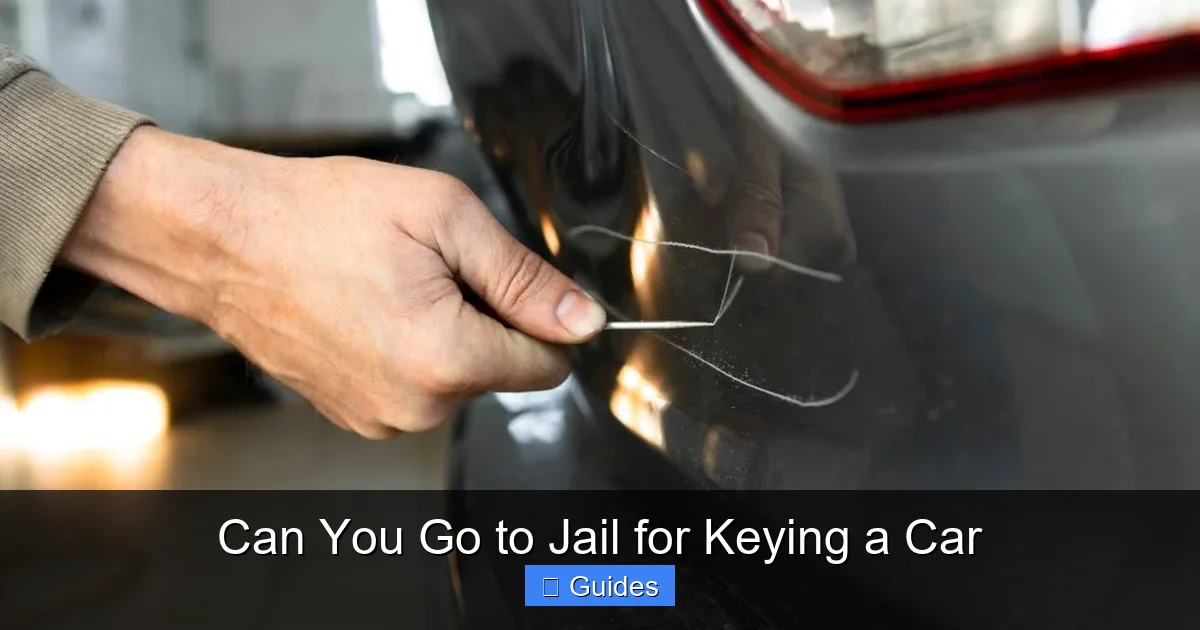
Visual guide about Can You Go to Jail for Keying a Car
Image source: blgwins.com
At its core, keying a car is the deliberate act of scratching or damaging a vehicle’s exterior using a sharp object—most commonly a key. It’s often done out of anger, revenge, jealousy, or even boredom. But no matter the motivation, the result is the same: intentional destruction of someone else’s property.
Legally, this act falls under the umbrella of vandalism or criminal mischief. These terms vary slightly by state, but they all refer to the willful damage or defacement of property that doesn’t belong to you. For example, in California, keying a car is prosecuted under Penal Code 594, which defines vandalism as “maliciously defacing, damaging, or destroying” someone else’s property. In New York, it’s covered under Penal Law § 145.00, which includes “criminal mischief” as intentionally damaging property.
The key word here is intentional. Accidental scratches—like brushing against a car while walking—aren’t crimes. But if someone deliberately drags a key across the hood, doors, or trunk, that’s a criminal act. The law doesn’t care if the damage is “just paint.” It cares that someone chose to harm another person’s belongings without permission.
Why Does the Law Treat Keying So Seriously?
You might wonder: “It’s just a scratch. Why is this a big deal?” The answer lies in the principle of property rights. In the U.S., your car is your personal property, and the law protects it from unauthorized interference. Damaging someone’s car isn’t just an inconvenience—it’s a violation of their rights and can cause real financial and emotional harm.
Consider this: a deep scratch might require more than just a touch-up. It could need sanding, priming, repainting, and clear-coating—costing hundreds or even thousands of dollars. For many people, that’s a significant expense, especially if they don’t have comprehensive insurance. And even with insurance, you might face a deductible or risk higher premiums.
Beyond the money, there’s the emotional impact. Your car is often a symbol of independence, hard work, and personal freedom. Seeing it vandalized can feel like a personal attack. The law recognizes this and aims to deter such behavior through penalties.
Common Motivations Behind Keying
Understanding why people key cars can help us see why the law takes it seriously. Common reasons include:
- Revenge: After a breakup, argument, or dispute, someone might key the other person’s car as payback.
- Jealousy: Seeing someone with a nicer car can trigger envy, leading to destructive acts.
- Road rage: A heated moment on the road can escalate into vandalism.
- Gang activity or territorial disputes: In some cases, keying is used to mark territory or send a message.
- Boredom or peer pressure: Teens or young adults might key cars as a “dare” or to fit in.
No matter the reason, the law doesn’t accept emotional distress or social pressure as an excuse. Intentional damage is still a crime.
Legal Consequences of Keying a Car

Visual guide about Can You Go to Jail for Keying a Car
Image source: villages-news.com
So, what happens if you’re caught keying a car? The penalties vary widely depending on where you live, the extent of the damage, and your criminal history. But one thing is consistent: the consequences can be severe.
In most states, keying a car is charged as either a misdemeanor or a felony. The difference hinges largely on the cost of repairs.
Misdemeanor Charges
If the damage is relatively minor—say, under $500 or $1,000—the charge is usually a misdemeanor. This is still a criminal offense, but the penalties are less severe than felonies.
Typical misdemeanor penalties include:
- Jail time: Up to 1 year in county jail (though many first-time offenders receive probation instead)
- Fines: $500 to $2,000 or more
- Restitution: You must pay the victim for repair costs
- Community service: Often 50–200 hours
- Probation: Typically 1–3 years, with conditions like no contact with the victim
For example, in Texas, criminal mischief causing damage under $750 is a Class B misdemeanor, punishable by up to 180 days in jail and a $2,000 fine. In Florida, damage under $200 is a second-degree misdemeanor, with up to 60 days in jail.
Felony Charges
When the repair costs exceed a certain threshold—often $1,000 to $2,500, depending on the state—the charge can escalate to a felony. Felonies carry much harsher penalties.
Felony consequences may include:
- State prison time: 1–5 years or more
- Higher fines: $5,000 to $10,000 or more
- Restitution: Full reimbursement for repairs, rental car costs, and sometimes emotional distress
- Permanent criminal record: This affects future job prospects, housing applications, and voting rights in some states
- Loss of professional licenses: Teachers, nurses, and others may lose their credentials
For instance, in California, vandalism causing over $400 in damage is a “wobbler”—meaning it can be charged as either a misdemeanor or felony. But if the damage exceeds $10,000, it’s automatically a felony, punishable by up to 3 years in state prison.
Factors That Influence Sentencing
Judges consider several factors when deciding penalties:
- Damage amount: Higher costs usually mean harsher sentences.
- Criminal history: Repeat offenders face steeper consequences.
- Intent: Was it premeditated? Done in anger? Part of a hate crime?
- Victim impact: Did the victim lose work time? Suffer emotional distress?
- Cooperation: Did the offender confess, apologize, or help repair the damage?
In some cases, first-time offenders who show remorse and pay restitution may avoid jail time. But there’s no guarantee.
Real-Life Examples of Keying Cases
Visual guide about Can You Go to Jail for Keying a Car
Image source: cdn.shopify.com
To understand how seriously the law treats keying, let’s look at real cases where people faced jail time.
Case 1: Revenge After a Breakup
In 2019, a man in Ohio keyed his ex-girlfriend’s car after their breakup. The scratches covered the entire driver’s side, requiring a full repaint that cost $3,200. He was charged with felony vandalism. Despite claiming it was “just a scratch,” he was sentenced to 18 months in prison, $3,200 in restitution, and 3 years of probation. The judge emphasized that emotional distress doesn’t justify property destruction.
Case 2: Road Rage Incident
A woman in Arizona keyed a man’s SUV after a minor fender bender. Security camera footage showed her deliberately dragging her key across the hood. The repair cost $1,800. She was charged with criminal mischief and sentenced to 6 months in jail, $1,800 in restitution, and anger management classes. The court noted that road rage doesn’t excuse criminal behavior.
Case 3: Teenagers Acting Out
Three teens in Georgia keyed 12 cars in a parking lot as a “prank.” The total damage exceeded $15,000. All three were charged with felony vandalism. Two received juvenile detention sentences, while the third, age 17, was tried as an adult and sentenced to 2 years in prison. The judge stated that peer pressure doesn’t absolve responsibility.
These cases show that no one is immune from consequences—whether you’re an adult acting out of anger or a teen making a bad decision.
Can You Go to Jail for Keying Your Own Car?
Here’s a twist: what if you key your own car? Maybe you’re trying to make it look damaged for an insurance claim, or you’re angry at yourself and take it out on the vehicle. Does that count as a crime?
The short answer: yes, it can still be illegal—especially if you’re trying to defraud insurance.
Insurance Fraud Risks
If you key your own car and then file an insurance repair claim, you could be committing insurance fraud. This is a serious crime that can lead to:
- Felony charges
- Fines up to $50,000
- Jail time (up to 10 years in some states)
- Denial of future insurance claims
- Criminal record
Insurance companies investigate claims thoroughly. If they suspect you caused the damage yourself, they can deny the claim and report you to law enforcement.
Self-Harm and Mental Health
If you’re keying your own car out of depression, anger, or self-destructive tendencies, it’s a sign you need help—not jail. In such cases, courts may recommend counseling or mental health treatment instead of punishment. But you should still avoid damaging your property, as it can escalate into larger legal or financial problems.
How to Protect Yourself from Car Keying
While you can’t control other people’s actions, you can reduce your risk of becoming a victim.
Install Security Cameras
Park in areas with surveillance cameras, or install a dashcam with parking mode. Many modern systems record motion and sound, even when the car is off. If someone keys your car, you’ll have evidence.
Use a Car Cover
A high-quality car cover can deter vandals. It’s harder to scratch through fabric, and the cover itself is cheaper to replace than a painted panel.
Park Smart
Choose well-lit, high-traffic areas. Avoid parking near dumpsters, alleys, or secluded spots where vandals can act unnoticed.
Get Comprehensive Insurance
Make sure your auto insurance includes comprehensive coverage, which pays for vandalism repairs (minus your deductible). It’s usually affordable and worth the peace of mind.
Report Incidents Immediately
If your car is keyed, take photos, note the time and location, and file a police report right away. This helps with insurance claims and increases the chances of catching the culprit.
What to Do If You’re Accused of Keying a Car
If someone accuses you of keying their car—whether you did it or not—take it seriously.
Don’t Admit Guilt
Even if you’re upset or scared, avoid confessing or apologizing without a lawyer. Anything you say can be used against you.
Contact a Criminal Defense Attorney
A lawyer can review the evidence, challenge the charges, and negotiate a fair outcome. They may argue lack of intent, mistaken identity, or insufficient proof.
Gather Evidence
If you didn’t do it, collect alibis, receipts, GPS data, or witness statements that prove you weren’t present.
Consider Restitution
If you’re guilty but remorseful, offering to pay for repairs voluntarily can lead to reduced charges or probation instead of jail.
Conclusion
Keying a car might seem like a quick way to express anger or get back at someone, but the legal and personal consequences are far from trivial. Yes, you can go to jail for keying a car—especially if the damage is extensive or part of a pattern of behavior. From fines and restitution to probation and prison time, the penalties are real and lasting.
More importantly, this act harms others and reflects poorly on your character. There are always better ways to handle conflict: talking it out, seeking mediation, or walking away. Destroying someone’s property doesn’t solve anything—it only creates more problems.
If you’ve been a victim, know that the law is on your side. Report the incident, gather evidence, and work with law enforcement. If you’re tempted to key someone’s car, pause and think about the long-term impact. A moment of anger isn’t worth years of regret.
Respect for property—and for others—is the foundation of a safe and just society. Let’s keep our cars—and our communities—scratch-free.
Frequently Asked Questions
Can you go to jail for keying a car?
Yes, you can go to jail for keying a car. It’s considered vandalism or criminal mischief, and penalties range from fines and probation to months or even years in jail, depending on the damage and location.
Is keying a car a felony?
It can be. If the repair costs exceed a certain amount—usually $1,000 to $2,500—the charge may escalate to a felony, especially for repeat offenders or cases involving hate crimes.
What happens if you key someone’s car by accident?
Accidental damage isn’t a crime. But if you cause harm, you should still offer to pay for repairs. Intent is key in criminal cases.
Can you be charged for keying a car years later?
Yes, if new evidence emerges—like security footage or a confession. Statutes of limitations vary, but many states allow charges for vandalism within 3–6 years.
Do insurance companies cover keying damage?
Yes, if you have comprehensive auto insurance. It typically covers vandalism repairs, minus your deductible. Always file a police report to support your claim.
Can minors go to jail for keying a car?
Minors may face juvenile detention, community service, or counseling. In severe cases, they can be tried as adults and sent to prison, especially for repeat or gang-related offenses.

At CarLegit, we believe information should be clear, factual, and genuinely helpful. That’s why every guide, review, and update on our website is created with care, research, and a strong focus on user experience.