
Yes, you can jump a car in the rain—but it requires extra caution. While modern vehicles and jumper cables are designed to handle moisture, water increases electrical risks and safety hazards. Following proper steps and safety measures makes rainy-day jump-starts possible and relatively safe.
In This Article
- 1 Key Takeaways
- 2 📑 Table of Contents
- 3 Can You Jump a Car in the Rain? The Truth About Wet Weather Jump-Starts
- 4 Understanding the Risks of Jump-Starting in Wet Conditions
- 5 Essential Safety Precautions for Jump-Starting in the Rain
- 6 Step-by-Step Guide to Jump-Starting a Car in the Rain
- 7 Common Mistakes to Avoid When Jump-Starting in the Rain
- 8 When Not to Jump-Start in the Rain
- 9 Preventing Dead Batteries in Wet Weather
- 10 Conclusion: Yes, You Can Jump a Car in the Rain—Safely
- 11 Frequently Asked Questions
Key Takeaways
- Yes, you can jump a car in the rain: It’s possible and often necessary, but extra precautions are essential to avoid shocks or damage.
- Water increases electrical risk: Wet conditions can lead to short circuits or electric shocks if cables or terminals are submerged or poorly handled.
- Use insulated gloves and eye protection: Personal protective equipment reduces the chance of injury from sparks or battery acid.
- Ensure cables and terminals are dry: Wipe down battery terminals and cable clamps before connecting to minimize conductivity risks.
- Follow the correct jump-start sequence: Connect cables in the right order—positive to positive, negative to ground—to prevent sparks near the battery.
- Never let cable clamps touch: Keep red and black clamps separated to avoid short circuits, especially in wet conditions.
- After starting, disconnect in reverse order: Remove the negative cable first, then the positive, to safely complete the process.
📑 Table of Contents
- Can You Jump a Car in the Rain? The Truth About Wet Weather Jump-Starts
- Understanding the Risks of Jump-Starting in Wet Conditions
- Essential Safety Precautions for Jump-Starting in the Rain
- Step-by-Step Guide to Jump-Starting a Car in the Rain
- Common Mistakes to Avoid When Jump-Starting in the Rain
- When Not to Jump-Start in the Rain
- Preventing Dead Batteries in Wet Weather
- Conclusion: Yes, You Can Jump a Car in the Rain—Safely
Can You Jump a Car in the Rain? The Truth About Wet Weather Jump-Starts
Picture this: It’s a rainy Tuesday morning. You’re running late for work, you hop into your car, turn the key—and nothing. The engine doesn’t crank. The lights are dim. You realize your battery is dead. You call a friend for help, and they arrive with jumper cables. But now you’re standing in the rain, wondering: *Can you even jump a car in the rain? Is it safe?*
The short answer is yes—you can jump a car in the rain. But it’s not as simple as just connecting cables and hoping for the best. Rain introduces new risks, from electrical hazards to slippery conditions. However, with the right knowledge and precautions, you can safely jump-start your vehicle even when the weather isn’t cooperating.
Many people assume that water and electricity don’t mix—and they’re right. But modern cars and jumper cables are built with safety in mind. The 12-volt systems in most vehicles aren’t powerful enough to cause serious harm under normal conditions, but rain can increase the risk of short circuits, sparks, or accidental shocks if you’re not careful. The key is preparation, awareness, and following the correct procedure.
In this guide, we’ll walk you through everything you need to know about jump-starting a car in the rain. From understanding the risks to step-by-step instructions and safety tips, you’ll be equipped to handle a dead battery—rain or shine.
Understanding the Risks of Jump-Starting in Wet Conditions
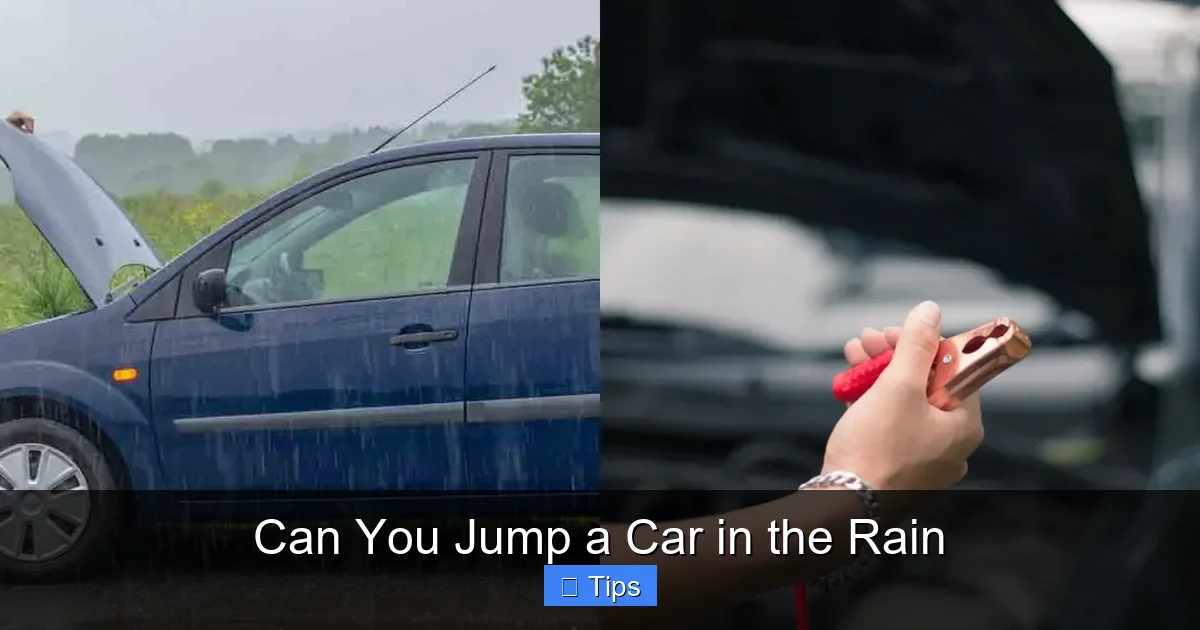
Visual guide about Can You Jump a Car in the Rain
Image source: docerp.s3.amazonaws.com
Before you grab those jumper cables, it’s important to understand why rain adds complexity to the jump-start process. Water is a conductor of electricity, and while your car’s electrical system is designed to handle some moisture, heavy rain or standing water can create dangerous situations.
One of the biggest concerns is the risk of electrical shock. Although car batteries operate at 12 volts—generally considered low-risk—wet hands, wet clothing, or water on the ground can lower your body’s resistance, making it easier for current to pass through you. This is especially true if you’re standing in a puddle or on wet pavement while handling live cables.
Another risk is short-circuiting. If the positive and negative clamps touch while connected to a live battery, they can create a spark powerful enough to ignite hydrogen gas that may be emitted from the battery. This is rare, but it’s a real danger, particularly in enclosed spaces or near flammable materials. Rain doesn’t cause this directly, but it can increase the chances of accidental contact if cables are slippery or hard to control.
Additionally, water can corrode battery terminals over time. If your battery terminals are already dirty or corroded, rain can worsen the issue, leading to poor connections and reduced jump-start effectiveness. That’s why it’s crucial to inspect and clean the terminals before attempting a jump.
Finally, visibility and traction are reduced in the rain. You’re more likely to slip, drop cables, or misjudge distances. Working in wet conditions requires extra focus and care to avoid accidents.
Why Water and Electricity Don’t Mix—But It’s Not Always Dangerous
It’s a common myth that you should never touch electrical equipment in the rain. While water does conduct electricity, the voltage in a car battery is relatively low. Household outlets (120 volts) are far more dangerous than a car’s 12-volt system. That said, water can still create paths for current to flow where it shouldn’t—like through your body if you’re grounded and touching both terminals.
The real danger comes from improper handling. For example, if you’re standing in a puddle and touch the positive terminal with one hand and the negative with the other, you complete a circuit. The current may not be lethal, but it can cause a painful shock or muscle spasm. In rare cases, it could lead to a fall or other injury.
How Rain Affects Battery Performance
Cold, wet weather can also affect your battery’s performance. Low temperatures reduce a battery’s ability to produce power, and rain can exacerbate this by cooling the engine bay. If your battery was already weak, rain might be the final straw that leaves you stranded.
Moreover, moisture can seep into electrical connections, causing corrosion or short circuits over time. This is why regular maintenance—like cleaning terminals and checking cable integrity—is so important, especially if you live in a rainy climate.
Essential Safety Precautions for Jump-Starting in the Rain
Visual guide about Can You Jump a Car in the Rain
Image source: static.pakwheels.com
Safety should always come first, especially when dealing with electricity and wet conditions. Here are the essential precautions to take before you even think about connecting those cables.
First, **wear protective gear**. Insulated gloves are a must—they protect your hands from shocks and battery acid. Safety goggles are also recommended, as sparks or acid splashes can occur during the process. If you don’t have gloves, at the very least, make sure your hands are dry and avoid touching both terminals at the same time.
Second, **park both vehicles on level, stable ground**. Avoid puddles or muddy areas where water could pool around the batteries. If possible, position the cars so their batteries are as close as possible, minimizing the length of cable exposed to the elements.
Third, **turn off both engines and all electronics**. This includes headlights, radios, and climate control. Turning off electronics reduces the load on the battery and prevents voltage spikes that could damage sensitive components.
Fourth, **inspect the batteries and cables**. Look for cracks, leaks, or heavy corrosion. If the battery is swollen or leaking, do not attempt a jump-start—call a professional. Also, check that your jumper cables are in good condition: no frayed wires, exposed metal, or damaged clamps.
Fifth, **keep the area around the battery dry**. Use a dry cloth or towel to wipe down the battery terminals and the cable clamps. Even a small amount of water on the terminals can increase conductivity and risk.
Finally, **have a fire extinguisher nearby**—just in case. While rare, battery explosions can happen if hydrogen gas ignites. A small Class ABC fire extinguisher can help you respond quickly if needed.
What to Do If You’re Alone and It’s Raining
If you’re stranded in the rain with a dead battery and no one to help, your options are limited—but not hopeless. Many roadside assistance services offer jump-start services, and some even have mobile units that can come to you. If you have a portable jump starter (also called a jump box), you can use it without another vehicle. These devices are battery-powered and safe to use in the rain, as long as you follow the instructions and keep the unit dry.
Portable jump starters are especially useful in wet conditions because they eliminate the need for a second car and reduce exposure time. Just make sure the jump box is fully charged and designed for your vehicle’s engine size.
Step-by-Step Guide to Jump-Starting a Car in the Rain
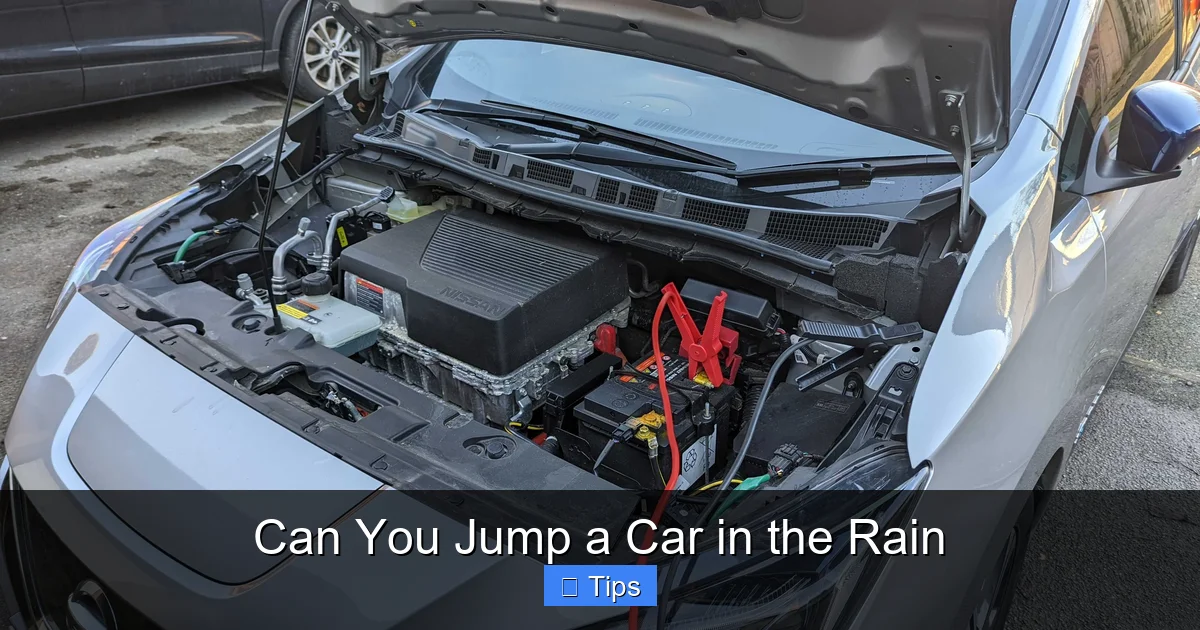
Visual guide about Can You Jump a Car in the Rain
Image source: cdn.mos.cms.futurecdn.net
Now that you understand the risks and safety measures, let’s walk through the actual process of jump-starting a car in the rain. Follow these steps carefully to ensure a safe and successful jump.
Step 1: Position the Vehicles
Park the working vehicle (the one with the good battery) close to the dead car, but don’t let them touch. Turn off both engines and set the parking brakes. If possible, angle the cars so their batteries are facing each other, reducing the distance the cables need to span.
Step 2: Prepare the Batteries
Open both hoods and locate the batteries. Identify the positive (+) and negative (−) terminals. They’re usually marked with red and black covers or symbols. Use a dry cloth to wipe the terminals and remove any dirt, corrosion, or moisture. If there’s heavy corrosion (a white or green powdery substance), use a mixture of baking soda and water to clean it off, then dry thoroughly.
Step 3: Connect the Jumper Cables
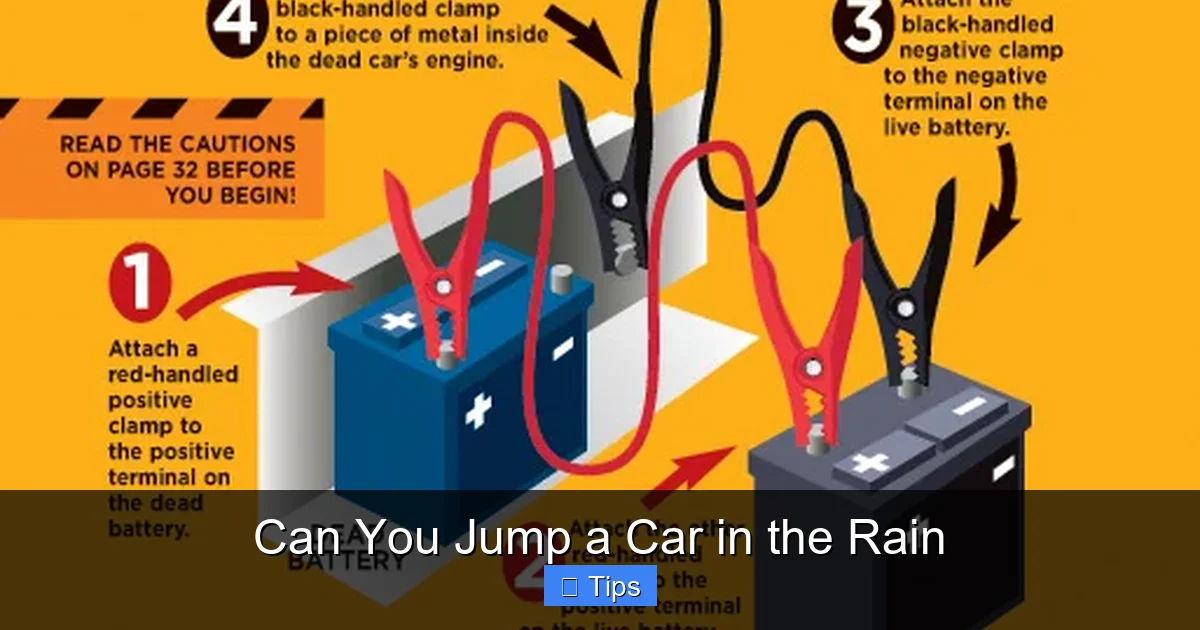
Follow this exact sequence to minimize sparking near the battery:
1. **Connect the red (positive) clamp to the positive terminal of the dead battery.**
2. **Connect the other red clamp to the positive terminal of the good battery.**
3. **Connect the black (negative) clamp to the negative terminal of the good battery.**
4. **Connect the other black clamp to an unpainted metal surface on the dead car’s engine block—not the battery terminal.** This acts as a ground and reduces the risk of sparks near the battery.
Why ground to the engine block? Because car batteries can emit hydrogen gas, which is flammable. By connecting the final clamp to a grounded metal part away from the battery, you reduce the chance of igniting that gas.
Step 4: Start the Working Vehicle
Start the engine of the vehicle with the good battery and let it run for 2–3 minutes. This allows the alternator to charge the dead battery slightly.
Step 5: Attempt to Start the Dead Car
Try starting the dead car. If it doesn’t start right away, wait another minute or two and try again. Do not crank the engine for more than 10 seconds at a time. If it still doesn’t start after three attempts, there may be another issue—like a faulty alternator or a completely dead battery.
Step 6: Disconnect the Cables
Once the dead car is running, disconnect the cables in the reverse order:
1. Remove the black clamp from the grounded metal on the previously dead car.
2. Remove the black clamp from the negative terminal of the good battery.
3. Remove the red clamp from the positive terminal of the good battery.
4. Remove the red clamp from the positive terminal of the previously dead battery.
This sequence prevents sparks and ensures safety.
Step 7: Let the Engine Run
Keep the jumped car running for at least 15–20 minutes to allow the alternator to recharge the battery. If the car dies again shortly after, the battery may need to be replaced or the charging system checked.
Common Mistakes to Avoid When Jump-Starting in the Rain
Even experienced drivers make mistakes when jump-starting in wet conditions. Here are some common errors and how to avoid them.
Connecting Cables in the Wrong Order
One of the most dangerous mistakes is connecting the negative cable directly to the dead battery’s negative terminal. This can cause a spark right next to the battery, increasing the risk of explosion. Always ground the final negative clamp to the engine block or frame.
Letting Clamps Touch
Never let the red and black clamps touch while they’re connected to a battery. This creates a short circuit, which can damage the cables, blow fuses, or even start a fire. Keep them separated at all times.
Using Damaged Cables
Frayed or corroded cables are unsafe, especially in the rain. Inspect your cables before use. If the insulation is cracked or the metal is exposed, replace them.
Ignoring Personal Safety
Working in the rain without gloves or eye protection is risky. Wet hands increase conductivity, and battery acid can splash during the process. Always protect yourself.
Not Letting the Battery Charge
After jump-starting, don’t turn off the engine immediately. The battery needs time to recharge. Drive the car for at least 20 minutes or use a battery charger to restore full power.
When Not to Jump-Start in the Rain
While jump-starting in the rain is usually safe, there are situations where you should avoid it altogether.
If the battery is **swollen, cracked, or leaking**, do not attempt a jump-start. These are signs of internal damage, and attempting to jump could cause a fire or explosion. Call a professional instead.
If the **cables are wet or damaged**, don’t use them. Wet cables can conduct electricity unpredictably, and damaged ones may fail under load.
If you’re in a **flooded area or standing in deep water**, stay away from the vehicle. Water can conduct electricity from power lines or other sources, creating a serious hazard.
If you’re **unsure or uncomfortable**, don’t risk it. It’s better to wait for help than to cause injury or damage.
Preventing Dead Batteries in Wet Weather
The best way to avoid jump-starting in the rain is to prevent dead batteries in the first place. Here are some tips to keep your battery healthy, especially during rainy seasons.
Regular Maintenance
Check your battery terminals every few months for corrosion. Clean them with a wire brush and baking soda solution if needed. Ensure the battery is securely mounted and the cables are tight.
Test Your Battery
Most auto parts stores offer free battery testing. Have your battery checked annually, especially before winter or rainy seasons. A weak battery is more likely to fail in cold, wet conditions.
Use a Battery Maintainer
If you don’t drive often, consider using a battery maintainer or trickle charger. These devices keep the battery charged without overcharging, extending its life.
Park in a Garage or Covered Area
Protecting your car from rain and extreme temperatures can help preserve battery life. If you don’t have a garage, use a car cover or park under a shelter.
Turn Off Accessories
Leaving lights, radios, or phone chargers on when the engine is off can drain the battery quickly. Always double-check before walking away.
Conclusion: Yes, You Can Jump a Car in the Rain—Safely
So, can you jump a car in the rain? Absolutely. With the right precautions, it’s not only possible but often necessary. Rain doesn’t make jump-starting impossible—it just makes it more important to follow safety guidelines.
Remember: water increases electrical risks, but modern vehicles and proper techniques make rainy-day jump-starts manageable. Wear protective gear, keep terminals dry, follow the correct cable sequence, and never take shortcuts.
By understanding the risks and preparing in advance, you can handle a dead battery with confidence—even when the weather isn’t on your side. And if you’re ever unsure, don’t hesitate to call for professional help. Your safety is always worth the wait.
Keep a set of quality jumper cables in your car, consider investing in a portable jump starter, and stay informed. That way, when the rain starts pouring and your car won’t start, you’ll be ready.
Frequently Asked Questions
Is it safe to jump a car in the rain?
Yes, it’s generally safe to jump a car in the rain if you take proper precautions. The main risks come from water increasing conductivity and the chance of sparks, but following safety steps minimizes these dangers.
Can rain cause a car battery to die?
Rain itself doesn’t kill a battery, but cold, wet weather can reduce battery performance. Moisture can also lead to corrosion on terminals, which may weaken connections over time.
Should I dry the battery before jump-starting?
Yes, it’s a good idea to wipe the battery terminals and cable clamps with a dry cloth before connecting. This reduces the risk of short circuits and improves connection quality.
What if my jumper cables get wet?
If the cables are only slightly wet, they’re usually still safe to use—especially if the insulation is intact. However, avoid using damaged or soaked cables, as they can conduct electricity unpredictably.
Can I use a portable jump starter in the rain?
Yes, portable jump starters are safe to use in the rain as long as you keep the unit itself dry and follow the manufacturer’s instructions. They’re often a better option than traditional cables in wet conditions.
What should I do if my car won’t start after jump-starting in the rain?
If the car starts but dies again shortly after, the battery may be too old or damaged to hold a charge. Have it tested at an auto shop. If it doesn’t start at all, there could be an issue with the alternator, starter, or electrical system.

At CarLegit, we believe information should be clear, factual, and genuinely helpful. That’s why every guide, review, and update on our website is created with care, research, and a strong focus on user experience.