
Yes, you can jump a motorcycle with a car, but it’s not as simple as connecting cables and hoping for the best. This process requires caution, the right tools, and a clear understanding of electrical systems to avoid damaging your bike or vehicle. Done incorrectly, jump-starting can fry your motorcycle’s electronics or even cause injury.
In This Article
- 1 Key Takeaways
- 2 📑 Table of Contents
- 3 Can You Jump a Motorcycle with a Car? The Short Answer
- 4 Why Motorcycle Batteries Die (And How to Prevent It)
- 5 The Risks of Jump-Starting a Motorcycle with a Car
- 6 How to Safely Jump a Motorcycle with a Car
- 7 Safer Alternatives to Jump-Starting with a Car
- 8 When to Replace Your Motorcycle Battery
- 9 Final Thoughts: Is It Worth the Risk?
- 10 Frequently Asked Questions
- 10.1 Can you jump-start a motorcycle with a car battery?
- 10.2 Is it safe to jump a motorcycle with a running car?
- 10.3 What happens if you connect the jumper cables backwards?
- 10.4 Can you jump-start a fuel-injected motorcycle?
- 10.5 How long should you let the motorcycle run after a jump?
- 10.6 What’s the best alternative to jump-starting with a car?
Key Takeaways
- Yes, it’s possible: You can jump-start a motorcycle using a car, but only if done carefully and with the right precautions.
- Use proper cables: Heavy-duty jumper cables are essential to handle the power transfer safely.
- Turn off the car engine: Never leave the car running while connecting or disconnecting cables to prevent voltage spikes.
- Protect the motorcycle’s electronics: Modern bikes have sensitive ECUs and sensors that can be damaged by improper jump-starting.
- Follow the correct sequence: Connect cables in the right order—positive first, then negative—and disconnect in reverse.
- Consider alternatives: A portable jump starter or battery tender is often safer and more convenient for motorcycles.
- Know when to walk away: If you’re unsure or the bike shows signs of electrical issues, call a professional instead.
📑 Table of Contents
- Can You Jump a Motorcycle with a Car? The Short Answer
- Why Motorcycle Batteries Die (And How to Prevent It)
- The Risks of Jump-Starting a Motorcycle with a Car
- How to Safely Jump a Motorcycle with a Car
- Safer Alternatives to Jump-Starting with a Car
- When to Replace Your Motorcycle Battery
- Final Thoughts: Is It Worth the Risk?
Can You Jump a Motorcycle with a Car? The Short Answer
So, your motorcycle won’t start. The engine clicks, the lights dim, and you’re stuck in the garage or parking lot. You’ve got a car nearby with a healthy battery. Naturally, the question pops up: Can you jump a motorcycle with a car? The quick answer is yes—but with a big caveat: it’s not always the safest or smartest move.
Motorcycles have smaller, more delicate electrical systems compared to cars. While both run on 12-volt batteries, the components in a bike—like the ECU (engine control unit), fuel injectors, and sensors—are far more sensitive to voltage spikes and improper connections. A car battery, especially when the engine is running, can deliver a surge of power that might overwhelm your motorcycle’s system. That’s why jumping a motorcycle with a car isn’t as straightforward as jumping a car with another car.
But don’t panic. With the right knowledge, tools, and careful steps, you can safely jump-start your motorcycle using a car. This guide will walk you through everything you need to know—from the risks and precautions to step-by-step instructions and safer alternatives. Whether you’re a weekend rider or a daily commuter, understanding how to handle a dead battery could save you time, money, and frustration.
Why Motorcycle Batteries Die (And How to Prevent It)

Visual guide about Can You Jump a Motorcycle with a Car
Image source: i.ytimg.com
Before we dive into the jump-starting process, it’s important to understand why motorcycle batteries die in the first place. Knowing the root causes can help you avoid the problem altogether.
Common Causes of Dead Motorcycle Batteries
One of the biggest culprits is infrequent use. Unlike cars, many motorcycles sit idle for days or even weeks. When a bike isn’t used regularly, the battery slowly loses its charge. Even when turned off, modern motorcycles have small electrical draws—like the clock, alarm system, or ECU memory—that drain the battery over time.
Another common cause is extreme temperatures. Cold weather slows down the chemical reactions inside the battery, reducing its ability to hold a charge. On the flip side, hot weather can accelerate battery degradation. If you store your bike in a garage without climate control, the battery may weaken faster than expected.
Old or worn-out batteries are also a major factor. Most motorcycle batteries last between 3 to 5 years. If your battery is older than that, it may not hold a charge well, even if it seems fine. Sulfation—a buildup of lead sulfate crystals—can reduce battery efficiency and eventually lead to failure.
Signs Your Battery Is Failing
How do you know if your battery is on its last legs? Watch for these warning signs:
– The engine cranks slowly or weakly when you try to start it.
– The headlight dims significantly when the engine is off.
– The bike starts fine after a jump but dies again the next day.
– You hear a clicking sound but the engine doesn’t turn over.
If you notice any of these, it’s time to test your battery or consider a replacement.
How to Prevent Battery Drain
The best way to avoid a dead battery is to keep it charged. Here are a few simple tips:
– Use a battery tender: A smart charger or maintainer can keep your battery at full charge without overcharging it. Plug it in whenever the bike sits for more than a few days.
– Start your bike regularly: Even a 10-minute ride once a week can help recharge the battery.
– Turn off accessories: Don’t leave lights, GPS, or phone chargers on when the engine is off.
– Store in a cool, dry place: Avoid extreme heat or cold when possible.
By taking these preventive steps, you can extend your battery’s life and reduce the chances of needing a jump-start in the first place.
The Risks of Jump-Starting a Motorcycle with a Car
Visual guide about Can You Jump a Motorcycle with a Car
Image source: carscoops.com
Now, let’s talk about the elephant in the room: the risks. While it’s technically possible to jump a motorcycle with a car, there are several dangers you need to be aware of.
Voltage Spikes and Electrical Damage
Cars have larger alternators and electrical systems designed to handle high power loads. When you connect a car battery to a motorcycle, especially if the car is running, there’s a risk of sending a voltage spike into the bike’s system. Modern motorcycles rely heavily on electronics—fuel injection, ignition systems, ABS, traction control, and more. These components are not built to handle sudden surges.
A voltage spike can fry the ECU, damage sensors, or even destroy the rectifier/regulator. Replacing these parts can cost hundreds or even thousands of dollars—far more than a new battery or a portable jump starter.
Battery Polarity and Connection Errors
Another major risk is connecting the jumper cables incorrectly. If you reverse the positive and negative terminals—even for a second—you can cause a short circuit. This can lead to sparks, melted cables, or even a battery explosion.
Motorcycle batteries are often tucked away in tight spaces, making it harder to see the terminals clearly. A moment of confusion can lead to a costly mistake.
Overcharging and Overheating
If the car is left running while connected, the alternator may try to charge the motorcycle battery too quickly. This can cause the battery to overheat, leak acid, or even rupture. Sealed lead-acid and lithium-ion batteries are especially vulnerable to overcharging.
Physical Damage to the Bike
Jumper cables are heavy and stiff. If they’re not secured properly, they can pull on the battery terminals or wiring, causing physical damage. In some cases, the cables might fall and short against metal parts of the bike.
Personal Safety Hazards
Working with batteries involves risks like acid exposure, electrical shock, and fire. Motorcycle batteries contain sulfuric acid, which can burn skin and eyes. Sparks near the battery can ignite hydrogen gas, leading to an explosion.
Always wear safety glasses and gloves when handling batteries. Work in a well-ventilated area, and keep open flames or sparks away.
How to Safely Jump a Motorcycle with a Car
Visual guide about Can You Jump a Motorcycle with a Car
Image source: i.ytimg.com
If you’ve weighed the risks and still decide to proceed, here’s how to do it safely. Follow these steps carefully to minimize the chance of damage or injury.
Step 1: Gather the Right Tools
You’ll need:
– Heavy-duty jumper cables (preferably 4-gauge or thicker)
– Safety glasses and gloves
– A fully charged car with a healthy battery
– Your motorcycle (obviously!)
Avoid using lightweight or cheap cables—they may not handle the current and could overheat.
Step 2: Position the Vehicles
Park the car close to the motorcycle, but make sure they’re not touching. Turn off both engines and remove the keys. Engage the parking brake on the car and put the motorcycle in neutral.
Step 3: Locate the Battery Terminals
On most motorcycles, the battery is under the seat or behind a side panel. Remove the seat or panel to access it. Identify the positive (+) and negative (-) terminals. The positive terminal is usually red and marked with a “+” sign.
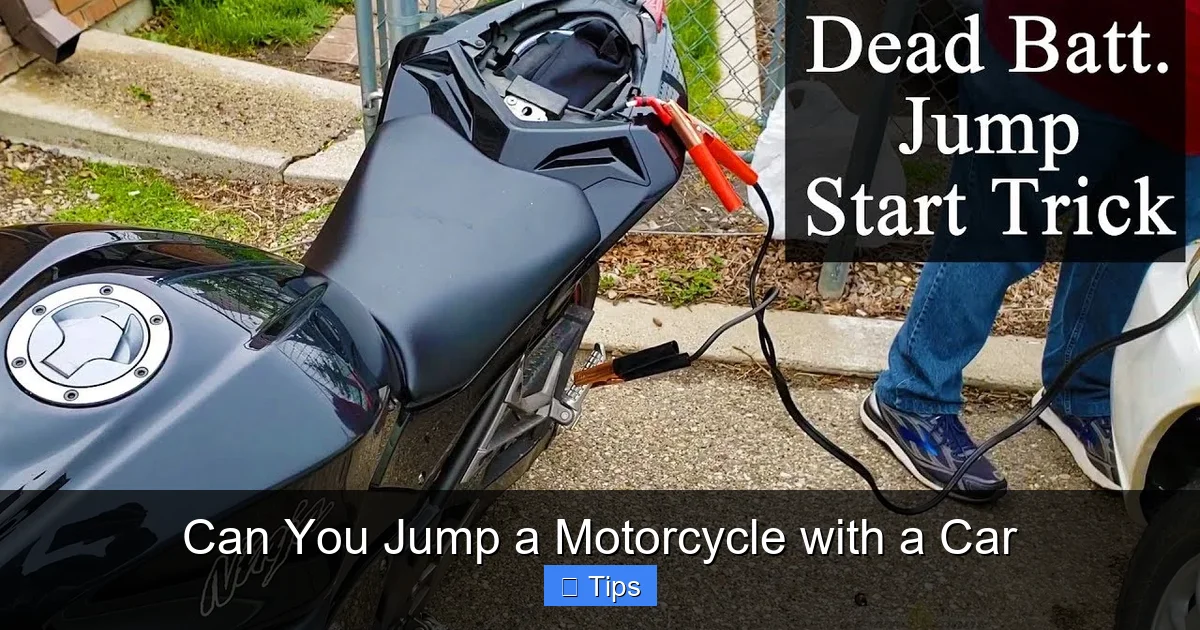
Step 4: Connect the Jumper Cables
Follow this sequence exactly:
1. Connect the red (positive) cable to the positive terminal of the motorcycle battery.
2. Connect the other end of the red cable to the positive terminal of the car battery.
3. Connect the black (negative) cable to the negative terminal of the car battery.
4. Connect the other end of the black cable to an unpainted metal part of the motorcycle’s frame—not the battery terminal. This is called grounding and helps prevent sparks near the battery.
Step 5: Start the Car (Briefly)
Start the car and let it run for about 2–3 minutes. Do not rev the engine or leave it running for long. The goal is to give the motorcycle battery a small boost—not to charge it fully.
Step 6: Try to Start the Motorcycle
Turn the key and try to start the motorcycle. If it starts, great! Let it run for 10–15 minutes to allow the bike’s alternator to recharge the battery.
If it doesn’t start, wait a few minutes and try again. Do not crank the engine for more than 10 seconds at a time. Over-cranking can damage the starter motor.
Step 7: Disconnect the Cables
Once the motorcycle is running, disconnect the cables in reverse order:
1. Remove the black cable from the motorcycle frame.
2. Remove the black cable from the car battery.
3. Remove the red cable from the car battery.
4. Remove the red cable from the motorcycle battery.
Be careful—sparks may occur during disconnection.
Step 8: Test and Monitor
After disconnecting, let the motorcycle run for at least 15–20 minutes. Take it for a short ride if possible. If the bike starts normally the next time you use it, the battery is likely fine. If it dies again, the battery may need to be replaced or recharged with a proper charger.
Safer Alternatives to Jump-Starting with a Car
Given the risks, many riders prefer safer alternatives. Here are some better options for jump-starting a motorcycle.
Use a Portable Jump Starter
A portable jump starter (also called a jump box) is a compact, battery-powered device designed specifically for jump-starting vehicles. Many models are small enough to fit in a saddlebag or backpack.
These devices are safer because they deliver a controlled amount of power and often include safety features like reverse polarity protection and short-circuit prevention. They’re also convenient—no need for another vehicle.
Popular brands include NOCO, Jump-N-Carry, and Hulkman. Look for a model with at least 1000 peak amps and a built-in flashlight or USB ports for added utility.
Use a Battery Tender or Smart Charger
If your bike sits for long periods, invest in a smart battery charger or tender. These devices slowly recharge the battery and maintain it at full charge without overcharging.
They’re especially useful for winter storage or if you only ride occasionally. Most can be left plugged in indefinitely.
Push-Start (If Your Bike Has a Manual Transmission)
If your motorcycle has a manual transmission and a healthy battery (just low on charge), you can try a push-start (also called bump-starting).
Here’s how:
1. Turn the ignition on.
2. Put the bike in second gear.
3. Hold the clutch and have someone push the bike (or roll it down a slight hill).
4. Once moving at about 5–10 mph, release the clutch quickly.
5. The engine should turn over and start.
This method works best on older bikes with carburetors. Modern fuel-injected bikes may not respond well to push-starting.
Call for Help
If you’re not confident in your ability to jump-start the bike safely, don’t risk it. Call a roadside assistance service or a friend with experience. Many motorcycle clubs and insurance plans offer towing or jump-start services.
When to Replace Your Motorcycle Battery
Sometimes, a jump-start is just a temporary fix. If your battery keeps dying, it may be time for a replacement.
Signs It’s Time for a New Battery
– The battery is more than 3–5 years old.
– It won’t hold a charge even after recharging.
– The bike starts fine after a jump but dies the next day.
– The battery swells or leaks fluid.
– You notice a rotten egg smell (a sign of sulfur buildup).
Choosing the Right Replacement
When buying a new battery, check your owner’s manual for the correct type and specifications. Common types include:
– Lead-acid (wet cell): Affordable but requires maintenance.
– AGM (Absorbent Glass Mat): Maintenance-free, vibration-resistant, and better for modern bikes.
– Lithium-ion: Lightweight and long-lasting, but more expensive.
Make sure the voltage (usually 12V) and cold cranking amps (CCA) match your bike’s requirements.
Proper Disposal
Old batteries contain toxic materials and should never be thrown in the trash. Take them to an auto parts store, recycling center, or battery retailer. Most places will recycle them for free.
Final Thoughts: Is It Worth the Risk?
So, can you jump a motorcycle with a car? Yes—but it’s not the ideal solution. The risks of electrical damage, fire, and personal injury are real, especially if you’re not experienced.
For most riders, a portable jump starter or battery tender is a safer, more reliable option. These tools are affordable, easy to use, and designed specifically for motorcycles. They also give you peace of mind knowing you won’t fry your bike’s electronics.
If you do decide to use a car, follow the steps carefully, wear protective gear, and never leave the car running during the process. And remember: prevention is always better than a jump-start. Keep your battery charged, maintain it regularly, and replace it when needed.
Riding should be about freedom and fun—not stressing over a dead battery. With the right knowledge and tools, you can get back on the road safely and confidently.
Frequently Asked Questions
Can you jump-start a motorcycle with a car battery?
Yes, you can jump-start a motorcycle using a car battery, but it must be done carefully to avoid damaging the bike’s electrical system. Always use heavy-duty cables and follow the correct connection sequence.
Is it safe to jump a motorcycle with a running car?
No, it’s not safe to leave the car running while jump-starting. The alternator can send voltage spikes to the motorcycle, potentially damaging sensitive electronics like the ECU or fuel injectors.
What happens if you connect the jumper cables backwards?
Reversing the cables can cause a short circuit, leading to sparks, melted cables, or even a battery explosion. Always double-check polarity before connecting.
Can you jump-start a fuel-injected motorcycle?
Yes, but extra caution is needed. Fuel-injected bikes have sensitive electronics that can be damaged by improper jump-starting. A portable jump starter is often a safer choice.
How long should you let the motorcycle run after a jump?
Let the motorcycle run for at least 15–20 minutes to allow the alternator to recharge the battery. A short ride is even better to ensure a full charge.
What’s the best alternative to jump-starting with a car?
A portable jump starter or smart battery charger is the best alternative. They’re safer, more convenient, and designed specifically for motorcycles.

At CarLegit, we believe information should be clear, factual, and genuinely helpful. That’s why every guide, review, and update on our website is created with care, research, and a strong focus on user experience.